Key Takeaways
-
Check refrigerant levels at every service interval to prevent compressor failure, as low refrigerant is the leading cause of poor A/C performance and forces compressors to work harder.
-
Implement proactive scheduled maintenance on a quarterly or monthly basis instead of waiting for driver complaints, as reactive repairs cost 2-3 times more than preventive care.
-
Inspect compressor belts, hoses, fittings, and electrical components regularly to catch wear before system failures occur mid-route, avoiding unexpected downtime.
-
Clean or replace cabin air filters frequently in dusty environments, as clogged filters restrict airflow and strain the blower motor and entire A/C system.
-
Check and clear evaporator drain lines to prevent water backup, musty odors, and mold growth inside vehicle cabins.
-
Clean condenser coils and inspect for bent fins or damage, as condensers exposed to road debris and heat cycles cannot efficiently release refrigerant heat.
If you manage a fleet of vehicles in Tampa, you know how brutal the Florida heat can be. Whether you’re running delivery vans, service trucks, buses, or heavy equipment, a broken A/C system isn’t just uncomfortable — it’s a productivity killer. A solid fleet AC maintenance checklist is one of the best tools you can have. But here’s the thing: most fleet managers are unknowingly making mistakes that turn small A/C issues into expensive repairs.
At Marks Air, we’ve been keeping Tampa fleets cool since 1971. We see the same mistakes over and over again. The good news? Every single one of them is avoidable. Let’s walk through the 8 most common fleet AC maintenance checklist mistakes — and how to fix them.
Why Your Fleet AC Maintenance Checklist Matters
A well-kept A/C system isn’t a luxury for your drivers — it’s a safety and performance issue. Driver fatigue sets in fast when cab temperatures soar. Equipment operators lose focus. Passengers on buses get uncomfortable and frustrated. And when A/C systems fail mid-route, you’re looking at downtime, repair costs, and unhappy customers.
A proper preventive fleet AC maintenance routine keeps all of that from happening. But only if you’re doing it right. Let’s look at what can go wrong.

Mistake 1: Skipping Regular Refrigerant Level Checks
Low refrigerant is the number one cause of poor A/C performance in fleet vehicles. Over time, systems lose refrigerant through tiny leaks — even when nothing seems obviously broken. If your checklist doesn’t include regular refrigerant level inspections, you’re flying blind.
Low refrigerant forces the compressor to work harder. That leads to premature wear and, eventually, a full compressor failure. Checking refrigerant levels at each service interval is non-negotiable.
Mistake 2: Ignoring Compressor Belt Condition
The A/C compressor belt drives the entire system. A worn, cracked, or loose belt means the compressor can’t do its job. Worse, a snapped belt mid-route can take down not just the A/C but other engine accessories too.
Here’s what to look for when inspecting belts:
- Visible cracking or fraying along the belt edges
- Glazing or shiny spots on the belt surface
- Squealing sounds when the A/C is turned on
- Belt tension that’s too loose or too tight
- Misalignment between the belt and pulleys
Add belt inspections to every fleet vehicle AC diagnostic visit. It’s a simple check that prevents big headaches.
Mistake 3: Forgetting to Clean or Replace Cabin Air Filters
Clogged cabin air filters restrict airflow through the evaporator. When airflow drops, the A/C has to work overtime just to push cool air into the cab. Over time, this strains the blower motor and reduces overall system efficiency.
For fleet vehicles, especially those operating in dusty or construction environments, filters get dirty fast. Check them more frequently than the standard schedule. A clean filter keeps your truck’s AC blower motor running smoothly and extends the life of the whole system.
Mistake 4: Overlooking the Condenser
The condenser sits at the front of the vehicle and releases heat from the refrigerant. It’s constantly exposed to road debris, bugs, and dirt — especially on heavy-duty trucks and buses. A clogged or damaged condenser can’t release heat efficiently, which causes the entire system to underperform.
Your fleet AC maintenance checklist should include:
- Visually inspecting the condenser for bent fins or physical damage
- Cleaning the condenser coils with compressed air or a gentle rinse
- Checking for refrigerant leaks around condenser fittings
- Confirming airflow is not blocked by debris or mounting issues
This is especially important for bus AC system maintenance, where condensers take a serious beating in daily stop-and-go traffic.
Mistake 5: Neglecting Evaporator Drain Lines
Here’s one that catches a lot of fleet managers off guard. The evaporator removes humidity from the air inside the cabin. That moisture has to drain somewhere — and it does, through a small drain line. When that drain line gets clogged, water backs up into the cab. You end up with wet carpets, musty odors, and potential mold growth inside your vehicles.
Checking and clearing evaporator drain lines is a quick task. But it’s left off a lot of checklists. Don’t let it be left off yours. For more complex situations, a professional heavy duty AC evaporator replacement might be needed, but prevention is far cheaper.
Mistake 6: Not Inspecting Hoses and Fittings for Leaks
A/C hoses carry refrigerant and oil throughout the system. They’re under pressure and exposed to heat cycles every single day. Over time, hoses crack, fittings corrode, and O-rings degrade. Even a small refrigerant leak will slowly drain the system and cause performance to drop.
Fleet vehicles rack up miles fast. Hose wear happens faster than most people expect. Add a leak inspection to your routine service. Look for:
- Oily residue around hose connections (a sign of refrigerant oil leaking)
- Cracked or bulging hose exteriors
- Corrosion or discoloration around metal fittings
- Soft spots or hard, brittle sections in rubber hoses
When hoses need replacing, custom fabrication matters. Fleet AC hose fabrication done right means the new hose fits perfectly and lasts longer.
Mistake 7: Skipping Electrical System Checks
Modern vehicle A/C systems rely heavily on electrical components — sensors, pressure switches, relays, and control modules. A faulty sensor can cause the system to shut off unexpectedly. A bad relay can prevent the compressor from engaging at all.
These issues don’t always show obvious signs. The system might seem fine until it suddenly stops working on the hottest day of the year. Include these electrical checks in your fleet AC maintenance checklist:
- Test pressure switches for proper engagement
- Inspect wiring harnesses for chafing or corrosion
- Check relay function at the compressor clutch
- Verify control panel and thermostat accuracy
- Confirm fan motors and blower resistors are operating correctly
Catching electrical issues early is much cheaper than diagnosing a full system failure. If you’re not sure what to look for, professional AC services can handle a full system electrical inspection for your fleet.
Mistake 8: Waiting for Drivers to Report Problems
This might be the biggest mistake of all. Reactive maintenance — waiting until something breaks — costs two to three times more than proactive care. By the time a driver reports that the A/C “doesn’t feel as cold as it used to,” the system may already have significant wear or damage.
Set up a structured schedule so every fleet vehicle gets a proper A/C inspection at regular intervals. Don’t rely on driver feedback as your only early warning system. Drivers notice big problems. A scheduled checklist catches the small ones before they become big.
Here’s a simple example of a quarterly fleet AC maintenance checklist structure:
| Inspection Item | Monthly | Quarterly | Annually |
|---|---|---|---|
| Cabin air filter check | ✓ | ✓ | ✓ |
| Refrigerant level inspection | ✓ | ✓ | |
| Compressor belt inspection | ✓ | ✓ | |
| Condenser cleaning | ✓ | ✓ | |
| Evaporator drain line check | ✓ | ✓ | |
| Hose and fitting leak inspection | ✓ | ✓ | |
| Electrical system check | ✓ | ||
| Full system performance test | ✓ |
Building a Fleet AC Maintenance Program That Works
A great checklist is only as good as the team behind it. Training your in-house technicians on A/C system basics makes a real difference. If you want to take it further, A/C training programs — including EPA 609 certification — are available for fleet technicians who want to handle more diagnostics in-house.
For fleet operators who prefer to outsource maintenance, partnering with a specialist shop is the smart move. You want someone who knows the difference between a delivery van’s A/C system and a transit bus’s heavy-duty cooling system. Those are not the same job.
Marks Air is proud to be a member of the Mobile Air Climate Systems Association (MACS), which means we stay current with the latest industry standards and refrigerant technologies. That matters when your fleet includes newer vehicles running HFO-1234yf refrigerant alongside older vehicles using R-134a systems. Learn more about HFO-1234yf refrigerant for fleets to stay ahead of compliance requirements in 2026.
Common Fleet Types and Their A/C Maintenance Needs
Not every fleet has the same maintenance needs. Here’s a quick breakdown of what to prioritize by vehicle type:
| Fleet Vehicle Type | Top A/C Maintenance Priority | Common Issue |
|---|---|---|
| Delivery Vans & Light Trucks | Cabin filter + refrigerant level | Gradual refrigerant loss |
| Heavy-Duty Trucks | Compressor belt + leak detection | Hose wear from vibration |
| Transit Buses | Condenser cleaning + electrical checks | Condenser damage from road debris |
| Construction Equipment | Cabin filter + evaporator drain | Rapid filter clogging from dust |
| Emergency Vehicles | Full system inspection | High-demand cycle wear |
If you manage emergency vehicle HVAC systems, the stakes are even higher. Those vehicles run their A/C under intense demand — often idling for long periods with the system working full blast. More frequent inspections are a must.
What to Expect from a Professional Fleet A/C Inspection
When you bring your fleet vehicles in for a professional A/C inspection, here’s the typical sequence a qualified technician follows:
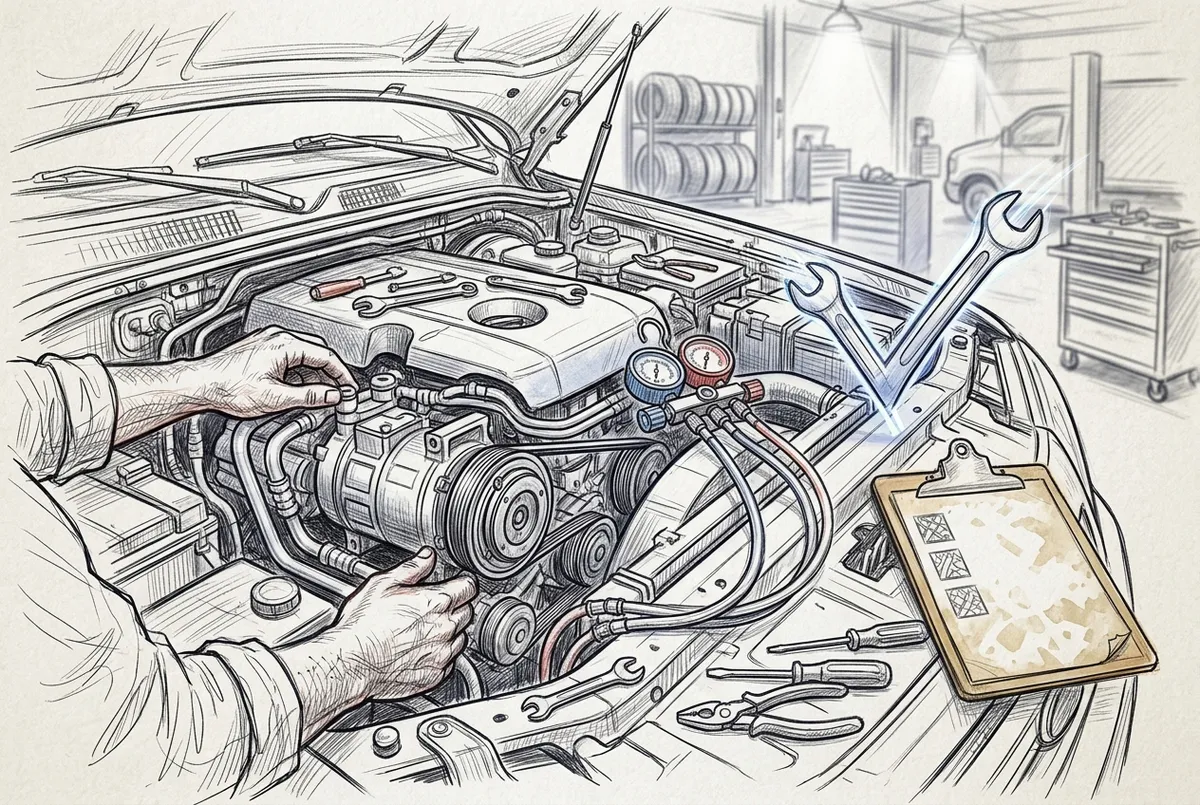
- Visual inspection of all major components — compressor, condenser, evaporator, hoses, belts, and electrical connections
- Refrigerant charge test to confirm the system has the correct amount of refrigerant
- Leak detection scan using UV dye or electronic leak detectors
- Performance test to measure vent temperatures and airflow output
- Report and recommendations — a clear list of what needs immediate attention and what to watch
This kind of thorough process is what separates real preventive maintenance from a quick eyeball check. You can see what other fleet customers have experienced by checking out Marks Air reviews on Yelp or visiting our customer reviews page. We also love sharing fleet A/C tips and updates on our Facebook page.
If you’re ready to build a smarter fleet AC maintenance checklist or need expert eyes on your vehicles, don’t wait until the A/C stops blowing cold. Check out our fleet vehicle AC repair tips for more money-saving advice, and explore our full range of A/C parts available for fleet use.
You can also visit Marks Air on Google to see our location details, hours, and reviews from real Tampa fleet customers.
Keep Your Fleet Cool — All Year Long
Tampa’s heat doesn’t take a break, and neither should your fleet A/C maintenance routine. Avoiding these 8 common checklist mistakes means fewer breakdowns, lower repair costs, and happier drivers and passengers. It means your fleet keeps moving — efficiently and comfortably — no matter how hot it gets outside.
A good fleet AC maintenance checklist isn’t complicated. But it does need to be consistent, thorough, and handled by people who know A/C systems inside and out. That’s exactly what we’re here for.
Ready to get your fleet’s A/C in top shape? Schedule a fleet A/C inspection with our team today, or give us a call at 813-988-1671 — we’d love to help keep your vehicles running cool all year long.
FAQs
Q: How often should fleet vehicles have their A/C systems inspected?
A: Great question! For most fleet vehicles, a quarterly A/C inspection works well — covering refrigerant levels, belts, filters, and hoses. Vehicles in high-demand environments like construction sites or daily bus routes may need monthly filter checks too. Staying consistent is the key to catching small issues before they become costly repairs.
Q: What are the signs that a fleet vehicle’s A/C system needs immediate attention?
A: Watch for warm air blowing from vents, unusual noises when the A/C kicks on, musty or moldy smells in the cab, or visible moisture inside the vehicle. Any of these signs means it’s time to get the vehicle in for a professional inspection right away — waiting usually makes things worse and more expensive!
Q: Can fleet A/C maintenance be done in-house, or should it always go to a specialist?
A: You can absolutely handle some tasks in-house, like filter replacements and visual inspections, especially if your techs have gone through A/C training. However, refrigerant handling, leak detection, and electrical diagnostics really benefit from specialist expertise. A combination approach — in-house basics plus scheduled professional inspections — tends to work best for most fleets.
Q: Does refrigerant type matter for fleet A/C maintenance?
A: It absolutely does! Newer fleet vehicles often use HFO-1234yf refrigerant, while older ones still run on R-134a. These systems require different handling equipment and procedures. Mixing them up can damage the system and cause compliance issues, so make sure your maintenance checklist notes the correct refrigerant type for each vehicle.
Q: How does Tampa’s climate affect fleet A/C maintenance needs?
A: Tampa’s heat and humidity put A/C systems under serious stress year-round — there’s really no off-season here! That means refrigerant levels drop faster, evaporator drains get clogged more often from condensation, and compressors work harder than in cooler climates. Fleet operators in the Tampa area should plan for more frequent inspections than the national average.