Key Takeaways
-
Coastal Tampa residents within 5-10 miles of Tampa Bay or the Gulf should schedule A/C maintenance every 6 months instead of annually, as salt air accelerates corrosion of condenser coils.
-
Schedule A/C inspections in early spring before peak summer heat to beat the rush, catch small problems early, and avoid emergency service delays when technicians are overwhelmed.
-
Watch for warning signs like weak airflow, unusual noises, musty odors, ice buildup, and increased fuel consumption—catching these early prevents costly full system replacements.
-
Use quality, OEM-rated A/C parts from trusted brands rather than cheap alternatives, which fail faster in Tampa’s demanding heat and humidity, causing additional component damage.
-
Fleet managers should train at least one staff member on basic A/C maintenance, create vehicle-specific schedules, and document service history to reduce downtime and spot recurring issues.
-
Keep condenser coils clean by having them professionally cleaned at each service and rinsing with fresh water regularly if you drive near the coast to prevent compressor failure.
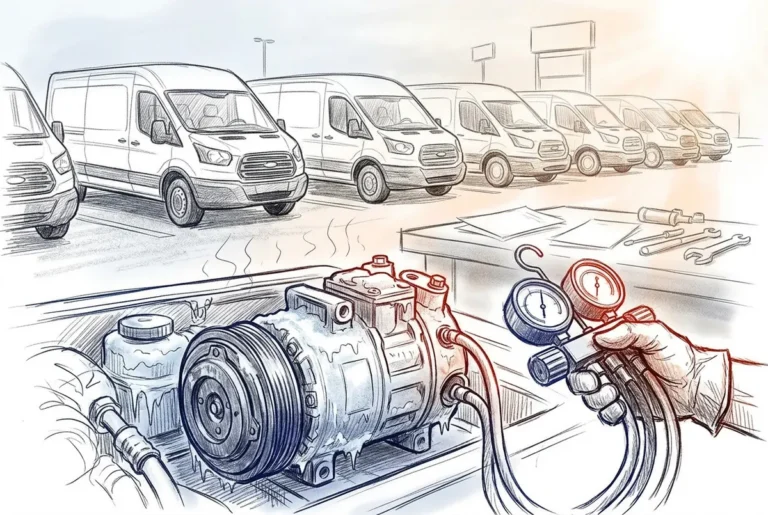
Tampa’s heat is no joke. Whether you’re driving across town or hauling heavy equipment through a construction site, a working air conditioner isn’t a luxury — it’s a necessity. With temperatures regularly hitting the upper 90s and humidity that makes the air feel even hotter, your vehicle’s A/C system works overtime every single day.
The good news? A little regular maintenance goes a long way. Keeping your vehicle’s A/C in top shape helps you avoid costly repairs, stay comfortable, and keep things running smoothly all year long. Whether you own a car, truck, bus, RV, or a fleet of heavy equipment, these five tips are built for you. Let’s dig in!

Why AC Maintenance in Tampa Is So Important
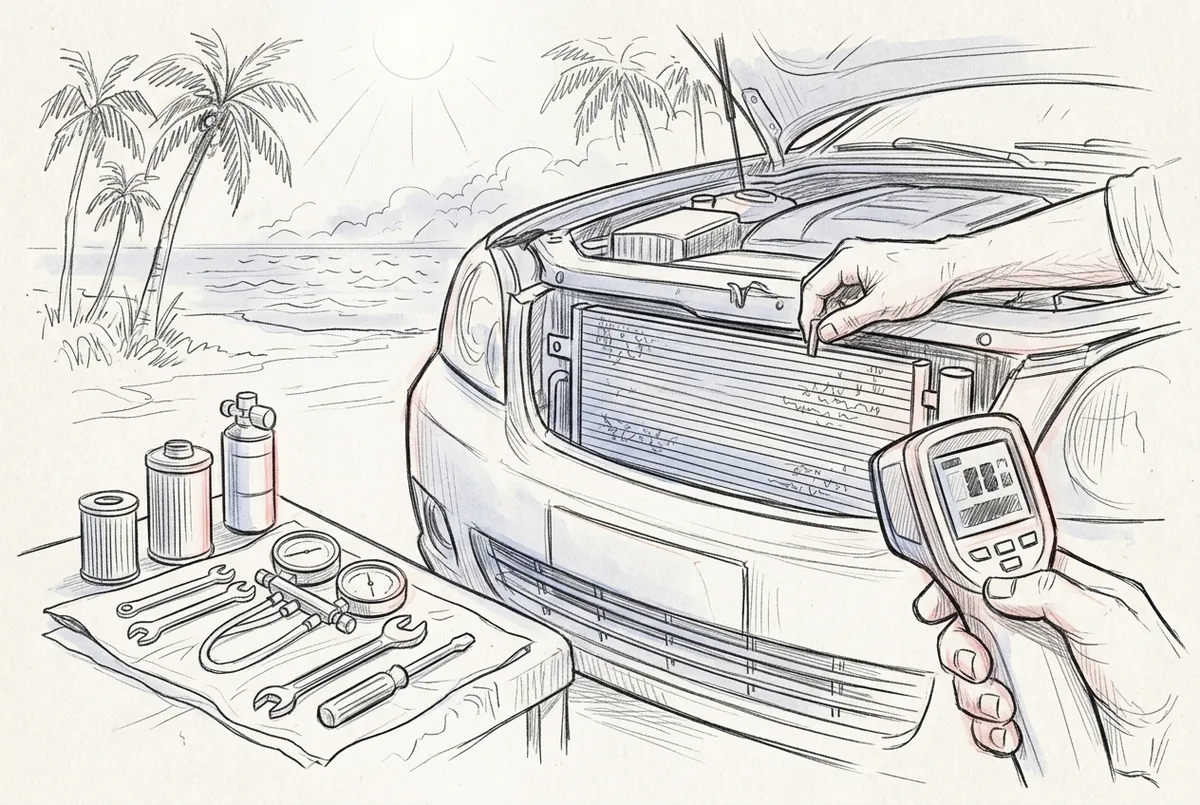
Tampa’s climate is uniquely tough on vehicle air conditioning systems. The intense heat, high humidity, and — if you’re near Tampa Bay or the Gulf — salt air all put extra stress on your A/C components. Salt air alone can corrode outdoor condenser coils faster than you’d expect.
Coastal Tampa residents within 5–10 miles of Tampa Bay or the Gulf should schedule A/C maintenance every 6 months. That’s compared to the standard annual schedule for vehicles kept further inland. Skipping maintenance doesn’t just mean a sweaty commute — it can lead to bigger, more expensive repairs down the road.
Here’s a quick look at how Tampa’s environment affects different vehicle types:
|
Vehicle Type |
Common A/C Issue in Tampa |
Recommended Maintenance Interval |
|---|---|---|
|
Cars & Light Trucks |
Refrigerant loss, weak airflow |
Once per year (coastal: every 6 months) |
|
Heavy Trucks |
Compressor wear, hose leaks |
Every 6–12 months |
|
Buses & Transit Vehicles |
Condenser corrosion, filter clogging |
Every 3–6 months |
|
RVs |
Refrigerant leaks, belt wear |
Before and after travel season |
|
Heavy Equipment |
Dust/debris buildup, cab overheating |
Every 3–6 months |
5 AC Maintenance Tips Every Tampa Vehicle Owner Should Know
1. Schedule Regular A/C Inspections Before Summer Peaks
Don’t wait until your A/C stops blowing cold air in the middle of July to get it checked. By then, technicians are slammed with emergency calls, and you’re stuck sweating in traffic. Proactive maintenance is always the smarter move.
Scheduling an inspection in early spring — before peak heat hits — means you’ll beat the rush and catch small problems before they become big ones. Think of it like getting your tires rotated. A little attention now saves a lot of pain later.
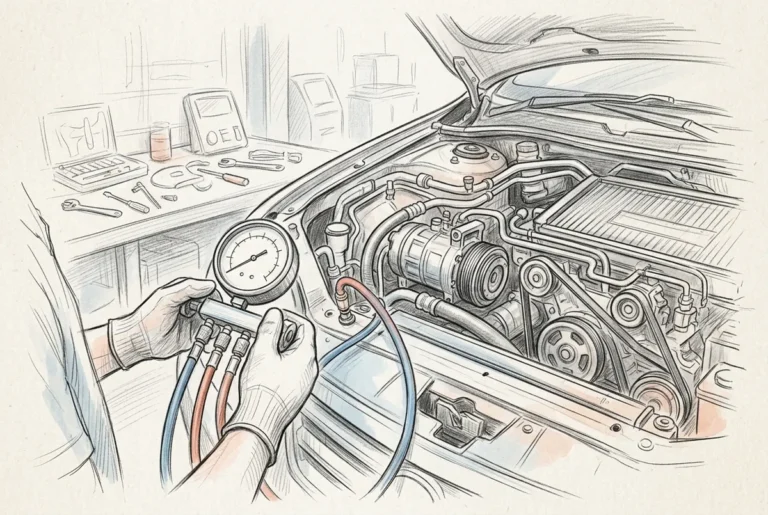
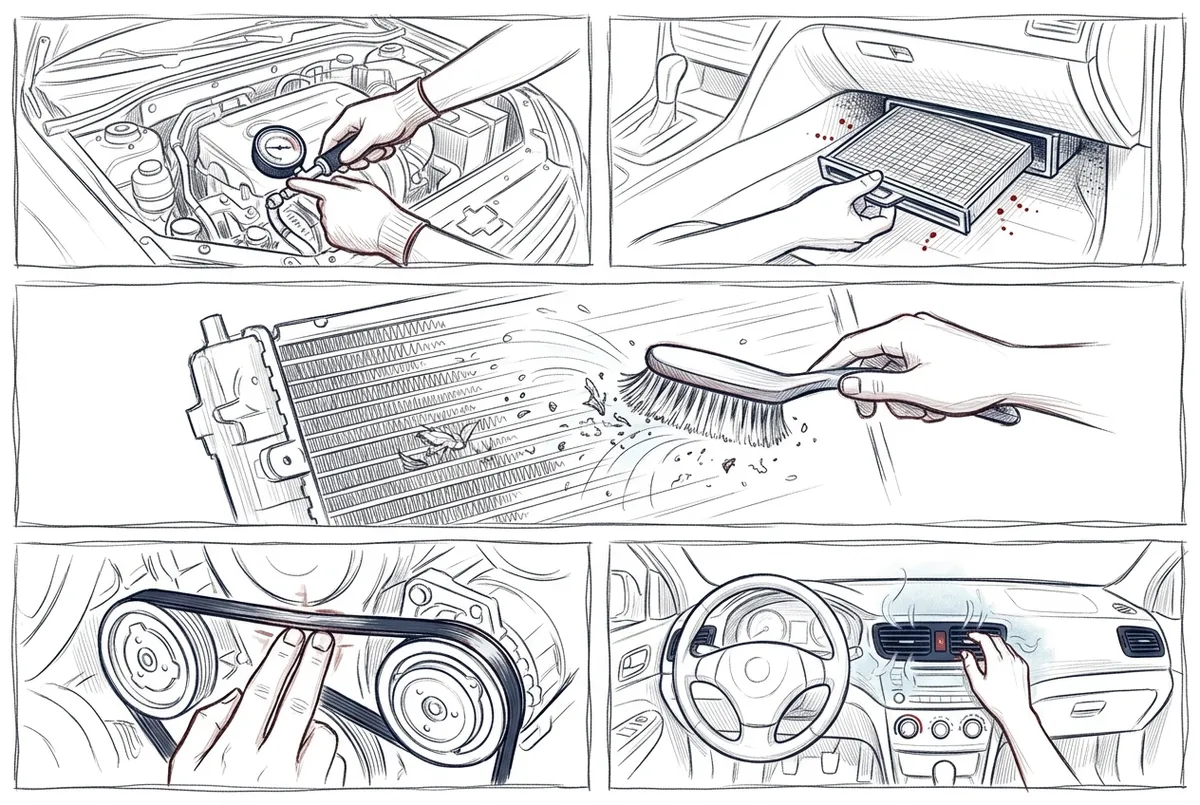
Here’s what a professional A/C inspection typically covers:
-
Refrigerant level check and leak detection
-
Compressor inspection and belt condition
-
Condenser and evaporator coil cleaning
-
Cabin air filter replacement
-
Electrical connections and control system check
-
Overall cooling performance test
At Marks Air’s AC services, technicians perform thorough inspections tailored to your specific vehicle or equipment type. Whether it’s a personal car or a transit bus, they know exactly what to look for.
2. Watch for These Warning Signs Between Checkups
Your vehicle will often tell you when something’s wrong — you just need to know what to listen and look for. Catching A/C issues early can mean the difference between a quick fix and a full system replacement.
Common warning signs that your vehicle A/C needs attention include:
-
Weak or warm airflow from the vents
-
Ice buildup on the air handler or evaporator during summer
-
Unusual noises when the A/C is running (clicking, grinding, or hissing)
-
Strange or musty odors coming from the vents
-
Increased fuel consumption without a clear reason
-
A/C cycling on and off more frequently than usual
Truck drivers and fleet operators: pay special attention to these signs. A failing A/C in a long-haul truck doesn’t just affect comfort — it can impact alertness and driver safety during long shifts in Tampa’s heat.
Have questions about what’s normal and what’s not? Check out the Marks Air FAQs page for helpful answers from experienced technicians.
3. Keep the Condenser Coils Clean
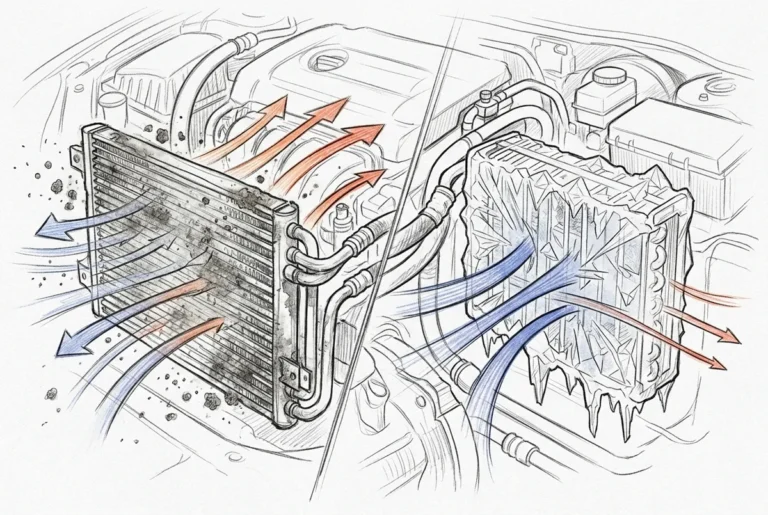
The condenser is the part of your A/C system that releases heat to the outside. It’s typically located at the front of the vehicle or on the rooftop of buses and RVs, which means it collects dirt, bugs, road grime, and — for coastal drivers — salt deposits.
A clogged or corroded condenser works much harder to do its job, which reduces efficiency and puts stress on the compressor. Left too long, this can lead to a compressor failure, which is one of the most expensive A/C repairs out there.
Here’s how to protect your condenser coils:
-
Have coils professionally cleaned at each maintenance visit.
-
Rinse the exterior with fresh water regularly if you drive near the coast.
-
Avoid parking in areas with heavy debris or construction dust whenever possible.
-
Ask your technician about protective coatings for salt-air environments.
Heavy equipment operators — excavators, bulldozers, and other machinery work in incredibly dusty, debris-heavy environments. Condenser maintenance for these machines is especially critical to prevent overheating in the cab.
4. Use Quality A/C Parts When Repairs Are Needed
Not all replacement parts are created equal. Using cheap or incompatible A/C parts might save money upfront, but they tend to fail faster and can even damage other components in your system. It’s a false economy, especially in Tampa’s demanding climate.
When your vehicle needs a repair, always insist on quality, properly rated components from trusted brands. Marks Air stocks a full line of A/C parts, including their KOOL-TEMP parts line and components from trusted names like SPAL, ACT, BCC, gpd, and Omega — many available the same day.
Here’s why quality parts matter more in Tampa:
-
High heat and humidity accelerate wear on lower-quality components.
-
Salt air causes corrosion on substandard metals and fittings.
-
Proper refrigerant hoses and fittings prevent costly leaks.
-
OEM-quality parts support warranty coverage and long-term reliability.
For RV owners getting ready for a road trip, having the right parts on hand before you hit the road is especially smart. The last thing you want is an A/C failure in the middle of a Florida summer away from home.
5. Don’t Skip Training If You Maintain Your Own Fleet
If you manage a fleet of vehicles — whether that’s delivery trucks, buses, or construction equipment — having trained staff who understand basic A/C maintenance can save your business thousands of dollars a year. Routine in-house checks between professional service visits go a long way.
Proper A/C training covers things like refrigerant handling safety, system diagnostics, and knowing when to call in a specialist. It also helps your team stay compliant with EPA regulations around refrigerant management.
Marks Air offers professional A/C training programs covering EPA 609 certification, HFO-1234yf training, MVAC best practices, and EVT A/C training. As a member of the Mobile Air Climate Systems Association (MACS), Marks Air stays aligned with the latest industry standards so your team gets up-to-date, reliable instruction.
Here’s a simple framework for fleet managers to follow:
-
Train at least one staff member on basic A/C inspection and maintenance procedures.
-
Create a maintenance schedule for every vehicle in your fleet based on usage and location.
-
Document all A/C service history for each vehicle to spot recurring issues early.
-
Partner with a trusted local specialist for professional diagnostics and repairs.
-
Restock critical A/C parts locally so downtime is minimal when repairs are needed.
How to Choose the Right AC Maintenance Provider in Tampa
Not every auto shop handles vehicle A/C systems with the same level of expertise. When you’re choosing a provider for AC maintenance in Tampa, it pays to look for a few key qualities.
Here’s what to look for in a Tampa A/C specialist:
-
Specialized focus: Look for a shop that specializes in vehicle A/C systems, not just a general mechanic who handles A/C on the side.
-
Experience with your vehicle type: Whether you have a car, bus, RV, or heavy machinery, make sure they’ve worked on your type of equipment before.
-
Parts availability: A shop with an in-house parts inventory can get you back on the road faster.
-
Transparent diagnostics: A trustworthy provider explains the problem clearly and doesn’t recommend unnecessary repairs.
-
Warranty on work: Quality service should come with a warranty for peace of mind.
Marks Air has been serving Tampa since 1971, making them one of the most experienced vehicle A/C specialists in the region. As a family-owned, woman-owned business, they bring a personal touch and a deep commitment to quality that keeps customers coming back. You can read what their customers have to say at their Marks Air reviews page, on Yelp, and on their Facebook page.
Want to see what their team is up to? Follow along on Instagram for updates and tips from the Marks Air crew.
A Quick Maintenance Checklist for Tampa Vehicle Owners
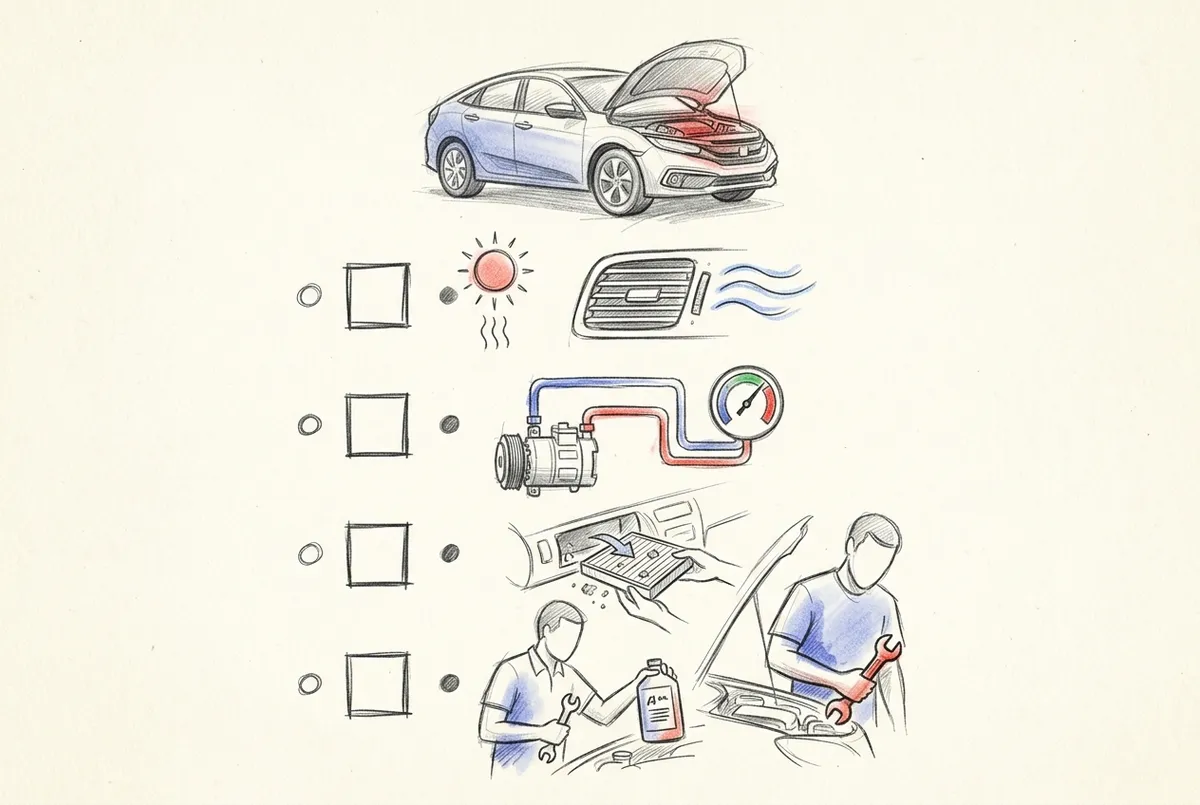
Here’s a simple reference you can use to stay on top of your vehicle’s A/C health throughout the year.
|
Maintenance Task |
Frequency |
Notes |
|---|---|---|
|
Full A/C inspection |
Annually (coastal: every 6 months) |
Include refrigerant and coil check |
|
Cabin air filter replacement |
Every 12,000–15,000 miles |
More often in dusty environments |
|
Condenser coil cleaning |
Every 6 months |
Critical for coastal and heavy equipment |
|
Refrigerant level check |
Annually or if cooling drops |
Low refrigerant often signals a leak |
|
Belt and hose inspection |
Annually |
Look for cracks, wear, or looseness |
|
Electrical system check |
Annually |
Ensure fans and controls function properly |
Get Your Tampa Vehicle A/C Serviced by the Experts
Staying on top of AC maintenance in Tampa is one of the smartest things you can do as a vehicle owner. It keeps your system running efficiently, prevents surprise breakdowns, and extends the life of your equipment. And when Tampa summers are this intense, having a reliable A/C system isn’t optional — it’s essential.
Whether you’re a car owner, truck driver, bus operator, RV enthusiast, or fleet manager, Marks Air has the experience, parts, and expertise to keep your A/C running at its best. Learn more about Marks Air and why Tampa residents and businesses have trusted them for over 50 years. You can also visit their Google Business Profile to see reviews and get directions to their Tampa location.
Ready to schedule your next A/C service? Book your appointment with Marks Air today or give them a call directly at 813-988-1671 — your comfort is worth it!
FAQs
Q: How often should I schedule AC maintenance for my vehicle in Tampa?
A: Most vehicle owners in Tampa should schedule A/C maintenance at least once a year. However, if you live or drive within 5–10 miles of Tampa Bay or the Gulf Coast, every 6 months is a much better idea — salt air is tough on condenser coils and other A/C components!
Q: What are the signs that my vehicle’s AC needs repair in Tampa?
A: Keep an eye (and ear!) out for weak or warm airflow, unusual noises when the A/C kicks on, musty smells from the vents, ice buildup on the evaporator, or a noticeable drop in fuel efficiency. Any of these signs mean it’s time to bring your vehicle in for a checkup.
Q: Does regular AC maintenance really prevent breakdowns?
A: Absolutely! Regular maintenance catches small issues — like low refrigerant, dirty coils, or worn belts — before they turn into big, expensive problems. Think of it as an investment that keeps your A/C running strong and your wallet happy all summer long.
Q: What’s the difference between AC maintenance and AC repair?
A: AC maintenance is proactive — it’s all about inspecting, cleaning, and tuning your system to keep it running well. AC repair, on the other hand, addresses problems that have already developed. Regular maintenance is the best way to reduce the need for repairs in the first place!
Q: Why should heavy equipment operators prioritize AC maintenance in Tampa?
A: Heavy equipment operators work in hot, dusty environments where cab A/C systems take a real beating. A failing A/C in a bulldozer or excavator isn’t just uncomfortable — it can lead to operator fatigue and costly downtime. Regular maintenance keeps your crew safe and your equipment productive.