
Key Takeaways
-
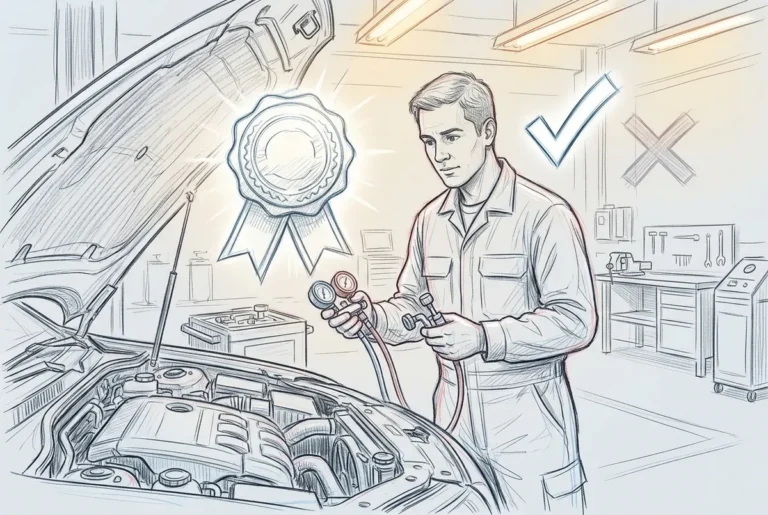
EPA Section 608 certification is the federal baseline for AC technicians working with refrigerants; ask to see proof and verify they hold Universal certification for broader system knowledge.
-
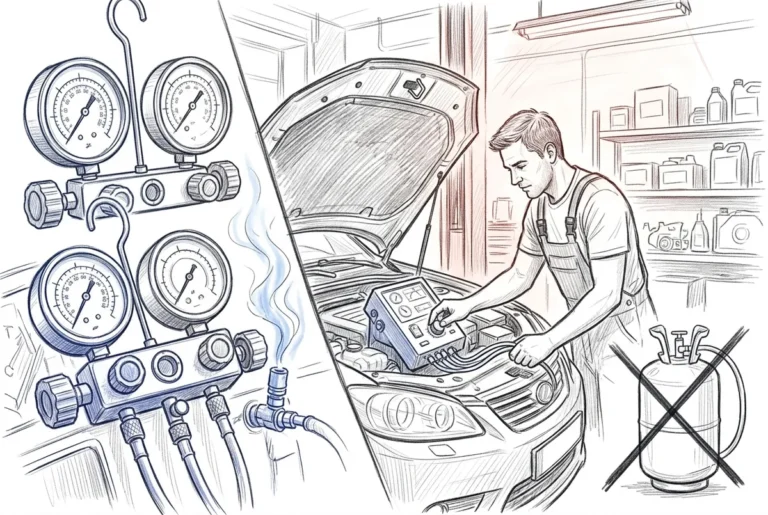
Certified technicians must safely recover and recycle refrigerant rather than venting it illegally; ask how they handle refrigerant during repairs as a red flag test.
-
Modern refrigerants like R-32 and R-454B are mildly flammable and require specific A2L safety training, tools, and ventilation that differ from older R-134a systems.
-
A complete AC diagnostic should include electrical connections, airflow, drainage lines, thermostats, and mechanical parts—not just a quick refrigerant recharge recommendation.
-
Verify that technicians hold proper state/local business licensing and insurance separate from EPA certification, and check their real-world reputation through reviews and years in business.
-
Get written estimates with clear documentation of refrigerant used, parts replaced, and warranty details before approving any repair work.
Your car’s AC just started blowing warm air on a 95-degree Tampa afternoon. You need help fast, but you also want someone who actually knows what they’re doing under the hood. That’s where a certified AC repair technician makes all the difference. The right credentials mean safer repairs, fewer callbacks, and a system that actually gets fixed the first time.
Whether you drive a sedan, haul freight across state lines, run a bus route, tow an RV, or manage a fleet of heavy equipment, you deserve a technician who knows refrigerants, tools, and safety rules inside and out. This guide breaks down exactly what to look for, why it matters, and how to ask the right questions before anyone touches your system. Let’s get you cool and confident again.

1. They Hold EPA Section 608 Technician Certification
Here’s the big one. Any technician who works on refrigerant systems in a way that could release refrigerant into the air generally needs EPA Section 608 Technician Certification. This certification comes from the Clean Air Act, and it’s designed to keep refrigerants from harming the atmosphere.
There are four levels of this certification. Type I covers small appliances. Type II covers high-pressure appliances. Type III covers low-pressure appliances. Universal certification covers all three. A technician with Universal certification has proven they understand a wide range of systems, from small units to complex ones.
This certification is usually permanent once earned. Technicians don’t need to renew it federally, though some employers or manufacturers may ask for extra training over time. The EPA also requires technicians to keep a copy of their certification on file for three years after they stop working in the trade.

2. They Can Explain Refrigerant Recovery and Recycling Rules
A truly certified technician doesn’t just wave a gauge around. They understand how to safely recover refrigerant, recycle it when possible, and avoid venting it into the air, which is against federal law.
Ask your technician how they handle refrigerant during a repair. A confident, clear answer is a good sign. If they seem unsure or dodge the question, that’s a red flag. Good techs are proud of their process because they know it protects both you and the environment.
3. They Know the Difference Between Refrigerant Types
Not all AC systems use the same refrigerant. Older vehicles might still run R-22, while many cars on the road use R-410A or R-134a. Newer vehicles are shifting toward lower-impact refrigerants like R-32 or R-454B, sometimes called A2L refrigerants.
These newer refrigerants are mildly flammable, so they require different tools, extra ventilation, and specific safety steps. A tech who understands this shift is staying current with the industry. If you’re unsure which refrigerant your vehicle uses, a shop like Marks Air’s AC service team can identify it quickly and explain what it means for your repair.
| Refrigerant Type | Common Use | Key Consideration |
|---|---|---|
| R-22 | Older vehicles and equipment | Being phased out, harder to source |
| R-134a | Many cars and trucks | Widely used, standard handling |
| R-1234yf | Newer cars and trucks | Requires specific certification and tools |
| R-32 / R-454B | Newest low-GWP systems | Mildly flammable, needs A2L safety training |
4. They Carry Broader Industry Credentials Too
EPA 608 certification is the baseline, but many skilled technicians go further. Credentials like NATE certification or HVAC Excellence training show a deeper understanding of diagnostics, electrical systems, and airflow issues.
These extra credentials don’t replace EPA certification when refrigerant is involved. But they do show a technician has invested extra time in their craft. Manufacturer-specific training and apprenticeships add even more real-world know-how.
Marks Air takes this seriously by offering its own AC training programs, including EPA 609 certification, HFO-1234yf training, and MVAC best practices. This hands-on approach helps techs stay sharp on the latest refrigerants and repair methods.
5. They Can Diagnose More Than Just Refrigerant Problems
A cooling system involves more than gas and compressors. A qualified technician should also check:
- Electrical connections and fuses
- Airflow through vents and ducts
- Drainage lines for clogs or leaks
- Thermostat and control settings
- Mechanical parts like belts, compressors, and blower motors
If a technician jumps straight to “you need a recharge” without checking these other areas, you might be getting a quick fix instead of a real diagnosis. True diagnostic work takes time, but it saves you money down the road by catching the actual problem.
6. They Provide Clear Estimates and Documentation
Before any work begins, a certified AC repair technician should walk you through what they found and what they plan to do. This includes a written estimate, not just a verbal guess.
Good documentation also means keeping records of refrigerant used, parts replaced, and any warranty details. This protects you if something goes wrong later. It’s also a great way to compare pricing if you’re getting quotes from more than one shop.
Before you approve any repair, here are five questions worth asking:
- Are you EPA 608 certified, and can I see proof?
- What refrigerant does my system use?
- What exactly did your diagnostic find?
- Is refrigerant recovery included in the price?
- Does this repair come with a warranty?
7. They Understand Your Type of Vehicle or Equipment
AC systems in a small car are different from systems in a semi-truck, transit bus, RV, or piece of heavy equipment. A technician who mainly works on passenger cars might not have the tools or experience for a bus’s larger system or a bulldozer’s rugged setup.
Marks Air has spent decades working across every category, from personal vehicles to custom truck AC systems, transit buses, RVs, and heavy equipment. This kind of range matters because each system has different pressures, part sizes, and airflow needs.
For Truck Drivers and Fleet Operators
Long-haul drivers can’t afford AC downtime. A broken system means uncomfortable, sometimes unsafe, driving conditions. Fleet managers should look for shops that stock parts and offer fleet AC repair tips to reduce downtime and repeat visits.
For Bus Operators
Passenger comfort and safety both depend on a working AC system. Public transit and shuttle companies need technicians who understand large-scale systems and can perform proper bus AC maintenance without long service interruptions.
For RV Enthusiasts
Nothing ruins a road trip faster than a broken AC in the middle of a Florida summer. RV owners need technicians familiar with both mobile living systems and standard vehicle AC, so repairs hold up over long trips.
For Heavy Equipment Operators
Construction and agricultural equipment often run in extreme heat and dust. A certified technician who understands these tough conditions can help prevent operator fatigue and reduce costly downtime on the job site.
8. They Carry Proper Licensing and Insurance
EPA 608 certification is a federal credential, but it’s not the same as a state or local business license. Licensing rules vary by city and county, so it’s smart to check that the shop itself is properly licensed and insured.
This protects you if something goes wrong during the repair. A shop with insurance and clear business licensing shows they take their responsibilities seriously, not just their certifications.
9. They Have a Track Record You Can Verify
Certifications matter, but real-world experience and reputation matter too. Look for reviews, ask around, and check how long a shop has been in business. A company that’s been trusted for decades has likely handled just about every AC problem you can imagine.
Marks Air has served Tampa since 1971, working across cars, trucks, buses, RVs, and heavy equipment. As a family-owned and woman-owned business, the shop has built its reputation one repair at a time. You can read customer reviews or check out feedback on Yelp and Facebook to see what real customers say.
Marks Air is also a proud member of the Mobile Air Climate Systems Association (MACS), which keeps the team aligned with the latest refrigerant standards and repair techniques. This kind of ongoing involvement shows a real commitment to doing things right, not just meeting the minimum requirements.
Why Certification Matters for the Future of AC Repair
The AC repair industry is changing fast. According to the U.S. Bureau of Labor Statistics, employment for heating, air-conditioning, and refrigeration mechanics is projected to grow 11% from 2025 to 2035. More vehicles and equipment on the road means more demand for skilled, certified technicians.
At the same time, refrigerant rules keep shifting. The American Innovation and Manufacturing Act calls for an 85% reduction in certain refrigerants over 15 years. This means lower-impact refrigerants like R-32 and R-454B will become more common, and technicians will need updated training to handle them safely.
This is exactly why ongoing training matters so much. Marks Air’s commitment to technician training helps make sure every repair follows current safety standards, no matter which refrigerant your system uses.
What to Look for in Parts and Repairs
A certified technician is only half the equation. Quality parts matter just as much. Marks Air stocks its own KOOL-TEMP parts line along with trusted brands, so AC parts are often available the same day. This means less waiting around and faster repairs, whether you’re dealing with a leaking hose or a failing compressor.
For fleet owners and heavy equipment operators, having reliable parts on hand can mean the difference between a quick fix and days of downtime. Even specialized components, like a fire truck compressor, need to be sourced from a shop that understands emergency vehicle requirements.
Ready to Work With a Certified AC Repair Technician?
Finding a certified AC repair technician isn’t complicated once you know what to look for. Check for EPA 608 certification, ask about refrigerant type, request a clear estimate, and look for a shop with real experience across your type of vehicle or equipment.
Marks Air has been Tampa’s trusted AC specialist since 1971, working on everything from personal cars to heavy equipment. The team’s decades of focused experience, in-house training programs, and same-day parts availability make repairs faster and more reliable. You can also visit us on Google — Marks Air to see location details and customer feedback firsthand.
Don’t let a broken AC system slow you down this summer. Schedule service with Marks Air today or call us at 813-988-1671 to get your system checked by a team that’s been keeping Tampa cool for over 50 years.
FAQs
Q: What does a certified AC repair technician do?
A: A certified AC repair technician diagnoses and fixes air conditioning problems, from refrigerant leaks to electrical issues. They safely handle refrigerant recovery, charging, and recycling while following federal safety rules. Think of them as the trusted expert who keeps your ride cool without cutting corners.
Q: Is EPA 608 certification required for AC repair?
A: Yes, if the work could release refrigerant, technicians generally need EPA Section 608 certification. This applies to different equipment types, from small appliances to high-pressure systems. It’s one of the easiest ways to confirm a technician knows how to handle refrigerant safely and legally.
Q: How can I verify that an AC technician is certified and licensed?
A: Just ask! A confident, certified technician will happily show proof of their EPA 608 credential. You can also check business licensing with your local county office and read reviews on platforms like Yelp or Google to confirm real-world reputation.
Q: Can a certified technician repair systems using R-22, R-410A, R-32, or R-454B refrigerant?
A: Yes, a properly certified technician can work with all these refrigerant types, though newer ones like R-32 and R-454B require extra safety training since they’re mildly flammable. A shop that stays current on refrigerant transitions, like Marks Air, will have the right tools and know-how for each type.
Q: What should I ask an AC technician before approving a repair?
A: Ask about their certification, what refrigerant your system uses, what their diagnostic found, and whether the repair includes a warranty. These simple questions help you feel confident before any work begins, and a good technician will welcome the conversation.