
Key Takeaways
-
Choose reputable aftermarket suppliers like SPAL, ACT, BCC, and gpd for older trucks and fleets needing fast, cost-effective repairs with same-day availability instead of expensive OEM parts with long lead times.
-
Always perform proper system diagnosis with pressure testing before any refrigerant work; adding refrigerant without finding leaks overcharges the system and can damage the compressor and other components.
-
Replace the receiver/drier every time you open the AC system as inexpensive insurance against moisture damage that can contaminate the entire refrigerant loop.
-
Verify part numbers carefully by truck make, model, year, and engine type before purchasing to avoid fitment issues, especially when sourcing aftermarket parts across multiple truck brands.
-
Invest in quality compressor replacements since cheap units fail prematurely and contaminate the system with metal debris, requiring flushing and replacing multiple additional parts.
-
Work with certified technicians from MACS-member shops who stay current on refrigerant handling and system diagnostics to protect your investment and ensure proper repairs on heavy-duty rigs.
Your semi truck’s cab is your office, your break room, and sometimes your bedroom. When the air conditioning fails on a hot Tampa summer day, every mile feels twice as long. Choosing the right semi truck AC parts can mean the difference between a quick fix and a costly comeback repair. The big question most truck drivers and fleet managers face is simple: do you go with OEM parts or aftermarket alternatives? Both options have real advantages, and understanding them helps you make a smarter decision every time. Let’s break it down together so you can keep your rig cool and your wallet happy.

What Makes Up a Semi Truck AC System?
Before we compare parts, it helps to know what you’re working with. A semi truck HVAC system is a team effort. Mechanical, electrical, and refrigerant-handling components all work together to move heat out of the cab and push cool air in. If one part fails, the whole system suffers.
Here are the core semi truck AC parts you’ll encounter during any service or repair:
- AC compressor and clutch – The heart of the system; pressurizes the refrigerant
- Condenser – Releases heat from the refrigerant to the outside air
- Evaporator core – Absorbs heat from inside the cab
- Receiver/drier – Filters moisture and debris from the refrigerant loop
- Expansion valve (TXV) – Controls refrigerant flow into the evaporator
- Blower motor – Pushes conditioned air through the cab vents
- O-ring seal kits – Prevent refrigerant leaks at connection points
- Thermostat and pressure switches – Monitor and regulate system operation
For a deeper dive into AC components across vehicle types, check out what are the most important commercial vehicle AC parts for a helpful overview.

OEM Semi Truck AC Parts: The Case for Going Original
OEM stands for Original Equipment Manufacturer. These are parts made to the exact specifications of the truck’s original system. Think of them as the factory blueprint come to life.
Advantages of OEM Parts
- Guaranteed fit – OEM parts are engineered for your specific make and model, so installation is straightforward.
- Proven performance – These parts have already been tested in your exact application, which reduces guesswork.
- Warranty protection – Many OEM parts come with manufacturer warranties that protect your investment.
- Consistent quality – You know exactly what you’re getting every time.
Disadvantages of OEM Parts
- Higher upfront cost compared to aftermarket options
- Limited availability, especially for older truck models
- Longer lead times if the part needs to be ordered from the dealer
- Fewer options if your system needs an upgrade or custom application
For fleets with newer trucks under manufacturer coverage, OEM parts are often the safest bet. Learn more about common pitfalls in our article on OEM truck AC compressor mistakes to avoid in 2026.
Aftermarket Semi Truck AC Parts: The Case for Flexibility
Aftermarket parts are made by third-party manufacturers to fit OEM specifications — or sometimes improve on them. The heavy-duty truck AC parts market is large and well-established, with suppliers offering components for over-the-road tractors, buses, construction equipment, agricultural machinery, and more.
Advantages of Aftermarket Parts
- Lower cost – Aftermarket parts often cost significantly less than OEM equivalents, which matters when you’re managing a fleet.
- Wide availability – Many aftermarket parts are stocked locally and can be sourced the same day.
- Broad compatibility – Quality aftermarket lines cover multiple truck makes and models in a single part number.
- Performance upgrades – Some aftermarket parts are designed to outperform the original in durability or efficiency.
Disadvantages of Aftermarket Parts
- Quality varies widely between manufacturers — not all aftermarket parts are equal
- Fitment issues can occur if part numbers are not verified carefully
- Some budget options use lower-grade materials that may fail sooner
- Warranty terms differ and may be less comprehensive
The key is sourcing aftermarket parts from reputable suppliers. At Marks Air, the parts inventory includes trusted industry brands like SPAL, ACT, BCC, gpd, and Omega — plus the in-house KOOL-TEMP parts line. You can explore available options at the AC parts page. Many items are available same-day, which is a real advantage when a truck is sitting idle. You can also read Marks Air reviews on Yelp to see what other truck drivers and fleet operators have experienced.
Head-to-Head Comparison: OEM vs. Aftermarket
Here’s a quick side-by-side look to help you decide at a glance:
| Feature | OEM Parts | Aftermarket Parts |
|---|---|---|
| Cost | Higher | Lower to moderate |
| Fitment accuracy | Exact match | Good with verified part numbers |
| Availability | Limited for older models | Wide, often same-day |
| Quality consistency | Uniform | Varies by brand |
| Warranty | Manufacturer warranty | Varies by supplier |
| Upgrade potential | Limited | Yes, with right supplier |
| Best for | Newer trucks, warranty coverage | Older trucks, fleets, fast turnaround |
When Does It Matter Most? Common Semi Truck AC Failures
The part type you choose matters most when the failure is serious. Here are the most common semi truck AC problems and how part quality affects the repair outcome.
Compressor Failure
The AC compressor is the most expensive single component in the system. A quality replacement — OEM or reputable aftermarket — is essential here. A cheap compressor can fail prematurely and contaminate the entire system with metal debris, which means flushing and replacing multiple parts. Check out our full guide on how to fix an AC compressor in your vehicle.
Refrigerant Leaks
Leaks are one of the top causes of poor AC performance in semi trucks. O-rings, hose fittings, and evaporator or condenser seals are common leak points. Low-quality seals fail faster, especially under the heat and vibration conditions heavy trucks face daily. Learn how to detect AC leaks in your truck before they get worse.
Blower Motor Issues
A failing blower motor means weak airflow even when the rest of the system is working fine. Aftermarket blower motors from quality brands work very well in heavy-duty applications. Read our breakdown of truck AC blower motor repair fixes that actually work.
Evaporator and Condenser Replacement
These components are more labor-intensive to replace. Using a durable part the first time reduces the chance of doing the same job twice. See our detailed guide on heavy duty AC evaporator replacement done right and our step-by-step article on truck AC condenser replacement.
Service and Diagnosis: Don’t Skip This Step
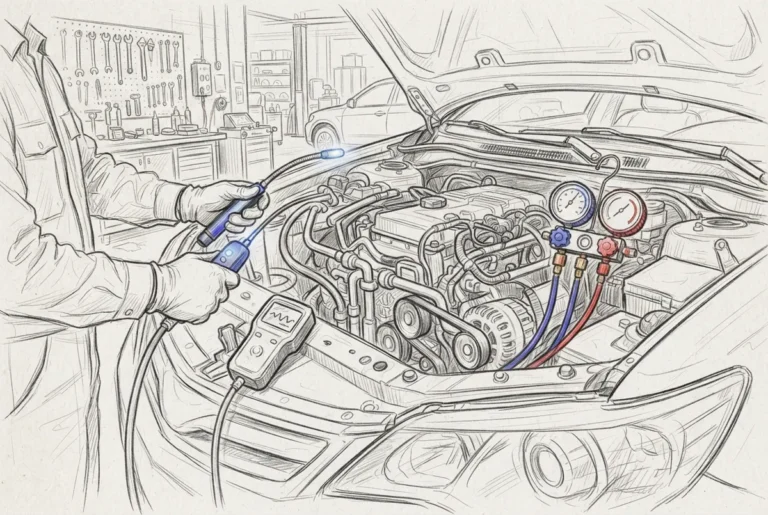
No matter which type of semi truck AC parts you choose, proper diagnosis comes first. Pressure testing and gauge readings are required before any refrigerant work. Simply adding refrigerant without finding a leak can overcharge the system and create new problems. A certified technician will always check the system before recommending parts.
If you’re managing a fleet, proper diagnostics protect your investment across every vehicle. Explore fleet vehicle AC diagnostics to learn what a full inspection involves. You can also review the fleet AC maintenance checklist mistakes to stop making to stay proactive.
Marks Air is a member of the Mobile Air Climate Systems Association (MACS), which means their technicians stay current with industry standards for diagnosis, refrigerant handling, and system repairs. That matters when you’re trusting someone with a heavy-duty rig.
Tips for Choosing the Right Semi Truck AC Parts
Whether you lean toward OEM or aftermarket, keep these points in mind:
- Verify part numbers carefully – Cross-reference by truck make, model, year, and engine type before purchasing.
- Choose reputable brands – Stick with established manufacturers who specialize in heavy-duty HVAC applications.
- Don’t ignore the drier – Replace the receiver/drier every time you open the system. It’s inexpensive insurance against moisture damage.
- Buy from specialists – A shop that focuses exclusively on AC systems will stock better parts than a general auto parts retailer.
- Ask about same-day availability – Downtime costs money, so local stock matters for commercial operators.
For more general guidance on finding parts you can trust, read how to find the right commercial AC parts in Tampa. You can also follow Marks Air on Facebook for updates, tips, and service reminders.
The Verdict: Which Wins?
Honestly, it depends on your situation. OEM parts win when fitment precision and warranty compliance are your top priorities — especially on newer trucks. Aftermarket parts from reputable suppliers win when you need fast availability, cost savings, or parts for older equipment. The real loser is always a cheap, unverified part from an unknown source.
The best outcome comes from combining quality parts with expert service. Marks Air AC services cover everything from diagnostics to full system replacement for semi trucks, buses, RVs, and heavy equipment in the Tampa area. You can also check out the 15 KOOL-TEMP AC parts that keep your vehicle cool to see what’s available in their in-house parts line.
Keep Your Cab Cool — Let’s Get Started
A broken AC system doesn’t just make the drive uncomfortable. It affects driver focus, health, and performance. Whether you need a single semi truck AC part or a full system overhaul, working with experienced specialists makes all the difference. Visit us on Google — Marks Air to see our reviews, get directions, and confirm our Tampa location. We’ve been keeping vehicles cool since 1971, and we’re ready to help you today.
Ready to stop sweating it out in your cab? Schedule your AC service appointment with our team or call us at 813-988-1671 to speak with a specialist right now.
FAQs
Q: What are the main semi truck AC parts I should know about?
A: The core components include the AC compressor and clutch, condenser, evaporator core, receiver/drier, expansion valve, blower motor, O-ring seal kits, and pressure switches. Each part plays a specific role in moving heat out of the cab and keeping the air cool. Knowing these basics helps you have a much more informed conversation with your technician!
Q: How do I know if my semi truck AC compressor is going bad?
A: Common signs include warm air blowing from the vents, unusual noises when the AC is engaged, the clutch not engaging properly, or visible refrigerant leaks near the compressor. A proper pressure test and gauge reading by a certified technician will confirm the diagnosis — don’t just assume adding refrigerant will fix it, as that can actually make things worse.
Q: How often should semi truck AC parts be serviced or replaced?
A: There’s no one-size-fits-all answer, but a general rule is to inspect the full AC system annually and replace wear items like the receiver/drier anytime the system is opened for repairs. Heavy-duty applications put more stress on parts, so staying proactive with inspections saves you from bigger repair bills down the road.
Q: Are aftermarket semi truck AC parts as reliable as OEM parts?
A: Yes — when you choose aftermarket parts from reputable, heavy-duty-focused manufacturers, quality and reliability are very comparable to OEM. The key is avoiding cheap, unverified parts from unknown sources. Trusted brands designed specifically for heavy-duty HVAC applications will serve you well and often come with solid warranty coverage.
Q: Can I just add refrigerant to my semi truck AC system if it’s blowing warm air?
A: It’s not recommended to just top off the refrigerant without diagnosing the root cause first. If there’s a leak, adding refrigerant only delays the problem — and overcharging the system can actually damage the compressor and other parts. A certified technician will perform pressure testing to identify exactly what’s wrong before any refrigerant work begins.