Key Takeaways
-
Refrigerant doesn't disappear during normal use—low levels almost always indicate a leak, so simply topping off the system masks the problem rather than fixing it; find and repair the leak first.
-
A thorough A/C diagnostic includes visual inspection, pressure testing, leak detection with dye or electronic detectors, and system evacuation before recharging; skip this and you'll likely pay more for repairs later.
-
Technicians servicing car A/C systems must be EPA 609 certified by law; this certification ensures safe and legal handling of refrigerants, so verify your technician's credentials before service.
-
R-134a and R-1234yf refrigerants cannot be mixed and require different handling; always check your vehicle's under-hood label to confirm which type your car uses before any service work.
-
Early warning signs like weak airflow, warm air output, strange compressor noises, or musty smells can save you money if caught early; address them before they escalate into expensive compressor failures.
-
Average A/C repair costs around $650, but range from $75-$300 for diagnostics to $1,000-$4,000+ for major overhauls; preventive annual maintenance checks before summer heat hits can prevent costly breakdowns.
Nothing ruins a Tampa afternoon faster than a car A/C that suddenly quits on you. One minute you’re cruising with cool air on your face, and the next you’re sitting in traffic on I-275 with warm, sticky air blasting from the vents. If you’ve been there, you already know why car air conditioning repair matters so much in our Florida heat. This guide walks you through the causes, costs, and fixes you need to know, so you can get back to comfortable driving as quickly as possible.
Whether you’re a daily commuter, a truck driver logging long hours on the road, or someone managing a whole fleet of vehicles, a broken A/C system is more than an inconvenience. It’s a safety issue, a comfort issue, and sometimes a costly one if ignored. Let’s break down everything you need to know about diagnosing and fixing car A/C problems the right way.
Why Car Air Conditioning Repair Is About More Than Adding Refrigerant
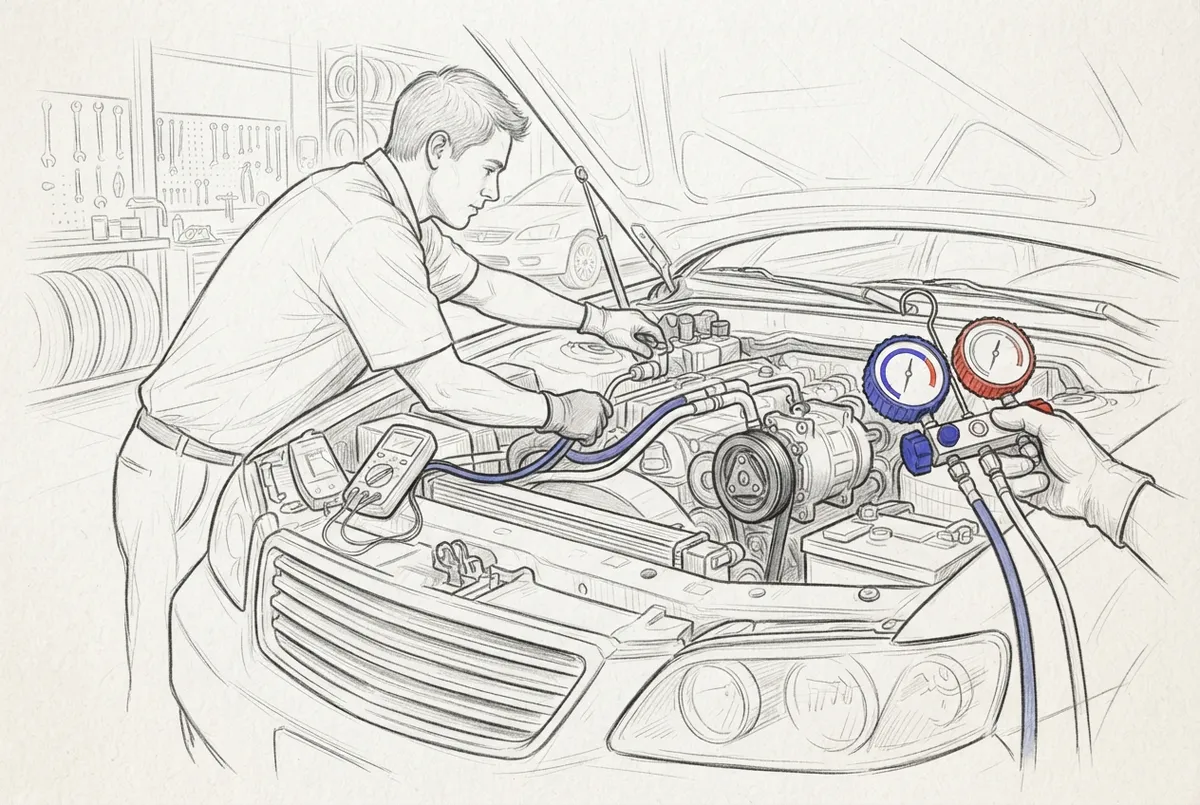
A lot of folks think car air conditioning repair just means topping off the refrigerant. That’s actually a common misunderstanding, and it’s one that can cost you more money down the road. Your vehicle’s A/C system is a closed loop made up of several parts working together, including the compressor, condenser, receiver-drier or accumulator, expansion valve, evaporator, and refrigerant lines.
Here’s the thing: refrigerant doesn’t just disappear during normal use. If your system is low, that almost always means there’s a leak somewhere. Simply adding more refrigerant might make things cool again for a little while, but it won’t solve the real problem. A proper repair means finding the leak, fixing it, and recharging the system with the exact type and amount of refrigerant your vehicle needs.
This is exactly the kind of thorough approach the team at Marks Air has been using in Tampa since 1971. Decades of hands-on experience mean technicians know how to look past the surface symptoms and find what’s really going on.
Common Signs Your Car A/C Needs Attention
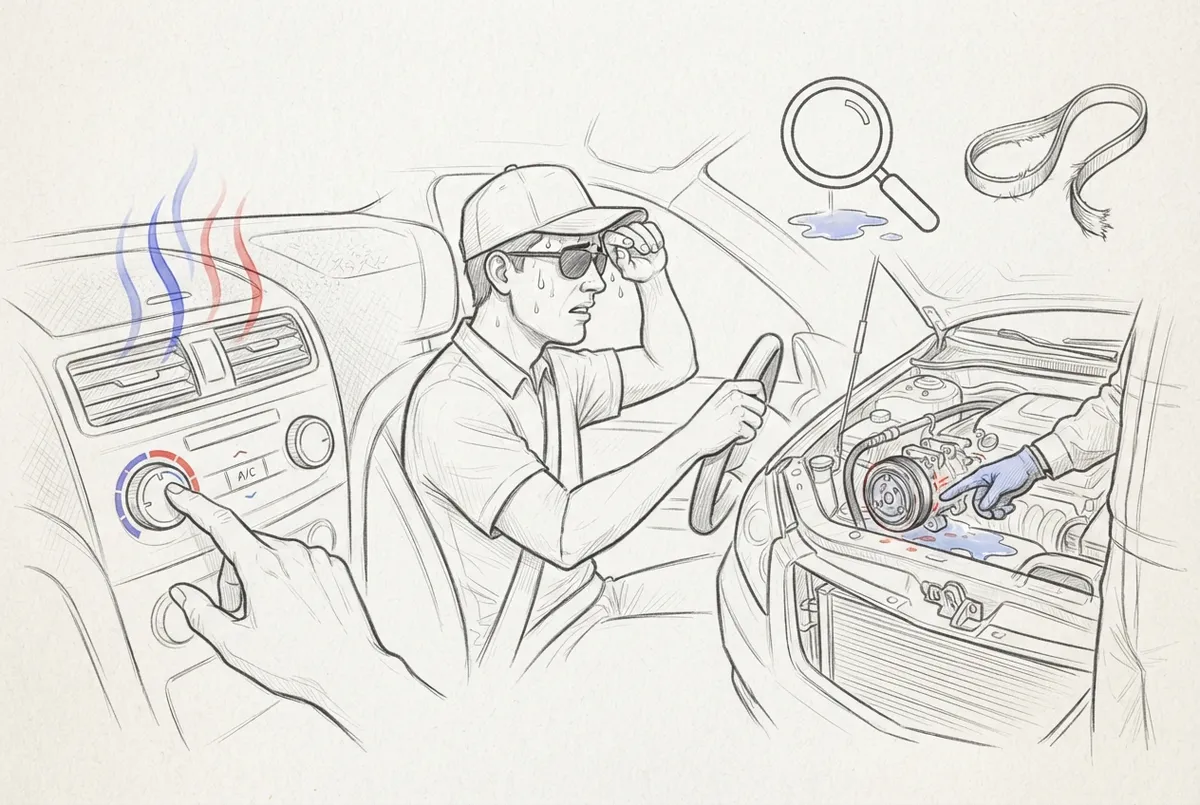
Your car usually gives you warning signs before the A/C fails completely. Catching these early can save you from a bigger repair bill later.
- Warm air blowing even though the fan sounds normal
- Weak airflow from the vents, even at the highest fan setting
- Cooling that comes and goes without warning
- Strange noises like grinding or screeching near the compressor
- Musty or moldy smells when you turn the A/C on
- Water pooling on the passenger-side floor
- Oily residue around A/C fittings or hoses
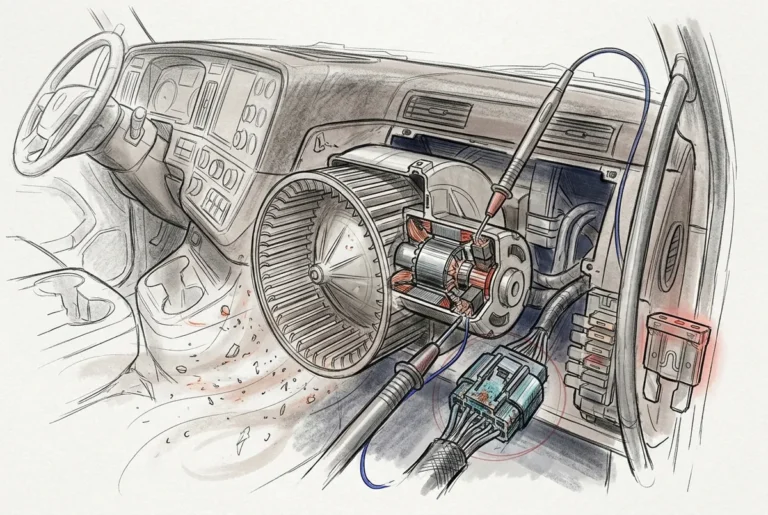
Each of these symptoms usually points to a different problem. Warm air with good airflow often means low refrigerant, a leak, or trouble with the compressor or condenser. Weak airflow, on the other hand, is more likely a clogged cabin filter, a failing blower motor, or a blocked duct. For a deeper breakdown, check out our article on 10 Reasons Your AC Is Blowing Warm Air (And How to Fix It).
What That Puddle Under Your Car Really Means
Seeing a clear puddle under your car after running the A/C is totally normal. That’s just condensation draining off the evaporator, and it’s a sign your system is working correctly. But if you notice water inside the cabin, especially on the passenger floor, that usually means the evaporator drain is blocked or disconnected. Oily residue near fittings is a different story altogether, and it often points to a refrigerant leak that needs professional attention.
The Professional Diagnostic Process, Step by Step
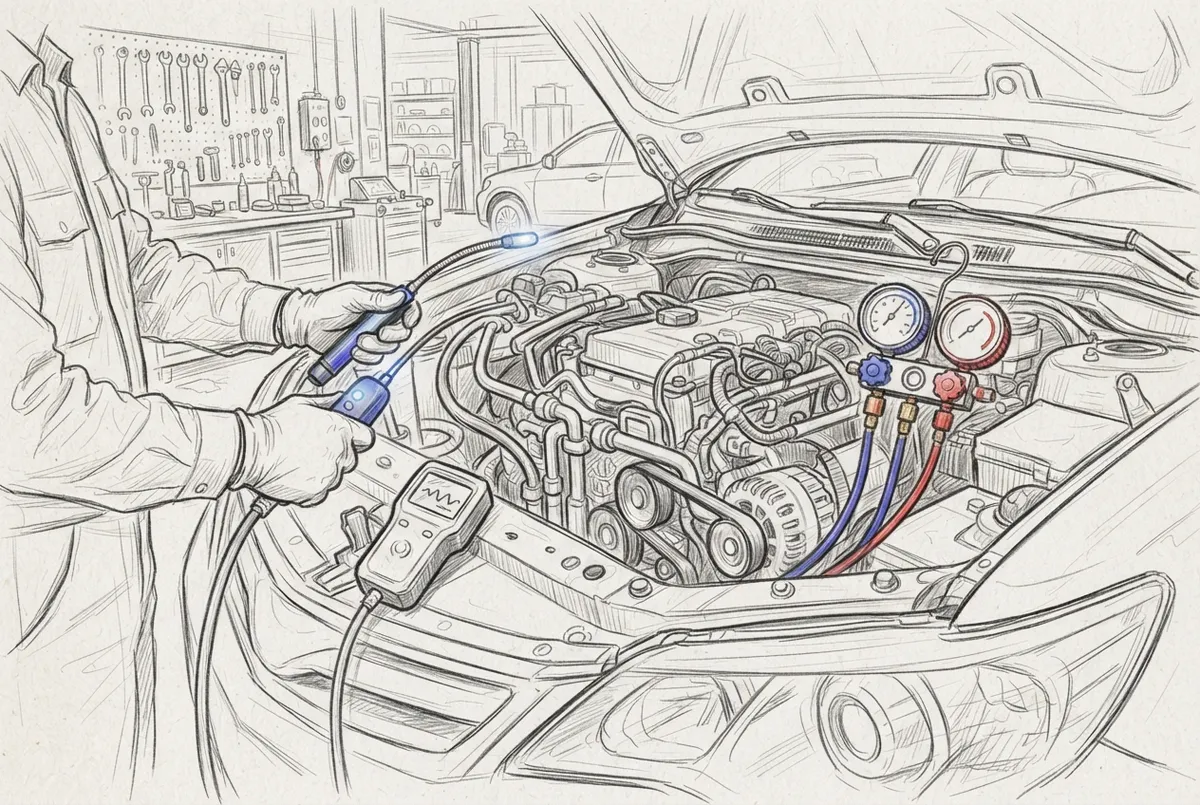
A trustworthy shop won’t just guess at what’s wrong with your system. Here’s what a thorough car air conditioning repair process typically looks like:
- A conversation about your symptoms and when they started
- A visual inspection of hoses, connections, and components
- Checking the cabin air filter and overall airflow
- Measuring vent temperature to see how well the system is cooling
- Testing compressor and fan operation
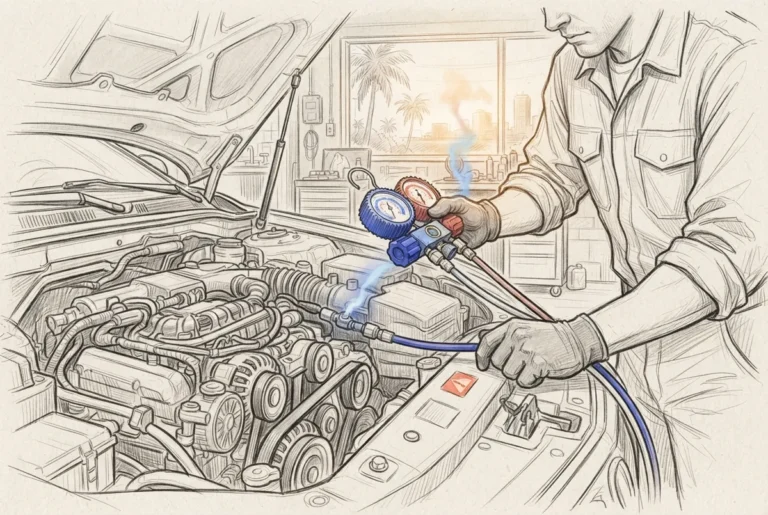
- Checking system pressures with gauges
- Leak detection using dye, electronic detectors, or nitrogen testing
- Recovering old refrigerant and evacuating the system
- Recharging with the correct refrigerant type and amount
- A final performance check to confirm everything is cooling properly
This kind of detailed process is why many drivers turn to professional A/C services rather than trying to DIY a fix. It’s also why we always recommend against repeatedly topping off a system that keeps losing refrigerant. That’s just masking the symptom, not solving the problem.
How Much Does Car Air Conditioning Repair Cost?
Costs can vary quite a bit depending on what’s actually wrong with your system. Here’s a general breakdown based on 2025 and 2026 industry pricing guides:
| Service | Typical Cost Range |
|---|---|
| Diagnostic/Inspection | $75 – $300 |
| Basic Recharge (Recover, Evacuate, Recharge) | $150 – $300 (up to $550 in some cases) |
| Minor Repairs | $150 – $800 |
| Compressor Clutch/Pulley Replacement | $200 – $900 |
| Condenser Replacement | $300 – $900+ |
| Evaporator Replacement | $500 – $1,500+ |
| Compressor Replacement | $500 – $1,600+ |
| Major System Overhaul | $1,000 – $4,000+ |
An average repair often lands around $650, though this depends heavily on your vehicle and the scope of the problem. If you want a more detailed cost breakdown, our guide on How Much Does Auto AC Repair Cost in 2026? covers this in more depth. We also recommend browsing our A/C parts inventory if you’re curious about component pricing.
Refrigerant Types: R-134a vs. R-1234yf
This is a topic that trips up a lot of car owners, and honestly, it’s easy to see why. Modern vehicles use one of two main refrigerants: HFC-134a or the newer HFO-1234yf, which has a lower impact on global warming. These refrigerants absolutely cannot be mixed, so it’s critical that a technician checks your under-hood label before doing any service.
The U.S. Environmental Protection Agency has set a global-warming-potential limit of 150 for light-duty passenger vehicles starting with model year 2025. This doesn’t mean every older car needs to be converted to a new refrigerant. Your existing HFC-134a system can still be serviced as long as it’s done correctly and legally. If you’re curious about the details, our article on 12 Things to Know About R-134a to 1234yf Conversion covers this topic thoroughly.
Why EPA Certification Matters for Your Technician
Here’s something a lot of drivers don’t realize: technicians working on your car’s A/C system are legally required to be certified. Under Section 609 of the Clean Air Act, anyone servicing a motor vehicle A/C system must be trained and certified through an EPA-approved program. They also need to use approved refrigerant-recovery equipment and can never intentionally vent refrigerant into the air.
This isn’t just a box to check. Proper certification means the person working on your car actually understands how to handle refrigerants safely and legally. Marks Air takes this seriously, which is why the shop offers its own EPA 609 certification training for technicians. As a proud member of the Mobile Air Climate Systems Association (MACS), the team stays current on industry standards and best practices.
Special Considerations for Different Vehicle Types
Trucks and Fleet Vehicles
If you’re a truck driver or manage a fleet, A/C problems aren’t just about comfort. Long hours on the road in Florida heat without working air conditioning can lead to fatigue and safety concerns. Fleet owners should consider regular preventive checks rather than waiting for a breakdown. Our article on 4 Fleet Vehicle AC Repair Tips That Save You Money offers practical advice for keeping your vehicles on the road.
RVs and Recreational Vehicles
RV owners face a unique challenge since these vehicles often sit unused for stretches of time, which can lead to slow leaks going unnoticed. If you’re planning a summer road trip, it’s worth having your system checked before you head out. Check out our tips on 6 RV Air Conditioner Repair Parts Mistakes to Avoid to prevent common headaches.
Buses and Transit Vehicles
Public transit and shuttle operators know that passenger comfort and safety go hand in hand. A/C failures on a packed bus in Tampa’s summer heat aren’t just uncomfortable, they can become a real safety concern. Our resource on What Does Proper Bus AC System Maintenance Actually Involve? is a great starting point for transit fleet managers.
Heavy Equipment and Hybrid/Electric Vehicles
Construction and agricultural equipment operators depend on working A/C to avoid operator fatigue during long shifts outdoors. Meanwhile, hybrid and electric vehicles bring their own complexity, since electrically driven compressors often require specialized, non-conductive oil and careful high-voltage safety procedures. These aren’t jobs for guesswork, and they require technicians with specific training.
Should You Attempt a DIY Recharge?
We get this question a lot, and we understand the appeal of grabbing a can of refrigerant from the auto parts store. But here’s why we’d encourage you to think twice:
- Store-bought recharge kits don’t diagnose the actual problem
- Using unapproved sealants can damage your system permanently
- Mixing refrigerant types can cause serious system failure
- Opening pressurized components without proper training is risky
- DIY fixes often mask leaks instead of repairing them
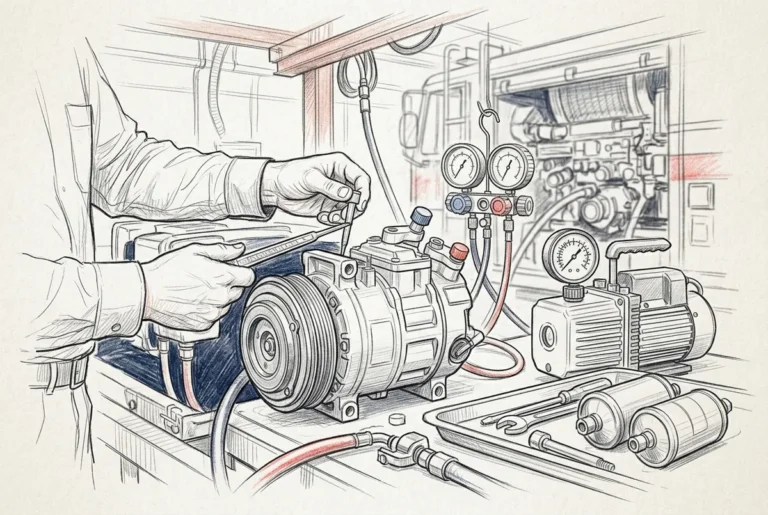
If you hear grinding or screeching near the compressor, the safest move is to shut the system off right away and get it looked at. Continuing to run a failing compressor can spread metal debris throughout the entire system, turning a moderate repair into a very expensive one. For more guidance, take a look at How to Fix an AC Compressor in Your Vehicle.
How Often Should You Service Your Car’s A/C?
Most manufacturers recommend having your A/C system checked at least once a year, ideally before the heat of summer really kicks in. Regular maintenance can catch small leaks before they become big problems and keeps your system running efficiently for years. Our guide on 5 AC Maintenance Tips Every Tampa Vehicle Owner Needs walks through simple habits that extend the life of your system.
Choosing the Right Shop for Car Air Conditioning Repair
Not every repair shop specializes in A/C work, and that specialization matters more than you might think. Look for a shop with:
- EPA 609 certified technicians
- Proper recovery and recharging equipment
- A track record of diagnosing root causes, not just symptoms
- Access to quality parts, ideally with same-day availability
- Positive customer reviews and long-standing local presence
Marks Air checks every one of these boxes, with decades of experience working exclusively on air conditioning systems for cars, trucks, buses, RVs, and heavy equipment. The shop stocks a full range of parts, including its own KOOL-TEMP line along with trusted brands like SPAL, ACT, BCC, gpd, and Omega. You can browse customer feedback and read genuine reviews from Tampa drivers who’ve had their systems repaired here, or visit us on Google — Marks Air to see what local customers are saying.
You can also connect with the team on Facebook or follow along on Instagram for updates and tips. And if you’re weighing your options, Yelp reviews offer another helpful perspective from real customers in the area.
A Quick Word on Overall Vehicle Care
Taking care of your car goes beyond the A/C system, of course. Just like keeping up with routine check-ups matters for your health, the same goes for your vehicle’s comfort systems. If you’re the type who values proactive care in every part of life, you might also appreciate the same philosophy at Charming Smiles of Ocoee, a dental practice that believes in the same preventive, detail-oriented approach we bring to A/C repair here in Tampa.
Ready to Get Your Cool Air Back?
Dealing with a broken car A/C in Tampa’s heat is no fun for anyone, whether you’re driving to work, hauling freight, or shuttling passengers around town. The good news is that most A/C problems have a clear cause and a reliable fix, especially when a trained technician takes the time to diagnose things properly. Don’t let a small leak turn into a major repair bill down the road.
Our team at Marks Air has been helping Tampa drivers stay cool since 1971, and we’d love to help you too. Whether you drive a sedan, a delivery truck, an RV, or manage a whole fleet, we have the experience and parts on hand to get you back on the road comfortably. Schedule your service today or call us at 813-988-1671 to talk through what’s going on with your system. We’re here, we’re local, and we’re ready to help.
FAQs
Q: Why is my car A/C blowing warm air but the fan is working?
A: This usually means the fan and blower motor are fine, but something else is off, like low refrigerant, a leak, or compressor trouble. It’s a good idea to get it checked before the small issue turns into a bigger, pricier repair.
Q: How can I tell whether my car A/C needs a recharge or has a refrigerant leak?
A: Honestly, low refrigerant almost always means there’s a leak somewhere, since refrigerant doesn’t just disappear on its own. A technician can use dye or electronic leak detectors to pinpoint exactly where it’s escaping, so you get a real fix, not just a temporary recharge.
Q: How much does car air conditioning repair cost?
A: It really depends on what’s wrong! Diagnostics typically run $75 to $300, a basic recharge is often $150 to $300, and bigger repairs like compressor or evaporator replacement can range from $500 to $1,500 or more.
Q: Can I recharge my car A/C myself, and is it safe?
A: We totally understand the temptation to grab a DIY kit, but it’s usually not the best idea. Store-bought kits don’t fix leaks, and mixing refrigerants or using unapproved sealants can cause serious damage that costs way more to repair later.
Q: Why does my car A/C smell musty or moldy?
A: That musty smell is often caused by mold or bacteria growing in the evaporator or a clogged cabin air filter. The good news is this is usually an easy fix, and a quick filter change or evaporator cleaning can make your car smell fresh again.