Key Takeaways
-
Bus AC systems require specialized diagnosis and repair by EPA 609-certified technicians experienced with heavy-duty HVAC, not general auto mechanics, to avoid costly repeat visits.
-
Implement monthly filter and refrigerant checks, quarterly electrical testing, and annual full seasonal inspections to catch problems early and avoid expensive breakdowns during peak summer operation.
-
Common warning signs like warm airflow, weak output, strange compressor noises, oily residue at fittings, or water dripping inside demand immediate attention before small issues become major repairs costing $1,500-$5,000.
-
Bus AC systems face extra stress from frequent door openings, long routes, packed seating, and constant idling in traffic, requiring more robust maintenance than typical passenger car air conditioning.
-
Electric and hybrid bus HVAC repairs require additional safety protocols including high-voltage isolation, lockout procedures, and insulated gear—specialized training beyond standard diesel bus AC work.
-
Create individual service records for each bus to help technicians spot patterns and prevent repeat failures, and balance scheduled shop visits with mobile repair options to minimize fleet downtime.
Picture a school bus full of kids on a sweltering August afternoon in Tampa, and the air conditioning just quits. Or think about a transit bus packed with commuters, windows fogging up because the AC can’t keep up. That’s not just uncomfortable, it’s a real safety issue. Bus AC repair is one of those specialized services that keeps fleets running, passengers safe, and drivers focused instead of sweating through their shift.
At Marks Air, we’ve been fixing air conditioning systems on cars, trucks, buses, and heavy equipment since 1971. That’s over 50 years of learning what makes bus HVAC systems tick, and what makes them break. Whether you run a school bus fleet, a shuttle service, or a transit company, this guide will walk you through everything you need to know about keeping your buses cool and your passengers happy.
What Does Bus AC Repair Actually Cover
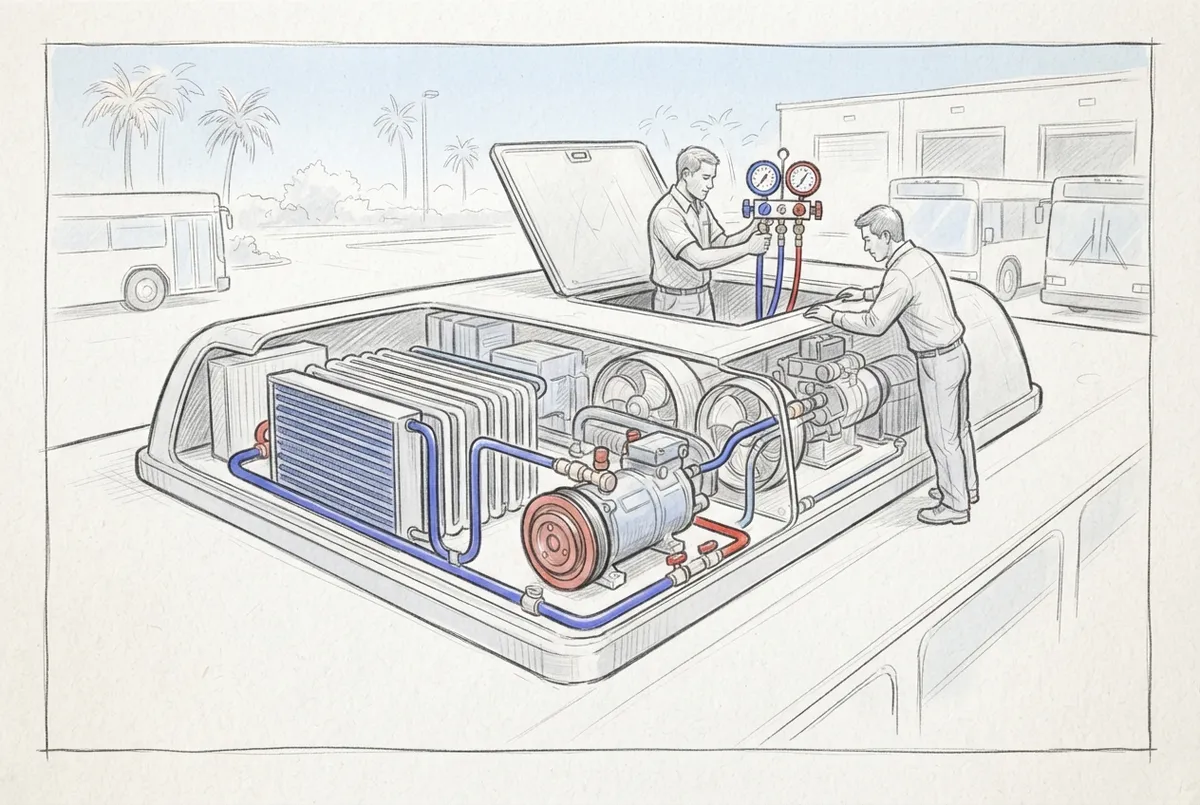
Bus air conditioning systems are bigger and more complex than what you’d find in a regular car. They have to cool a much larger space, deal with constant door openings, and handle way more passengers moving in and out all day long.
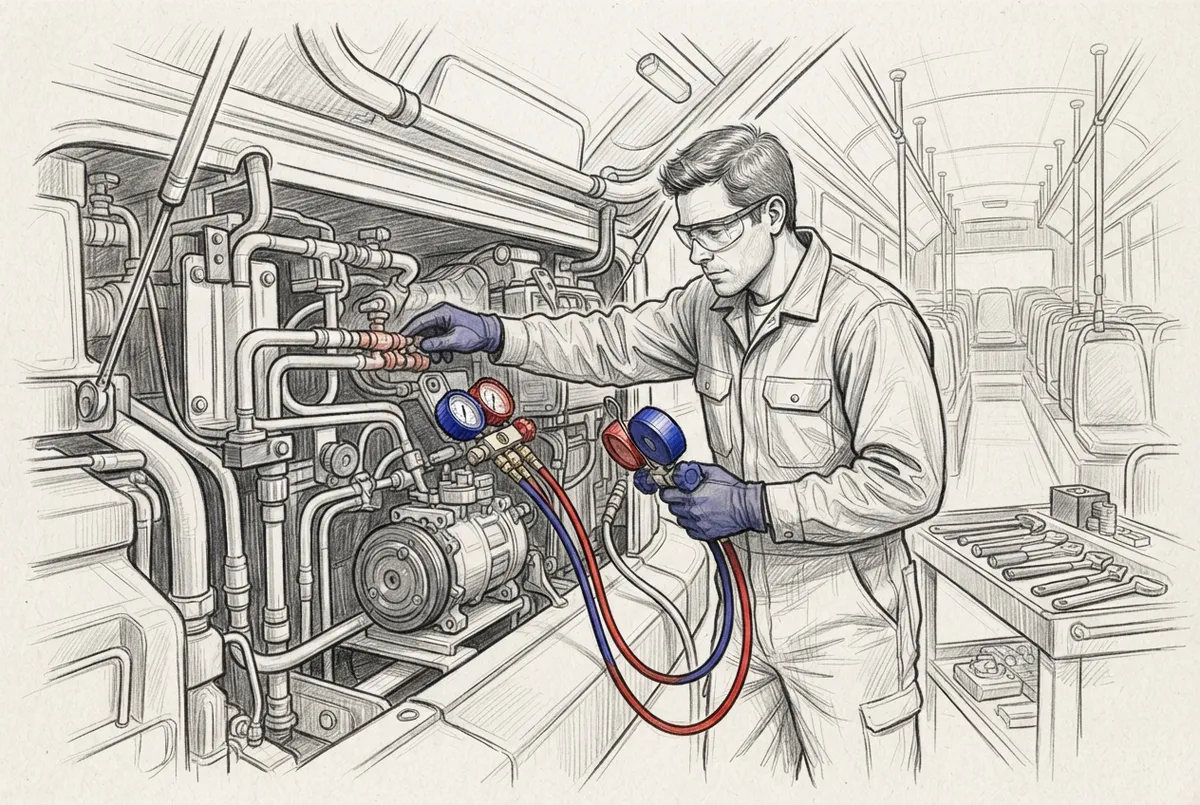
A full bus AC system includes several major parts working together. Here’s what technicians check and service during bus AC repair:
- Compressor and its mounting hardware
- Condenser and evaporator coils
- Blower motors and cooling fans
- Belts, hoses, and refrigerant fittings
- Electrical controls, sensors, and relays
- Ductwork and air filters
- Condensate drain lines
When any one of these parts fails, the whole system can struggle. That’s why a thorough inspection needs to check every component, not just the obvious ones. If you’re curious about the individual components, our page on transit bus air conditioning parts breaks it down in more detail.
Common Signs Your Bus AC Needs Attention
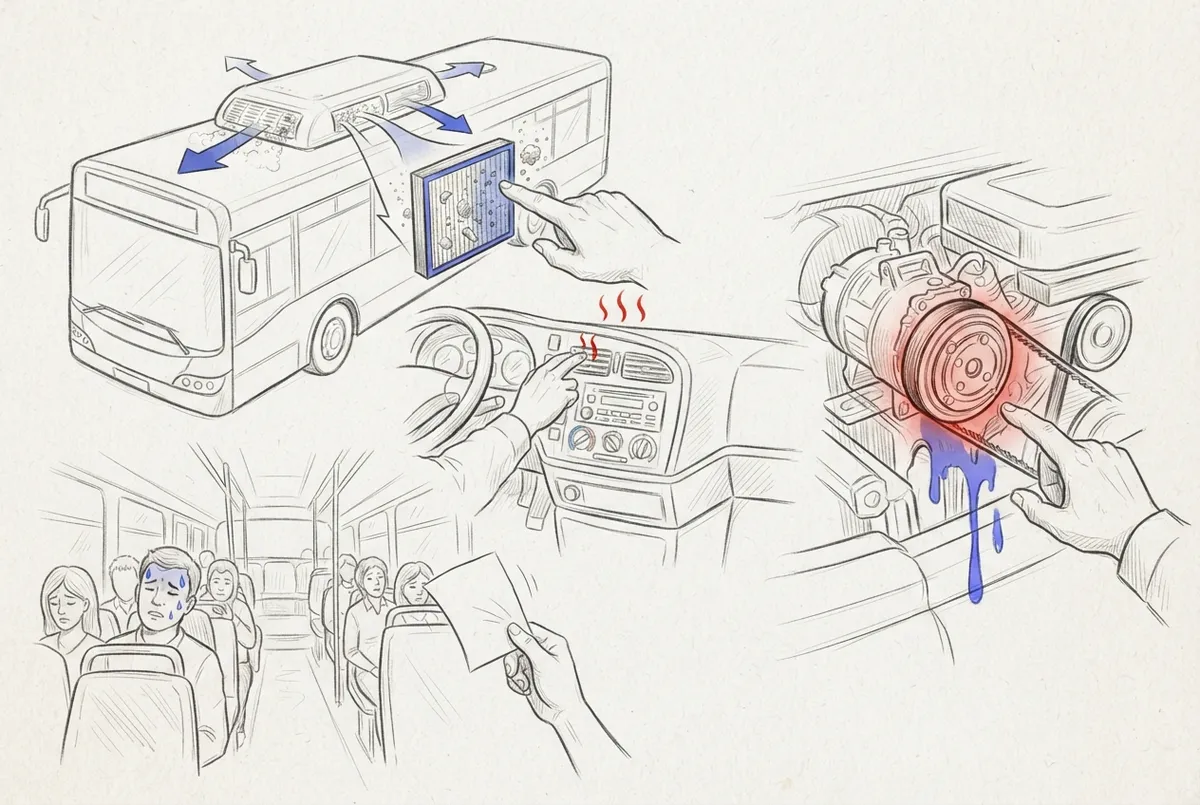
Buses take a beating. Road vibration, dust, long hours, and heavy summer loads put more stress on HVAC systems than most passenger cars ever face. Here are the warning signs fleet managers and drivers should watch for:
- Warm or inconsistent air coming from the vents
- Weak airflow even when the fan is on high
- Strange noises from the compressor or fans
- Oily residue near hose fittings, which often means a leak
- Water dripping inside the passenger cabin
- Electrical faults or warning lights
- Circuit breakers that keep tripping
If you notice even one of these signs, don’t wait. A small problem today can turn into a major repair bill next month. We cover more warning signs in our article on why AC blows warm air and how to fix it.
Why Bus AC Systems Face Extra Stress
Think about how many times a school bus door opens and closes in one route. Every time that happens, hot outside air rushes in and the AC has to work harder to cool it back down. Add long summer routes, packed seating, and constant idling in traffic, and you get a system that’s under way more pressure than a typical car AC.
How a Proper Bus AC Diagnosis Works
Good diagnosis is the difference between fixing the real problem and just throwing parts at a bus and hoping something sticks. Here’s the step-by-step process a qualified technician should follow:
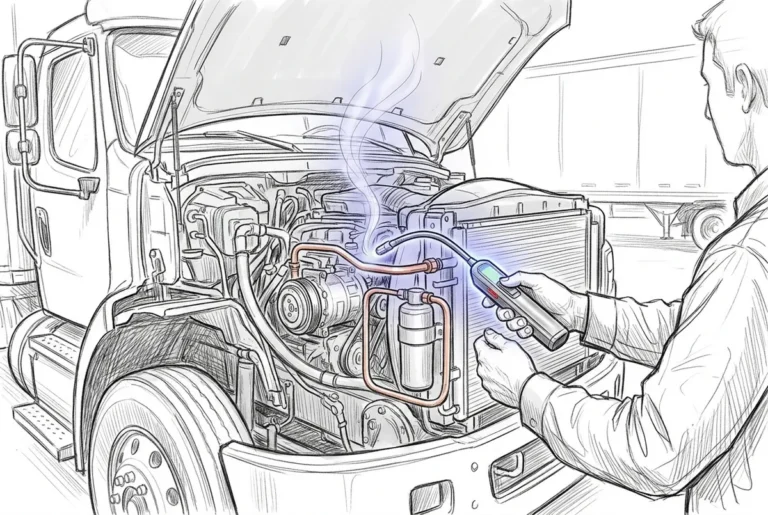
- Check the refrigerant charge and look for leaks around fittings and hoses
- Inspect the condenser and evaporator for dirt, debris, or damage
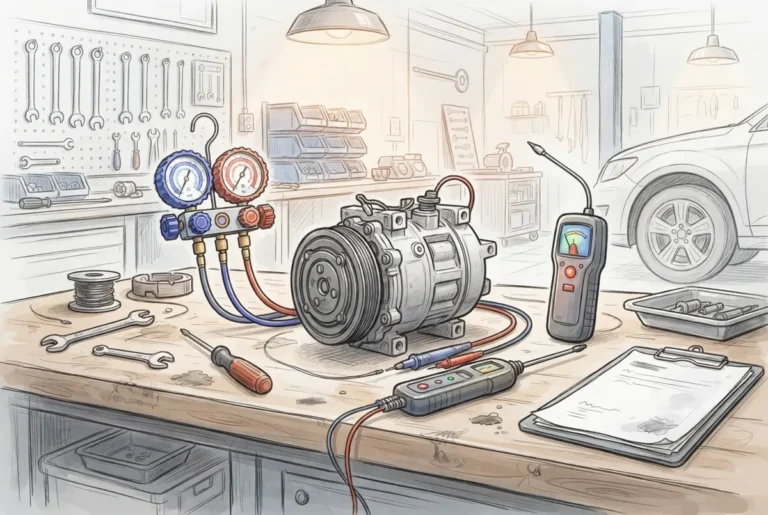
- Test the compressor to confirm it’s cycling correctly
- Measure airflow and vent temperatures at multiple points in the cabin
- Inspect belts, pulleys, and mounting hardware for wear
- Test blower motors and condenser fans under load
- Check wiring, relays, sensors, and control modules for faults
Skipping steps here almost always leads to repeat visits. This is exactly why fleet operators should work with technicians who specialize in heavy-duty HVAC, not just general auto mechanics. Learn more about what a full inspection should include on our page about proper bus AC system maintenance.
Preventive Maintenance Schedules for Bus Fleets
Waiting for something to break is the most expensive way to run a fleet. Preventive maintenance catches small issues before they become big, costly ones. While exact intervals should always follow your bus and HVAC manufacturer’s recommendations, here’s a general guide many fleet managers follow:
| Maintenance Task | Recommended Frequency |
|---|---|
| Filter cleaning or replacement | Monthly |
| Refrigerant level and leak check | Monthly |
| Wiring, fan, and blower testing | Quarterly |
| Compressor performance testing | Quarterly |
| Belt and piping inspection | Semiannual |
| Full seasonal system inspection | Annual |
These are general industry recommendations, not a one-size-fits-all rule. Always check your specific bus manufacturer’s service manual for exact intervals. Our team can help build a custom maintenance plan for your fleet, similar to what we outline in preventive versus reactive fleet AC maintenance.
Building a Service History for Each Bus
Every bus in your fleet is a little different, even if they’re the same make and model. Keeping an individual service record for each vehicle helps technicians spot patterns and catch problems early. This is standard practice for serious fleet operations, and it pays off in fewer surprise breakdowns.
What Bus AC Repair Typically Costs
Pricing varies a lot depending on the bus type, the part that failed, and your local labor rates. That said, here’s a general breakdown based on industry estimates to help you budget:
| Service Type | Estimated Cost Range |
|---|---|
| Diagnostic fee | $100 – $250 |
| Routine preventive maintenance | $150 – $400 |
| Filter replacement or refrigerant recharge | $200 – $500 |
| Major component replacement (compressor, condenser) | $1,500 – $5,000 |
These numbers are illustrative estimates, not fixed pricing. Your actual cost will depend on your bus, your location, and the parts needed. For more detail on how repair costs break down for commercial vehicles, check out our guide on how much auto AC repair costs.
Who Should Repair Your Bus AC System
Not every mechanic is equipped to handle bus HVAC work. These systems are bigger, more complex, and often tied into electrical systems that need specialized training. When choosing a technician or shop, look for these qualifications:
- Experience with heavy-duty or transit HVAC systems specifically
- EPA Section 609 certification for refrigerant handling
- Access to EPA-approved refrigerant recovery equipment
- Familiarity with your bus manufacturer’s service specs
- A track record of working with fleet operators
The U.S. Environmental Protection Agency requires anyone servicing motor vehicle AC systems for payment to complete Section 609 training, regardless of the refrigerant type used. This isn’t optional paperwork, it’s the law, and it protects both technicians and the environment. Marks Air offers A/C training programs covering EPA 609 certification, so we understand this requirement inside and out.
Electric and Hybrid Bus HVAC: A Different Animal
If your fleet includes electric or hybrid buses, AC repair looks a bit different. These systems often run on high-voltage components that require extra safety steps. Technicians need to isolate high-voltage systems using manufacturer procedures, use lockout and tagout controls, wear insulated gear, and confirm a zero-energy state before touching any HVAC parts tied into the electrical system. This isn’t a job for a general repair shop. It takes specific training and the right safety protocols every single time.
On-Site Repair vs. Shop Visits
One question fleet managers ask a lot is whether a bus needs to come into a shop or if repairs can happen on-site. The honest answer is: it depends on the problem.
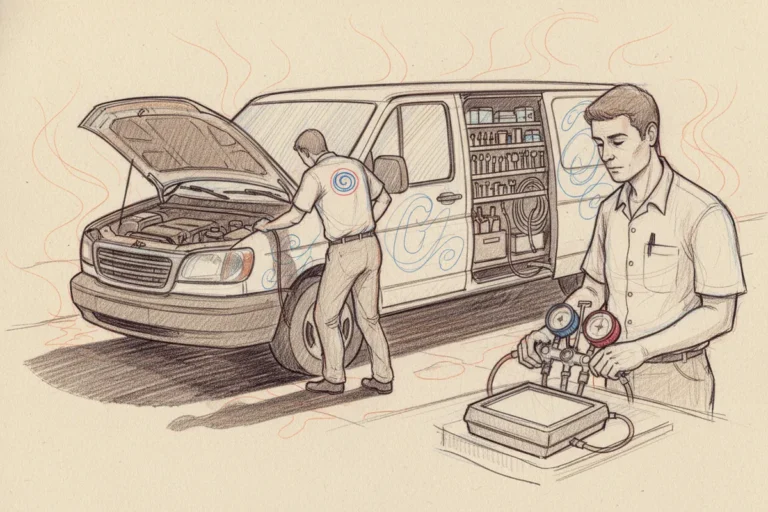
- Minor issues like filter changes or small refrigerant top-offs can often be handled on-site or with mobile service
- Diagnostic work benefits from shop equipment but can sometimes be done in the field with portable tools
- Major component replacement, like swapping a compressor or condenser, usually requires a full shop setup
- Electrical or control module repairs may need specialized diagnostic equipment only available in-shop
For fleet operators managing multiple routes, minimizing downtime is everything. A good fleet AC program balances scheduled shop visits with mobile repair options to keep buses on the road as much as possible.
Why Tampa Fleets Trust Local Specialists
Tampa’s climate is no joke. Hot, humid summers push bus AC systems to their limits almost year-round. That’s a big reason why fleet operators in this area need technicians who understand local conditions and know how heat and humidity affect system performance.
Marks Air has served the Tampa area since 1971, and we’re proud to be a family-owned, woman-owned business with deep roots in this community. We’re also a member of the Mobile Air Climate Systems Association (MACS), which keeps us aligned with the latest industry standards for mobile AC work. You can read what other customers have to say by checking out our customer reviews, following us on Instagram, or catching updates on Facebook.
We also stock a wide range of parts, including our own KOOL-TEMP line along with trusted brands like SPAL and gpd, so repairs don’t get held up waiting on backordered components. If you want to browse what’s available, take a look at our A/C parts inventory.
Fleet Programs That Actually Reduce Downtime
A smart fleet AC program isn’t just about fixing things when they break. It’s about planning ahead. Here’s what a solid fleet program should include:
- Scheduled inspections tied to manufacturer intervals
- Mobile repair options for minor fixes
- Priority emergency service for breakdowns during peak hours
- Parts planning so common components are always in stock
- Individual service records for every bus in the fleet
This kind of planning saves money in the long run and keeps your buses running when you need them most. For fleets managing several vehicle types, our page on fleet vehicle AC repair tips that save money has more practical advice.
Getting Your Bus Fleet Back on the Road
Bus AC repair isn’t glamorous, but it’s essential. A cool, comfortable bus keeps passengers happy, keeps drivers alert, and keeps your fleet running smoothly through Tampa’s brutal summer heat. Whether you need routine maintenance, a full diagnostic, or emergency repair after a breakdown, working with experienced technicians makes all the difference.
Don’t wait until your fleet’s AC fails on a hot afternoon. Reach out today to schedule service for your bus fleet, or call us at 813-988-1671 to talk through your fleet’s specific needs. You can also see what our Marks Air customers say by checking out our Marks Air location on Google, or read more reviews on Yelp. We’re here to keep your buses, and your passengers, cool all year long.
FAQs
Q: How much does bus AC repair cost?
A: It really depends on what’s wrong and what type of bus you have. Routine maintenance often runs $150 to $400, while diagnostic fees land between $100 and $250. Bigger jobs, like replacing a compressor or condenser, can range from $1,500 to $5,000, so it’s always best to get a specific quote for your fleet.
Q: What causes a bus AC system to blow warm air?
A: Warm air usually points to a refrigerant leak, a failing compressor, or a dirty condenser that can’t release heat properly. Sometimes it’s as simple as a clogged filter restricting airflow. A proper diagnostic check can pinpoint the exact cause pretty quickly.
Q: How often should bus air conditioning be serviced?
A: Many fleets follow monthly filter and refrigerant checks, quarterly electrical and fan testing, and a full seasonal inspection once a year. That said, your bus manufacturer’s specific schedule should always be your main guide. We’re happy to help you build a maintenance plan that fits your fleet.
Q: Can bus AC systems be repaired on-site, or does the bus need to come into a shop?
A: Minor fixes like filter changes or refrigerant top-offs can often happen right where the bus is parked. But bigger jobs, like swapping out a compressor, usually need the full setup you’ll find at a shop. We can help figure out which option makes sense for your situation.
Q: Are electric bus HVAC systems repaired differently than diesel bus AC systems?
A: Yes, and it’s a pretty big difference. Electric and hybrid buses often have high-voltage components tied into the HVAC system, which means technicians need extra safety training, insulated tools, and lockout procedures before they can even start the repair. It’s not a job for just any mechanic.