Key Takeaways
-
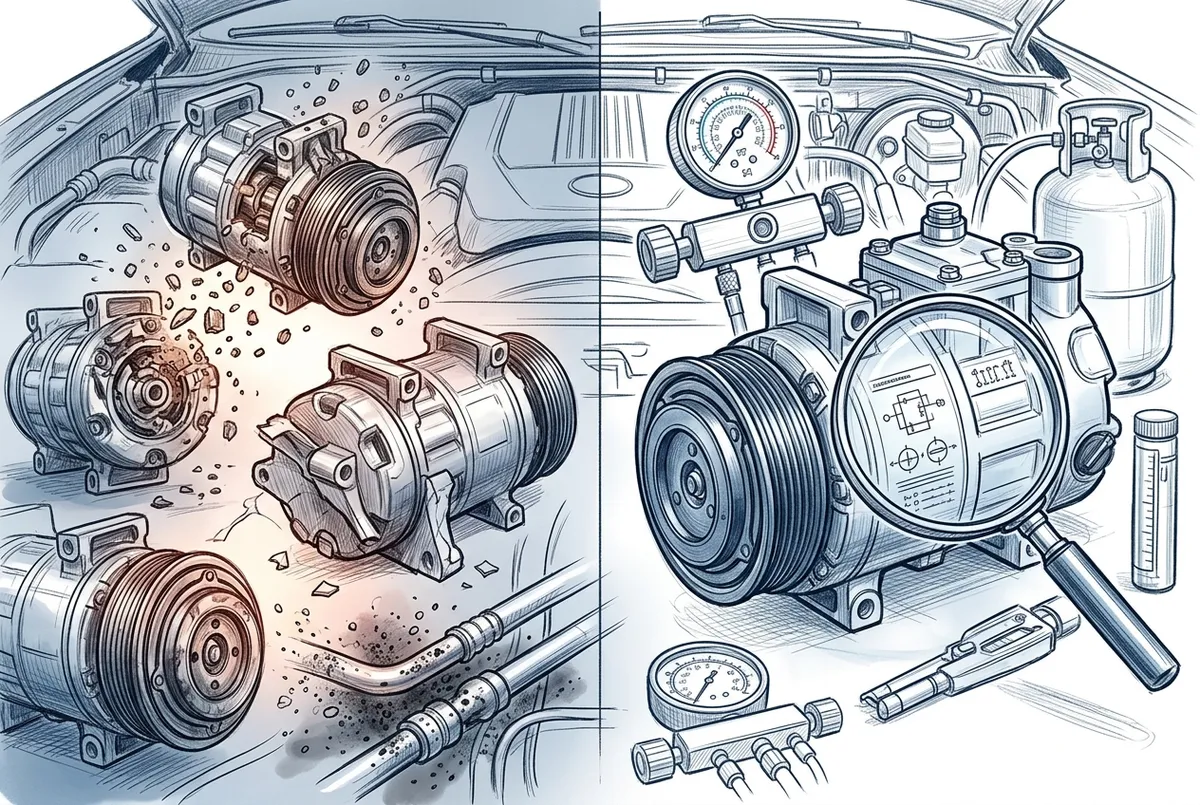
Always flush the entire AC system after compressor failure to remove metal debris; installing a new compressor into a contaminated system will destroy it quickly and waste your investment.
-
Diagnose the root cause of compressor failure before replacement—low refrigerant, leaks, incorrect oil charge, or electrical issues must be fixed or the new compressor will fail again.
-
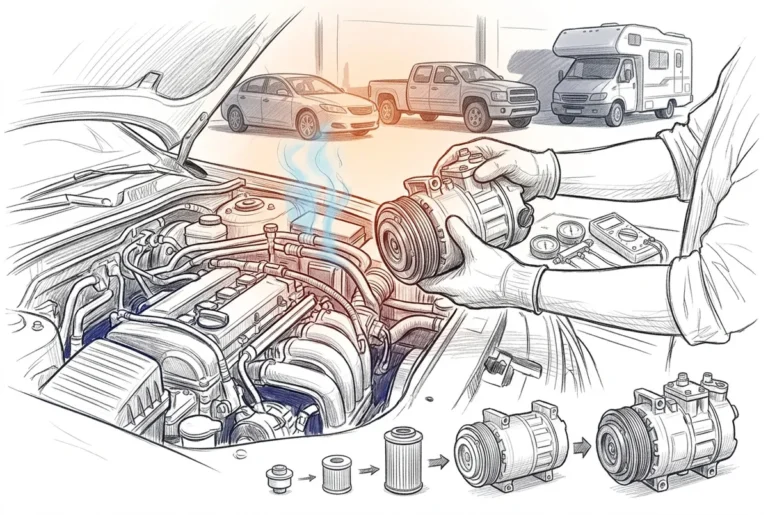
Match your compressor exactly to your truck's year, make, model, and engine type; even same-model trucks may require different compressors based on engine size and trim level.
-
Avoid choosing compressors based on price alone; a cheap unit that fails in months costs far more than a quality OEM compressor lasting years, plus risks damaging other AC components.
-
If selecting a remanufactured compressor, verify it has new internal components, correct oil pre-charge, leak testing, and a strong warranty—not all remanufactured units meet quality standards.
-
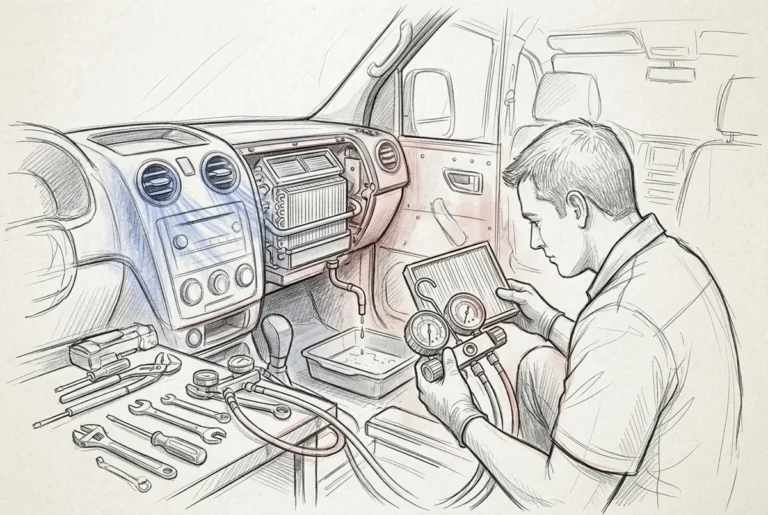
Replace receiver/drier, expansion valve, O-rings, and seals simultaneously with the compressor to prevent repeat failures and save on labor costs; don't attempt DIY installation without EPA certification and proper tools.
Your truck’s AC compressor is the heart of the entire cooling system. When it fails on a hot Tampa summer day, everything stops working. Choosing the wrong replacement part can make things even worse — and cost you a lot more money down the road.
Whether you’re a long-haul driver, a fleet manager, or a heavy equipment operator, getting the right OEM truck AC compressor matters. The wrong choice leads to poor cooling, system damage, and premature failures. The good news? These mistakes are totally avoidable.
At Marks Air, we’ve been helping Tampa drivers and fleet operators since 1971. We’ve seen every compressor mistake in the book. This guide covers the six most common ones — so you don’t have to learn the hard way.
What Is an OEM Truck AC Compressor?
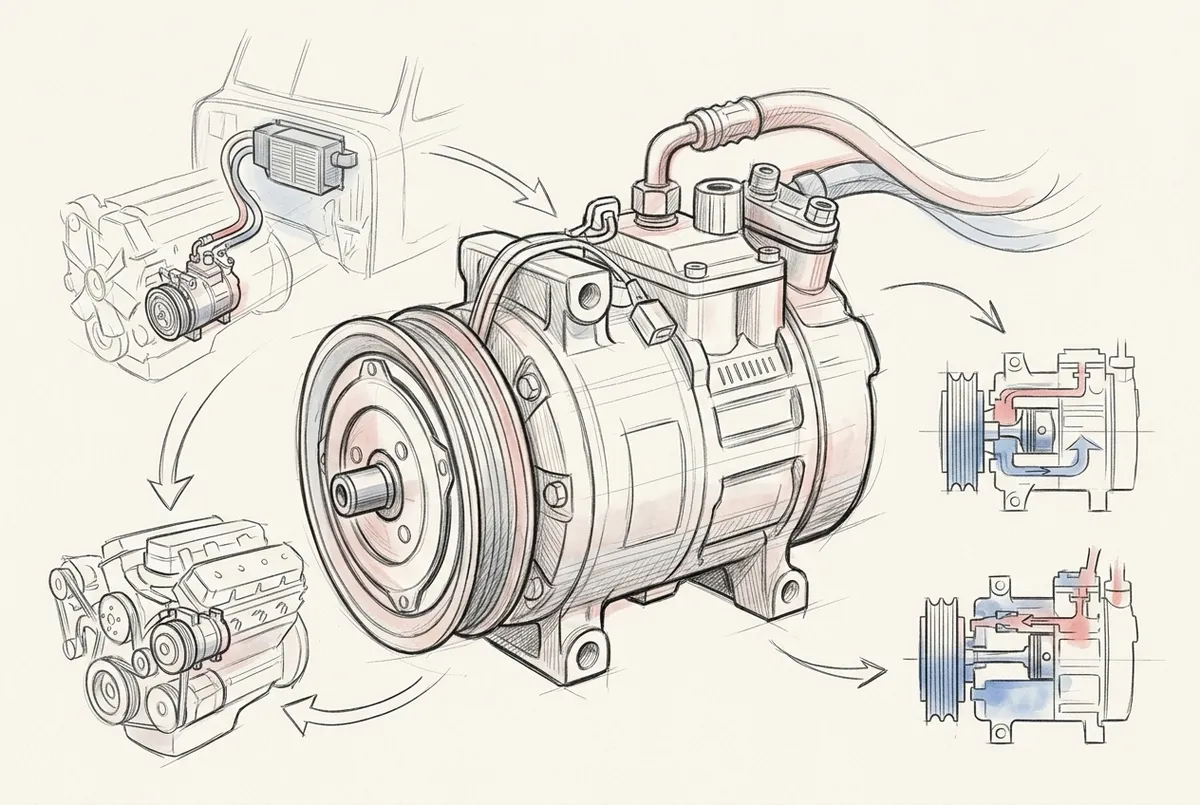
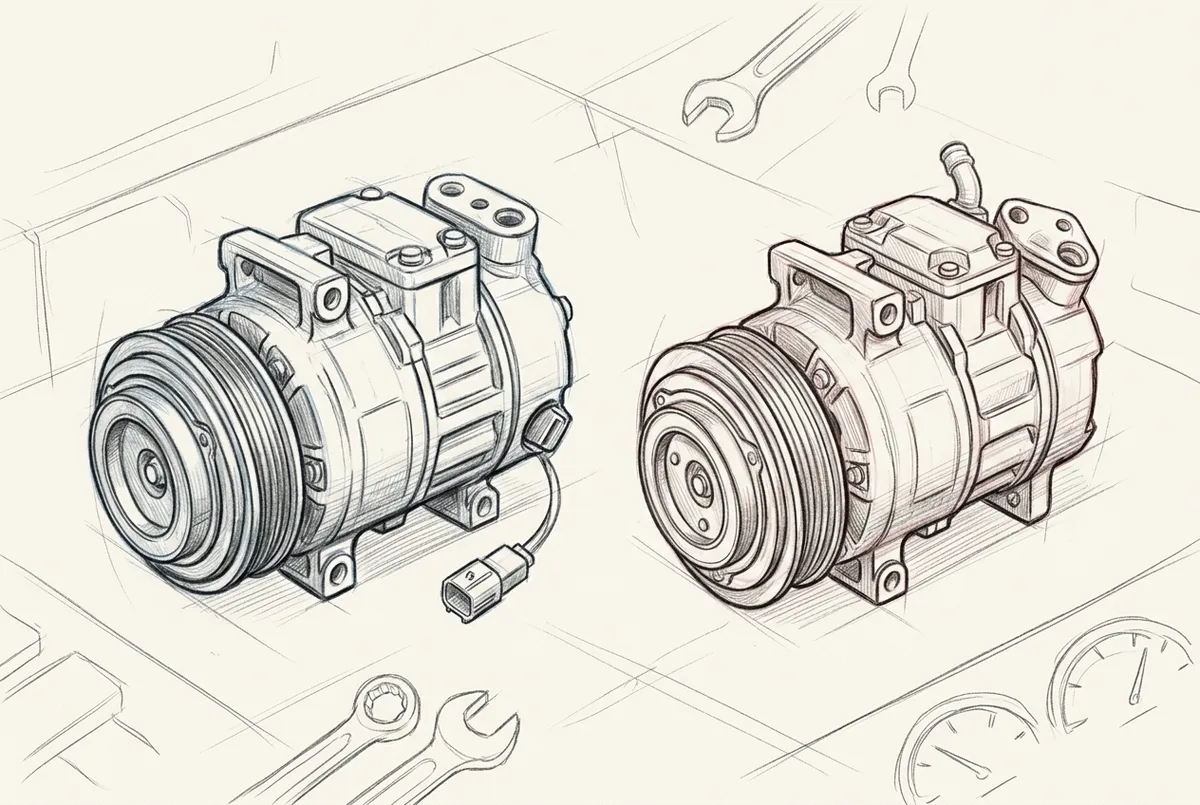
OEM stands for Original Equipment Manufacturer. An OEM truck AC compressor is built to the exact same specifications as the compressor that came with your truck from the factory. It fits correctly, performs the way the system was designed, and integrates seamlessly with the rest of your HVAC components.
Major OE suppliers like DENSO — one of the world’s largest OE AC compressor suppliers — build units that are specified by most major vehicle manufacturers. These compressors are designed for quiet operation, durability, and strong performance under heavy AC load. That’s especially important for work trucks, buses, and heavy equipment running in tough conditions.
To understand more about the key parts inside your AC system, check out 6 A/C Parts Every Vehicle Owner Should Know in 2026.
OEM vs. Aftermarket: A Quick Comparison
Before diving into the mistakes, it helps to know the difference between OEM and aftermarket compressors at a glance. Both options have their place, but understanding the tradeoffs is key.
| Feature | OEM / OE-Supplier Compressor | Aftermarket Compressor |
|---|---|---|
| Fitment | Exact match to factory specs | May require minor adjustments |
| Performance | Factory-level cooling and noise levels | Varies by brand and quality tier |
| Cost | Typically higher upfront | Often lower upfront cost |
| Warranty | Usually strong manufacturer warranty | Varies widely by supplier |
| Availability | May need to order for specific models | Broad availability across platforms |
| Best For | Fleet vehicles, heavy-duty trucks, buses | Budget repairs, older vehicles |
For fleet managers looking to keep costs in check without sacrificing reliability, these fleet AC repair tips are a great starting point.
Mistake 1: Buying Based on Price Alone
We get it — budget matters. But choosing a truck AC compressor purely on price is one of the biggest mistakes you can make. A bargain compressor that fails in three months costs far more than a quality OEM unit that lasts for years.
OEM and OE-supplier compressors are built to tighter tolerances and tested against the vehicle manufacturer’s standards. That means better durability, quieter operation, and less risk of damaging other AC components when something goes wrong.
- Low-cost compressors may ship without the correct oil pre-charge
- Poor sealing can lead to refrigerant leaks shortly after installation
- Inferior internals wear faster, especially under heavy AC load
- Warranty coverage is often minimal or hard to claim
Think long-term, especially for work trucks and commercial fleets. The upfront savings rarely justify the risk. You can also learn when AC repair vs. replacement makes more financial sense before making your decision.
Mistake 2: Not Matching the Compressor to Your Exact Truck
This mistake catches a lot of people off guard. Even trucks of the same make and model can require different compressors depending on the year, engine type, and trim level. Getting the wrong fitment is a costly error.
For example, Peterbilt trucks with PACCAR and Cummins engines have specific OEM-spec compressor requirements. Using a part that doesn’t match your exact application can lead to bracket misalignment, belt tension problems, and even electrical incompatibility with the truck’s control system.
Here’s how to make sure you get the right match:
- Always identify your truck’s exact year, make, model, and engine size
- Cross-reference the part number from the original compressor if possible
- Work with a specialist shop that knows heavy-duty and commercial applications
- Confirm the compressor’s mounting style, shaft type, and port orientation
- Ask whether a complete kit (with drier, orifice tube, and oil) is recommended
Our team at Marks Air stocks parts for a wide range of truck, bus, and heavy equipment platforms, so getting the right fit is never a guessing game. Check out our full AC parts inventory for more information.
Mistake 3: Skipping the Flush Before Installing a New Compressor
This is one of the most damaging mistakes a technician — or a DIYer — can make. When an AC compressor fails, it often sends metal debris through the entire system. Installing a brand-new OEM compressor into a contaminated system is like putting a clean engine into a dirty vehicle without flushing the oil lines.
That debris will circulate through the new compressor and destroy it quickly. The result? You’re back to square one, but now you’ve wasted an expensive OEM unit on top of the original repair cost.
- Always flush the AC system lines after a compressor failure
- Replace the receiver/drier or accumulator at the same time
- Check the condenser for debris — it’s often a debris trap
- Use the correct refrigerant oil type and amount for the new compressor
Proper system preparation before installing any compressor is non-negotiable. Read more about how to handle an AC compressor repair correctly.
Mistake 4: Ignoring What Caused the Original Compressor to Fail
Replacing a failed compressor without diagnosing why it failed is a recipe for repeat failure. The new part won’t last if the root cause isn’t fixed first.
Common reasons truck AC compressors fail include:
- Low refrigerant levels — causes the compressor to run hot and wear out early
- Refrigerant leaks — if not repaired, the new compressor will lose its lubrication
- Incorrect oil charge — too much or too little oil causes internal damage
- Electrical issues — a faulty clutch circuit burns out compressors repeatedly
- Contaminated refrigerant — moisture or air in the system destroys components
A thorough diagnostic inspection before any compressor replacement is essential. If your truck’s AC is blowing warm air before the compressor fails completely, catch it early. See 10 reasons your AC is blowing warm air and what to do about it.
Marks Air, a proud member of the Mobile Air Climate Systems Association (MACS), follows industry best practices for every diagnostic and repair job — helping you avoid repeat failures.
Mistake 5: Choosing a Remanufactured Compressor Without Checking Quality Standards
Remanufactured compressors can be a good option — but only when they meet strict quality standards. Not all remanufactured units are created equal. Some are barely cleaned and re-packaged, while others are rebuilt to OEM specifications with new internal components.
Here’s what to look for when evaluating a remanufactured compressor:
- Confirm it was rebuilt with new seals, valves, and internal components — not just cleaned
- Check that it comes pre-charged with the correct refrigerant oil
- Look for a warranty that matches or approaches what a new OEM unit offers
- Make sure it was tested for leaks and performance before shipping
- Verify it’s application-specific — not a generic rebuilt unit
For heavy-duty trucks, buses, and fleet vehicles, a quality remanufactured compressor from a reputable OE supplier can save money without sacrificing reliability. The key word is “quality.” When in doubt, go with a new OEM or OE-supplier unit.
Mistake 6: Attempting a DIY Compressor Swap Without the Right Tools or Training
Truck AC systems are complex. Swapping an OEM compressor is not the same as replacing a simple bolt-on part. It requires specialized tools, refrigerant handling certification, and a solid understanding of system pressures and oil charges.
The risks of a DIY compressor swap include:
- Improper refrigerant recovery, which is illegal without EPA certification
- Over or under-charging the system, leading to poor performance or component damage
- Incorrect torque on fittings, causing leaks
- Missing the root cause of failure, resulting in repeat damage
- Voiding the warranty on the new OEM compressor
If you’re a technician looking to build your skills, Marks Air offers professional AC training programs, including EPA 609 certification and HFO-1234yf training. These programs give you the knowledge and credentials to handle compressor jobs correctly and legally.
For everyone else — bring your truck to the pros. You can explore Marks Air’s full range of AC services to see what we can do for your vehicle.
What Other Parts Should Be Replaced with a Truck AC Compressor?
A smart compressor replacement doesn’t stop with just the compressor. Here’s what experienced technicians recommend replacing at the same time:
- Receiver/Drier or Accumulator — absorbs moisture and filters debris; always replace after a compressor failure
- Expansion Valve or Orifice Tube — controls refrigerant flow; often damaged by compressor debris
- Condenser — inspect closely and flush or replace if contaminated
- O-rings and Seals — always use new seals at every connection point
- AC Belt — check for wear and replace if needed during the same service visit
Replacing these parts together saves labor costs and protects your investment in the new OEM compressor. Learning to detect AC leaks in your truck early also helps extend the life of every component in the system.
Why Tampa Truck Operators Trust Marks Air
Marks Air has been Tampa’s go-to AC specialist for trucks, buses, RVs, and heavy equipment since 1971. As a family-owned, woman-owned business, we take pride in delivering honest, expert service with a personal touch. Our team stocks OEM-spec compressors and parts from trusted industry brands, so we can often get your vehicle back on the road the same day.
We work on everything from light-duty pickup trucks to Peterbilt and heavy commercial rigs. You can visit us on Google — Marks Air to see what our Tampa customers say about their experience. You can also connect with us on Facebook and Instagram to stay up to date on tips, specials, and news from the shop.
Fleet operators can also take advantage of our fleet vehicle AC diagnostics service to keep an entire fleet running cool all year long.
Conclusion
Getting the right OEM truck AC compressor — and installing it correctly — makes all the difference in how long your system lasts and how well it performs. Avoid these six mistakes and you’ll save time, money, and a lot of frustration. Whether you’re a solo driver or managing a large fleet, the quality of your compressor choice matters every single day on the road.
Don’t let a compressor mistake leave you sweating through a Tampa summer. Our team at Marks Air is ready to help you get it right the first time. Schedule your AC service today or give us a call at 813-988-1671 — we’d love to help keep your truck cool and your system running strong.
FAQs
Q: What does OEM mean for truck AC compressors?
A: OEM stands for Original Equipment Manufacturer. An OEM truck AC compressor is built to the exact same specifications as the factory-installed unit, ensuring a perfect fit and factory-level performance. It’s the gold standard for replacement parts, especially in commercial and heavy-duty truck applications.
Q: Are OEM truck AC compressors better than aftermarket options?
A: OEM and OE-supplier compressors typically offer better fitment, quieter operation, and stronger warranty backing than many aftermarket options. That said, high-quality aftermarket units can work well for certain applications. The key is knowing your truck’s specific needs and not sacrificing quality just to save a few dollars upfront.
Q: How do I know which AC compressor fits my truck?
A: You’ll want to identify your truck’s exact year, make, model, and engine type before selecting any compressor. Cross-referencing the original part number is even better. Our team at Marks Air can help you find the right match quickly — just give us a call at 813-988-1671 and we’ll take it from there!
Q: Can I use a remanufactured compressor instead of a new OEM unit?
A: Yes, a remanufactured compressor can be a smart choice — but only if it’s been properly rebuilt to OEM specifications with new internal components and tested before shipping. Always check the warranty and make sure it’s application-specific for your truck’s platform and engine type.
Q: What other parts should be replaced when installing a new truck AC compressor?
A: At minimum, you should replace the receiver/drier or accumulator, the expansion valve or orifice tube, and all O-rings and seals. If the old compressor failed catastrophically, the condenser should be flushed or replaced too. Doing this all at once protects your new compressor and saves on labor costs down the road.