Key Takeaways
-
Custom fleet AC hose fabrication allows same-day or while-you-wait service instead of waiting weeks for unavailable OEM parts, dramatically reducing vehicle downtime and operational costs.
-
AC hose assemblies must match specific refrigerant types (R-134a vs HFO-1234yf), pressure ratings, and vehicle routing; using incorrect materials causes premature failure and leaks.
-
Fleet managers should partner with specialized AC shops experienced in commercial vehicles rather than general repair shops, as this provides faster diagnosis, consistent quality, and technicians familiar with specific fleet needs.
-
Custom fabrication works for heavy-duty trucks, construction equipment, transit buses, and specialty vehicles where standard replacement hoses are unavailable or sourcing takes months.
-
Proper hose assembly requires precise measurement, correct fitting selection, accounting for crimp growth, and calibrated crimping equipment to ensure leak-free, long-lasting connections.
-
Fleet AC hose programs standardize service across multiple vehicles, reduce emergency repair situations, and provide simplified ordering and scheduling compared to vehicle-by-vehicle sourcing.
If you manage a fleet of trucks, buses, or heavy equipment in Tampa, you know how brutal the Florida heat can be. When one vehicle’s air conditioning goes down, driver comfort and productivity go with it. That’s where fleet AC hose fabrication comes in — and it’s one of the most valuable services a fleet manager can tap into. Instead of waiting weeks for an OEM part that may never arrive, custom hose fabrication gets your vehicles back on the road fast. In this article, we’ll walk you through six essential facts about fleet AC hose fabrication, covering everything from how hoses are built to why fleet programs make a real difference. Whether you run a handful of delivery vans or a full transit operation, this guide is for you.
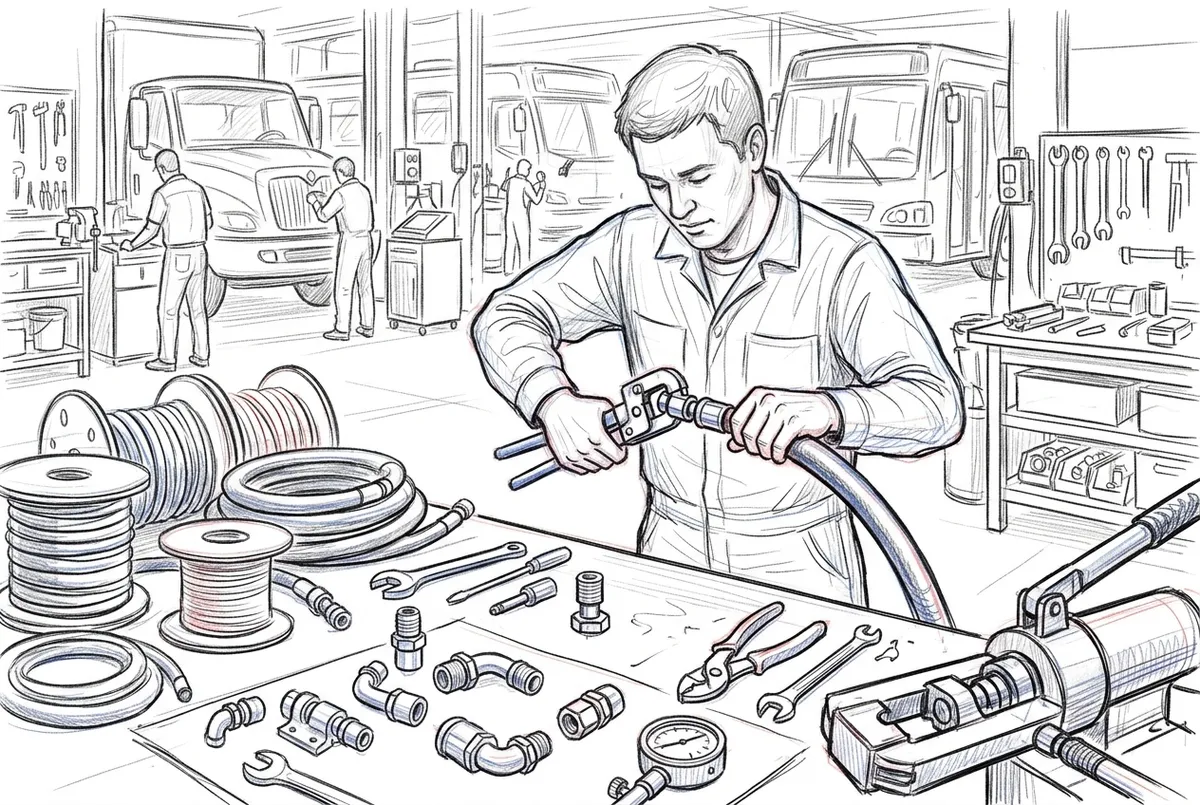
1. Fleet AC Hose Fabrication Is a Custom Service, Not Just a Parts Swap
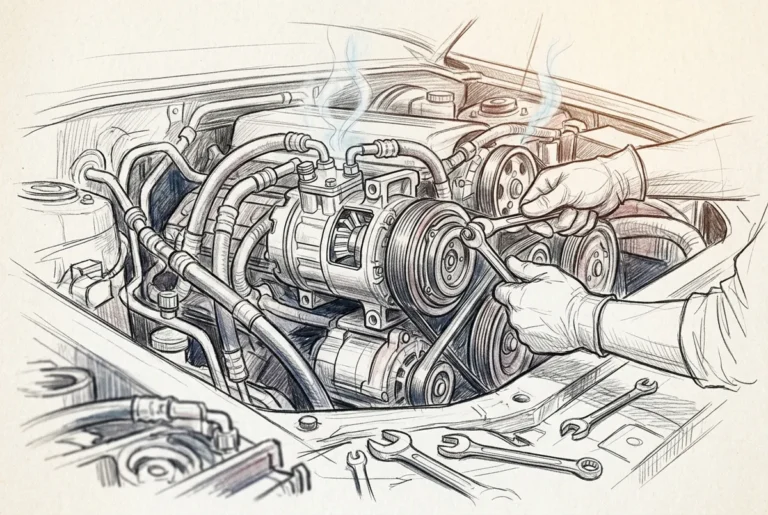
Many people assume AC hose replacement is simple — just grab a new hose off the shelf and bolt it on. In reality, fleet AC hose fabrication is a custom process from start to finish. Technicians build each hose assembly to match the specific vehicle, refrigerant type, and system requirements.
This matters a lot for fleet vehicles. Trucks, buses, and heavy equipment often have unique routing, space constraints, and refrigerant specifications that standard shelf parts simply can’t accommodate. A custom-built hose fits exactly right, reduces the risk of leaks, and performs reliably under demanding conditions.
- Each hose is measured and built to the customer’s exact specifications
- Fittings, hose type, and length are all selected for the specific application
- OEM hoses may be unavailable or take weeks to source for older equipment
- Custom fabrication works for cars, trucks, RVs, buses, and construction equipment
For fleet operators, this means you don’t have to wait on a manufacturer’s supply chain. You can get what you need quickly, keeping your vehicles operational. Check out how fleet vehicle AC repair tips can help you reduce downtime and costs across your operation.
2. Understanding What Goes Into an AC Hose Assembly
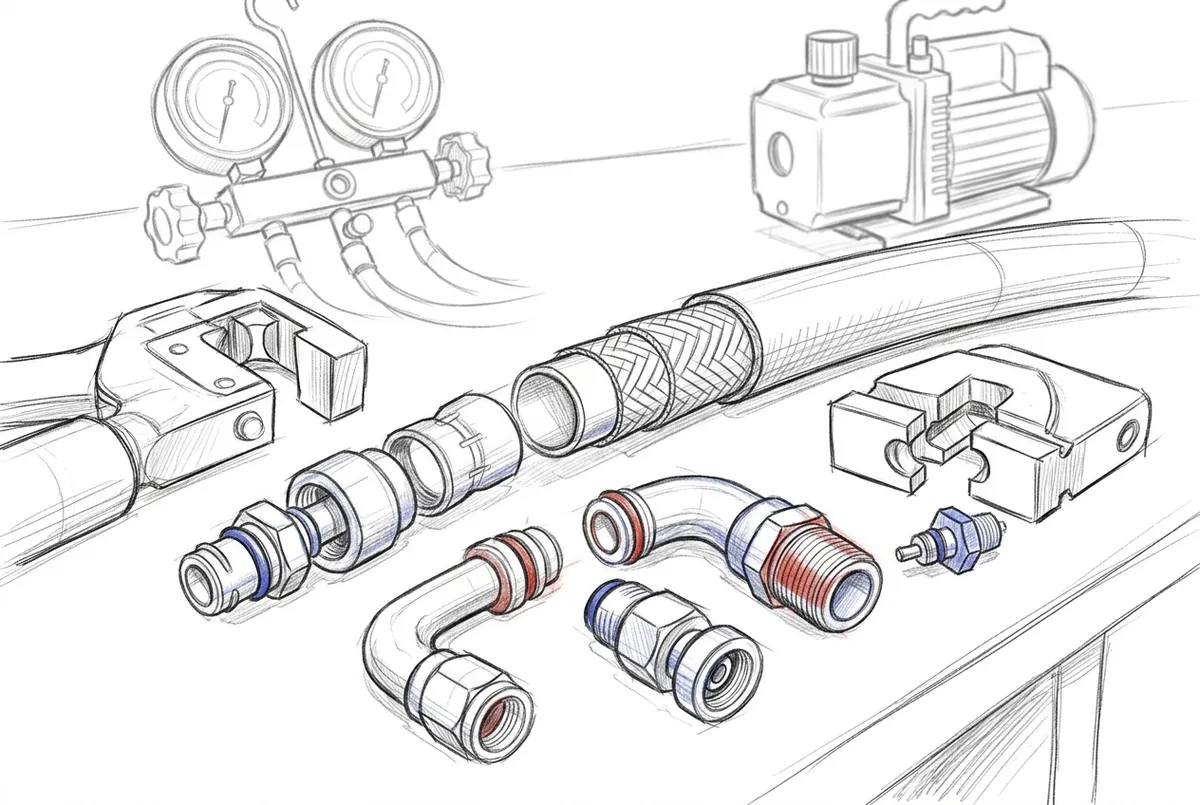
It helps to understand the anatomy of a refrigerant hose. An AC hose assembly is more than just a tube — it’s a carefully engineered component designed to handle high pressure, temperature swings, and exposure to refrigerant and lubricant.
Here’s a quick breakdown of the main parts of a typical AC hose assembly:
- Inner tube: Carries refrigerant and oil through the system; must be compatible with the specific refrigerant used
- Reinforcement braid: Adds strength and helps the hose handle system pressure without bursting or ballooning
- Braid collars: Secure the reinforcement layer at the ends of the hose
- Outer cover: Protects against abrasion, heat, and environmental damage
- Fittings: Connect the hose to compressors, condensers, evaporators, and other components
Each of these elements must be chosen and assembled correctly. Using the wrong materials — for example, a hose rated for R-134a in a system using HFO-1234yf — can lead to premature failure or refrigerant leaks. You can learn more about refrigerant compatibility and system standards from the member of the Mobile Air Climate Systems Association (MACS), which tracks current industry best practices.
3. The Step-by-Step Fabrication Process Technicians Follow
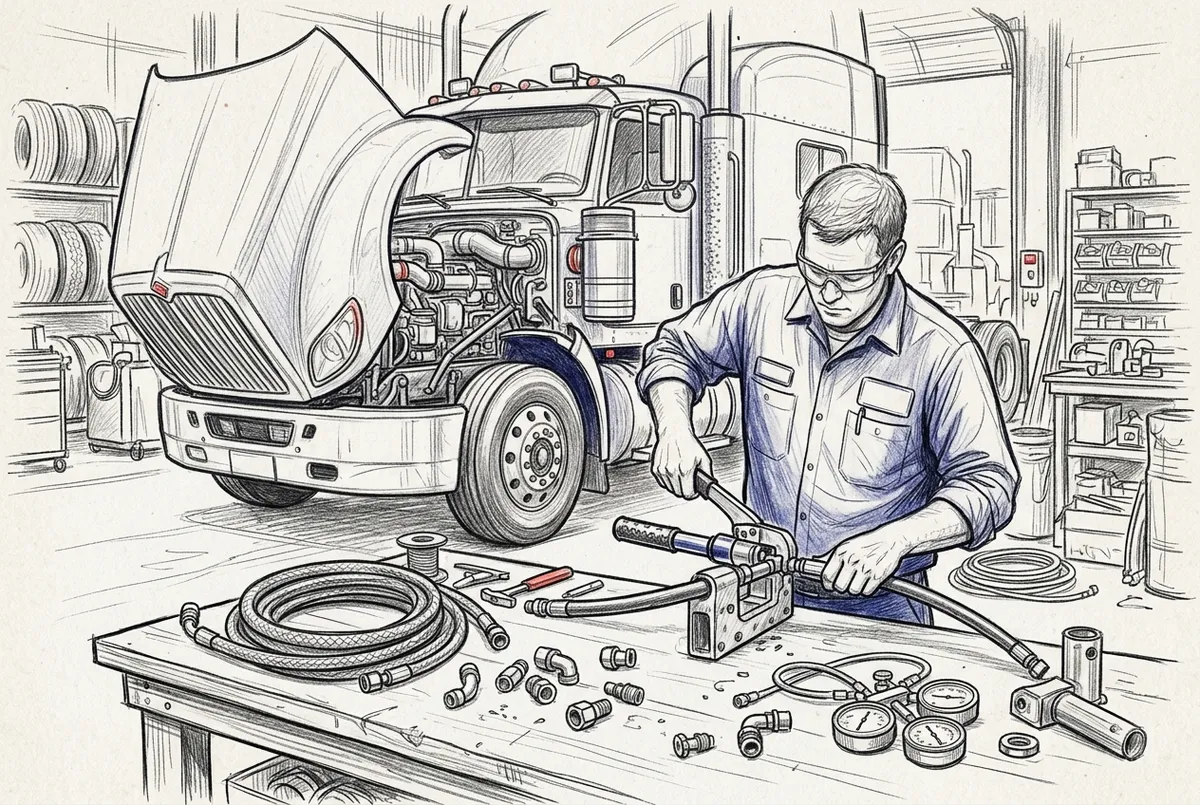
Skilled technicians follow a careful process to fabricate a reliable AC hose. Skipping any step can result in a hose that leaks, fails prematurely, or doesn’t fit properly. Here’s how it’s typically done:
- Measure the failed or existing hose — length, diameter, and routing are all noted carefully
- Select the correct hose type — barrier hoses, refrigerant-rated flex lines, or specialty types depending on the system
- Choose compatible fittings — metric or standard, aluminum or steel, based on the vehicle and refrigerant
- Account for crimp growth — hoses typically gain about a quarter inch on each end during crimping, so technicians adjust length accordingly
- Mark orientation — especially important for hoses with angled fittings to ensure correct routing after installation
- Crimp the assembly to spec — using calibrated crimping equipment for a leak-free, secure connection
This process applies whether the technician is building a hose for a transit bus, a long-haul truck, or a piece of construction equipment. Proper technique every time means fewer comebacks and longer-lasting repairs. For a deeper look at how A/C components work together, see our guide on 6 A/C parts every vehicle owner should know in 2026.
Hose Types and Material Compatibility
Not all refrigerant hoses are created equal. The type of hose and fitting materials must match the refrigerant, operating pressure, and environmental conditions the vehicle faces. Here’s a simple comparison to help you understand the differences:
| Hose Type | Common Use | Refrigerant Compatibility | Fitting Material |
|---|---|---|---|
| Standard Barrier Hose | Passenger cars, light trucks | R-134a | Aluminum or steel |
| Heavy-Duty Barrier Hose | Buses, heavy trucks | R-134a, HFO-1234yf | Steel or brass |
| Metric Hose Assembly | Import vehicles, specialty equipment | R-134a | Metric aluminum fittings |
| Flexible Specialty Line | RVs, off-road equipment | R-134a, R-12 retrofit | Aluminum or stainless |
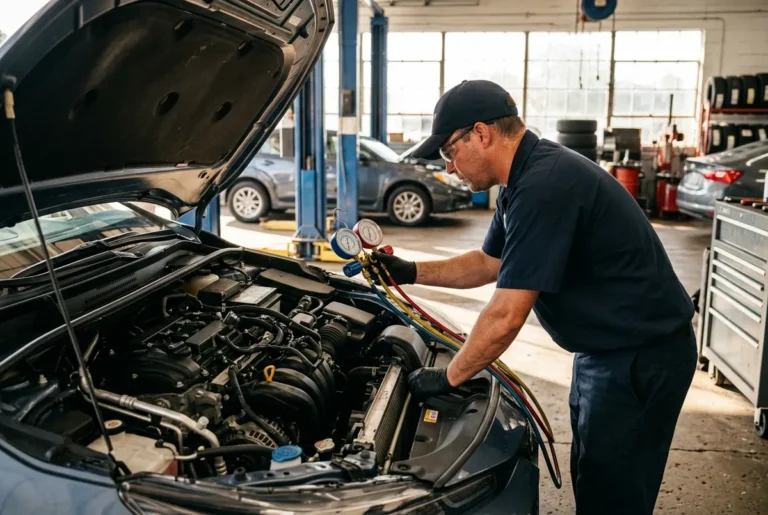
When you bring a vehicle in for fleet AC hose fabrication, the technician will confirm which refrigerant your system uses before selecting materials. Getting this right is critical for system performance and longevity. You can also explore our A/C parts inventory to see the range of components available for your fleet.
4. Why Fleet Managers Benefit From AC Hose Programs
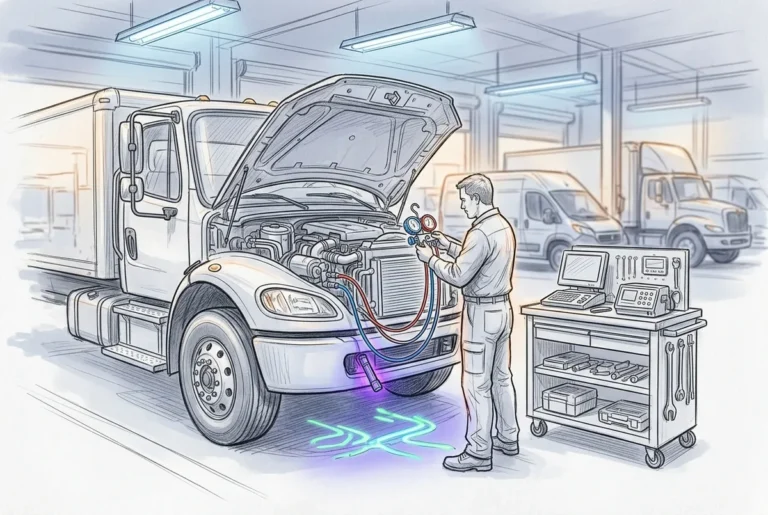
Managing a fleet means keeping multiple vehicles running at once. One AC failure is annoying. Multiple AC failures are a real operational headache. That’s exactly why fleet-focused hose programs exist — and why smart fleet managers take advantage of them.
A fleet AC hose program lets you standardize how your vehicles are serviced. Instead of scrambling to source parts vehicle by vehicle, you work with a shop that knows your fleet and stocks or builds the hoses you need regularly.
- Faster turnaround — some shops offer same-day or while-you-wait fabrication
- Consistent quality across all vehicles in your fleet
- Reduced downtime and fewer emergency repair situations
- Simplified ordering and service scheduling
- Access to technicians who know your vehicles’ specific needs
Fleet managers who partner with a dedicated A/C shop gain a huge advantage over those who rely on general repair shops. Specialized knowledge means faster diagnosis, better parts selection, and more reliable results. See how preventive vs. reactive fleet AC maintenance stacks up — and why being proactive almost always wins.
You can also follow along with Marks Air on Facebook for tips, updates, and fleet service information tailored to Tampa-area operators.
5. Custom Fabrication Works for Heavy-Duty and Specialty Vehicles
One of the biggest advantages of custom fleet AC hose fabrication is that it works for virtually any vehicle — including the ones that are hardest to find parts for. Heavy-duty trucks, off-road construction equipment, agricultural machinery, and specialty vehicles often have AC systems that simply don’t have widely available replacement hoses.
For these applications, fabrication isn’t just convenient — it’s often the only option. Waiting on a factory hose for a piece of excavation equipment or a specialty transit vehicle can take weeks or months. A skilled technician can measure the existing hose, fabricate a matching replacement, and have the equipment back in service the same day.
- Construction and agricultural equipment with older or unique AC systems
- Long-haul trucks with complex hose routing
- Transit buses and shuttle vehicles requiring durable, high-cycle assemblies
- Emergency vehicles where downtime is simply not an option
- RVs and specialty coach vehicles with custom-built AC layouts
If your operation includes heavy equipment with AC, don’t assume you’re stuck waiting. A shop experienced in heavy-duty AC evaporator replacement and custom hose work can usually get you sorted out faster than you’d expect. Learn more about custom AC systems for trucks that are built to handle tough conditions.
6. Choosing the Right Shop for Fleet AC Hose Fabrication in Tampa
Not every auto shop has the equipment, training, or experience to handle fleet AC hose fabrication correctly. This is a specialized service that requires calibrated crimping tools, a knowledge of refrigerant-rated materials, and experience with a wide variety of vehicle types.
Here’s what to look for when choosing a shop for your fleet:
- Specialization in mobile A/C systems — not just general auto repair
- Experience with commercial vehicles — trucks, buses, and heavy equipment
- A solid parts inventory — so they can build your hose without waiting on suppliers
- Same-day or fast turnaround capability — because fleet downtime costs money
- Proper certifications and training — including EPA 609 and refrigerant handling credentials
In Tampa, Marks Air has been the go-to A/C specialist for cars, trucks, buses, RVs, and heavy equipment since 1971. As a family-owned, woman-owned business with over five decades of focused experience, they carry a full line of A/C parts — including their KOOL-TEMP line and brands like SPAL, ACT, BCC, and gpd — and offer in-house diagnostics, custom hose work, and full AC service all under one roof.
You can read what real Tampa-area customers have to say on Yelp or visit Marks Air on Google to check reviews and get directions to the shop. For fleet managers looking to learn more about AC systems and refrigerant handling, the shop also offers A/C training programs covering EPA 609 certification, HFO-1234yf, and more.
If you’re dealing with a failed hose or want to set up a fleet service arrangement, don’t wait until more vehicles go down. Explore the full range of AC services available, and reach out to get your fleet back to full cooling capacity.
Keep Your Fleet Cool — It’s Easier Than You Think
Fleet AC hose fabrication doesn’t have to be complicated or stressful. With the right shop partner, you can get custom hoses built fast, keep your drivers comfortable, and reduce the operational headaches that come with unexpected AC failures. Whether you’re running delivery vans around Tampa or managing a heavy equipment fleet, custom hose fabrication is a smart, cost-effective solution.
Understanding the basics — from hose anatomy to material selection to the fabrication process — helps you make better decisions for your fleet. And knowing what to look for in a service partner means fewer surprises and more reliable results season after season. Check out our fleet vehicle AC diagnostics resource for even more ways to stay ahead of cooling system problems.
Also, if you’ve had issues with common AC problems, our guide on 10 reasons your AC is blowing warm air is a great place to start troubleshooting before your next service visit. And for Tampa-specific tips, see why AC repair in Tampa is so important for your vehicle.
Ready to get your fleet’s AC hoses inspected or fabricated? Schedule your fleet AC service with Marks Air today, or give the team a call at 813-988-1671 — they’re ready to help you keep every vehicle in your fleet running cool all year long.
FAQs
Q: What is fleet AC hose fabrication and why does it matter?
A: Fleet AC hose fabrication is the custom building of refrigerant hose assemblies for commercial vehicles like trucks, buses, and heavy equipment. It matters because standard off-the-shelf hoses often don’t fit specialty or older vehicles, and custom fabrication gets your fleet back on the road much faster than waiting on OEM parts.
Q: How long does it take to fabricate a custom AC hose for a fleet vehicle?
A: Many shops offering fleet AC hose fabrication can complete a custom assembly the same day — sometimes while you wait! The exact time depends on the complexity of the hose, the fittings required, and parts availability, but fast turnaround is a major advantage of working with a shop that stocks refrigerant-rated materials.
Q: Can custom AC hoses be built for heavy-duty trucks and off-road equipment?
A: Absolutely! Custom fleet AC hose fabrication is especially valuable for heavy-duty trucks, construction equipment, and specialty vehicles where OEM hoses may be unavailable or take weeks to source. A skilled technician can measure the existing hose and fabricate a precise replacement for virtually any application.
Q: What materials are used in refrigerant hose assemblies for fleet vehicles?
A: Fleet AC hose assemblies typically include a refrigerant-compatible inner tube, a reinforcement braid for pressure strength, braid collars, a protective outer cover, and metal fittings made from aluminum or steel. The exact materials must be matched to the refrigerant type — such as R-134a or HFO-1234yf — to ensure safety and longevity.
Q: Why should fleet managers use a dedicated AC hose program?
A: A fleet AC hose program lets fleet managers standardize repairs, simplify ordering, and work with technicians who already understand their vehicles’ needs. This means faster service, more consistent quality across the fleet, and fewer surprise breakdowns — all of which save time and money in the long run.