Key Takeaways
-
Commercial vehicle AC parts are larger, more durable, and built for longer run times than passenger car parts; using incorrect parts can cause system failure and refrigerant leaks, so always source parts rated for your specific vehicle type.
-
The compressor is the most commonly replaced AC part in heavy-duty applications; catching early signs like strange noises or weak cooling prevents complete system failure and costly emergency repairs.
-
Refrigerant leaks from cracked hoses, worn O-rings, and damaged fittings are the most common cause of AC failure; preventive maintenance like pre-summer inspections and replacing the receiver-drier during major repairs protects the entire system.
-
Replace the receiver-drier every time the system is opened for major repairs to remove moisture that causes corrosion, ice crystals, and acid buildup—this inexpensive part prevents expensive component damage.
-
Commercial vehicles transitioning to HFO-1234yf refrigerant require specific compatible parts and handling procedures; using wrong refrigerant types or mixing them can damage components and void warranties.
-
Proactive fleet maintenance with regular inspections before summer and after heavy-use seasons is almost always cheaper than emergency repairs and keeps vehicles from sitting idle during peak operating periods.
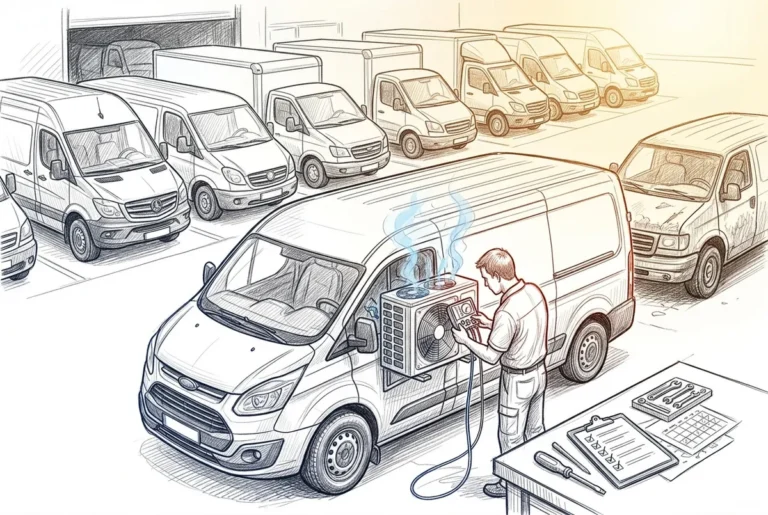
If you operate a truck, bus, RV, or heavy equipment in Tampa, you already know how brutal the Florida heat can be. A working air conditioning system isn’t a luxury — it’s a necessity. Whether you’re a long-haul driver, a fleet manager, or a bus operator, keeping your A/C in top shape depends on one thing: having the right commercial vehicle AC parts in place and in good condition.
Commercial vehicle A/C systems are built differently from the ones in your everyday passenger car. They handle more stress, longer run times, and tougher conditions. That means when something breaks, you need parts that are up to the job. Knowing which parts matter most — and why — helps you make smarter decisions when it’s time for a repair or replacement.
Let’s walk through everything you need to know about commercial vehicle AC parts, from what they are to how they work and when to replace them.
How a Commercial Vehicle AC System Works
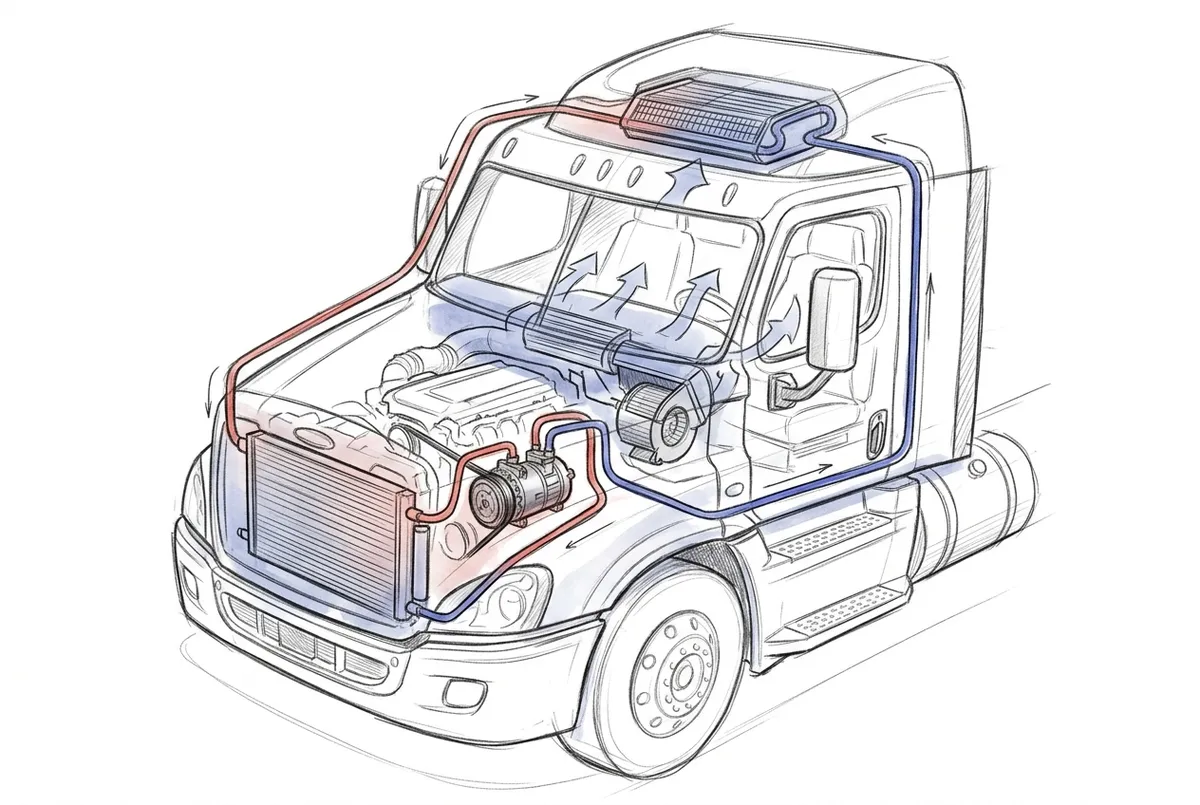
Before diving into individual parts, it helps to understand the big picture. A commercial vehicle A/C system works by moving refrigerant through a closed loop of components. Each part plays a specific role in cooling the cab or passenger compartment. The system pulls heat out of the air inside the vehicle and releases it outside, leaving cool, dehumidified air behind.
Commercial systems are designed for longer operating hours and heavier thermal loads than standard passenger vehicle A/C units. That’s why the parts used in trucks, buses, and heavy equipment are often larger, more durable, and built to tighter tolerances. You can learn more about how these systems compare on the Marks Air AC Services page.
The Most Important Commercial Vehicle AC Parts
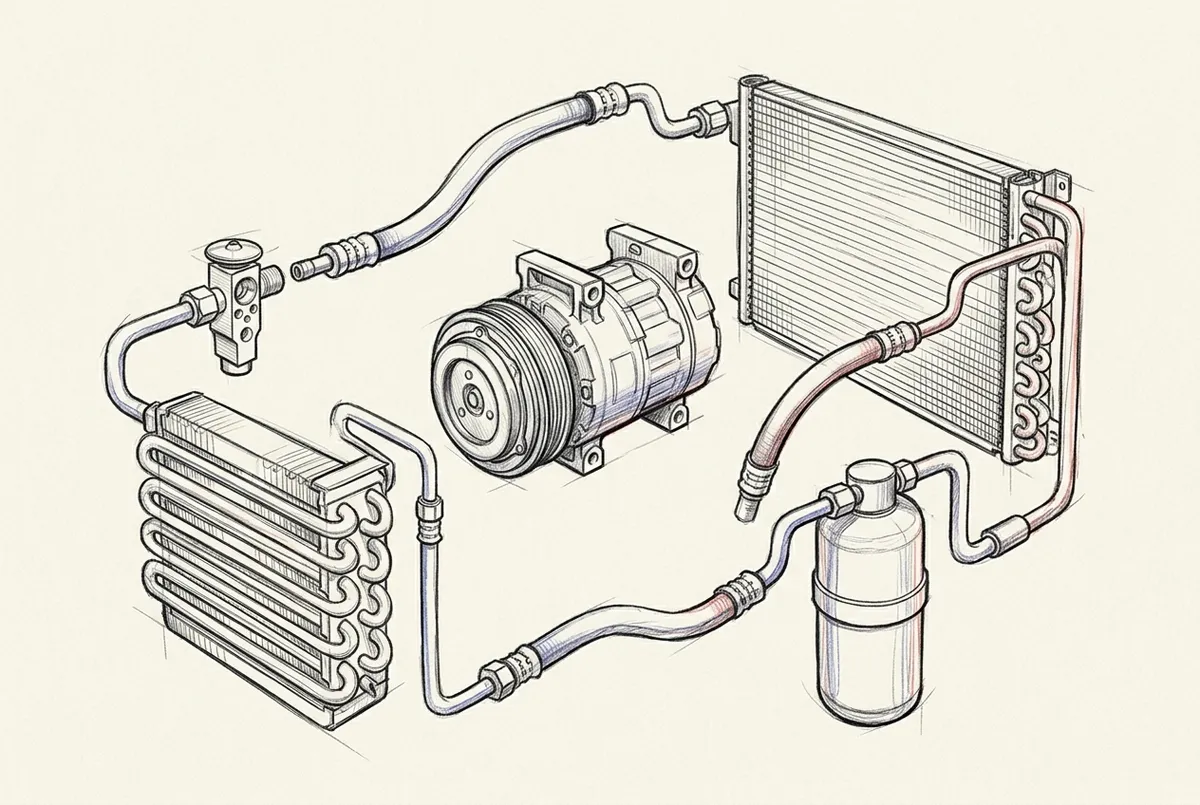
Every component in the system matters, but some parts do the heaviest lifting. Here’s a look at the key components you’ll encounter in a commercial vehicle A/C system.
1. The AC Compressor
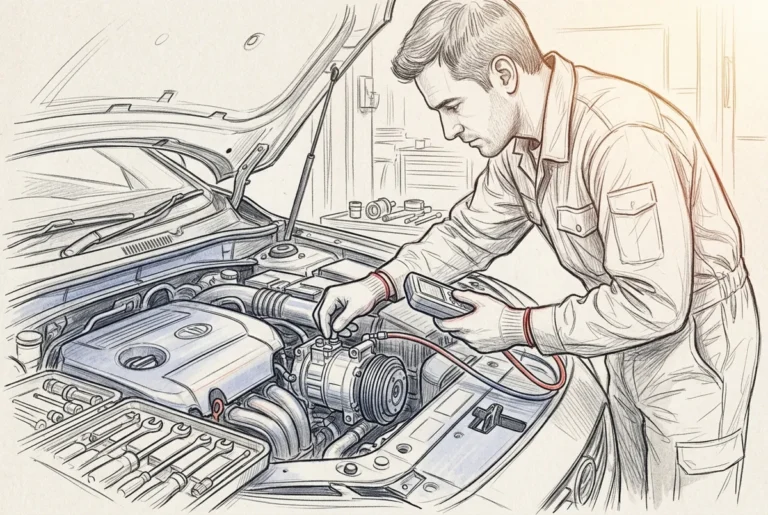
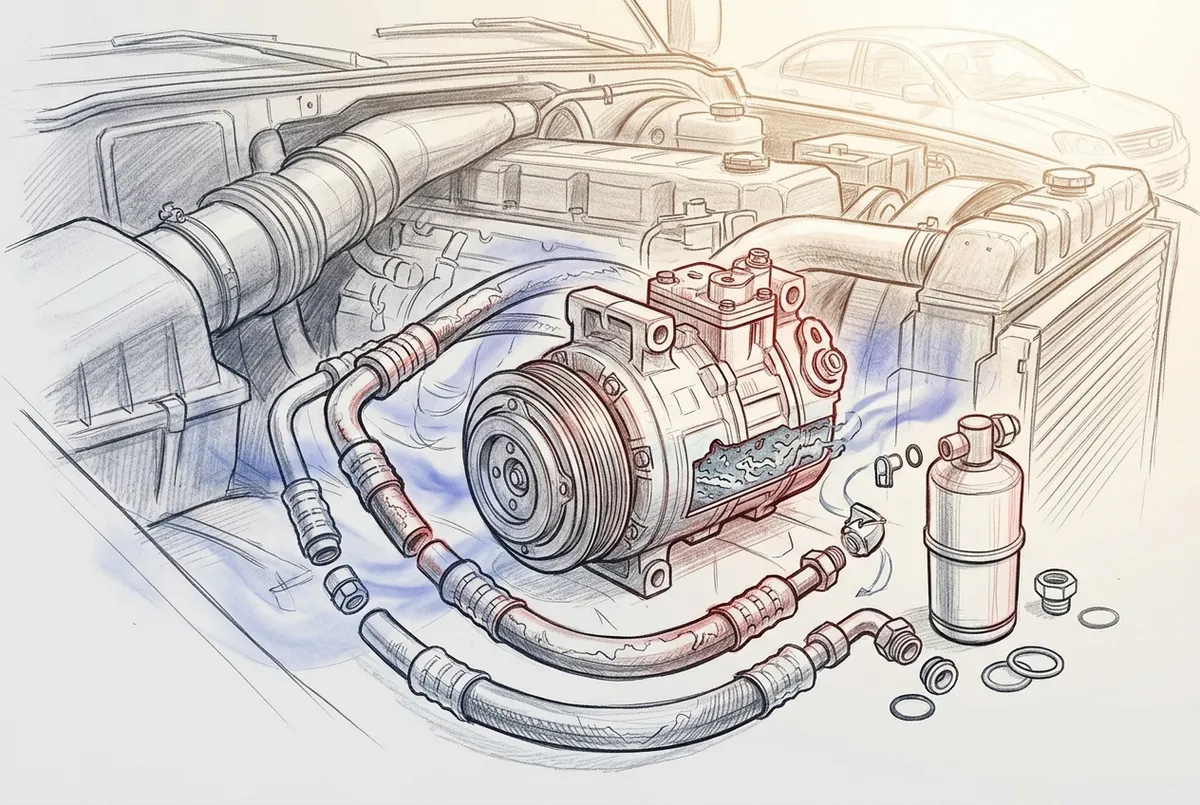
The compressor is the heart of any A/C system. It pressurizes the refrigerant and keeps it moving through the system. In commercial vehicles, compressors face higher demand and more wear than in passenger cars. That’s why compressors are one of the most commonly replaced parts in heavy-duty A/C service.
Aftermarket suppliers manufacture and remanufacture compressors for a wide range of truck, bus, and off-road applications. If your compressor fails, cooling stops completely. Catching the early signs — like strange noises or weak cooling — can save you from a full breakdown. Check out this guide on how to fix an AC compressor in your vehicle for more detail.
2. The Condenser
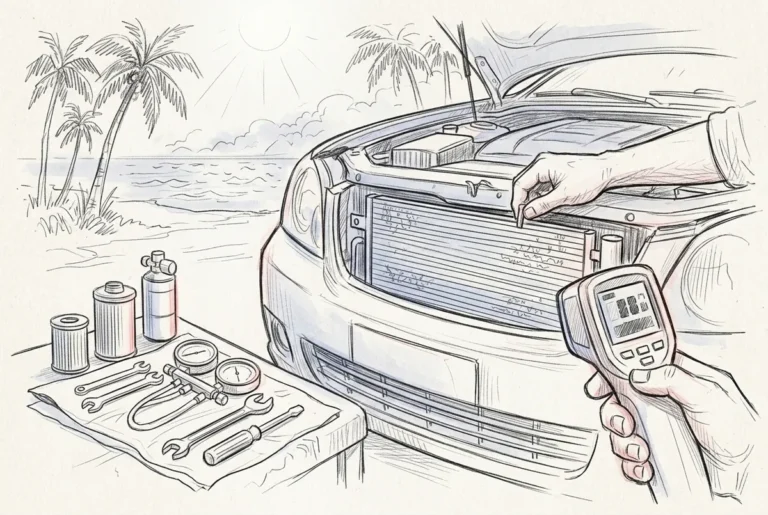
The condenser looks a lot like a radiator and sits at the front of the vehicle. Its job is to release heat from the refrigerant to the outside air. In commercial vehicles, condensers are exposed to road debris, bugs, and heavy airflow, which can cause damage over time.
A clogged or damaged condenser reduces the system’s ability to shed heat, which makes the whole system work harder. Regular inspection helps catch problems early before they cascade into bigger repairs.
3. The Evaporator
The evaporator sits inside the cab and absorbs heat from the air inside the vehicle. When warm air passes over the cold evaporator coil, it releases its heat into the refrigerant and comes out cool. Evaporators in commercial vehicles can develop leaks or get clogged with debris over time.
Heavy-duty evaporator replacement is a more involved job, but it’s critical for system performance. You can read more about heavy duty AC evaporator replacement on the Marks Air blog.
4. The Receiver-Drier or Accumulator
This part filters the refrigerant and removes moisture from the system. Moisture in an A/C system causes corrosion, ice crystals, and acid buildup — all of which damage components. Driers and accumulators are inexpensive parts that protect the rest of the system, so they should be replaced whenever the system is opened for a major repair.
5. Expansion Valve or Orifice Tube
These components regulate how much refrigerant enters the evaporator. If too much or too little refrigerant flows through, the system loses efficiency. A faulty expansion valve can cause the evaporator to freeze over or deliver inconsistent cooling.
6. Blower Motor
The blower motor pushes air across the evaporator and into the cab. Without it, even a perfectly working refrigerant circuit won’t cool the vehicle. Blower motors in commercial vehicles run for long hours, which means they wear out faster. Learn about common truck AC blower motor repair fixes that actually work.
7. Hoses, O-Rings, and Fittings
These smaller components connect everything together and keep the refrigerant sealed inside the system. A small leak from a cracked hose or worn O-ring can cause refrigerant loss and system failure. Fleet AC hose fabrication is a specialty service that keeps commercial systems running tight and leak-free.
Common Commercial Vehicle AC Parts at a Glance
| Part | Function | Replacement Frequency |
|---|---|---|
| Compressor | Pressurizes refrigerant | As needed (high wear item) |
| Condenser | Releases heat outside | When damaged or clogged |
| Evaporator | Absorbs heat from cab air | When leaking or clogged |
| Receiver-Drier | Filters moisture | Every major repair |
| Expansion Valve | Regulates refrigerant flow | When system efficiency drops |
| Blower Motor | Circulates air in cab | When airflow weakens |
| Hoses and O-Rings | Seal and connect components | When leaks are detected |
How Commercial Vehicle AC Parts Differ from Passenger Car Parts
This is a question that comes up a lot: can you just use standard car AC parts in a commercial vehicle? The short answer is no — and here’s why.
- Size and capacity: Commercial parts are larger to handle higher thermal loads.
- Durability: Heavy-duty parts are built for longer run times and rougher conditions.
- Refrigerant compatibility: Some commercial systems use different refrigerants or pressures.
- Fitment: Parts are designed specifically for the mounting points and configurations of trucks, buses, and equipment.
- Vibration resistance: Commercial vehicles create more vibration, which requires more robust seals and fittings.
Using the wrong part can cause system failure, refrigerant leaks, or even damage to other components. Always source parts that are rated for your specific vehicle type and application.
Most Common Causes of AC Failure in Commercial Vehicles
Understanding what causes breakdowns helps you prevent them. Here are the top reasons commercial vehicle A/C systems fail:
- Refrigerant leaks — Often caused by cracked hoses, worn O-rings, or damaged fittings. This is the most common issue across all vehicle types.
- Compressor failure — Usually caused by low refrigerant, lack of lubrication, or normal wear over high mileage.
- Clogged condenser — Road debris and grime block airflow, reducing cooling capacity.
- Faulty expansion valve — Causes poor refrigerant flow and inconsistent cooling.
- Worn blower motor — Reduces airflow and makes the cab feel warm even when refrigerant levels are fine.
- Moisture contamination — Water enters the system through a failed drier and causes internal corrosion or ice blockages.
If your A/C is blowing warm air, take a look at this resource: 10 Reasons Your AC Is Blowing Warm Air and How to Fix It.
What to Look for in Quality Commercial AC Parts
Not all parts are created equal. When sourcing commercial vehicle AC parts, keep these factors in mind:
- OEM specifications: Parts should meet or exceed original equipment standards for your vehicle.
- Warranty coverage: Quality parts come with a warranty. If they don’t, that’s a red flag.
- Brand reputation: Trusted brands have proven track records in heavy-duty applications.
- Availability: Same-day availability matters when a vehicle is down and you need it running fast.
- Full-system coverage: Sourcing parts from suppliers with broad inventory makes it easier to get everything you need in one place.
At Marks Air, the team stocks a full line of A/C parts — including the KOOL-TEMP parts line and components from trusted brands like SPAL, ACT, BCC, gpd, and Omega. Many items are available the same day, which is a huge deal when a commercial vehicle is sitting idle in the Tampa heat. Browse the AC parts inventory to see what’s available.
You can also check out 15 KOOL-TEMP AC parts that keep your vehicle cool for a closer look at what’s in stock.
When to Inspect and Replace Commercial Vehicle AC Parts
Commercial vehicles work hard, and so does their A/C. Here’s a simple inspection schedule to follow:
- Before summer: Check refrigerant levels, inspect hoses and fittings, and test system pressure. In Tampa, that means getting ahead of the heat before it hits full force.
- Every major service: Replace the receiver-drier whenever the system is opened for a repair. It’s a low-cost way to protect the whole system.
- At signs of trouble: Weak airflow, warm air, unusual noises, or visible leaks all mean it’s time for a professional inspection.
- After heavy-use seasons: Buses, delivery trucks, and construction equipment that run all summer should have A/C systems inspected in the fall.
For fleet operators, staying proactive saves money. Preventive maintenance is almost always cheaper than emergency repairs. Explore more at Preventive vs. Reactive Fleet AC Maintenance: Which Wins?.
Tools Needed to Service Commercial Vehicle AC Systems
Professional technicians use specialized tools to service commercial A/C systems. These include:
- Manifold gauge sets to measure system pressure
- Vacuum pumps to evacuate air and moisture before recharging
- Refrigerant recovery and recharge machines
- Leak detection equipment
- Hose crimping tools for custom hose fabrication
If you’re a technician looking to sharpen your skills, Marks Air also offers A/C training programs, including EPA 609 certification and HFO-1234yf training. Learn more at the Marks Air Training page. Marks Air is proud to be a member of the Mobile Air Climate Systems Association (MACS), which means they stay current with the latest industry standards.
Refrigerant Considerations for Commercial Vehicles in 2026
Refrigerant type matters more than ever in 2026. Many newer commercial vehicles are transitioning from R-134a to HFO-1234yf refrigerant. These systems require specific parts, tools, and handling procedures. Using the wrong refrigerant or mixing types can damage components and void warranties.
Make sure any replacement parts you source are compatible with your vehicle’s refrigerant type. If you’re not sure, a fleet vehicle AC diagnostic can identify exactly what your system needs. You can also learn more about HFO-1234yf refrigerant for fleets and what the transition means for your vehicles.
Why Sourcing the Right Parts Matters for Commercial Fleets
For fleet managers, every vehicle that’s down costs money. Getting the right commercial vehicle AC parts quickly — and installed correctly — keeps your operation moving. Sourcing from a shop with deep inventory and real expertise makes all the difference.
You can follow Marks Air on Facebook and Instagram for tips, updates, and behind-the-scenes looks at commercial vehicle A/C service. You can also check out real customer feedback on Yelp to see why Tampa fleet operators trust Marks Air year after year. For a quick look at what customers say, visit Marks Air on Google to read reviews and get directions to the shop.
Whether you manage a single work truck or a fleet of buses, having a reliable parts source and service partner in your corner saves time, money, and headaches. Check out these fleet vehicle AC repair tips that save you money for practical advice.
Conclusion
Commercial vehicle AC parts are the building blocks of a reliable, efficient cooling system. From the compressor and condenser to hoses, O-rings, and blower motors, every part plays a role in keeping your cab comfortable and your operation running smoothly. Knowing what these parts do — and when to replace them — puts you ahead of breakdowns before they happen.
In Tampa’s heat, you can’t afford to wait until the A/C fails completely. Staying proactive with inspections, using quality parts, and working with a specialist you trust is the smartest approach for any commercial vehicle operator. Marks Air has been doing this since 1971, and the team is ready to help you find the right parts and get your system back in peak condition.
Ready to get started? Schedule your service appointment today, or give the team a call at 813-988-1671 to talk through what your vehicle needs. The Marks Air team is here to help — and they know their stuff.
FAQs
Q: What parts are included in a commercial vehicle AC system?
A: A commercial vehicle AC system includes the compressor, condenser, evaporator, receiver-drier, expansion valve or orifice tube, blower motor, hoses, O-rings, and fittings. Each part plays a specific role in cooling the cab or passenger compartment, and all of them need to be in good shape for the system to work properly.
Q: Can I use passenger car AC parts in a commercial vehicle?
A: It’s not a good idea! Commercial vehicle AC parts are larger, more durable, and built to handle longer run times and heavier loads than standard car parts. Using the wrong parts can lead to system failure, refrigerant leaks, or damage to other components — so it’s always best to use parts rated for your specific vehicle type.
Q: How often should commercial vehicle AC systems be inspected?
A: At a minimum, commercial vehicle A/C systems should be inspected before summer and after any heavy-use season. Fleet vehicles like buses, delivery trucks, and heavy equipment that run all summer benefit from a fall inspection as well. Catching small issues early prevents costly breakdowns down the road.
Q: What are the most common causes of AC failure in commercial vehicles?
A: The most common causes are refrigerant leaks from worn hoses or O-rings, compressor failure due to wear or low refrigerant, and clogged condensers from road debris. Moisture contamination and faulty expansion valves are also frequent culprits. Regular inspections help catch these issues before they take your vehicle offline.
Q: Where can I get commercial vehicle AC parts in Tampa?
A: Marks Air in Tampa stocks a full line of commercial vehicle AC parts, including their KOOL-TEMP line and components from trusted brands like SPAL, ACT, BCC, gpd, and Omega. Many parts are available the same day, so you can get your vehicle back in service fast. Give them a call at 813-988-1671 or visit their AC parts page online.