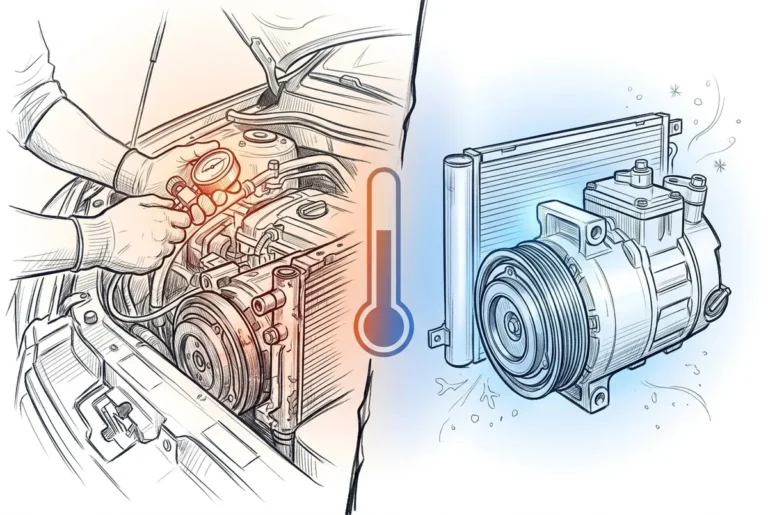

Key Takeaways
-
Fleet managers must invest in dedicated R-1234yf service equipment (recovery/recycle/recharge machines, unique fittings, A2L leak detectors) as standard R-134a equipment cannot be used and cross-contamination can damage systems.
-
Most late-model fleet vehicles purchased since 2018 already use R-1234yf refrigerant, making it essential to identify which refrigerant each vehicle contains before servicing to prevent costly errors.
-
Technicians require EPA 609 certification plus HFO-1234yf specific training to safely handle A2L flammable refrigerants and comply with regulatory requirements for mobile A/C service.
-
R-1234yf has dramatically lower environmental impact (GWP of 4 versus R-134a's 1,430), but costs more per pound, so fleets should prioritize leak prevention and proper recovery/recycling to manage operational costs.
-
Mixed fleets using both R-134a and R-1234yf require separate dedicated equipment, clear labeling, and standardized refrigerant identification procedures before every A/C service to prevent contamination.
-
Regular proactive A/C maintenance and proper charging procedures by weight significantly reduce expensive refrigerant loss and keep fleet vehicles performing reliably with R-1234yf systems.
If you manage a fleet of vehicles in 2026, there is a good chance some of your vehicles already use HFO-1234yf refrigerant. This newer refrigerant has become the standard in many late-model cars, vans, and light trucks. Understanding it can save your fleet time and money. It can also help you avoid headaches during routine A/C service.
This guide breaks down everything fleet managers and vehicle owners need to know about HFO-1234yf refrigerant. We cover what it is, how it differs from older refrigerants, and what your service team needs to handle it safely. Let’s dive in and make this refrigerant thing a little less intimidating!
What Is HFO-1234yf Refrigerant?
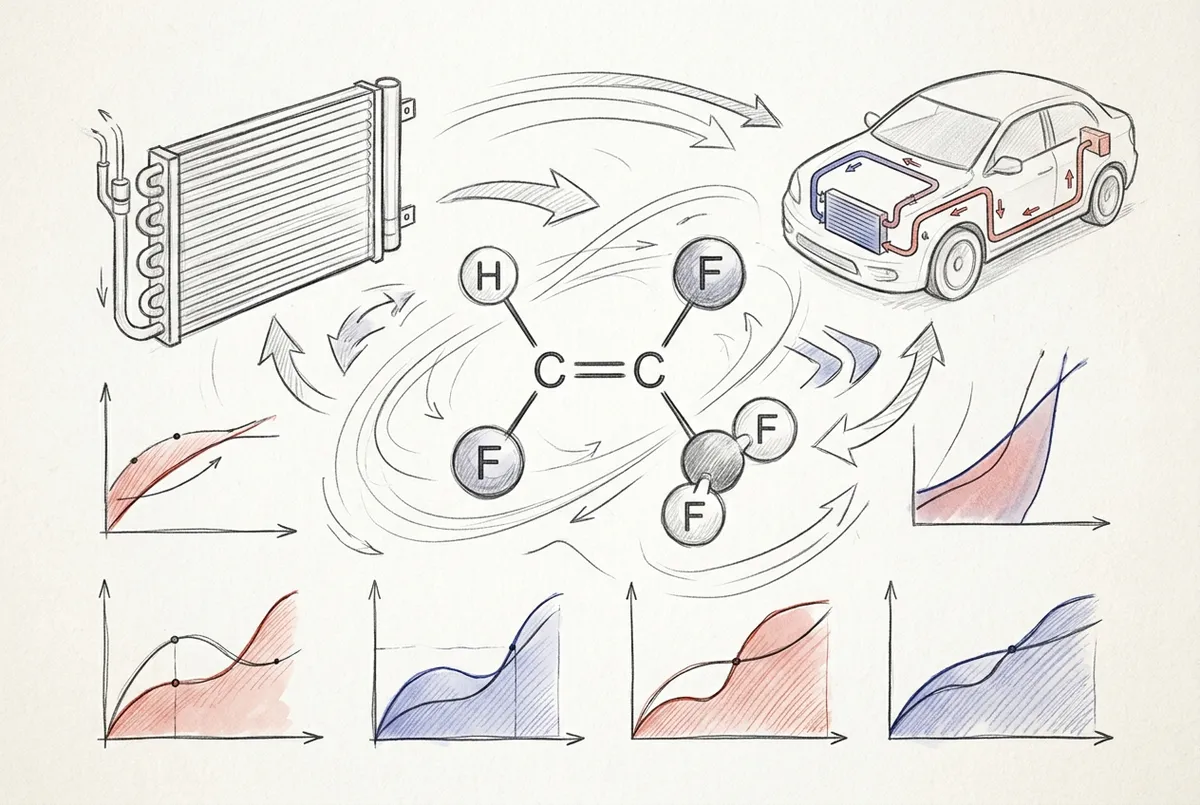
HFO-1234yf (also called R-1234yf) is a modern refrigerant designed for vehicle air conditioning systems. HFO stands for hydrofluoroolefin. That sounds complicated, but the basics are simple. It keeps your vehicle’s A/C system running cold, just like the older R-134a refrigerant did.
The big difference is how it affects the environment. R-1234yf has a global warming potential (GWP) of only about 4. Compare that to R-134a, which has a GWP of about 1,430. That is a massive difference. Switching to R-1234yf means far less climate impact when refrigerant leaks or is released during service.
Automakers began adopting 1234yf in the mid-2010s. By the early 2020s, it had become common across many vehicle models. Today in 2026, a large portion of newer fleet vehicles use this refrigerant. If you are managing late-model cars, vans, or light trucks, chances are good that R-1234yf is already in your fleet. You can also check out our article on 12 Things to Know About R-134a to 1234yf Conversion for more details on the transition.
How R-1234yf Differs From R-134a
Both refrigerants do the same basic job — they absorb and release heat to cool the cabin. But there are some important differences your fleet maintenance team needs to understand.
| Feature | R-134a | R-1234yf (HFO) |
|---|---|---|
| Global Warming Potential (GWP) | ~1,430 | ~4 |
| Flammability Class | A1 (non-flammable) | A2L (mildly flammable) |
| Cooling Performance | Effective | Similar to R-134a |
| Service Equipment Required | Standard R-134a machines | Dedicated 1234yf machines |
| Refrigerant Cost | Lower | Higher |
| Fitting Type | Standard fittings | Unique 1234yf fittings |
The A2L flammability classification is important. R-1234yf is only mildly flammable — it does not ignite easily. But it does require service equipment and handling practices designed for that safety class. You cannot simply use standard R-134a equipment on a 1234yf system. This is a key point for any fleet operation.
Why Fleets Are Seeing More R-1234yf Vehicles
Fleet operators are adding new vehicles every year. Many of these newer models roll off the lot with R-1234yf already installed at the factory. This is partly driven by environmental regulations and automaker commitments to lower-emission vehicles.
Here are the main reasons R-1234yf is now common in fleet vehicles:
- Major automakers adopted 1234yf starting in the mid-2010s as a drop-in replacement for R-134a
- Environmental regulations pushed the industry toward lower-GWP refrigerants
- OEM systems on new vehicles are factory-built and warranted for R-1234yf use
- Fleet replacement cycles mean older R-134a vehicles are being phased out naturally
- Light-duty fleet vehicles like sedans, SUVs, and vans are the most common 1234yf adopters
If your fleet includes any late-model vehicles purchased in the last several years, you almost certainly have at least some R-1234yf units mixed in. That means your service operation needs to be ready for both refrigerant types. Check out our guide on Fleet Vehicle AC Diagnostics: Keep Your Fleet Cool in 2026 to learn how to stay ahead of A/C issues across mixed fleets.
Service Equipment Requirements for R-1234yf
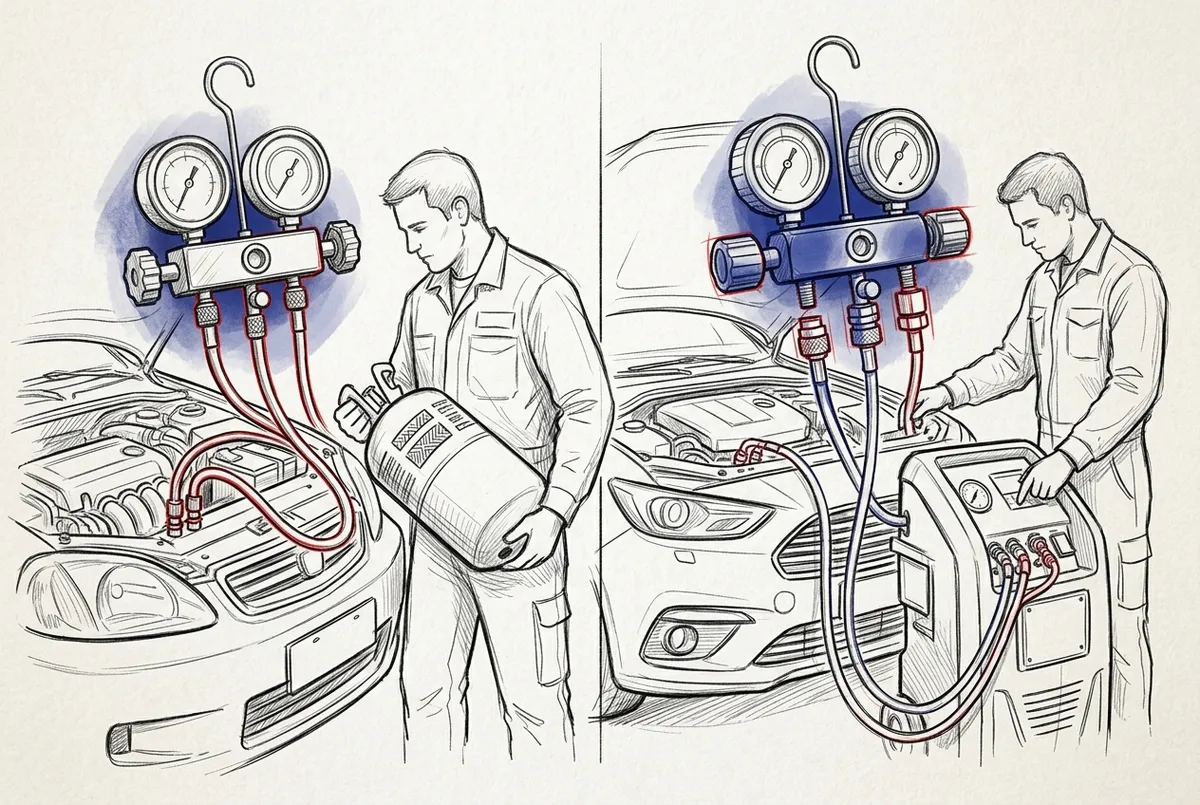
This is where many fleet managers get tripped up. You cannot service R-1234yf systems with standard R-134a recovery and recharge machines. The two refrigerants require completely separate equipment.
Equipment Your Shop Needs
To properly service HFO-1234yf refrigerant for fleets, your service team needs the right tools. Here is what is required:
- Dedicated R-1234yf recovery/recycle/recharge machine — These machines meet SAE J2843 standards, which is the key industry standard for 1234yf service equipment used in mobile A/C systems.
- Refrigerant identifier — Before servicing, technicians should verify which refrigerant is in the system. A refrigerant identifier confirms this and prevents cross-contamination.
- Correct service fittings — R-1234yf uses different service port fittings than R-134a. Using the wrong fittings is not just incorrect — it can damage the system.
- Leak detection tools rated for A2L refrigerants — Because 1234yf has mild flammability, leak detectors need to be compatible with A2L refrigerant types.
- Proper refrigerant storage containers — Recovery tanks and storage must be labeled and dedicated to R-1234yf to prevent mixing with other refrigerants.
This equipment investment is real. But for fleets with multiple 1234yf vehicles, it pays off quickly in proper service and avoided damage. You can also explore our A/C parts inventory for compatible components for your fleet vehicles.
Technician Training and Certification
Handling R-1234yf safely is not something any technician can just wing. Proper training and certification are important — not just for safety, but for compliance and quality results.
Here is what technicians working on 1234yf systems should have:
- EPA 609 certification — Required for anyone purchasing refrigerants and servicing mobile A/C systems in the U.S.
- HFO-1234yf specific training — Covers the differences in handling, safety procedures, and service techniques for A2L refrigerants
- Familiarity with OEM and SAE service standards — Ensures proper recovery, evacuation, and recharge procedures are followed
- Hands-on practice with 1234yf-rated equipment — Real-world experience with the right machines matters
At Marks Air, we offer A/C training programs that cover EPA 609 certification, HFO-1234yf training, and MVAC best practices. We are also a proud member of the Mobile Air Climate Systems Association (MACS), which keeps us aligned with the latest industry standards. If your technicians need to get up to speed on 1234yf, check out our training programs to see how we can help.
For fleet managers who want to avoid common certification pitfalls, our article on 13 EPA 609 Certification Training Mistakes to Avoid is a great resource.
How to Tell If a Fleet Vehicle Uses R-1234yf
You don’t want your technician guessing which refrigerant is in a vehicle. Here are the easiest ways to confirm:
- Check the underhood label — Most vehicles have a label near the A/C service ports that specifies the refrigerant type and charge amount.
- Look at the service port fittings — R-1234yf ports use a unique fitting style different from R-134a ports. A trained technician can spot the difference quickly.
- Check the vehicle’s year, make, and model — Many newer vehicles (generally 2018 and newer for most brands, with some earlier) use 1234yf. An OEM parts reference or service manual will confirm.
- Use a refrigerant identifier — This tool provides a definitive answer before any service begins, protecting the equipment and the system.
Getting this step right protects your investment in service equipment and keeps your fleet vehicles performing at their best. For more on diagnosing A/C issues across your fleet, visit our A/C services page.
Managing R-1234yf Costs in Fleet Operations
One thing fleet managers notice right away is that R-1234yf costs more per pound than R-134a. This is a real operational consideration. Here is how to manage those costs wisely:
- Prioritize leak prevention and detection — Losing refrigerant through leaks is expensive with 1234yf. Early leak detection saves money. Our guide on 13 AC Leak Mistakes That Cost Car Owners More Money has great tips.
- Always recover and recycle — Never vent 1234yf to the atmosphere. Proper recovery and recycling stretches your refrigerant supply and keeps your operation compliant.
- Schedule proactive A/C maintenance — Regular inspections catch issues early before they become expensive repairs. See our article on Preventive vs. Reactive Fleet AC Maintenance: Which Wins?
- Train technicians properly — Mistakes during service can waste refrigerant. Skilled technicians minimize refrigerant loss during every service visit.
- Use proper charging procedures — Always charge by weight, not by pressure, to avoid overcharging or undercharging systems.
These steps help control costs while keeping your fleet vehicles cool and your drivers comfortable. You can also find more money-saving tips in our guide on 4 Fleet Vehicle AC Repair Tips That Save You Money.
Benefits of R-1234yf for Fleet Operators
Yes, there are real benefits to embracing R-1234yf in your fleet — beyond just regulatory compliance. Here is the positive side of the picture:
- Cooling performance is similar to R-134a, so driver comfort is not sacrificed
- OEM systems are factory-designed for 1234yf, meaning better compatibility and fewer warranty issues
- Lower environmental impact supports corporate sustainability goals
- Staying current with refrigerant standards keeps your fleet ahead of future regulations
- Shops equipped for 1234yf can handle the full spectrum of modern fleet vehicles
Working with a knowledgeable A/C service partner makes all the difference. Marks Air has been serving Tampa fleets since 1971, and our team is fully equipped and trained for HFO-1234yf refrigerant service. You can see what our customers say at our reviews page or check out our profile on Yelp for more honest feedback from real customers.
Servicing Mixed Fleets: Both R-134a and R-1234yf
Most fleets in 2026 are mixed — some older vehicles still use R-134a, while newer additions use R-1234yf. Managing both is very doable with the right setup.
- Maintain separate, dedicated equipment for each refrigerant type — Never cross-contaminate machines or refrigerant supply.
- Label all equipment and storage clearly — Clear labeling prevents mistakes during busy service days.
- Build a refrigerant ID step into every A/C service workflow — Make it standard practice before any service begins.
- Keep a vehicle A/C log for your fleet — Tracking which vehicles use which refrigerant simplifies service scheduling.
- Partner with a shop that handles both — If you outsource fleet A/C service, make sure your shop is equipped for both refrigerant types.
If you are dealing with A/C issues in your fleet right now, our 8 Tampa Fleet AC Repair Mistakes That Cost You More article can help you avoid costly errors. You can also follow us on Facebook for helpful tips and updates from our team.
Bringing It All Together
HFO-1234yf refrigerant for fleets is not a trend — it is the new reality of vehicle A/C service. More fleet vehicles use it every year. The shift brings lower environmental impact and OEM-compatible performance, but it also requires dedicated equipment, proper training, and updated service procedures.
The good news? With the right service partner and well-trained technicians, managing R-1234yf is completely straightforward. Whether you are running a small delivery fleet or a large commercial operation, staying ahead of the refrigerant transition protects your vehicles and your bottom line.
If you have questions about your fleet’s A/C systems or need expert 1234yf service in Tampa, we would love to help. Visit us on Google — Marks Air to read customer reviews and get directions to our Tampa location. Our team is ready and equipped for all your fleet A/C needs — from diagnostics to refrigerant recovery and recharge.
Ready to get your fleet’s A/C systems in great shape? Schedule your fleet A/C service with Marks Air today, or give us a call at 813-988-1671. We are happy to answer your questions and get your vehicles back to cooling perfectly!
FAQs
Q: What is HFO-1234yf refrigerant and how is it different from R-134a?
A: HFO-1234yf (R-1234yf) is a modern vehicle A/C refrigerant designed to replace R-134a in newer cars and trucks. The biggest difference is environmental impact — R-1234yf has a global warming potential (GWP) of only about 4, compared to R-134a’s GWP of about 1,430. Cooling performance is similar, but the two refrigerants require completely separate service equipment and fittings!
Q: Do fleet vehicles need special A/C service equipment for R-1234yf?
A: Yes, absolutely — this is one of the most important things to know! R-1234yf systems require dedicated recovery, recycle, and recharge machines that meet SAE J2843 standards, along with unique service port fittings and A2L-rated leak detection tools. Standard R-134a equipment cannot be used on a 1234yf system, so having the right gear is essential for proper, safe service.
Q: Is HFO-1234yf safe to work with in fleet maintenance operations?
A: R-1234yf is classified as an A2L refrigerant, meaning it is mildly flammable — but don’t let that worry you too much! With proper training, A2L-rated equipment, and safe handling procedures, it can be serviced safely in any well-run fleet maintenance operation. Technicians should have EPA 609 certification and HFO-1234yf specific training before handling this refrigerant.
Q: Why is R-1234yf refrigerant more expensive than R-134a?
A: R-1234yf costs more due to its more complex manufacturing process and the specialized production required to create a low-GWP hydrofluoroolefin refrigerant. The good news is that proper recovery and recycling during service can help manage costs over time. Preventing leaks and training technicians to handle refrigerant carefully also goes a long way toward keeping service costs under control.
Q: Which fleet vehicles are most likely to use HFO-1234yf refrigerant?
A: Most late-model light-duty fleet vehicles — including sedans, SUVs, minivans, and light trucks — are likely to use R-1234yf, especially models from roughly 2018 onward for many major brands. The best way to confirm which refrigerant a specific vehicle uses is to check the underhood A/C service label, inspect the service port fittings, or use a refrigerant identifier before any service begins.