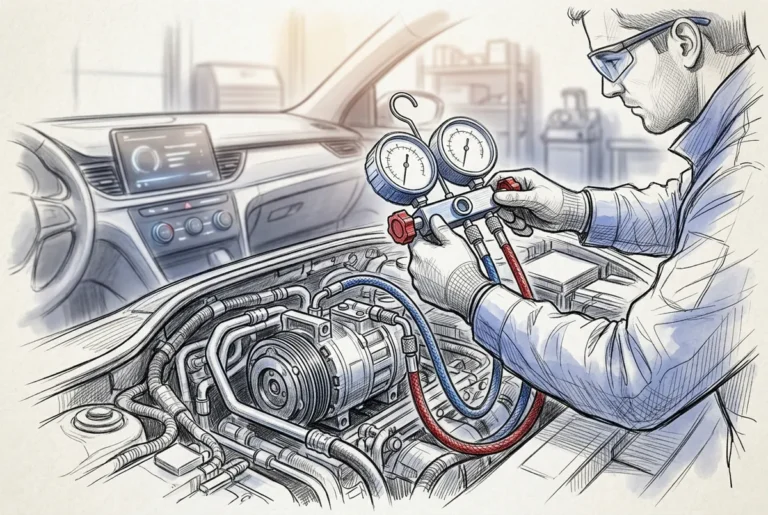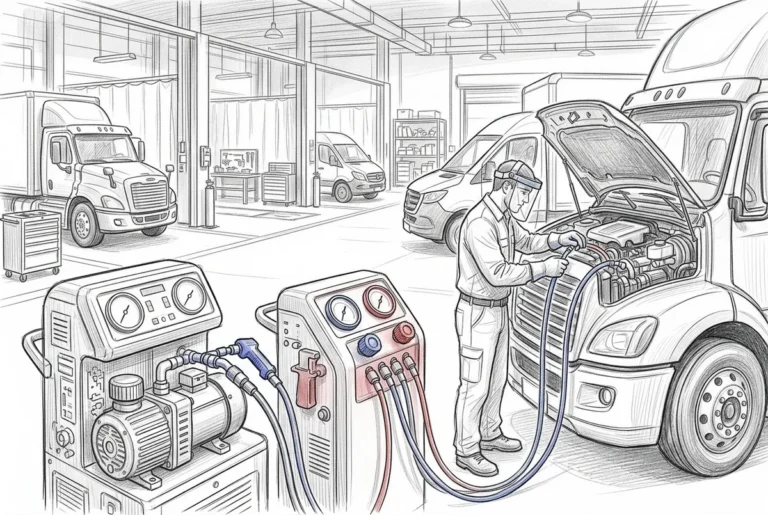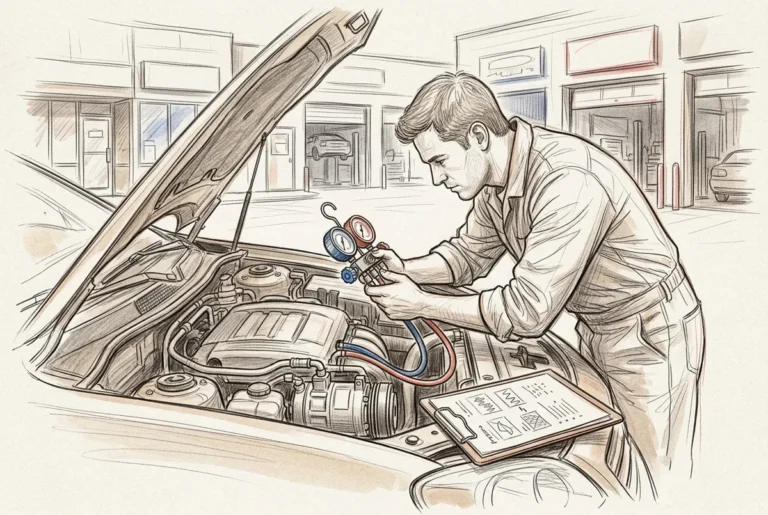

Key Takeaways
-
Check and clean the condenser weekly during peak season by removing debris with compressed air, as dust and chaff buildup blocks airflow and reduces cooling efficiency by up to 30%.
-
Schedule professional A/C service before peak season to detect leaks and refrigerant issues early, avoiding equipment failure during the hottest work periods when downtime is most costly.
-
Monitor refrigerant levels regularly for signs of leaks (warm air, frequent compressor cycling, ice formation) and have a certified technician repair leaks before recharging to avoid wasting money and harming the environment.
-
Replace cabin air filters frequently in dusty conditions—sometimes every few days during harvest—as clogged filters restrict airflow and reduce cooling performance in the operator cab.
-
Inspect the compressor belt regularly for wear, cracking, or looseness, as a failing belt reduces compressor speed and cooling output without obvious warning signs until performance drops significantly.
-
Work only with EPA-certified technicians holding Type II or MVAC Section 609 certification, as improper refrigerant handling can result in serious fines and environmental damage on MVAC-like agricultural systems.
If you operate a tractor or other farm equipment in the heat, you know how brutal it can get inside the cab. Temperatures can soar, and without a working A/C system, productivity drops fast. That’s why agricultural equipment AC service is so important for anyone running machinery in the field. A comfortable operator is a safer, more productive one.
The good news? Farm equipment A/C systems work a lot like the ones in your car or truck. That means experienced mobile A/C specialists can service them efficiently. Whether you manage one tractor or a full fleet of heavy machinery, keeping the cab cool is not optional during Florida summers. Let’s walk through five practical tips that will help you keep your agricultural equipment A/C running strong all season long.
Why Agricultural Equipment AC Service Matters
Farm equipment cabs are designed to protect operators from heat, dust, and noise. The A/C system is a critical part of that protection. Most tractor A/C systems, when working properly, can cool the cab about 20 to 30 degrees Fahrenheit below the outside air temperature. That’s a huge difference when it’s 95°F outside.
Beyond comfort, a working A/C system helps reduce operator fatigue. Tired operators make more mistakes. Keeping the cab cool supports focus and safety during long work days. It’s not just a luxury — it’s a practical investment in your operation.
For heavy equipment operators in Tampa and the surrounding area, professional A/C services for agricultural machinery are available at shops with the right tools and certifications. Not every general mechanic is equipped to handle refrigerant systems on farm equipment, so finding a specialist matters.
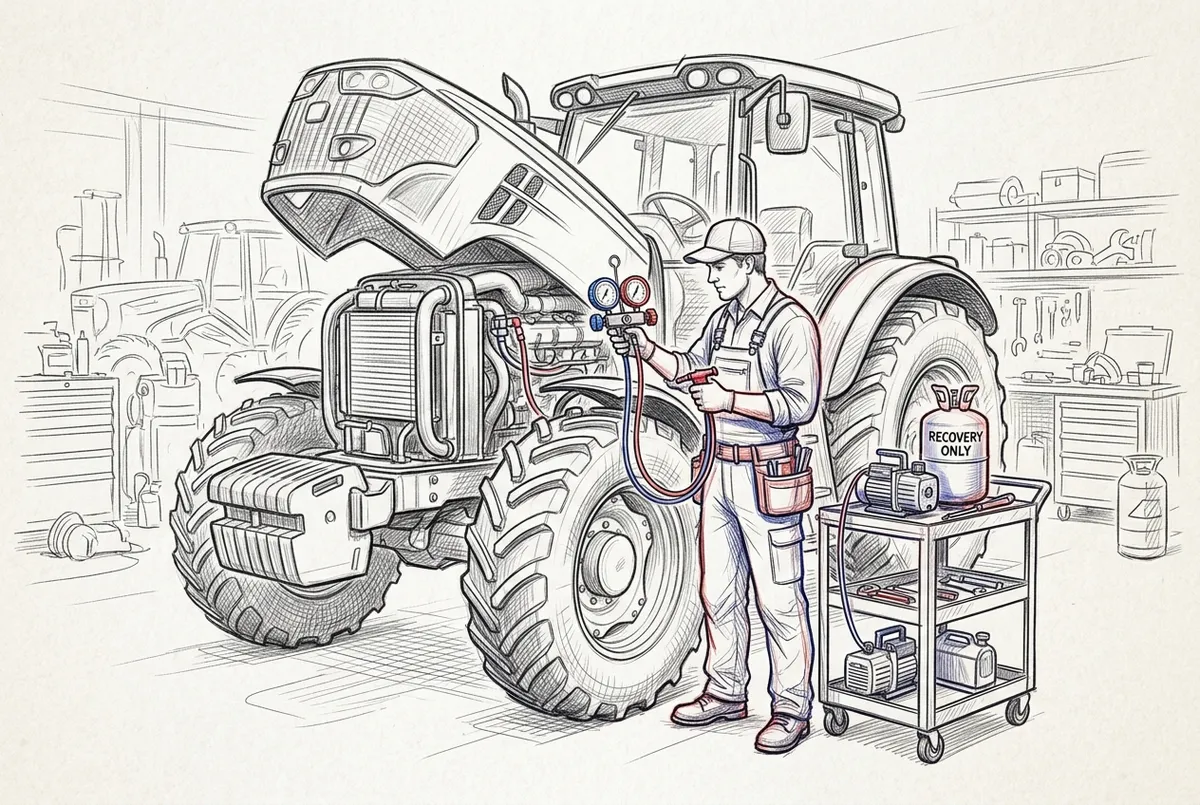
Understanding EPA Rules for Farm Equipment AC
Before we get into maintenance tips, it’s worth knowing the rules. The EPA classifies agricultural equipment A/C systems as MVAC-like appliances. This puts them in a special category under Sections 608 and 609 of the Clean Air Act and regulations at 40 CFR 82.
Here’s what that means in plain terms:
- It is illegal to vent refrigerant from these systems into the atmosphere
- Refrigerant must be properly recovered and recycled using certified equipment
- Technicians must hold EPA certification (Type II under Section 608 or MVAC certification under Section 609)
- Recovery and recycling equipment can be transported to farms for mobile service calls
- Skipping proper refrigerant handling can result in serious fines
This is one reason why working with a certified specialist matters. Marks Air — Tampa’s trusted A/C shop since 1971 — is a member of the Mobile Air Climate Systems Association (MACS), which means the team stays current with industry standards including refrigerant handling rules for MVAC-like equipment.
If you want to learn more about technician certification requirements, the A/C training programs at Marks Air cover EPA 609 certification, HFO-1234yf training, and MVAC best practices.
Tip 1: Check the Condenser Regularly
The condenser is one of the most important parts of any A/C system. On farm equipment, it gets clogged fast. Dust, chaff, and debris from field work pack into the condenser fins and block airflow. When airflow is restricted, the system can’t release heat effectively, and cooling performance drops.
Here’s a simple maintenance routine for the condenser:
- Shut down the equipment and let it cool before inspecting
- Locate the condenser (usually mounted near the radiator or on the cab roof)
- Use compressed air or a soft brush to remove debris from the fins
- Inspect the fins for bending or damage — straighten gently if needed
- Check for oil stains, which can indicate a refrigerant leak nearby
Doing this check at the start of every work week during peak season can prevent a lot of bigger problems. A clean condenser means the whole system works more efficiently and lasts longer. You can learn more about common A/C part functions in this helpful guide on 6 A/C parts every vehicle owner should know in 2026.
Tip 2: Monitor the Refrigerant Charge
A low refrigerant charge is one of the most common reasons an agricultural equipment cab stops cooling well. Refrigerant doesn’t simply “run out” on its own — if levels are low, there’s a leak somewhere in the system.
Signs that your refrigerant charge may be low include:
- Warm or barely cool air blowing from the vents
- The A/C compressor cycling on and off frequently
- Ice forming on the evaporator or lines
- Hissing or bubbling sounds near A/C components
Do not try to simply “top off” refrigerant without addressing a leak first. Adding refrigerant to a leaking system wastes money and harms the environment. A certified technician can perform a proper leak detection, repair the issue, and recharge the system to the correct specification.
For more on this topic, check out this article on AC leak mistakes that cost owners more money — the same principles apply to heavy and agricultural equipment.
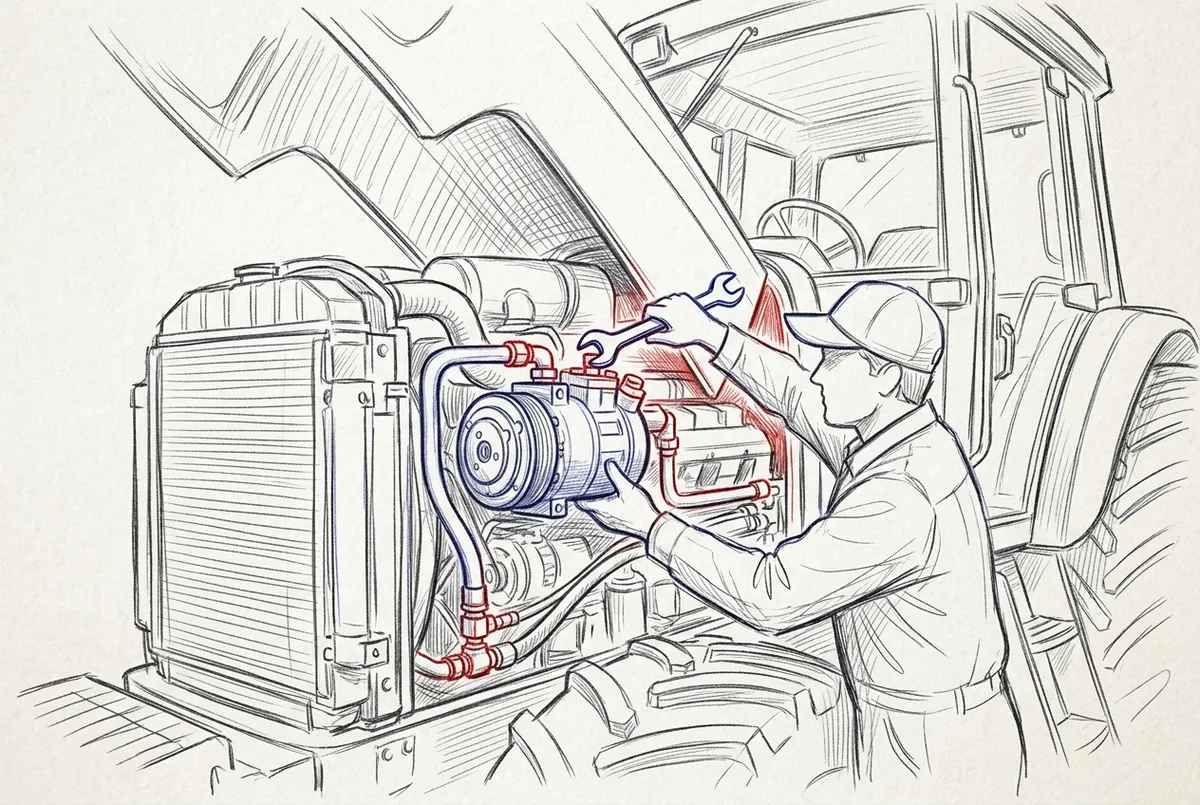
Tip 3: Inspect the Compressor and Belt
The compressor is the heart of the A/C system. On agricultural equipment, it’s driven by a belt from the engine. If the belt is worn, cracked, or too loose, the compressor won’t spin at the right speed — and cooling performance suffers.
Here’s a quick inspection checklist for the compressor area:
- Check belt tension — it should have only slight flex when pressed firmly
- Look for cracking, fraying, or glazing on the belt surface
- Listen for squealing noises when the A/C is switched on
- Check the compressor clutch for wear or slipping
- Look for oil stains around compressor fittings (a sign of refrigerant leaks)
A failing compressor doesn’t always announce itself loudly. Sometimes the only clue is reduced cooling. Having a technician check compressor operation as part of your annual service keeps small issues from turning into costly repairs. For a deeper dive, this guide on how to fix an AC compressor in your vehicle walks through the key steps.
Tip 4: Replace Cabin Air Filters and Check Airflow
Farm equipment cabs circulate a lot of air, and that air carries dust and fine particles. Cabin air filters and system filters catch this debris. When filters get clogged, airflow through the evaporator slows down — and that means less cool air reaching the operator.
This tip is simple but often overlooked:
- Check and replace cab air filters according to the equipment manufacturer’s schedule
- In dusty field conditions, check more often — sometimes every few days during harvest
- Clean or replace recirculation filters to maintain proper airflow
- Make sure vent outlets in the cab aren’t blocked by gear or materials
- Inspect the evaporator housing for mold or buildup that can restrict airflow and create odors
Good cab airflow not only improves cooling — it also improves air quality inside the cab, which matters for operators spending long hours in the field.
Tip 5: Schedule a Professional A/C Service Before Peak Season
The best time to find out your agricultural equipment A/C has a problem is not during the hottest week of the year. Scheduling a professional agricultural equipment AC service before your busy season gives a technician time to find and fix issues without rushing.
A full professional service typically covers:
- Refrigerant recovery, system evacuation, and recharge to proper specs
- Leak detection using dye or electronic detection tools
- Compressor operation and clutch inspection
- Condenser and evaporator cleaning and inspection
- Hose and fitting condition check
- Electrical system and thermostat function testing
Shops that specialize in heavy equipment and vehicle A/C — like Marks Air in Tampa — have the certified equipment and trained technicians to handle agricultural systems properly. You can schedule your agricultural A/C service ahead of peak season and avoid being caught in the heat with a down system.
Common Agricultural Equipment AC Problems at a Glance
Here’s a quick reference table for the most common issues and what usually causes them:
| Symptom | Likely Cause | Recommended Action |
|---|---|---|
| Warm air from vents | Low refrigerant charge or leak | Leak detection and recharge |
| Weak airflow | Clogged cabin filter or blower issue | Replace filter, inspect blower motor |
| A/C cycles on and off rapidly | Low charge or pressure issue | Refrigerant level check |
| Loud noise when A/C is on | Compressor or belt problem | Compressor and belt inspection |
| Ice on evaporator | Restricted airflow or low charge | Filter check and system inspection |
| Musty odor from vents | Mold in evaporator housing | Evaporator cleaning |
Choosing the Right Parts for Agricultural Equipment AC Repairs
When parts need replacing on agricultural A/C systems, quality matters. Low-quality components may fail sooner and cost more in the long run. Look for parts from trusted industry brands that are designed for heavy-duty and agricultural applications.
For technicians and equipment owners in the Tampa area, A/C parts from Marks Air include a full inventory of components from reliable brands, including the KOOL-TEMP parts line, with many available the same day. That means less downtime waiting for parts to ship.
You can also explore what the most critical components are in this article on commercial vehicle A/C parts — much of which applies directly to agricultural equipment systems.
Staying Connected and Informed
Keeping up with best practices for agricultural equipment AC service doesn’t have to be complicated. Industry-focused shops share helpful tips and updates regularly. Follow Marks Air on Facebook for service tips and updates, and check out their Yelp reviews to hear directly from customers who have trusted them with their vehicles and equipment.
You can also visit Marks Air on Google to see their location details and read what Tampa-area customers have to say about their experience with the shop’s work on heavy and specialty equipment.
Wrapping It Up
Agricultural equipment AC service doesn’t have to be a mystery. With the right maintenance habits and a qualified technician in your corner, you can keep your cab cool and your operators productive all season long. From checking the condenser to scheduling a full professional service before the heat peaks, these five tips give you a solid foundation.
Don’t wait until the hottest day of the year to find out your A/C isn’t working. Whether you run tractors, harvesters, or other heavy field equipment, a little proactive attention goes a long way. You can also explore more helpful A/C guidance in the Marks Air blog or check out frequently asked questions about vehicle and equipment A/C systems.
Ready to get your agricultural equipment A/C checked out before the season heats up? Schedule your service with Marks Air today — or give us a ring at 813-988-1671. We’ve been keeping Tampa cool since 1971, and we’re ready to help keep your cab comfortable too.
FAQs
Q: What is agricultural equipment AC service?
A: Agricultural equipment AC service means inspecting, maintaining, and repairing the air conditioning systems in tractors and other farm machinery. It includes tasks like leak detection, refrigerant recovery and recharge, compressor checks, and filter replacement — very similar to what’s done on cars and trucks, but with some different EPA compliance requirements.
Q: Do technicians need special certification to service farm equipment AC systems?
A: Yes! The EPA classifies agricultural equipment A/C systems as MVAC-like appliances, so technicians must hold proper certification — either Type II under Section 608 or MVAC certification under Section 609 of the Clean Air Act. Working with a certified shop ensures refrigerant is handled legally and safely.
Q: How often should tractor AC systems be serviced?
A: A good rule of thumb is to schedule a professional inspection at least once a year, ideally before your busiest season. If you’re operating in heavy dust or extreme heat, checking filters and condenser cleanliness more frequently — even every few weeks — can help prevent bigger issues down the road.
Q: What are the most common reasons a tractor cab stops cooling well?
A: The most common culprits are a clogged condenser, low refrigerant due to a leak, a worn compressor belt, or a dirty cabin air filter. Most of these are easy to catch early with regular inspections and can be fixed quickly by a certified A/C technician before they turn into costly repairs.
Q: Can older farm equipment be retrofitted with a new AC system?
A: Absolutely — many older tractors and agricultural machines can have modern A/C systems installed or upgraded. A specialist with experience in custom and heavy equipment A/C installations can assess your machine and recommend the right system to keep your cab comfortable without major modifications.