Key Takeaways
-
Emergency vehicle HVAC systems are purpose-built with heavier-duty components and higher cooling capacity than standard vehicles due to continuous engine idling, heavy protective gear, and heat-generating equipment that standard A/C systems cannot handle.
-
Many emergency vehicles require multi-zone climate control to maintain different temperatures in separate areas simultaneously, such as ambulance driver cabs versus patient compartments, which demands specialized diagnostic expertise and adds significant complexity to repairs.
-
Auxiliary and standby cooling systems that operate independently of the main engine are essential for emergency vehicles parked at hospitals or incident scenes, protecting crew, patients, and temperature-sensitive medical equipment when the engine is off.
-
Preventive maintenance is critical and non-negotiable, requiring annual performance checks of cold and heat output, twice-yearly visual inspections of controls and hoses, and regular filter maintenance to prevent costly system failures that pull vehicles from service.
-
Technician experience and OEM-quality parts are non-negotiable; emergency vehicles demand specialists familiar with multi-zone systems and auxiliary cooling, not general mechanics, to avoid recurring failures and ensure lasting repairs.
-
Common failure points in emergency vehicle HVAC include refrigerant leaks from worn hoses, compressor wear from extended idling, clogged evaporators from high-traffic environments, and electrical faults in complex control systems that require early detection.
Emergency vehicles work harder than almost any other vehicle on the road. Ambulances, fire trucks, and rescue units run long hours, idle for extended periods, and carry crews and equipment that generate serious heat. When the A/C fails in one of these vehicles, the consequences go far beyond discomfort. Patient care, crew performance, and mission readiness are all on the line.
If you operate, maintain, or service emergency vehicles in Tampa, understanding how emergency vehicle HVAC systems work is essential. These are not standard passenger-car systems. They are purpose-built, heavily loaded, and far more complex to service. Getting them right requires the right knowledge, the right parts, and a specialist who truly understands what these systems demand.
Here are five critical facts about emergency vehicle HVAC systems that every fleet manager, technician, and operator should know in 2026.
1. Emergency Vehicle HVAC Systems Are Not Standard A/C Systems
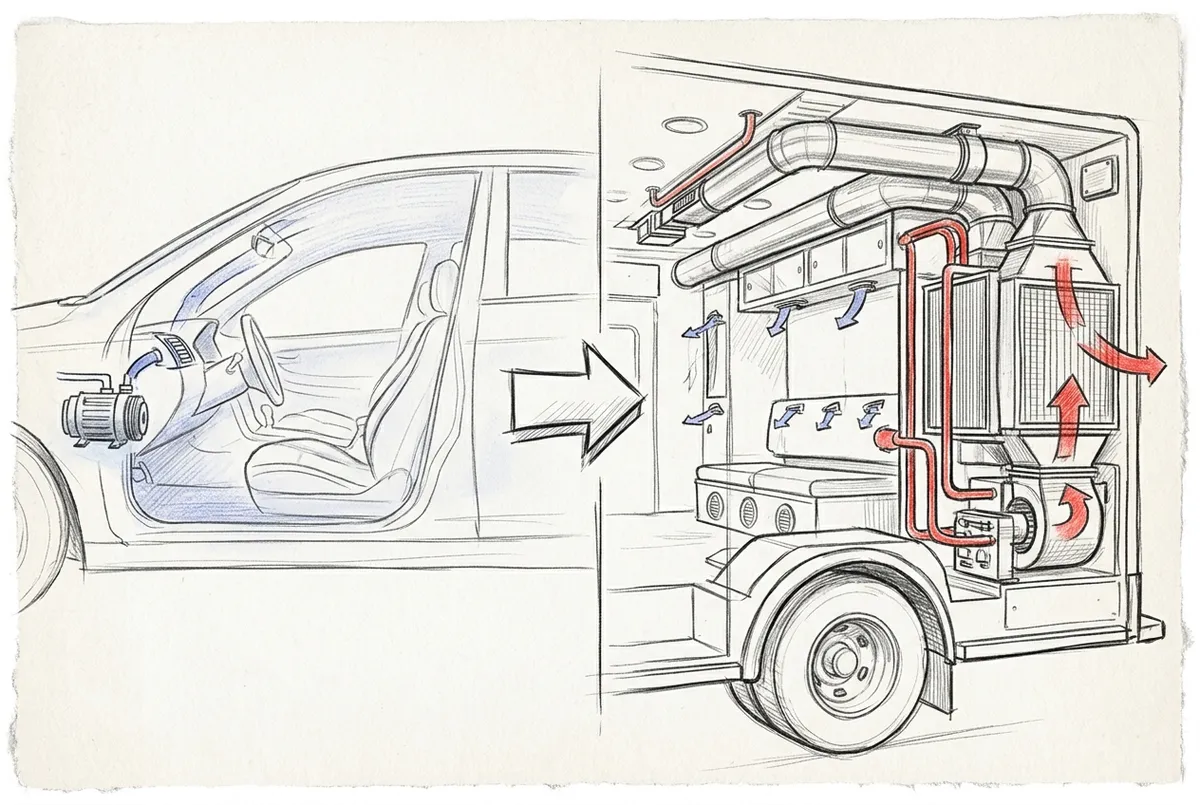
This is the most important thing to understand upfront. Emergency vehicles use specialized HVAC designs that are completely different from what you find in a regular passenger car or even a standard truck. The demands placed on these systems are far greater.
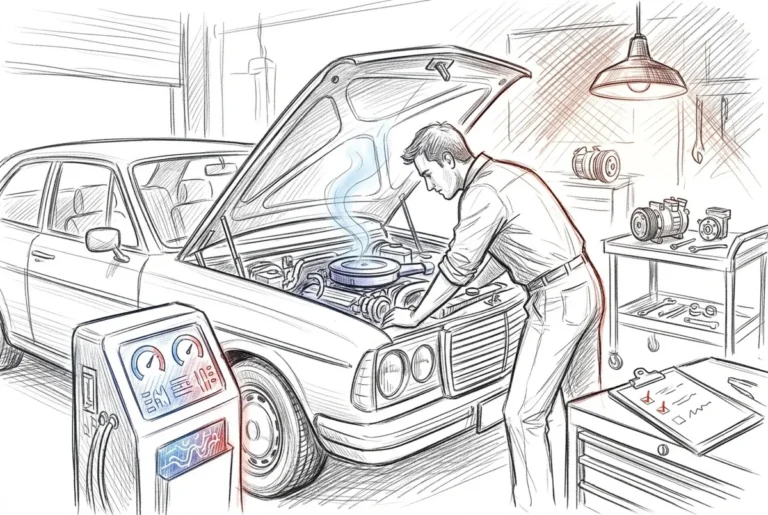
Think about what an ambulance or fire truck deals with daily. The engine idles for hours at a time. The crew wears heavy protective gear that radiates body heat. The vehicle carries electronics, radios, medical devices, and powered workstations. All of that heat has to go somewhere, and the HVAC system has to manage it continuously.
Standard vehicle A/C systems are simply not designed for those conditions. Emergency vehicle HVAC systems are built with heavier-duty components, higher cooling capacity, and layouts that fit into tight, custom vehicle packaging. If you try to service these systems with a one-size-fits-all approach, you will likely run into problems fast.
- Higher cooling loads from personnel and equipment
- Longer continuous run times than standard vehicles
- Custom component layouts specific to the vehicle build
- More complex wiring and control systems
- Tighter packaging constraints in specialty vehicle bodies
For fleet managers dealing with specialty vehicles, the most important commercial vehicle A/C parts are different from those in regular cars and trucks. Understanding that difference is step one.
2. Multi-Zone Climate Control Is Often Required
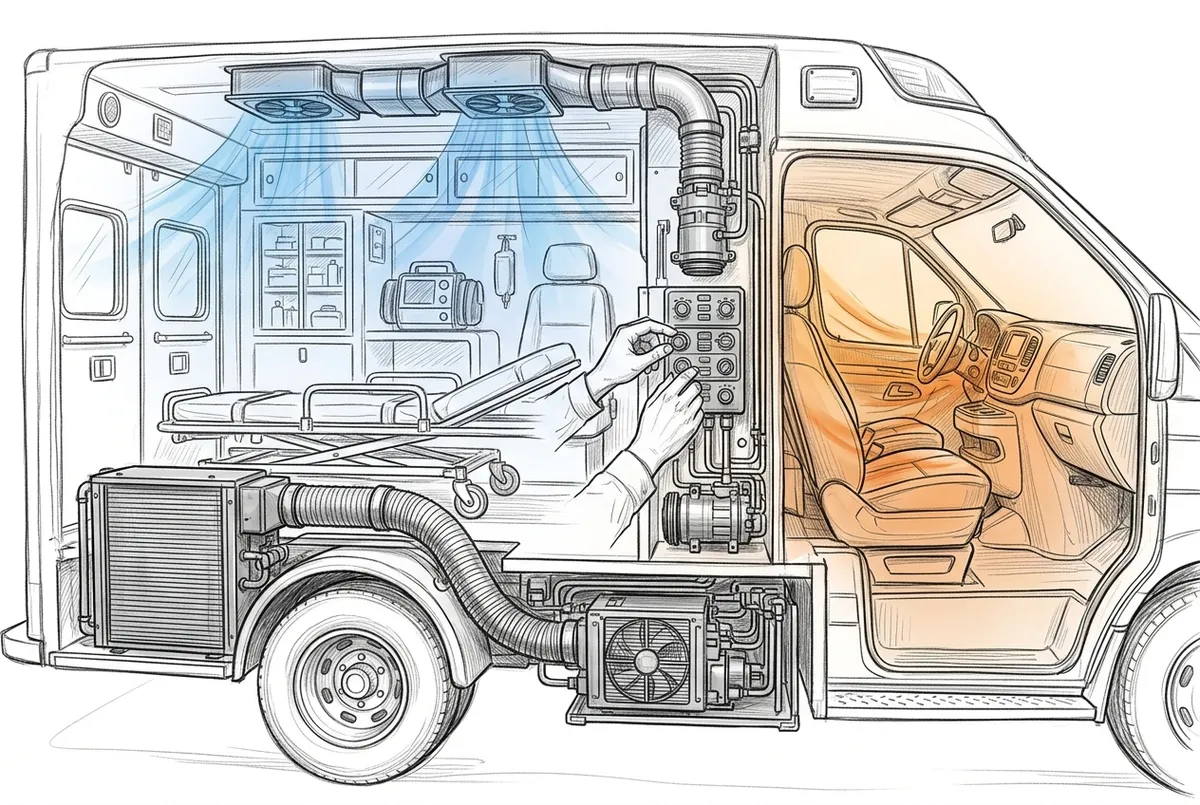
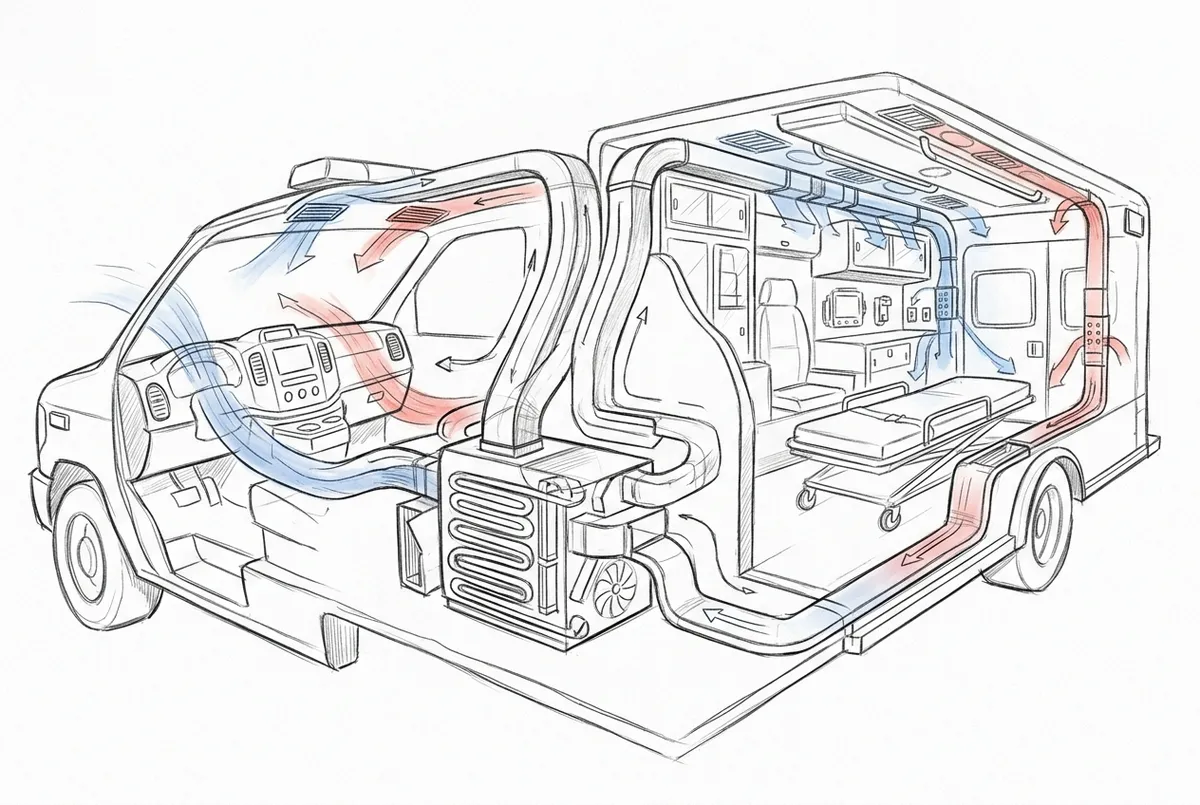
Many emergency vehicles need to maintain different temperatures in different areas of the vehicle at the same time. This is called multi-zone climate control, and it is a standard feature in well-equipped ambulances and command vehicles.
In an ambulance, for example, the driver cab and the patient compartment often need separate temperature control. The driver might need one setting while the patient requires a different environment for safety and comfort. Medical protocols may even dictate specific temperature ranges in the patient area, making this a patient-care issue rather than just a comfort preference.
Multi-zone systems add complexity to diagnostics and repairs. A technician who does not understand how the zones interact can easily misdiagnose a problem. This is why working with a specialist who has real experience on emergency vehicle HVAC systems matters so much.
Common Multi-Zone Applications in Emergency Vehicles
| Vehicle Type | Typical Zones | Primary Concern |
|---|---|---|
| Ambulance | Cab + Patient Compartment | Patient care and crew comfort |
| Fire Truck | Cab + Crew Area | Crew recovery after heat exposure |
| Mobile Command Unit | Driver Area + Operations Area | Equipment cooling and personnel comfort |
| Police Command Vehicle | Front Cab + Rear Office | Electronics cooling and operator comfort |
If your fleet includes any of these vehicle types, it is worth reviewing fleet vehicle A/C diagnostics to make sure your service approach covers all zones properly.
3. Auxiliary and Standby Cooling Is a Must-Have Feature
Here is a fact that surprises many people outside the emergency vehicle world. These vehicles often need cooling to run even when the main engine is off or idling is restricted. That is where auxiliary and standby cooling systems come in.
Ambulances frequently park at hospitals or scene locations with the engine off but the crew still inside. Command vehicles may run for hours at an incident scene without being driven. In both cases, the A/C still needs to function. Without auxiliary cooling, the interior temperature can rise quickly, putting the crew, patients, and sensitive equipment at risk.
Auxiliary cooling systems run independently of the main engine. They are powered by the vehicle’s electrical system, an onboard generator, or a dedicated battery bank. Servicing these systems requires a technician who understands both the A/C components and the power systems that drive them.
- Auxiliary systems can run when the engine is off
- They protect temperature-sensitive medical equipment
- They reduce crew fatigue during extended standby periods
- They help maintain readiness for the next call
If you are unsure whether your emergency vehicles have functioning auxiliary cooling, reach out to a specialist to schedule an inspection before the Tampa summer heat becomes a serious problem.
4. Preventive Maintenance Is Non-Negotiable for These Systems
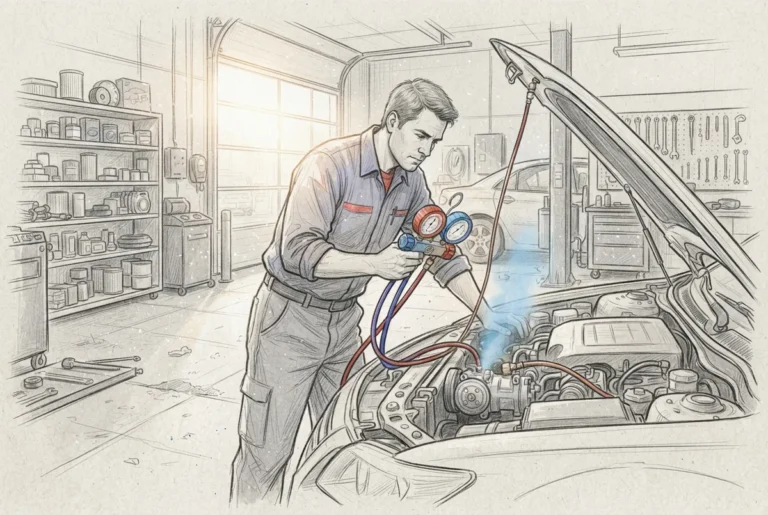
With standard vehicles, skipping an A/C checkup might just mean a warm drive for a few days. With emergency vehicles, a system failure can mean a unit is pulled from service at the worst possible time. That is why preventive maintenance is not optional for emergency vehicle HVAC systems — it is a core part of keeping your fleet mission-ready.
Industry guidance recommends inspecting and cleaning or replacing filters regularly. Heat output and cold air output should each be checked at least once per year. Visual inspections of HVAC controls, wiring, lines, hoses, belts, and components should happen at least twice per year. These are baseline standards that serious fleet operators follow consistently.
Recommended Maintenance Schedule for Emergency Vehicle HVAC
| Task | Recommended Frequency |
|---|---|
| Filter inspection and cleaning/replacement | Regularly (per manufacturer guidance) |
| Cold air output performance check | At least once per year |
| Heat output performance check | At least once per year |
| Visual inspection of controls, wiring, hoses, belts | At least twice per year |
| Refrigerant level check and leak inspection | At least once per year |
Following a structured maintenance plan catches small issues before they become costly failures. For fleet operators managing multiple emergency units, explore the comparison between preventive vs. reactive fleet A/C maintenance to see why proactive care always wins in the long run.
Marks Air has been serving Tampa’s vehicle and fleet A/C needs since 1971, and the team has extensive experience with complex, heavy-duty applications including emergency vehicles. You can visit Marks Air on Google to read what fleet customers have said about our work.
The Most Common HVAC Problems Found in Emergency Vehicles
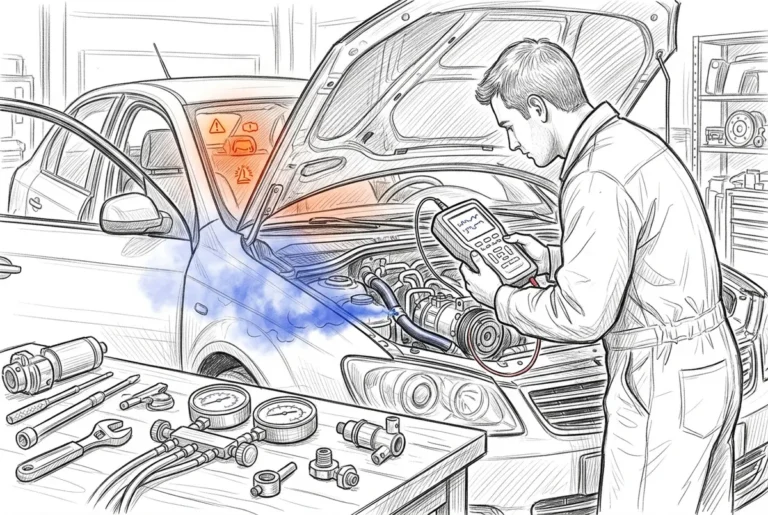
Knowing what to look for during maintenance helps you catch issues early. Emergency vehicle HVAC systems have some specific failure points that show up more often than others.
- Refrigerant leaks — Heavy use and vibration can loosen fittings and wear down hoses over time
- Compressor wear — Long idle hours put heavy demands on the compressor, leading to early wear
- Clogged or dirty evaporators — High-traffic environments mean more dust and debris getting into the system
- Electrical and control system faults — Complex wiring in multi-zone systems can develop shorts or sensor failures
- Auxiliary system failures — Standby cooling units have their own components that need regular attention
For a deeper look at refrigerant issues, check out information on HFO-1234yf refrigerant for fleets, which is becoming increasingly relevant for newer emergency vehicle builds.
5. Technician Knowledge and the Right Parts Make All the Difference
Emergency vehicle HVAC systems reward specialists. A technician who works on these systems regularly will catch things that a general mechanic might miss entirely. The complexity of multi-zone systems, auxiliary cooling units, and custom-integrated designs means that experience and training are directly tied to the quality of the repair.
Parts quality matters just as much. Emergency vehicles cannot afford to have a newly repaired system fail again in two months. Using reliable, properly matched components is the difference between a lasting fix and a recurring problem. Marks Air stocks a full line of A/C parts, including the KOOL-TEMP parts line and components from trusted brands, with many available the same day in Tampa. You can browse A/C parts options to see what is available for your specific application.
- Use OEM-quality or better components for critical systems
- Match refrigerant type to the system specification
- Verify compatibility with auxiliary and multi-zone controls
- Document all repairs for fleet maintenance records
For technicians who want to sharpen their skills on complex vehicle A/C systems, including emergency vehicle applications, Marks Air also offers A/C training programs covering EPA 609 certification, HFO-1234yf, and more. Staying current on training is especially valuable as emergency vehicle technology continues to evolve.
Marks Air is proud to be a member of the Mobile Air Climate Systems Association (MACS), which keeps the team aligned with the latest industry standards and best practices for mobile A/C systems of all types.
Questions to Ask Your A/C Technician Before Emergency Vehicle Service
- Do you have experience with multi-zone emergency vehicle HVAC systems?
- Can you service auxiliary and standby cooling units, not just the main system?
- Do you stock parts for specialty vehicle applications, or will there be delays?
- Will you provide documentation of the work for our fleet maintenance records?
- Do your technicians hold current EPA 609 certification?
Getting clear answers to these questions before you commit to a service provider can save you significant time, money, and headaches down the road. You can also read through our A/C service FAQs for more guidance on what to expect from a professional service visit.
Keeping Your Emergency Fleet Cool and Ready in Tampa
Emergency vehicle HVAC systems are complex, demanding, and absolutely critical to mission readiness. Whether you manage an ambulance fleet, a fire department vehicle pool, or a mobile command unit, the A/C system is not a secondary concern — it is core infrastructure. The five facts covered here give you a strong foundation for making smarter decisions about service, maintenance, and parts.
Tampa’s heat and humidity make reliable cooling even more important for emergency responders operating in this region. If your emergency vehicles are due for an inspection, a repair, or a full system evaluation, do not wait for a failure in the field. The full range of A/C services at Marks Air is available for emergency vehicles, heavy equipment, buses, and more, all under one roof in Tampa.
You can also check out what our customers are saying on Marks Air on Yelp and follow us on Facebook for updates, tips, and seasonal service reminders.
Ready to get your emergency vehicles serviced by a team that knows these systems inside and out? Schedule your service appointment with Marks Air today, or give us a call at 813-988-1671 to talk through your fleet’s needs with a specialist who has been doing this since 1971.
FAQs
Q: What makes emergency vehicle HVAC systems different from regular car A/C?
A: Emergency vehicle HVAC systems are built to handle heavier cooling loads, longer idle times, and more complex layouts than standard passenger car systems. They often include multi-zone controls, auxiliary cooling units, and custom-integrated components designed for the demanding conditions these vehicles face every day.
Q: How often should emergency vehicle HVAC systems be serviced?
A: Industry guidance recommends checking cold and heat output performance at least once per year, and performing visual inspections of controls, wiring, hoses, and belts at least twice per year. Regular filter cleaning or replacement should also be part of your routine maintenance schedule.
Q: Can emergency vehicle A/C systems run when the engine is off?
A: Yes! Many emergency vehicles use auxiliary or standby cooling systems that operate independently of the main engine. These are powered by the vehicle’s electrical system or an onboard generator, allowing the A/C to keep running during extended parked or idling situations.
Q: What are the most common A/C problems in ambulances and fire trucks?
A: The most common issues include refrigerant leaks from worn hoses or loose fittings, compressor wear from heavy idle use, clogged evaporators, and electrical faults in multi-zone control systems. Catching these early through regular preventive maintenance is the best way to avoid unexpected breakdowns.
Q: Where can I get emergency vehicle HVAC systems serviced in Tampa?
A: Marks Air in Tampa specializes in A/C systems for a wide range of vehicles, including emergency vehicles, buses, heavy equipment, and fleets. With over 50 years of experience and a full parts inventory on hand, the team is well-equipped to handle complex emergency vehicle A/C repairs and maintenance.