
Key Takeaways
-
Preventive maintenance on commercial truck A/C systems costs significantly less than emergency repairs; a compressor replacement can cost far more than a seasonal inspection and refrigerant service.
-
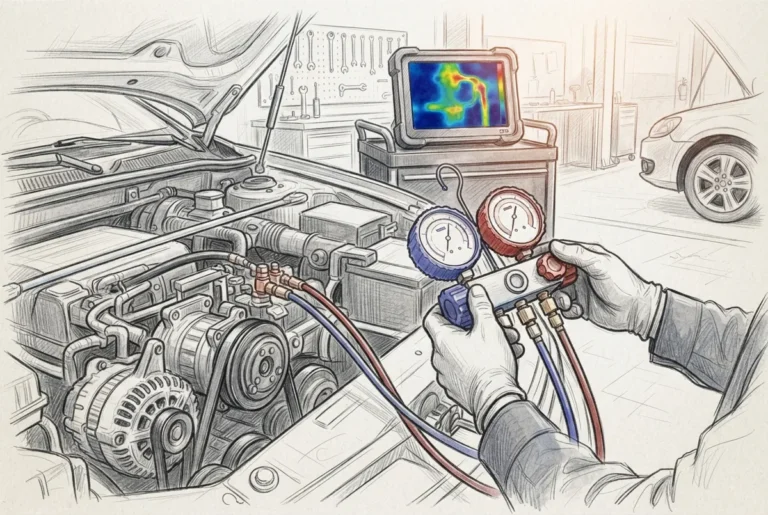
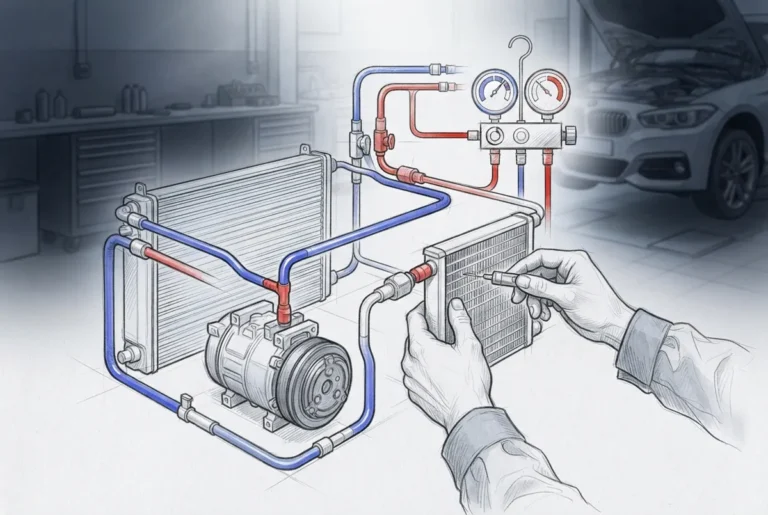
Complete A/C service includes refrigerant checks, leak detection, compressor inspection, condenser/evaporator cleaning, cabin air filter replacement, and hose/fitting inspection—not just a refrigerant recharge.
-
Watch for warning signs like weak airflow, unusual noises, musty odors, excess condensation, and rapid A/C cycling; catching problems early prevents costly system replacements.
-
New refrigerants like HFO-1234yf and A2L require updated equipment, specific handling procedures, and certified technicians—ensure your service shop stays current with industry standards.
-
Modern commercial trucks increasingly use IoT-connected HVAC systems with predictive maintenance alerts that notify fleet managers before failures occur, reducing unplanned downtime.
-
Follow a preventive maintenance schedule with pre-season inspections in spring, mid-season checks in summer, and post-season reviews in fall to maintain peak A/C performance year-round.
Your truck’s A/C system works harder than most people realize. On a hot Tampa summer day, cab temperatures can soar past 130°F before the engine even warms up. For professional drivers and fleet operators, a failed air conditioning system isn’t just uncomfortable — it’s a safety hazard and a productivity killer. Commercial truck air conditioning service is one of the most important maintenance tasks you can schedule, yet it’s often the first thing that gets pushed aside until something goes wrong.
Whether you manage a fleet of semi-trucks, run a single long-haul rig, or operate heavy equipment in the field, understanding how your A/C system works — and when it needs attention — can save you serious money and downtime. Let’s walk through four essential facts every truck owner and fleet manager should know about keeping commercial vehicle A/C systems running strong in 2026.

1. Commercial Truck A/C Service Covers More Than Just Refrigerant
Many drivers think a quick refrigerant recharge is all it takes to fix a warm cab. In reality, professional commercial truck air conditioning service includes a thorough inspection of the entire climate control system. Missing even one failing component can mean another breakdown weeks later.
Here’s what a complete service visit typically covers:
- Refrigerant level check and recharge — ensuring the system has the correct charge for peak performance
- Leak detection — using electronic detectors or UV dye to find even small refrigerant leaks before they become big problems
- Compressor inspection — checking for worn bearings, clutch engagement, and belt condition
- Condenser and evaporator cleaning — removing road grime, debris, and biological buildup that reduces heat transfer
- Cabin air filter replacement — improving airflow and interior air quality for driver comfort
- Hose and fitting inspection — looking for cracks, corrosion, or loose connections that cause slow refrigerant loss
Trucks operate in harsh conditions — dusty job sites, long highway miles, extreme temperatures. That’s why a full inspection matters so much. You can explore Marks Air’s complete A/C services to see how a comprehensive approach covers everything from diagnostics to repairs and system installations.
For fleet managers, having a solid fleet AC maintenance checklist makes it easier to stay on top of every vehicle in your inventory without missing anything important.

2. Warning Signs Tell You When Service Is Overdue
Commercial truck drivers spend long hours behind the wheel. Catching A/C problems early can mean the difference between a quick repair and a costly system replacement. Your truck will usually give you clear signals before the system fails completely.
Watch for these common warning signs:
- Weak or warm airflow — the most obvious sign; low refrigerant or a failing compressor is often the cause
- Unusual noises — grinding, rattling, or squealing when the A/C is running suggests compressor or belt trouble
- Strange odors — musty smells point to mold or bacteria growth in the evaporator; chemical smells can indicate a refrigerant leak
- Excess condensation inside the cab — water pooling on the floor may mean a clogged drain line or evaporator issue
- A/C cycling on and off rapidly — this often signals low refrigerant pressure or an electrical fault
If you notice any of these symptoms, don’t wait. Delaying service often turns a simple repair into a much larger bill. You can learn more about how to detect AC leaks in your truck before they get worse — catching a leak early is one of the best ways to protect your system.
Compressor failures are among the most expensive repairs in any vehicle’s A/C system. If you suspect yours is struggling, check out these tips on how to fix an AC compressor in your vehicle and what your repair options look like.
3. Refrigerant Changes and New Technology Are Reshaping Truck A/C Service
The A/C service industry isn’t standing still. In 2026, commercial truck operators are dealing with real changes in refrigerant regulations, system technology, and service requirements. Staying informed helps you make smarter decisions when it’s time for service or upgrades.
The Refrigerant Transition
The shift from older refrigerants to newer, lower-global-warming-potential options is underway across the industry. Many newer commercial vehicles now use HFO-1234yf or are being designed around A2L refrigerants. These require different handling procedures, updated equipment, and certified technicians. Working with a shop that stays current on these changes is essential. Marks Air offers HFO-1234yf refrigerant guidance for fleets and is a member of the Mobile Air Climate Systems Association (MACS), which means staying aligned with the latest industry standards is part of how they operate.
You can also review 12 important facts about the R-134a to 1234yf conversion to understand exactly what this change means for your trucks.
Smart Systems and Predictive Maintenance
Modern commercial trucks increasingly use connected HVAC systems with sensors and diagnostics that can flag problems before they cause a breakdown. The automotive HVAC market is valued at $97.53 billion in 2025 and projected to reach $135.78 billion by 2034, driven largely by technology upgrades and tighter efficiency standards. Commercial vehicles are described as the fastest-growing segment in the automotive air conditioning market right now.
Here’s how new technology is changing truck A/C service:
- IoT-connected systems can monitor pressure levels, temperatures, and compressor performance in real time
- Predictive maintenance alerts notify fleet managers before a failure occurs, reducing unplanned downtime
- More efficient cooling designs reduce fuel consumption, which matters a lot on long-haul routes
- Advanced diagnostics tools allow technicians to pinpoint problems faster and more accurately than ever
For fleets managing multiple trucks, fleet vehicle AC diagnostics have become a valuable tool for keeping every unit in top shape throughout the year.
4. Preventive Maintenance Saves Fleets Real Money
Here’s a fact that every fleet manager needs to hear: preventive maintenance on commercial truck A/C systems almost always costs less than emergency repairs. Much less. A compressor replacement, for example, can run significantly higher than a seasonal inspection and refrigerant service.
The trucking industry remained active through 2025, with service activity up 4.5% year over year driven by higher freight volumes and mileage. More miles mean more wear on every system in a truck, including the A/C. Skipping maintenance only shortens the window before something breaks.
A smart preventive maintenance schedule for commercial truck A/C typically looks like this:
- Pre-season inspection (spring) — check refrigerant charge, inspect belts and hoses, clean condenser and evaporator, replace cabin air filter
- Mid-season check (summer) — verify system performance under peak heat conditions, check for slow leaks, inspect compressor operation
- Post-season review (fall) — document any issues found during the season, note components approaching end of life for proactive replacement
For fleets, the math strongly favors a preventive approach. Read more about preventive vs. reactive fleet AC maintenance to see a clear comparison of what each approach really costs over time.
Looking for actionable tips you can apply right away? These 4 fleet vehicle AC repair tips offer practical guidance that saves money across any size fleet.
Choosing the Right Parts Matters Too
Preventive maintenance only works if the replacement parts are reliable. Using substandard components might save a few dollars upfront, but they fail faster and can damage other parts of the system. Quality A/C parts designed specifically for commercial vehicles make a real difference in how long repairs last.
Here’s what to look for when sourcing truck A/C parts:
- OEM or high-quality aftermarket components designed for commercial applications
- Same-day availability so trucks aren’t sitting idle waiting for parts
- Brands with a proven track record in heavy-duty and fleet applications
- Technician support from the supplier for complex or custom installations
You can browse A/C parts specifically for commercial vehicles to find components that meet heavy-duty standards. Marks Air stocks a full line of parts including its KOOL-TEMP line and components from trusted industry brands, with many items available the same day. Learn more about the most important commercial vehicle AC parts to understand what’s inside your system and why each piece matters.
| Service Type | Frequency | Key Components Checked |
|---|---|---|
| Pre-Season Inspection | Annually (Spring) | Refrigerant, belts, hoses, condenser, evaporator, cabin filter |
| Leak Detection Service | As needed / annually | All refrigerant lines, fittings, compressor seal, evaporator |
| Compressor Inspection | Annually or at symptoms | Clutch engagement, bearing noise, belt tension and wear |
| Full System Service | Every 1-2 years | Complete system diagnostics, refrigerant recharge, component replacement |
Why Tampa Truck Operators Trust Specialized A/C Shops
Tampa’s heat and humidity put extra stress on commercial truck A/C systems compared to cooler climates. Local drivers and fleet operators need a service partner who understands both the technology and the environment. Why AC repair in Tampa matters so much comes down to the fact that systems here simply work harder, longer, and under more strain than anywhere else.
Working with a shop that specializes exclusively in vehicle A/C — not a general mechanic who services A/C on the side — means faster diagnosis, more accurate repairs, and technicians who’ve seen every type of commercial truck system. Visit us on Google — Marks Air to read what Tampa truck operators and fleet managers have to say about their experience. You can also connect with the Marks Air community on Facebook for tips, updates, and service reminders.
For drivers dealing with an unexpected breakdown, emergency AC repair in Tampa is available when you need fast relief and can’t afford to be stuck in the heat.
Conclusion
Commercial truck air conditioning service is more than a comfort issue — it’s a safety, productivity, and cost issue that every truck operator and fleet manager needs to take seriously. From regular inspections and refrigerant checks to navigating the new refrigerant landscape and investing in predictive maintenance technology, staying proactive keeps your trucks running and your drivers comfortable. The right service partner, quality parts, and a consistent maintenance schedule make all the difference.
Marks Air has been Tampa’s trusted A/C specialist since 1971, serving trucks, fleets, buses, RVs, and heavy equipment with the focused expertise that comes from decades of doing one thing exceptionally well. Whether you need a seasonal inspection, a full system repair, or same-day parts, we’re here to help. You can also check out Marks Air reviews on Yelp to see what our customers have experienced firsthand.
Don’t wait for a hot cab to tell you something’s wrong. Schedule your commercial truck A/C service today and keep your fleet cool, safe, and efficient all year long — or call us at 813-988-1671 and we’ll get you taken care of right away.
FAQs
Q: What does commercial truck air conditioning service include?
A: A full commercial truck A/C service covers refrigerant checks and recharge, leak detection, compressor and belt inspection, condenser and evaporator cleaning, cabin air filter replacement, and a thorough inspection of all hoses and fittings. Think of it as a complete health check for your truck’s entire cooling system — not just a quick top-off of refrigerant!
Q: How often should a commercial truck A/C system be serviced?
A: Most truck operators benefit from at least one full inspection per year, ideally in the spring before peak heat season hits. If your truck is logging heavy miles or operating in harsh conditions like Tampa’s heat and humidity, a mid-season check is a smart idea too. Staying ahead of problems is always easier — and cheaper — than dealing with a breakdown on the road.
Q: What are the most common causes of commercial truck A/C failure?
A: The most common culprits are refrigerant leaks, compressor wear or failure, clogged condensers, and worn or cracked hoses and belts. Commercial trucks work in tough environments, so these components take a real beating over time. Catching any of these early with regular inspections can save you a significant repair bill down the road.
Q: How do A2L refrigerants affect commercial vehicle A/C service?
A: A2L refrigerants require updated equipment, specific handling procedures, and certified technicians who are trained to work safely with mildly flammable refrigerants. If your newer commercial truck uses an A2L or HFO-1234yf refrigerant, make sure your service shop is up to date — it’s not something every general repair shop is equipped to handle properly.
Q: Why is preventive A/C maintenance so important for commercial fleets?
A: Preventive maintenance catches small issues before they turn into expensive repairs or unexpected breakdowns. For fleets, an out-of-service truck means lost revenue and frustrated drivers — and Tampa’s heat makes a broken A/C a real safety risk. A simple annual inspection is one of the best investments you can make to protect your trucks and keep your team comfortable.