Key Takeaways
-
Heavy duty truck AC compressors are not universal – they must match your specific engine model and mounting configuration, so always verify compatibility before purchasing to avoid costly delays and installation failures.
-
Watch for five critical warning signs of compressor failure: warm/hot air from vents, loud grinding or squealing noises, visible oily refrigerant leaks, non-engaging clutch, and fluctuating temperatures – catch these early to prevent expensive full system breakdowns.
-
Low refrigerant levels, contaminated refrigerant oil, moisture in the system, and clogged condensers are the leading causes of premature compressor failure – regular maintenance and annual inspections are your best prevention strategy.
-
Compressor replacement requires professional service including system inspection, refrigerant recovery, proper flushing, evacuation, and recharging – this is not a DIY job and cutting corners leads to system contamination and larger repair bills.
-
Modern aftermarket compressors rated for up to 2 million cycles offer more than twice the clutch life of standard units, making them durable enough for long-haul trucking in extreme heat and demanding conditions.
-
Choose between new compressors for long-term reliability and new builds, or remanufactured units rebuilt to OEM specs for budget-conscious repairs – both are viable depending on truck age, budget, and operational criticality.
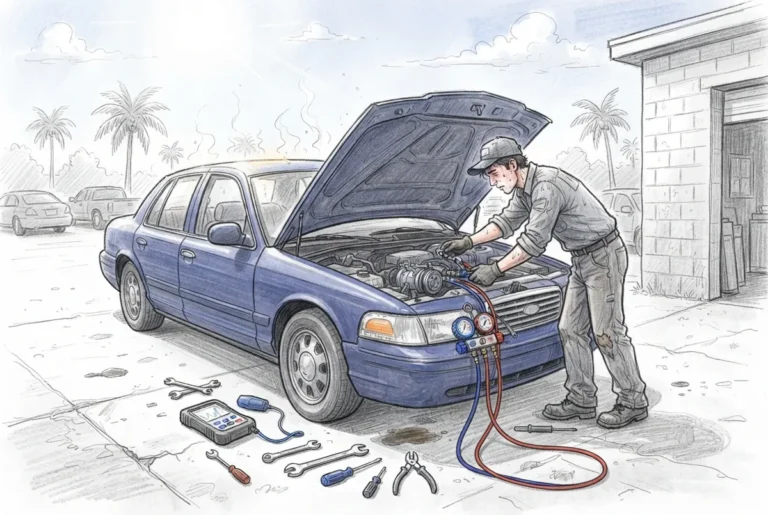
If you drive a semi-truck, dump truck, or any commercial rig, you know how brutal a hot cab feels. When your heavy duty truck AC compressor stops working, you notice fast. The compressor is the beating heart of your truck’s entire air conditioning system. Without it, refrigerant doesn’t move, and cool air doesn’t happen.
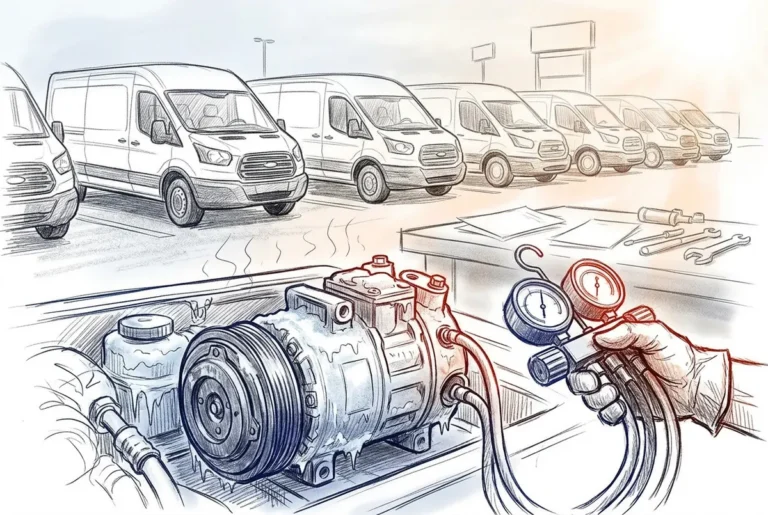
Whether you’re a long-haul trucker logging miles across Florida or a fleet manager keeping a dozen commercial vehicles running, understanding your truck’s AC compressor matters. It can help you spot problems early, avoid costly breakdowns, and make smarter repair decisions. Let’s walk through everything you need to know — in plain language, no engineering degree required.
What Does a Heavy Duty Truck AC Compressor Actually Do?
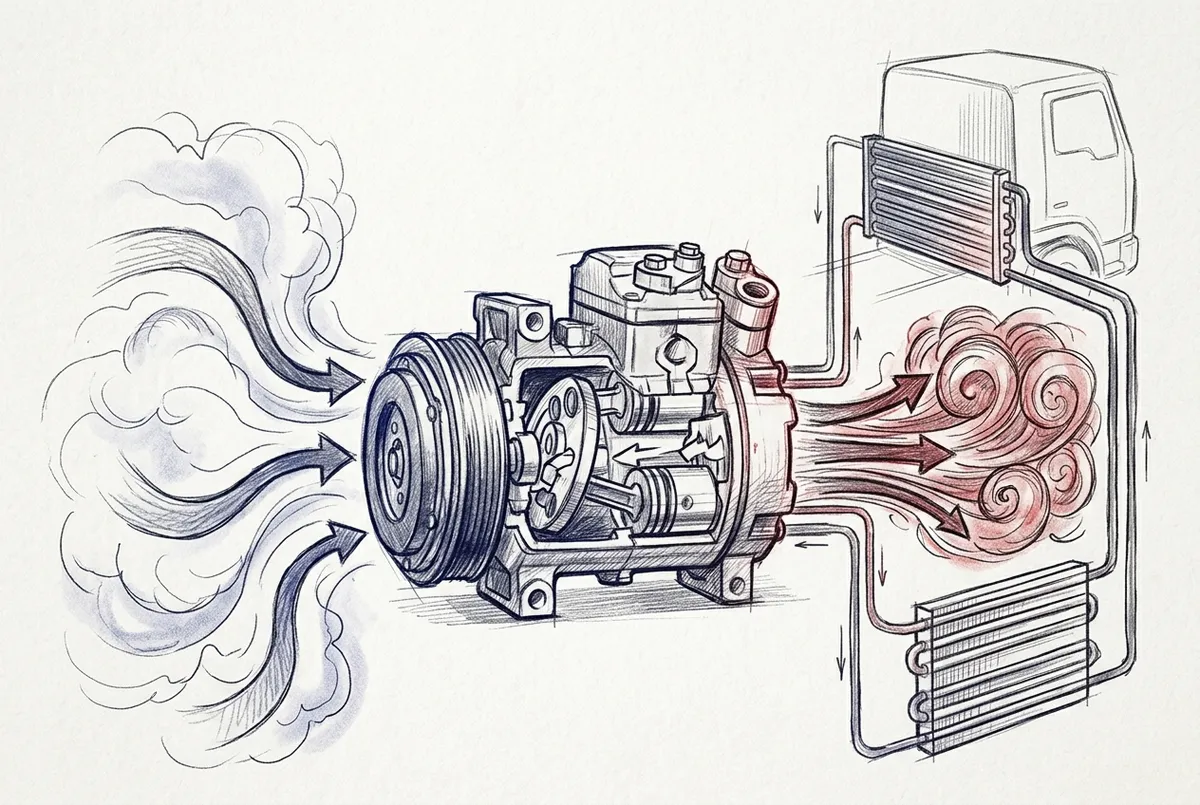
Think of the AC compressor as the pump that keeps your entire cooling system alive. It pressurizes refrigerant and moves it through the system — from the evaporator to the condenser and back again. That cycle is what pulls heat out of your cab and replaces it with cool air.
Because it runs continuously while your AC is on, the compressor takes a serious beating. Heavy duty truck compressors are built for long hours, high heat, and demanding road conditions. Some modern aftermarket compressors are even rated for up to 2 million cycles and offer more than twice the clutch life of standard heavy-duty units. That’s the kind of durability you need when you’re running a rig all day in summer heat.
Want to learn more about the parts that keep your vehicle cool? Check out this helpful guide on 6 A/C Parts Every Vehicle Owner Should Know in 2026.

Types of Heavy Duty Trucks That Use These Compressors
Heavy duty AC compressors aren’t just for semis. They’re used across a wide range of commercial and vocational vehicles. Here’s a quick look at where you’ll find them:
- Semi-trucks and tractor-trailers
- Dump trucks and construction haulers
- Garbage trucks and municipal vehicles
- Box trucks and delivery vans
- Step vans and route vehicles
- Bus and transit vehicles
- Emergency vehicles and specialty rigs
Each of these vehicles places different demands on the AC system. A garbage truck running short urban routes faces different stress than a long-haul semi crossing the country. That’s why it’s important to get the right compressor for your specific application.
Are Heavy Duty Truck AC Compressors Universal?
Short answer: No, they’re not universal. This is one of the most common misconceptions we hear. A heavy duty truck AC compressor must match your truck’s engine model and mounting configuration. Many heavy duty setups require engine-specific compressor brackets, so fitment depends on the engine family, not just the truck brand.
OEM and aftermarket suppliers offer compressors built for specific makes, engine families, and mounting setups — including popular Peterbilt applications. Always verify compatibility before purchasing or installing a replacement unit. Getting the wrong compressor means the job doesn’t get finished, and that costs you time and money.
For help sourcing the right parts, explore the AC parts inventory at Marks Air, where same-day availability makes a real difference for working trucks.
How to Tell If Your Semi Truck AC Compressor Is Failing
Catching a failing compressor early can save you from a full breakdown. Here are the most common warning signs to watch for:
- Warm or hot air from the vents — even when the AC is set to max cool
- Loud or unusual noises — grinding, squealing, or clunking when the AC kicks on
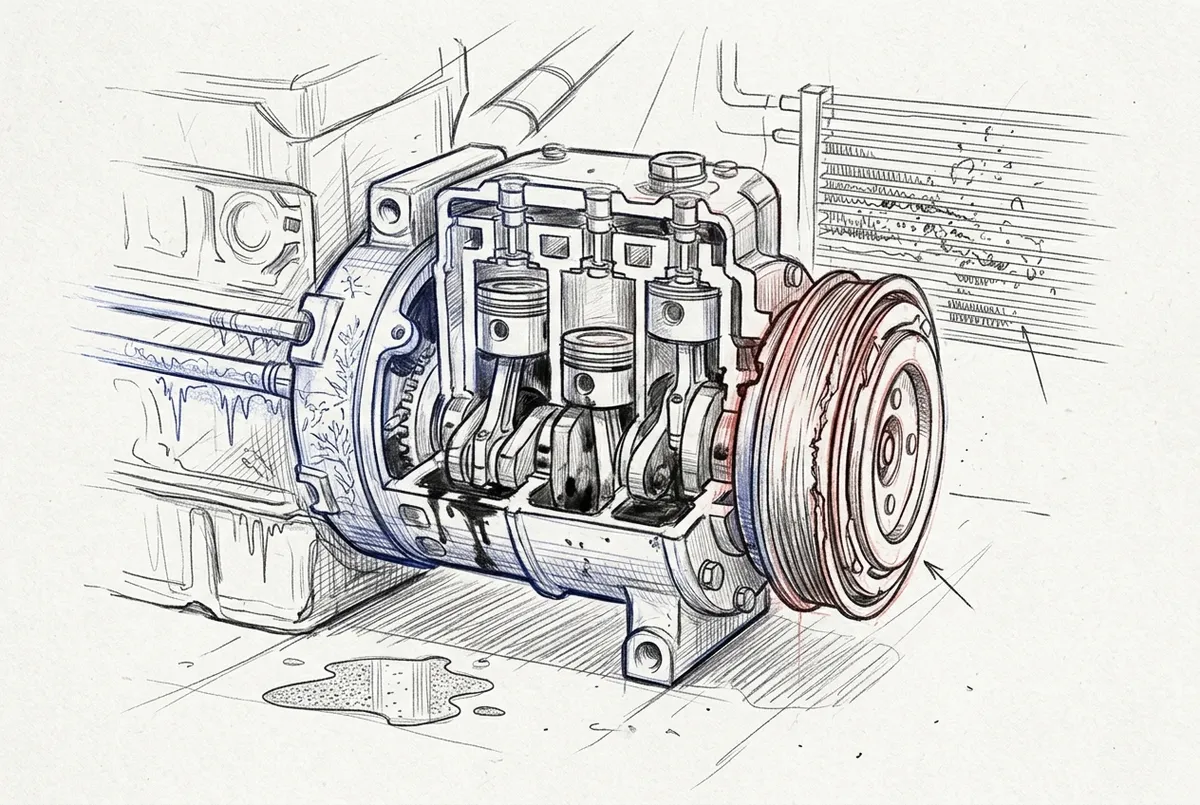
- Visible refrigerant leaks — oily residue near the compressor or hose connections
- Clutch not engaging — the compressor pulley spins but the clutch doesn’t grab
- Fluctuating temperatures — cool air that comes and goes inconsistently
If you’re seeing any of these signs, it’s time to get a professional diagnosis. Don’t wait — small compressor issues become big, expensive ones quickly. Read more about what to look for in 10 Reasons Your AC Is Blowing Warm Air (And How to Fix It).
What Causes a Truck AC Compressor to Fail?
Several factors lead to premature compressor failure in heavy duty trucks. Understanding these causes helps you prevent them:
- Low refrigerant levels — A low charge forces the compressor to work harder and can cause it to overheat or seize.
- Contaminated refrigerant oil — Dirty or degraded oil fails to lubricate compressor internals properly, causing wear.
- Moisture in the system — Water causes acid formation and corrodes internal components over time.
- Clogged condenser or evaporator — Restricted airflow builds excessive pressure in the system, stressing the compressor.
- Loose or broken mounting brackets — Vibration damage accelerates wear on compressor seals and bearings.
- Electrical issues — Most engine-driven compressor setups require a proper 12V electrical system; faults here can disrupt clutch operation.
Regular maintenance is the best defense. A well-maintained system protects the compressor and keeps your whole AC running efficiently. Learn about proactive approaches in our article on Preventive vs. Reactive Fleet AC Maintenance: Which Wins?.
How a Heavy Duty Truck AC Compressor Is Serviced or Replaced
Replacing a heavy duty truck AC compressor isn’t a simple swap. It requires specialized equipment and trained hands. Here’s a general overview of the process a qualified technician follows:
- System inspection — Check for leaks, oil contamination, and signs of moisture before doing anything else.
- Recover refrigerant — Properly recover all refrigerant using certified equipment. Never vent to the atmosphere.
- Remove the old compressor — Disconnect lines, electrical connections, and mounting brackets.
- Inspect and flush the system — Clean lines, replace the drier/receiver, and flush out contaminants.
- Install the new compressor — Add the correct amount of refrigerant oil before installation.
- Evacuate and recharge — Pull a proper vacuum to remove moisture, then recharge with the correct refrigerant type and amount.
- Final performance check — Verify vent temperatures, pressures, and clutch operation before returning the truck to service.
This is a job best left to professionals. For expert help right here in Tampa, schedule your service with Marks Air or give us a call at 813-988-1671.
Curious about common mistakes during compressor work? Don’t miss 6 OEM Truck AC Compressor Mistakes to Avoid in 2026.
New vs. Remanufactured Heavy Duty Truck AC Compressors
When it’s time to replace your compressor, you’ll typically have two main options: new or remanufactured. Here’s a quick comparison to help you decide:
| Feature | New Compressor | Remanufactured Compressor |
|---|---|---|
| Cost | Higher upfront cost | More budget-friendly |
| Availability | May require ordering | Often in stock |
| Quality | Factory-fresh components | Rebuilt to OEM specs |
| Warranty | Full manufacturer warranty | Varies by supplier |
| Best For | Long-term reliability, new builds | Cost-conscious repairs, older trucks |
Both options can be excellent choices depending on your truck’s age, your budget, and how critical the vehicle is to daily operations. A trusted A/C specialist can help you weigh the tradeoffs for your specific situation. For more on this topic, read OEM vs. Aftermarket Semi Truck AC Parts: Which Wins?.
Keeping Your Heavy Duty Truck AC Compressor Healthy
Prevention is always better than a repair bill. These maintenance habits help extend the life of your truck’s AC compressor:
- Run your AC system regularly, even in cooler months, to keep seals lubricated
- Schedule annual system inspections to catch leaks or wear before they escalate
- Keep the condenser clean and free of debris for proper heat dissipation
- Watch refrigerant charge levels and never ignore a slow leak
- Replace the receiver-drier whenever the system is opened for service
If you manage a fleet, building these steps into a regular maintenance schedule pays off big. Check out 4 Fleet Vehicle AC Repair Tips That Save You Money for more practical advice.
Marks Air has been Tampa’s go-to A/C specialist since 1971, serving everything from personal cars to heavy commercial rigs. As a proud member of the Mobile Air Climate Systems Association (MACS), Marks Air stays current with industry standards and best practices so your truck gets the most up-to-date service available. You can also follow along on Facebook or check out customer experiences on Yelp to see what Tampa truck operators are saying.
When to Call a Professional for Compressor Issues
Some AC issues are minor and easy to monitor. But compressor problems almost always need a professional. Here are clear signals it’s time to pick up the phone:
- The compressor makes loud, mechanical noises on startup
- Your truck’s AC suddenly stops blowing cold air entirely
- You see oil residue around compressor fittings or lines
- The clutch pulley wobbles or doesn’t spin freely when checked
Delaying service on a failing heavy duty truck AC compressor can lead to refrigerant contamination throughout the system. That turns a single compressor replacement into a full system overhaul — and a much larger bill. Learn about common service pitfalls in 4 Commercial Truck Air Conditioning Service Facts You Need.
For more in-depth guidance on compressor repairs, visit our detailed article on How to Fix an AC Compressor in Your Vehicle. And if you’re dealing with an urgent situation, don’t wait — emergency AC repair in Tampa is available when you need fast relief.
Your Next Step: Get Your Truck’s AC Working Right
A heavy duty truck AC compressor isn’t just a comfort item — it’s a safety issue. Driver fatigue from heat exposure is a real risk, especially during Florida summers. Keeping your compressor in top shape means keeping your driver alert and your truck on the road where it belongs.
Whether you need a diagnostic check, a full compressor replacement, or just some honest advice about your options, the team at Marks Air is here to help. We’ve been doing this since 1971, and we know heavy commercial AC systems inside and out. Visit us on Google — Marks Air to see our location, read reviews from fellow truck operators, and get directions to our Tampa shop.
Ready to get your truck cool again? Schedule your AC service with Marks Air today or call us directly at 813-988-1671. Let’s get you rolling in comfort.
FAQs
Q: What does a heavy duty truck AC compressor do?
A: The heavy duty truck AC compressor is the heart of your truck’s cooling system — it pumps refrigerant through the system so heat gets removed from the cab and cool air flows through your vents. Without it working properly, you’re just blowing hot air, which is no fun for anyone on a long haul!
Q: How do I know if my semi truck AC compressor is bad?
A: Great question! Watch for warm air from the vents, loud grinding or squealing noises when the AC turns on, oily residue near the compressor fittings, or a clutch that isn’t engaging properly. If any of these show up, it’s time to get a professional inspection before the problem gets bigger.
Q: Can a heavy duty truck AC compressor be rebuilt or remanufactured?
A: Yes, absolutely! Remanufactured compressors are a popular option because they’re rebuilt to OEM specs and are often more budget-friendly than brand-new units. They can be a smart choice for older trucks or cost-conscious fleet operators — just make sure you’re buying from a reputable supplier.
Q: What causes a heavy duty truck AC compressor to fail early?
A: The most common culprits are low refrigerant levels, dirty or degraded refrigerant oil, moisture in the system, and a clogged condenser blocking proper airflow. Regular maintenance and annual system checks go a long way toward preventing premature compressor failure.
Q: Are heavy duty truck AC compressors a universal fit?
A: Not at all — heavy duty truck compressors are application-specific. They need to match your truck’s engine model and bracket configuration, so fitment really depends on the engine family and mounting setup. Always verify compatibility before ordering a replacement to avoid costly delays.