Key Takeaways
-
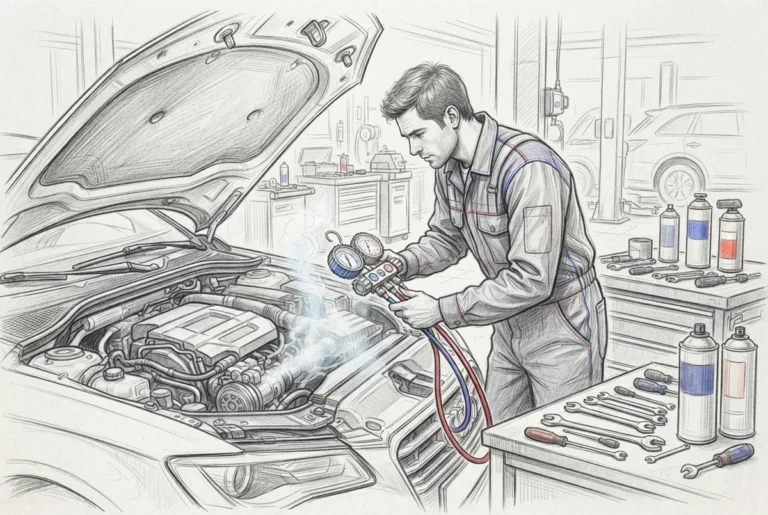
Don't just top off refrigerant when your A/C is weak—find and fix the leak first, as sealed systems losing refrigerant indicate an underlying problem that recharging alone won't permanently solve.
-
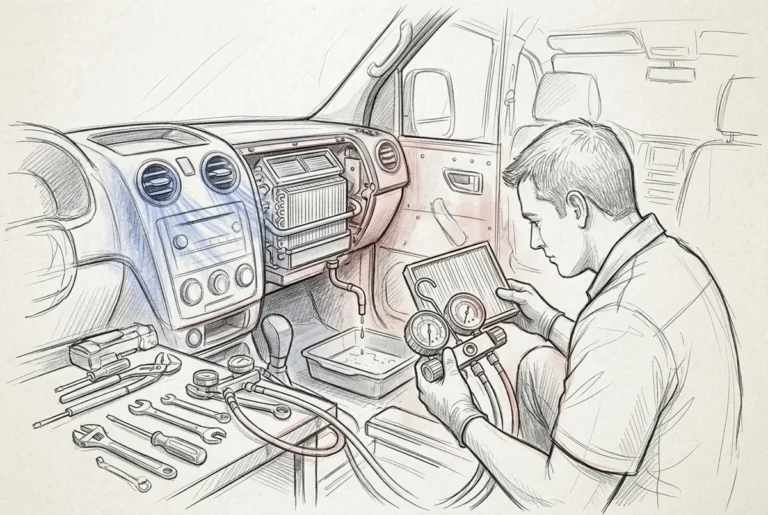
Check your cabin air filter annually or every 15,000 km (more often in dusty conditions), as a clogged filter reduces airflow and makes your A/C feel weak even when the system is functioning properly.
-
Follow your vehicle manufacturer's service schedule in the owner's manual rather than generic advice, as different vehicle types and driving conditions require different A/C maintenance intervals.
-
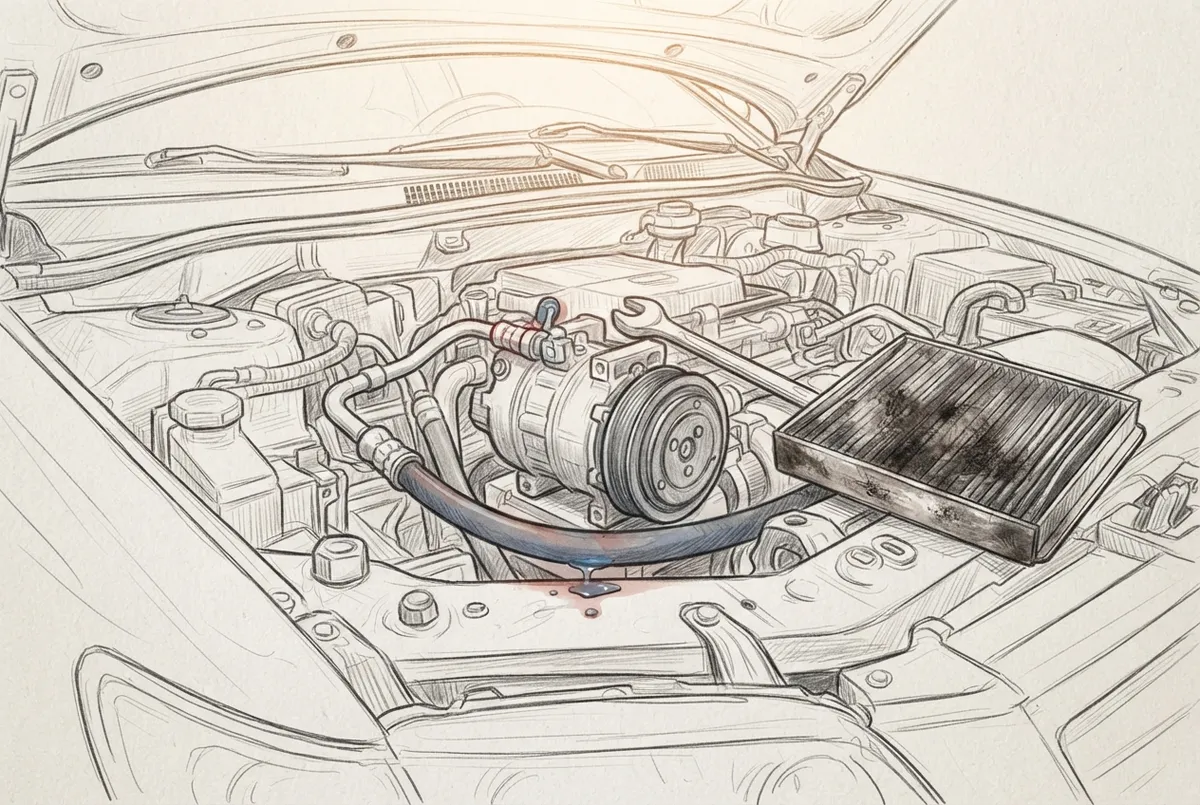
Watch for early warning signs like weaker cooling, odd smells, strange noises, or oily spots near hoses, as catching these clues weeks or months early saves money compared to emergency repairs.
-
Use only the correct refrigerant type for your vehicle (check the under-hood label for R-134a or R-1234yf) and never mix types, as contaminated refrigerant damages system performance and complicates repairs.
-
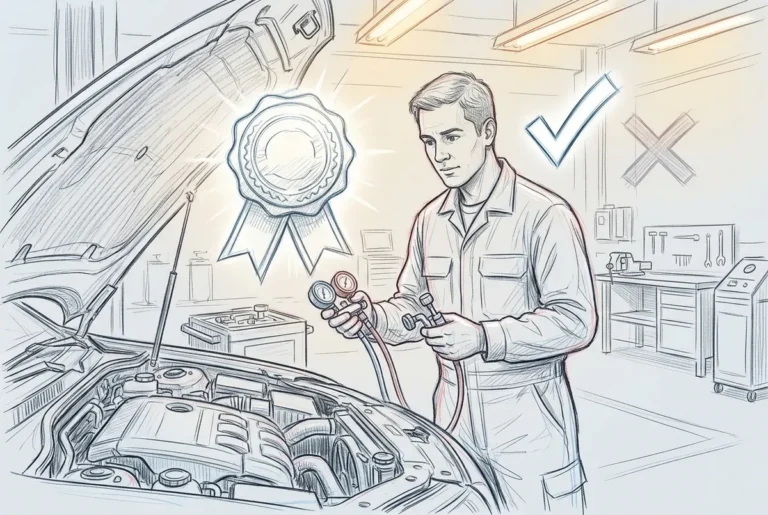
Hire only EPA-certified technicians for A/C service, as they have proper training, approved equipment to safely recover refrigerant, and understand environmental regulations that protect your vehicle and the environment.
Let’s be honest. Most of us don’t think about our vehicle’s A/C until it quits on a hot Tampa afternoon. Then we’re sweating in traffic, windows down, wondering what went wrong. The good news? Most A/C headaches start with small mistakes that are easy to avoid once you know about them.
Vehicle air conditioning maintenance is not just about adding refrigerant. It’s about checking the whole cooling system, finding problems early, and fixing the real cause. Whether you drive a family car, run a delivery truck, operate a bus, enjoy an RV, or manage heavy equipment, the same basic rules apply.
In this friendly guide, we’ll walk through seven common mistakes that cost drivers time, comfort, and money in 2026. We’ll also share simple fixes you can use right away. Think of it as a chat with a neighbor who has been around A/C systems for a long time. At Marks Air, we’ve been helping Tampa vehicle owners since 1971, and we’ve seen just about every A/C mistake there is. Let’s get you ahead of them.
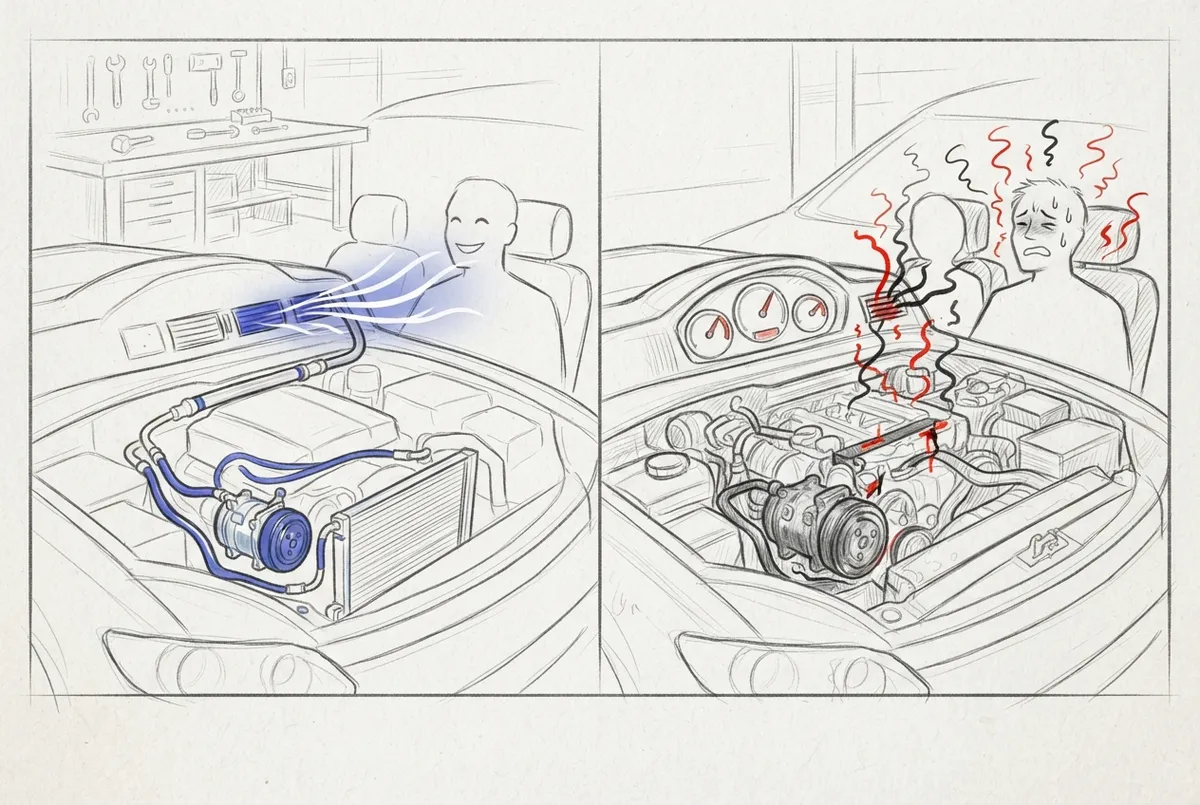
Why Vehicle Air Conditioning Maintenance Matters
Your A/C system works hard. It moves refrigerant, squeezes it, cools it, and sends it through hoses and coils many times a minute. Tampa’s heat and humidity make that job even tougher.
Good vehicle air conditioning maintenance helps you:
- Stay comfortable on long drives and hot commutes
- Avoid surprise breakdowns that sideline your vehicle
- Catch small leaks before they become big repair bills
- Protect operators from heat fatigue in trucks, buses, and heavy equipment
- Keep fleets running with less downtime
Now let’s look at the mistakes that get in the way.
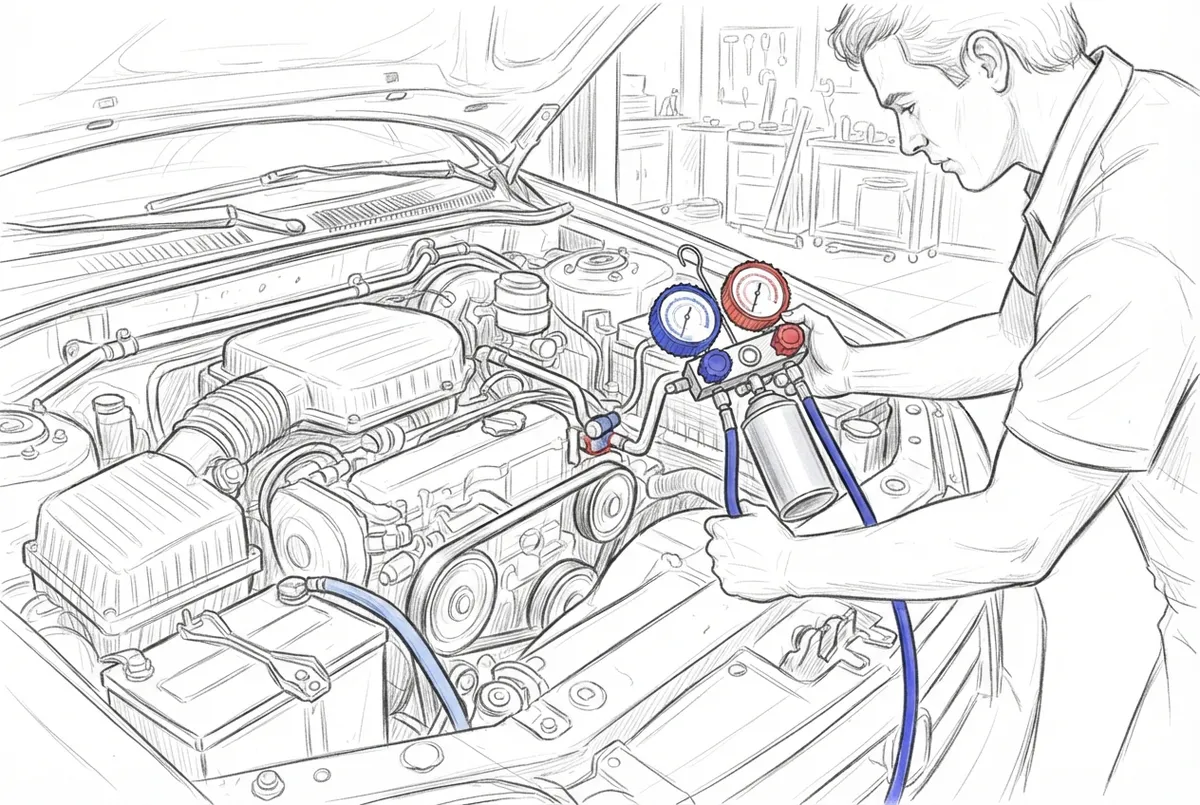
Mistake 1: Just Topping Off the Refrigerant
This one is the most common. Your A/C blows warm air, so you grab a recharge can and call it a day. It feels like a quick win. But it often isn’t.
Here’s the catch. A/C systems are sealed. If the refrigerant is low, it usually means there’s a leak somewhere. The EPA notes that topping off or recharging does not permanently repair a leak. Fixing or replacing the leaking part is what lasts.
What to Do Instead
Have a qualified technician find the source of the loss first. A good leak check can find the problem so you only pay to fix what is truly broken. Want to dig deeper? Our guide on 13 AC leak mistakes that cost car owners more money covers this topic in detail.
Here’s a helpful fact from the EPA. A few ounces, about 10% of a system’s normal charge, can be enough for a technician to perform a leak check. So a proper diagnosis doesn’t have to be a big production.
Mistake 2: Ignoring the Cabin Air Filter
The cabin air filter is the unsung hero of your A/C system. It traps dust, pollen, and debris before they enter your vehicle. When it gets clogged, airflow drops. Your A/C may feel weak even when the system itself is fine.
Many drivers forget it exists. That’s okay. We all do it. The fix is simple and cheap.
How Often Should You Check It?
There is no one answer for every vehicle. Your owner’s manual should be your first stop. Some aftermarket guides suggest checking or replacing the filter about once a year or every 15,000 km, but that is general advice, not a rule for all vehicles. If you drive on dusty roads or in heavy traffic, check it more often.
Mistake 3: Following a Generic Service Schedule
You may have heard “get your A/C serviced every year.” Or maybe it was every two years. The truth is, there is no universal interval that fits every vehicle.
Some sources say many manufacturers suggest A/C service every one to two years. Others describe a full service every two years. These are helpful ballparks, but your vehicle’s manufacturer guidance should come first.
| Vehicle Type | Common Concern | Smart Move |
|---|---|---|
| Cars | Weak cooling, dirty filter | Follow the owner’s manual and check performance each spring |
| Trucks | Long hours, constant use | Add A/C checks to regular service visits |
| Buses | Heavy passenger loads, many door openings | Schedule preventive inspections before peak season |
| RVs | Long idle periods, then heavy use | Test the system before each travel season |
| Heavy equipment | Dust, vibration, outdoor heat | Inspect condensers and airflow often |
If you run a fleet, a written plan makes life easier. Take a look at preventive vs. reactive fleet AC maintenance to see why planning ahead usually wins.
Mistake 4: Letting the Condenser Get Blocked
The condenser sits near the front of your vehicle, usually by the radiator. Its job is to release heat from the refrigerant. When bugs, leaves, dirt, or road debris block it, the system can’t shed heat well. Cooling suffers.
This happens a lot in Florida. Think of love bugs in season, sandy roads, and summer storms. Construction sites and farm fields make it even worse for heavy equipment.
Quick Visual Checks You Can Do
- Park on level ground with the engine off and cool.
- Look through the grille at the condenser fins.
- Check for bent fins, debris, or oily residue.
- Note any greasy spots on hoses or fittings, which can hint at a leak.
- Share what you find with your A/C technician.
Don’t spray high-pressure water straight at the fins, since that can bend them. A professional can clean the area safely. If you suspect damage, learn more about signs you need AC condenser repair in Tampa.
Mistake 5: Ignoring Early Warning Signs
Your A/C usually whispers before it shouts. Small changes often show up weeks or months before a full failure. If you catch them, you save money and stress.
Watch for these clues:
- Air that feels less cold than it used to
- Weak airflow from the vents
- Odd smells when the A/C starts up
- Strange noises from the compressor or blower
- Moisture or musty air inside the cabin
- Clicking sounds when the system cycles on and off
- Oily spots near hoses and connections
If you notice any of these, don’t wait. Our post on 10 reasons your AC is blowing warm air can help you narrow down the cause. For Tampa drivers dealing with extra-hot days, 7 signs you need emergency A/C repair right now is worth a read too.
Mistake 6: Mixing Up Refrigerants
Here’s one that surprises many people. Not every vehicle uses the same refrigerant. Some use R-134a. Newer models often use R-1234yf. The right type is listed on a label under the hood.
Mixing refrigerants is a bad idea. It can hurt system performance and make repairs harder. The EPA advises that contaminated or unfamiliar refrigerant should be recovered before repair or recharge.
What You Should Know
- Check the under-hood label before any service.
- Never add a different refrigerant type to your system.
- Use the exact charge amount your vehicle calls for.
- Ask your technician which refrigerant your vehicle uses.
Curious about newer refrigerants? We break it down in HFO-1234yf refrigerant for fleets: what you need to know.
Mistake 7: Skipping Certified Help
DIY can be fun. We love a good weekend project as much as anyone. But A/C work is different from changing wipers or topping off washer fluid.
In the United States, technicians who service motor vehicle A/C systems for payment must hold EPA Section 609 certification. They must also use approved equipment to recover and recycle refrigerant. Releasing refrigerant on purpose is generally not allowed. Shops must keep certain records, including technician certification and refrigerant-transfer information, for three years.
A certified shop protects you, your vehicle, and the environment. It also means the person under your hood has trained for this exact work. Marks Air is a proud member of the Mobile Air Climate Systems Association (MACS), and our team keeps up with current standards. We also offer A/C training for technicians who want to build their skills.
DIY or Pro? A Quick Comparison
| Task | DIY Friendly? | Why |
|---|---|---|
| Replacing a cabin air filter | Often yes | Simple, low risk, low cost |
| Looking for debris on the condenser | Yes | Visual check only |
| Recharging refrigerant | Use caution | Hides leaks and requires correct type and amount |
| Leak testing and repair | Pro recommended | Needs special tools and training |
| Refrigerant recovery | Pro required | EPA rules apply to paid service |
Wondering about costs? Our guide on DIY vs. shop car AC repair price gives a helpful look at both sides.
What a Professional A/C Service Includes
A good service visit is more than a quick check. While exact work depends on your vehicle and the diagnosis, a thorough appointment may include several steps.
- Performance check: The technician tests vent temperatures and airflow.
- Visual inspection: Hoses, fittings, belts, the condenser, and the compressor get a close look.
- Leak testing: Special tools help locate where refrigerant may be escaping.
- Refrigerant recovery: If needed, refrigerant is safely removed with approved equipment.
- Evacuation: The system is pulled into a vacuum to remove moisture and air.
- Recharge: The correct refrigerant is added in the manufacturer-specified amount.
- Final testing: The technician confirms cooling performance and checks for problems.
To learn more about what to expect, explore our A/C services page. If you want to get ahead of problems before summer peaks, 5 A/C maintenance tips every Tampa vehicle owner needs is a great companion read.
Tips for Different Kinds of Vehicles
Every vehicle type has its own quirks. Here’s how to tailor your approach.
Car Owners
Pay attention to how your A/C feels over time. If it slowly gets weaker, don’t wait for a total failure. Short, early visits are usually cheaper than emergency repairs.
Truck Drivers and Fleet Owners
Long hours behind the wheel make A/C comfort a safety issue, not just a luxury. A tired, overheated driver is a risk. Build A/C checks into your regular service calendar. Our post on 4 fleet vehicle AC repair tips that save you money has practical ideas.
Bus Operators
Passengers notice a warm bus right away. Preventive checks before the hottest months help you avoid complaints and breakdowns. See what proper bus AC system maintenance actually involves for more.
RV Enthusiasts
RVs often sit unused for weeks. Test your cooling system before every trip, not during it. A surprise A/C failure at a campsite in July is no fun for anyone.
Heavy Equipment Operators
Dust and vibration are tough on A/C parts. Regular cleaning and inspection help prevent operator fatigue and costly downtime. Read how to get heavy equipment AC repair done right for helpful guidance.
A Simple Seasonal Routine You Can Follow
Want an easy plan? Try this friendly routine. It takes only a few minutes each season and helps you stay ahead of trouble.
- Spring: Test cooling performance and check the cabin filter before heat arrives.
- Summer: Watch for weak airflow, odd smells, or noises during hot days.
- Fall: Look for debris around the condenser after storm season.
- Winter: Run the A/C briefly now and then, since use helps keep seals and parts in good shape.
Of course, your owner’s manual always has the final word. Use this routine as a gentle reminder, not a replacement for manufacturer guidance.
Finding the Right Shop
A trusted shop makes everything easier. Look for certified technicians, clear explanations, fair estimates, and a focus on A/C work. Reading customer reviews is a smart place to start. You can also see what neighbors say on Yelp or learn how to find reliable auto A/C service in Tampa Bay.
Marks Air is a family-owned, woman-owned business that has focused on vehicle and heavy equipment A/C since 1971. We handle diagnostics, repairs, parts, installations, and training all in one Tampa location. Many parts are available the same day. If you’d like to see what our Marks Air customers say, visit us on Google — Marks Air.
And just like a trusted dentist helps you keep your smile bright, as the friendly team at Charming Smiles of Ocoee does for their patients, a trusted A/C specialist helps keep your ride cool and comfortable year after year.
Conclusion: Small Habits, Big Savings
Great vehicle air conditioning maintenance comes down to a few simple habits. Don’t just top off refrigerant. Check your cabin filter. Follow your manufacturer’s guidance. Keep the condenser clear. Listen to early warning signs. Use the right refrigerant. And lean on certified help when the job calls for it.
Avoid these seven mistakes and you’ll enjoy cooler drives, fewer surprises, and lower repair bills. Your vehicle, your passengers, and your wallet will thank you.
Ready for an A/C checkup? Schedule service with Marks Air or call us at 813-988-1671. We’d love to help you stay cool in 2026 and beyond.
FAQs
Q: How often should vehicle air conditioning be serviced?
A: There’s no single schedule that fits every vehicle, so your owner’s manual should be your first guide. Some sources suggest a check or service every one to two years, but that’s a general ballpark, not a rule. If your cooling feels weaker or you notice odd sounds or smells, don’t wait for the calendar.
Q: Should a refrigerant leak be repaired before recharging my car A/C?
A: Yes, that’s the smart move. A recharge can bring back cooling for a while, but it doesn’t permanently fix a leak. Repairing or replacing the leaking part gives you a longer-lasting solution and saves you from repeat visits.
Q: Can I recharge my car’s A/C myself?
A: It’s tempting, but it can hide the real problem and risks using the wrong refrigerant type or amount. Vehicles may use R-134a or R-1234yf, and they should never be mixed. A certified technician can find the leak, use the right refrigerant, and charge your system to the exact manufacturer specification.
Q: Why is my vehicle’s air conditioning blowing warm air?
A: There are several friendly suspects, including low refrigerant from a leak, a clogged cabin filter, a blocked condenser, or a compressor problem. The only way to know for sure is a proper diagnosis. A quick inspection can usually point to the real cause so you only fix what’s truly broken.
Q: What does a professional car A/C service include?
A: A thorough visit may include a cooling performance check, a close look at hoses, belts, the condenser, and the compressor, plus leak testing. If needed, the technician recovers refrigerant, evacuates the system, and recharges it to the manufacturer-specified amount. The exact work depends on your vehicle and the diagnosis.