Key Takeaways
-
Tampa's intense heat and humidity cause A/C systems to wear out twice as fast as in cooler climates, requiring service twice as often due to constant refrigerant loss and seal degradation from humidity cycling.
-
Early warning signs like weak airflow, sweet-smelling vents, unusual noises, and inconsistent cooling between vents indicate imminent A/C failure—catching these before complete breakdown saves thousands in emergency repairs.
-
Professional A/C service includes pressure testing, leak detection with UV dye or electronic sniffers, salt corrosion inspection, and proper refrigerant recovery—skip basic recharges and demand full diagnostics in Tampa's harsh climate.
-
Tampa vehicles need A/C service twice yearly; run your system 10 minutes weekly even in winter, replace cabin filters every 12,000–15,000 miles, and park in shade to extend compressor life significantly.
-
Established shops with specialized equipment outperform mobile services for anything beyond basic recharges; verify EPA 609 certification, ask about HFO-1234yf system training, and get itemized quotes before repairs.
-
Recharges cost $100–$200, compressor replacements $400–$1,200+, and full system installations $1,500–$4,000+ depending on vehicle type; sometimes replacing an entire failing system costs less than repeated partial repairs over five years.
When your car’s air conditioning fails during a Tampa summer traffic jam, the temperature inside can climb to 140 degrees within minutes. That’s not just uncomfortable — it can be genuinely dangerous. Most Tampa drivers wait until their A/C stops working completely before calling for help. But Florida’s climate puts unique stress on automotive cooling systems, and catching problems early saves you time, money, and a whole lot of sweating. Understanding how Tampa’s heat and humidity affect your vehicle’s A/C gives you the power to spot warning signs before a small issue becomes a big repair bill. Whether you drive a personal car, a work truck, an RV, or a bus, this guide will help you navigate air conditioning service in Tampa with confidence. Let’s make sure you’re never stuck in a hot car again.
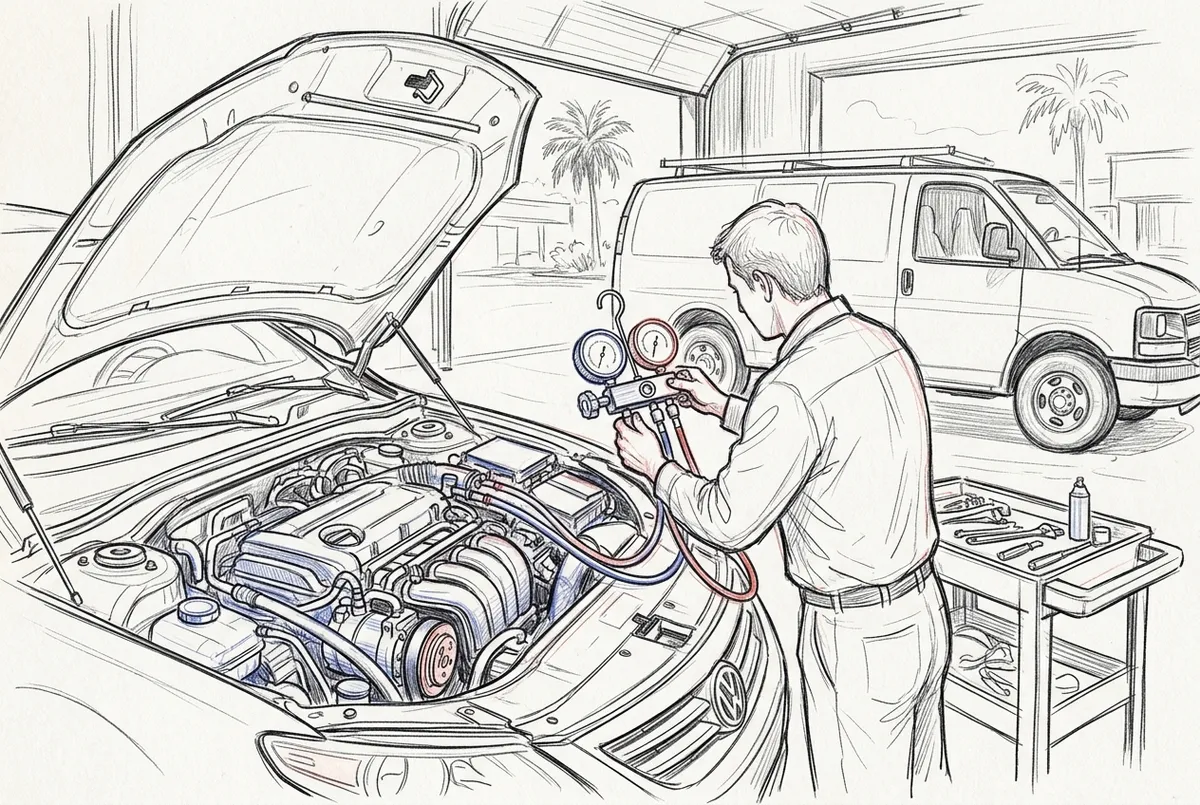
Understanding Tampa’s Impact on Vehicle A/C Systems
Tampa’s climate is no joke. The region’s humid subtropical weather means your vehicle A/C system is working harder — and wearing out faster — than in most other parts of the country. Regional forecasts for Spring 2026 predict sustained 90-degree temperatures arriving earlier than historical averages. That’s bad news for overworked cooling components.
How Humidity Accelerates Refrigerant Loss and Seal Deterioration
High humidity creates a perfect storm for A/C seal degradation. Rubber seals and O-rings expand and contract constantly in Florida’s heat and moisture, which speeds up cracking and refrigerant leaks. A system that holds a charge fine up north may slowly lose refrigerant here in Tampa within a single season.
Salt Air Corrosion on Condensers and Components
Living near Tampa Bay also means salt air. Salt accelerates corrosion on aluminum condensers, metal fittings, and electrical connections inside your A/C system. Vehicles driven near the coast or stored outside are especially vulnerable. Corroded condenser fins reduce efficiency even when the system is fully charged.
Why Tampa Vehicles Need Service More Often
Because of these added stressors, Tampa vehicles typically need A/C service twice as often as those in cooler, drier climates. Running your system nearly year-round — rather than just a few months — wears out compressor clutches, belts, and refrigerant faster than the manufacturer’s standard service intervals assume.
Early Warning Signs Specific to Florida Climate
- Cooling that takes longer than usual to kick in after startup
- A/C that blows cold in the morning but warm by afternoon
- Musty or mildewy smells from vents after rain
- Visible moisture or frost forming around A/C fittings
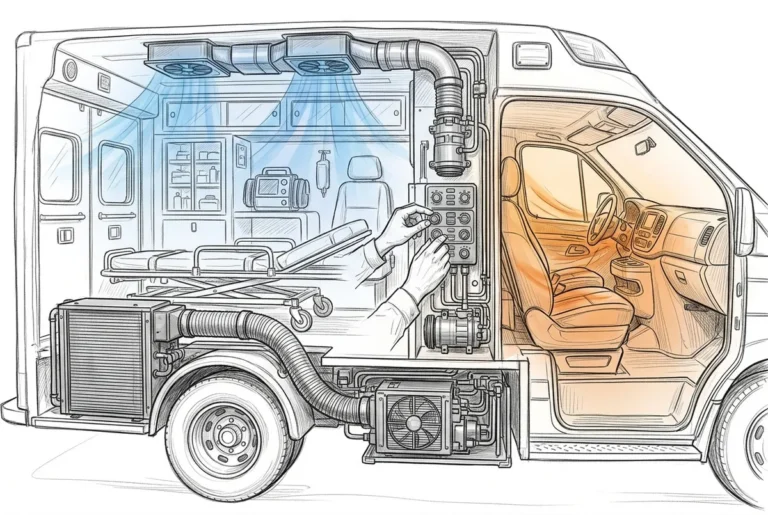
Home and auto A/C systems may seem similar, but they’re very different animals. Home systems are stationary, serviced annually, and designed for consistent loads. Vehicle systems deal with vibration, road debris, and the dramatic heat cycles of a parked Florida car. That’s why auto A/C expertise matters — and why specialized A/C services from a shop that focuses exclusively on vehicles makes such a difference.
Signs Your Vehicle Needs A/C Service Now
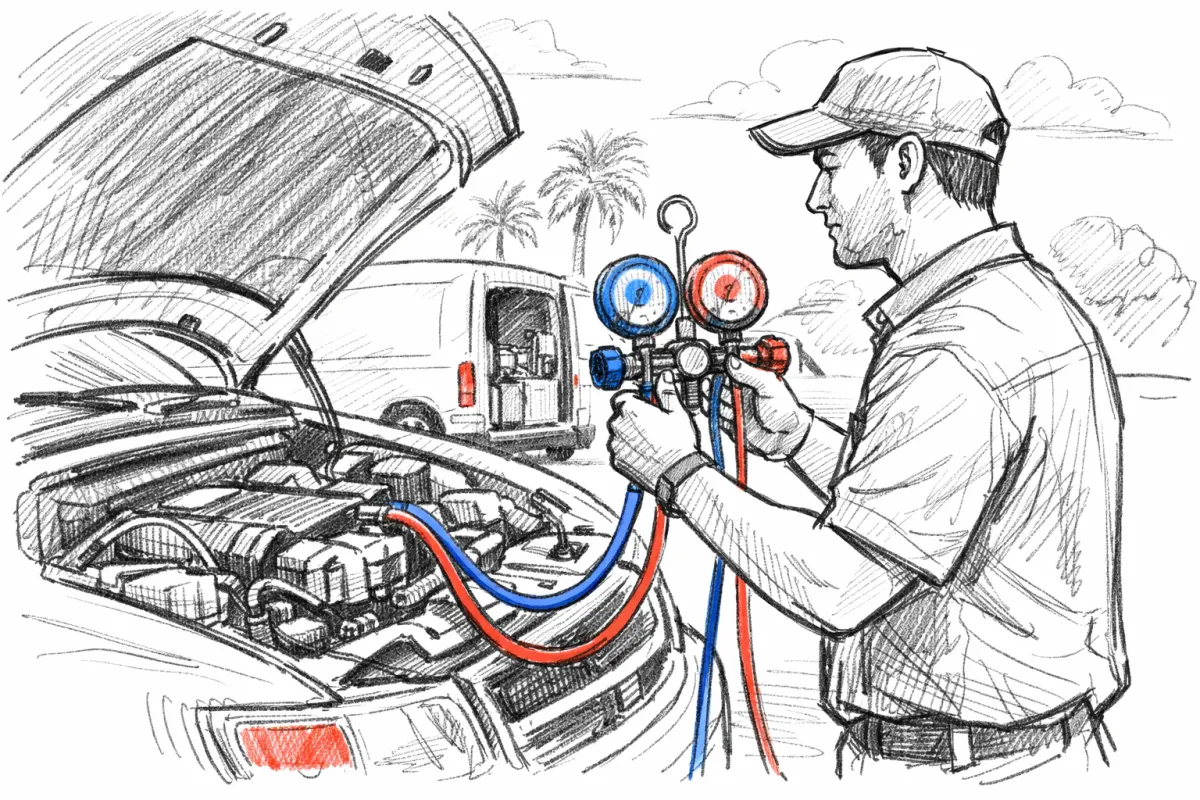
Your vehicle’s A/C system usually gives you warning before it fails completely. Knowing what to look and listen for can help you get ahead of a breakdown — and avoid a sweaty surprise on I-275.
Five Key Warning Signs to Watch For
- Weak airflow despite high fan settings. If you crank the fan to max and still feel a trickle of air, the blower motor, a clogged cabin filter, or blocked ducts may be the culprit.
- A sweet smell from the vents. That oddly pleasant smell is often refrigerant — specifically, it can indicate a leak in the evaporator or nearby lines. Don’t ignore it.
- Unusual noises when A/C is engaged. Grinding, squealing, or rattling when you switch on the A/C often points to compressor wear, a failing clutch, or debris in the blower housing.
- Inconsistent cooling between vents. One vent blowing cold while another pushes warm air suggests blend door problems or blockages in the duct system.
- Moisture buildup on windows despite A/C running. Your A/C dehumidifies air as it cools it. If windows stay foggy with the system on, the evaporator may be failing or the system may be low on refrigerant.
These symptoms apply to all vehicle types — cars, trucks, RVs, and buses. Fleet operators should train drivers to report these signs immediately, since one ignored A/C problem in a fleet vehicle can multiply into several expensive repairs across multiple units. Early diagnosis is always cheaper than emergency repairs. You can check out common A/C questions and answers to learn more about what different symptoms might mean for your specific vehicle.
What to Expect During Professional A/C Service
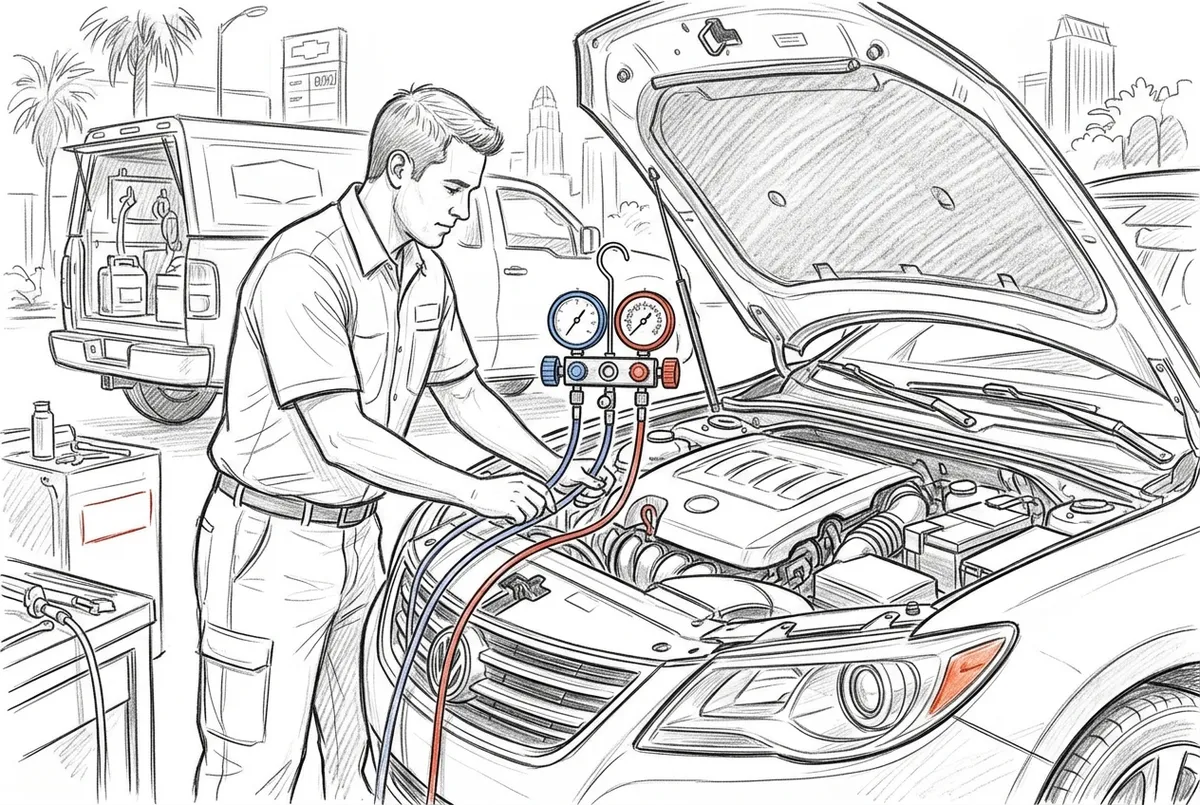
If you’ve never had a professional auto A/C service, you might wonder what actually happens during the appointment. Here’s a clear walkthrough of what a thorough service visit looks like — and what separates a quality shop from a quick-fix operation.
Step-by-Step Professional A/C Service Process
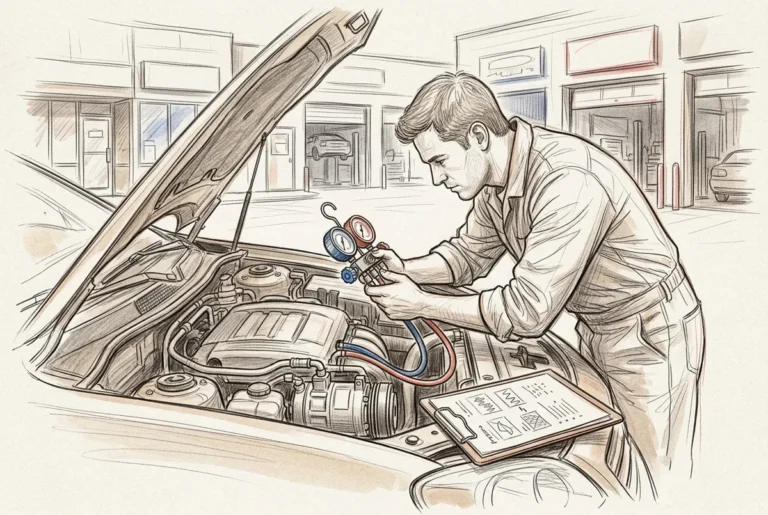
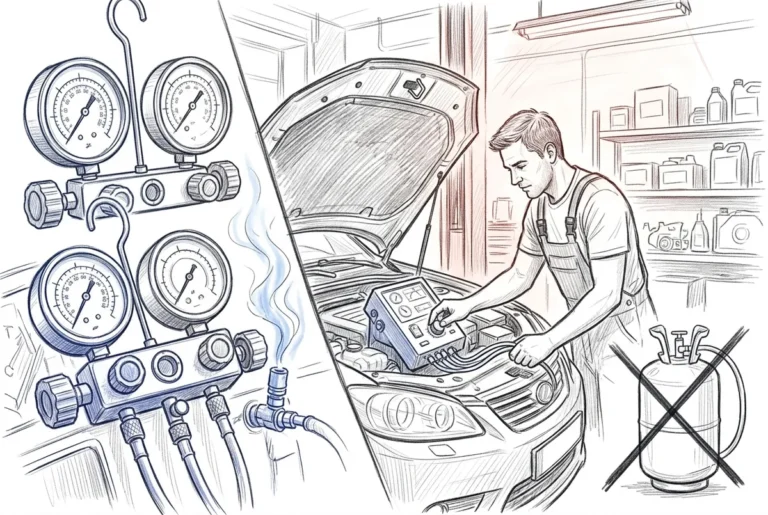
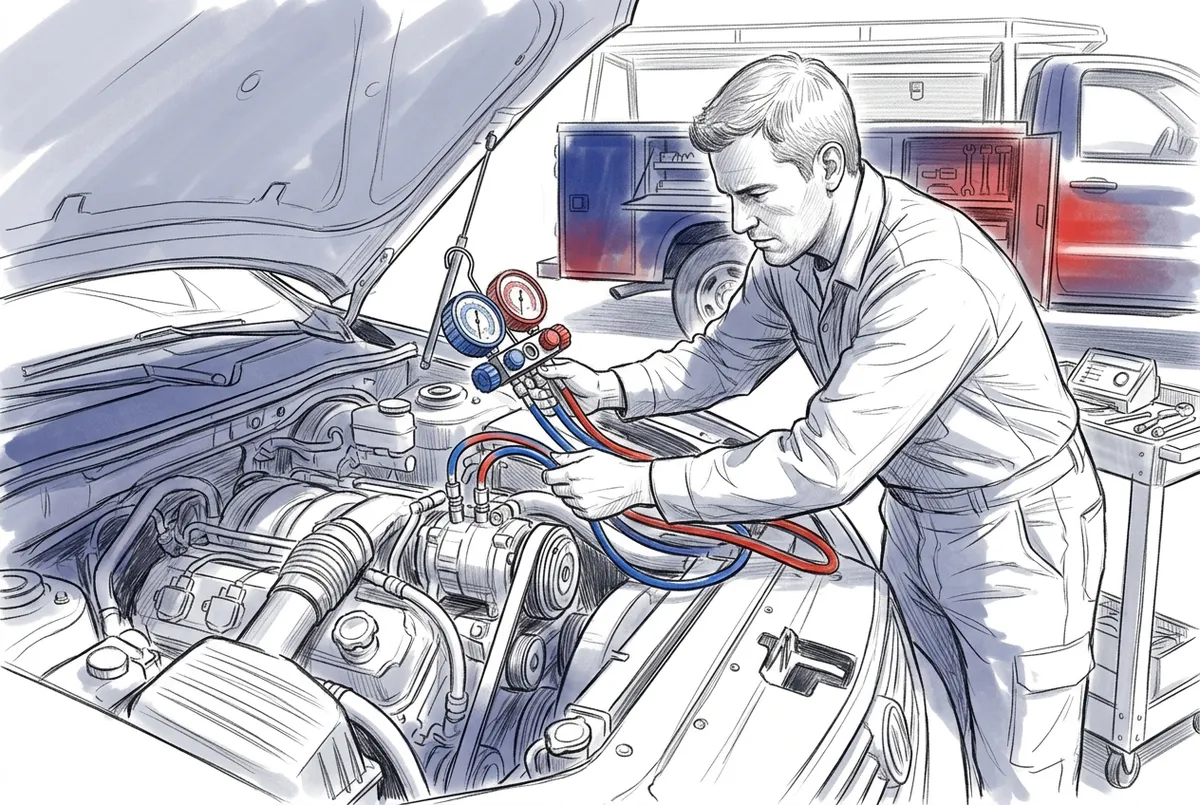
- Initial system pressure and temperature testing. A technician connects gauges to measure high-side and low-side pressures. This tells them whether the system is undercharged, overcharged, or has a blockage — all before a single part is touched.
- Leak detection. Using UV dye, electronic sniffers, or nitrogen pressure testing, a tech locates every leak point. In Tampa’s climate, finding all leaks — not just the obvious one — is critical before recharging.
- Component inspection for Tampa conditions. A good shop checks for salt corrosion on the condenser, belt wear, compressor operation, cabin filter condition, and drain line blockages that lead to musty smells.
- Refrigerant recovery and recharge. Old refrigerant is properly recovered using certified equipment (required by EPA regulations), the system is evacuated to remove moisture, and then it’s recharged to the exact manufacturer spec for your vehicle.
- Performance verification. After the recharge, the technician checks vent temperatures, airflow, and system pressures again to confirm everything is working correctly before handing your keys back.
Always ask about warranty coverage on parts and labor. A reputable shop stands behind its work. Marks Air, Tampa’s A/C specialist since 1971, provides diagnostics, hose fabrication, full system installations, and repairs — all backed by warranties — for cars, trucks, buses, RVs, and heavy equipment. When you want to know what quality service looks like, reading customer reviews is a great starting point.
Choosing Between Repair Shops and Mobile Services
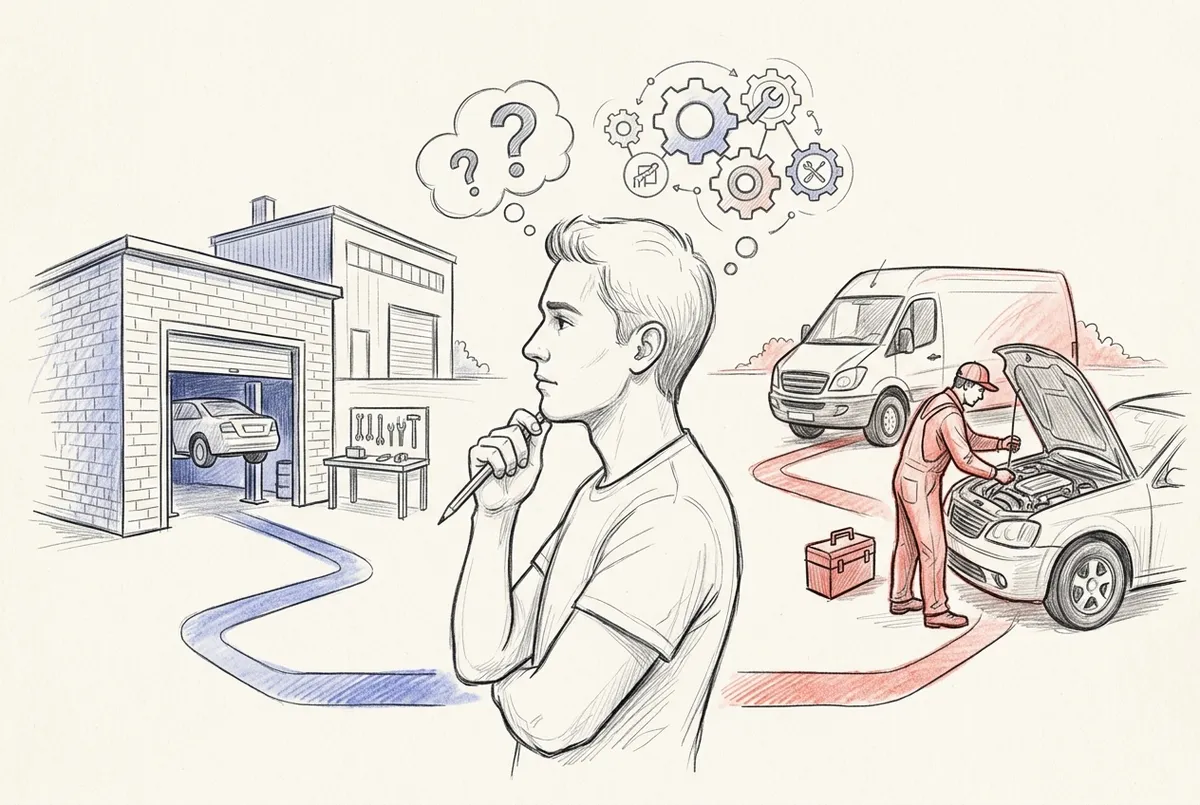
When your vehicle A/C acts up, you have a choice: bring it to a shop or call a mobile tech. Both have their place, but knowing the difference helps you make the right call.
Benefits of Established Shops with Specialized Equipment
A fully equipped shop can handle the complete service spectrum — from simple recharges to compressor replacements, evaporator core swaps, and full system installations. Proper refrigerant recovery machines, vacuum pumps, leak detection equipment, and parts inventory live in the shop. For anything beyond a basic recharge, a shop is almost always the better choice.
When Mobile A/C Service Makes Sense
Mobile services work well for basic diagnostics or simple recharges on fleet vehicles parked at a yard. If you have a bus fleet or a large construction equipment operation, having a tech come to your location can reduce downtime. However, complex repairs still need to happen in a properly equipped facility.
Questions to Ask About Technician Certifications
- Is the technician EPA 609 certified for refrigerant handling?
- Are they trained on HFO-1234yf systems for newer vehicles?
- Do they have experience with your specific vehicle type (bus, RV, heavy equipment)?
- What equipment do they use for leak detection?
Red Flags in Service Quotes
- Quotes given without any diagnostic testing first
- Refusing to itemize parts and labor separately
- Pressure to approve additional repairs immediately without explanation
- No warranty offered on parts or labor
Specialized auto A/C shops consistently outperform general mechanics on cooling system work. A general mechanic may handle A/C occasionally. A dedicated A/C specialist does it every day — and that repetition builds the diagnostic accuracy that saves you money. Marks Air is proud to be a member of the Mobile Air Climate Systems Association (MACS), ensuring technicians stay current with industry best practices and refrigerant standards.
Cost Factors for Tampa Auto A/C Service
Let’s talk money — because A/C repair costs vary widely, and knowing what drives the price helps you evaluate any quote you receive.
| Service Type | Typical Price Range | Notes |
|---|---|---|
| A/C Recharge (Refrigerant Only) | $100 – $200 | Varies by refrigerant type (R-134a vs. HFO-1234yf) |
| Leak Detection | $50 – $150 | May be included with full service |
| Compressor Replacement | $400 – $1,200+ | Higher on trucks, RVs, and buses |
| Evaporator Core Replacement | $500 – $1,500+ | Labor-intensive; varies greatly by vehicle |
| Full System Installation | $1,500 – $4,000+ | Custom or heavy equipment systems cost more |
Why Quotes Vary Between Vehicle Types
A compact car A/C job is very different from a bus or RV system repair. Larger vehicles carry more refrigerant, have bigger components, and often require more labor hours. Heavy equipment A/C systems can be especially complex. Always give the shop your exact vehicle type before requesting a quote.
Hidden Costs to Ask About Upfront
- Refrigerant disposal or recovery fees
- Shop supplies or environmental fees
- Diagnostic charges that may or may not apply toward repair cost
Sometimes replacement is smarter than repeated repairs. If your compressor has failed, your condenser is corroded, and your evaporator is leaking — all at once — a full system replacement may cost less over five years than patching each problem individually. Ask your technician for an honest assessment. Tampa’s high A/C usage means systems wear out faster, so timing matters. Scheduling service before peak summer heat typically gets you faster appointments and sometimes better pricing. Check out quality A/C parts to understand what goes into a proper repair.
Maintaining Your A/C Between Services
Professional service keeps your system healthy, but what you do between visits matters too. Here are practical habits that extend A/C life and keep you comfortable year-round in Tampa’s heat.
Monthly Checks You Can Do Yourself
- Run the A/C and check vent temperature. You don’t need gauges for this — just feel whether the air is genuinely cold or just mildly cool. A noticeable change from last month is worth investigating.
- Listen for unusual sounds when you engage the A/C. New noises mean something changed. Early detection prevents bigger damage.
- Look under the hood for visible damage. Check the A/C belt for cracking or fraying and look at the condenser (the front-most radiator-like part) for bent fins or debris.
Run A/C in Winter to Preserve Seals
Even in Tampa’s mild winters, run your A/C for at least 10 minutes per week. This circulates the refrigerant oil that lubricates seals and keeps the compressor healthy. A system that sits idle for weeks can develop dried-out seals that leak refrigerant when you finally need it in the spring.
Cabin Filter Replacement Schedule
Tampa’s pollen, dust, and humidity make cabin filters dirty faster than in most cities. A clogged cabin filter restricts airflow and makes your A/C work harder, reducing efficiency and cooling power. Replace your cabin filter every 12,000–15,000 miles in Tampa — or more frequently if you drive on unpaved roads or in dusty construction zones.
Parking Strategies to Reduce System Strain
- Park in shade whenever possible to reduce cabin temperature before you even start the car
- Use a windshield sunshade — it dramatically cuts interior heat buildup
- Crack windows slightly if parked in a safe area to allow heat to escape
- Avoid letting the car sit in direct sun on black asphalt for extended periods
These simple steps reduce how hard your A/C has to work when you first start driving, which lowers wear on the compressor and other components.
Products to Avoid That Damage A/C Components
- Cheap stop-leak additives: These can clog orifice tubes and damage compressors. Avoid them entirely.
- DIY refrigerant cans with sealant added: They may void your warranty and create bigger problems for technicians trying to properly service the system later.
- Pressure washing the condenser directly: High-pressure water bends delicate condenser fins and reduces airflow. Use low pressure and keep the nozzle at a safe distance.
Want to go deeper on best practices? A/C training resources at Marks Air cover everything from EPA 609 certification to HFO-1234yf systems — great for professional technicians and curious vehicle owners alike. You can also follow Marks Air on Facebook and Instagram for tips, updates, and helpful reminders to keep your vehicle cool all year long.
Keep Your Cool — Let Tampa’s A/C Experts Help
Tampa’s heat is relentless, but a well-maintained vehicle A/C system doesn’t have to be a source of stress. From understanding Florida’s unique impact on cooling systems to spotting early warning signs and choosing the right shop, you now have the knowledge to make smart decisions about air conditioning service in Tampa. Whether you’re a daily commuter, a long-haul trucker, a bus operator, or an RV adventurer, keeping your A/C in top shape is not optional in this climate — it’s essential.
Marks Air has been Tampa’s trusted automotive A/C specialist since 1971. As a family-owned, woman-owned business, we care deeply about every customer and every vehicle that comes through our doors. Read what our customers say on Yelp and visit our Google Business Profile to see why Tampa drivers, fleet operators, and heavy equipment companies keep coming back. Don’t wait until your A/C quits on the hottest day of the year — schedule your A/C service appointment today or give us a call at 813-988-1671. We’re here to keep you cool.
FAQs
Q: How long does a typical auto A/C recharge last in Tampa’s climate?
A: In Tampa’s intense heat and humidity, a properly performed recharge on a leak-free system can last two to three years or more. However, because Florida’s climate accelerates seal wear, it’s smart to have your system pressure-checked annually so small leaks don’t quietly drain your refrigerant before you notice reduced cooling.
Q: Can I convert my older R-12 system to modern refrigerant?
A: Yes, older R-12 systems can be retrofitted to use R-134a or other approved refrigerants, though it’s not a simple swap — it requires replacing O-rings, flushing the system, and potentially upgrading the compressor oil. A certified A/C technician can evaluate your specific vehicle and recommend the best conversion path so you get reliable cooling without damaging components.
Q: Why does my A/C work fine in the morning but fail in afternoon heat?
A: This is a very common Tampa complaint! When a system is low on refrigerant or has a marginal compressor, it can handle the lighter cooling load of a cool morning but struggle when afternoon temps push into the 90s and demand spikes. Getting a full pressure test and inspection will usually reveal whether a refrigerant top-up, leak repair, or compressor service is needed.
Q: Is it safe to use DIY refrigerant cans from auto parts stores?
A: We understand the temptation — they’re cheap and easy to find — but DIY cans carry real risks. Many contain sealant additives that can clog internal A/C components and contaminate the refrigerant, making professional service much harder and more expensive down the road. A proper shop diagnosis costs a bit more upfront but protects your system long-term.
Q: What’s the difference between evacuating and recharging an A/C system?
A: Evacuating means using a vacuum pump to remove all air and moisture from the A/C system before adding refrigerant — skipping this step is a common shortcut that leads to poor cooling and accelerated corrosion. Recharging is the process of adding the correct amount and type of refrigerant after evacuation. A quality shop always does both steps together for the best results.