Key Takeaways
-
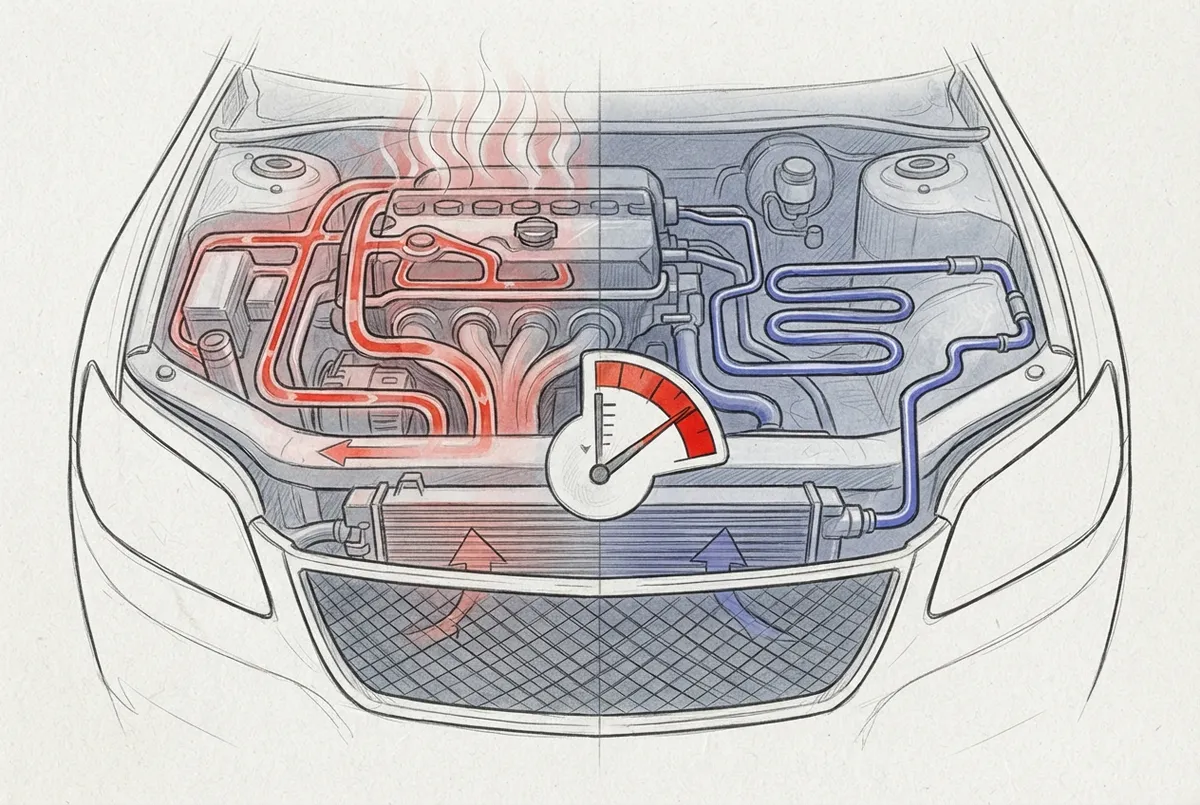
Engine cooling systems and A/C systems are completely separate—engine cooling uses coolant to protect the engine while A/C uses refrigerant to cool the cabin air. Mixing them up leads to wasted time and money on unnecessary repairs.
-
If your car is overheating, pull over immediately and shut off the engine without opening the radiator cap; continuing to drive risks catastrophic engine damage that costs far more than a tow.
-
A/C recharges do not fix engine cooling problems and often mask the real issue—if your system is low on refrigerant, there's usually a leak that must be found and sealed first.
-
Both systems share airflow at the front of your vehicle, so a failing cooling fan or blocked radiator/condenser can hurt engine temperature and A/C performance simultaneously, requiring a technician to diagnose both before recommending repairs.
-
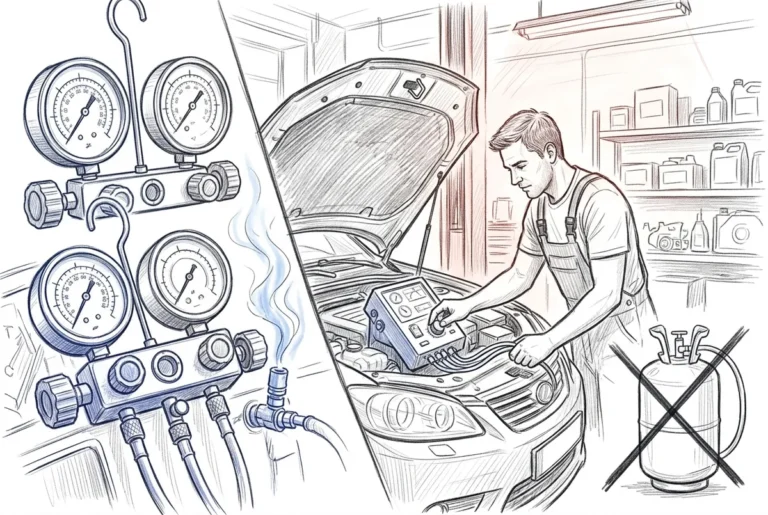
Any technician servicing your vehicle's A/C system must hold EPA Section 609 certification and use approved refrigerant recovery equipment; refrigerant cannot be vented and must be properly recovered and recycled.
-
Follow your vehicle manufacturer's specific coolant type and service intervals rather than universal rules or color matching, as using wrong coolant can damage your engine cooling system over time.
Picture this: it’s a sticky August afternoon in Tampa. You’re sitting in traffic, the temperature gauge is creeping up, and the air from your vents feels more like a hair dryer than a cool breeze. Is your engine overheating? Is your A/C dying? Or is it both at once? If you’ve ever felt that sinking feeling, you’re in good company.
Here’s the tricky part. When people search for automotive cooling system repair, they usually mean the engine’s liquid-cooling system. But many drivers also use that phrase when their cabin air won’t cool down. These are two separate systems, and mixing them up can lead to wasted time and money.
The good news? You don’t need to be a mechanic to understand the difference. In this friendly guide, we’ll walk through how each system works, how to spot the warning signs, and how to tell which one needs help. We’ll also cover where the two systems overlap, so you know what to say when you call a shop.

What Does Automotive Cooling System Repair Actually Mean?
In most repair shops, automotive cooling system repair refers to the engine cooling system. This system keeps your engine from getting too hot while it runs. It uses a liquid called coolant (often called antifreeze) that flows through the engine and the radiator.
Your car’s A/C system is a different thing entirely. It uses a sealed refrigerant circuit to pull heat out of the cabin air. It has its own parts, its own fluid, and its own rules for service.
Think of it like this. The engine cooling system protects your engine. The A/C system protects your comfort. Both matter, but they need different tools and different know-how.
The Engine Cooling System at a Glance
The engine cooling system circulates coolant to carry heat away from the engine. Common parts include:
- Radiator: Releases heat from the coolant into the air.
- Hoses and clamps: Carry coolant between the engine and radiator.
- Thermostat: Controls when coolant flows to the radiator.
- Water pump: Pushes coolant through the system.
- Cooling fan: Pulls air across the radiator, especially in slow traffic.
- Coolant reservoir: Holds extra coolant as it expands and contracts.
The A/C System at a Glance
The A/C system moves refrigerant through a closed loop to cool cabin air. Its main parts include the compressor, condenser, evaporator, expansion device, hoses, and controls. If you’d like a quick refresher, our guide to 6 A/C Parts Every Vehicle Owner Should Know in 2026 is a great place to start.

Engine Cooling vs. A/C: A Quick Comparison
Here’s a simple side-by-side look at the two systems. Keep this handy next time something feels off.
| Feature | Engine Cooling System | Vehicle A/C System |
|---|---|---|
| Main job | Controls engine temperature | Cools the cabin air |
| Fluid used | Coolant (antifreeze) | Refrigerant |
| Key parts | Radiator, water pump, thermostat, hoses | Compressor, condenser, evaporator, hoses |
| Typical warning sign | Overheating gauge, steam, coolant leaks | Warm air from vents, odd noises, weak airflow |
| Risk if ignored | Serious engine damage | Loss of comfort, possible compressor damage |
| Special rules | Follow vehicle maker’s specs | EPA Section 609 rules apply to refrigerant |
Signs Your Engine Cooling System Needs Repair
Engine cooling problems can get serious fast, so it pays to know the warning signs. Watch for these:
- An overheating gauge or warning light. If the needle climbs toward hot, take it seriously.
- Coolant leaks. Puddles under the car are often bright green, orange, or pink.
- A low coolant level. If you keep topping off, there’s likely a leak.
- Steam from under the hood. This is a clear sign to pull over.
- Temperature swings. A gauge that jumps up and down can point to a thermostat or flow issue.
If your car is overheating, stop in a safe place and shut off the engine. Do not keep driving it. Overheating can cause serious engine damage, and a short tow is much cheaper than a new engine. Never open a hot radiator cap, because the system is under pressure.
Signs Your A/C System Needs Help Instead
Now let’s flip it around. Sometimes the engine runs just fine, but the cabin never cools down. That points to the A/C side. Common signs include:
- Warm or only slightly cool air from the vents
- Weak airflow, even on high
- Strange noises when the A/C turns on
- Musty smells from the vents
- Air that cools at highway speed but warms up at red lights
Warm air alone does not prove your engine cooling system has failed. It could be refrigerant loss, a compressor problem, a condenser issue, a fan problem, or a control fault. For a closer look at the possibilities, see 10 Reasons Your AC Is Blowing Warm Air (And How to Fix It).
Where the Two Systems Overlap
Here’s where things get interesting. The two systems are separate, but they share some real estate. On many vehicles, the A/C condenser sits right in front of the engine radiator. Both parts need airflow to shed heat. In many cases, the same cooling fan helps both.
That means a weak or failing fan can hurt both systems at once. You might notice poor A/C performance in stop-and-go traffic and, under some conditions, a rising temperature gauge too. The systems use different fluids and different circuits, but the airflow at the front of your vehicle is a shared lifeline.
Quick Things That Can Affect Both
- A failing or slow cooling fan
- Bugs, leaves, or road debris blocking the front of the radiator and condenser
- Bent fins from road damage
- A missing air shroud or deflector that guides airflow
Because of this overlap, a good technician checks both systems before suggesting a fix. That keeps you from paying for the wrong repair.
How Technicians Diagnose Cooling Problems
Good diagnosis saves money. Here is how a careful shop usually approaches an engine cooling complaint:
- Check coolant level and condition. Low, dirty, or rusty coolant tells a story.
- Look for leaks. Hoses, clamps, the radiator, and the water pump are common spots.
- Pressure test the system. This helps find small leaks that don’t leave puddles.
- Test the thermostat. A stuck thermostat can cause overheating or poor heat.
- Check circulation and fan operation. Coolant must flow, and the fan must kick on when needed.
Repair steps and coolant types differ from vehicle to vehicle. That’s why it’s best to follow the manufacturer’s service information instead of guessing at a universal flush schedule or coolant color. Using the wrong coolant can cause problems down the road.
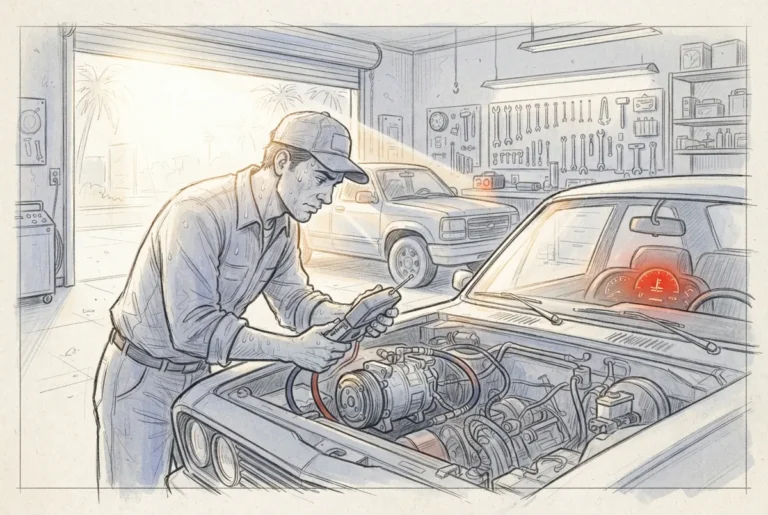
For A/C complaints, the process looks different. A technician checks pressures, inspects the compressor and condenser, looks for leaks, tests fans and controls, and confirms airflow. If you want to know what to expect, our post on how to find the best AC diagnostic near me fast walks through the basics.
Does an A/C Recharge Fix an Engine Cooling Problem?
Nope, and this is one of the most common mix-ups we hear. An A/C recharge adds refrigerant to the A/C circuit. It does nothing for your engine coolant, your radiator, or your water pump.
It also isn’t always the right fix for the A/C itself. If your system is low on refrigerant, there’s usually a leak somewhere. Adding more without finding the leak just delays the real repair. We cover this in detail in 13 AC Leak Mistakes That Cost Car Owners More Money.
The EPA Rules You Should Know About
Here’s a helpful fact for any car owner. In the United States, a technician who services a motor vehicle A/C system for payment must hold EPA Section 609 certification. They must also use approved refrigerant recovery equipment. Refrigerant cannot be intentionally vented into the air. It has to be recovered first, then recycled or reclaimed.
This matters because most vehicle A/C systems use R-134a, which has a global warming potential about 1,400 times that of CO₂, according to the EPA. These rules protect the environment and make sure your system is handled properly. They apply to A/C refrigerant work, not ordinary engine coolant repairs.
When you pick a shop, it’s smart to ask about certification. Marks Air is a proud member of the Mobile Air Climate Systems Association (MACS), and we also offer EPA 609 and related training for technicians.
Cooling Concerns for Trucks, Buses, RVs, and Heavy Equipment
Big vehicles face bigger heat. Tampa’s climate puts extra stress on every cooling component, and the stakes are higher when downtime costs money.
- Truck drivers: Long hauls in summer heat mean fans, condensers, and hoses work overtime. A small problem on the road can turn into a long delay.
- Bus operators: Passenger comfort and safety depend on steady A/C. Regular checks keep routes on schedule.
- RV owners: Parked at a campsite or climbing a hill, RVs can strain both engine cooling and A/C. A pre-trip check is worth the effort.
- Heavy equipment operators: Dust, heat, and long shifts are tough on radiators and condensers. A cool cab helps reduce operator fatigue.
- Fleet owners: Preventive checks across a fleet cost far less than surprise breakdowns. See Preventive vs. Reactive Fleet AC Maintenance: Which Wins? for more.
Simple Habits That Help Both Systems
You don’t need special tools to give your vehicle a fighting chance. A few easy habits go a long way:
- Check coolant level when the engine is cold. Never open the cap on a hot system.
- Look under your vehicle now and then. Spotting a small drip early can save a big repair.
- Keep the front of the vehicle clean. Gently remove bugs and debris from the radiator and condenser area.
- Listen for new noises. Squeals, grinding, or rattles are worth a look.
- Watch your gauge. Notice if it runs hotter than normal.
- Run your A/C regularly. Even in cooler weather, use it from time to time to keep seals moving.
For more ideas, check out 5 AC Maintenance Tips Every Tampa Vehicle Owner Needs.
How to Pick the Right Shop
Since the two systems are different, ask a few smart questions before you hand over your keys:
- Do you diagnose first before suggesting repairs?
- Are your A/C technicians EPA Section 609 certified?
- Do you work on my type of vehicle, whether car, truck, bus, RV, or heavy equipment?
- Do you offer a warranty on your work?
At Marks Air, we focus on vehicle and equipment air conditioning, and we’ve been doing it in Tampa since 1971. As a family-owned, woman-owned shop, we take pride in honest diagnosis and long-lasting repairs. If you suspect an engine-cooling issue, we’ll tell you straight so you can get it to the right place. You can also read what neighbors say in our customer reviews, on Yelp, or see what our Marks Air customers say on Google. And hey, if your smile needs a little tune-up too, our friends at Brockway Orthodontics are a great local team.
Why Local Matters in Tampa
Tampa’s heat and humidity are hard on every vehicle. Parts wear faster, and a small issue can grow quickly. A local shop knows what summers do to hoses, fans, condensers, and compressors. It also means faster parts and quicker answers. Our A/C parts inventory helps us get many repairs done without long waits.
If your A/C is the problem, our A/C services cover diagnostics, leak detection, repairs, hose fabrication, and full system installs. If you’re curious about costs, take a peek at How Much Does Auto AC Repair Cost in 2026?
Wrapping It Up: Know Your System, Save Your Summer
When it comes to automotive cooling system repair, the smartest first step is figuring out which system is acting up. Your engine’s cooling system protects the engine. Your A/C system keeps you comfortable. They’re separate, but they share airflow and sometimes a fan, so a problem in one area can show up in the other.
If your gauge is climbing, stop safely and get it checked. If your vents are blowing warm, don’t just assume a recharge will fix it. A proper diagnosis saves you money and stress. Not sure where to start? We’re happy to help you sort it out.
Ready to cool things down? Schedule service with our Tampa team today, or call us at 813-988-1671. You can also follow our shop news on Facebook. We’d love to help you stay comfortable on the road.
FAQs
Q: What is the difference between an engine cooling system and a car A/C system?
A: The engine cooling system uses coolant to keep your engine from overheating. The A/C system uses a separate sealed refrigerant circuit to cool the air inside your cabin. They have different parts and different fluids, so each needs its own diagnosis.
Q: Can a bad radiator or cooling fan make my car’s A/C blow warm air?
A: It can contribute. On many vehicles, the A/C condenser and radiator share airflow, and one fan may serve both. A weak fan or blocked airflow can hurt A/C performance, especially in slow traffic, even though the two systems use separate fluids.
Q: What should I do if my car is overheating?
A: Pull over in a safe spot and turn off the engine. Don’t open a hot radiator cap, and don’t keep driving, since overheating can cause serious engine damage. Let it cool down and call for help or a tow.
Q: Does automotive A/C repair require EPA Section 609 certification?
A: Yes. In the U.S., anyone servicing a motor vehicle A/C system for payment must hold EPA Section 609 certification and use approved refrigerant recovery equipment. Refrigerant can’t be vented and must be recovered, then recycled or reclaimed. These rules apply to A/C refrigerant work, not regular engine coolant repairs.
Q: How often should engine coolant be changed?
A: It depends on your vehicle. Intervals and coolant types vary, so the best move is to follow your manufacturer’s service information rather than relying on a one-size-fits-all rule. A trusted technician can help you find the right spec.