Key Takeaways
-
Fix AC condenser problems quickly in Tampa to avoid expensive repairs; warm air from your A/C often signals a failing condenser that needs professional diagnosis before purchasing parts.
-
Tampa's extreme heat (91.3°F average in August, 3,611 annual cooling degree days) causes rapid condenser corrosion, clogging, and salt damage—making preventive maintenance essential for vehicle owners.
-
Distinguish between repair and replacement: repair works for bad fans, loose mounts, or dirty coils, while leaking, crushed, or corroded condensers require replacement for reliable performance.
-
Ten warning signs include warm air at idle, cool air only while driving, oily residue, repeated refrigerant loss, bent fins, unusual noises, clogged coils, high pressure symptoms, non-spinning fans, and warning lights.
-
Choose EPA-certified technicians trained under Section 608 and 609 regulations to safely handle refrigerant systems; DIY work is illegal and venting refrigerant is federally prohibited.
-
Get a written, itemized estimate after professional diagnosis to understand exact costs; repair prices vary greatly by vehicle type, refrigerant version (HFO-1234yf costs more than R-134a), and labor involved.
Picture this: it’s a sticky August afternoon in Tampa, you hop into your car, crank the A/C, and get a blast of warm, muggy air. Not the welcome you were hoping for! When that happens, the vehicle’s condenser is often on the suspect list. Getting ac condenser repair in Tampa sorted out quickly can save you a lot of sweat and a lot of money.
Here in Tampa, the weather does not play nice. According to National Weather Service climate normals, the city’s August normal high is 91.3°F, and the year averages 3,611 cooling degree days. That’s a long, hard cooling season for any vehicle’s A/C system. The condenser sits right up front and takes the heat, the bugs, the road debris, and the rain.
In this friendly guide, we’ll walk through 10 signs your condenser needs attention, what repairs usually involve, and how to choose the right shop. Whether you drive a car, haul freight, run a bus route, cruise in an RV, operate heavy equipment, or manage a fleet, you’ll find useful tips here.
What Does a Vehicle A/C Condenser Actually Do?
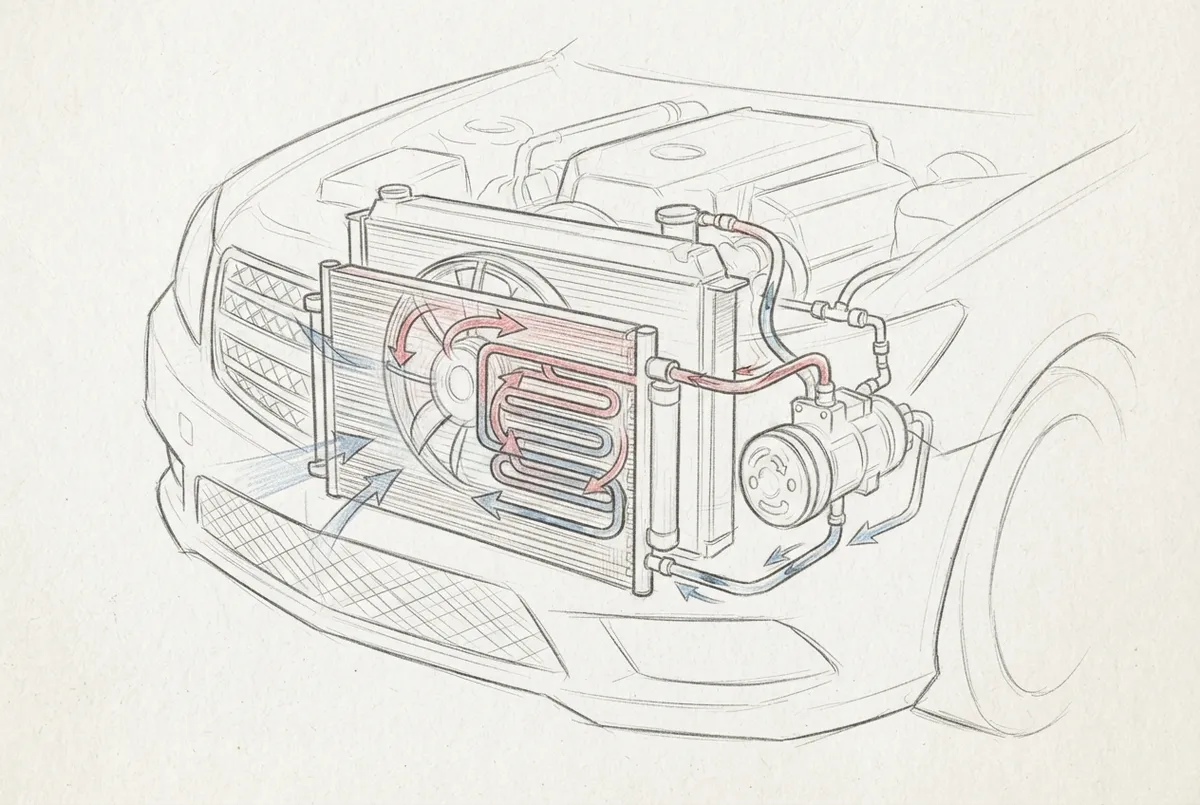
Think of the condenser as your A/C system’s radiator. It’s a finned metal coil that usually mounts in front of your engine’s radiator. Hot, high-pressure refrigerant flows through it, and airflow pulls the heat away. The refrigerant cools down and turns from a gas into a liquid so the system can keep making cold air.
If the condenser can’t shed heat, the whole system struggles. That’s why even a small problem here can make your cabin feel like a sauna.
A quick note on terms. In homes, people call the outdoor unit the “condenser.” At Marks Air, we focus on vehicles and heavy equipment, so we’re talking about the condenser in your car, truck, bus, RV, or machine. If you want a refresher on how the parts fit together, take a look at these 6 A/C parts every vehicle owner should know in 2026.
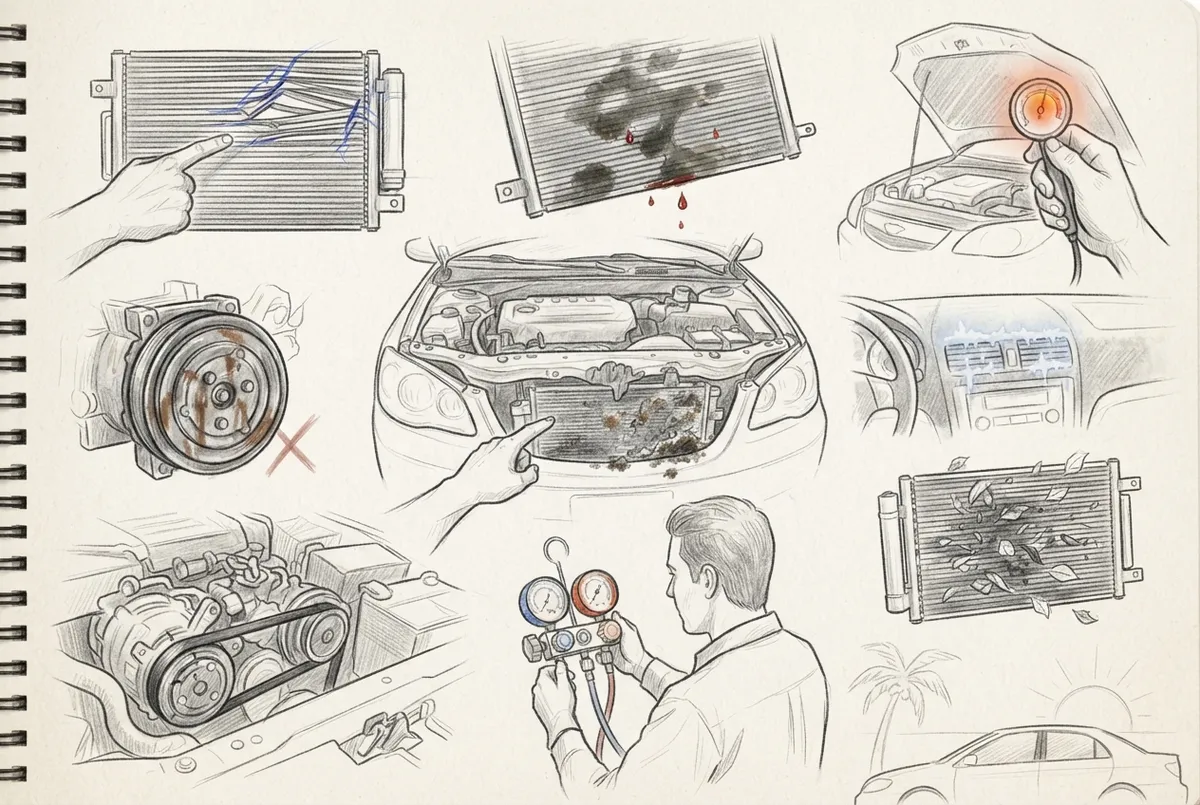
10 Signs You Need AC Condenser Repair in Tampa
Symptoms can point to several different problems, so please treat this list as a set of clues, not a final diagnosis. A proper inspection is the only way to know for sure. That said, these signs are the most common red flags.
1. Your A/C Blows Warm Air
This is the big one. If the air is not cold, the condenser may not be releasing heat well. But warm air also has other causes, like low refrigerant or a bad compressor. Our guide on 10 reasons your AC is blowing warm air can help you narrow it down.
2. The Air Is Only Cool While Driving
Does your A/C get cold on the highway but turn warm at red lights? That pattern often means the condenser isn’t getting enough airflow when you’re stopped. A weak or dead cooling fan is a common cause, and Tampa traffic makes it easy to notice.
3. Visible Damage or Bent Fins
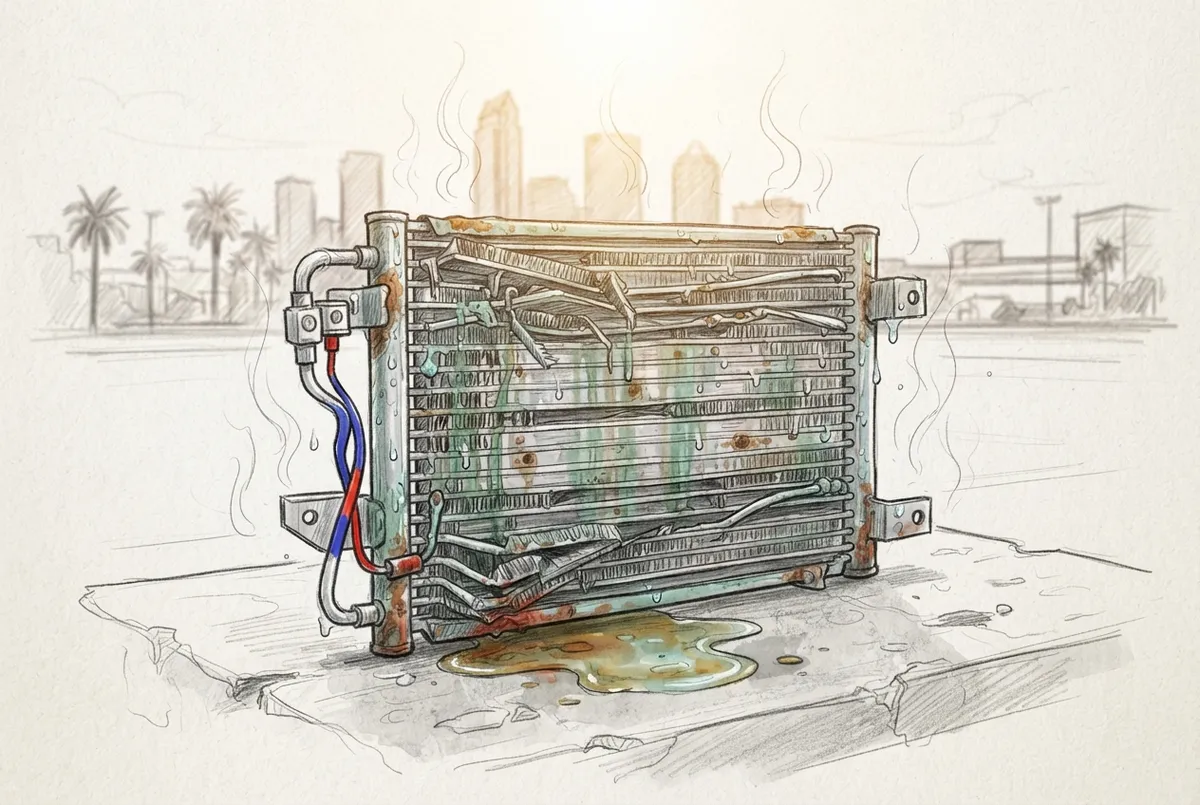
The condenser sits at the front of your vehicle, so rocks, road debris, and minor fender benders can dent or puncture it. Take a look through the grille with a flashlight. Bent fins, crushed sections, or crusty spots are worth a closer look.
4. Oily Residue on the Condenser
Refrigerant carries a bit of lubricating oil. If you see greasy, dirty patches on the condenser or nearby lines, that can signal a leak. Our post on how to detect A/C leaks in your truck shares more tips that work for other vehicles too.
5. The System Keeps Losing Refrigerant
If you’ve been “topping off” your system again and again, there’s a leak somewhere. Condensers are a frequent leak spot because of their thin tubing and exposure to road hazards. Adding refrigerant without fixing the leak only wastes money. Read more in why won’t your car A/C stop losing refrigerant.
6. Unusual Noises From the Front of the Vehicle
Rattling, grinding, or squealing near the front end can come from a failing fan motor or a loose condenser mount. Don’t ignore new noises. They rarely get better on their own.
7. Clogged or Dirty Coils
Florida bugs, leaves, and road grime love to pack into condenser fins. When airflow is blocked, heat can’t escape. Dirty coils can even lead to other trouble, like freezing. See can dirty coils cause AC to freeze for the full story.
8. High Pressure or Overheating Symptoms
A condenser that can’t shed heat can cause pressure to climb inside the system. Signs can include the compressor shutting off, the A/C cycling on and off, or even a hotter-running engine. A technician can check system pressures to see what’s going on.
9. The Cooling Fan Doesn’t Spin
The electric fan pulls air across the condenser. If it’s dead, the system can’t cool properly at low speeds. Tampa-area invoice data reported in 2026 put the median condenser fan motor replacement at $737, though that figure is for home outdoor units, so treat vehicle costs as different.
10. You Smell Something Odd or See Warning Lights
A sweet or chemical smell, or a warning light, can point to a leak or an overheating problem. Any time your dash tells you something is wrong, it’s smart to have it checked.
Quick Symptom Guide
Use this table as a starting point. Remember, several problems can look alike, so a hands-on inspection matters.
| Symptom | Possible Condenser-Related Cause | Other Possible Causes |
|---|---|---|
| Warm air at idle, cool on highway | Weak cooling fan, blocked fins | Low refrigerant, failing clutch |
| Oily residue on coil | Refrigerant leak in condenser | Leaking hose or fitting |
| Repeated refrigerant loss | Punctured or corroded condenser | Compressor seal, evaporator leak |
| Bent or crushed fins | Road debris or impact damage | Cosmetic only, if airflow is fine |
| A/C cycles on and off | High pressure from poor heat rejection | Switch or sensor failure |
Why Tampa’s Climate Is Tough on Condensers
Tampa’s heat and humidity work your A/C hard for most of the year. Here are a few reasons condensers take a beating locally:
- Long cooling season: With 3,611 annual cooling degree days, your A/C rarely gets a real break.
- Salt and moisture: Coastal air can speed up corrosion on thin aluminum tubes.
- Bugs and debris: Love bugs and road grime can clog the fins fast.
- Stop-and-go traffic: Less natural airflow means more strain on the fan.
For a deeper look at why local heat matters, check out why A/C car parts fail so fast in Tampa heat.
What Condenser Repair Usually Involves
Good news: a proper repair is not a mystery. Here’s what a careful shop typically does.
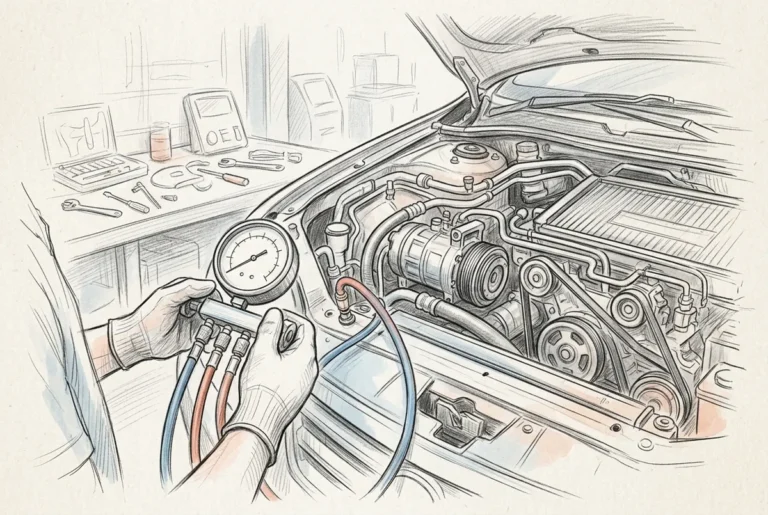
- Visual inspection: The technician checks the condenser, fan, mounts, and lines for damage, leaks, and blockage.
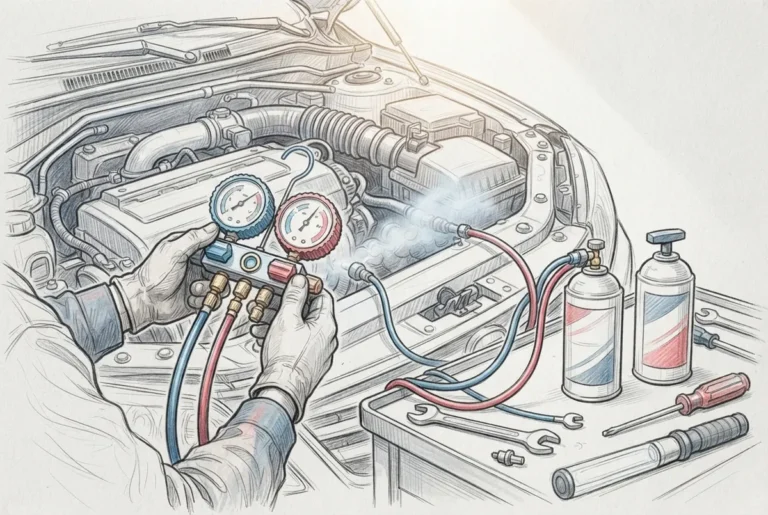
- Pressure and performance testing: Gauges show how the system is running and whether heat rejection is normal.
- Leak detection: Dye or electronic tools help find the exact leak location.
- Repair or replacement: Minor fin damage may be straightened. Leaking or crushed condensers are usually replaced, since the core is hard to repair reliably.
- System service: The system is evacuated, any needed parts are swapped, and it’s recharged to spec.
- Final test: The tech confirms cold air, proper pressures, and good fan operation.
If you’d like to see what a complete visit looks like from start to finish, read 6 steps that show what AC repair involves in 2026. And if you’re curious about that step where the condenser gets swapped, our guide on truck A/C condenser replacement walks through it.
Repair or Replace: How to Decide
Not every condenser problem needs a new part. Here’s a simple way to think about it:
- Repair may work when: the problem is a bad fan, a loose mount, a clogged coil that can be cleaned, or a relay or wiring issue.
- Replacement is likely when: the condenser is leaking, crushed, badly corroded, or internally clogged.
- Look at the bigger picture: vehicle age, other worn parts, and how long you plan to keep it all matter.
Always ask for an itemized estimate so you can see exactly what you’re paying for. Our comparison of AC repair vs. AC replacement can help you weigh your options.
What Does It Cost?
Costs vary a lot by vehicle, part, and labor. A compact car is usually a different story from a transit bus or a piece of heavy equipment. Hoses, fittings, refrigerant type, and whether other parts are involved all change the bill. Newer vehicles that use HFO-1234yf refrigerant can cost more to service than those using R-134a.
Instead of guessing, get a written estimate after a real diagnosis. For a broader look at pricing, see how much auto AC repair costs in 2026.
Tips for Different Vehicle Owners
Every driver’s needs are a little different. Here’s how condenser trouble shows up across our customers:
- Car owners: Watch for warm air at stoplights. It’s often the first hint something’s off.
- Truck drivers: Long hauls in summer heat mean downtime hurts. Fix small airflow issues before your next run. Learn more about commercial truck air conditioning service.
- Bus operators: Passenger comfort and safety depend on strong cooling. See what proper bus A/C maintenance involves.
- RV enthusiasts: Road debris and long trips take a toll. Check RV air conditioner repair parts mistakes to avoid.
- Heavy equipment operators: Dust and debris clog coils fast on job sites. Regular cleaning fights operator fatigue. Read how to get heavy equipment AC repair done right.
- Fleet owners: A schedule beats surprises. Explore preventive vs. reactive fleet A/C maintenance.
Keeping Your Condenser Healthy
A little care goes a long way in Tampa’s heat. Try these habits:
- Check the front of your vehicle for bugs, leaves, and debris, and have them cleaned gently.
- Avoid blasting the fins with a high-pressure washer, which can bend them.
- Run your A/C regularly, even in cooler months, to keep seals lubricated.
- Fix small leaks early before they turn into big repairs.
- Schedule seasonal checkups before summer hits.
Want a simple routine? These 5 A/C maintenance tips every Tampa vehicle owner needs are easy to follow.
Why Certified Service Matters
Working on a vehicle’s refrigerant circuit isn’t a DIY-friendly job. Federal rules under EPA Section 608 apply to technicians whose service could release refrigerant, and intentionally venting refrigerant into the air is prohibited. For motor vehicle air conditioning, technicians also need proper EPA 609 training. In short, you want people who know the rules and use the right equipment.
Look for a shop with verified credentials and a track record. Our guide on signs you’ve found a certified AC repair technician makes it simple to check.
Why Choose Marks Air for Condenser Repair in Tampa
Since 1971, Marks Air has been Tampa’s A/C specialist for cars, trucks, buses, RVs, emergency vehicles, and heavy equipment. We’re a family-owned, woman-owned business, and A/C is all we do. We’re proud to be a member of the Mobile Air Climate Systems Association (MACS), which keeps us in step with industry standards.
Our shop handles diagnostics, leak detection, hose fabrication, parts, and installations under one roof. We also stock a wide range of A/C parts, including our KOOL-TEMP line, with many items available the same day. Learn more about our full menu of A/C services.
Don’t just take our word for it. See what our neighbors say by checking our customer reviews, or read Marks Air feedback on Google at our Tampa location. You can also find us on Yelp.
And while you’re getting your vehicle ready for a road trip or a weekend project, folks who love tidy details might enjoy the craftsmanship at Bucheli Trim, a local trim carpentry business.
Wrapping It Up: Don’t Sweat It, Get It Checked
A struggling condenser rarely fixes itself, and Tampa’s heat makes small problems grow fast. If you notice warm air, oily residue, odd noises, or repeated refrigerant loss, get a professional diagnosis before you buy parts. A clear, itemized estimate helps you decide between repair and replacement with confidence.
Ready to cool things down? Schedule your condenser service with Marks Air or call us at 813-988-1671. We’ll get you back on the road, comfortable and cool.
FAQs
Q: How much does AC condenser repair cost in Tampa?
A: It depends on your vehicle, the part that failed, and the refrigerant your system uses. A minor fan or wiring fix costs far less than a full condenser replacement on a bus or heavy machine. The best move is to get a diagnosis and an itemized written estimate first.
Q: What are the signs that an AC condenser is failing?
A: Common signs include warm air (especially at idle), oily residue on the coil, repeated refrigerant loss, bent or clogged fins, and a cooling fan that won’t spin. Since other parts can cause the same symptoms, a hands-on inspection is the only way to be sure.
Q: Can I drive my vehicle if the condenser fan isn’t working?
A: You can usually drive, but running the A/C with a dead condenser fan can push system pressures too high and may stress the compressor. It can also affect engine cooling in some vehicles. It’s smart to have it checked soon and skip the A/C until it’s fixed.
Q: Should I repair or replace my vehicle’s AC condenser?
A: Simple issues like a bad fan, a loose mount, or a dirty coil can often be repaired. A leaking, crushed, or badly corroded condenser is typically replaced. A technician can walk you through the options based on your vehicle’s age and condition.
Q: Does condenser repair require a certified technician?
A: Yes, it should. Work that opens the refrigerant circuit falls under federal rules, and venting refrigerant on purpose is prohibited. For vehicles, look for a shop with EPA-trained technicians and the right recovery equipment.