
Key Takeaways
-
Proper AC repair requires a full diagnostic assessment measuring temperature split and system pressures to find the actual cause, not just guessing or swapping parts hoping for results.
-
Refrigerant low levels indicate a leak that must be found and fixed before recharging; simply adding refrigerant without leak repair is not a real repair and violates EPA regulations.
-
Critical electrical components like capacitors, relays, contactors, and fan motors are small but can completely fail your AC system if worn, making early detection essential to avoid compressor damage.
-
Airflow problems from dirty filters, coils, or clogged drains strain your compressor over time and can cause expensive failures; proper cleaning and maintenance prevent costly damage.
-
Post-repair verification testing of temperatures, airflow, pressures, and controls must be performed to confirm the fix actually works before considering the job complete.
-
A trustworthy shop clearly explains findings, walks you through repair versus replacement options, and follows EPA Section 608 certification requirements; skipping communication and verification leads to repeat visits.
Your car’s AC blows warm air, and suddenly Tampa’s heat feels ten times worse. You start wondering what a repair shop actually does back there. Do they just add refrigerant and send you on your way? Not if they’re doing it right. Real AC repair is a careful process, not a quick guess.
Whether you drive a sedan, haul freight across the state, or run a fleet of buses, understanding what does AC repair involve helps you make smarter decisions. It also helps you spot a shop that cuts corners versus one that does the job correctly. Marks Air has been fixing vehicle AC systems in Tampa since 1971, and we’ve seen every kind of AC problem there is. Here are the six steps that make up a proper, honest AC repair.

1. A Real Diagnostic Assessment, Not a Guessing Game
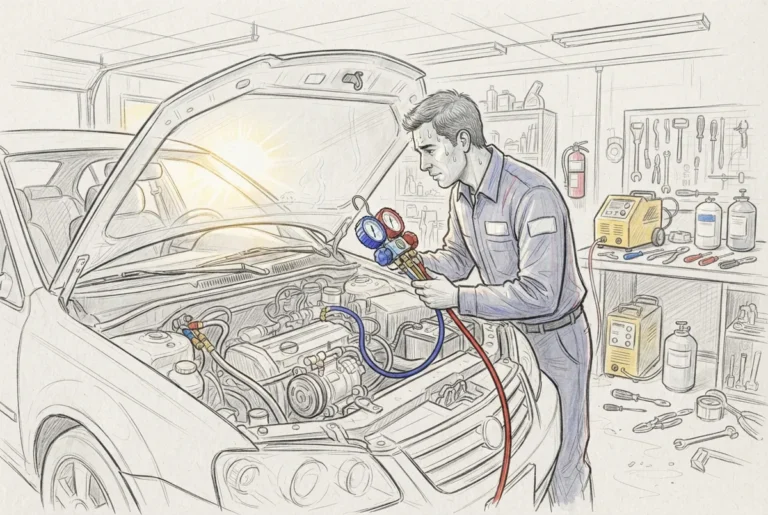
Good AC repair always starts with a conversation and a hands-on inspection. A technician asks what you’re noticing. Warm air? Weird smells? Weak airflow? Then they inspect both the indoor cabin components and the outdoor-facing parts under the hood.
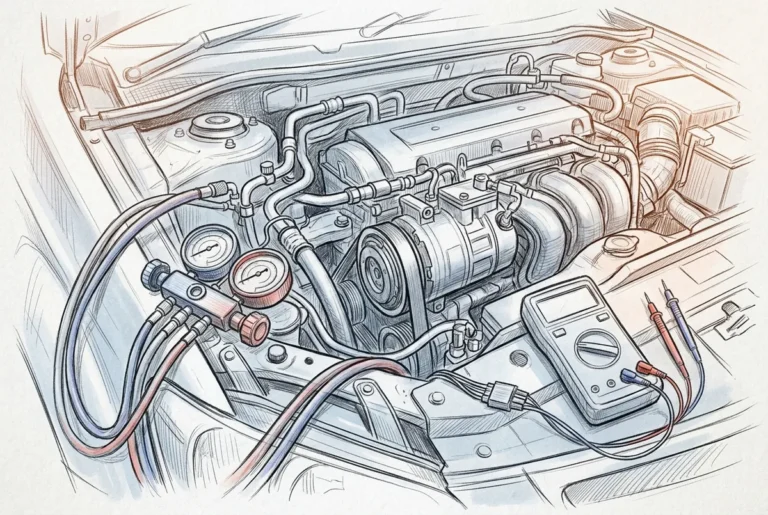
They check airflow strength, test electrical connections, and measure something called temperature split. This tells them how much cooler the air is coming out compared to what’s going in. They also check system pressures using gauges. This step matters because it finds the actual cause instead of just swapping parts and hoping for the best.
This is the same approach we use at Marks Air, whether you’re bringing in a car, a semi-truck, or a piece of heavy equipment. Learn more about our full A/C services and how we approach every diagnostic visit.

2. Fixing the Electrical and Mechanical Components
Once the cause is found, repair often means replacing small but critical parts. These parts don’t cost a fortune, but they can stop your whole system cold if they fail.
- Capacitors and relays that help start the compressor
- Contactors that control electrical flow
- Fan motors and blower motors that move air
- Thermostats and control boards that manage temperature
- Fuses, disconnects, and damaged wiring
A worn capacitor or a corroded relay might seem minor, but it can prevent your whole AC system from turning on. Truck drivers and fleet operators especially benefit from catching these issues early, since a failed part on the road means lost time and lost money. Browse our A/C parts selection, including our KOOL-TEMP line and trusted brands like SPAL, ACT, BCC, gpd, and Omega, many available the same day.
3. Restoring Proper Airflow
Weak airflow is one of the most common complaints we hear, and it has several possible causes. A dirty filter is the easiest fix. Dirty evaporator or condenser coils are a close second. Sometimes the problem is a clogged condensate drain, damaged ductwork, or a blower fan that’s struggling.
These airflow issues do more than make you uncomfortable. Over time, they can strain your compressor and cause bigger, more expensive damage down the road. This is especially true for RVs and heavy equipment that run their AC systems for long stretches in Tampa’s brutal summer heat.
| Airflow Problem | Common Fix | Risk If Ignored |
|---|---|---|
| Dirty air filter | Replace filter | Reduced cooling, dust buildup |
| Dirty coils | Coil cleaning | Frozen coils, poor cooling |
| Clogged drain | Clear condensate drain | Water leaks, mold growth |
| Damaged ductwork | Duct repair | Air loss, uneven cooling |
| Failing blower motor | Motor replacement | Compressor strain, total failure |
If you’ve noticed your coils icing up, our article on whether dirty coils cause AC to freeze explains exactly why this happens and how to prevent it.
4. Handling Refrigerant the Right Way
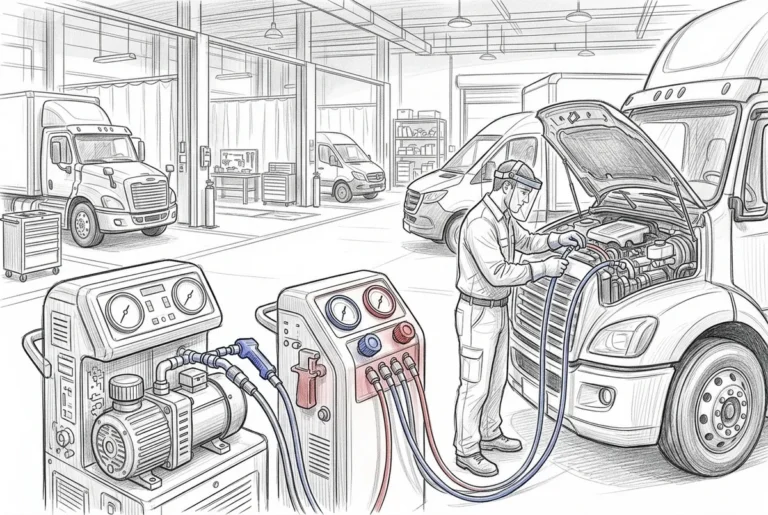
Here’s something a lot of people don’t realize: simply adding refrigerant is not a repair. If your system is low, there’s a leak somewhere. A proper repair means finding that leak, fixing it, and only then recharging the system to the manufacturer’s exact specifications.
This process usually includes these steps:
- Leak detection using specialized tools
- Recovery of any remaining refrigerant
- Repair of the actual leak point
- Evacuation of the system to remove air and moisture
- Recharging with the correct refrigerant amount
Refrigerant work is heavily regulated. The EPA’s Section 608 rules require technicians who service, repair, or dispose of covered AC equipment to pass an EPA-approved certification test, and these credentials never expire once earned. For larger equipment holding 50 or more pounds of refrigerant, EPA guidance sets a 10% annual leak-rate threshold, and owners typically must repair a qualifying leak within 30 days or plan for retrofit or retirement within a year. The EPA also requires verification testing before and after repairs, and it strictly prohibits venting refrigerants into the air.
If you’re curious about how refrigerant swaps affect newer vehicles, check out our guide on R-134a to 1234yf conversion. It’s especially relevant for fleet owners updating older vehicles.
5. Verifying the Repair Actually Worked
A repair isn’t finished just because a part got replaced. Any technician worth their salt tests the system afterward to confirm everything’s working the way it should.
This verification usually checks:
- Supply and return air temperatures
- Airflow strength at the vents
- Electrical readings across components
- Refrigerant pressure and condition
- Condensate drainage
- Safety controls and thermostat response
Skipping this step is how small problems turn into repeat visits. At Marks Air, we don’t consider a job done until we’ve confirmed the fix holds up under real operating conditions, whether that’s a city bus running its route or a piece of construction equipment working a full shift in the Tampa sun.
6. Getting Clear Answers and a Repair-vs-Replace Decision
The last piece of what AC repair involves is communication. A good shop explains what they found, what they fixed, and why. They also walk you through your options, especially when your system is older or the damage is extensive.
Sometimes repair makes sense. Other times, replacement saves you money long-term. Factors that go into this decision include:
- Age of the AC system or vehicle
- Overall condition of major components
- Cost of the repair versus a new system
- Efficiency and expected lifespan
- Frequency of past repairs
We break this down in detail in our article AC Repair vs. AC Replacement: Which Is Right for You? It’s worth a read before committing to either path.
Why Experience Matters Across Every Vehicle Type
AC repair looks a little different depending on what you’re driving. A car owner dealing with warm air on a commute has different needs than a bus operator maintaining a whole fleet for passenger safety. Truck drivers need fast turnarounds to avoid downtime, while RV enthusiasts need systems that hold up during long trips and extreme heat.
Heavy equipment operators face their own challenges too. A broken AC system in a piece of construction machinery isn’t just uncomfortable, it can lead to operator fatigue and safety risks on the job site. That’s why Marks Air works across all these categories, from personal vehicles to heavy equipment AC repair and everything in between.
Our team has decades of focused experience, and we’re proud members of the Mobile Air Climate Systems Association (MACS), which keeps us aligned with the latest industry standards. We also offer A/C training programs, including EPA 609 certification and HFO-1234yf training, for technicians who want to sharpen their skills.
What Sets a Trustworthy AC Repair Shop Apart
Not every shop handles repairs the same way. Here’s a quick comparison of what separates a thorough repair from a rushed one.
| Feature | Thorough Repair | Rushed Repair |
|---|---|---|
| Diagnosis | Full inspection, pressure and temp checks | Guesswork based on symptoms alone |
| Refrigerant Service | Leak found and fixed before recharge | Refrigerant added without leak repair |
| Verification | Full post-repair testing | No follow-up testing |
| Communication | Clear explanation of findings and options | Minimal explanation |
| Compliance | Follows EPA Section 608 guidelines | Skips proper certification steps |
Our family-owned, woman-owned shop has built its reputation in Tampa since 1971 on doing things the right way, not the fast way. You can read what our customers say by checking out our reviews, following us on Instagram, or connecting with us on Facebook.
Common Warning Signs You Shouldn’t Ignore
Not sure if it’s time for a repair? Watch for these signs:
- Warm air blowing even with AC set to max cold
- Strange noises from the compressor or blower
- Musty smells suggesting mold or drain issues
- Weak airflow from vents
- Visible refrigerant residue or oily spots near hoses
- AC cycling on and off rapidly
If any of these sound familiar, don’t wait. Small issues tend to grow into expensive repairs, especially with compressor damage. For a deeper look at warm air issues specifically, check out our article on 10 Reasons Your AC Is Blowing Warm Air.
Bringing It All Together
Understanding what AC repair involves helps you feel confident walking into any shop, including ours. It’s not magic, and it’s not guesswork when done right. It’s a careful process of diagnosis, repair, airflow correction, proper refrigerant handling, verification, and honest communication.
Whether you’re a daily commuter, a truck driver logging miles across Florida, a bus operator keeping passengers comfortable, an RV owner planning your next trip, or a fleet manager overseeing dozens of vehicles, Marks Air is here for you. Our Tampa shop has been trusted since 1971, and we bring that same care to every diagnostic, repair, and installation. See what people are saying by visiting Marks Air on Google, or check out our profile on HVACService.io and Yelp to see real feedback from real customers.
Ready to get your AC fixed the right way? Schedule service with our Tampa team today, or give us a call directly at 813-988-1671 to talk through what’s going on with your vehicle’s AC system. We’re here to help, and we’re not going anywhere.
FAQs
Q: What are the most common reasons an air conditioner stops cooling?
A: Most of the time it comes down to a refrigerant leak, a failing compressor, worn electrical parts like capacitors, or restricted airflow from dirty coils or a clogged filter. A proper diagnostic visit will pinpoint the exact cause instead of just guessing, so you’re not paying for repairs you don’t actually need.
Q: How much does AC repair usually cost?
A: Costs vary quite a bit depending on what’s wrong, whether it’s a simple capacitor swap or a full compressor replacement. Bringing your vehicle in for a diagnostic first gives you an accurate picture, and our team is always happy to walk you through your options before any work begins.
Q: How long does an air conditioner repair take?
A: Simple fixes like replacing a capacitor or clearing a drain can often be done same-day, while more involved repairs like leak detection and compressor replacement may take a bit longer. We’ll always give you a realistic timeframe upfront so you know what to expect.
Q: How can I tell whether my AC needs repair or replacement?
A: It really depends on the age of your system, how often it’s needed repairs, and the cost of fixing it versus a new install. If your system is older and repairs keep piling up, replacement often saves you money in the long run, and we’re happy to help you weigh both sides.
Q: Is it safe to run an air conditioner with a refrigerant leak?
A: Running your AC with a known leak isn’t a great idea, since it can strain your compressor and lead to bigger, more expensive damage over time. Plus, refrigerant handling is regulated by the EPA, so it’s best to get that leak found and fixed properly rather than just topping it off.