Key Takeaways
-
Find and fix the actual leak source before recharging; topping off refrigerant without repairs is ineffective and wastes money, as the refrigerant will escape again.
-
Technicians use multiple detection methods (visual inspection, electronic detectors, UV dye, pressure testing) because no single tool catches every leak, so proper diagnosis is essential.
-
Common leak sources include worn O-rings, loose hose connections, damaged condensers, failing compressor seals, and deteriorated service-port valves that develop over time.
-
Avoid DIY stop-leak products from auto parts stores as they don't fix underlying problems and can clog components, making future professional repairs more complicated and expensive.
-
Ensure your repair shop has EPA Section 609 certification; this legal requirement guarantees technicians understand proper refrigerant handling, recovery procedures, and safety practices.
-
Newer vehicles (2025+) require R-1234yf refrigerant instead of R-134a due to lower environmental impact; verify your shop has correct equipment for your vehicle's specific refrigerant type.
Picture this: it’s another sunny Tampa afternoon, the kind where your steering wheel feels hot enough to fry an egg. You crank up your A/C, expecting that sweet blast of cold air, but instead you get lukewarm mist and disappointment. If this sounds familiar, you might be dealing with a refrigerant leak. And trust us, you’re not alone. This is one of the most common reasons drivers, truckers, and fleet managers bring their vehicles to us for ac leak repair automotive service.
Here’s the good news: refrigerant leaks are fixable, and understanding how they work can save you time, money, and a whole lot of sweat. Whether you’re a daily commuter, a long-haul trucker, or you manage a whole fleet of vehicles, this guide will walk you through everything you need to know. We’ll keep it simple, friendly, and packed with real answers. Let’s get your cool air back where it belongs.
What Causes an Automotive A/C Refrigerant Leak?
Your car’s A/C system is a closed loop. Refrigerant should never need topping off if everything is sealed properly. When it does escape, something has gone wrong somewhere along that loop. Refrigerant leaks happen slowly over time or suddenly after damage, and pinpointing the source takes a trained eye.
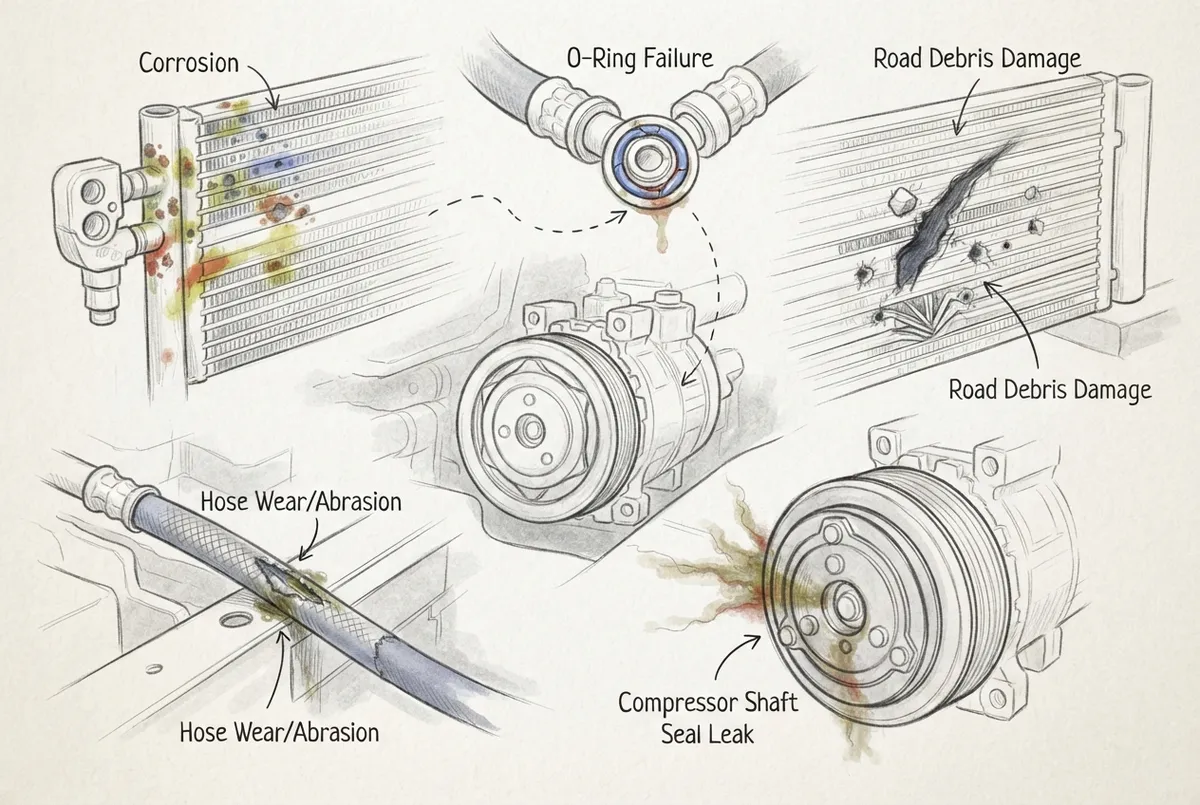
Common places where leaks develop include:
- Hose and line connections that loosen or crack with age
- O-rings that dry out, shrink, or get pinched during service
- Service-port valves that wear down over time
- The condenser, which sits up front and takes a beating from road debris
- Compressor seals that wear out from constant motion
- The evaporator, tucked deep inside your dashboard
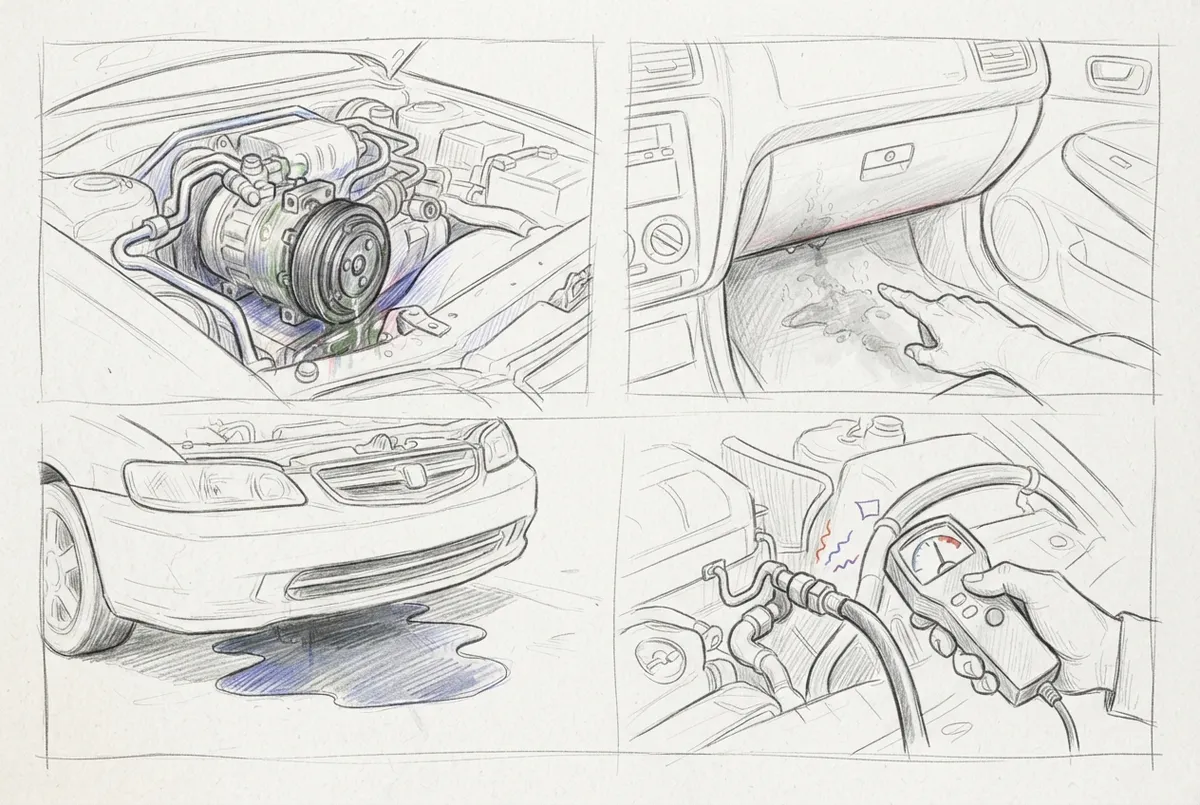
Oil staining near a fitting or component is often a clue that refrigerant has been escaping. Refrigerant oil travels with the refrigerant, so when you see a greasy residue, that’s usually where the leak lives. Still, a technician should confirm this before any repair work begins. Don’t just assume and start swapping parts.
Signs You Might Have an A/C Leak in Your Vehicle
Your car will usually give you hints before the A/C completely gives up. Learning to spot these early can save you a hot, miserable drive and a bigger repair bill down the road.
- Weak or warm airflow even when the system is set to max cold
- Reduced cooling that seems to get worse over days or weeks
- Compressor cycling on and off more frequently than normal
- A hissing sound near the dashboard or under the hood
- Visible oily residue around hoses or fittings
Here’s the catch: these symptoms don’t automatically mean you have a leak. Electrical issues, airflow blockages, or a failing compressor can cause similar problems. That’s exactly why a proper diagnosis matters so much before jumping to conclusions. If your car’s A/C is acting up, check out our guide on 10 reasons your A/C is blowing warm air for more background.
How Do Technicians Actually Find the Leak?
Finding a refrigerant leak isn’t always as simple as looking under the hood. Skilled technicians combine several methods because no single tool catches every leak every time.
Visual Inspection
This is always step one. A technician looks for oil stains, corrosion, or physical damage on hoses, the condenser, and connection points. It’s a great starting point but won’t catch every hidden leak.
Electronic Refrigerant Detectors
These handheld tools sniff the air near suspected leak points and alert the technician when refrigerant molecules are detected. They’re fast and effective for many leaks, especially in tight engine bay spaces.
UV Dye and Lamp
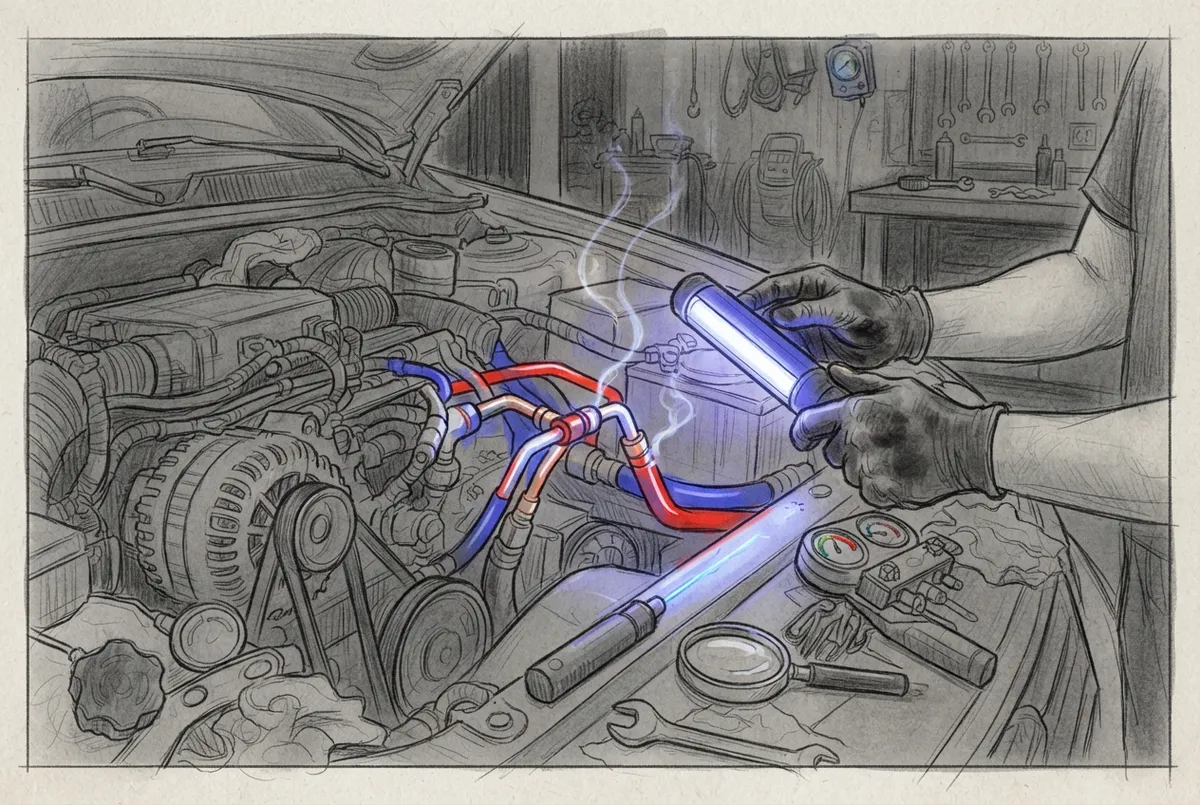
A fluorescent dye gets added to the system, and after it circulates, a UV lamp reveals a glowing trace right at the leak site. This method works best after the dye has had time to travel through the system, not as a first-step diagnostic.
Pressure Testing
Technicians sometimes use an inert test gas to pressurize the system and check for drops that indicate a leak. This method helps confirm findings from other tests.
Most professional shops, including our team here at Marks Air, use a mix of these approaches depending on the vehicle and the symptoms. If you’re curious about the process, our article on leak detection and repair facts breaks it down further.
Why Topping Off Refrigerant Isn’t a Real Fix
We get this question a lot: “Can’t you just add more refrigerant and call it done?” We understand the appeal. It seems quicker and cheaper. But here’s the honest truth: adding refrigerant without fixing the leak is like pouring water into a leaky bucket. The refrigerant will escape again, usually sooner than you’d hope.
A lasting repair means finding and fixing the actual source of the leak. That could mean replacing a worn seal, a damaged hose, a cracked condenser, or another failed part. Only after the repair is complete should the system be evacuated and recharged to the exact amount specified by your vehicle’s manufacturer.
We also want to gently warn you against DIY stop-leak products sold at auto parts stores. These products promise a quick fix, but they don’t address the underlying problem. Worse, they can clog components and make future professional repairs more complicated and expensive. For more on this, take a look at our post on 13 A/C leak mistakes that cost car owners more money.
The Repair Process, Step by Step
Wondering what actually happens when you bring your vehicle in for leak repair? Here’s a simple breakdown of the process:
- Diagnosis: The technician inspects the system and uses detection tools to locate the leak.
- Recovery: Remaining refrigerant gets safely recovered using approved equipment, never vented into the air.
- Repair: The damaged part, whether it’s a hose, seal, or component, gets replaced or repaired.
- Evacuation: The system is vacuumed down to remove air and moisture.
- Recharge: The correct refrigerant type and amount, per your vehicle manufacturer’s specs, gets added back in.
- Verification: The system is tested again to confirm cooling performance and check for any remaining leaks.
This process protects your vehicle and the environment. Refrigerant recovery equipment prevents harmful venting, which matters both for compliance and for doing right by our planet.
R-134a vs R-1234yf: Why It Matters
Not all refrigerants are the same, and using the wrong one can cause serious problems. Here’s a quick comparison to help you understand what’s in your vehicle.
| Refrigerant | Global Warming Potential (GWP) | Common Use |
|---|---|---|
| HFC-134a (R-134a) | 1,430 | Older vehicles, still serviceable today |
| HFO-1234yf (R-1234yf) | 4 | Newer vehicles, required for many 2025+ models |
According to the EPA, new light-duty passenger vehicles built starting with model year 2025 must use a refrigerant with a GWP limit of 150, which is why R-1234yf has become standard in newer cars. Existing vehicles can continue to be serviced with their original refrigerant, so there’s no need to panic if your car uses R-134a. The key is making sure your shop has the right equipment and knowledge for both. We cover this topic in more depth in our article about R-134a to 1234yf conversion.
What About EPA Certification?
Here’s something many drivers don’t realize. In the United States, anyone servicing motor vehicle A/C systems for payment must hold Section 609 certification through an EPA-approved program. This isn’t just red tape. It ensures the technician working on your vehicle understands proper refrigerant handling, recovery procedures, and safety practices.
At Marks Air, our technicians take this seriously. We also offer A/C training programs covering EPA 609 certification, HFO-1234yf handling, and MVAC best practices, because we believe education keeps the whole industry moving forward. We’re proud to be a member of the Mobile Air Climate Systems Association (MACS), which keeps us aligned with the latest standards in mobile air conditioning service.
How This Applies to Different Vehicle Types
Car Owners
If you drive a personal vehicle around Tampa, a refrigerant leak means uncomfortable commutes and potential long-term damage if ignored. Catching it early keeps repair costs lower and your ride comfortable.
Truck Drivers and Fleet Operators
For long-haul truckers, a working A/C system isn’t a luxury. It’s essential for staying alert and safe on the road. Fleet managers should read our tips on fleet vehicle A/C repair that saves money to reduce downtime.
Bus Operators
Passenger comfort and safety both depend on reliable A/C. Regular leak checks help transit companies avoid mid-route breakdowns during Florida’s brutal summer heat.
RV Enthusiasts
Nothing ruins a camping trip faster than a warm RV cabin. Leak repairs keep your adventures comfortable, whether you’re parked at a campsite or cruising the highway.
Heavy Equipment Operators
Construction and agricultural equipment operators depend on functioning A/C to avoid fatigue during long shifts. A leak left unchecked can lead to operator discomfort and lost productivity.
Automobile Fleet Owners
Managing multiple vehicles means multiple opportunities for A/C issues. Preventive diagnostics across your fleet can catch small leaks before they become expensive breakdowns.
How Much Does A/C Leak Repair Cost?
Costs vary depending on the leak location, the part that needs replacing, and your vehicle’s refrigerant type. A simple O-ring replacement costs far less than a full condenser swap. For a detailed cost breakdown, our guide on how much auto A/C repair costs in 2026 walks through common price ranges.
Generally, expect these factors to influence your final bill:
- The specific component that failed
- Labor time needed to access the leak location
- Refrigerant type and amount required for recharge
- Whether additional parts need replacing due to system contamination
Can You Still Drive With a Leak?
Technically, yes, you can drive with a refrigerant leak. Your engine and safety systems won’t be affected. But driving without proper cooling in Tampa’s heat is uncomfortable at best and can lead to further system strain at worst. We recommend getting it checked out sooner rather than later to prevent a small fix from turning into a bigger repair job.
Why Choose a Specialist for A/C Leak Repair
Not every repair shop specializes in A/C systems. At Marks Air, we’ve focused exclusively on air conditioning for cars, trucks, buses, RVs, and heavy equipment since 1971. That’s over five decades of hands-on experience finding leaks other shops might miss. We stock a full range of parts, including our own KOOL-TEMP line along with trusted brands like SPAL, ACT, BCC, gpd, and Omega, so repairs often happen the same day.
Being a family-owned and woman-owned business means we treat every customer like a neighbor, because in Tampa, you probably are one. You can browse our customer reviews or check out what people are saying on Yelp and Facebook to see why so many Tampa drivers trust us with their vehicles. You can also visit us on Google — Marks Air to see reviews and directions to our shop.
Ready to Fix That Leak for Good?
Living with a warm, cranky A/C system is nobody’s idea of fun, especially here in sunny Tampa. The good news is that a proper diagnosis and repair can get you back to cool, comfortable drives in no time. Whether you’re dealing with a personal car, a fleet of delivery trucks, or heavy equipment out on a job site, our team at Marks Air is ready to help.
Don’t let a small leak turn into a bigger headache. Schedule service with our team today or simply call us at 813-988-1671 to get started. We’re here, we’re local, and we genuinely love helping our Tampa neighbors stay cool.
FAQs
Q: What are the signs of an A/C refrigerant leak in a car?
A: You might notice weak or warm airflow, reduced cooling, or the compressor cycling on and off more than usual. Just remember, these signs can also point to other issues, so it’s always worth having a technician take a proper look before assuming it’s a leak.
Q: How do mechanics find an automotive A/C leak?
A: Technicians usually start with a visual inspection, then bring in tools like electronic refrigerant detectors, UV dye and lamps, or pressure testing with inert gas. Combining these methods helps catch leaks that a single test might miss.
Q: Can I drive my car with an A/C refrigerant leak?
A: Yes, you can still drive safely, but you’ll be stuck with warm air, especially rough in Tampa’s heat. We recommend getting it looked at soon so a small leak doesn’t turn into a bigger, pricier repair.
Q: Does a car A/C leak need to be repaired before recharging?
A: Absolutely, yes. Simply adding refrigerant without fixing the leak is like filling a bucket with a hole in it. The refrigerant will escape again, and you’ll be back where you started, only with a bigger bill.
Q: What is the difference between R-134a and R-1234yf?
A: R-134a has a much higher global warming potential compared to R-1234yf, which is why newer vehicles starting with model year 2025 use the lower-impact option. Both refrigerants are safe to use in the vehicles they’re designed for, but they require different equipment and can’t be swapped casually.