Key Takeaways
-
Clean dirty condenser coils and clear debris around the unit first, as this is one of the most common and easily fixed causes of compressor trouble that can restore cooling almost instantly.
-
Test the compressor clutch coil resistance with a multimeter (should read 2-5 ohms); readings outside this range indicate failure, and this is one of the more DIY-friendly diagnostic checks before visiting a shop.
-
Never attempt refrigerant recharging yourself; it requires licensed professional handling due to environmental regulations, safety risks, and system damage potential if mishandled.
-
Perform a visual inspection looking for bulging capacitors, burned wiring, condenser blockage, and oily residue around fittings, which can identify fixable problems without costly guessing.
-
Replace rather than repair a seized compressor with internal metal-on-metal damage or severe electrical burnout, as replacement saves money long-term despite requiring full system evacuation and recharge.
-
Avoid DIY work on capacitors, contactors, and high-voltage electrical components near the compressor; these involve electrical risks and should only be handled by trained technicians.
Your car’s AC just blew warm air on the hottest day of a Tampa summer. Now you’re standing in your driveway wondering if you can fix the compressor yourself or if you need to call in a pro. It’s a fair question. Some AC compressor problems really are simple fixes. Others can turn into an expensive mess if you guess wrong. This guide walks through both paths so you know exactly where you stand.
Whether you drive a sedan, haul freight across Florida, run a shuttle bus, or manage a fleet of work trucks, a dead AC compressor is more than an inconvenience. It’s a safety issue, a comfort issue, and sometimes a compliance issue. We’ll break down how to fix an ac compressor step by step, show you what you can safely check at home, and help you decide when it’s time to bring in a trained technician. Let’s get your air cold again.
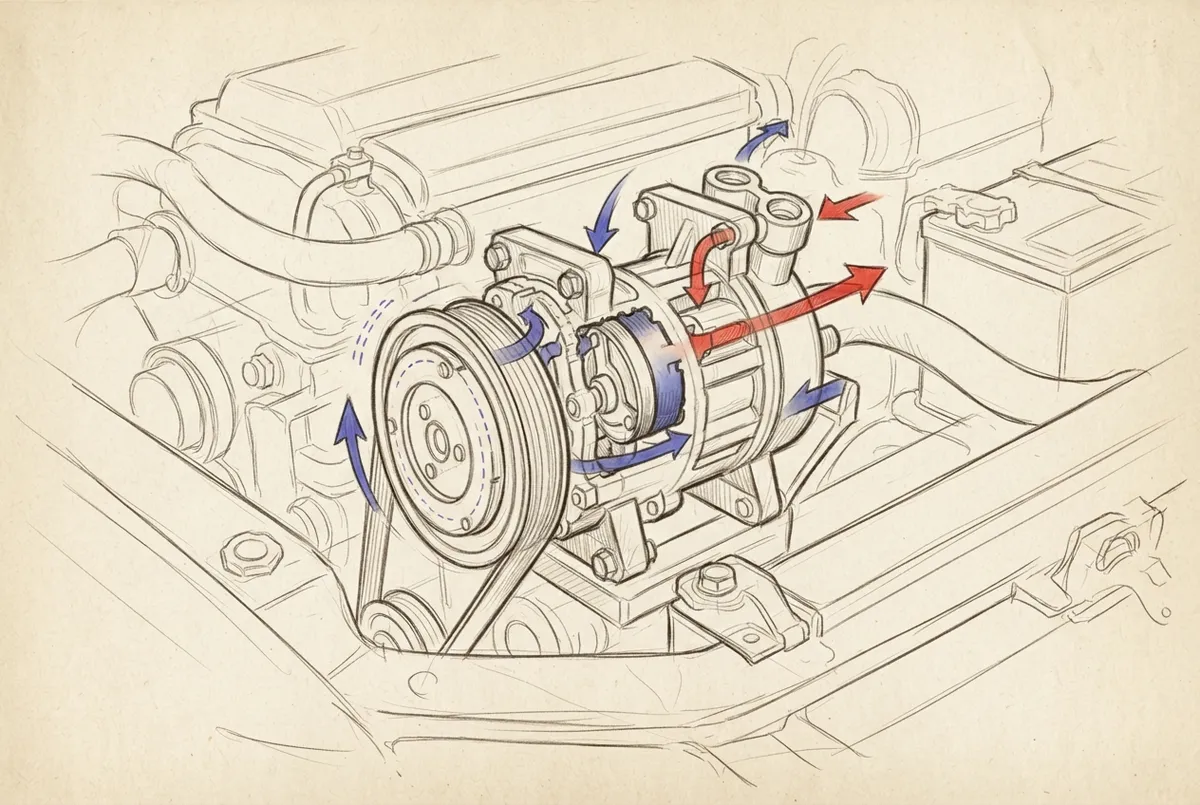
What Does an AC Compressor Actually Do?
Think of the compressor as the heart of your vehicle’s AC system. It pumps refrigerant through the system, squeezing it into a high-pressure gas that eventually turns cold as it expands. When the compressor struggles or stops, your whole cooling system falls apart with it.
This is why compressor problems feel so dramatic. One bad part can shut down the entire AC system in your car, truck, bus, RV, or piece of heavy equipment. Understanding this helps explain why some fixes are quick and others require a full shop visit.
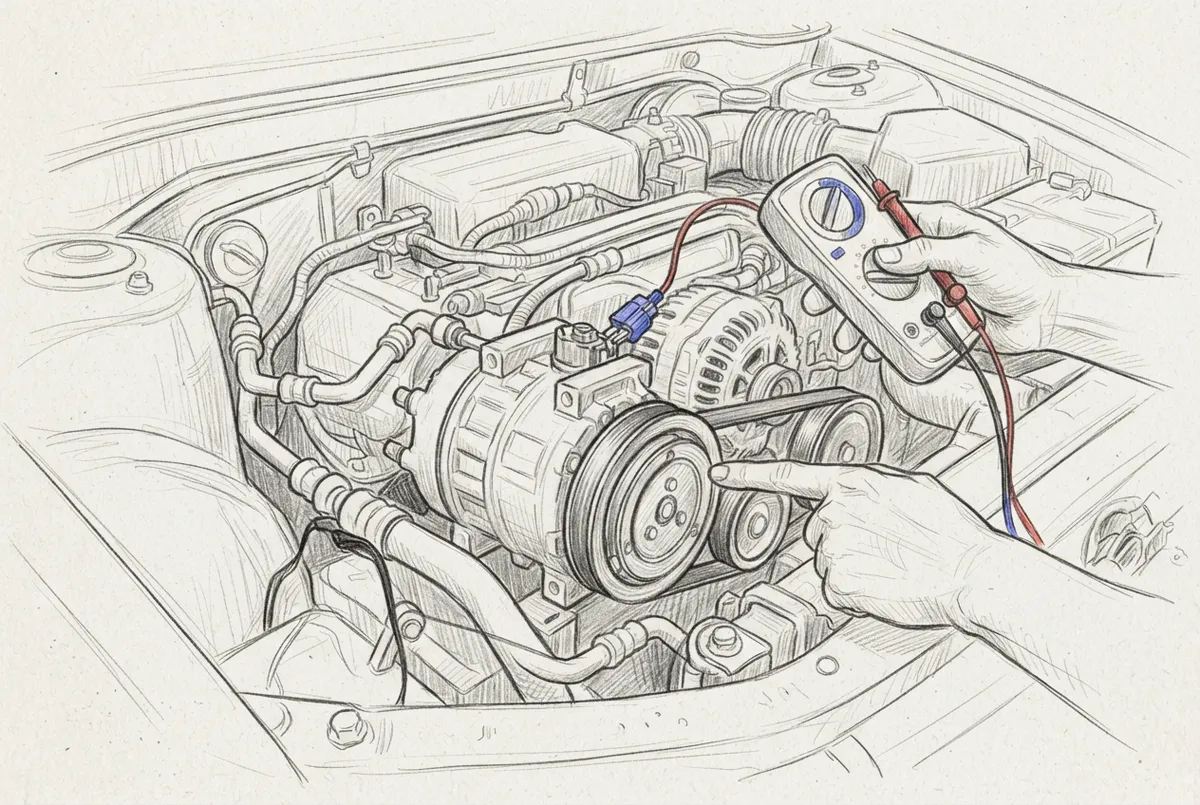
DIY Fix: What You Can Safely Check Yourself
Before you assume the compressor itself is toast, there are several checks any car owner or fleet manager can do safely. Many “compressor problems” are actually smaller issues wearing a big disguise.
Step-by-Step Visual Inspection
Start here every time. A visual check takes five minutes and can save you a costly guess.
- Turn off the engine and let the system cool down completely.
- Pop the hood and locate the compressor near the front of the engine.
- Look for bulging or leaking capacitors, since a swollen capacitor is a clear sign of failure.
- Check for burned or melted wiring near the compressor connections.
- Inspect the condenser for dirt, leaves, bugs, or bent fins blocking airflow.
- Look for oily residue around fittings, which often signals a refrigerant leak.
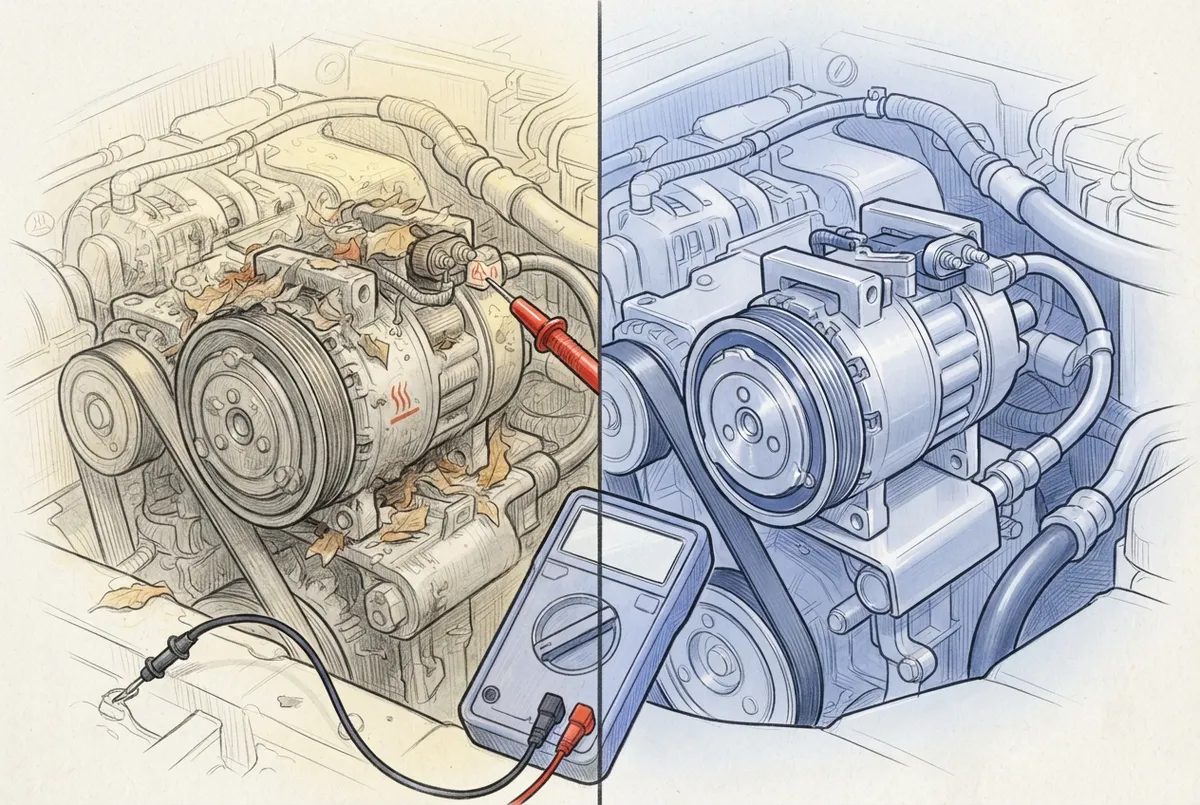
If you spot debris covering the condenser, clearing it away can sometimes restore normal cooling almost instantly. Dirty coils force the compressor to work harder and overheat, which is one of the most common and easily fixed causes of compressor trouble.
Testing the Compressor Clutch
On most vehicle AC systems, the compressor clutch engages and disengages using an electromagnetic coil. If your compressor hums but never kicks on, this clutch coil is often the culprit.
- A healthy clutch coil typically reads between 2 and 5 ohms of resistance.
- Readings far outside this range usually mean the coil has failed.
- A clicking noise without engagement often points to a stuck or worn clutch.
- Visible rust or wobble on the clutch plate is a sign it needs replacement.
Testing this requires a multimeter and a little patience, but it’s one of the more DIY-friendly checks car owners can attempt before heading to a shop.
The Pro Repair Path: When to Call a Technician
Some compressor issues are simply not safe or practical to handle in your driveway. This is where the “pro repair” side of our comparison comes in, and it’s worth taking seriously.
Capacitor and Electrical Diagnostics
If your compressor hums but won’t start, a technician will typically test the start or run capacitor with a multimeter. According to standard repair guidelines, a capacitor reading should stay within about 10% of its rated value. Anything outside that range means it needs replacing.
Bad contactors, loose wiring, and burnt terminals also fall into this category. These are serviceable, fixable problems, but they involve working near high-voltage components. That’s not a place to improvise, especially in a moving vehicle’s electrical system.
Refrigerant Handling
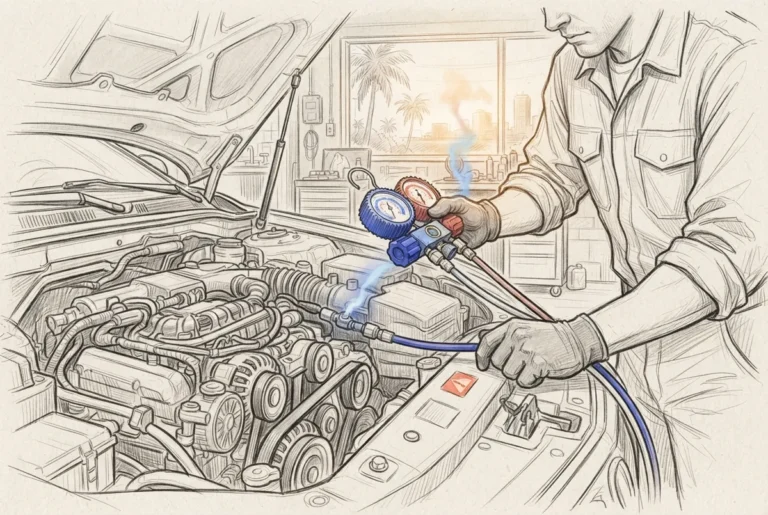
Low refrigerant can trigger safety shutoffs and strain the compressor, but this is one repair you should never attempt yourself. Refrigerant must be properly recovered, measured, and recharged by a licensed professional. It’s not just about performance either. Mishandling refrigerant can violate environmental regulations and damage the system further.
This is exactly the kind of job where Marks Air‘s decades of hands-on experience make a real difference for Tampa vehicle owners.
Mechanical Failure and Replacement
If the compressor is seized, has internal metal-on-metal damage, or shows severe electrical burnout, replacement is usually the smarter move over attempting a rebuild. Compressor replacement typically requires a full system evacuation, vacuum process, and recharge before your AC will work correctly again. This is detailed, multi-step work best left to trained hands.
DIY vs. Pro: A Side-by-Side Comparison
| Issue | DIY Friendly? | Why |
|---|---|---|
| Dirty condenser coils | Yes | Simple cleaning restores airflow |
| Loose debris around unit | Yes | Safe to clear by hand |
| Clutch coil resistance test | Somewhat | Requires a multimeter and basic know-how |
| Capacitor testing and replacement | Not recommended | Involves electrical risk and precise readings |
| Contactor or wiring repair | No | High-voltage risk near vehicle systems |
| Refrigerant recharge | No | Requires licensed handling and recovery equipment |
| Seized or damaged compressor | No | Usually needs full replacement, not repair |
Common Symptoms and What They Usually Mean
Not sure what’s actually wrong? Here are the signs that different audiences report most often, and what they typically point to.
- Compressor hums but doesn’t start: Often a failed start or run capacitor.
- Loud clicking or clunking noise: Usually a worn clutch or loose mounting bolt.
- AC blows warm air suddenly: Could be low refrigerant, a failed compressor, or a blown fuse.
- System shuts off after a few minutes: Often a safety shutoff from overheating or low refrigerant.
- Burning smell near the dashboard or engine: Possible electrical short or seized compressor bearing.
- Visible oil spots under the vehicle: A sign of a refrigerant leak that needs professional detection.
If any of these sound familiar, our vehicle AC troubleshooting guide can help you narrow things down further before your visit.
How This Plays Out for Different Drivers
Car Owners
For everyday commuters, a hot car in Tampa traffic is miserable. Most car owners can handle the visual inspection and coil cleaning steps above. Anything involving capacitors or refrigerant should go to a shop right away, especially before a long summer road trip.
Truck Drivers and Fleet Operators
Long-haul comfort isn’t optional. A failed compressor means driver fatigue, missed schedules, and potential compliance headaches. Fleet operators benefit from scheduled inspections rather than waiting for a breakdown on the highway. Check out our tips on fleet vehicle AC repair that saves you money for a proactive approach.
Bus Operators
Passenger comfort and safety both depend on a working AC system. Transit companies should treat compressor issues as a priority repair, not a maintenance afterthought, especially during peak summer ridership.
RV Enthusiasts
Nothing ruins a camping trip faster than a compressor failure mid-route. RV owners should combine our DIY checks with a pre-trip inspection to catch small problems before they strand you somewhere remote.
Heavy Equipment Operators
Operator fatigue in un-air-conditioned cabs leads to real safety risks on job sites. Construction and agricultural equipment often use heavy-duty compressors that need specialized parts, which is why our heavy equipment AC repair guide is worth a read before summer projects ramp up.
Steps to Take Before You Decide DIY or Pro
- Shut off power at the breaker and disconnect switch before inspecting an outdoor unit or working near electrical components.
- Complete the visual inspection outlined earlier in this guide.
- Test the clutch coil resistance if you’re comfortable using a multimeter.
- Note any unusual smells, sounds, or leaks you observed.
- Decide if the issue involves electrical components or refrigerant, both of which call for a professional.
- Contact a trusted shop with your findings so the technician can diagnose faster.
Following these steps saves time at the shop and often reduces your diagnostic cost, since you’ll already have useful information ready to share.
Why Trust Matters in Compressor Repair
Since 1971, Marks Air has focused exclusively on air conditioning systems for vehicles and heavy equipment in the Tampa area. As a family-owned and woman-owned business, the team understands that trust and long-term reliability matter just as much as the repair itself. That kind of specialized focus is different from a general auto shop trying to handle everything under one roof.
The shop stocks a full range of parts, including its own KOOL-TEMP line along with trusted brands like SPAL, ACT, BCC, gpd, and Omega, many available the same day. Technicians are also trained in EPA 609 certification and HFO-1234yf procedures, and the business is a proud member of the Mobile Air Climate Systems Association (MACS), which keeps its practices aligned with current industry standards.
If your project involves interior vehicle finishing alongside AC work, partners like Bucheli Trim handle trim carpentry that pairs well with a full vehicle refresh.
Repair or Replace: Making the Final Call
Here’s a quick way to think about it. If the problem is dirt, debris, a bad capacitor, or a wiring issue, repair is usually the right call. If the compressor is seized, has internal damage, or shows major electrical burnout, replacement almost always makes more sense long term. Our detailed comparison on AC repair versus AC replacement breaks this down even further if you want to dig deeper.
Cost is always part of this decision too. For a full breakdown of what impacts pricing, take a look at our guide on factors that determine AC compressor replacement cost.
Bringing It All Together
Fixing an AC compressor really does come down to two paths. Simple, visible problems like dirty coils and debris are safe DIY territory. Anything involving capacitors, wiring, or refrigerant belongs in the hands of a trained technician. Knowing the difference protects your wallet, your vehicle, and your safety.
Curious what other Tampa drivers say about their experience? You can read honest reviews on Yelp or browse feedback directly on our reviews page. You can also see what our Marks Air customers say by visiting our Google Business Profile, or follow along with shop updates on Instagram and Facebook.
Don’t let a struggling compressor turn your Tampa summer into a sweaty ordeal. Schedule service with our team today, or simply call us at 813-988-1671 to talk through your symptoms with a real technician who knows exactly what to listen for.
FAQs
Q: Why is my AC compressor not kicking on?
A: This is usually caused by a bad capacitor, a failed clutch coil, or a wiring problem, not the compressor itself. A quick visual inspection and a clutch coil resistance test can often point you toward the real culprit before you assume the worst.
Q: How do you test an AC compressor capacitor?
A: Technicians use a multimeter to check the capacitor’s reading against its rated value. If it falls outside about 10% of that rating, it’s time for a replacement, and honestly, this small part causes more no-start issues than people expect.
Q: Should I repair or replace a bad AC compressor?
A: If the issue is electrical or related to dirt and airflow, repair is usually the smart, budget-friendly choice. But if the compressor is seized or has serious internal damage, replacement almost always saves you money and headaches down the road.
Q: Can low refrigerant damage an AC compressor?
A: Yes, low refrigerant can trigger safety shutoffs and force the compressor to work harder than it should. That said, refrigerant recovery and recharging is a job for a licensed professional, not a home DIY project.
Q: Is it safe to reset an AC compressor myself?
A: Basic safety steps like shutting off power before inspecting an outdoor unit are fine for anyone to do. But resetting electrical components or touching refrigerant lines yourself can be risky, so it’s best to let a trained technician handle that part.