Key Takeaways
-
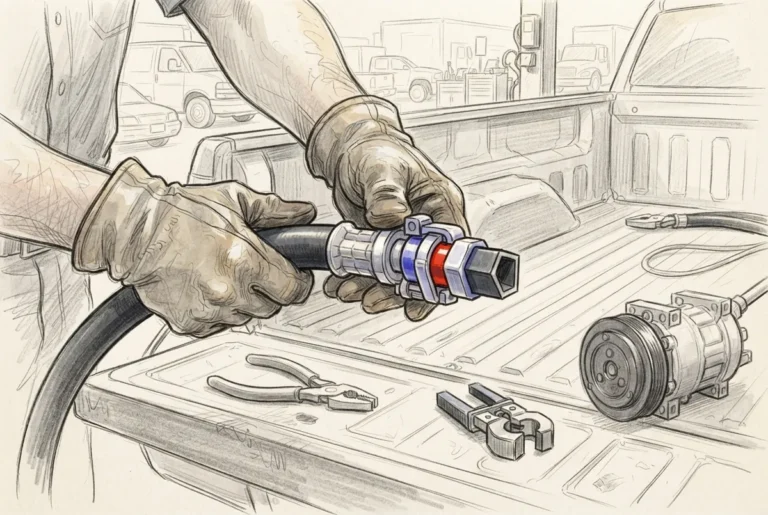
A proper A/C repair requires a complete seven-step process including diagnostic, leak detection, refrigerant recovery, component repair/replacement, system evacuation, vacuum testing, and recharge—skipping steps leads to repeat visits and wasted money.
-
Modern vehicles may use R-1234yf refrigerant instead of older R-134a, requiring different equipment and specialized handling; never mix refrigerants as they have different fittings, tools, and safety requirements.
-
EPA Section 609 certification is legally required for all technicians servicing vehicle A/C systems; choose shops that comply with environmental regulations and use approved recovery equipment.
-
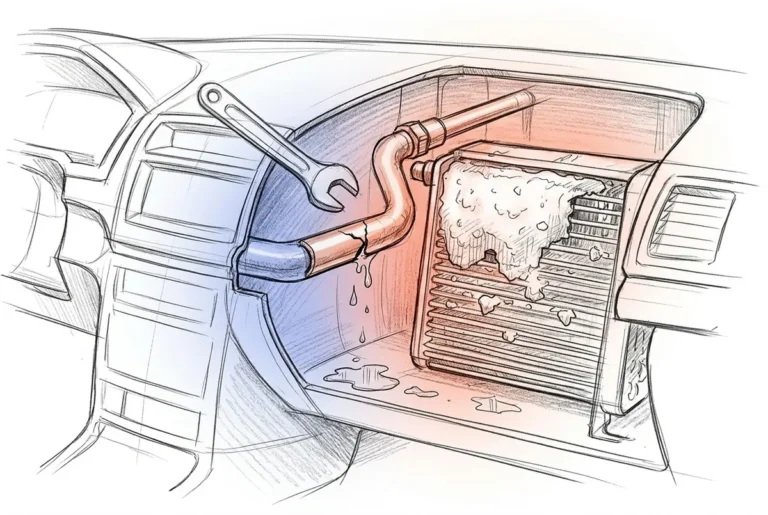
Six critical warning signs requiring professional repair are: warm air output, weak airflow, strange noises, musty odors, visible refrigerant leaks, and compressor clutch failure—addressing these early prevents costly damage.
-
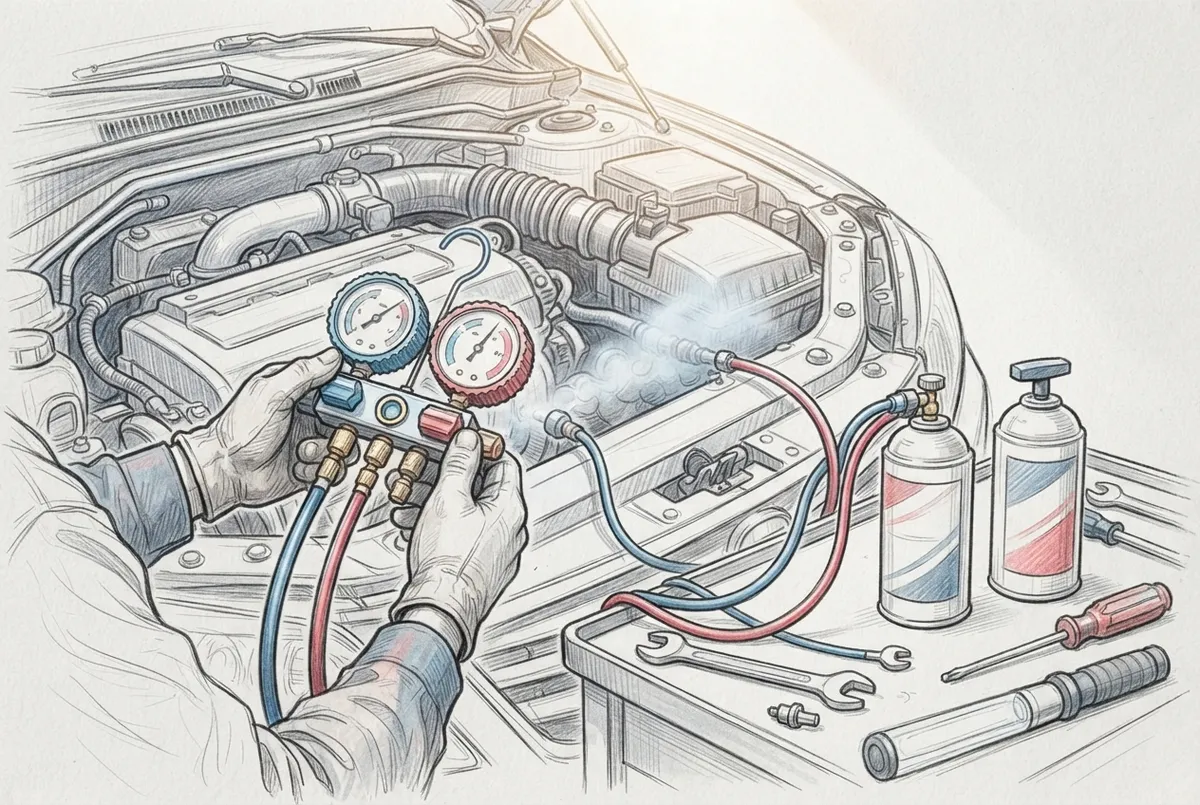
A/C repair costs vary significantly by issue: basic recharge ($150-$300), leak repair ($200-$1,500), compressor replacement ($800-$2,500), condenser replacement ($500-$1,200), and evaporator replacement ($1,000-$2,800).
-
When selecting a repair shop, verify experience with automotive A/C systems, ability to handle both refrigerant types, proper diagnostic equipment, written estimates, solid warranties, and positive customer reviews before booking.
Tampa summers don’t play around, and neither should your car’s air conditioner. When you’re sitting at a red light with sweat dripping down your back, typing “a/c repair near me for car” into your phone feels like an emergency. We get it. Marks Air has been fixing car, truck, bus, and RV air conditioning in Tampa since 1971, and we know exactly what drivers go through when their A/C quits in the middle of a heat wave.
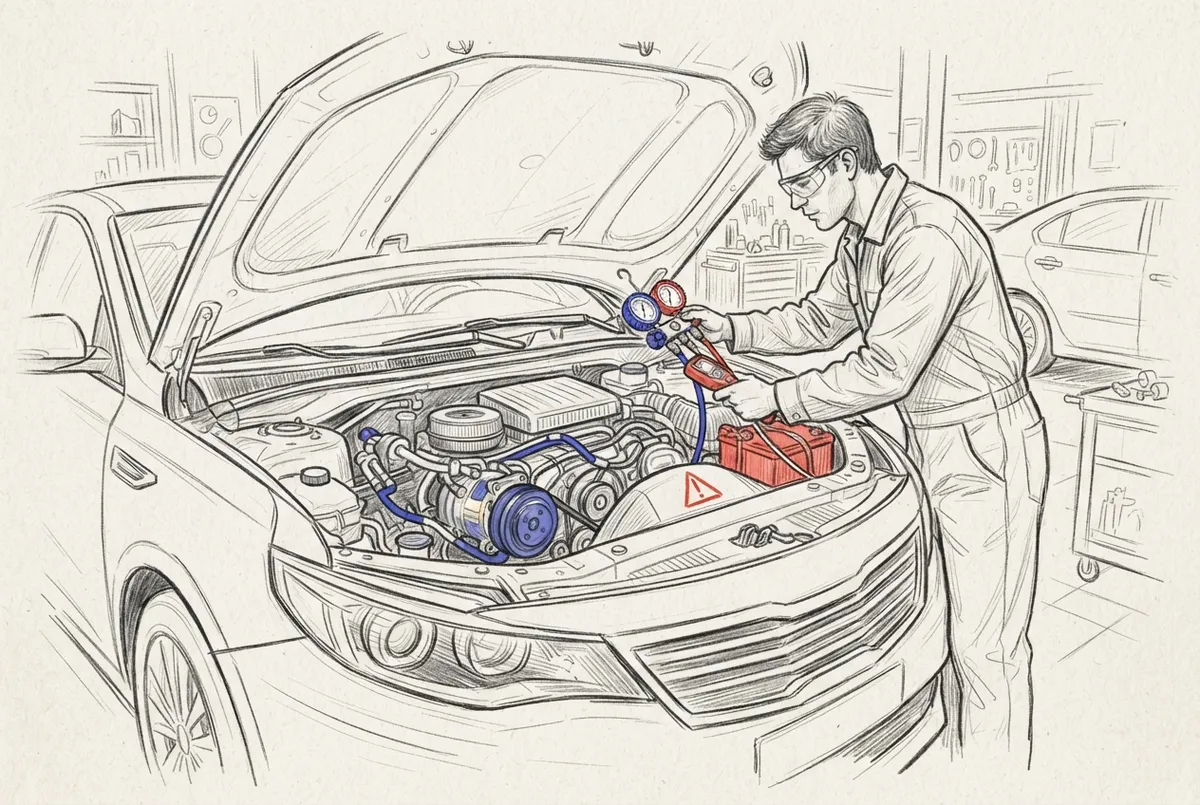
This guide walks you through the six clearest signs your car needs professional A/C attention, what actually happens during a repair, and how to pick a shop you can trust. Whether you’re a daily commuter, a truck driver logging long hauls, or a fleet manager juggling a dozen vehicles, this article gives you the straight facts you need before you book an appointment.
Why Searching “A/C Repair Near Me For Car” Matters More Than Ever
Your car’s cooling system is more complicated than most people realize. It includes a compressor, condenser, evaporator, expansion device, refrigerant, a drive belt or electrical controls, a blower motor, a cabin air filter, and several sensors. If just one part fails, you can end up with warm air, weak airflow, or a system that won’t turn on at all.
That’s why a quick online search only gets you so far. You need a shop that understands the full system, not just a quick recharge. Our team explains this in detail on our A/C services page, where we break down every type of repair we handle.
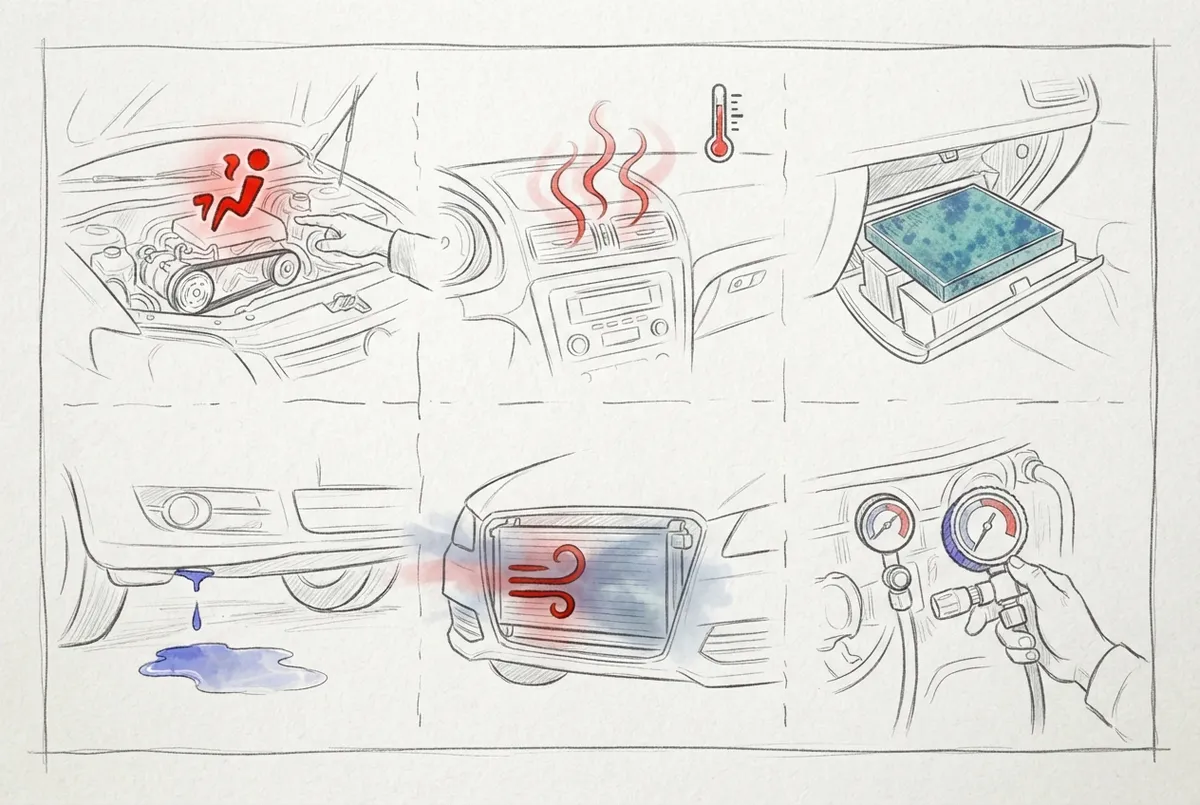
6 Signs Your Car Needs Professional A/C Repair
Not sure if your A/C trouble is serious? Here are the six warning signs that mean it’s time to stop searching and start calling.
1. Warm Air Instead Of Cold
This is the number one complaint we hear. Warm air can mean low refrigerant, a failing compressor, or a blocked condenser. Our article on 10 reasons your A/C is blowing warm air covers this issue in depth.
2. Weak Or Reduced Airflow
If air barely trickles out of your vents, your blower motor, cabin air filter, or ductwork may be clogged or failing. This often gets worse over time, so don’t wait it out.
3. Strange Noises When The A/C Turns On
Grinding, squealing, or clicking sounds usually point to a worn compressor clutch or a failing belt. Driving with these noises can lead to bigger, more expensive problems down the road.
4. Unpleasant Odors From The Vents
A musty or moldy smell often means mold or bacteria has built up in your evaporator core. This isn’t just annoying, it can affect the air quality inside your cabin.
5. Visible Refrigerant Or Oil Residue
Any oily residue near your A/C lines or under your car is a strong sign of a refrigerant leak. Low refrigerant almost never means normal use, it usually means something is leaking. Our guide on A/C leak mistakes that cost car owners more money explains why chasing leaks early saves you cash.
6. The Compressor Won’t Engage
If your compressor clutch doesn’t click on when you switch on the A/C, you could have an electrical issue, low refrigerant, or a failed compressor. This is one of the more serious signs and usually needs a full diagnostic.
What A Proper Car A/C Repair Should Include
A quality repair is more than just adding refrigerant. Here’s what a thorough service visit should cover, step by step:
- Full system diagnostic to identify the root cause of the problem
- Leak detection using proper testing equipment
- Recovery of remaining refrigerant using EPA-approved equipment
- Repair or replacement of the faulty component
- System evacuation to remove air and moisture
- Vacuum test to confirm the system holds properly
- Recharge with the manufacturer-specified refrigerant amount
Skipping any of these steps often leads to repeat visits and wasted money. This is exactly why we walk customers through each stage of the process, as outlined on our A/C parts page where you can also see the components we stock and install.
R-134a vs R-1234yf: Know What Your Car Needs
Not all car A/C systems use the same refrigerant, and this matters a lot for repair costs and safety. Many older vehicles use R-134a, while many newer vehicles use R-1234yf. These refrigerants need different fittings, tools, and handling procedures, and they should never be mixed.
| Refrigerant | Common In | Global Warming Potential (GWP) | Typical Price Per Pound |
|---|---|---|---|
| R-134a | Older vehicles | Approximately 1,430 | $50–$80 |
| R-1234yf | Many newer vehicles | Approximately 4 | $60–$120 |
According to the U.S. Environmental Protection Agency’s guidance on acceptable refrigerants and their impacts, R-1234yf has a much lower global warming potential but is mildly flammable, which means it needs specialized equipment and trained handling. New light-duty vehicles built for model year 2025 and later must use refrigerants with a GWP below 150, though existing vehicles can still be serviced with their original refrigerant type.
Not sure which refrigerant your car uses? Our team can check this for you fast. Learn more on our R-134a to 1234yf conversion guide.
Why Technician Certification Matters
In the United States, anyone servicing your car’s A/C system must be certified. This isn’t just a formality, it’s the law. Technicians must hold EPA Section 609 certification and use approved recovery equipment. Venting refrigerant into the air is illegal and harmful to the environment.
Marks Air takes this seriously. We offer training programs covering EPA 609 certification, HFO-1234yf handling, and MVAC best practices. We’re also a proud member of the Mobile Air Climate Systems Association (MACS), which keeps our team current on industry standards.
What Car A/C Repair Costs In 2026
Prices vary a lot depending on your vehicle, the part that failed, and your location. Here are typical 2026 estimates to help you budget:
- Basic A/C recharge: roughly $150–$300
- Leak repair: about $200–$1,500
- Compressor replacement: approximately $800–$2,500
- Condenser replacement: about $500–$1,200
- Evaporator replacement: approximately $1,000–$2,800
These numbers are estimates only. A proper diagnostic will give you an accurate number for your specific vehicle. For a deeper cost breakdown, check out how much auto A/C repair costs in 2026.
How To Choose The Right Shop When Searching Near You
Not every shop that pops up in your search results is equipped to handle every vehicle type. Here’s what to look for before you book an appointment:
- Experience specifically with automotive A/C systems, not just general repair
- Ability to service both R-134a and R-1234yf refrigerants
- Proper diagnostic tools and leak detection equipment
- Written estimates before work begins
- A solid warranty on parts and labor
- Positive reviews from real customers
- Same-day or quick availability for urgent repairs
You can read what real customers say about our work on our reviews page, or check out our profile on Yelp. We also recommend visiting Visit us on Google — Marks Air to see photos, hours, and directions to our Tampa shop.
Different Vehicles, Different A/C Needs
A/C repair isn’t one-size-fits-all. Here’s how needs differ across vehicle types we serve every day in Tampa:
Car Owners
Daily drivers need fast, affordable fixes that get them back on the road quickly, especially during Florida’s brutal summer months.
Truck Drivers And Fleet Operators
Long-haul drivers depend on working A/C for comfort and safety on extended trips. Downtime costs money, so quick turnarounds matter. Our fleet vehicle A/C repair tips can help fleet managers plan smarter maintenance schedules.
Bus Operators
Public transit and shuttle companies need dependable A/C to keep passengers comfortable and safe. Regular maintenance prevents mid-route breakdowns.
RV Enthusiasts
RV owners often deal with unique cooling challenges during long trips or camping in the heat. Our RV air conditioner repair guide covers common mistakes to avoid.
Heavy Equipment Operators
Construction and industrial crews need reliable A/C to prevent operator fatigue during long outdoor shifts. We handle everything from excavators to fire truck compressor replacements for emergency fleets.
Why Marks Air Has Been Tampa’s Go-To Choice Since 1971
Marks Air is a family-owned, woman-owned business that has focused exclusively on vehicle air conditioning for over five decades. We don’t split our attention between home HVAC and car A/C. Our entire shop is built around cars, trucks, buses, RVs, and heavy equipment.
We stock a full line of parts, including our own KOOL-TEMP line along with trusted brands like SPAL, ACT, BCC, gpd, and Omega. Many parts are available the same day, so you’re not stuck waiting a week for a fix. Learn more about our story on our about page, or follow our latest updates on Instagram and Facebook.
Common Mistakes To Avoid When Searching For Repair
Before you pick the first shop you find, watch out for these common pitfalls:
- Choosing a shop based on price alone without checking experience
- Skipping the diagnostic step and asking only for a recharge
- Ignoring warranty terms on parts and labor
- Assuming all shops can service R-1234yf systems
- Waiting too long after noticing symptoms
Our article on auto A/C repair mistakes that cost you more money dives deeper into how these small missteps add up.
Ready To Get Your Car’s A/C Fixed The Right Way
Nobody wants to spend another Tampa afternoon sweating through a broken A/C system. Whether you’re driving a sedan, managing a fleet of trucks, or keeping an RV cool for your next trip, Marks Air has the experience, parts, and certified technicians to get it done right the first time. We’ve been trusted by Tampa drivers since 1971, and we’d love to earn your trust too.
Ready to feel cool air again? Schedule service today, or give us a ring and call us at 813-988-1671 to talk through your car’s symptoms with our friendly team.
FAQs
Q: How much does car A/C repair cost near me?
A: It really depends on what’s wrong and what car you drive. A simple recharge might run $150 to $300, while a compressor replacement can be $800 to $2,500. The best way to know for sure is to get a diagnostic from a trusted local shop.
Q: Why is my car A/C blowing warm air?
A: Warm air usually points to low refrigerant from a leak, a failing compressor, or a blocked condenser. It’s frustrating, but the good news is most causes are fixable once a technician finds the real problem. Don’t just top off refrigerant and hope for the best.
Q: Does my car use R-134a or R-1234yf refrigerant?
A: It depends on your vehicle’s age and manufacturer. Many older cars use R-134a while many newer models use R-1234yf, and the two should never be mixed. If you’re not sure, just ask us, we can check it quickly for you.
Q: How long does an automotive A/C repair or recharge take?
A: A basic recharge can often be done in under an hour, while a compressor or evaporator replacement might take a half day or more. We’ll always give you a realistic time estimate before we start any work so there are no surprises.
Q: How can I choose a reliable car A/C repair shop near me?
A: Look for a shop with real automotive A/C experience, proper refrigerant equipment, honest written estimates, and a solid warranty. Reading reviews helps too, and we’re proud of what our customers say about us on Yelp and Google.