Key Takeaways
-
EPA-certified technicians (609 certification) are a legal requirement for handling refrigerants; verify this before choosing a repair shop to ensure safety and compliance.
-
Common AC problems like warm air, weak airflow, unusual noises, and musty smells often require professional diagnosis using specialized equipment—DIY fixes typically fall short on sealed systems.
-
Refrigerant recharge ($150-$300) is the most common repair, but compressor replacement ($500-$800+) and condenser work ($300-$700) costs vary significantly by vehicle type and damage severity.
-
Get a written estimate and confirm warranty coverage before repairs begin; trustworthy shops will walk you through diagnostics first to protect you from surprise costs.
-
Run your AC weekly and have refrigerant levels checked annually to catch problems early; preventive maintenance can reduce emissions by 30% while avoiding expensive breakdowns.
-
Specialized AC-only shops with deep expertise outperform general repair shops; read 4.5+ star reviews and ask about their focus on air conditioning systems specifically.
Your car’s air conditioning stops working on the hottest day of the summer. Sound familiar? If you’re driving through Tampa without cold air, every red light feels like forever. Whether you’re a daily commuter, a truck driver covering long miles, or a fleet manager keeping vehicles on the road, finding reliable automotive AC repair near me is a top priority. The good news is that getting your AC back to full power doesn’t have to be stressful. You just need to know what to look for, what questions to ask, and how to find a shop you can trust. This guide walks you through everything you need to know — from spotting early warning signs to choosing a qualified technician in Tampa. Let’s get you cool again.
Why Your Vehicle’s AC System Needs Professional Attention
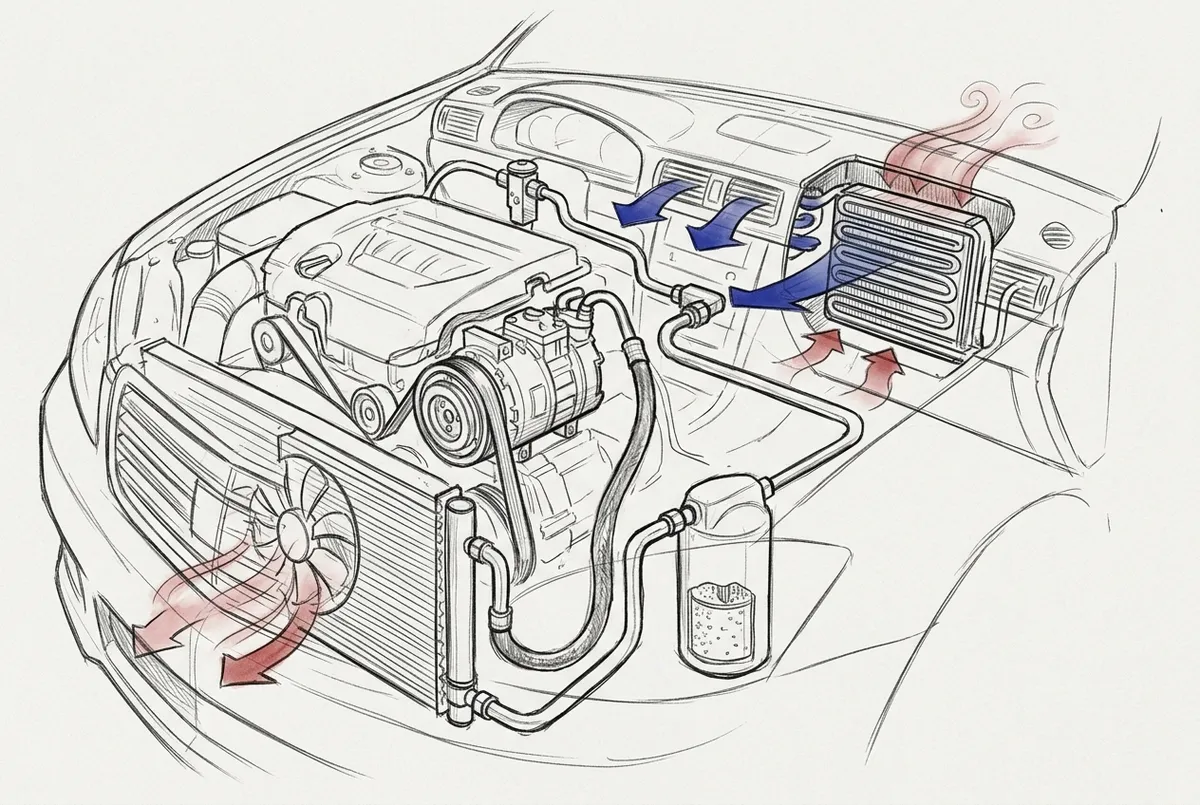
A car’s air conditioning system is more complex than most people realize. It’s not just about blowing cold air — it’s a sealed system with pressurized refrigerant, several mechanical components, and electronic controls. When one part fails, the whole system can suffer. That’s why DIY fixes often fall short.
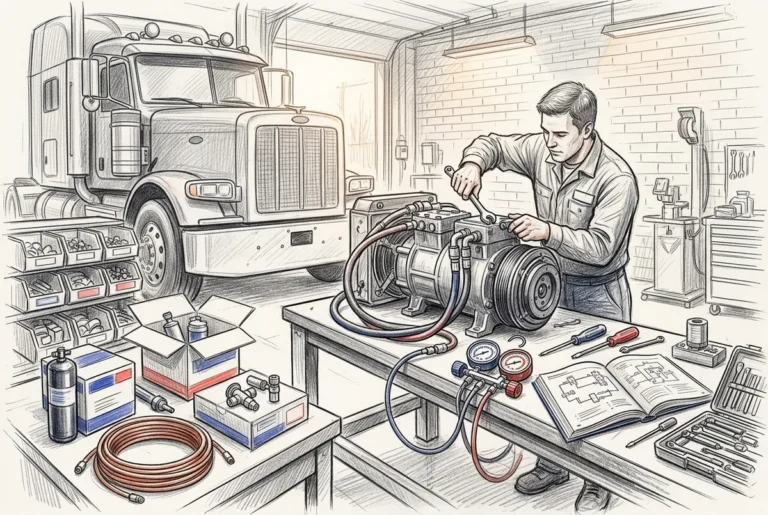
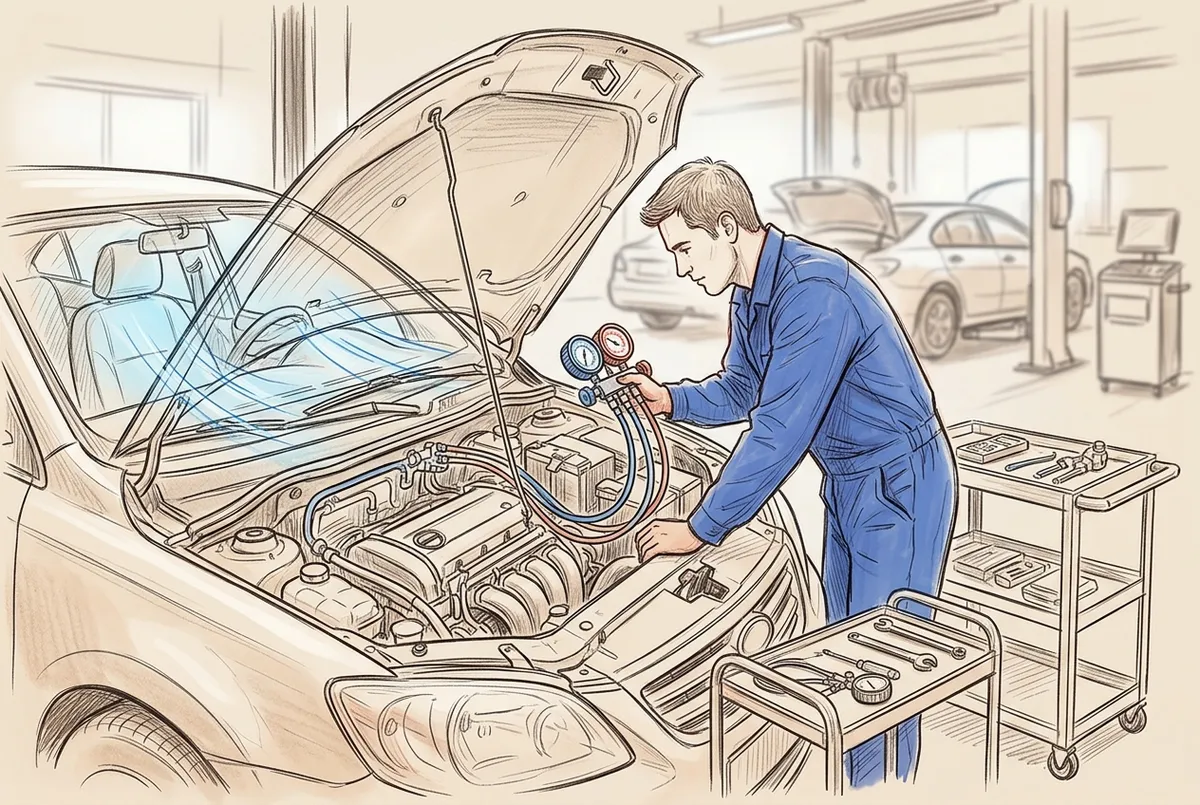
Technicians who handle professional AC services use specialized equipment to properly diagnose, evacuate, and recharge your system. In fact, EPA regulations require technicians to be certified before handling refrigerants. Working with a certified shop protects both you and the environment. Marks Air’s team, for example, holds the proper certifications and stays current with industry training as a proud member of the Mobile Air Climate Systems Association (MACS).
Common Signs Your Vehicle AC Needs Repair
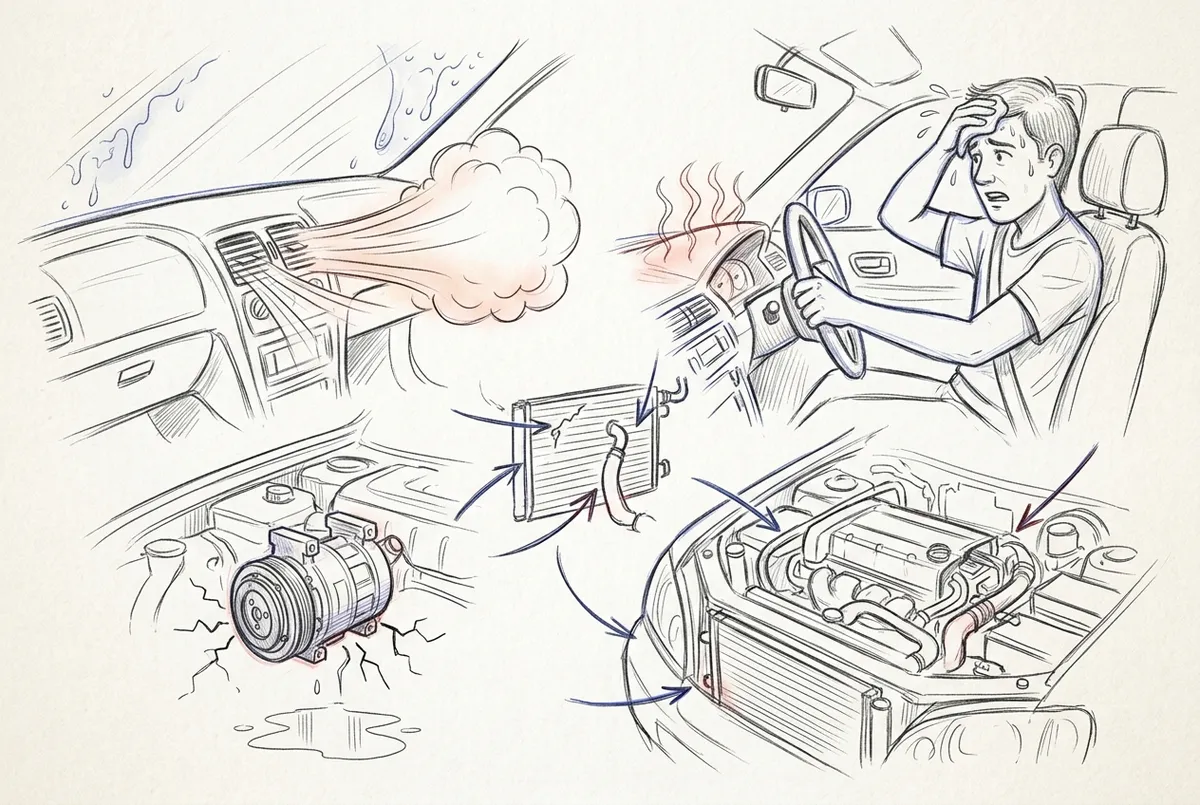
Don’t wait until your AC completely stops working. Catching problems early saves time and money. Here are the most common warning signs that it’s time to search for automotive AC repair near me:
- Warm or lukewarm air blowing from the vents instead of cold air
- Weak airflow even when the fan is set to high
- Unusual noises like grinding, squealing, or clicking when the AC turns on
- Unpleasant smells coming from the vents (musty or burning odors)
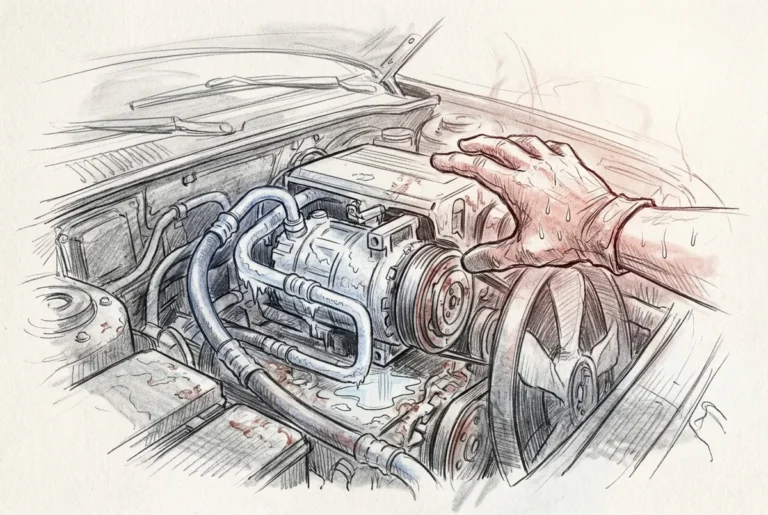
- Moisture or leaks inside the vehicle or under the hood
- AC cycles on and off too frequently or shuts off unexpectedly
If you’re experiencing any of these issues, check out 10 reasons your AC is blowing warm air for a deeper look at what might be going wrong.
What Automotive AC Repair Usually Includes
When you bring your vehicle to a qualified shop, here’s what a typical AC repair service covers:
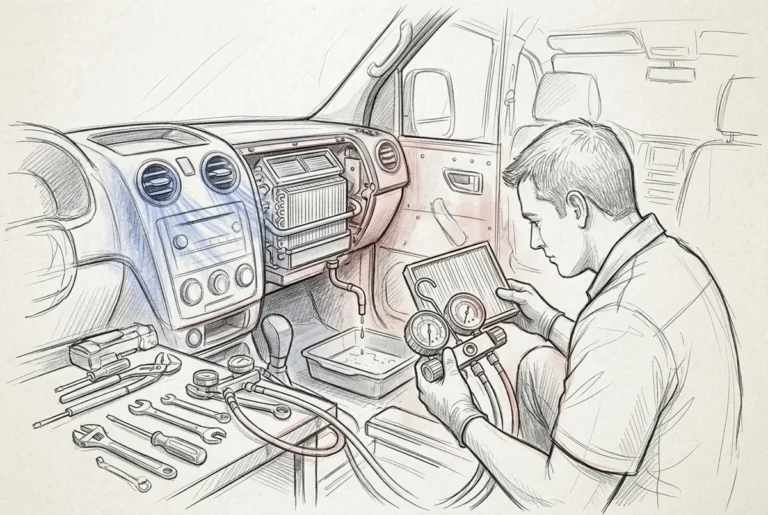
- AC Diagnostics — A technician inspects your system to identify the root cause of the problem using pressure gauges and electronic tools.
- Refrigerant check and recharge — Low refrigerant is one of the most common AC issues. The system is evacuated, checked for leaks, and then recharged to the correct level.
- Leak detection — Using UV dye or electronic detectors, technicians locate any leaks in hoses, seals, or components.
- Component repair or replacement — This may include the compressor, condenser, evaporator, expansion valve, or hoses depending on what’s failed.
- System performance testing — After repairs, the system is tested to confirm it’s blowing at the right temperature and pressure.
Want to know more about what each component does? Take a look at 6 A/C parts every vehicle owner should know in 2026.
How Much Does Automotive AC Repair Cost?
One of the most common questions people have is about cost. The honest answer: it depends on what’s wrong. Here’s a general breakdown to set your expectations:
| Type of Repair | Estimated Cost Range | Notes |
|---|---|---|
| Refrigerant recharge | $150 – $300 | Most common service; may include leak check |
| Leak repair (hoses/seals) | $200 – $500 | Depends on location and severity of leak |
| Compressor replacement | $500 – $800+ | Major repair; varies by vehicle type |
| Condenser replacement | $300 – $700 | Often needed after front-end collisions |
| Evaporator replacement | $500 – $1,000+ | Labor-intensive; located inside the dashboard |
Keep in mind these are general estimates. Costs vary based on the vehicle type, the parts needed, and the complexity of the job. For a more detailed look at what to expect in 2026, visit our guide on how much auto AC repair costs. The key is to get a clear, honest estimate before any work begins — a trustworthy shop will always walk you through the diagnosis first.
How to Find a Trustworthy Automotive AC Repair Shop Near You
Not all shops are created equal. Here’s how to make a smart choice when searching for automotive AC repair near me:
- Look for EPA-certified technicians. Any shop that handles refrigerants must have EPA 609-certified techs. This is non-negotiable for safety and legality.
- Read reviews carefully. Shops with 4.5 stars or higher and detailed reviews tend to provide better, more reliable service. Check platforms like Yelp to see what real customers say.
- Ask about their AC specialization. A shop that focuses exclusively on automotive AC systems will have deeper knowledge and better tools than a general repair shop.
- Request a written estimate. Before any work begins, get a clear breakdown of labor and parts costs. This protects you from surprises.
- Check for a warranty on repairs. Quality shops back their work. Ask what warranty they offer on parts and labor before committing.
For more guidance on this, check out how to find reliable auto A/C service in Tampa Bay.
AC Repair for Every Type of Vehicle
One thing that sets specialized AC shops apart is the ability to service all types of vehicles — not just passenger cars. Here’s a quick overview of who benefits from professional automotive AC repair:
- Car owners: Keep daily commutes comfortable and protect your health during Tampa’s hot summers.
- Truck drivers: Long-haul comfort matters. A failing AC can cause fatigue and reduced focus on the road.
- Bus operators: Passenger safety and comfort depend on a fully functioning AC system. Learn more about proper bus AC system maintenance.
- RV enthusiasts: Camping and travel shouldn’t come at the cost of comfort. Get expert help for RV air conditioner repair.
- Heavy equipment operators: Construction and agricultural equipment operators need reliable AC to prevent heat stress and downtime. See how to get heavy equipment AC repair done right.
- Fleet managers: Keeping multiple vehicles cool and operational is a big job. Get tips from our guide on fleet vehicle AC repair tips that save you money.
Preventive Maintenance Keeps AC Problems Away
The best repair is the one you never need. Regular preventive maintenance extends the life of your AC system and helps you avoid expensive breakdowns. Here’s what a good maintenance routine looks like:
- Run your AC system at least once a week — even in cooler months — to keep seals lubricated and refrigerant circulating.
- Have refrigerant levels checked annually to catch low levels before they cause compressor damage.
- Inspect belts, hoses, and electrical connections regularly for signs of wear or cracking.
- Replace cabin air filters as recommended by your vehicle’s manufacturer to maintain airflow quality.
- Schedule a full AC tune-up before the summer heat hits Tampa hard. Read more about why your vehicle needs an AC tune-up in Tampa.
The EPA estimates that properly maintained vehicle AC systems can reduce refrigerant emissions by up to 30%. That’s a win for your wallet and the environment. For a full list of best practices, see 5 AC maintenance tips every Tampa vehicle owner needs.
Repair or Replace? How to Decide
Sometimes the question isn’t whether to fix the AC — it’s whether to repair specific components or replace the whole system. This decision depends on the age of your vehicle, the cost of repairs, and the overall condition of the AC system.
For example, if your compressor fails on a high-mileage vehicle and several other components are also worn, a full system replacement might make more financial sense than piecemeal repairs. On the other hand, if your system is relatively new and just needs a hose or seal replaced, a targeted repair is the smarter move. Get the full breakdown in our guide on AC repair vs. AC replacement.
Why Tampa Drivers Trust Marks Air
Marks Air has been Tampa’s go-to automotive AC specialist since 1971. As a family-owned, woman-owned business, they bring a personal touch to every job. They work on cars, trucks, buses, RVs, heavy equipment, and emergency vehicles — all under one roof in Tampa.
What makes Marks Air stand out is simple: they focus exclusively on air conditioning. That means every technician, every tool, and every part in stock is chosen with AC systems in mind. From same-day AC parts to full system installations, you get specialized expertise backed by decades of hands-on experience. You can see what customers are saying by visiting Marks Air on Google or checking their reviews page. They also stay connected with their community through Facebook, where you can follow along for tips, updates, and more.
Ready to Get Your AC Fixed?
Don’t let a broken AC ruin your day — or your week. Whether you drive a compact car, a heavy-duty truck, or manage a fleet of buses, getting your air conditioning back in shape is easier than you think. The most important step is choosing a shop that knows AC systems inside and out, uses quality parts, and gives you a fair, honest price.
Tampa’s heat isn’t going anywhere, and neither is your need for a cold, comfortable ride. If you’re ready to stop sweating it out and get back to comfortable driving, schedule your AC service with Marks Air today or call us at 813-988-1671 to get started. We’re here to help — and we’ve been doing it since 1971.
FAQs
Q: What does automotive AC repair near me usually include?
A: A typical automotive AC repair service includes a full system diagnosis, refrigerant level check, leak detection, and repair or replacement of faulty components like the compressor, condenser, or hoses. The technician will also test the system after repairs to make sure everything is blowing cold and running smoothly. It’s a complete process — not just a quick recharge!
Q: How can I tell if my car AC needs a repair or just a recharge?
A: If your AC is blowing warm air but everything else seems fine, a refrigerant recharge might be all you need. However, if the system keeps losing refrigerant, makes unusual noises, or the compressor won’t engage, there’s likely an underlying issue that needs a proper repair. A quick diagnostic from a certified shop will give you a clear answer.
Q: How much does it cost to fix a car’s air conditioner?
A: The cost depends on what’s wrong — a refrigerant recharge typically runs $150 to $300, while a compressor replacement can reach $800 or more. The best way to get an accurate number is to have a certified technician diagnose the issue first. A trustworthy shop will always give you a written estimate before any work begins.
Q: How often should I have my car’s AC system checked?
A: It’s a great idea to have your vehicle’s AC system inspected at least once a year — ideally before summer kicks in. Regular checks help catch small issues like low refrigerant or a worn belt before they turn into bigger, more expensive problems. In a hot city like Tampa, staying ahead of AC issues keeps you comfortable all year long.
Q: What certifications should an automotive AC repair technician have?
A: Any technician who handles refrigerants must hold an EPA 609 certification — this is a legal requirement in the U.S. For shops working with newer vehicles using HFO-1234yf refrigerant, additional training and equipment are required. Always confirm your shop has certified technicians before handing over your keys!