Key Takeaways
-
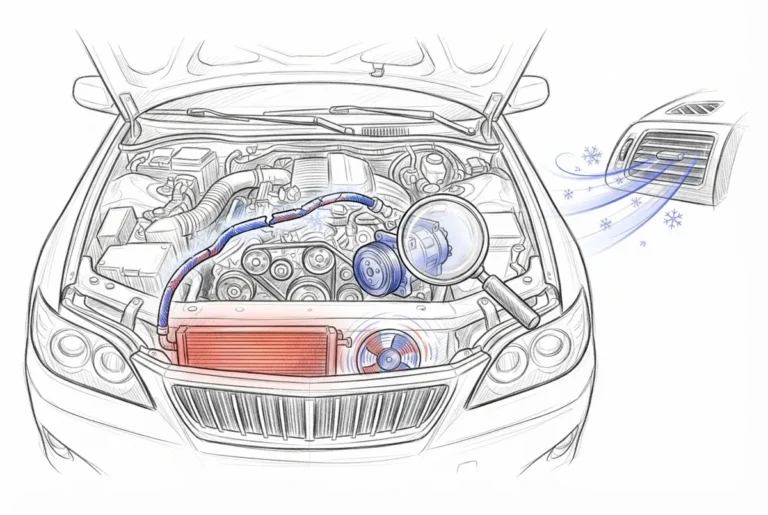
Catch A/C problems early by recognizing warning signs like warm air, weak airflow, strange noises, or musty odors—early detection prevents expensive compressor replacements later.
-
Always get a complete diagnostic with pressure checks and leak detection before agreeing to a refrigerant recharge; topping off without fixing the leak wastes money.
-
Verify your vehicle’s correct refrigerant type (R-134a for pre-2017 vehicles, HFO-1234yf for 2017+) before service to avoid system damage from wrong refrigerant.
-
Choose a specialized A/C repair shop with EPA 609-certified technicians, transparent diagnostics, in-house parts inventory, and repair warranties rather than general mechanics.
-
Establish annual preventive maintenance before summer heat peaks to catch small issues early and keep your A/C performing reliably in high-temperature climates.
-
Request a written estimate and confirm warranty coverage on both labor and parts before authorizing any A/C repair work.
Tampa summers are no joke. When the temperature climbs past 90°F and your car’s A/C starts blowing warm air, it can feel like an emergency. Whether you’re a daily commuter, a truck driver on a long haul, or an RV road-tripper, a broken car air conditioner is more than an inconvenience — it’s a real problem. The good news? Finding someone to fix your car air conditioner near you doesn’t have to be stressful. You just need to know what to look for, what questions to ask, and what to expect when you walk through the door.
This guide walks you through everything you need to know about getting your vehicle’s A/C repaired locally — from spotting the warning signs early to understanding what a proper repair involves. Let’s get you cool again!
Why Your Car A/C Stops Working
Your vehicle’s air conditioning system has several moving parts. When one fails, the whole system can struggle or shut down. Understanding why it breaks helps you have a smarter conversation with your repair shop.
Here are the most common reasons a car A/C stops cooling properly:
- Low refrigerant: Refrigerant slowly leaks over time. Without enough of it, your system can’t cool the air effectively.
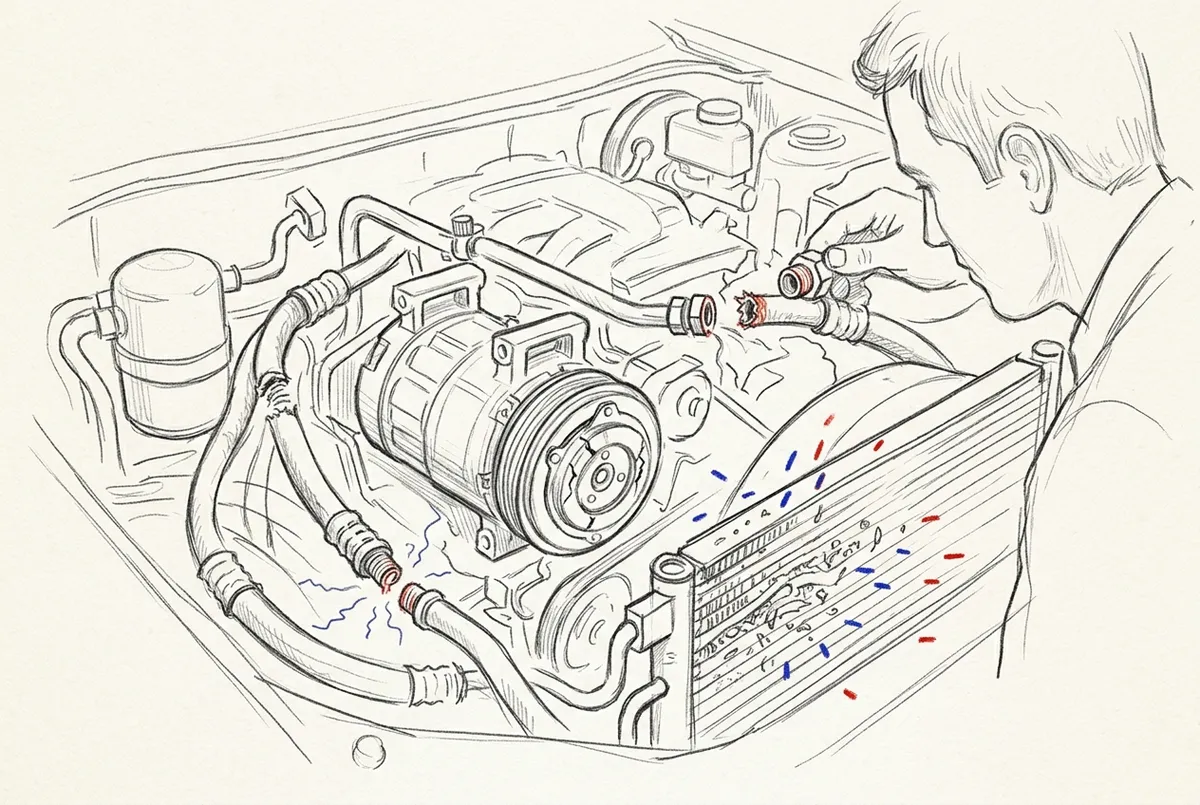
- Refrigerant leak: A crack or worn seal lets refrigerant escape faster than normal. Just topping it off won’t fix the root cause.
- Compressor failure: The compressor is the heart of the system. When it fails, nothing else works properly.
- Clogged or damaged condenser: The condenser releases heat from the refrigerant. Damage or debris can block this process.
- Faulty expansion valve or orifice tube: These components control refrigerant flow. If they’re stuck or clogged, cooling suffers.
- Electrical issues: Blown fuses, bad relays, or wiring faults can prevent the A/C from turning on at all.
- Worn belts or hoses: Old hoses can crack and leak. Worn belts can slip, causing the compressor to underperform.
If you’re curious about which components are most commonly involved in repairs, check out this breakdown of 6 A/C parts every vehicle owner should know in 2026.
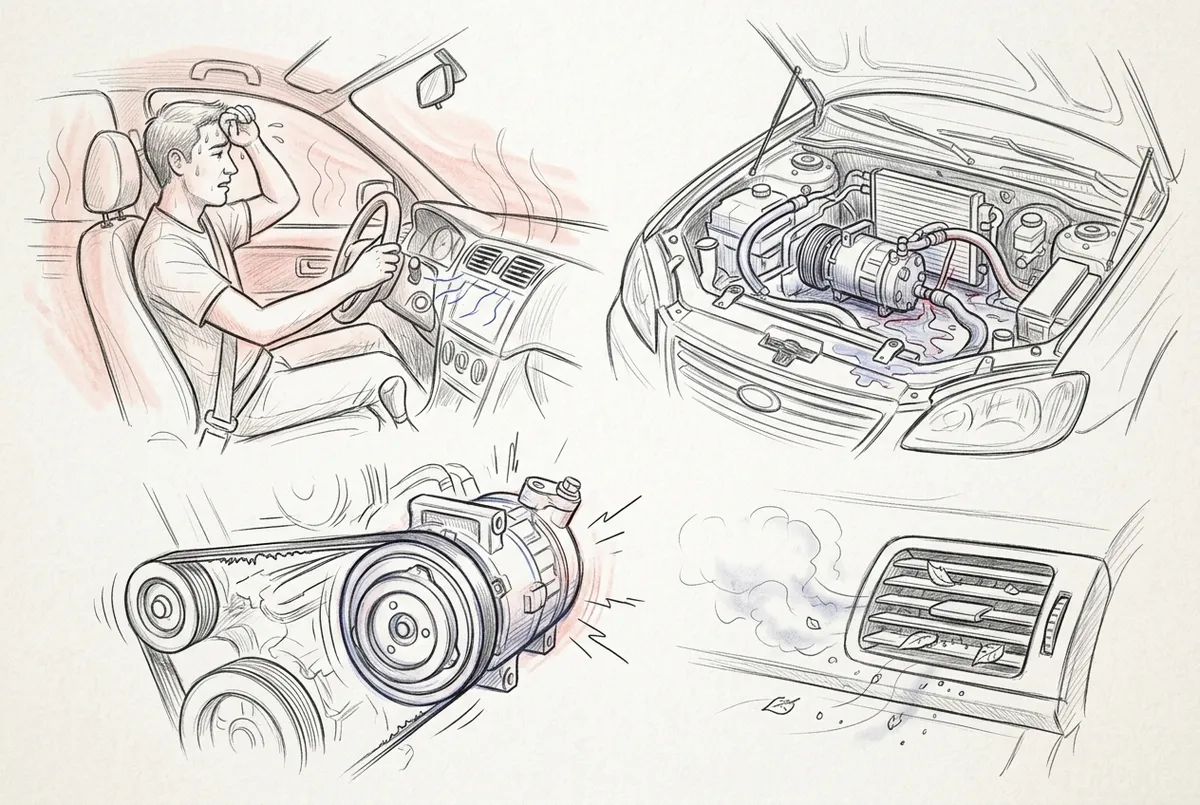
Warning Signs You Need to Fix Your Car Air Conditioner
The earlier you catch a problem, the cheaper and simpler the fix usually is. Don’t wait until your A/C completely quits before taking action. Here are the top signs your system needs attention:
- Warm or lukewarm air blowing from vents — This is the most obvious sign something is wrong.
- Weak airflow — If air barely trickles out, you may have a blower motor or ductwork issue.
- Strange noises when A/C is on — Rattling or grinding often points to a struggling compressor or loose component.
- Bad odors from the vents — A musty smell usually means mold or bacteria in the evaporator area.
- Water pooling inside the vehicle — A clogged drain line can cause moisture to build up inside your cabin.
- A/C cycles on and off rapidly — This could signal low refrigerant or an electrical problem.
Want a deeper look at these symptoms? Our guide on 10 reasons your AC is blowing warm air and how to fix it covers each one in detail.
What Happens During a Professional Car A/C Inspection
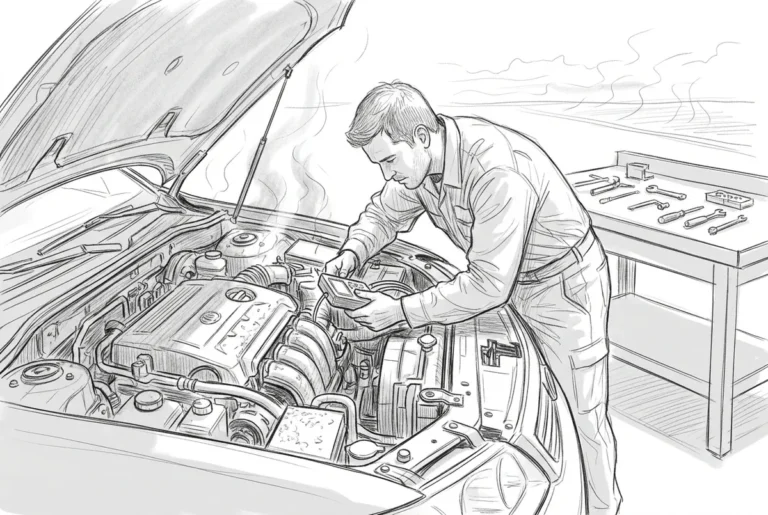
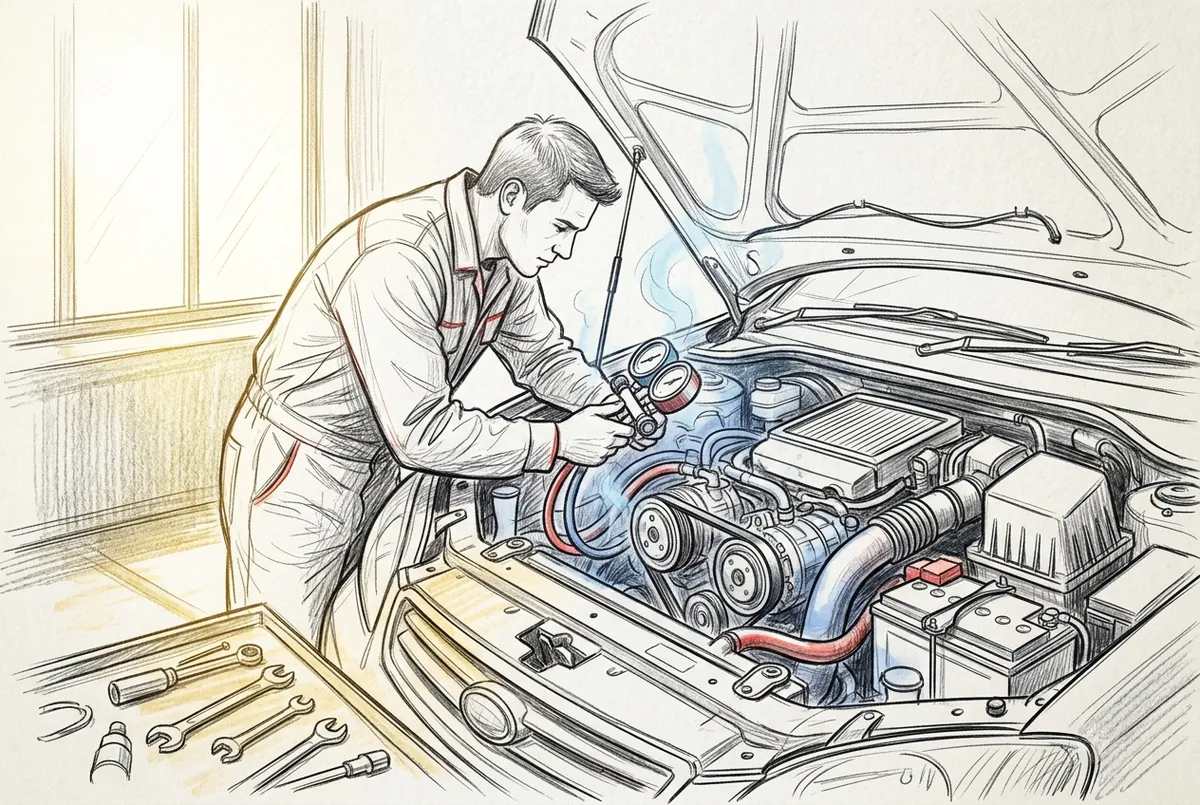
When you bring your vehicle in to fix your car air conditioner near you, a qualified shop won’t just top off the refrigerant and send you on your way. A proper inspection is thorough and systematic. Here’s what the process typically looks like:
- Vent temperature test: The technician checks the air coming out of your vents to see how cold (or warm) it actually is.
- Pressure check: Using specialized gauges, they measure both high-side and low-side pressure to evaluate refrigerant levels and system balance.
- Visual inspection: Technicians look over belts, hoses, the condenser, compressor, and other visible components for damage or wear.
- Leak detection: Using UV dye or electronic detectors, they locate any refrigerant leaks in the system.
- Electrical check: Fuses, relays, and wiring are tested to rule out control-system failures.
This kind of complete diagnostic approach is what separates a quality repair from a temporary fix. Learn more about what a car A/C diagnostic costs in 2026 so you know what to expect before you go in.
Common Car A/C Services and What They Involve
Once the diagnosis is complete, your technician will recommend the appropriate repairs. Here’s a quick overview of the most common services:
| Service | What It Addresses | Typical Timeframe |
|---|---|---|
| Refrigerant Recharge | Low refrigerant levels causing poor cooling | 30–60 minutes |
| Leak Detection & Repair | Refrigerant escaping through seals, hoses, or fittings | 1–3 hours |
| Compressor Replacement | Failed or seized compressor not circulating refrigerant | 2–5 hours |
| Condenser Service | Damaged or blocked condenser reducing heat exchange | 1–3 hours |
| Belt & Hose Replacement | Worn or cracked components causing performance loss | 30–90 minutes |
| Electrical Diagnosis | Fuses, relays, or wiring faults preventing A/C operation | 1–2 hours |
For a full breakdown of what these repairs cost in 2026, visit our guide on how much auto A/C repair costs.
Refrigerant: What You Need to Know Before Your Repair
One detail that trips up a lot of vehicle owners is refrigerant type. Not all vehicles use the same refrigerant, and using the wrong type — or overfilling — can damage your system. Most older vehicles use R-134a, while many newer models (2017 and up) use HFO-1234yf.
A typical recharge uses 28–32 ounces of refrigerant, though larger vehicles, trucks, buses, and RVs with rear A/C systems often require more. That’s why it matters to have your service done by a shop that fills to the vehicle manufacturer’s exact specifications, not a one-size-fits-all amount.
If your vehicle is due for a refrigerant conversion, check out our guide on 12 things to know about R-134a to 1234yf conversion.
How to Choose the Right Shop to Fix Your Car Air Conditioner Near You
Not every shop is created equal. Here’s what to look for when searching for a reliable place to fix your car air conditioner near you:
- Specialization in A/C systems: A shop that focuses on air conditioning will have better tools, deeper knowledge, and more experience than a general mechanic handling A/C as a side task.
- Certified technicians: Look for EPA 609 certification and industry training. This ensures technicians handle refrigerants safely and legally.
- Transparent diagnostics: A trustworthy shop explains what they found and why each repair is needed before they start work.
- Warranty on repairs: Quality shops back their work. Ask about labor and parts warranties before agreeing to service.
- Positive reviews: Check what real customers say. You can read what Tampa customers say about Marks Air on Yelp for honest feedback.
- Parts availability: Shops with in-house parts inventory can get you back on the road faster. No waiting on backorders.
For more tips on vetting local repair shops, read how to find reliable auto A/C service in Tampa Bay.
Why Marks Air Is Tampa’s Go-To A/C Specialist
Marks Air has been fixing vehicle air conditioners in Tampa since 1971. That’s over 50 years of focused experience — not general auto repair, but air conditioning specifically. As a family-owned, woman-owned business, Marks Air brings a personal touch to every job. They work on cars, trucks, buses, RVs, and heavy equipment, all at their fully equipped Tampa facility.
What sets Marks Air apart is their complete, in-house approach. They stock a full line of A/C parts — including their own KOOL-TEMP line and components from trusted brands like SPAL, ACT, gpd, and Omega — so repairs happen faster without waiting on parts orders. They’re also a proud member of the Mobile Air Climate Systems Association (MACS), keeping their technicians aligned with the latest industry standards.
You can visit Marks Air on Google to see their location, hours, and customer reviews all in one place. When you’re ready to get your A/C fixed, schedule your service appointment or give them a call at 813-988-1671.
A/C Repair for Every Type of Vehicle
One of the great things about working with a dedicated A/C specialist is that they can handle more than just passenger cars. Here’s a quick look at who benefits from specialized vehicle A/C service:
- Car owners: Keep your daily commute comfortable and avoid heat-related wear on your vehicle’s interior.
- Truck drivers: A working A/C isn’t just comfort — it’s a safety issue on long hauls. Learn about custom A/C systems for trucks that hold up on the road.
- Bus operators: Passenger comfort and driver safety depend on a reliable system. See what proper bus A/C maintenance involves.
- RV enthusiasts: Don’t let a broken A/C ruin your next trip. Avoid common RV air conditioner repair parts mistakes.
- Heavy equipment operators: Operator fatigue and heat stress are real risks. Get your equipment serviced by someone who knows how to handle heavy equipment A/C repair right.
- Fleet managers: Keep your entire fleet cool and road-ready with fleet vehicle A/C repair tips that save you money.
Don’t Wait — Preventive Maintenance Saves Money
Here’s something a lot of vehicle owners don’t realize: regular A/C maintenance can prevent most major breakdowns. Catching a small refrigerant leak early costs far less than replacing a seized compressor later. Running contaminated refrigerant damages internal components over time. Dirty filters reduce airflow and make the system work harder.
Staying on top of maintenance also means your A/C is ready to perform when Tampa’s heat peaks in summer. Check out these 5 A/C maintenance tips every Tampa vehicle owner needs to stay ahead of problems.
You can also follow Marks Air on Facebook and Instagram for seasonal maintenance reminders, tips, and updates from the team.
Getting Your A/C Fixed: A Quick Action Plan
- Notice the symptoms early. Warm air, weak airflow, strange smells, or odd noises are your cue to act.
- Call ahead and describe what you’re experiencing. This helps the shop prepare for your visit.
- Get a proper diagnostic done first. Don’t agree to a recharge before a leak check — you may just be delaying a bigger repair.
- Ask for a written estimate. Know what you’re paying for before work begins.
- Confirm the refrigerant type. Make sure the shop uses the correct refrigerant for your specific vehicle.
- Ask about the warranty. Quality repairs should be backed by a guarantee on both labor and parts.
Conclusion: Stay Cool With the Right Local A/C Specialist
Searching for someone to fix your car air conditioner near you doesn’t have to feel overwhelming. The key is finding a shop with real A/C expertise, honest diagnostics, and the parts inventory to get your vehicle back on the road fast. Whether you drive a car, truck, bus, RV, or heavy equipment — and whether it’s a simple recharge or a full compressor replacement — you deserve a repair done right the first time.
Tampa’s heat waits for no one. If your A/C is struggling, don’t put it off. Schedule your service at Marks Air today and let our team of specialists get you back to cool, comfortable driving — fast.
FAQs
Q: How do I know if my car air conditioner just needs a recharge or a bigger repair?
A: Great question! If your A/C was working fine and gradually got warmer, a refrigerant recharge might help — but it’s always worth checking for a leak first. If you just recharge without finding a leak, the refrigerant will escape again and you’ll be back to square one. A proper diagnostic check takes the guesswork out of it.
Q: How long does it take to fix a car air conditioner?
A: It really depends on what’s wrong! A simple refrigerant recharge can take 30–60 minutes, while a compressor replacement may take 2–5 hours. The best thing to do is call your local A/C shop ahead of time, describe your symptoms, and they can give you a realistic time estimate before you drop off your vehicle.
Q: What kind of refrigerant does my car use?
A: Most vehicles made before 2017 use R-134a refrigerant, while many newer models use HFO-1234yf. Using the wrong type — or the wrong amount — can actually harm your A/C system. Your repair shop should check your vehicle’s specifications and fill it to the manufacturer’s exact recommendation every time.
Q: Can I fix my car air conditioner myself with a DIY recharge kit?
A: DIY recharge kits can add refrigerant, but they won’t detect leaks, clean the system, or diagnose what actually went wrong. In some cases, overfilling with a DIY kit can damage the compressor. For a lasting fix, it’s always better to have a certified technician perform a full diagnosis and proper service.
Q: How often should I have my car A/C serviced?
A: Most A/C specialists recommend having your system inspected at least once a year — ideally before summer kicks in. In a hot climate like Tampa’s, your A/C works hard almost year-round, so regular maintenance helps catch small issues before they turn into expensive repairs. Think of it like an annual checkup for your car’s cooling system!