Key Takeaways
-
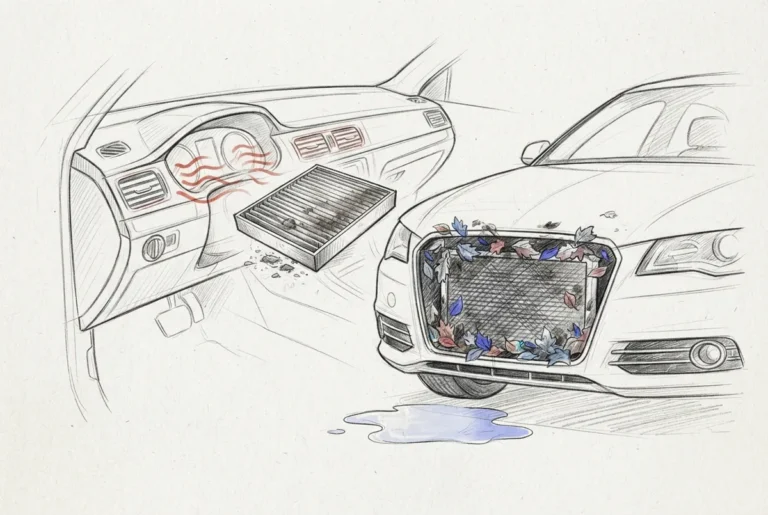
Restricted airflow from dirty cabin filters, blocked vents, or failing blower motors is the number one cause of frozen AC coils; regular filter checks prevent this most common issue.
-
Low refrigerant levels caused by leaks make the system run too cold and freeze the coil; this requires professional leak detection and repair rather than DIY fixes.
-
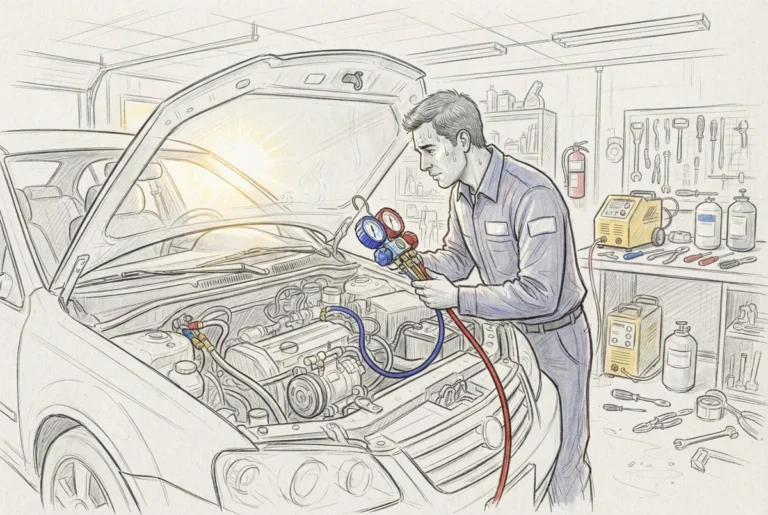
Turn off your AC immediately and let the coil thaw naturally without running the compressor, as operating a frozen system can cause expensive compressor damage.
-
Dirty or clogged evaporator coils create cold spots where ice forms, especially in dusty environments; professional cleaning restores even airflow and prevents buildup.
-
A faulty blower motor or weak fan reduces airflow across the coil, allowing it to freeze; replacing a failing motor is a straightforward fix that prevents compressor damage.
-
Blocked condensate drains trap moisture around the coil in humid climates, accelerating ice formation; keeping drains clear is essential preventive maintenance.
You’re driving down I-275 in Tampa, sweat already forming, when your vents start blowing weak, warm air instead of that icy relief you need. Then you pop the hood later and notice something strange: ice on your AC coil, even though it’s 95 degrees outside. If this sounds familiar, you’re not alone. Frozen AC coils are one of the most common—and most confusing—problems vehicle owners, truck drivers, and fleet managers run into.
The good news? Once you understand what causes ac coils to freeze, the fix usually isn’t complicated. Whether you drive a sedan, haul freight across the state, operate a transit bus, or manage a fleet of work trucks, this guide breaks down the real reasons your evaporator coil turns into a block of ice. We’ll also cover what to do about it, so you’re not stuck sweating it out on the side of the road.
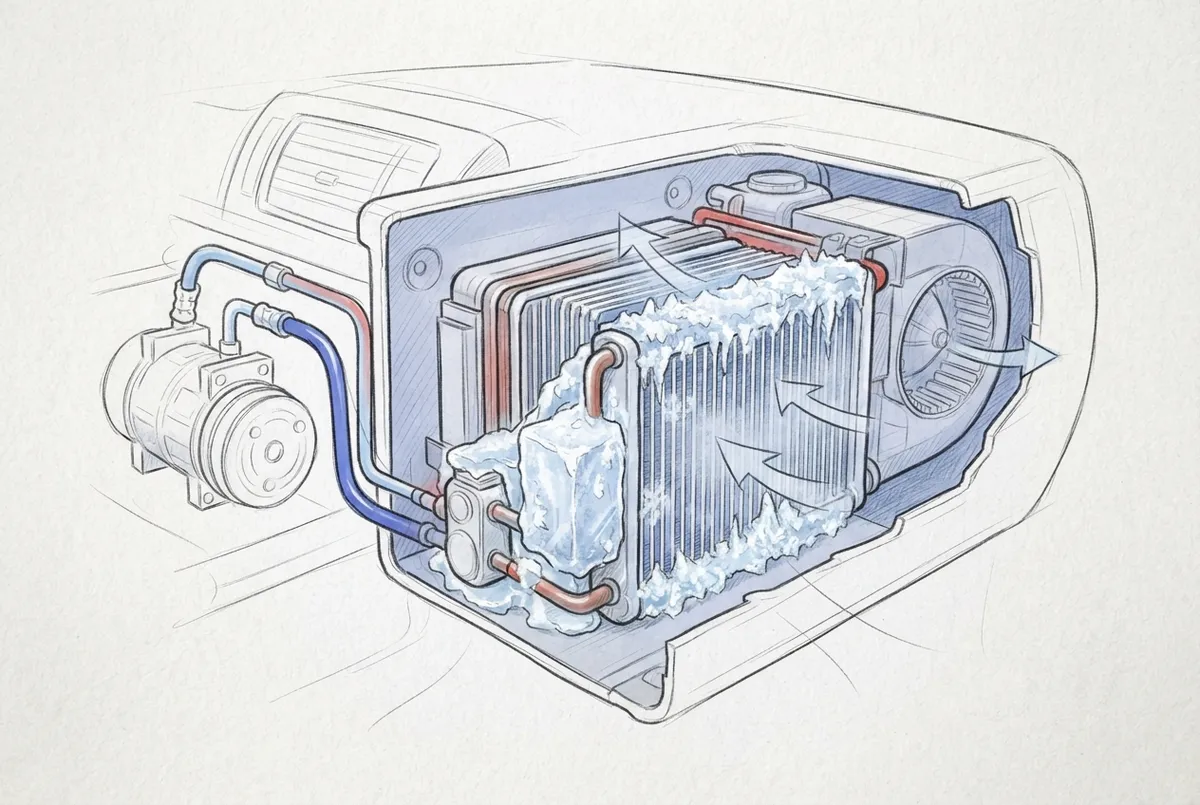
What Causes AC Coils to Freeze in a Vehicle System
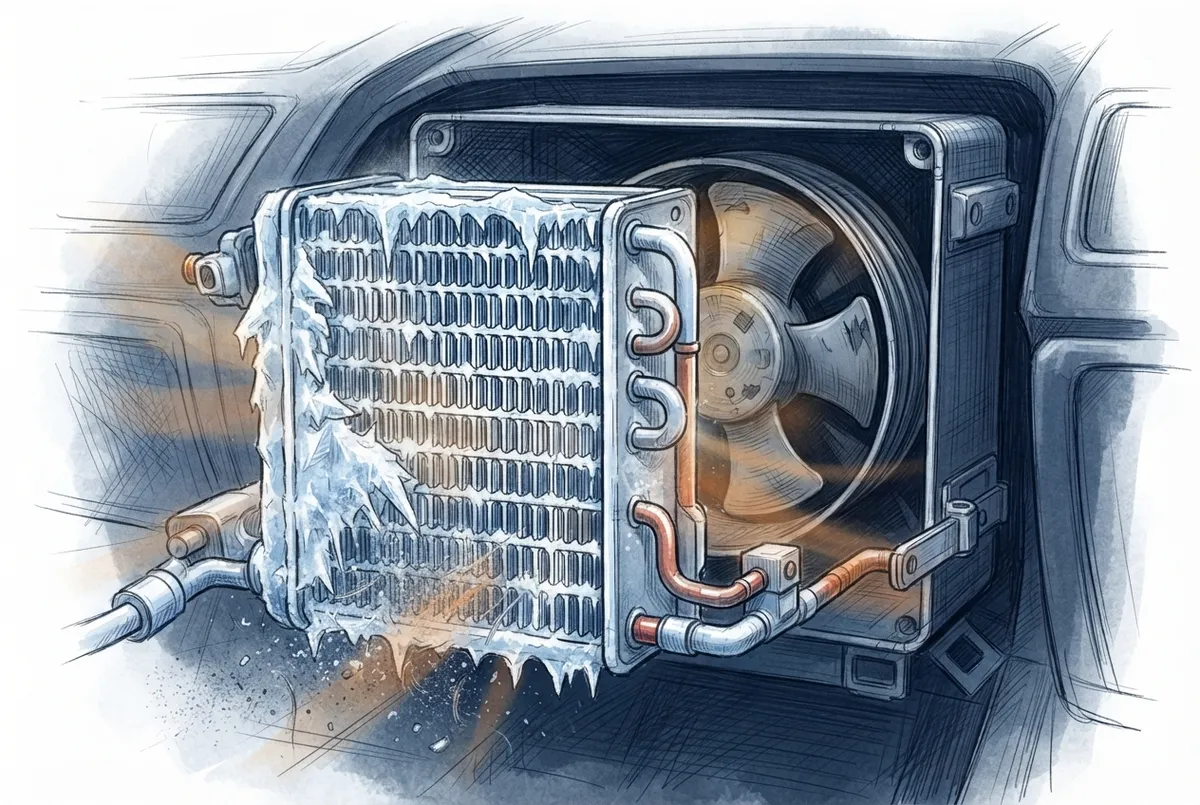
Your vehicle’s AC system works by pulling warm air through the evaporator coil, which is filled with cold refrigerant. That process removes heat and moisture from the air, giving you that cool breeze. But when something throws off the balance between airflow, refrigerant, and temperature, the coil can get too cold. Once that happens, moisture in the air freezes right onto the coil surface.
Once ice builds up, it blocks airflow even more, which makes the problem worse. It’s a snowball effect (pun intended) that can quickly turn a small issue into a bigger repair. Understanding the root causes helps you catch the problem early, before it damages other parts of your system.
1. Restricted Airflow Through the System
This is, by far, the number one cause of frozen coils in any AC system, whether it’s in your car or a heavy-duty truck. When air can’t move properly across the coil, the coil gets colder than it should. Common airflow blockers include:
- A dirty or clogged cabin air filter
- Blocked or dirty return vents
- A failing or weak blower motor
- Collapsed or damaged air ducts
- Debris caught around the evaporator housing
Fleet vehicles and heavy equipment are especially prone to this because of dust, dirt, and job site debris. If you’re managing a fleet, regular filter checks should be part of your routine. Our guide on AC maintenance tips every Tampa vehicle owner needs covers simple steps that prevent airflow issues before they start.
2. Low Refrigerant Levels
Refrigerant is the lifeblood of your AC system. When levels drop too low, usually because of a leak, the pressure inside the system drops too. Lower pressure means the refrigerant gets colder than normal as it moves through the coil, and that extra cold causes ice to form.
Low refrigerant almost always points to a leak somewhere in the system. It won’t just disappear on its own. If your AC has been running weaker than usual for weeks, this is likely the culprit. Learn more about spotting these issues early in our article on how to detect AC leaks in your truck before they get worse.
3. Dirty or Clogged Evaporator Coil
Even with good airflow and proper refrigerant levels, a coil covered in dirt and grime won’t work efficiently. Dust and debris create an insulating layer that traps cold air right at the coil surface instead of letting it spread evenly. This uneven cooling creates cold spots where ice starts forming.
Vehicles that spend a lot of time in dusty environments, like construction sites or agricultural fields, are more likely to deal with this. Curious whether this applies to your situation? Check out our detailed breakdown on whether dirty coils cause AC to freeze.
4. Faulty Blower Motor or Fan Issues
The blower motor pushes air across the coil. When it’s weak, slow, or failing altogether, not enough air moves through the system. Less airflow means the coil gets colder than it’s designed to, and ice starts building up fast.
This is a common issue in older vehicles and heavy-duty trucks that log a lot of miles. If you’ve noticed your fan sounds different, runs slower, or barely pushes air at all, it’s worth getting checked out. Truck drivers dealing with this exact problem might find our article on truck AC blower motor repair fixes that actually work helpful.
5. Thermostat or Control Malfunctions
Your AC system relies on sensors and controls to regulate temperature. When these fail, the system can run the compressor too long or too aggressively, pushing coil temperatures below freezing. This is less common but still shows up, especially in older vehicles or systems with electrical issues.
6. Blocked Condensate Drain
As your AC pulls moisture from the air, that water needs somewhere to go. If the condensate drain gets clogged, water backs up around the coil. This trapped moisture combined with cold coil temperatures leads to ice buildup, especially in humid climates like Tampa’s.
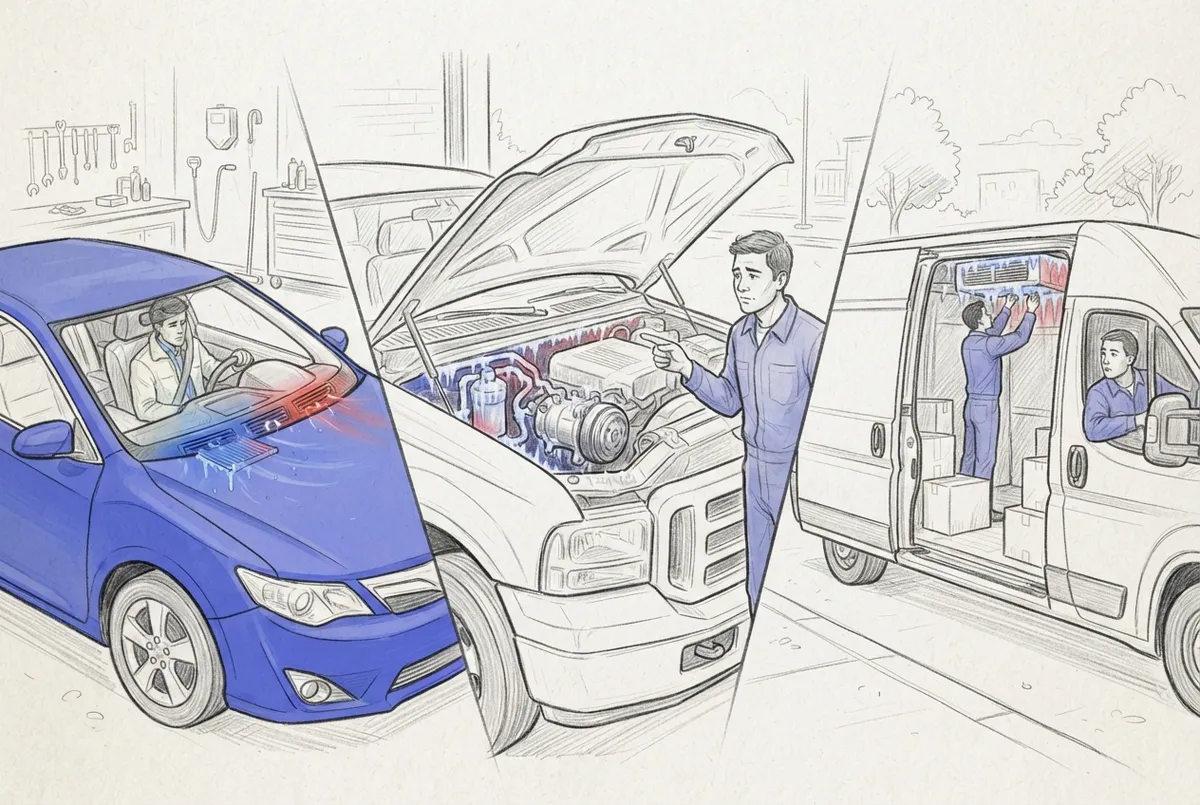
How Frozen Coils Affect Different Types of Vehicles
Frozen AC coils don’t just cause discomfort. They can lead to bigger, more expensive problems depending on what you drive or operate. Here’s how it plays out across different vehicle types:
| Vehicle Type | Common Cause | Risk If Ignored |
|---|---|---|
| Cars & Personal Vehicles | Dirty cabin filter, low refrigerant | Compressor damage, costly repairs |
| Semi-Trucks & Fleet Vehicles | Airflow blockage, refrigerant leaks | Driver discomfort, DOT compliance issues |
| Buses & Transit Vehicles | Dirty coils, blower motor failure | Passenger complaints, safety concerns |
| RVs | Low refrigerant, blocked drains | Ruined trips, mold from trapped moisture |
| Heavy Equipment | Dust-clogged coils, airflow restriction | Operator fatigue, reduced productivity |
Whatever you drive, a frozen coil is a sign something needs attention. Ignoring it rarely makes the problem go away.
Signs Your AC Coil Might Be Freezing
You don’t always need to pop the hood to know something’s wrong. Watch for these warning signs:
- Weak or reduced airflow from the vents, even at full blast
- Air that starts cold but slowly turns warm
- Strange gurgling or hissing sounds from the AC system
- Visible ice or frost around the compressor or coil area
- Water pooling under the vehicle after the AC has been running
- A musty smell coming through the vents
If you notice any of these, it’s smart to get things checked before the ice buildup causes more damage to your compressor or other components.
Steps to Take When Your AC Coil Freezes
If you suspect a frozen coil, don’t panic. Follow these steps to avoid making things worse:
- Turn off your AC system completely and let it thaw naturally. Running it while frozen can damage the compressor.
- Switch the fan to run without the AC compressor engaged, which helps speed up thawing.
- Check your cabin air filter for dirt or blockage once things have thawed.
- Inspect visible vents and ducts for obstructions.
- Schedule a professional diagnostic if the problem returns or if you notice refrigerant leaks.
Trying to force the system to keep running while frozen almost always leads to bigger problems, including compressor failure. It’s better to pause, thaw, and then get a proper diagnosis.
Why Professional Diagnostics Matter
Frozen coils can stem from several different issues, and pinpointing the exact cause takes the right tools and experience. A trained technician can measure refrigerant pressure, check airflow rates, and inspect your coil for damage or buildup that’s hard to spot on your own.
At Marks Air, we’ve been diagnosing and repairing vehicle AC systems in Tampa since 1971. As a family-owned, woman-owned business, we understand how frustrating it is to deal with AC problems, especially during Florida’s brutal summers. Our team handles everything from personal cars to heavy trucks, buses, RVs, and construction equipment. You can learn more about our full range of AC services or browse our AC parts inventory, which includes same-day availability for many common components.
We’re also proud members of the Mobile Air Climate Systems Association (MACS), which keeps our technicians up to date on the latest industry standards. Whether you’re dealing with a frozen coil in your daily driver or managing a whole fleet, our decades of focused A/C experience means we catch problems others might miss.
Preventing Frozen Coils Before They Start
Prevention is always cheaper and easier than dealing with a frozen coil mid-drive. Here are some simple habits that go a long way:
- Replace your cabin air filter regularly, especially if you drive in dusty conditions
- Schedule routine AC inspections at least once a year
- Address small refrigerant leaks immediately instead of waiting
- Keep your vehicle’s vents and ducts clear of debris
- Listen for unusual sounds and act quickly if something seems off
Fleet operators and truck drivers should consider more frequent checks given the demanding conditions these vehicles face daily. Our article on preventive vs. reactive fleet AC maintenance dives deeper into building a maintenance schedule that actually saves money long-term.
Special Considerations for Trucks, Buses, and Heavy Equipment
Larger vehicles and equipment often have more complex AC systems, which means more potential points of failure. Truck drivers hauling long distances need reliable cooling not just for comfort, but for staying alert and compliant with safety regulations. Bus operators need consistent AC performance to keep passengers comfortable and safe in Tampa’s heat and humidity.
Heavy equipment operators face a unique challenge too. Dust and debris from job sites clog coils faster, and operator fatigue from poor cabin cooling can affect safety and productivity. If your equipment’s AC system has been acting up, our guide on how to get heavy equipment AC repair done right walks through what to expect from a proper repair process.
When to Call in the Professionals
Some AC issues are simple enough to check yourself, like a dirty filter. But if you’re dealing with recurring freezing, refrigerant leaks, or strange noises, it’s time to bring in a professional. Attempting DIY refrigerant recharges without proper training can actually make things worse and even damage your system further.
Our technicians at Marks Air have decades of hands-on experience across every vehicle type imaginable. We also offer A/C training programs for those looking to build their own skills, covering everything from EPA 609 certification to HFO-1234yf best practices. Whether you want to learn the trade or just need your AC fixed right the first time, we’re here to help.
Frequently Searched Concerns About Frozen AC Coils
Many Tampa drivers want to know if frozen coils mean they need a whole new system. The truth is, most frozen coil issues are fixable without a full replacement, especially when caught early. If you’re weighing your options, our comparison on AC repair vs. AC replacement can help you understand which path makes sense for your situation and budget.
Don’t just take our word for it. You can read customer reviews on Yelp or check out our latest projects on Instagram to see the kind of work we do every day. We also share tips and updates on Facebook, so give us a follow if you want to stay in the loop on AC maintenance advice.
Ready to Stop Sweating Over a Frozen AC Coil?
A frozen AC coil doesn’t have to ruin your day or your budget. Now that you know what causes ac coils to freeze, you can catch the warning signs early and avoid bigger repairs down the road. Whether you’re driving a personal car, managing a fleet, or keeping heavy equipment running smoothly, understanding these basics puts you ahead of the problem.
If your AC has been acting up lately, don’t wait for it to get worse. Our friendly, experienced team at Marks Air has been helping Tampa drivers stay cool since 1971, and we’d love to help you too. Schedule service with our team today, or if you need help right away, call us at 813-988-1671. You can also visit us on Google to see what our Marks Air customers are saying. We’re ready to get your AC blowing cold again, the right way.
FAQs
Q: What causes AC coils to freeze in a car or truck?
A: The most common causes are restricted airflow from a dirty filter, low refrigerant from a leak, and a dirty evaporator coil. A weak blower motor or clogged condensate drain can also cause ice to build up on the coil.
Q: Can I drive with a frozen AC coil?
A: You can drive, but you should turn off the AC and let the system thaw first. Running the compressor while the coil is frozen can cause serious damage, so it’s best to get it checked out soon.
Q: How long does it take for a frozen AC coil to thaw?
A: It usually takes anywhere from 30 minutes to a few hours, depending on how much ice has built up. Running the fan without the compressor engaged helps speed things along.
Q: Does a frozen coil mean I need a new AC system?
A: Not usually! Most frozen coil problems come from fixable issues like low refrigerant or airflow blockages. Catching it early almost always means a simple repair instead of a full replacement.
Q: How can fleet owners prevent frozen AC coils in their vehicles?
A: Regular filter changes, routine inspections, and quick attention to small refrigerant leaks make a huge difference. Building a preventive maintenance schedule keeps your whole fleet running cool and avoids costly downtime.