Key Takeaways
-
Never recharge A/C without fixing the leak first; recharging a leaking system is temporary and will require repeat repairs, so always have technicians locate and repair leaks before evacuation and recharge.
-
Verify your vehicle's refrigerant type (R-134a for older vehicles, R-1234yf for 2015+) from the under-hood label before service, as mixing these refrigerants causes serious damage and violates EPA regulations.
-
A proper A/C diagnosis includes cabin airflow checks, visual inspection, pressure/temperature testing, leak detection, and individual component evaluation—not just adding refrigerant.
-
Ensure your technician holds EPA Section 609 certification, required by law for anyone servicing A/C systems for payment, which guarantees proper refrigerant handling and compliance with EPA guidelines.
-
Run your A/C for a few minutes weekly, maintain clean cabin air filters, and get annual professional inspections before summer to prevent costly repairs and extend system lifespan.
-
Warm air from vents can indicate multiple issues (refrigerant leak, compressor failure, clogged condenser, or faulty blend door), so professional diagnosis matters to avoid guessing and wasted repairs.
Nothing tests your patience like a broken A/C on a scorching Tampa afternoon. Whether you’re driving your daily commuter, hauling freight across the state, or running a fleet of buses, a vehicle that won’t cool down is more than an inconvenience. It’s a genuine problem that can mess with your day, your comfort, and even your safety. Good news: understanding how ac system repair for vehicles actually works can save you time, money, and a whole lot of sweaty frustration.
At Marks Air, we’ve been fixing vehicle air conditioning systems in Tampa since 1971. We’re a family-owned, woman-owned shop that lives and breathes A/C repair for cars, trucks, buses, RVs, and heavy equipment. So grab a cold drink (while your A/C gets fixed), and let’s walk through everything you need to know about keeping your vehicle cool.
How a Vehicle A/C System Actually Works
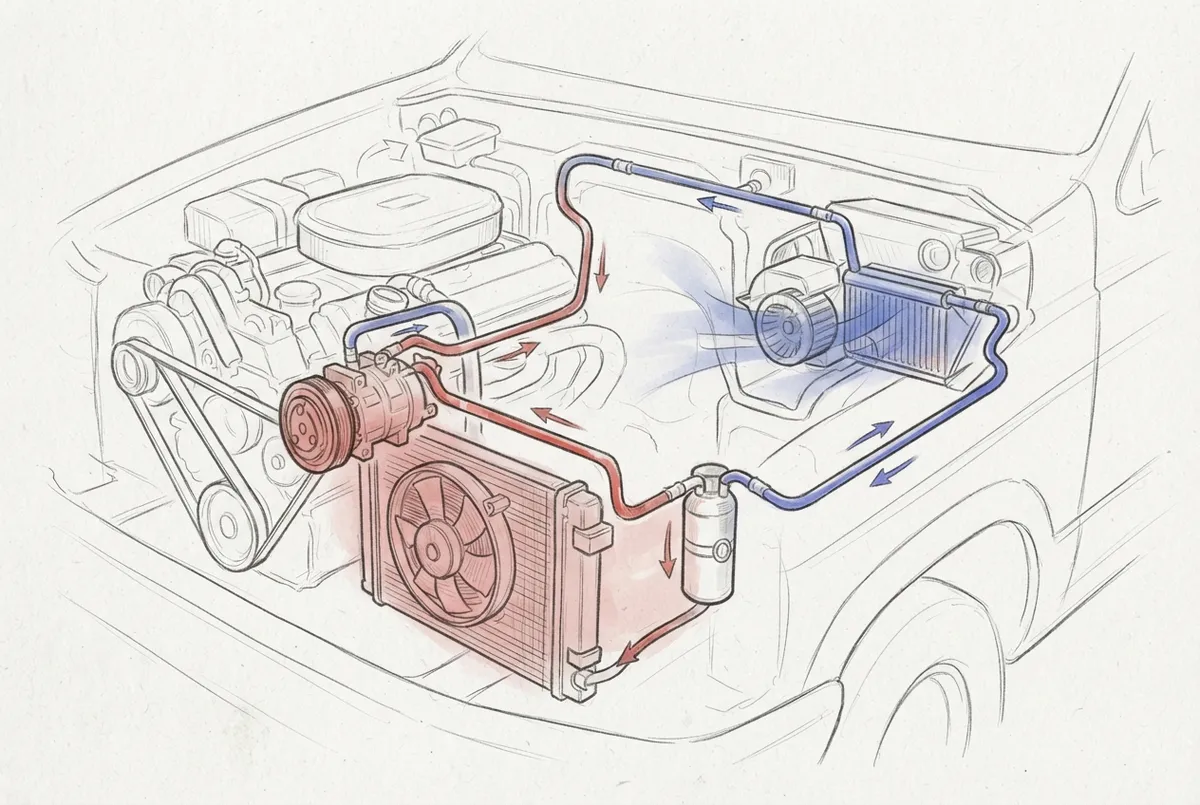
Think of your vehicle’s A/C like a tiny, hardworking loop. Refrigerant travels through a closed circuit, moving between the compressor, condenser, expansion device, and evaporator. Each part has a job: the compressor pressurizes the refrigerant, the condenser cools it down, the expansion device controls the flow, and the evaporator pulls heat and humidity out of your cabin air.
When all these parts work together, you get that blast of cold air you’re craving. But when even one piece fails, the whole system can struggle. That’s why ac system repair for vehicles isn’t just about adding more refrigerant. It’s about figuring out exactly which part of the loop broke down.
Common Signs Your Vehicle Needs A/C Repair
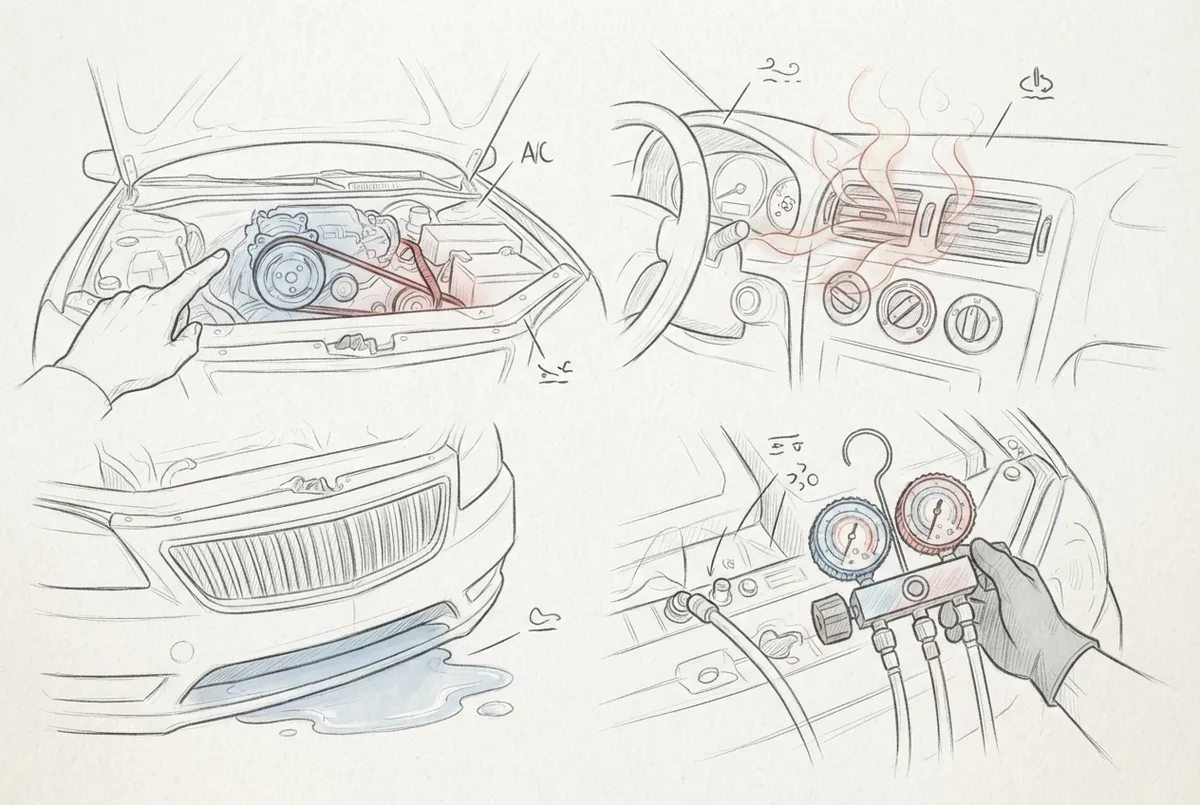
Not sure if your A/C needs professional attention? Here are the most common red flags drivers notice:
- Warm or lukewarm air blowing from the vents
- Weak airflow even with the fan on high
- A/C that works sometimes, then stops randomly
- Strange noises coming from the compressor
- A musty smell when you turn the system on
- Visible oily residue near hoses or fittings (a possible leak sign)
Here’s the tricky part: these symptoms don’t tell you exactly what’s wrong. Warm air could mean a refrigerant leak, a bad compressor, a clogged condenser, or even a failing blend door. That’s exactly why guessing games rarely work, and why a proper diagnostic matters so much. If you want a deeper breakdown of specific causes, check out our guide on 10 Reasons Your AC Is Blowing Warm Air (And How to Fix It).
What Happens During a Professional A/C Diagnosis
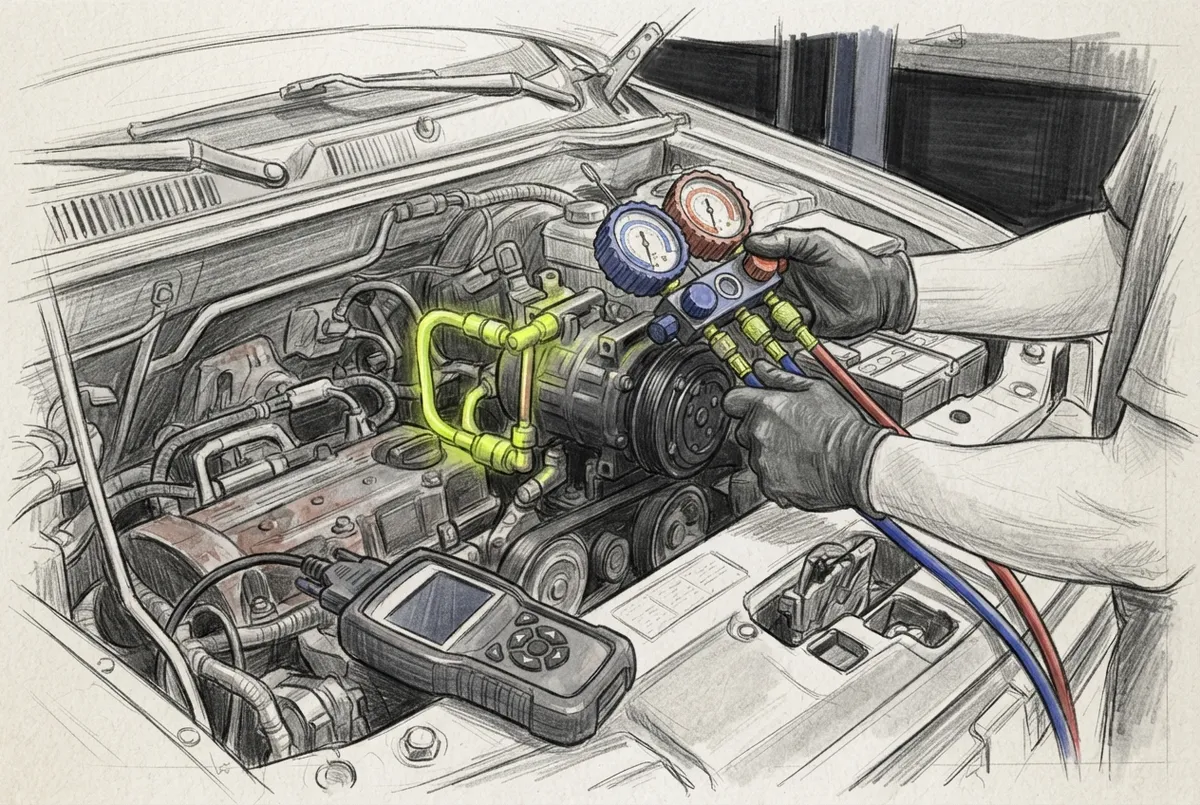
A trustworthy shop doesn’t just slap on a refrigerant can and send you on your way. A real diagnosis follows a logical process. Here’s what typically happens:
- Cabin airflow and controls check. Technicians verify your fan speeds, temperature controls, and vent settings work correctly.
- Visual inspection. They look over hoses, connections, and components for obvious wear, cracks, or corrosion.
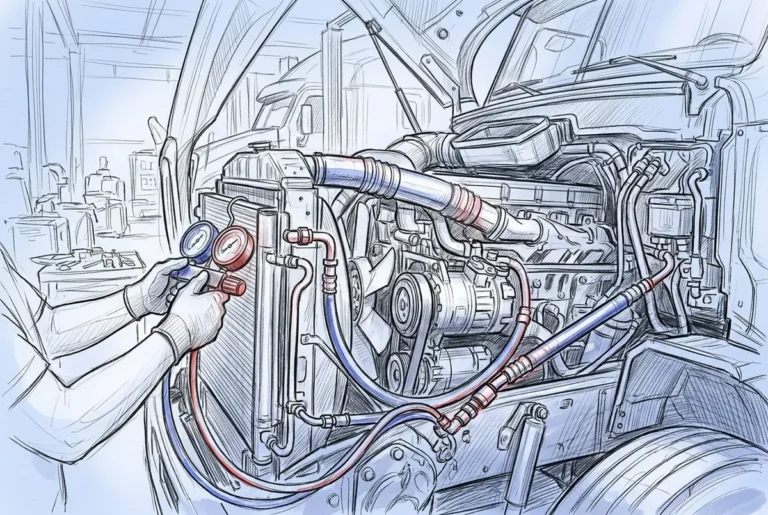
- Pressure and temperature testing. Gauges measure how the system is performing under real operating conditions.
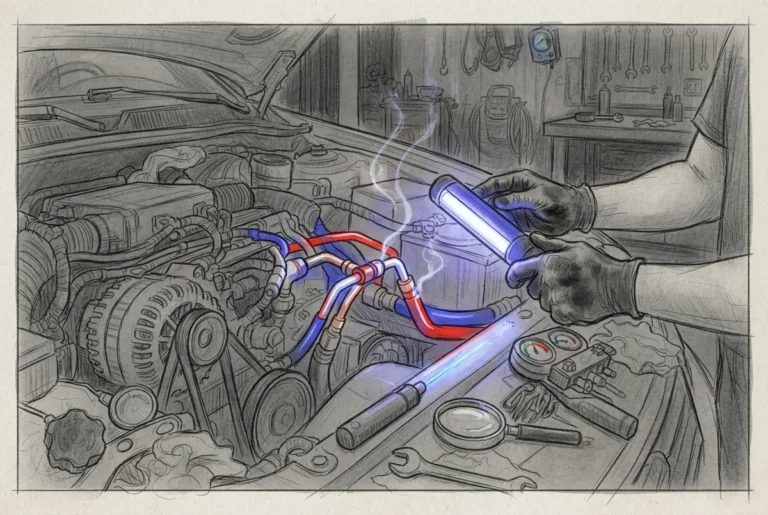
- Leak detection. Using electronic detectors, UV dye, or other approved methods, technicians pinpoint exactly where refrigerant might be escaping.
- Component evaluation. The compressor, condenser, evaporator, and expansion device get checked individually.
This step-by-step approach is what separates a lasting fix from a quick, temporary patch. Curious how this process plays out in real Tampa shops? Our article on How To Find Reliable Auto A/C Service in Tampa Bay walks through what to expect.
Why a Simple Recharge Isn’t Always Enough
Here’s something a lot of drivers don’t realize: if your system lost its refrigerant, that refrigerant didn’t just disappear. It leaked out somewhere. Recharging the system without finding and fixing that leak is like filling a bucket with a hole in the bottom. It might feel cool for a little while, but the problem will come right back.
A proper repair means locating the leak, fixing it, and then evacuating and recharging the system with the exact refrigerant type and amount your vehicle’s manufacturer specifies. Skipping steps here almost always leads to repeat visits and wasted money. We cover this in detail in 13 AC Leak Mistakes That Cost Car Owners More Money.
Refrigerant Types: R-134a vs. R-1234yf
Not all refrigerants are created equal, and using the wrong one can cause serious damage. Here’s a quick comparison to help you understand what’s under your hood:
| Feature | R-134a | R-1234yf |
|---|---|---|
| Common Use | Older vehicles (pre-2014 generally) | Newer vehicles, especially 2015 and later |
| Environmental Impact | Higher global warming potential | Much lower global warming potential |
| Compatibility | Cannot be mixed with R-1234yf | Cannot be mixed with R-134a |
| Where to Verify | Under-hood label or service manual | Under-hood label or service manual |
The EPA has set a global-warming-potential limit of 150 for refrigerants used in new light-duty vehicles starting with model year 2025, with compliance required no earlier than October 24, 2024. This doesn’t mean older vehicles can’t be serviced. It just means technicians need to know exactly which refrigerant your specific vehicle calls for. Never let anyone mix refrigerant types. For more on this shift, see our article on 12 Things to Know About R-134a to 1234yf Conversion.
Why Certification and Compliance Matter
Here’s something every vehicle owner should know: in the United States, any technician who services a vehicle’s A/C system for payment must hold EPA Section 609 certification. This isn’t just a formality. It ensures technicians know how to handle refrigerant safely, avoid intentional venting, and properly recycle or reclaim refrigerant before reuse.
Shops must also use approved refrigerant-handling equipment and keep service records for three years, according to EPA guidance. When you bring your vehicle somewhere for repair, you’re trusting that shop to follow these rules. Marks Air takes this seriously, and we’re proud to be a member of the Mobile Air Climate Systems Association (MACS), which keeps us aligned with the latest industry standards. We even offer training for technicians who want to earn or renew their EPA 609 certification.
Repair Needs by Vehicle Type
Vehicle A/C repair isn’t one-size-fits-all. Different vehicles come with different challenges:
Car Owners
Daily drivers usually deal with straightforward issues like leaks, compressor wear, or electrical faults. Since you rely on your car every day, getting a fast, accurate diagnosis matters. Our page on Why Is AC Repair in Tampa So Important For Your Vehicle explains why Florida heat makes this even more urgent.
Truck Drivers and Fleet Operators
Long-haul drivers need reliable cooling for comfort and safety during extended trips. Downtime costs money, so fast turnaround matters. Check out 4 Fleet Vehicle AC Repair Tips That Save You Money for practical advice.
Bus Operators
Public transit and shuttle companies need dependable systems to keep passengers comfortable, especially during Tampa’s long summers. Learn more in What Does Proper Bus AC System Maintenance Actually Involve?
RV Enthusiasts
RV A/C systems face unique wear from constant travel and vibration. Our guide on 6 RV Air Conditioner Repair Parts Mistakes to Avoid covers common pitfalls.
Heavy Equipment Operators
Construction and agricultural machinery need functioning A/C to prevent operator fatigue in Florida’s heat. See How to Get Heavy Equipment AC Repair Done Right for more insight, including specialized parts like the fire truck compressor used in emergency vehicle applications.
What Impacts the Cost of Vehicle A/C Repair
Vehicle A/C repair costs vary a lot depending on several factors. Here’s what typically affects your final bill:
- Type of refrigerant needed (R-134a systems can differ in cost from R-1234yf systems)
- Diagnosis complexity (a simple electrical fix costs less than replacing a compressor)
- Parts required (condensers, evaporators, hoses, or compressors all vary in price)
- Labor time (some repairs take an hour, others take a full day)
- Vehicle type (heavy trucks and buses often need more specialized parts than passenger cars)
A trustworthy shop should give you a written estimate that identifies the diagnosed problem, parts and labor costs, refrigerant type and quantity, and any related services needed. For a deeper dive into pricing, read How Much Does Auto AC Repair Cost in 2026?
Quality Parts Make a Difference
Repairs are only as good as the parts behind them. Marks Air stocks a full lineup, including our own KOOL-TEMP parts line plus trusted brands like SPAL, ACT, BCC, gpd, and Omega. Many items are available same-day, which means less waiting around for you or your fleet. Browse our full selection of A/C parts to see what’s available.
Why Choose a Specialist Over a General Repair Shop
General auto shops handle a lot of different systems, but A/C work requires specific tools, refrigerant handling knowledge, and diagnostic experience. Since 1971, Marks Air has focused exclusively on air conditioning systems for vehicles and heavy equipment. That kind of focused experience helps us avoid unnecessary repairs and deliver results backed by a warranty.
Don’t just take our word for it. You can visit us on Google — Marks Air to see what Tampa customers have to say, or check out our reviews page directly. We’re also active on Instagram and Facebook, and you can find independent feedback on Yelp as well.
Simple Maintenance Tips to Extend Your A/C’s Life
Want to avoid a repair visit altogether? A little maintenance goes a long way. Try these habits:
- Run your A/C for a few minutes weekly, even in cooler months, to keep seals lubricated.
- Keep cabin air filters clean to maintain good airflow.
- Listen for unusual noises and address them early.
- Get a professional inspection once a year, especially before Florida’s summer heat kicks in.
For more preventive advice, check out 5 AC Maintenance Tips Every Tampa Vehicle Owner Needs.
Ready to Get Your Cool Back?
Driving around Tampa without working A/C isn’t just uncomfortable, it can genuinely wear you down. Whether you’re managing a fleet, driving long hauls, or just trying to survive your commute, a properly repaired vehicle A/C system makes all the difference. Our team at Marks Air has spent over five decades perfecting ac system repair for vehicles, and we’d love to help you feel that cold air again.
Ready to stop sweating and start cooling? Schedule service with our team today, or give us a ring and call us at 813-988-1671 to talk through what’s going on with your vehicle. We’re here, we’re local, and we genuinely love helping Tampa stay cool.
FAQs
Q: Why is my car A/C blowing warm air?
A: Warm air can come from a bunch of different issues, like a refrigerant leak, a failing compressor, or even an electrical problem with your controls. It’s honestly one of those mysteries best left to a professional diagnosis, since guessing can lead to wasted money on the wrong fix. Bring it in and we’ll figure out exactly what’s going on.
Q: Can I just recharge my car A/C, or does the leak need to be repaired?
A: If your system lost refrigerant, there’s almost always a leak somewhere, and simply recharging won’t fix that. Think of it like refilling a leaky tire without patching the hole. You’ll want the leak found and repaired first, then the system properly evacuated and recharged.
Q: How much does vehicle A/C repair cost?
A: It really depends on your vehicle, the refrigerant type, and what parts need replacing. A simple electrical fix costs a lot less than swapping out a compressor or condenser. The best move is getting a written, vehicle-specific estimate so there are no surprises.
Q: What is the difference between R-134a and R-1234yf refrigerant?
A: R-134a is common in older vehicles, while R-1234yf shows up in newer models, especially from 2015 onward, thanks to its lower environmental impact. These two refrigerants should never be mixed, so it’s important to check your vehicle’s under-hood label before any service.
Q: Is it safe to drive with a broken car A/C system?
A: Technically, yes, you can still drive, but it’s not exactly pleasant in Florida heat. More importantly, some A/C issues can point to bigger mechanical or electrical problems, so it’s worth getting checked out sooner rather than later. Your comfort (and your patience) will thank you.