Key Takeaways
-
Start with symptom notes: whether air is warm, weak, or cool only sometimes, plus any noises or odors. These details help a technician separate a small fix from a major repair.
-
Run a basic vent temperature test with the A/C on max, recirculation on, blower on high, and a thermometer in the center vent. Repeat it under similar conditions every few months to spot a slow decline.
-
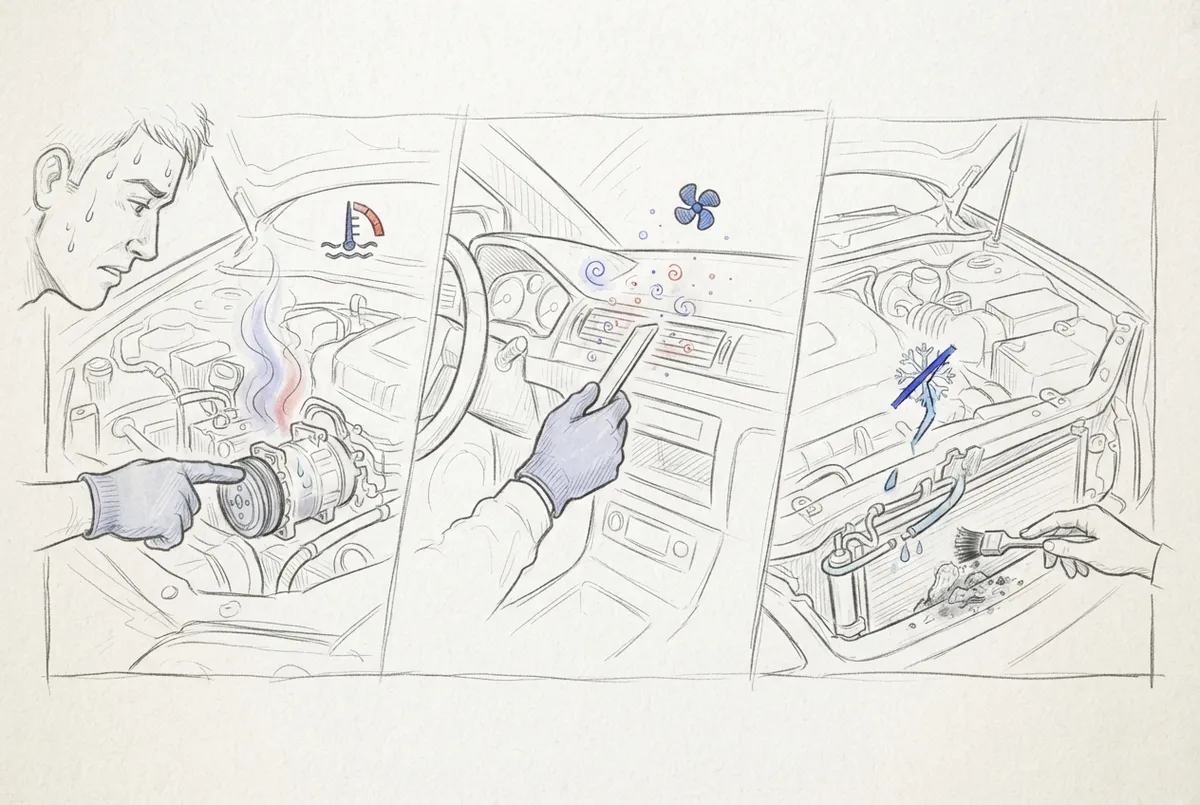
Confirm the compressor clutch engages and at least one condenser or radiator fan runs when the A/C is requested. A non-engaging compressor may be a sensor, relay, fuse, or low refrigerant protecting the system.
-
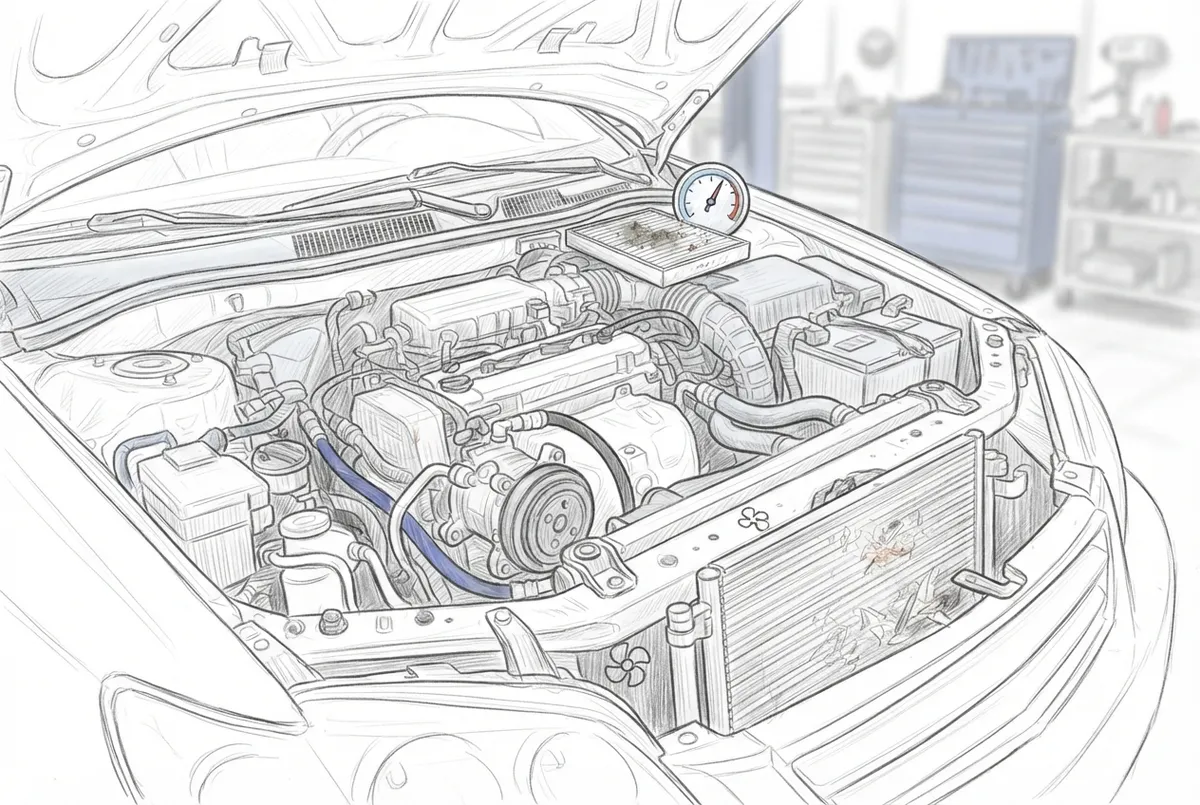
Inspect for oily residue on fittings and lines, cracked hoses, damaged wiring, and debris blocking the condenser, since oily grime can signal a slow refrigerant leak.
-
Check the cabin air filter and blower speeds, because a clogged filter or failing blower resistor can make a working A/C feel weak.
-
Avoid DIY recharge cans: adding refrigerant without finding the leak is only temporary, and the wrong refrigerant or charge can damage the compressor. Stop and call a pro for grinding noises, smoke, or overheating.
Is your car’s air conditioning feeling a little off? Maybe the air is not as cold as it used to be, or it smells odd, or it only cools down on the highway. Don’t worry. Learning how to check car ac system basics is easier than you might think, and a few simple checks can tell you a lot.
In Tampa, a weak A/C is more than an annoyance. Our heat and humidity push every part of the system hard. Whether you drive a family sedan, haul freight in a truck, run a transit bus, or manage a fleet, knowing what to look for helps you catch trouble early.
This guide walks you through safe, low-risk checks you can do yourself. It also explains what a professional will test, and when it is time to hand the job to a pro. Think of it as a friendly chat with a neighbor who has worked on A/C systems for a long time. At Marks Air, we have been doing exactly that in Tampa since 1971.
Start With What You Notice: Symptom Check
Before you touch anything, pay attention to how your A/C acts. Your car is already telling you a story. You just need to read the clues.
Ask yourself these questions:
- Is the air warm, weak, or only cool some of the time?
- Does the blower work on every fan speed?
- Does airflow change between vents or when you switch recirculation on and off?
- Do you hear squealing, rattling, clicking, or grinding?
- Do you smell something musty, sweet, or burnt?
Write down what you find. These notes help a technician a lot. They can also help you tell the difference between a small fix and a bigger repair. If the air is just not cold, our guide on 10 reasons your AC is blowing warm air goes into more detail.
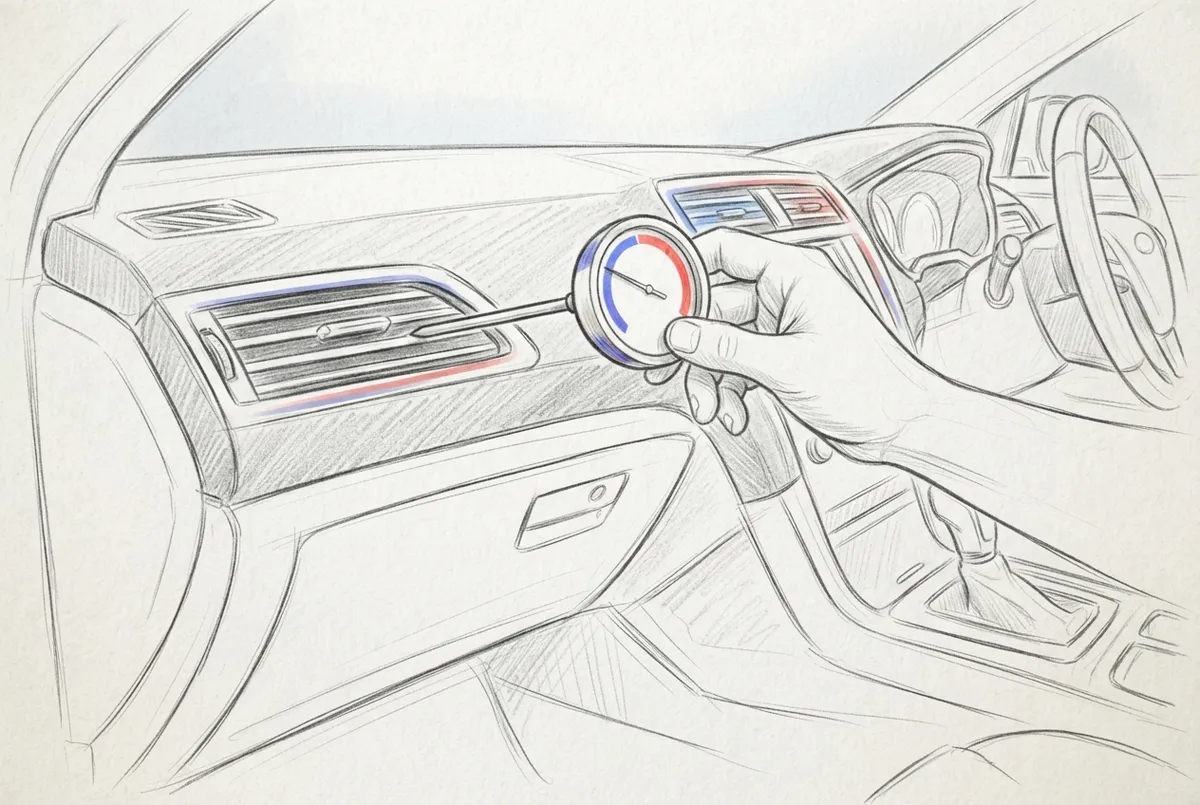
The Basic Vent Temperature Test
This is the easiest way to check your car AC system at home. It costs almost nothing and carries no risk. You only need a simple thermometer.
- Park the car in the shade, if you can, and note the outside temperature.
- Start the engine and let it run.
- Turn the A/C to maximum cooling.
- Turn on recirculation and set the blower to high.
- Place the thermometer in the center dash vent.
- Wait several minutes, then read the temperature.
- Write down the vent temperature, the outside temperature, and the humidity if you know it.
Here is the honest truth: there is no single magic number that fits every car. Outside heat, humidity, and the vehicle’s design all change the result. One manufacturer’s service bulletin may list a center-vent target below 50°F under specific test conditions. That target is for one model and one setup, not a rule for all vehicles.
Still, the test is useful. If you repeat it every few months under similar conditions, you can spot a slow decline. A drop in performance is an early warning worth acting on.
Watch the Compressor and the Fans
Next, look at what is happening under the hood. This takes just a minute. Keep your hands, hair, and loose clothing away from moving parts.
With the engine running and the A/C on, check two things:
- The compressor clutch: Look at the front of the compressor. You should see the center plate engage and spin with the pulley, usually with a soft click.
- The condenser and radiator fans: At least one fan should run when the A/C is requested, especially in hot weather.
Here is a helpful reminder. Some vehicles block compressor operation on purpose. They may do it in cold weather, or when pressure, engine, or electrical conditions are outside the safe range. So if the compressor is not engaging, that does not automatically mean it has failed. It may be a sensor, a relay, a fuse, or low refrigerant protecting the system.
If you suspect the compressor itself, read our walkthrough on how to fix an AC compressor in your vehicle to understand what is involved.
Do a Careful Visual Inspection
Now grab a flashlight and take a slow look around. You are hunting for anything that looks damaged, loose, or dirty. Turn the engine off before you reach near belts or fans.
What to Look For
- Damaged wiring or loose electrical connectors near the compressor
- Cracked, rubbing, or swollen A/C hoses
- Bent fins or impact damage on the condenser, which sits in front of the radiator
- Oily or dirty residue on fittings, lines, or the compressor
- Debris like leaves, bugs, or road grime blocking the condenser
- A worn or loose drive belt
That oily residue matters. Refrigerant carries a small amount of oil, so a greasy, dirt-covered spot on a line or fitting can point to a slow leak. Our article on warning signs of an AC refrigerant leak shows what to watch for.
A word of caution, though. A clean-looking system is not proof of a healthy system. Leaks can hide at the evaporator behind the dash or at concealed connections. A visual check helps, but it cannot rule out a leak.
Check the Cabin Side of Things
Some A/C problems are not about cold air at all. They are about airflow and comfort inside the cabin. These checks are quick and often overlooked.
- Cabin air filter: A clogged filter can choke airflow and make a good A/C feel weak. Many cars let you swap it in minutes.
- Blower speeds: If the fan works only on high, the blower resistor may be failing.
- Airflow direction: Make sure air switches properly between face, floor, and defrost.
- Odors: A damp, sour smell can mean moisture or buildup near the evaporator.
- Water on the floor: Water under the car is normal. Water inside on the passenger floor can mean a blocked drain.
Truck drivers and bus operators know how much a weak blower hurts on a long shift. If your blower motor is the culprit, our tips on truck AC blower motor repair fixes can help you sort it out.
Quick Reference: Symptoms and Likely Causes
This table gives you a simple map. It is not a diagnosis. It just points you in the right direction.
| What You Notice | Possible Cause | Next Step |
|---|---|---|
| Air is warm all the time | Low refrigerant, compressor issue, or electrical fault | Professional diagnosis |
| Air is cool, but weak | Clogged cabin filter or failing blower | Check filter, then blower |
| Cold at first, then warm | Freezing coil, moisture, or cycling problem | Professional diagnosis |
| Cold only when driving | Condenser fan or airflow problem | Check fans and condenser |
| Loud noise when A/C is on | Worn compressor or clutch | Stop use and get it inspected |
| Musty smell | Moisture or buildup at evaporator | Cleaning and service |
| Oily residue on lines | Possible refrigerant leak | Leak test |
If the system freezes up, dirty or restricted parts may be to blame. Read more about what causes AC coils to freeze in your vehicle.
What a Professional Checks (And Why It Matters)
Here is where the real detective work happens. A trained technician does not guess. They gather facts, then compare them to the right specs for your exact vehicle.
A full A/C diagnosis usually includes:
- Vent and ambient temperature readings under set conditions
- Scan-tool data to check sensors, switches, and commands
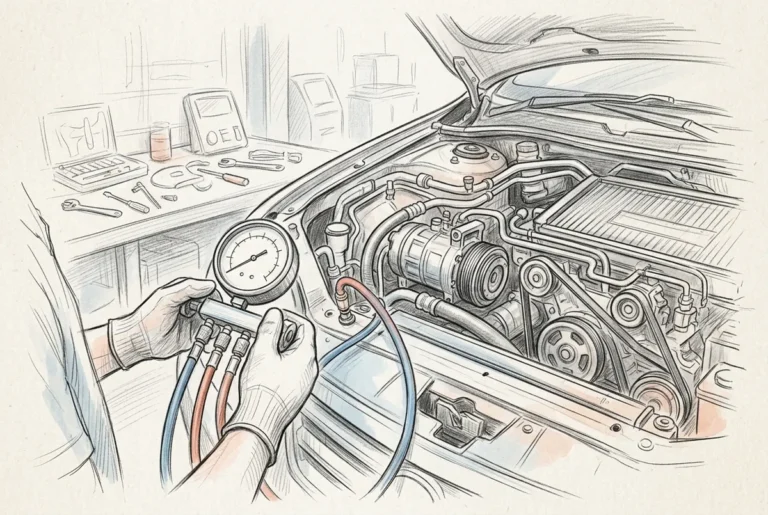
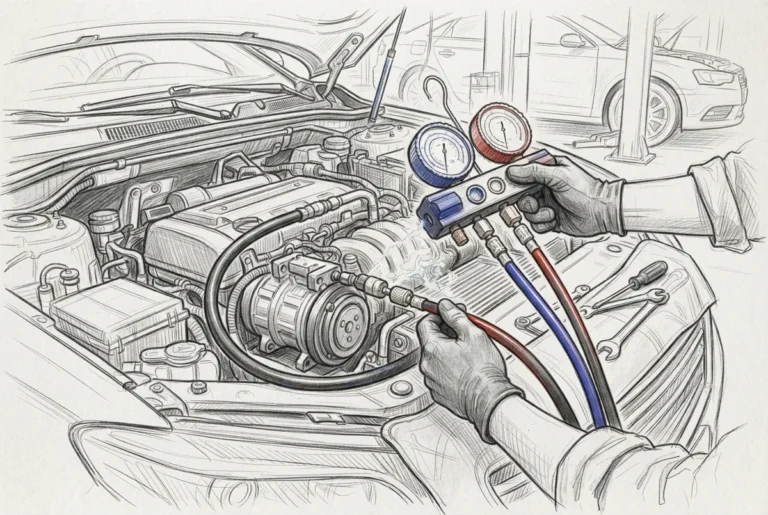
- High-side and low-side pressure readings
- Comparison against vehicle-specific service information
- A leak test if refrigerant loss is suspected
Pressure readings change with ambient temperature, humidity, engine speed, airflow, and system design. That is why one generic pressure number is unreliable. A reading that looks “low” on a cool day might be perfectly normal, and the reverse can be true on a hot one.
Curious about cost? Our breakdown of car AC diagnostic cost in 2026 explains what to expect, and our guide to diagnosing AC problems in your vehicle covers the process step by step.
How Shops Find Leaks
Low refrigerant almost always means a leak somewhere. The system is sealed, so refrigerant does not simply get “used up.” That is why finding the leak is so important.
Professionals may use several approaches:
- Electronic refrigerant detector: A sensitive tool that sniffs out escaping refrigerant.
- Approved UV dye: Dye in the system glows under a special light where it escapes, when appropriate for the vehicle.
- Forming-gas testing: One industry method uses a mix of 95% nitrogen and 5% hydrogen. This is a professional diagnostic method, not a DIY charging step.
A good leak check covers lines, joints, service ports, the compressor, the condenser, and the evaporator area. Our article on leak detection and repair facts goes deeper, and you can learn how to detect AC leaks in your truck before they get worse.
Why a Recharge Can Is Not a Full Check
We get it. Those do-it-yourself recharge cans look quick and cheap. But they can cause real trouble.
A low-pressure reading by itself is not a diagnosis. Adding refrigerant without finding the leak may give you cold air for a short time, then the problem returns. Worse, the wrong refrigerant type or the wrong charge amount can damage the compressor and other parts.
Many newer vehicles also use different refrigerants, so it pays to know what your car needs. If you are curious, see 12 things to know about R-134a to 1234yf conversion. For common slip-ups, our list of 13 AC leak mistakes that cost car owners more money is a good read.
Refrigerant Rules You Should Know
Safety and the environment matter here. In the United States, technicians who service motor-vehicle A/C systems with covered refrigerants must meet EPA Section 609 certification rules. They also must use approved refrigerant recovery equipment.
Refrigerant should never be released into the air on purpose. Handling and recovery are professional jobs. If you work in the trade or want to learn, we offer A/C training, and you can read about EPA 609 certification training mistakes to avoid. Marks Air is also proud to be a member of the Mobile Air Climate Systems Association (MACS), so we stay current with industry standards.
Tips for Trucks, Buses, RVs, and Fleets
Bigger vehicles run harder and longer, so a quick routine check pays off. Here is how the basics apply to different drivers:
- Truck drivers: Do a vent-temperature check at the start of each long trip. Cool air supports alertness and comfort on the road.
- Bus operators: Test cabin cooling during pre-trip inspections. Passenger comfort and satisfaction depend on it. See what proper bus AC system maintenance involves.
- RV owners: Check the system before camping season, not after you arrive somewhere hot. Our guide to RV air conditioner repair parts mistakes can save you headaches.
- Heavy equipment operators: A cool cab reduces fatigue and downtime. Learn how to get heavy equipment AC repair done right.
- Fleet owners: Log vent temperatures and symptoms for each vehicle. Trends show up fast. Try our fleet vehicle AC diagnostics tips.
When to Stop and Call a Pro
Some signs mean it is time to put the tools down. Keep it simple and safe. Call a specialist if you notice any of these:
- The compressor makes grinding or screeching noises
- The A/C blows warm air after your basic checks look fine
- You see oily residue or suspect a refrigerant leak
- The system cools, then quits, over and over
- You smell burning or see smoke
- The engine runs hot when the A/C is on
Overheating with the A/C on can point to a cooling system problem, not just the A/C. Our article on engine cooling versus A/C system failure helps you tell them apart. And if you are seeing multiple warning signs, check 5 signs you need car AC repair.
Keep Your A/C Healthy Between Checks
A little regular care goes a long way, especially in Tampa. A few habits help your system last:
- Run the A/C for a few minutes every week, even in cooler months, to keep seals lubricated
- Rinse bugs and debris off the condenser gently
- Replace the cabin air filter on schedule
- Fix small leaks early before they grow into big repairs
For more ideas, browse 5 AC maintenance tips every Tampa vehicle owner needs and how to know when to service car AC in Tampa. If you would like to see what our customers say, you can visit us on Google — Marks Air and read the reviews. You can also find us on Facebook and Yelp.
Final Thoughts
Knowing how to check car ac system basics puts you in control. Start with your symptoms. Run the vent temperature test. Watch the compressor and fans. Do a careful visual check, and look at the cabin filter and blower. Those steps take little time and tell you a lot.
Remember the big lessons. There is no one perfect vent temperature or pressure number for every car. A recharge can is not a full diagnosis. And refrigerant work belongs in trained, certified hands.
If your checks turn up something odd, or you simply want peace of mind, we are here to help. Our Tampa team has served drivers, fleets, and operators since 1971. Schedule service with Marks Air or call us at 813-988-1671 and we will get you back to cool, comfortable driving.
FAQs
Q: How can I check whether my car’s air conditioner is working properly?
A: Start the engine, set the A/C to max cooling with recirculation and the blower on high, then place a thermometer in the center vent. Wait a few minutes and compare the reading to the outside temperature. If it feels weak or warm, or the compressor and fans act strangely, it is a good time for a professional check.
Q: What should the temperature be at a car’s A/C vents?
A: There is no single number that fits every car, because heat, humidity, and system design all matter. Many vehicles blow noticeably cold air, but exact targets come from the manufacturer’s service information for that model. The best habit is to record your own readings under similar conditions and watch for a drop over time.
Q: Is it safe to recharge my car’s A/C myself?
A: We don’t recommend it. A recharge can does not find the leak, and the wrong refrigerant type or amount can damage your system. Refrigerant handling and recovery are also professional jobs under EPA Section 609 rules, so it is best to let a certified shop handle it.
Q: Why is my car A/C blowing warm air?
A: Common causes include low refrigerant from a leak, a compressor or clutch problem, a bad sensor or relay, or a blocked condenser. Blown fuses and electrical faults can also be the reason. Because the causes vary so much, a proper diagnosis with pressure readings and a leak test is the safest way to find the real issue.
Q: How does a mechanic test a car A/C system for leaks?
A: A technician may use an electronic refrigerant detector, approved UV dye, or another manufacturer-approved method. They check the lines, joints, service ports, compressor, condenser, and evaporator area. Finding and repairing the leak first is what keeps your A/C cold for the long run.