
Key Takeaways
-
Schedule a professional A/C inspection every spring before summer, ideally annually, to catch small issues before they become expensive emergency repairs during Florida's peak heat season.
-
A properly sealed A/C system should hold its refrigerant charge for 2-3 years; if your mechanic recommends annual recharges, it signals a leak that needs diagnosis and repair, not repeated top-offs.
-
If your A/C blows cold on the highway but warm at idle or stop-and-go traffic, the issue typically involves the condenser fan or low refrigerant levels requiring professional inspection.
-
Tampa's extreme heat and humidity demand more frequent A/C attention than cooler climates; vehicles over 10 years old, heavy-use commercial trucks, and fleet vehicles benefit from quarterly or bi-annual checkups.
-
A complete A/C inspection includes vent temperature tests, refrigerant pressure evaluation, leak detection, compressor inspection, electrical checks, and condenser/evaporator examination—not just a thermometer wave.
-
Avoid mechanics who skip leak diagnosis and simply recharge your system; federal EPA Section 609 certification is legally required for paid A/C work, ensuring proper refrigerant handling and system diagnosis.
Tampa heat does not play around, and your car’s air conditioner knows it better than anyone. If you have ever asked yourself when to service car ac, you are already ahead of the game. Most drivers wait until warm air blasts them in the face before they think about their A/C at all. But a little planning can save you from sweaty commutes, expensive repairs, and that dreaded moment when your AC quits on the way to work.
Whether you drive a family sedan, haul freight across the state, or run a fleet of buses, your air conditioning system needs attention on a schedule that fits your life. In this friendly guide, we will walk through exactly when to service car ac, what a real inspection covers, and the warning signs that mean it is time to act now instead of later. Grab a cold drink and let us get into it together.

Why Timing Matters for Car AC Service
There is no single magic number of miles that tells you when to service car ac. Unlike an oil change, your air conditioning system does not wear out on a fixed schedule. Instead, timing depends on your climate, how often you drive, your vehicle’s age, and how the system is actually performing right now.
Tampa drivers face a unique challenge here. Our long, hot, humid season puts extra strain on A/C systems for many months out of the year. That means Tampa vehicles often need more attention than cars in cooler climates. Understanding why AC repair in Tampa is so important for your vehicle is a great starting point if you want to understand your local risk factors.

The Simple Rule: Annual Inspections Before Summer
As a friendly baseline, most experts recommend a professional A/C inspection once a year, ideally in spring before the heat really kicks in. Some shops even suggest twice yearly checkups, once before summer and once after, to catch problems early in both directions.
Here is why this timing makes sense:
- Spring inspections catch small issues before they become expensive summer breakdowns
- Early detection means parts and labor are cheaper than emergency repairs
- You avoid the misery of a hot car with no cool air during Florida’s peak season
- Technicians have more appointment flexibility before the summer rush hits
If your vehicle sees heavy use, spends time in extreme heat or dust, or is more than 10 years old, you may benefit from checking in more often than once a year. Older systems tend to develop small leaks and worn components that need closer monitoring.
Factors That Change Your Service Timeline
Every vehicle is a little different. Here are the main things that shift how often you should think about when to service car ac:
- Climate and driving conditions: Constant heat and stop-and-go Tampa traffic push your system harder than highway miles in milder weather.
- Vehicle age: Systems over a decade old often develop seals that shrink or crack over time.
- Usage type: Commercial trucks, buses, and fleet vehicles run their A/C nearly nonstop, unlike a car parked in a garage most of the week.
- Manufacturer guidance: Always check your owner’s manual, since some vehicles have specific recommended intervals.
- Recent performance: If your air already feels weaker than it used to, that is a signal all on its own.
What a Full Car AC Inspection Actually Includes
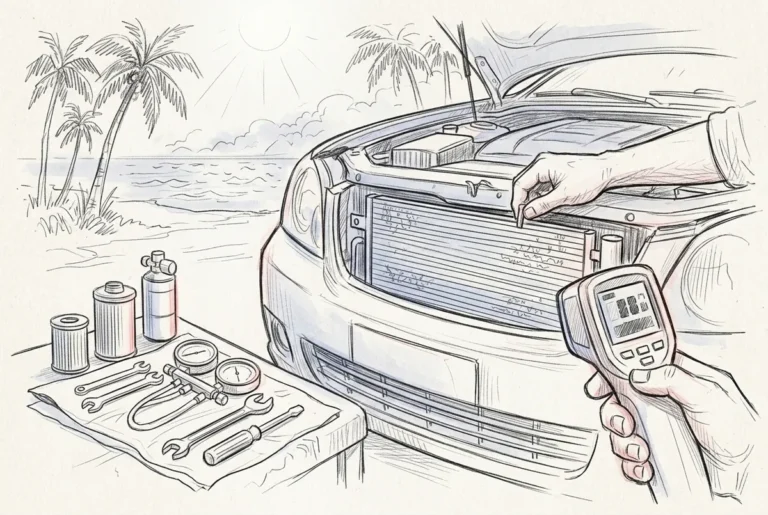
A proper inspection is more than someone waving a thermometer at your vents. A complete checkup at a shop like Marks Air typically includes several steps that work together to give a full picture of system health.
| Inspection Step | What It Checks |
|---|---|
| Vent temperature and airflow test | Confirms how cold and how strong the air is coming through |
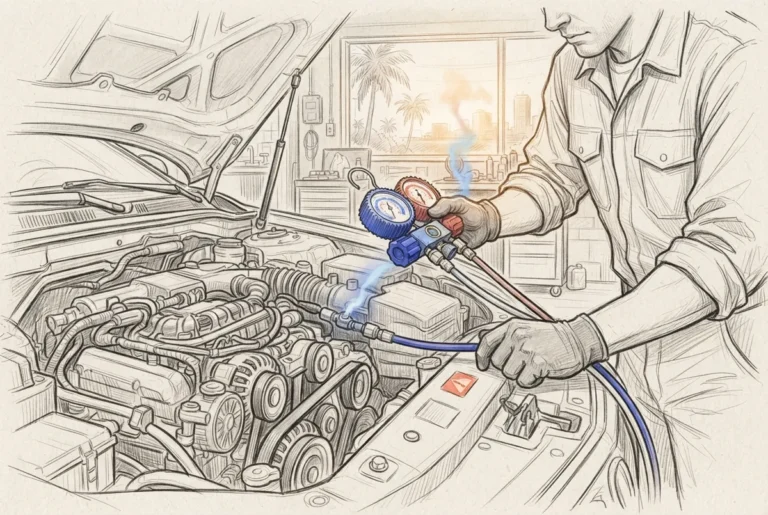
| Refrigerant pressure evaluation | Measures charge levels and system pressure |
| Leak testing | Finds where refrigerant may be escaping the system |
| Compressor and clutch inspection | Checks the heart of the system for wear or failure |
| Electrical system check | Tests wiring, switches, and sensors related to A/C function |
| Condenser and evaporator inspection | Looks for damage, corrosion, or blockages |
| Belt and hose check | Confirms no cracking, fraying, or leaking connections |
| Cabin air filter evaluation | Checks airflow restriction and odor sources |
This kind of thorough check is exactly what you will find detailed in 10 A/C service facts every vehicle owner must know, which breaks down each piece even further.
Does Your Car AC Need a Refrigerant Recharge Every Year?
Here is a common myth we love to clear up. A refrigerant recharge is not something your car needs every single year like a flu shot. A properly sealed A/C system should hold its charge for roughly 2 to 3 years without any topping off needed.
If your mechanic tells you that you need a recharge annually, that is actually a red flag. It usually means there is a leak somewhere in the system that keeps letting refrigerant escape. Recharging over and over without fixing the leak is like filling a bucket with a hole in the bottom. You are just buying time and spending money without solving the real problem.
The EPA notes that technicians often only need a small amount of refrigerant, about 10 percent of a full charge, just to run a proper leak check. A trustworthy shop will diagnose the cause first rather than simply topping you off and sending you on your way. Learn more about the difference in 13 AC leak mistakes that cost car owners more money.
Warning Signs You Should Not Ignore
Sometimes your car tells you it needs help before you even think about scheduling an appointment. Pay attention to these signals, because catching them early usually means a simpler, cheaper fix.
- Airflow feels weak or barely noticeable from the vents
- Air blows warm instead of cold, even after running for a while
- Cooling feels fine while driving but weak or warm at idle
- You hear clicking, grinding, or unusual noises when the A/C runs
- A musty or moldy smell comes through the vents
- Water pools inside the cabin floor
- Your windshield fogs up and will not clear
- You notice oily residue near hoses or connections under the hood
- Schedule a professional inspection every spring before Florida’s heat ramps up
- Pay attention to any change in airflow, temperature, or noise right away
- Do not accept repeated refrigerant top-offs as a normal fix, ask about leak testing instead
- Follow your owner’s manual for cabin air filter replacement timing
- Choose a shop with certified technicians who specialize in vehicle A/C systems
If any of these sound familiar, do not wait for your annual checkup. Our guide on 10 reasons your AC is blowing warm air and how to fix it walks through common causes and solutions in plain language.
Cold at Highway Speed, Warm at a Stoplight
This specific pattern deserves its own mention because it confuses so many drivers. If your A/C blows cold on the highway but turns warm at idle or in stop-and-go traffic, the issue is often related to the condenser fan or low refrigerant levels. Airflow across the condenser drops at low speeds, and a weak system cannot compensate the way a healthy one can.
Special Considerations for Different Vehicle Types
Not every vehicle owner has the same needs, so let us break down some specific guidance for the different drivers we serve here in Tampa.
Car Owners
If you drive a personal vehicle, an annual spring inspection paired with attention to warning signs is usually enough. Tampa’s heat means your system works overtime for much of the year, so do not skip that yearly checkup even if everything seems fine.
Truck Drivers and Fleet Operators
Long-haul trucking means your A/C runs nearly around the clock. Fleet vehicles benefit from more frequent checks, sometimes quarterly, especially before major routes through hot regions. Check out 4 fleet vehicle AC repair tips that save you money for ways to reduce downtime and repair costs across your fleet.
Bus Operators
Passenger comfort and safety both depend on a working A/C system, especially during Florida summers. Transit and shuttle operators should build A/C checks into their regular maintenance calendar rather than waiting for complaints. Our article on what proper bus AC system maintenance actually involves covers this in detail.
RV Enthusiasts
RVs often sit unused for stretches of time, which can lead to seals drying out between trips. Before any big road trip, have your system checked so you are not stuck fixing it at a rest stop in the middle of nowhere.
Heavy Equipment Operators
Construction and agricultural machinery cabs get brutally hot without working A/C, leading to operator fatigue and safety concerns. Regular servicing keeps your crews comfortable and productive, even during the toughest outdoor jobs. See how to get heavy equipment AC repair done right for more specifics.
Automobile Fleet Owners
Managing multiple vehicles means juggling multiple maintenance schedules. A preventive approach, rather than reactive fixes after breakdowns, saves real money over time. Compare strategies in preventive vs. reactive fleet AC maintenance: which wins.
Cabin Air Filters: A Simple but Easy to Miss Step
A clogged cabin air filter can absolutely mess with your airflow and add funky smells to your ride. But swapping the filter alone will not fix low refrigerant, a failing compressor, or a hidden leak. Filter intervals vary by vehicle, with some manufacturers recommending changes around 30,000 miles under normal conditions, or as often as 15,000 miles in dusty city driving.
Check your owner’s manual for your specific interval, and remember that a clean filter is just one small piece of a much bigger puzzle. Explore 6 A/C parts every vehicle owner should know in 2026 to understand how filters fit into your overall system.
Why Certified Technicians Matter
Here is something every driver should know: federal law under EPA Section 609 requires technicians who service vehicle A/C systems for payment to be properly certified. This rule exists because refrigerants can harm the environment if handled carelessly, and intentional venting is prohibited.
This matters even more with newer refrigerants like HFO-1234yf, which has become common in many newer vehicles. While its global warming potential is far lower than older refrigerants, it still requires specialized equipment and training to handle safely. Marks Air technicians stay current through ongoing programs, and the shop is a proud member of the Mobile Air Climate Systems Association (MACS), which keeps the team aligned with the latest industry standards. If you are curious about certifications yourself, take a look at our training programs covering EPA 609 and HFO-1234yf best practices.
Simple Steps to Stay Ahead of AC Problems
Want a quick game plan you can actually stick to? Follow these steps and you will rarely be caught off guard by a broken A/C system.
Since 1971, Marks Air has helped Tampa drivers, fleet managers, and equipment operators keep their cool through every kind of Florida summer. As a family-owned and woman-owned business, we take pride in treating every customer like a neighbor, not just a number. You can browse real customer reviews or visit us on Google — Marks Air to see what folks around Tampa are saying about our work. We are also active on Instagram and Facebook if you want a behind-the-scenes look at our shop, and you can read more independent feedback on Yelp as well.
Bringing It All Together
Knowing when to service car ac really comes down to a simple habit: get an annual inspection before summer hits, and never ignore the warning signs your vehicle gives you along the way. Whether you are a daily commuter, a long-haul trucker, or managing a whole fleet of vehicles, a little proactive care goes a long way toward avoiding a hot, miserable breakdown.
Our team at Marks Air has spent decades focused exclusively on air conditioning for cars, trucks, buses, RVs, and heavy equipment right here in Tampa. We would love to help you stay cool through whatever the Florida sun throws your way this year. Schedule service with our friendly team today, or simply call us at 813-988-1671 to talk through what your vehicle might need. We are always happy to help, and we cannot wait to get your A/C running strong again.
FAQs
Q: How often should you service your car’s air conditioning?
A: A good rule of thumb is once a year, ideally in spring before the summer heat arrives. If you drive a lot, live somewhere hot and dusty like Tampa, or your vehicle is over 10 years old, you may want checkups more often.
Q: Should I service my car AC every year or only when it stops cooling?
A: We always recommend a yearly checkup rather than waiting for a full breakdown. Catching small issues early is much easier on your wallet than an emergency repair when your AC quits in July.
Q: Is an AC recharge the same as a full car AC service?
A: Nope, they are quite different! A full service includes leak testing, pressure checks, and component inspections, while a recharge just adds refrigerant, which does not fix an underlying leak.
Q: What are the signs that my car AC needs servicing?
A: Watch for weak airflow, warm air, strange noises, musty smells, or fogging windows. Any of these mean it is time to get your system checked before things get worse.
Q: Can I recharge my car AC myself?
A: While DIY kits exist, we gently suggest leaving refrigerant work to certified technicians. Federal law actually requires certification for paid A/C service, and a pro can properly diagnose leaks instead of just masking the symptom.