
Key Takeaways
-
Diagnose your A/C problem before buying any parts to avoid wasting money on incorrect components; professional diagnostics are the smartest investment you can make.
-
Gather your vehicle’s year, make, model, VIN, and refrigerant type (R-134a or HFO-1234yf) before shopping to ensure exact compatibility with local suppliers.
-
Choose between OEM parts (guaranteed fit, higher cost) and quality aftermarket parts (more affordable, often in stock locally) based on your vehicle age and budget.
-
Buy from specialized local A/C suppliers with same-day inventory, knowledgeable staff, and warranty policies rather than general auto parts stores for faster repairs and expert advice.
-
Avoid common mistakes like skipping diagnostics, buying based on price alone, ignoring refrigerant compatibility, and forgetting to flush the system when replacing major components.
-
For complex systems or commercial vehicles, let professional A/C technicians source parts to access broader inventory, verify compatibility with certainty, and guarantee warranty coverage.
Your vehicle’s A/C system stops cooling on a hot Tampa afternoon. Sound familiar? Whether you drive a car, truck, bus, RV, or heavy equipment, finding the right air conditioner parts near me quickly can mean the difference between a fast fix and days of sweating it out. Knowing where to look — and what to look for — saves you time, money, and frustration.
The good news is that sourcing quality vehicle A/C parts locally is very doable. You just need to know the key steps. This guide walks you through exactly how to find, identify, and purchase the right parts for your vehicle’s cooling system. We’ll cover everything from diagnosing the problem to choosing between OEM and aftermarket components. Let’s get your cool air blowing again!

Why Finding Local A/C Parts Matters So Much
Speed is everything when your vehicle’s A/C fails. In Tampa’s heat, a broken system is not just uncomfortable — it can be dangerous for drivers and passengers. Searching for air conditioner parts near me is really about getting back on the road fast without waiting days for shipping.
Local availability also means you can check part compatibility in person. You can match model numbers, compare dimensions, and get expert advice on the spot. That’s a huge advantage over ordering online and hoping something fits. For fleet operators and truck drivers especially, downtime costs real money, so same-day part availability is a serious priority.
If you’re in the Tampa area, Marks Air’s A/C parts inventory stocks many common components available the same day, including their trusted KOOL-TEMP parts line and brands like SPAL, gpd, and Omega. Check out 15 AC Parts Near Me That Keep Your Vehicle Cool for a great starting point on what’s commonly needed.

Step 1: Diagnose the Problem Before You Shop
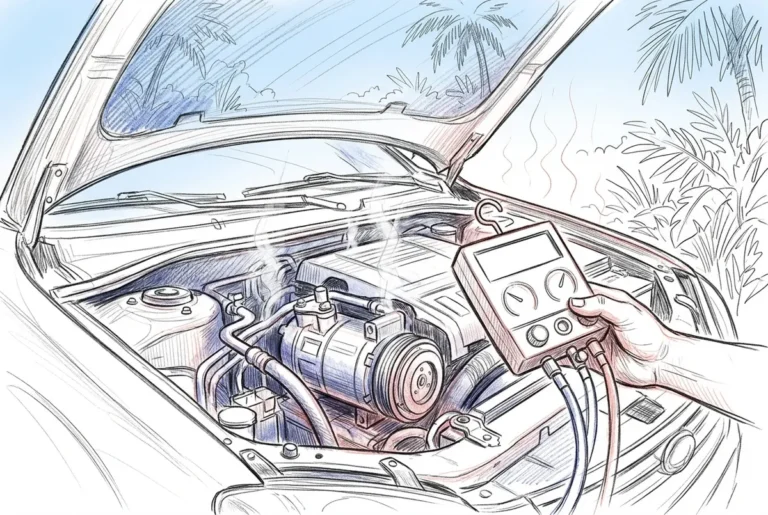
Never buy parts blindly. The most important first step is figuring out exactly what’s wrong with your vehicle’s A/C system. Buying the wrong part wastes money and delays your repair.
Here are the most common signs your vehicle A/C needs a specific part:
- Warm air blowing: Could point to a refrigerant leak, failed compressor, or clogged expansion valve
- Weak airflow: Often signals a failing blower motor or clogged cabin air filter
- Clicking or grinding noises: Usually related to the compressor clutch or fan components
- System cycling on and off rapidly: May indicate a pressure issue or faulty pressure switch
- Visible refrigerant leaks or oily residue: Points to hose, fitting, or seal failures
- A/C works sometimes but not always: Often a relay, sensor, or electrical issue
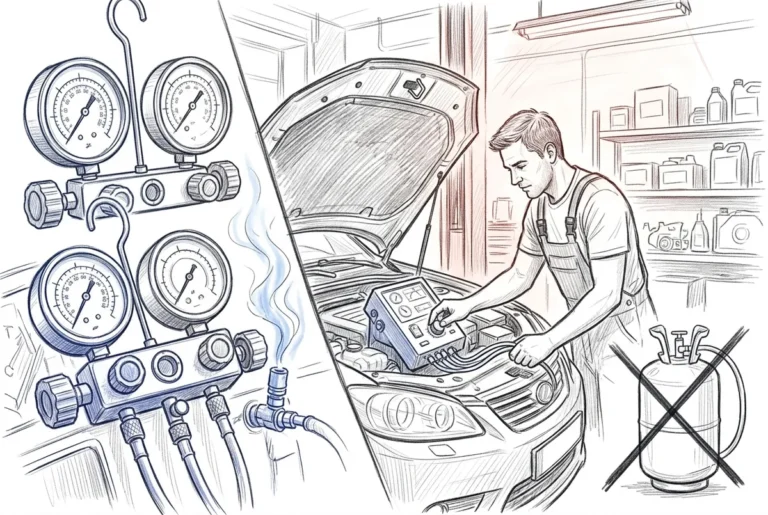
If you’re not sure what’s causing the problem, don’t guess. A professional diagnostic check is the smartest investment you can make. Learn more about what’s involved by reading 10 Reasons Your AC Is Blowing Warm Air (And How to Fix It). You can also check the key facts about car AC diagnostic costs in 2026 to know what to expect budget-wise.
Step 2: Know the Most Commonly Replaced A/C Parts
Vehicle A/C systems have several key components that wear out over time. Knowing which parts fail most often helps you communicate clearly with parts suppliers and technicians.
Here are the most frequently replaced vehicle A/C parts:
- Compressor: The heart of the system — pressurizes refrigerant to keep air cold
- Condenser: Releases heat from the refrigerant; often damaged by road debris
- Evaporator: Absorbs heat inside the cabin; prone to leaks over time
- Expansion valve or orifice tube: Controls refrigerant flow into the evaporator
- Receiver-drier or accumulator: Filters moisture and debris from refrigerant
- Blower motor: Pushes air through the cabin vents
- A/C hoses and fittings: Transfer refrigerant between components; crack with age
- Pressure switches and sensors: Monitor system pressure for safe operation
For a deeper look at key parts your vehicle depends on, visit 6 A/C Parts Every Vehicle Owner Should Know in 2026. If you operate commercial vehicles or heavy equipment, also check What Are the Most Important Commercial Vehicle AC Parts for guidance specific to larger systems.
Step 3: Gather Your Vehicle’s Key Information
Before heading to a local parts supplier, gather your vehicle’s essential information. This is critical for getting the right part the first time.
Here’s what you should have ready:
- Vehicle year, make, and model
- Engine size and type
- VIN (Vehicle Identification Number) for precise matching
- The failing part’s model or part number (if available)
- Type of refrigerant your system uses (R-134a or HFO-1234yf)
Compatibility is one of the biggest challenges when sourcing A/C parts. A part that looks right but isn’t designed for your system can cause further damage. This is especially true for buses, RVs, and heavy equipment with specialized systems. If you’re unsure about refrigerant types, 12 Things to Know About R-134a to 1234yf Conversion is a helpful read.
Step 4: Choose Between OEM and Aftermarket Parts
Once you know what part you need, you’ll face a common decision: OEM or aftermarket? Both have their advantages, and the right choice depends on your vehicle, budget, and priorities.
| Factor | OEM Parts | Aftermarket Parts |
|---|---|---|
| Cost | Higher price point | Usually more affordable |
| Fit and compatibility | Guaranteed exact fit | May require verification |
| Availability | May need special ordering | Often in stock locally |
| Warranty | Typically backed by manufacturer | Varies by brand |
| Best for | Newer vehicles under warranty | Older vehicles, budget repairs |
For commercial trucks, fleet vehicles, and heavy equipment, quality aftermarket parts from trusted brands often deliver excellent results at lower cost. Read OEM vs. Aftermarket Semi Truck AC Parts: Which Wins to explore this topic in more depth. And for OEM compressor decisions specifically, 6 OEM Truck AC Compressor Mistakes to Avoid in 2026 offers practical tips.
Step 5: Find a Reliable Local A/C Parts Source
Not all parts suppliers are created equal. When you’re searching for air conditioner parts near me for your vehicle, look for sources that offer these qualities:
- Same-day availability: Look for suppliers with broad in-stock inventory so you’re not waiting for orders
- Vehicle A/C expertise: General auto parts stores may carry some items, but A/C specialists have deeper knowledge
- Knowledgeable staff: Good suppliers help you confirm compatibility before you buy
- Both retail and trade customers welcome: The best suppliers serve both DIYers and professional technicians
- Warranty on parts: Always ask about return and warranty policies before purchasing
Marks Air, a family-owned Tampa institution since 1971, stocks a comprehensive range of vehicle A/C parts for cars, trucks, buses, RVs, and heavy equipment. As a proud member of the Mobile Air Climate Systems Association (MACS), Marks Air stays current with industry standards. You can explore their full parts offering at marksair.com/ac-parts or stop by the Tampa shop for in-person help. To see what customers think, read Marks Air reviews on Yelp or visit Marks Air on Google to check hours and get directions.
Special Considerations for Different Vehicle Types
Different vehicles have unique A/C system requirements. Here’s a quick reference to help you find the right parts for your specific situation:
| Vehicle Type | Common A/C Part Needs | Key Consideration |
|---|---|---|
| Cars and light trucks | Compressor, evaporator, cabin filter, refrigerant | Match part to exact model year |
| Heavy trucks | Blower motor, condenser, hoses, pressure switches | Vibration-resistant components needed |
| Buses and transit vehicles | Roof-mount A/C components, expansion valves, filters | High-capacity systems; passenger load matters |
| RVs | Rooftop unit parts, thermostats, fan motors | Weight and space constraints apply |
| Heavy equipment | Cab A/C compressors, condensers, hose fabrication | Extreme-duty parts required for durability |
RV owners can find tailored guidance at 6 RV Air Conditioner Repair Parts Mistakes to Avoid. Bus operators should check out 3 Transit Bus Air Conditioning Parts You Must Know. For heavy equipment, How to Get Heavy Equipment AC Repair Done Right offers practical insight into the parts and service process.
Step 6: Avoid These Common Parts-Buying Mistakes
Buying the wrong part is frustrating and costly. Here are the mistakes to steer clear of when sourcing vehicle A/C parts locally:
- Skipping the diagnostic step: Replacing parts without knowing the root cause usually leads to repeat failures
- Buying based on price alone: The cheapest part may cost you more in the long run with early failure
- Ignoring refrigerant compatibility: Always confirm whether your system uses R-134a or HFO-1234yf before ordering
- Not asking about warranties: Parts without warranty coverage leave you exposed if they fail early
- Forgetting to flush the system: When replacing major components like the compressor, always flush the system to remove debris
For fleet managers, these mistakes can multiply across many vehicles quickly. Check 4 Fleet Vehicle AC Repair Tips That Save You Money and 8 Fleet AC Maintenance Checklist Mistakes to Stop Making to keep your entire fleet in great shape.
When to Let a Professional Source the Parts for You
Sometimes the smartest move is letting an experienced A/C technician handle both the diagnosis and parts sourcing. This is especially true for complex systems, heavy equipment, or when you’re not sure what’s actually wrong.
Professional A/C shops often have access to a broader inventory than retail stores. They can source parts faster, verify compatibility with certainty, and back the whole repair with a warranty. That combination of speed, accuracy, and accountability is hard to beat — especially when your livelihood depends on keeping a fleet or commercial vehicle running.
The full range of A/C services at Marks Air covers everything from diagnostics to complete installation, all under one roof in Tampa. You can also follow Marks Air on Facebook or Instagram for tips, updates, and promotions. Have questions before you visit? Browse the Marks Air FAQ page for quick answers.
Conclusion: Get the Right Parts and Stay Cool
Finding the right air conditioner parts near me for your vehicle doesn’t have to be stressful. Follow the steps in this guide — diagnose first, gather your vehicle info, understand your part options, and choose a knowledgeable local supplier. You’ll save time, avoid costly mistakes, and get your A/C system running reliably again.
Whether you’re a car owner in Tampa, a truck driver on a tight schedule, a fleet manager watching the bottom line, or an RV traveler heading out for adventure, quality A/C parts from a trusted local source make all the difference. Don’t wait until you’re sweating through another Florida summer.
Ready to get started? Schedule your A/C service with Marks Air today or call us at 813-988-1671 to talk with a friendly A/C specialist who can help you find exactly what you need — fast.
FAQs
Q: Where can I buy vehicle air conditioner parts near me in Tampa?
A: If you’re in the Tampa area, Marks Air is a fantastic local option! They stock a wide range of vehicle A/C parts for cars, trucks, buses, RVs, and heavy equipment — many available the same day. You can visit the shop, call 813-988-1671, or browse their parts inventory at marksair.com/ac-parts.
Q: What are the most commonly replaced A/C parts in a vehicle?
A: Great question! The most frequently replaced vehicle A/C parts include the compressor, condenser, evaporator, expansion valve, receiver-drier, blower motor, A/C hoses, and pressure switches. Identifying the right failed part before you shop saves you time and money on your repair.
Q: Are OEM or aftermarket A/C parts better for my vehicle?
A: It really depends on your vehicle and goals! OEM parts guarantee an exact fit and are ideal for newer vehicles, while quality aftermarket parts offer great value for older vehicles and commercial equipment. The key is choosing a reputable brand and confirming compatibility with your specific system.
Q: Can I get same-day pickup for vehicle A/C parts near me?
A: Yes — many local A/C parts suppliers and specialty shops carry common components in stock for same-day pickup. Marks Air in Tampa stocks popular parts from trusted brands like KOOL-TEMP, SPAL, gpd, and Omega, so you can often get what you need without waiting for shipping.
Q: How do I know which air conditioner part my vehicle needs?
A: The best starting point is a professional A/C diagnostic. A trained technician can pinpoint the exact failed component so you don’t waste money on guesswork. If you’re in Tampa, Marks Air offers complete A/C diagnostics and can help you identify and source the right part quickly.