Key Takeaways
-
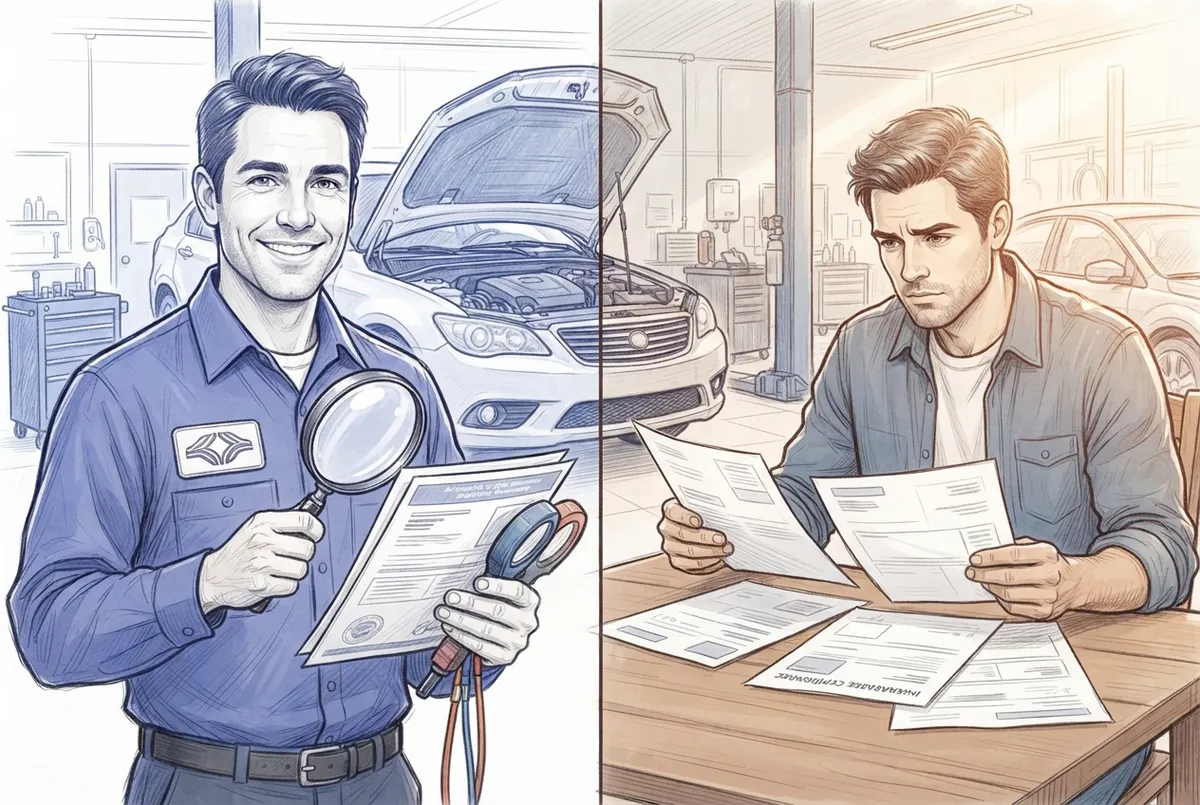
Verify EPA Section 608 certification for any technician handling refrigerant; this is a federal requirement under the Clean Air Act, not optional paperwork.
-
Always get written, detailed estimates from at least three shops before committing to repairs; include parts, labor, diagnostic fees, and warranty details to spot pricing red flags.
-
Confirm licensing and insurance directly with your local authority before handing over your keys; a shop hesitant to show proof of insurance is a major warning sign.
-
Watch for shops that recommend full system replacement without testing or repeatedly recharge refrigerant without detecting leaks; refrigerant runs in a closed loop and shouldn't disappear on its own.
-
Check reviews across multiple independent platforms (Yelp, Google, Instagram) rather than just the shop's website to identify patterns in punctuality, communication, and fair pricing.
-
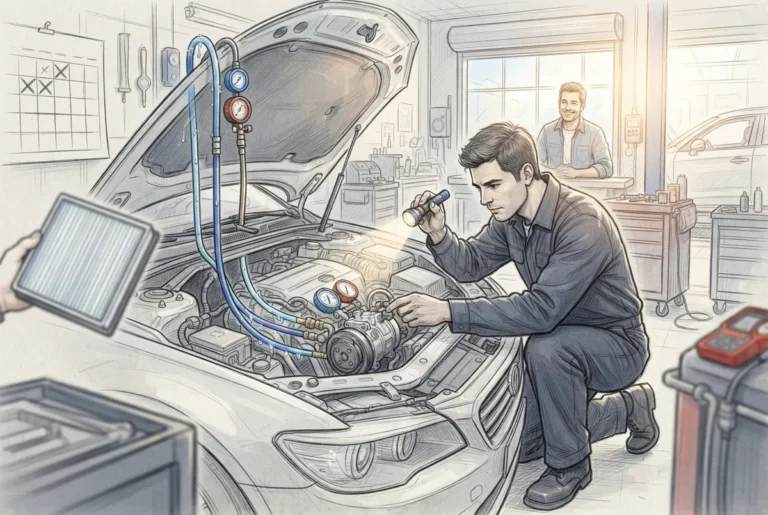
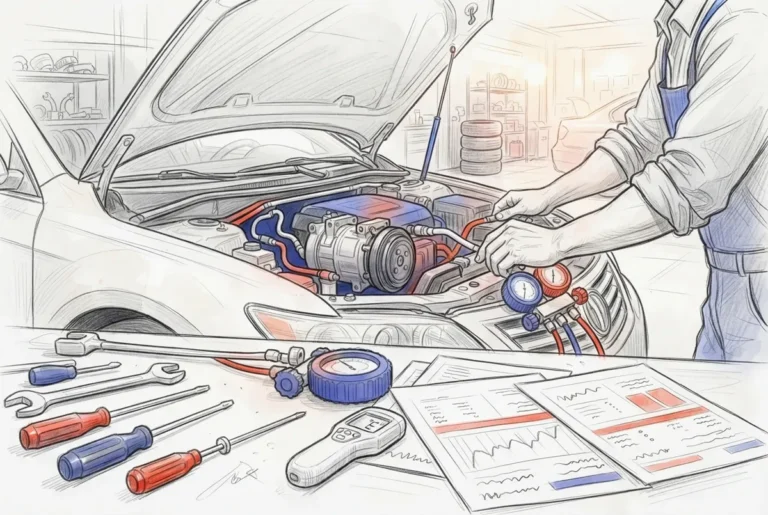
Ask prospective shops about their diagnostic process before scheduling; a thorough technician should test electrical systems, check pressures, perform leak detection, and provide measurable results before recommending repairs.
Nothing ruins a Tampa afternoon faster than a car, truck, or bus with warm air blasting from the vents. Whether you’re a daily commuter, a truck driver logging long hours on I-4, or a fleet manager juggling a dozen vehicles, finding a reliable A/C repair shop feels like a small victory. This guide walks you through exactly what to look for, so you never have to gamble on a stranger’s toolbox again.
We’ll cover licensing, certifications, pricing red flags, and the questions that separate a trustworthy shop from a risky one. By the end, you’ll feel confident choosing a repair partner who treats your vehicle (and your wallet) with respect. Let’s get you back to cool, comfortable driving.
Why AC Repair Shop Recommendations Matter So Much
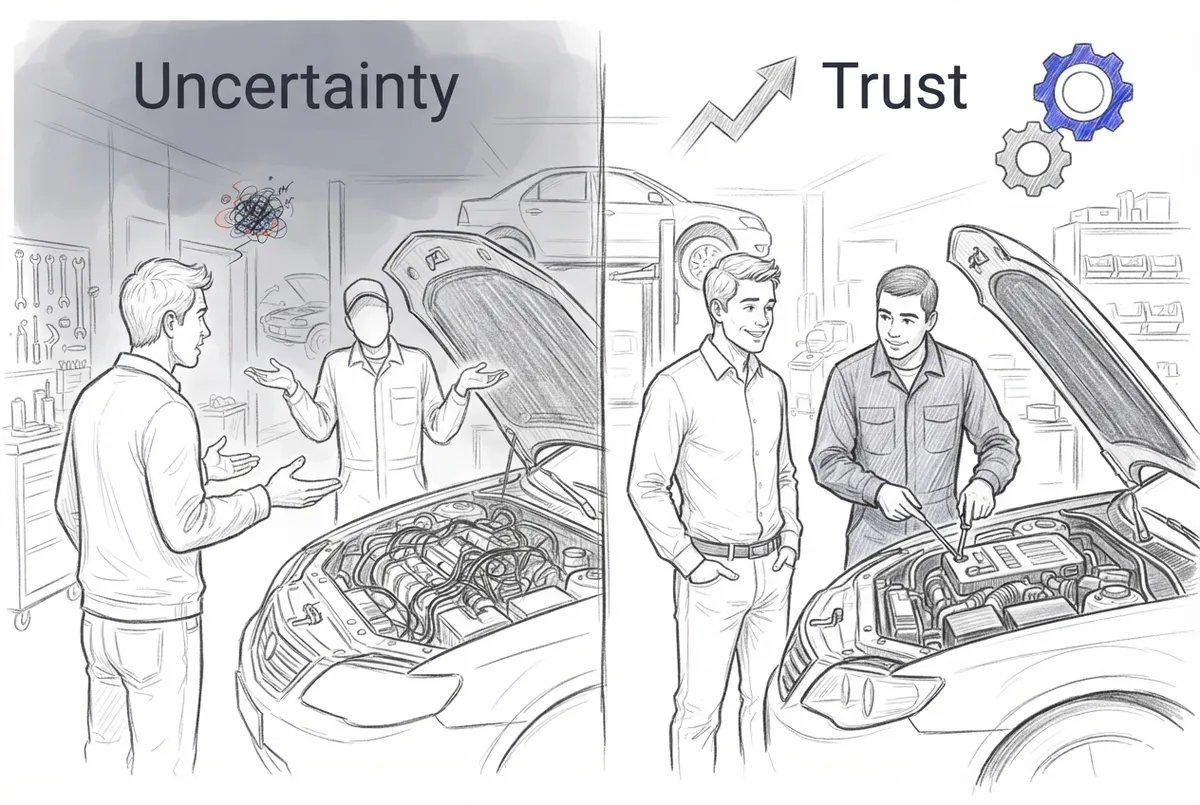
A bad repair doesn’t just waste money. It can leave you stranded in Tampa’s heat, damage your vehicle’s system further, or even create safety hazards. Choosing the right shop the first time saves you repeat visits, protects your refrigerant system, and keeps your ride comfortable all summer long.
This matters even more for commercial operators. Truck drivers depend on working A/C for alertness and comfort during long hauls. Bus operators need passenger cooling to meet safety expectations. Heavy equipment operators rely on cab cooling to avoid fatigue during twelve-hour shifts. A good recommendation isn’t just convenient. It’s essential.
Step 1: Confirm Licensing and Insurance
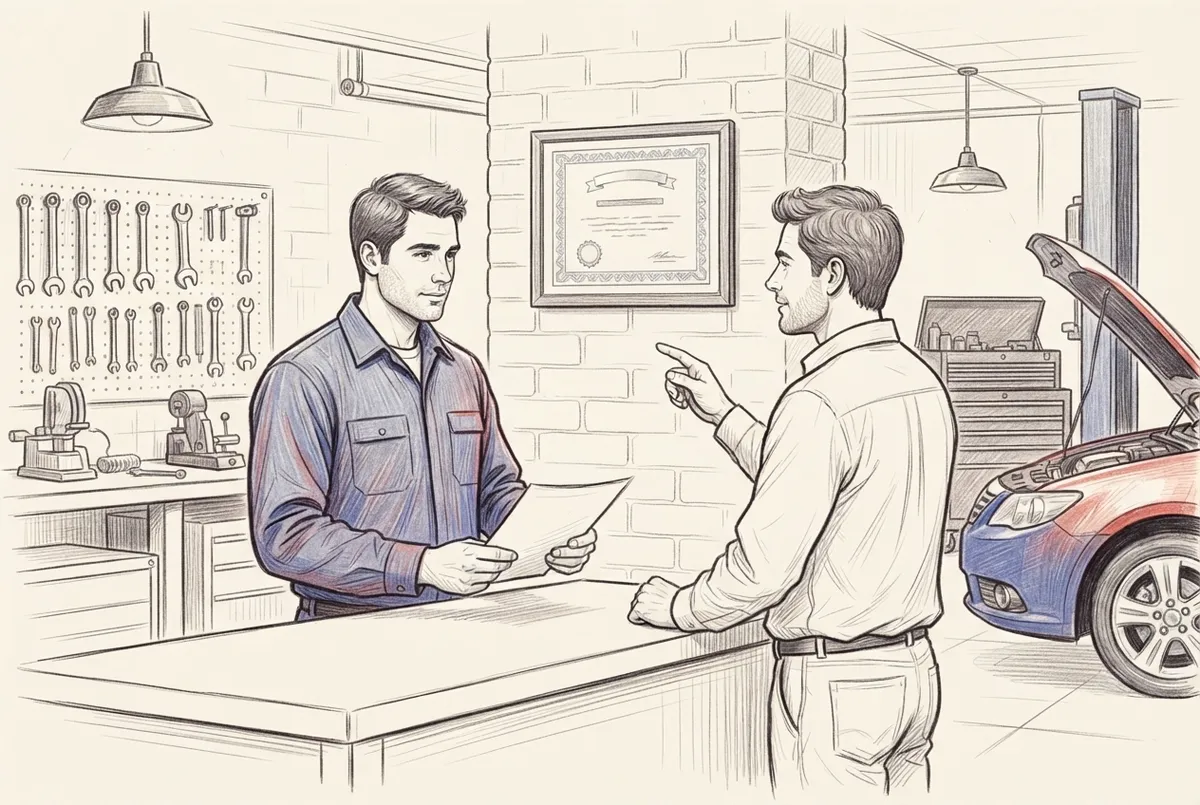
Before you hand over your keys, check that the shop is properly licensed and insured. Requirements vary by state and county, so it’s smart to confirm credentials directly with your local licensing authority. A shop that hesitates to show proof of insurance is a shop to avoid.
Insurance protects you if something goes wrong during the repair. It also signals that the business takes its work seriously. You can learn more about what a properly credentialed shop looks like by reviewing About Marks Air, which outlines decades of licensed, professional service in Tampa.
Step 2: Ask About EPA Section 608 Certification
Any technician who might release refrigerant during a repair generally needs EPA Section 608 certification under the Clean Air Act. This isn’t optional paperwork. It’s a federal requirement designed to protect the environment and ensure technicians know what they’re doing.
There are four certification types:
- Type I: Small appliances
- Type II: High- and very-high-pressure appliances (common in vehicle A/C systems)
- Type III: Low-pressure appliances
- Universal: Covers all four categories, requiring the technician to pass every exam section
Each exam section has 25 multiple-choice questions, and technicians need at least 18 correct (70%) to pass. Good news: these certifications never expire, though technicians still must follow current refrigerant-handling rules. If you want to understand more about training standards, check out Training options that cover EPA 609 certification and HFO-1234yf best practices.
Step 3: Get a Written, Detailed Estimate
The Federal Trade Commission recommends getting at least three written estimates before committing to repair work. This helps you compare pricing and spot anything that seems off. A trustworthy shop will diagnose the problem first, then explain what’s wrong before quoting a fix.
Your estimate should include:
- A clear description of the diagnosed problem
- The proposed repair and why it’s needed
- Cost of parts and refrigerant
- Labor charges
- Any diagnostic fees
- Warranty details for parts and labor
- Notes on whether additional work might be discovered mid-repair
If a shop refuses to put things in writing, that’s a warning sign. Learn what a fair diagnostic process looks like by browsing our Faqs page.
Step 4: Check Reviews Across Multiple Platforms
Don’t just glance at a company’s homepage testimonials. Look across several review sites to spot patterns. Are customers mentioning punctuality? Clear communication? Fair pricing? Repeat visits for the same issue can be a red flag, while strong warranty support is a great sign.
You can browse real customer feedback on our Reviews page, or check independent platforms like Yelp and Instagram to see recent photos and updates. You can also see what our Marks Air customers say by visiting our Google Business Profile.
Warning Signs to Watch For
Some red flags apply no matter what kind of vehicle you drive. Watch for these common tricks:
- Unusually low quotes that seem too good to be true
- Requests for large upfront cash payments
- High-pressure sales pitches pushing full system replacement
- Claims that refrigerant “just runs low over time” without checking for leaks
- Recommendations made without any actual testing or diagnostics
Refrigerant runs in a closed loop. It shouldn’t disappear on its own. If a shop keeps recharging your system without finding the leak, you’re wasting money. Our article on 13 AC Leak Mistakes That Cost Car Owners More Money breaks down exactly what to avoid.
What a Proper Diagnostic Visit Should Include
A thorough technician doesn’t just glance under the hood. A proper diagnostic typically covers:
- Electrical system testing
- Thermostat and control checks
- Airflow and filter inspection
- Evaporator and condenser evaluation
- Refrigerant pressure measurements
- Leak detection
- Condensate drain inspection
- Overall performance testing
The exact steps depend on your vehicle and symptoms. For a deeper look at what’s involved, see our guide on 6 Steps That Show What AC Repair Involves in 2026.
Repair vs. Replace: How a Good Shop Explains the Difference
A trustworthy shop won’t just tell you to replace your whole system without evidence. They should walk you through factors like equipment age, repair frequency, parts availability, and expected remaining service life. If replacement really is the smart move, the recommendation should be backed by measurable test results, not pressure tactics.
We cover this topic in detail in AC Repair vs. AC Replacement: Which Is Right for You?, which walks through the exact questions to ask before deciding.
Tailored Advice by Vehicle Type
Car Owners
If your personal car’s A/C stopped blowing cold air, start with a diagnostic visit rather than assuming the worst. Many issues, like a clogged cabin filter or a small leak, are simple fixes. Our page on 10 Reasons Your AC Is Blowing Warm Air (And How to Fix It) is a great starting point.
Truck Drivers
Long-haul drivers can’t afford downtime. Look for a shop that stocks parts for heavy-duty systems and understands DOT-related comfort needs. Check out 11 Signs You Need Truck AC Repair Near Me Now for symptoms worth acting on quickly.
Bus Operators
Passenger comfort and safety go hand in hand. Transit and shuttle fleets need shops experienced with larger systems. See 3 Transit Bus Air Conditioning Parts You Must Know for helpful background.
RV Enthusiasts
RV A/C systems face unique wear from travel and vibration. A shop familiar with recreational vehicles will save you from mismatched parts. Our guide on 6 RV Air Conditioner Repair Parts Mistakes to Avoid covers common pitfalls.
Heavy Equipment Operators
Cab cooling isn’t a luxury on a job site. It prevents operator fatigue and keeps productivity steady. Learn more in How to Get Heavy Equipment AC Repair Done Right.
Fleet Owners
Managing A/C across multiple vehicles calls for a shop that offers volume support and consistent quality. Our resource on 4 Fleet Vehicle AC Repair Tips That Save You Money is worth a read before your next service cycle.
Comparing What to Look For in a Shop
| Factor | Why It Matters | Good Sign |
|---|---|---|
| Licensing & Insurance | Protects you legally and financially | Shows proof without hesitation |
| EPA 608 Certification | Required for refrigerant handling | Technicians can explain their certification type |
| Written Estimates | Prevents surprise charges | Itemized parts, labor, and warranty info |
| Online Reviews | Reveals real customer experiences | Consistent positive feedback across platforms |
| Diagnostic Process | Confirms accurate repairs | Tests before recommending parts |
Questions to Ask Before You Commit
Before scheduling repair work, ask these simple questions:
- Are you licensed and insured for A/C repair in this state?
- Do your technicians hold EPA Section 608 certification?
- Can I get a written estimate before work begins?
- What warranty covers parts and labor?
- Who actually performs the repair work?
- Do you offer emergency or after-hours service?
- What’s your diagnostic fee, and does it apply toward repairs?
A confident shop will answer these without dodging. If you’d like a real-world example of how these questions play out, take a look at 9 Signs You’ve Found a Certified AC Repair Technician.
Why Local Experience in Tampa Matters
Tampa’s heat and humidity put extra strain on A/C systems, whether you’re driving a sedan or hauling freight. A shop with decades of local experience understands how Florida’s climate accelerates wear on hoses, compressors, and seals. Marks Air has been serving Tampa vehicle owners since 1971, offering in-house diagnostics, parts, and full system installations for cars, trucks, buses, RVs, and heavy equipment.
As a family-owned, woman-owned business, Marks Air also stocks its own KOOL-TEMP parts line alongside trusted brands like SPAL, ACT, BCC, gpd, and Omega, often available the same day. The shop is also a member of the Mobile Air Climate Systems Association (MACS), which helps keep its team current on industry standards. You can browse the full range of services on the Ac Services page.
For fleet-specific parts sourcing, our page on Ac Parts explains what’s typically stocked and available quickly for both retail customers and professional technicians.
Bringing It All Together
Finding trustworthy ac repair shop recommendations doesn’t have to feel overwhelming. Focus on licensing, certification, written estimates, and real reviews. Avoid shops that skip diagnostics or pressure you into replacements. And remember, a shop with decades of focused A/C experience, like one specializing exclusively in mobile air conditioning since 1971, often brings a level of expertise that’s hard to match.
You can also read independent listings such as HVACService.io or follow updates on Facebook to see how local shops engage with their communities. Trustworthy shops are transparent everywhere, not just on their own website.
Ready to get your A/C checked out by a team that’s been keeping Tampa vehicles cool for over 50 years? Schedule service today, or simply call us at 813-988-1671 to talk with a friendly technician about your specific needs. Your cool, comfortable drive is just one appointment away.
FAQs
Q: How do I find a reliable AC repair shop near me?
A: Start by checking licensing, insurance, and EPA Section 608 certification, then read recent reviews across multiple platforms. A shop that offers written estimates and clear diagnostics before quoting repairs is usually a safe bet. It also helps to pick a shop with years of local Tampa experience, since they understand how our climate affects A/C systems.
Q: Does an AC technician need EPA Section 608 certification?
A: Yes, technicians who might release refrigerant during service generally need this certification under the Clean Air Act. There are four types, and most vehicle A/C work falls under Type II or Universal certification. The good news is these credentials never expire, so a certified tech has proven, lasting knowledge.
Q: How many estimates should I get for air conditioner repairs?
A: The Federal Trade Commission recommends getting at least three written estimates before choosing a shop. This helps you compare pricing, spot unusual quotes, and confirm everyone is diagnosing the same problem. It’s a small step that can save you real money.
Q: How can I tell if a shop is recommending unnecessary repairs?
A: Watch for red flags like replacement suggestions without any testing, repeated refrigerant recharges without leak detection, or high-pressure sales tactics. A trustworthy shop backs every recommendation with measurable diagnostic results. If something feels rushed or unclear, it’s okay to get a second opinion.
Q: Should I repair or replace my vehicle’s air conditioning system?
A: This depends on your system’s age, repair history, parts availability, and overall condition. A good shop will explain these factors clearly instead of pushing you toward the most expensive option. If you want a deeper breakdown, our guide on repair versus replacement covers exactly what to consider.