Key Takeaways
-
Fire truck AC compressors endure extreme stop-and-start duty cycles with extended idle periods and high-demand operation, requiring specialized heavy-duty units designed for multiple cooling zones unlike standard vehicle compressors.
-
Low refrigerant levels are the leading cause of compressor failure; establish a maintenance schedule checking refrigerant every 6 months and performing system flushes every 2 years to prevent lubrication loss and moisture contamination.
-
Watch for warm air from vents, unusual grinding or squealing noises, and rapid on-off cycling as early warning signs of compressor problems; catching these issues immediately prevents costly internal damage and crew discomfort.
-
When selecting a replacement compressor, verify OEM compatibility with your specific fire truck model year, confirm refrigerant type compatibility (R-134a vs HFO-1234yf), and prioritize units with meaningful warranty coverage from reputable suppliers.
-
Regular preventive maintenance including belt/hose inspection every 6 months, condenser cleaning every 3-6 months, and annual clutch testing extends compressor lifespan to 8-12 years and costs significantly less than emergency repairs.
When a fire truck rolls out on a hot summer day in Tampa, the last thing any crew wants is a broken air conditioning system. Fire trucks endure extreme conditions — idling for long periods, running in intense heat, and demanding reliable performance every single time. At the heart of that cooling system sits the fire truck AC compressor, a hardworking component that takes a beating like no other.
Whether you manage a municipal fire fleet, oversee emergency vehicle maintenance, or simply want to understand what keeps your crew comfortable and safe, this guide is for you. We’ll break down five essential facts about fire truck AC compressors, covering everything from how they work to when they need replacing. Let’s dive in!
Why Fire Truck AC Systems Are Uniquely Demanding
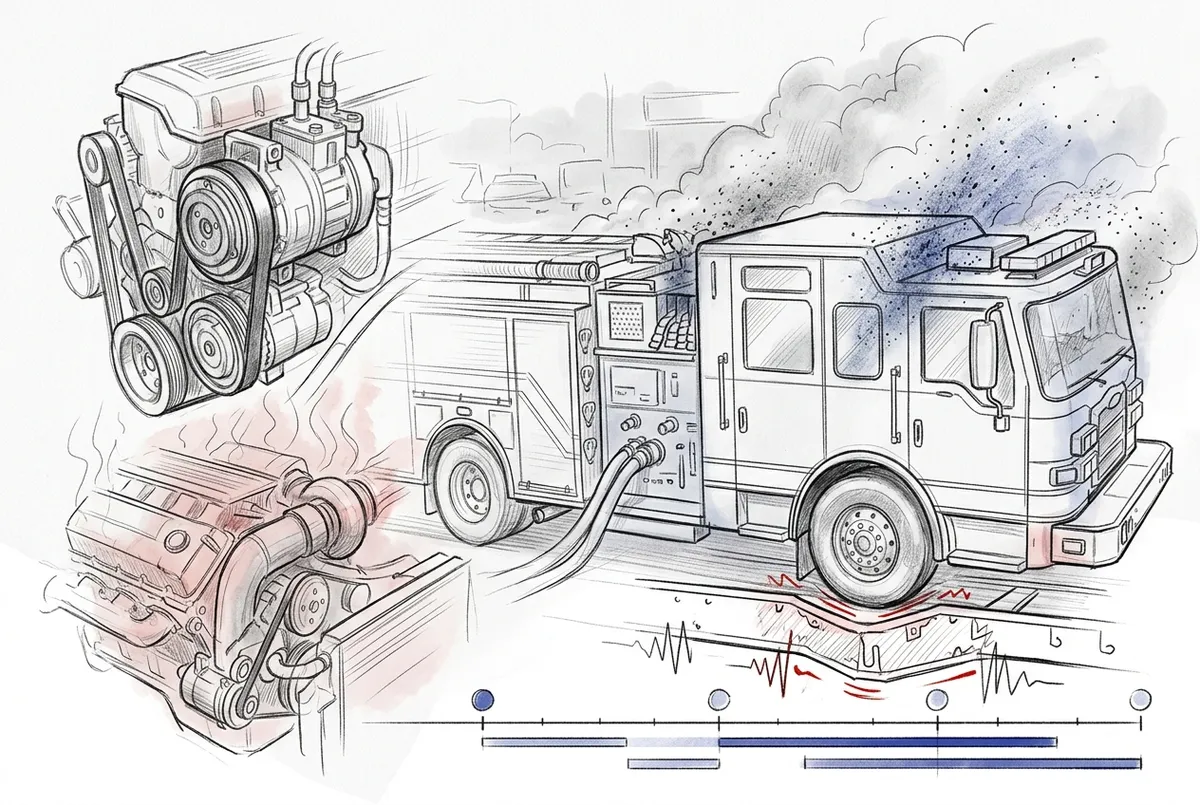
Fire trucks aren’t ordinary vehicles. They sit idle for hours at the station, then suddenly need full cooling power when the alarm sounds. This stop-and-start pattern puts enormous stress on every A/C component, especially the compressor. Unlike a regular car or truck, a fire apparatus may also carry multiple A/C zones — one for the cab and one for the crew area — making the system significantly more complex.
If you’re curious about how these systems compare to other heavy vehicles, check out our article on 5 Emergency Vehicle HVAC Systems Facts You Must Know. Understanding the unique demands helps fleet managers plan smarter maintenance schedules and avoid costly breakdowns.
Fact 1: The Compressor Is the Heart of the AC System
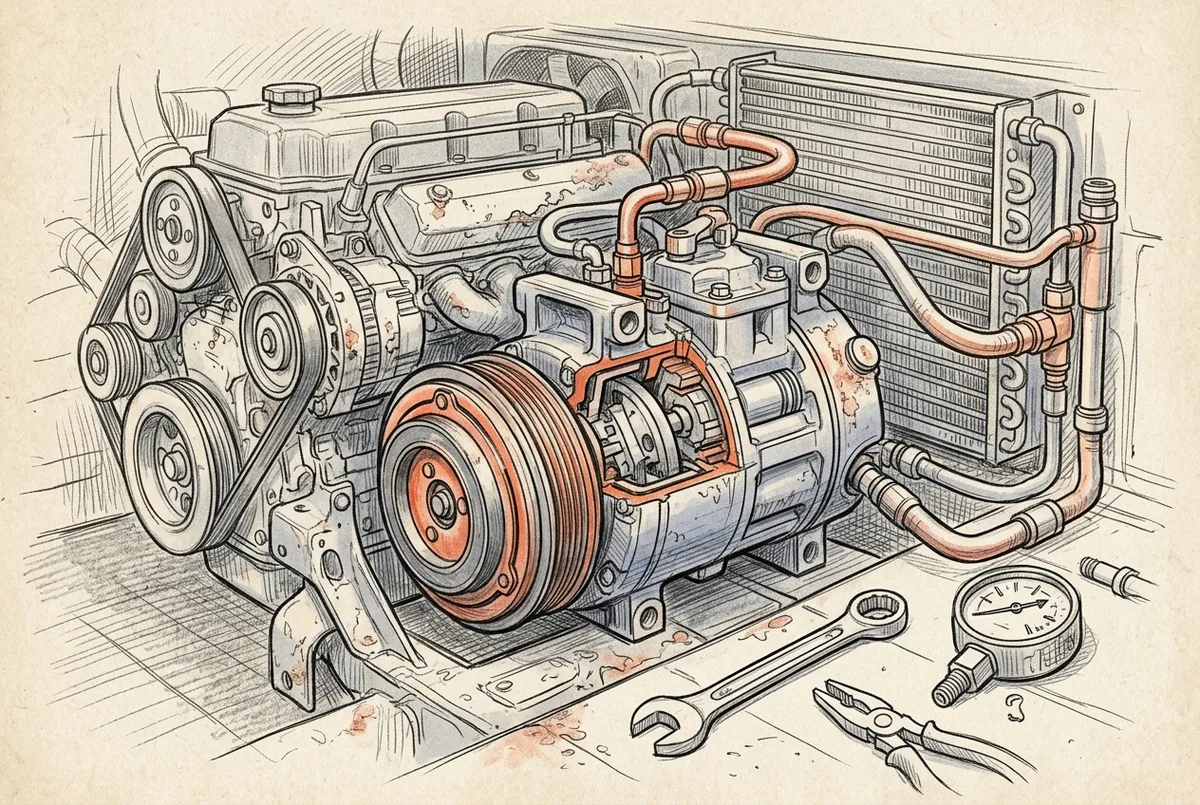
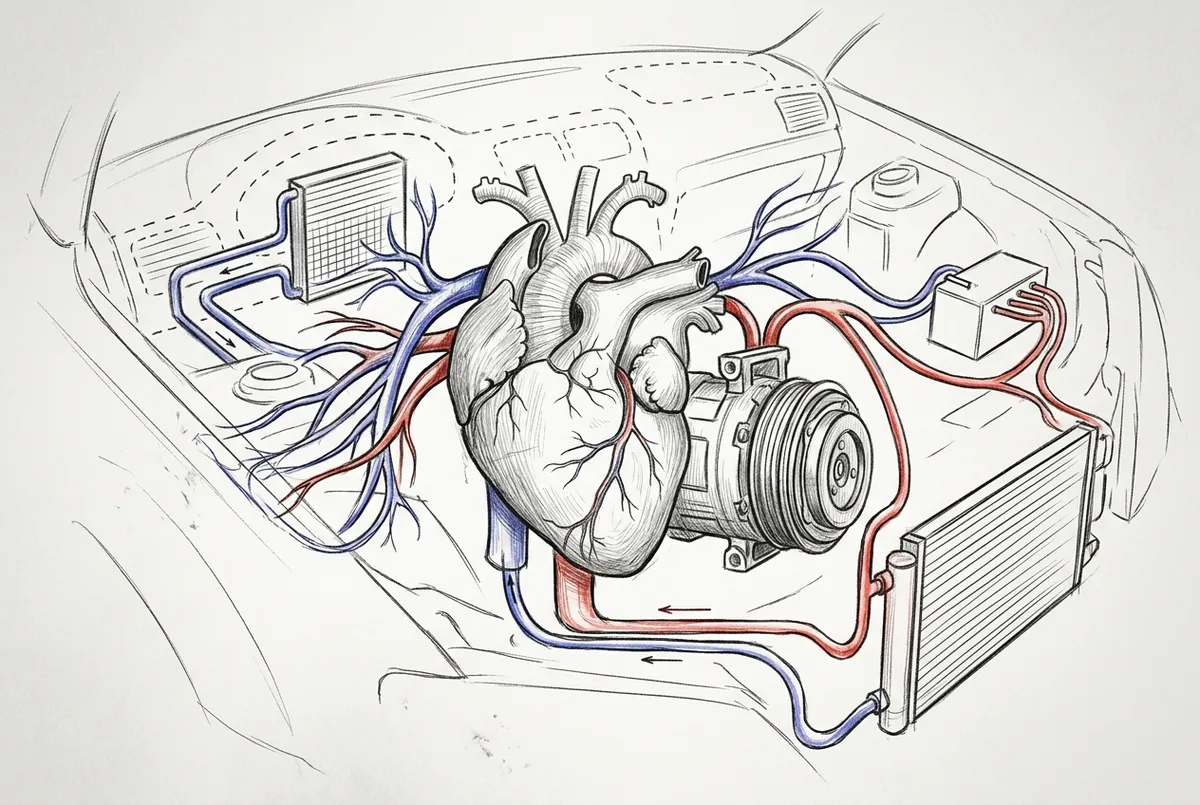
The AC compressor does one critical job — it pressurizes and circulates refrigerant throughout the entire cooling system. Without a functioning compressor, no cool air reaches the cab or crew compartment. Think of it like the heart of the human body: if it stops pumping, nothing works.
Fire truck compressors are typically heavy-duty units designed to handle high refrigerant volumes and long operating cycles. Many fire apparatus manufacturers use specialized compressors built specifically for the harsh demands of emergency vehicles. You can see an example of a purpose-built unit, like a fire truck compressor, to understand the specifications involved.
Here are the key roles a fire truck AC compressor plays:
- Pressurizes refrigerant to enable heat transfer
- Circulates refrigerant through the condenser, evaporator, and expansion valve
- Maintains consistent system pressure for effective cooling
- Supports multiple cooling zones in larger apparatus
- Works in coordination with the blower motor and condenser fans
For fleet managers dealing with compressor issues on other large vehicles, our guide on What Do You Need to Know About a Heavy Duty Truck AC Compressor? is a great resource.
Fact 2: Common Causes of Fire Truck AC Compressor Failure
Knowing what causes compressor failure helps you prevent it before it happens. Fire truck compressors fail for many of the same reasons as other heavy-duty vehicle compressors, but the conditions are often more extreme.
Here are the most common causes of fire truck AC compressor failure:
- Lack of lubrication: Refrigerant oil lubricates the compressor internally. When refrigerant leaks, oil levels drop and metal-on-metal wear increases rapidly.
- Moisture contamination: Water in the system creates acids that corrode internal compressor parts, leading to premature failure.
- Overheating: Fire trucks often operate in extremely hot environments. Extended idling in summer heat causes the compressor to work harder and run hotter than normal.
- Age and wear: Like any mechanical component, compressors wear out over time. Fire trucks with high operational hours see accelerated wear.
- Electrical issues: Faulty wiring, damaged clutch coils, or failed relays can prevent the compressor from engaging or cause it to cycle improperly.
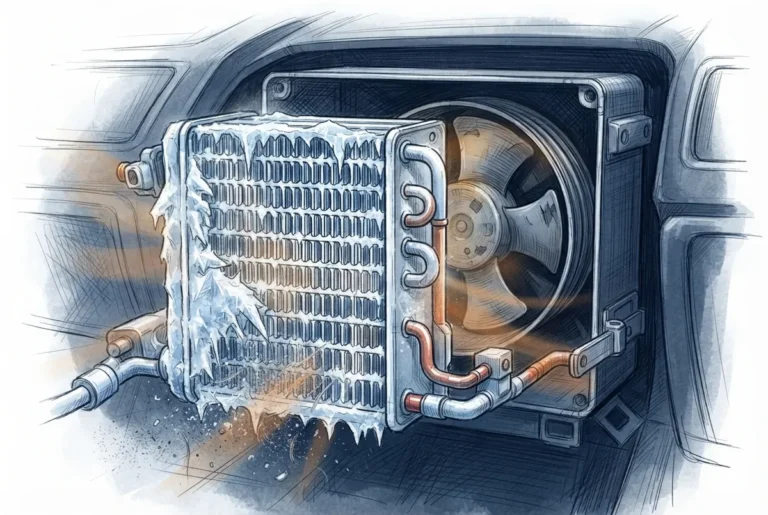
- Blocked or dirty condenser: When the condenser can’t dissipate heat efficiently, system pressure spikes and the compressor is forced to work overtime.
If you’re also managing issues like refrigerant leaks, don’t miss our detailed article on How to Detect AC Leaks in Your Truck Before They Get Worse. Catching a leak early can save your compressor from total failure.
Fact 3: Signs Your Fire Truck AC Compressor Needs Attention
Catching compressor problems early saves money and prevents dangerous situations for your crew. Here’s what to watch for:
- Warm air blowing from vents: This is the most obvious sign. If the cab isn’t cooling down, the compressor may not be engaging or may have failed.
- Unusual noises: Grinding, squealing, or rattling when the A/C is on often points to a worn compressor clutch or internal damage.
- Compressor clutch not engaging: If you can hear the system attempt to start but the compressor doesn’t kick in, the clutch coil or electrical connection may be faulty.
- Refrigerant leaks around the compressor: Oily residue near the compressor fittings usually indicates a refrigerant leak.
- Frequent cycling: A compressor that turns on and off rapidly may be responding to low refrigerant levels or high pressure issues.
Any of these warning signs deserve immediate attention. For a broader look at cooling issues, our article on 10 Reasons Your AC Is Blowing Warm Air (And How to Fix It) covers the full picture beautifully.
Fire Truck AC Compressor vs. Standard Truck Compressor: A Quick Comparison
It’s helpful to understand how fire truck compressors differ from standard heavy-duty truck compressors. Here’s a side-by-side comparison:
| Feature | Fire Truck AC Compressor | Standard Heavy Truck Compressor |
|---|---|---|
| Duty Cycle | Extended idle operation, high-demand cycles | Primarily road-use cycles |
| Cooling Zones | Often multiple (cab + crew area) | Typically single zone |
| Refrigerant Volume | Higher capacity systems | Standard capacity |
| Heat Exposure | Extreme (near fire scenes) | Moderate to high |
| Replacement Frequency | More frequent due to harsh conditions | Standard service intervals |
| Parts Availability | Specialized, may need sourcing | Widely available |
Understanding these differences helps fleet managers make smarter decisions about parts sourcing and maintenance intervals. For more on sourcing the right parts, visit our A/C Parts page to see what’s available.
Fact 4: Maintenance Is the Best Protection for Your Compressor
A well-maintained fire truck AC compressor lasts significantly longer than a neglected one. The good news is that most preventive maintenance steps are straightforward and not overly expensive when done consistently.
Here’s a simple maintenance checklist for fire truck AC systems:
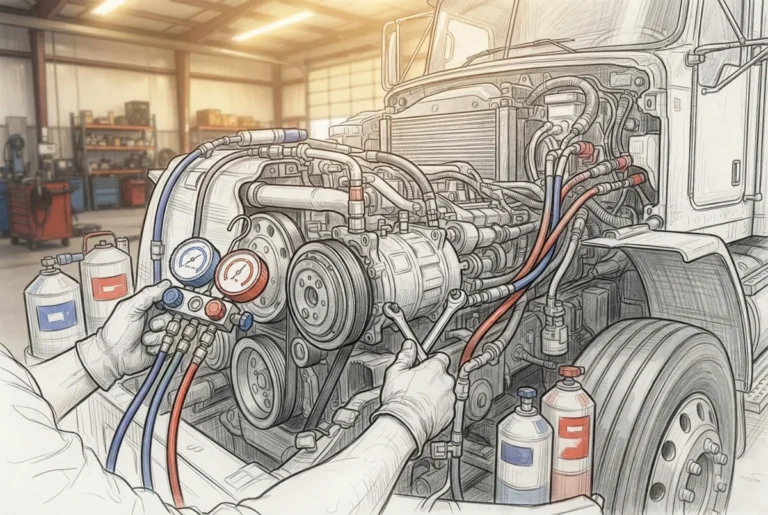
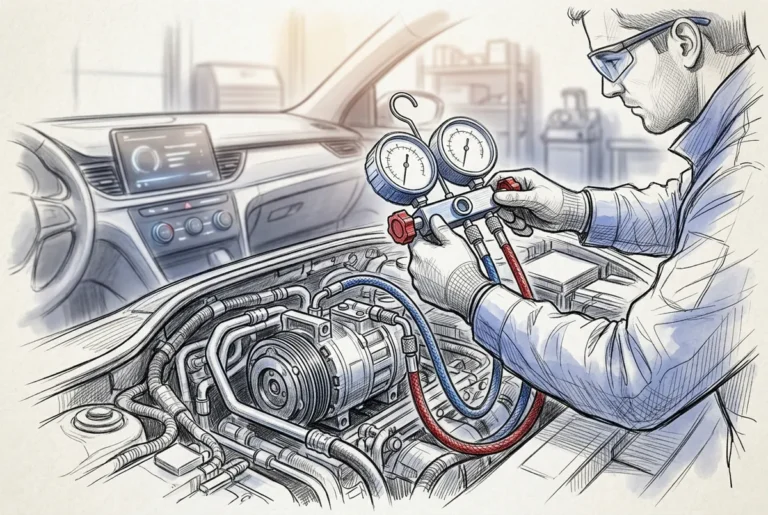
- Check refrigerant levels regularly: Low refrigerant is the number one cause of compressor stress. Test levels at least twice a year.
- Inspect belts and hoses: Cracked or worn belts can cause the compressor to underperform or fail entirely.
- Clean the condenser: Dirt and debris restrict airflow and drive up system pressure. Keep it clean, especially after fire scenes.
- Test the compressor clutch: Make sure the clutch engages smoothly and holds properly under load.
- Check for oil contamination or moisture: A/C system flush services remove harmful contaminants that accelerate wear.
- Run the A/C regularly: Even when temperatures are mild, running the system periodically keeps internal seals lubricated and prevents them from drying out.
For fleet managers looking to formalize their maintenance approach, our Fleet Vehicle AC Diagnostics service is designed exactly for this need. Staying proactive is always more affordable than emergency repairs.
You might also find value in reviewing our 8 Fleet AC Maintenance Checklist Mistakes to Stop Making — it’s packed with practical tips that apply directly to emergency vehicle fleets.
Fact 5: Choosing the Right Replacement Compressor Matters
Not all compressors are created equal. When a fire truck AC compressor fails and needs replacing, selecting the correct unit is critical. Using the wrong compressor can lead to reduced cooling performance, premature failure, and even damage to other system components.
Here’s what to consider when choosing a replacement compressor:
- OEM vs. aftermarket: OEM units match original specs perfectly but can be more expensive and harder to source. Quality aftermarket compressors from trusted brands can offer excellent performance at a better price point.
- Compatibility: Always match the compressor to the specific vehicle year, make, and configuration. Fire trucks vary significantly by manufacturer and build year.
- Refrigerant type: Make sure the compressor is compatible with the refrigerant your system uses, whether that’s R-134a or the newer HFO-1234yf.
- Warranty coverage: A reputable supplier should offer a meaningful warranty on replacement compressors.
For insight on the OEM vs. aftermarket decision, our article on OEM vs. Aftermarket Semi Truck AC Parts: Which Wins? breaks down the pros and cons clearly. And if your fleet is transitioning refrigerant types, our guide on 12 Things to Know About R-134a to 1234yf Conversion is a must-read.
Where to Get Expert Help for Your Fire Truck AC Compressor
Working on fire truck A/C systems requires specialized knowledge and equipment. This isn’t a job for a general mechanic — you need technicians who understand heavy-duty and emergency vehicle A/C systems inside and out.
Marks Air, Tampa’s trusted A/C specialist since 1971, has decades of experience working on everything from light passenger cars to heavy-duty emergency vehicles. As a member of the Mobile Air Climate Systems Association (MACS), Marks Air stays current with industry advancements and best practices for all vehicle A/C systems, including fire apparatus.
The shop stocks a wide range of heavy-duty A/C parts, including its own KOOL-TEMP line and components from trusted industry brands. Many parts are available the same day, which matters when your fleet can’t afford downtime. You can explore options on our Commercial Vehicle AC Parts page or reach out to schedule service for a proper diagnosis.
You can also visit Marks Air on Google to read reviews from real customers and get directions to the Tampa shop. Follow along on Facebook and Instagram for tips, updates, and behind-the-scenes looks at the work the team handles every day.
Quick Reference: Fire Truck AC Compressor Maintenance Schedule
| Maintenance Task | Recommended Frequency | Why It Matters |
|---|---|---|
| Refrigerant level check | Every 6 months | Prevents compressor wear from low lubrication |
| Belt and hose inspection | Every 6 months | Avoids unexpected failures during operation |
| Condenser cleaning | Every 3-6 months | Keeps system pressure in safe range |
| Compressor clutch test | Annually | Ensures reliable engagement under load |
| System flush and oil check | Every 2 years | Removes moisture and contaminants |
| Full A/C system inspection | Annually | Catches issues before they become failures |
Bringing It All Together
A fire truck AC compressor isn’t just a comfort item — it’s a safety-critical component that keeps crews focused, alert, and ready to perform in extreme conditions. Understanding how it works, what causes it to fail, and how to maintain it properly makes a real difference for any fleet manager or emergency vehicle operator.
From regular maintenance to choosing the right replacement unit, staying proactive protects your crew and your budget. And when you need expert help, don’t go it alone — lean on experienced specialists who understand the unique demands of emergency vehicle A/C systems.
Ready to get your fire truck or emergency fleet A/C in top shape? Call Marks Air at 813-988-1671 to speak with a specialist today, or check out our A/C Services page to learn more about what we offer. You can also browse our Marks Air reviews on Yelp to see why Tampa fleets trust us with their most critical vehicles.
FAQs
Q: How often should a fire truck AC compressor be inspected?
A: Great question! We recommend a full A/C system inspection at least once a year, with refrigerant level checks every six months. Fire trucks face more demanding conditions than standard vehicles, so more frequent check-ins really do pay off in the long run.
Q: Can a fire truck AC compressor be repaired, or does it always need replacement?
A: It depends on the type of damage! Minor issues like a faulty clutch coil or a small refrigerant leak near the compressor fittings can often be repaired without replacing the entire unit. However, internal mechanical failure — like broken valves or seized components — typically requires a full replacement.
Q: What type of refrigerant do fire truck AC systems use?
A: Most older fire trucks use R-134a refrigerant, while newer apparatus may be built or converted to use HFO-1234yf. It’s important to know which refrigerant your specific system requires before adding any refrigerant or making repairs, as mixing types can cause serious damage.
Q: How long does a fire truck AC compressor typically last?
A: With proper maintenance, a quality fire truck AC compressor can last 8 to 12 years or more. However, harsh operating conditions, infrequent maintenance, and refrigerant leaks can significantly shorten that lifespan. Regular servicing is the best way to get the most out of your compressor.
Q: Where can I find replacement parts for a fire truck AC compressor in Tampa?
A: Marks Air in Tampa stocks a comprehensive range of heavy-duty A/C parts, including compressors and components for emergency vehicles. Many parts are available the same day, so you don’t have to wait long to get your fleet back in service. Give them a call at 813-988-1671 or visit their A/C Parts page online!