Key Takeaways
-
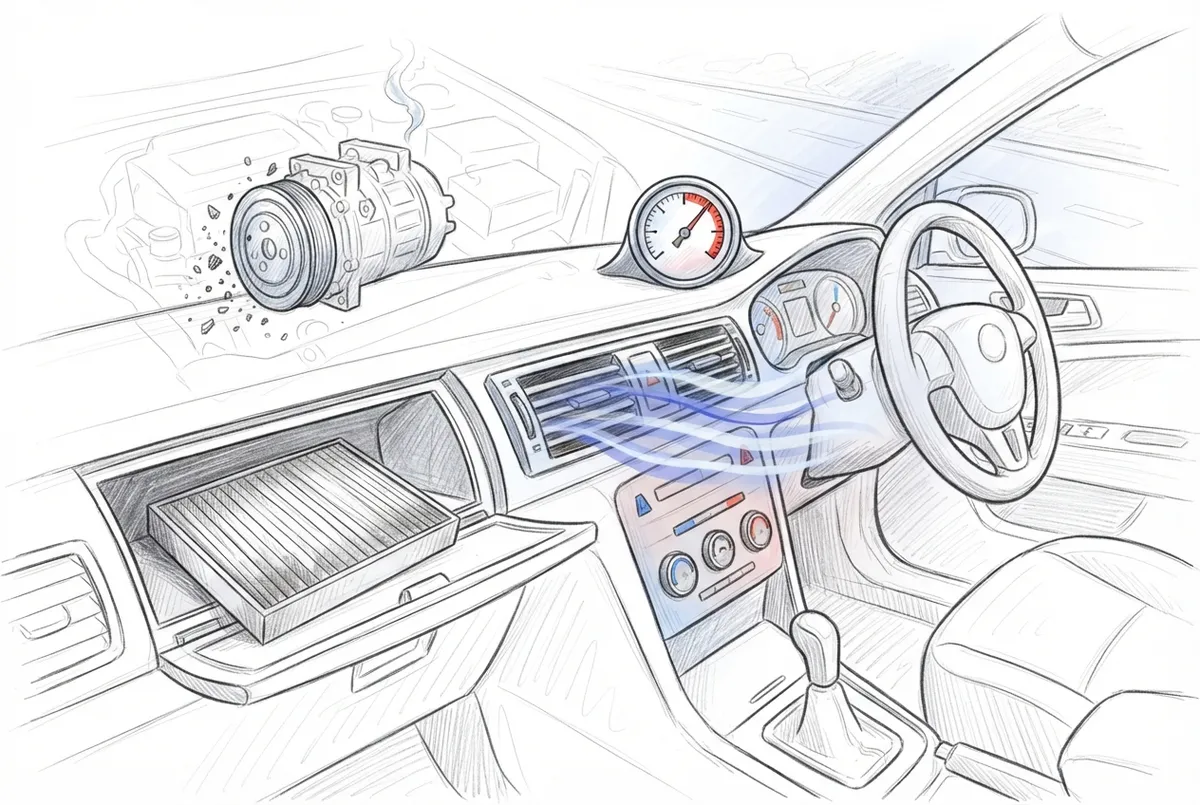
Warm or weak airflow is the most common sign of AC trouble, and a clogged cabin filter is an easy first check before calling a pro.
-
Grinding, rattling, or squealing noises should not be ignored; running a failing compressor can spread metal debris through the whole system and turn a small repair into a major one.
-
Burning or electrical smells, smoke, sparking, or repeated blown fuses need immediate professional attention, and smoke or fire risk means pulling over safely and calling emergency services.
-
Short cycling, where the AC clicks on and off repeatedly, means the system is working harder than it should and can wear out the clutch and compressor faster.
-
Adding DIY refrigerant without finding the leak is a temporary fix, since refrigerant doesn't get used up and low levels almost always mean a leak that needs professional detection and repair.
-
Ice on the evaporator coil or lines, or water pooling inside the cabin, is not normal; turn the cooling off to let the system thaw and have the drain or airflow problem checked.
It is a hot Tampa afternoon. You hop in your car, crank the A/C, and hope for that sweet blast of cold air. Instead, you get a warm puff and a funny smell. Sound familiar? If you have ever asked yourself, “how do I know if my AC needs repair?”, you are in good company.
Here is the good news. Your vehicle’s A/C system gives you plenty of clues before it quits. The bad news is that many drivers miss those clues or make small mistakes that let a minor problem grow into a big bill. Whether you drive a car, haul loads in a truck, run a bus route, enjoy an RV, operate heavy equipment, or manage a whole fleet, the warning signs are much the same.
In this guide, we walk through seven common mistakes that keep drivers from spotting trouble early. We also share simple checks you can do yourself and tell you when it is time to call a pro. Let’s keep you cool and keep your wallet happy.
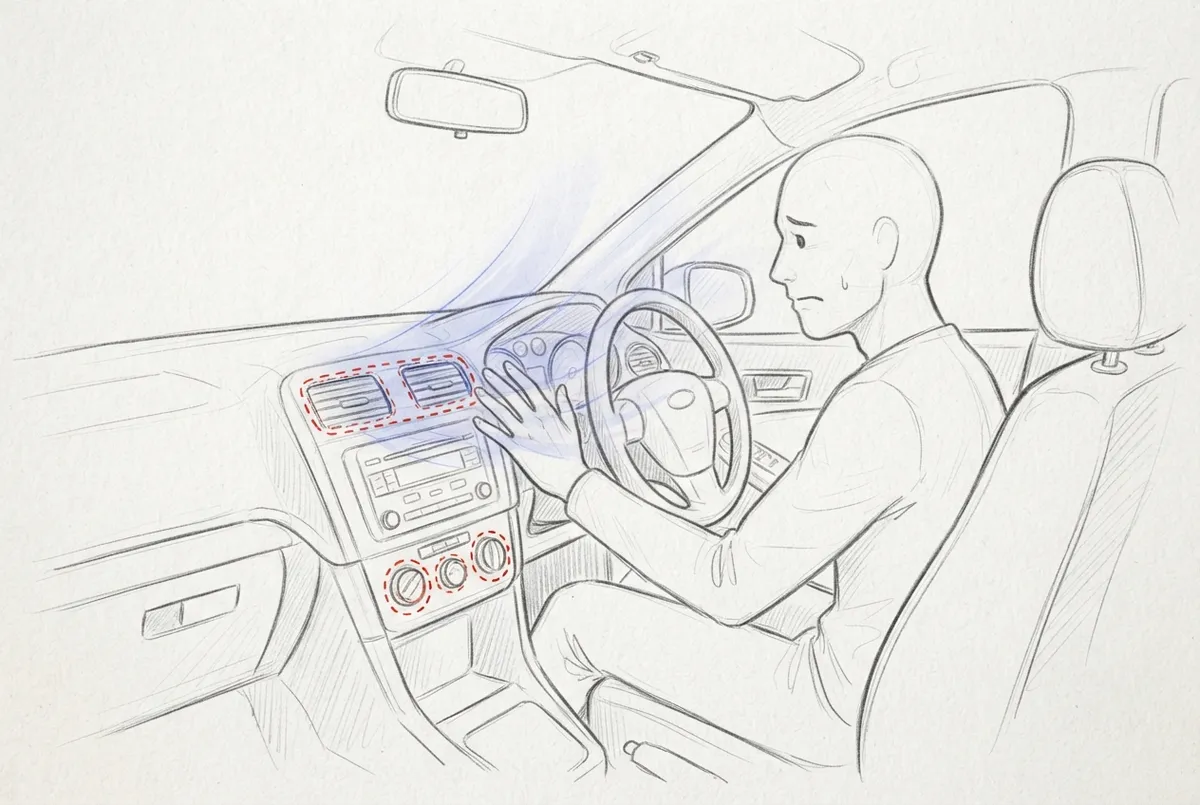
Mistake 1: Ignoring Warm or Weak Airflow
The most common sign your A/C needs help is simple. The air coming from the vents is warm, or it feels weak even when the fan is on high. Many drivers tell themselves it is just a hot day. Please do not shrug this one off.
Warm or weak air can have several causes. A clogged cabin filter, a failing blower motor, low refrigerant, or a worn compressor can all play a part. The symptom alone does not tell you which part has failed. That is why a proper diagnosis matters more than guessing.
ENERGY STAR notes that airflow problems can cut system efficiency by up to 15%. In a vehicle, that means longer cooling times, more strain on the engine, and a less comfortable ride. If you want to dig deeper, our guide on 10 reasons your AC is blowing warm air breaks down the most common culprits.
Quick Self-Check for Weak Airflow
- Set the fan to high and feel each vent for steady airflow.
- Check that the A/C button is on and the temperature is set to cold.
- Make sure nothing is blocking the vents or the intake area near the windshield.
- Replace a dirty cabin air filter if your vehicle has one.
If the air is still weak or warm after these checks, the problem is likely deeper in the system.
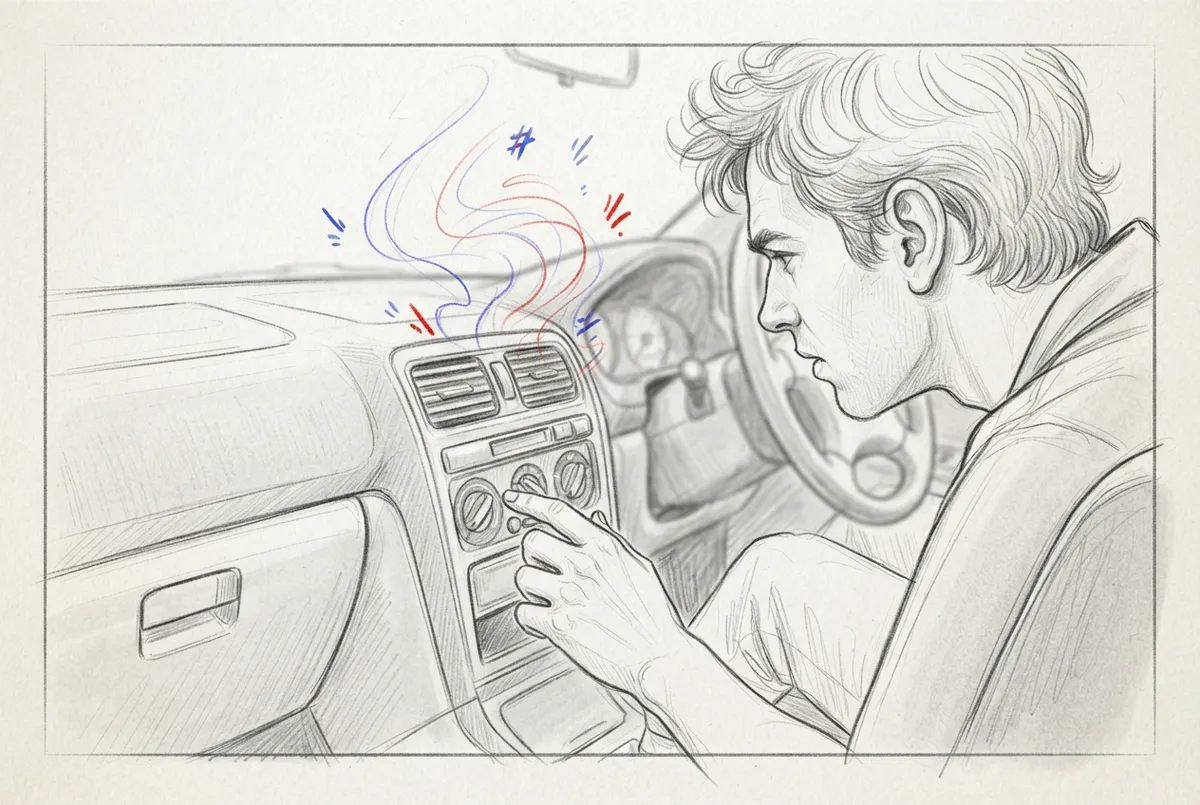
Mistake 2: Brushing Off Strange Noises
Your A/C should hum along quietly. When it starts to rattle, squeal, click, or grind, it is trying to tell you something. Many drivers turn up the radio instead. That is a costly habit.
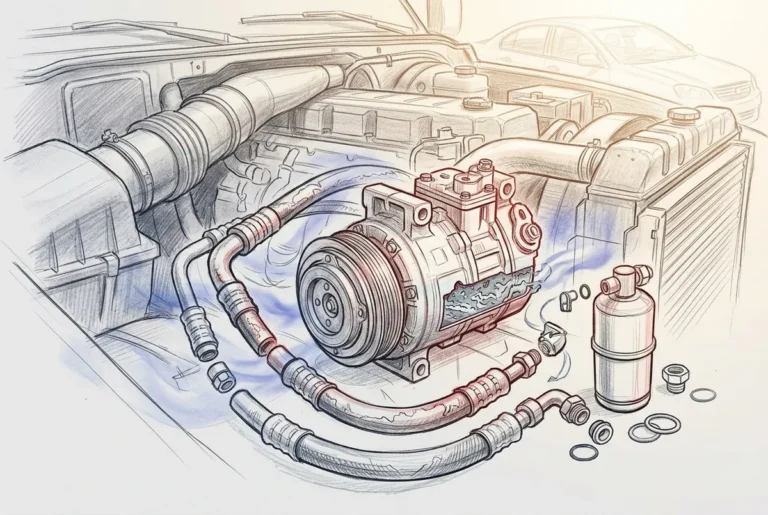
A squealing sound may point to a worn belt. A grinding or rattling noise can signal a failing compressor or clutch. Clicking may mean the clutch is struggling to engage. Loud mechanical grinding deserves prompt attention, because running a damaged compressor can spread metal debris through the whole system.
That is how a small repair turns into a full system job. If you want to understand why, check out our article on how to fix an AC compressor in your vehicle. Catching noise early often saves hundreds of dollars.
Noises and What They Might Mean
| Sound | Possible Cause | What To Do |
|---|---|---|
| Squealing | Worn or loose belt | Get the belt checked soon |
| Grinding | Failing compressor or bearing | Stop using A/C and call a pro |
| Rattling | Loose mounting or debris | Schedule an inspection |
| Clicking | Clutch cycling problem | Book a diagnostic visit |
Remember, a sound is a clue, not a final answer. A technician can confirm the real cause.
Mistake 3: Writing Off Odd Smells
Smells are easy to ignore, especially if they come and go. But your nose can be a great repair detector. A musty, gym-sock odor often means moisture and buildup inside the evaporator area. A sweet smell may hint at a leak somewhere in the cooling system. A burning or electrical odor is more serious.
Seek prompt professional help for burning smells, smoke, sparking, or repeated blown fuses. If you see smoke or sense a fire risk, pull over safely, get out, and call emergency services. Your safety always comes first.
Musty smells are usually not dangerous, but they do mean the system needs cleaning and a closer look. Left alone, moisture can lead to bigger problems over time. Many Tampa drivers notice this one because of our humid climate.
Mistake 4: Letting Short Cycling Slide
Does your A/C seem to click on and off over and over? That is called short cycling. It happens when the compressor turns on, runs briefly, then shuts off again. Many people think it is normal. It is not.
Short cycling can come from low refrigerant, a faulty pressure switch, a bad relay, or an electrical issue. Again, the symptom does not name the part. What it does tell you is that the system is working harder than it should.
Constant cycling wears out the clutch and compressor faster. It also makes the cabin swing between cool and warm. If you notice this pattern, it is a good time to book a check-up. Our post on why your AC is not working walks through more troubleshooting ideas.
Mistake 5: Adding Refrigerant Without Finding the Leak
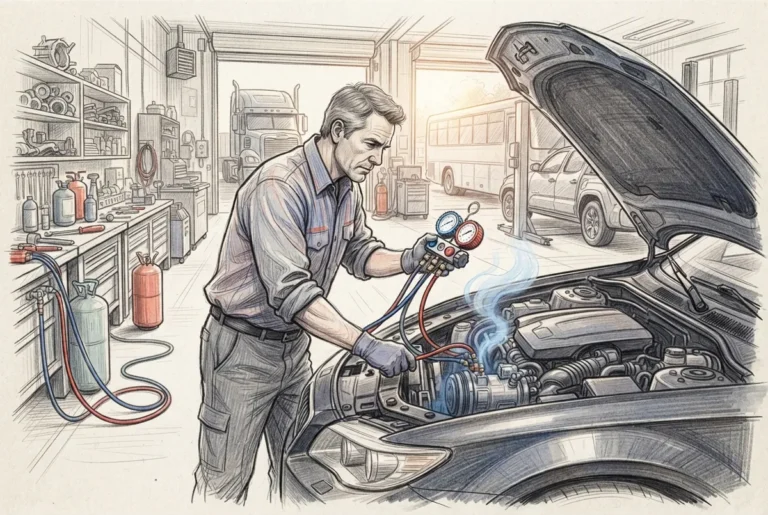
This is a big one. When the A/C stops cooling, many drivers grab a DIY recharge can. It feels like a quick fix. Sometimes the air gets cold again for a few days. Then it fades, and you are back where you started.
Here is why. Refrigerant does not get “used up” like gas. If the level is low, there is a leak somewhere. Adding more without fixing the leak is like pouring water into a bucket with a hole. A leak cannot be reliably diagnosed by adding refrigerant alone.
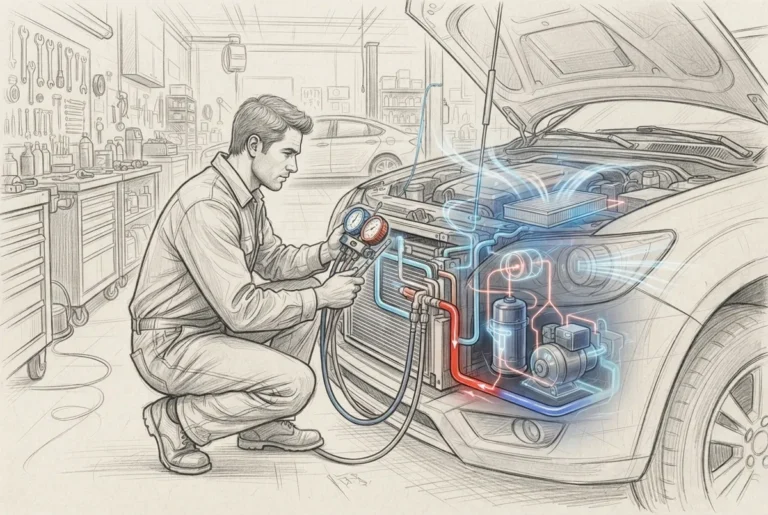
EPA guidance describes proper leak-finding methods, including electronic detectors, ultrasonic equipment, and bubble testing. Refrigerant handling is also covered by federal rules, including technician certification and limits on venting it into the air. That is one more reason to leave it to trained hands.
Worth knowing: EPA says existing systems can still be repaired under the HFC phasedown. The restrictions apply to importing certain new products, not to fixing your current system. If you are curious about newer refrigerants, read our guide on HFO-1234yf refrigerant for fleets.
Why Leak Detection Matters
- It finds the real source of the problem, not just the symptom.
- It protects the environment by keeping refrigerant in the system.
- It prevents repeat trips and wasted money on recharge kits.
- It protects your compressor from running low on oil.
Learn more about common errors in 13 AC leak mistakes that cost car owners more money.
Mistake 6: Overlooking Water, Moisture, or Ice
A little water dripping under your vehicle after running the A/C is normal. That is just condensation draining out. But puddles inside the cabin, wet carpets, or ice on the A/C parts are not normal.
Water inside the cab can come from a clogged evaporator drain. Ice forming on the evaporator coil or lines can point to restricted airflow or a refrigerant problem. If you see frost or ice, turn the cooling off and let the system thaw. Running an iced-up system can make things worse.
We have a helpful read on this topic too: what causes AC coils to freeze in your vehicle. And if you have a dirty system, you might also like can dirty coils cause AC to freeze.
Do not ignore recurring moisture. It can damage carpets, electronics, and seat padding. For buses and fleet vehicles, wet floors can also become a safety issue for passengers.
Mistake 7: Skipping Routine Checks and Maintenance
The last mistake is the sneakiest. Many drivers wait until the A/C fully fails before doing anything. By then, a small fix has often grown into a larger one. Regular checks catch problems while they are still cheap.
ENERGY STAR’s maintenance guidance suggests checking air filters monthly during heavy use and replacing them when dirty, or at least every three months. Filter needs vary by equipment and conditions. Tampa’s heat, dust, and humidity can be tough on any system.
You may also notice higher fuel use or longer cooling times. Those can be early signs of reduced performance. Weather, driving habits, and other factors can play a role too, so a professional look gives the clearest answer. For a simple routine, see our 5 AC maintenance tips every Tampa vehicle owner needs.
Simple Maintenance Habits That Help
- Run your A/C for a few minutes every week, even in cooler months.
- Check and replace the cabin air filter on schedule.
- Keep the front of the condenser clear of leaves and bugs.
- Listen for new noises and sniff for new smells.
- Book a yearly A/C inspection before summer arrives.
Fleet owners especially benefit from a plan. Our post on preventive vs. reactive fleet AC maintenance shows why checking early saves downtime.
Do These Quick Checks Before You Call
Before you book service, a few easy steps can rule out simple fixes. They take only a few minutes and may save you a trip. Here is a short checklist.
- Confirm the A/C is turned on and set to the coldest setting.
- Check that the fan runs at all speeds.
- Look at the fuses related to the A/C and blower.
- Replace a dirty cabin filter and clear any blocked vents.
- Look for obvious leaks, ice, or oily residue on hoses and fittings.
If the problem stays after these checks, it is time for a pro. Keep in mind that a few symptoms need fast attention. Burning odors, smoke, sparking, repeated blown fuses, and loud grinding should never wait.
Signs by Vehicle Type
Different vehicles show trouble in different ways. Here is a quick look at what to watch for, depending on what you drive.
| Vehicle | Common Warning Sign | Why It Matters |
|---|---|---|
| Cars | Warm air at idle, weak vents | Comfort and daily commute |
| Trucks | Cooling fades on long hauls | Driver fatigue and safety |
| Buses | Uneven cooling in the cabin | Passenger comfort on routes |
| RVs | Poor cooling while parked or camping | Trip comfort off the grid |
| Heavy equipment | Cab heats up on job sites | Operator focus and downtime |
If you drive a truck, our guide on 11 signs you need truck AC repair is worth a read. Fleet managers can also explore fleet vehicle AC diagnostics to stay ahead of breakdowns.
When to Call a Professional
Some fixes are fine for a driveway. Many are not. If the symptoms keep coming back, or if you see ice, leaks, or electrical warning signs, call a trained technician. Guessing at refrigerant or electrical issues can cause more harm than good.
At Marks Air, we have focused on vehicle and heavy equipment A/C since 1971. As a family-owned, woman-owned shop in Tampa, we offer diagnostics, leak detection, repairs, parts, and installations for cars, trucks, buses, RVs, and equipment. We are also a member of the Mobile Air Climate Systems Association (MACS), which helps us stay current with industry standards.
Curious what others say? See what customers share on our reviews page, or read Marks Air feedback on Google by choosing Visit us on Google — Marks Air. You can also learn more about our A/C services and the parts we stock.
Cost is often the next question. Our overview of how much AC repair costs for your vehicle in 2026 can help you plan. And if you are weighing options, see AC repair vs. AC replacement.
One more friendly note. We love our Tampa community, and we enjoy seeing local businesses thrive. If you are also spending time outdoors, local pros like Panther Pools can help you make the most of those sunny days. A cool car makes the whole summer better!
Conclusion: Do Not Wait Until You Sweat
So, how do you know if your AC needs repair? Watch for warm or weak air, strange noises, odd smells, short cycling, leaks, moisture, or ice. Avoid the seven mistakes we covered, and you will catch trouble early. Small problems are almost always cheaper to fix than big ones.
If your vehicle is showing any of these signs, we would love to help. Schedule service with Marks Air or call us at 813-988-1671 to bring your car, truck, bus, RV, or equipment to our Tampa shop. Let’s get you back to cool, comfortable driving.
FAQs
Q: Why is my car AC running but not cooling?
A: Great question! The fan can run while the cooling side has a problem, like low refrigerant from a leak, a weak compressor, or a clogged filter. Do a quick check of your settings and filter, and if the air stays warm, a technician can pinpoint the real cause.
Q: Should I turn off my AC if it is frozen or covered in ice?
A: Yes, turn the cooling off and let the system thaw. Ice on the coil or lines is not normal, and running it can make the problem worse. Restricted airflow or a refrigerant issue may be to blame, so have it checked.
Q: Can a dirty cabin filter cause my AC to stop cooling well?
A: It sure can! A clogged filter restricts airflow, so the air feels weak even when the system is cooling. Replacing a dirty filter is an easy first step, but if the problem continues, there may be another cause.
Q: What noises or smells mean I need AC repair right away?
A: Loud grinding, burning or electrical odors, smoke, sparking, and repeated blown fuses all call for prompt help. If you see smoke or a fire risk, get out safely and call emergency services. Musty smells and squeals are less urgent but still worth a check.
Q: Can I just add refrigerant to fix my AC?
A: Adding refrigerant alone rarely solves the problem, because low levels usually mean there is a leak. A pro can find the leak with proper tools and fix it for good. Refrigerant handling also falls under federal rules, so certified technicians are the safest choice.