Key Takeaways
-
AC repair costs typically range from $100-$700 for routine work, but major components like compressors or coils can exceed $1,000-$5,000; get a written itemized estimate before approving any repair.
-
Refrigerant recharge alone won't fix most AC problems—low refrigerant almost always indicates a leak, so ensure your estimate includes leak detection and repair to prevent the problem from recurring.
-
Labor rates vary significantly by region ($75-$250 per hour) and accessibility of parts; booking repairs early before summer peak season and full AC failure can save both money and stress.
-
Diagnostic fees are separate from repair costs and should be credited or waived if you approve the work; always ask upfront and request that the estimate clearly lists parts, labor, refrigerant, and taxes.
-
Repair versus replacement decisions depend on comparing the estimate cost, system age, remaining lifespan, and warranty coverage; if repair costs approach replacement price and the system is old, replacement offers better long-term value.
-
Choose an AC repair shop based on proper diagnosis capabilities, transparent itemized quotes, warranty coverage, and customer reviews rather than price alone, as cheap repairs that fail quickly cost more overall.
Picture this: it is a sticky Tampa afternoon, you climb into your car, and the air blowing from the vents feels like a hairdryer. Your first thought is probably, “How much is this going to cost me?” You are not alone. It is the very first question most of our customers ask, and it is a smart one to ask before you hand over the keys.
So, how much does AC repair cost for a car, truck, bus, RV, or piece of heavy equipment? The honest answer is that it depends. A simple fix can run a couple hundred dollars. A big-ticket part, like a compressor, can climb into the thousands. The good news is that once you understand what drives the price, you can spot a fair quote and avoid nasty surprises.
In this guide, we will walk you through typical price ranges, the factors that move the final bill, and how to decide between repairing and replacing. We will keep it friendly, simple, and useful. Let’s dive in.
So, How Much Does AC Repair Cost on Average?
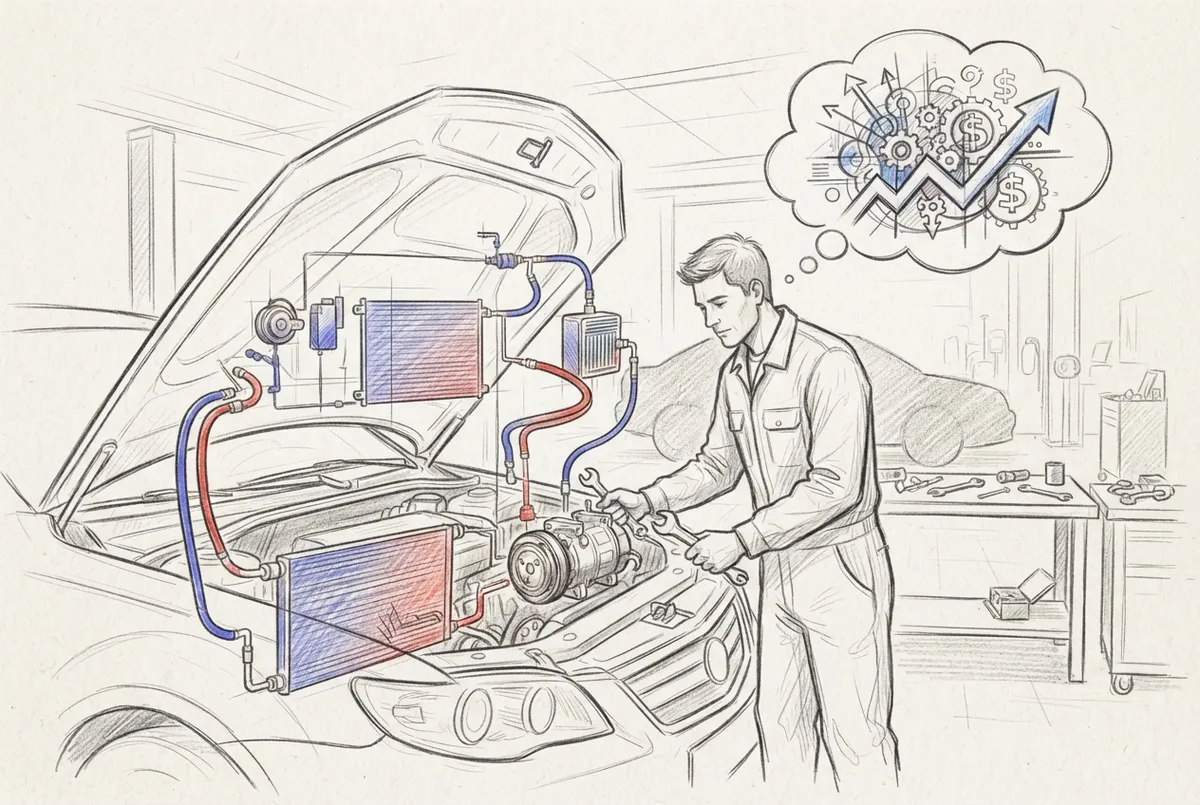
Let’s start with the big picture. National cost guides give us a helpful starting point. HomeAdvisor reports an average AC repair cost of about $417, with a common range of $172 to $664. Angi reports an average near $350, with a wider range of roughly $100 to $3,000 or more.
Those figures cover cooling systems in general, and they are national averages. They are not guaranteed local prices, and vehicle systems have their own quirks. Think of them as a ballpark, not a final bill.
For most vehicle owners, a routine A/C repair usually lands in the few-hundred-dollar range. Major component work can cost much more. Here is a quick look at how repairs tend to fall into tiers.
| Repair Tier | Typical Range | Examples |
|---|---|---|
| Minor repair | $100 to $400 | Capacitor or relay, fuse, thermostat or sensor, drain issue |
| Moderate repair | $225 to $1,600 | Refrigerant leak repair, hose or fitting replacement |
| Major repair | $900 to $5,000+ | Compressor, condenser, or evaporator replacement |
These ranges come from published national estimates, so your local quote may differ. For a closer look at vehicle-specific numbers, check out our guide on how much auto AC repair costs in 2026.
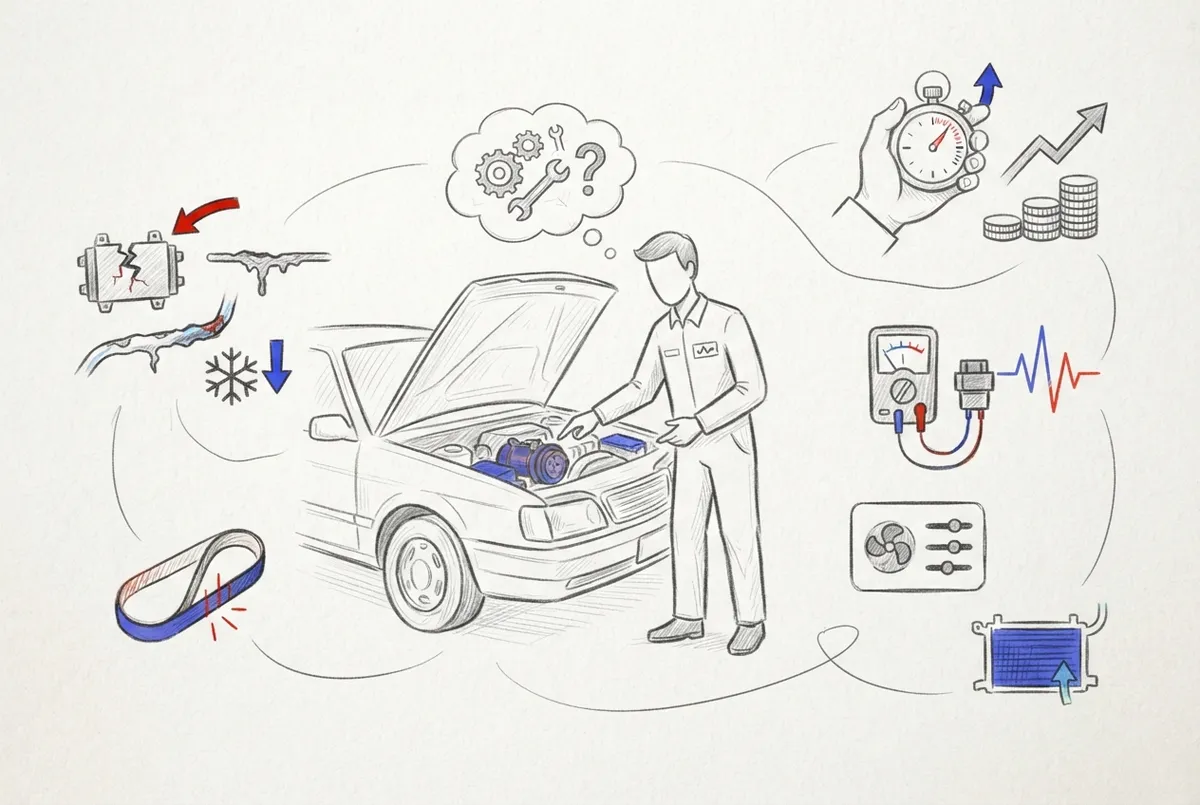
What Factors Change the Price of AC Repair?
Two vehicles can have the same warm-air problem and get very different bills. That is because several things shape the final price. Knowing them helps you read an estimate with confidence.
- The failed part: A relay is cheap. A compressor is not.
- Vehicle type and age: A heavy-duty truck or bus system is bigger than a compact car system, and older systems may need hard-to-find parts.
- Accessibility: If the part is buried deep in the dashboard, labor takes longer.
- Refrigerant type and amount: Different refrigerants cost different amounts, and bigger systems hold more.
- Local labor rates: Published labor estimates run from about $75 to $150 per hour on the low end up to $100 to $250 per hour, depending on the source and region.
- Timing: After-hours calls and peak summer rush can add to the bill.
Here in Tampa, the summer heat keeps shops busy. That is why booking early, before your A/C fully quits, often saves both money and stress.
What Is the Difference Between a Diagnostic Fee and a Repair Cost?
This one trips up a lot of people, so let’s clear it up. A diagnostic fee pays for the time it takes to find the problem. A repair cost pays for fixing it. They are often separate line items on your bill.
Before you agree to any work, ask these simple questions:
- Is there a diagnostic fee, and how much is it?
- Will the fee be credited or waived if I approve the repair?
- Does the estimate include labor, parts, refrigerant, and taxes?
- Will I get the estimate in writing, with each item listed?
Paying for a proper diagnosis is money well spent. It keeps a shop from guessing and replacing parts you do not need. If you want to understand what that first step involves, read our post on car AC diagnostic costs in 2026.
How Much Do Common AC Repairs Cost?
Now for the part you came for. Below are some common repairs and the published national ranges for them. Remember, these are planning guides, not promises.
| Repair | Estimated Range | Notes |
|---|---|---|
| Capacitor replacement | $120 to $475 | HomeAdvisor range. Trane lists $100 to $400. |
| Refrigerant recharge | $100 to $600 | Varies by refrigerant type and amount. |
| Refrigerant leak repair | $225 to $1,600 | Depends on where the leak is and how big it is. |
| Compressor replacement | $900 to $2,900 | One of the pricier single repairs. |
| Condenser coil work | $1,000 to $4,000+ | Depends on equipment and scope. |
| Evaporator coil work | $1,000 to $5,000+ | Often labor-heavy because of access. |
A few of these deserve a closer look, so let’s break them down.
Small Electrical Fixes
Capacitors, relays, fuses, and sensors are the budget-friendly repairs. They are small parts, and the fix is usually quick. If your A/C cuts in and out, or the fan will not start, a small electrical part may be the culprit.
Refrigerant Recharge and Leak Repair
Here is something many drivers do not know. Refrigerant is not “used up” like gas in your tank. If your system is low, there is almost always a leak somewhere. A recharge-only price may not include finding or fixing that leak, so the cooling can fade again in a few weeks.
Ask whether the quote includes leak detection. Fixing the leak is what makes the repair last. Our guide on 13 AC leak mistakes that cost car owners more money covers the most common pitfalls.
Compressor Replacement
The compressor is the heart of your A/C system. When it fails, the repair is bigger and the price shows it. Published estimates run from about $900 to $2,900. Heavy-duty applications, like a transit bus or a fire truck, can differ based on the specific unit.
If a compressor fails, the cause matters. Debris from the failure can spread through the system, so a thorough shop will check the rest of the system, not just swap one part. To learn more, see 5 key factors that determine AC compressor replacement cost.
Coil Repairs
Evaporator and condenser repairs sit at the top of the price scale. The evaporator is often tucked behind the dash, so labor can be the biggest part of the bill. That is why you see ranges that stretch into the thousands.
Does Your Type of Vehicle Change the Cost?
It sure does. A/C systems are not one-size-fits-all, and the equipment you drive matters.
- Car owners: Most passenger vehicle repairs fall in the lower to middle part of the ranges above. Newer cars using 1234yf refrigerant can cost more to service.
- Truck drivers: Heavy-duty truck systems are larger, and downtime costs you money. A fast, correct repair matters as much as the price.
- Bus operators: Transit and shuttle buses have bigger, more complex systems, so parts and labor can run higher.
- RV enthusiasts: Roof units and dash systems each have their own parts and quirks.
- Heavy equipment operators: Dust, vibration, and long hours in the sun are tough on cab A/C systems. Repairs often involve hoses and fittings.
- Fleet owners: Spreading maintenance across many vehicles can lower your long-term cost per vehicle.
Fleet managers, in particular, can save a lot by planning ahead. Take a look at 4 fleet vehicle AC repair tips that save you money for practical ideas.
Should You Repair or Replace Your A/C System?
This is the big question when a quote comes in high. Sometimes a repair is the smart move. Other times, replacing a part or even a larger piece of the system makes more sense.
Here is a simple way to think it through:
- Get a proper diagnosis first. A technician should find the fault before anyone recommends replacement.
- Compare the repair estimate with the cost of replacement.
- Consider the age and condition of the rest of the system.
- Ask about warranty coverage on parts and labor.
- Think about future repair costs, not just today’s bill.
If a repair costs a large share of what a replacement would, and the system is old, replacement may be the better long-term value. For a deeper look, read AC repair vs. AC replacement: which is right for you.
Can You Save Money on AC Repair?
Absolutely. A little planning goes a long way. Here are some friendly tips we share with our customers:
- Act early. A small leak or weak airflow is cheaper to fix than a failed compressor.
- Get an itemized written estimate. It makes comparing options easy.
- Ask about warranties. Parts or labor may be covered, which can save you real money.
- Do not skip the diagnosis. Guessing at repairs is the fastest way to overspend.
- Keep up with maintenance. Regular checks catch trouble before it grows.
Routine care really does pay off. See our 5 AC maintenance tips every Tampa vehicle owner needs to keep your system healthy.
It also helps to avoid common mistakes. Our post on 10 auto AC repair mistakes that cost you more money is worth a quick read before you book.
What Should You Look for in an A/C Shop?
The price matters, but so does who is doing the work. A cheap fix that fails in a month is not a bargain. Look for a shop that specializes in A/C, explains the problem in plain language, and stands behind its work.
A few good signs of a trustworthy shop:
- Clear, itemized written estimates
- Proper licensing and insurance for your area
- Technicians trained in current refrigerants and standards
- A warranty on parts and labor
- Good reviews from real customers
At Marks Air, we have focused on vehicle and equipment A/C in Tampa since 1971. We are a family-owned, woman-owned business and a proud member of the Mobile Air Climate Systems Association (MACS). Our team handles diagnostics, leak detection, hose fabrication, repairs, and installations all under one roof. You can browse our full list of A/C services to see what we do.
Curious what others think? You can see what our Marks Air customers say on Google, or read more on our reviews page. Seeing real feedback from fellow Tampa drivers is a great way to feel confident before you book.
Does Insurance or a Warranty Cover AC Repair?
It is worth a quick check before you pay out of pocket. Standard auto insurance usually does not cover A/C repairs from normal wear. It may help if damage came from a covered event, like a collision. A manufacturer, extended, or shop warranty is more likely to cover parts or labor.
Read the fine print and ask your shop what is covered. Knowing this ahead of time can turn a surprise bill into a manageable one.
A Quick Word on Parts and Availability
Part choice affects both price and speed. At Marks Air, we stock a full line of A/C components, including our KOOL-TEMP line and trusted industry brands, with many items available the same day. Having parts on hand means less downtime, which matters whether you drive to work or run a fleet. Explore our A/C parts to see what is available.
Ready to Find Out What Your Repair Will Cost?
Every vehicle is different, so the only way to know your real price is to have a technician take a look. Do not let a warm vent turn into a bigger problem. A quick check now can save you real money later.
Ready for a clear answer and a fair, itemized estimate? Schedule service with our Tampa team, or call us at 813-988-1671 to talk it through. We would love to help you get cool again.
FAQs
Q: How much does AC repair cost on average?
A: National estimates put the average around $350 to $417, with common repairs falling between about $100 and $700. Major parts like a compressor or coil can run into the thousands, so your real price depends on what failed and what you drive.
Q: How much does an AC diagnostic or service call cost?
A: Many shops charge a separate diagnostic fee to find the problem. Ask up front whether that fee is credited or waived if you approve the repair, and always request an itemized written estimate.
Q: Is a refrigerant recharge enough to fix my AC?
A: Not usually. Refrigerant does not get used up, so a low system often means there is a leak. A recharge-only price may not include leak detection or repair, so the cooling can fade again soon after.
Q: Is it worth repairing an older A/C system or should I replace it?
A: It depends on the repair cost, the age of the system, and how much life it has left. Have a technician diagnose the problem first, then compare the written repair estimate with replacement and warranty options.
Q: Does insurance or a warranty cover AC repairs?
A: Regular auto insurance usually does not cover normal wear on an A/C system, though it may help after a covered event like a collision. A manufacturer, extended, or shop warranty is more likely to cover parts or labor, so check the terms before you approve any work.