Key Takeaways
-
Start diagnosing by identifying the specific symptom (warm air, weak airflow, strange noises, odd smells) rather than jumping to parts, as each symptom points to different causes and saves diagnostic time.
-
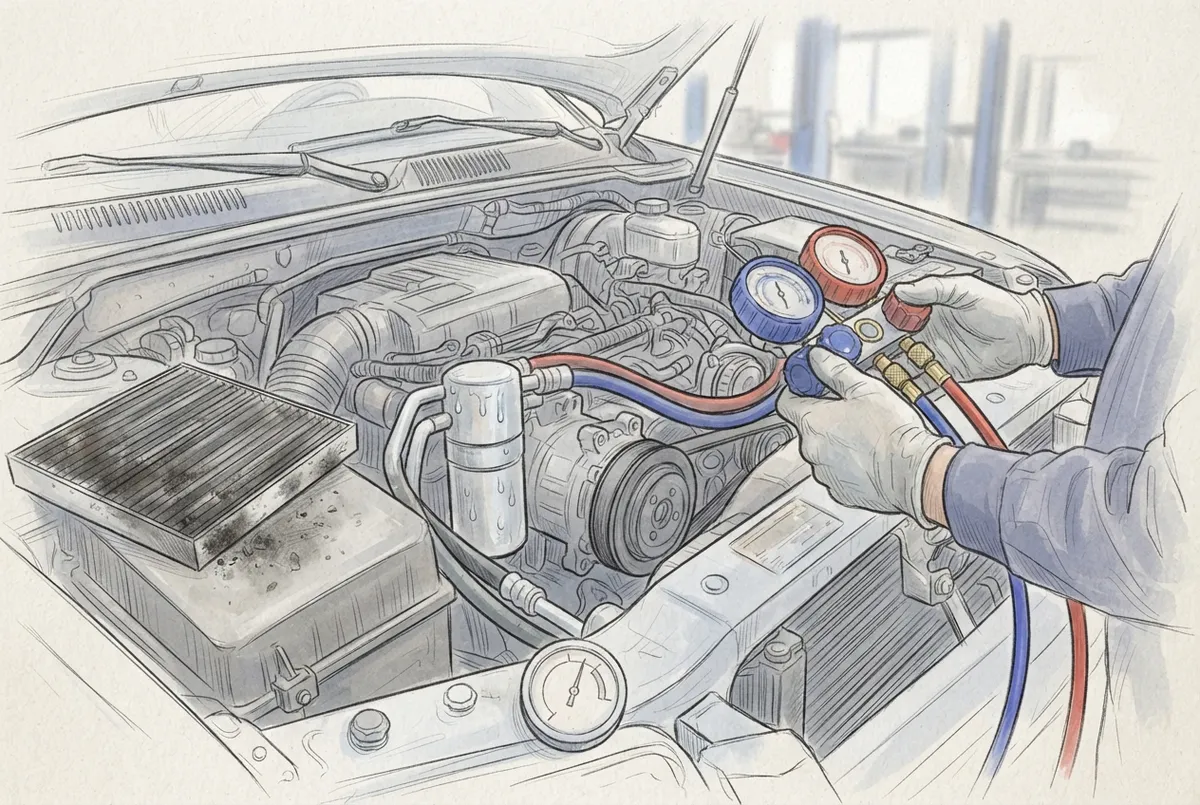
Perform safe owner checks first: verify A/C settings, replace dirty cabin filters, inspect the condenser for debris, test airflow at all vents, and look for oily residue on hoses—these simple steps often reveal the problem or provide helpful clues.
-
Refrigerant is not consumed during normal operation, so low levels almost always indicate a leak that requires professional detection and repair, not just a quick recharge that masks the real problem.
-
Stop using the A/C immediately and call a technician if you notice burning smells, severe grinding or screeching noises, repeatedly blown fuses, water near electrical parts, or ice that returns after clearing filters.
-
A proper professional diagnosis checks thermostat operation, electrical systems, compressor clutch, airflow, evaporator and condenser condition, drainage, and system pressures—not just refrigerant levels—to fix the root cause and avoid costly repeat failures.
-
Different vehicle types (cars, trucks, RVs, heavy equipment) have different A/C stress factors, so Tampa drivers should schedule yearly preventive inspections before summer and keep condensers clear of debris to avoid expensive repairs.
There is nothing quite like the moment you turn on your A/C on a hot Tampa afternoon and get a blast of warm, stale air. Your shirt sticks to the seat, your mood drops, and you start wondering what went wrong. Don’t worry. You are not alone, and the good news is that many A/C problems leave clues behind.
Learning how to diagnose AC problems starts with paying attention to what your system is telling you. Is the air warm? Is the airflow weak? Do you hear strange noises or smell something odd? Each symptom points toward a different cause. This guide walks you through a friendly, step-by-step approach for cars, trucks, buses, RVs, and heavy equipment. You will learn which simple checks are safe to do yourself, when to stop, and when it is time to call a professional.
We have been helping vehicle owners since 1971, so we have seen just about every A/C problem out there. Let’s get you cooled off and back on the road.
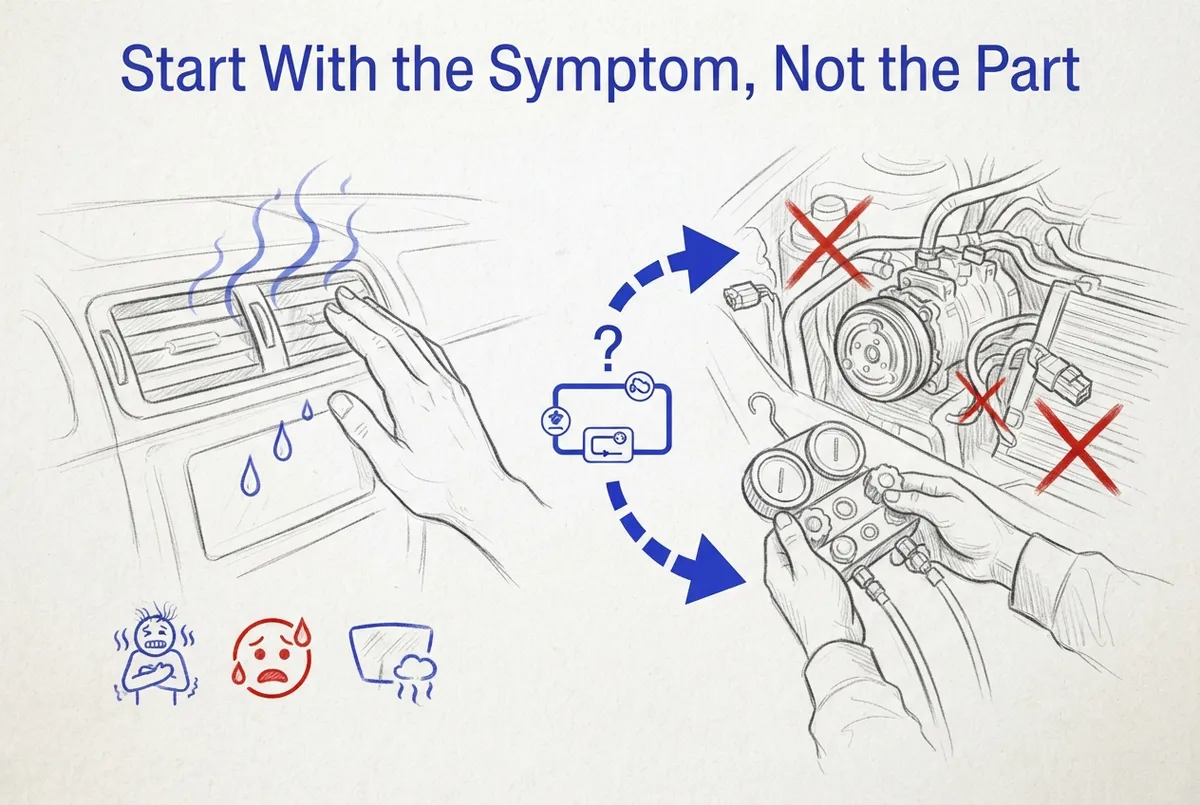
Start With the Symptom, Not the Part
The best way to diagnose A/C trouble is to match the symptom to likely causes. Before you touch anything, take a moment to note what is happening. Ask yourself a few simple questions:
- Is the air blowing warm, cool, or only slightly cool?
- Is the airflow strong, weak, or missing altogether?
- Does the problem happen all the time, or only at idle, at highway speed, or after a long drive?
- Do you hear clicking, rattling, squealing, or grinding?
- Do you smell something musty, sweet, or burning?
- Do you see water, oily residue, or ice anywhere?
Write these notes down. A technician will love you for it. Details like when the problem started, and whether anything changed right before (a new fuse, a jump start, a recent repair), can save a lot of diagnostic time.
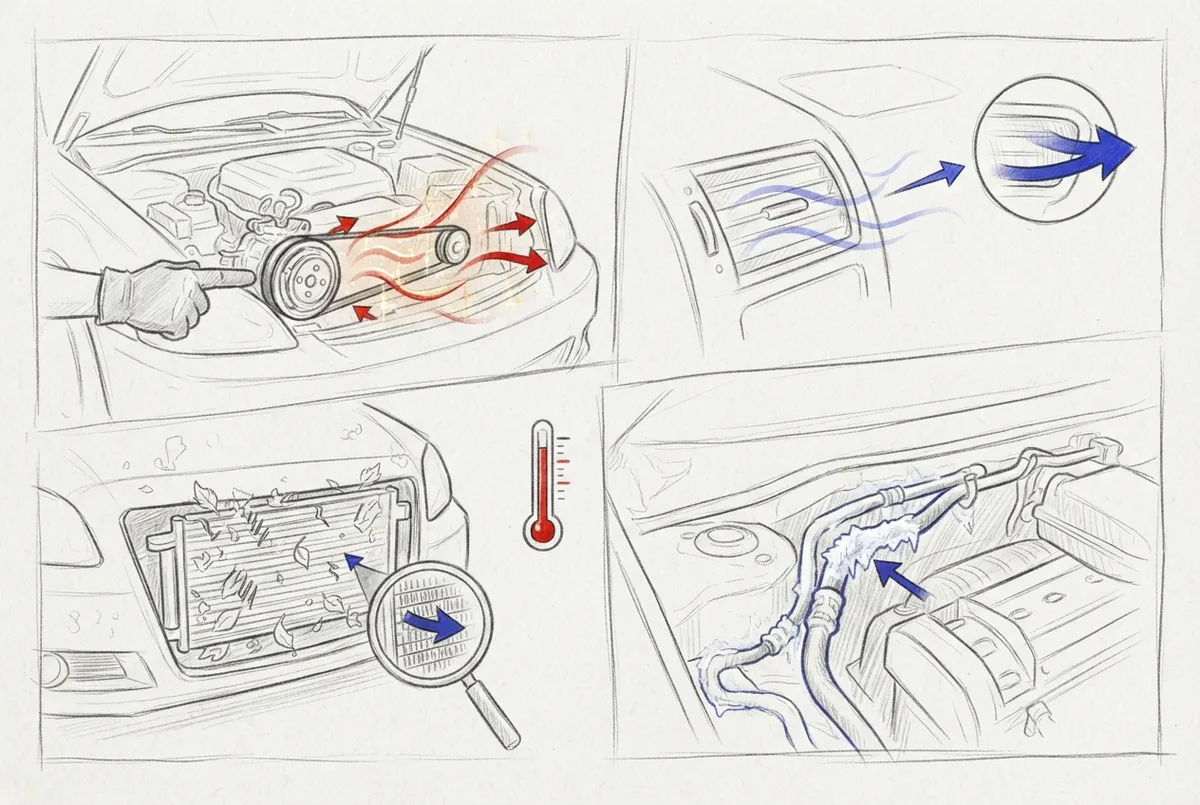
Quick Symptom Guide: What Is Your A/C Trying to Tell You?
Think of this table as a cheat sheet. It will not replace a hands-on inspection, but it points you in the right direction.
| Symptom | Common Possible Causes | Safe Owner Check? |
|---|---|---|
| Blows warm air | Low refrigerant from a leak, failed compressor clutch, blocked condenser, electrical fault | Check settings and look for debris in front of the condenser |
| Weak airflow | Dirty cabin filter, failing blower motor, blocked vents or ducts | Replace the cabin filter and check vents |
| Ice or frost forming | Restricted airflow, dirty coil, refrigerant or moisture problem | Turn the system off and let it thaw |
| Cycles on and off quickly | Low refrigerant, pressure switch trouble, electrical issue | Listen and note the pattern for your technician |
| Loud noise | Worn compressor, failing clutch, loose belt, bad blower | Turn the system off and note when the noise occurs |
| Musty smell | Moisture and buildup in the evaporator area | Replace the cabin filter |
| Water inside the cabin | Clogged drain line | Note where water appears and call for service |
Step-by-Step: Safe Checks You Can Do Yourself
Before you pay for a repair, run through these basic checks. They only take a few minutes, and sometimes the fix is simple. Remember, these are owner-friendly steps. Stay away from anything involving electrical panels or the refrigerant itself.
- Check your settings. Make sure the A/C button is on, the temperature is set to cold, and the fan speed is up. It sounds silly, but it happens to the best of us.
- Look at the air mode. Switch between recirculate and fresh air. If one mode works and the other does not, that is a helpful clue to share with a technician.
- Test the airflow at every vent. Try every fan speed. If the fan only works on high, the blower resistor may be failing. If there is no airflow at all, the blower motor or a fuse may be the issue.
- Inspect the cabin air filter. A dirty filter can choke airflow and make cooling feel weak. Replace it if it looks gray, clogged, or full of leaves.
- Check the front of the vehicle. With the engine off, look at the condenser (it sits in front of the radiator). Bugs, leaves, and road debris can block airflow and hurt cooling.
- Listen for the compressor clutch. With the engine running and the A/C on, you should hear a soft click as the compressor engages. No click can point to an electrical or low-pressure issue.
- Look for obvious leaks or damage. Oily residue on hoses or fittings often signals a refrigerant leak. Just look. Do not touch or loosen anything.
If these checks do not solve the problem, you have gathered great information. That is real progress, and it will make the next step faster and cheaper.
Common Causes Behind Poor Cooling
Dirty or Blocked Airflow
Airflow trouble is one of the most common and most fixable problems. A clogged cabin filter, blocked vents, or debris in front of the condenser can all make your A/C feel weak. A restricted flow of air can even contribute to ice forming on the evaporator. If you see ice, turn the system off. Do not chip the ice away. Let it thaw naturally.
If the ice keeps coming back after you have cleaned the filter and cleared obstructions, stop running the system and book a professional diagnosis. For more on this, our guide on what causes AC coils to freeze in your vehicle goes into helpful detail.
Low Refrigerant (Usually a Leak)
Here is something many drivers do not know: refrigerant is not used up during normal operation. If your system is low, there is almost always a leak somewhere. Hoses, seals, fittings, the condenser, and the evaporator are all common leak spots.
Simply adding refrigerant might cool things down for a while, but it leaves the real problem unsolved. A qualified technician should find the leak, repair it, and then charge the system to the correct specification. If you want to learn what leaks look like, read how to detect AC leaks in your truck before they get worse.
Compressor and Clutch Problems
The compressor is the heart of your A/C system. When it struggles, cooling suffers. Warning signs include grinding or squealing noises, a clutch that does not engage, or warm air that never seems to cool down. If you suspect compressor trouble, our article on how to fix an AC compressor in your vehicle explains what to expect.
Electrical and Control Issues
Fuses, relays, pressure switches, sensors, and wiring all play a part in keeping your A/C running. A single failed switch can shut down the whole system. Electrical faults can also be a safety risk, so this is one area where it pays to leave the work to a trained technician.
What About Warm Air Specifically?
Warm air is the symptom we hear about most often. The causes can range from a simple blocked condenser to a failed compressor or a refrigerant leak. If this is your main complaint, take a look at 10 reasons your AC is blowing warm air for a longer list of possible causes and fixes.
What a Professional Technician Checks
When you bring your vehicle in, a good technician does far more than “top off the freon.” A proper diagnosis typically includes:
- Thermostat or climate control operation
- Electrical supply, fuses, relays, and controls
- Compressor clutch and fan operation (indoor and outdoor fans)
- Airflow through the cabin and across the condenser
- Evaporator and condenser condition
- Condensate drainage
- System operating measurements and pressures
- Leak detection using the right tools
Importantly, refrigerant charge should be checked against the manufacturer’s specification and alongside airflow and equipment condition. It should not be guessed from a single symptom or one pressure reading. ENERGY STAR guidance also stresses that both refrigerant charge and proper airflow affect performance and reliability.
If you want to know what a diagnostic visit may cost, here are 3 key facts about car AC diagnostic cost in 2026. And for a fuller picture of how a repair visit unfolds, see 6 steps that show what AC repair involves in 2026.
Diagnosing A/C Problems by Vehicle Type
Different vehicles bring different challenges. Here is how the basics play out across the kinds of equipment we see every day.
Cars
Everyday drivers in Tampa usually notice the problem first as warm air at a red light. Short drives and stop-and-go traffic put extra stress on the system. Start with the simple checks above, then schedule a professional diagnosis if cooling does not improve.
Trucks and Fleet Vehicles
For professional drivers and fleet owners, A/C trouble means more than comfort. It can mean driver fatigue and lost time. Heavy-duty systems have larger components, so leaks and compressor wear can show up differently. Regular inspections help you catch small problems before they become costly downtime. Our fleet vehicle AC diagnostics guide is a great read for fleet managers.
Buses and Transit Vehicles
Passenger comfort and safety depend on a well-running A/C. Larger cabins, multiple evaporators, and long run times all raise the stakes. If a bus is cooling unevenly or cycling oddly, schedule service promptly.
RVs
RV owners often notice problems at the worst time, such as in the middle of a trip. Keep an eye on airflow, listen for unusual noises, and check for blocked intakes before you hit the road.
Heavy Equipment
Operators of construction and agricultural machines work in dusty, hot, demanding conditions. Dust can clog condensers and filters quickly. A cooler cab reduces operator fatigue, so keep these parts clean and have the system inspected on a regular schedule.
Safety First: What NOT to Do
Your A/C system includes moving belts, electrical components, and a pressurized refrigerant circuit. That mix can cause shock, injury, or damage if handled wrong. Please keep these rules in mind:
- Do not open electrical panels or bypass safety switches.
- Do not handle or vent refrigerant. Refrigerant service is regulated.
- Do not attempt refrigerant-side repairs at home.
- Do not keep running a system that is icing up or making severe noises.
EPA Section 608 certification is generally required for technicians who service equipment in ways that could release regulated refrigerant, and intentionally venting regulated refrigerants is prohibited. For motor vehicle A/C work, EPA 609 certification is the standard for technicians. If you are curious about the training side, 13 EPA 609 certification training mistakes to avoid is a helpful read.
When to Turn It Off and Call for Service
Some warning signs mean it is time to stop and get help right away. Shut the system off and call a technician if you notice any of these:
- A burning smell coming from the vents or under the hood.
- Fuses or breakers that blow or trip again and again.
- A cooling fan that is not running.
- Water leaking near electrical parts.
- Severe, sudden noises such as grinding or screeching.
- Ice that returns after you cleared the filter and airflow.
If you spot several of these at once, it is wise to act fast. Our list of 7 signs you need emergency AC repair right now can help you decide how urgent your situation really is.
Why Fixing the Root Cause Matters
It is tempting to grab a quick fix, especially when the heat is on. But a quick recharge can hide a leak, and a leak left alone can lead to bigger damage. Moisture and contamination can creep into the system and harm the compressor, which is one of the priciest parts to replace.
A careful diagnosis saves money over time. It tells you exactly what is wrong, so you only pay for what is needed. If you are weighing your options, AC repair vs. AC replacement can help you think it through. And if you want to avoid common pitfalls, check out 10 auto AC repair mistakes that cost you more money.
Keep Problems From Coming Back
Prevention is the friendliest way to handle A/C trouble. A few simple habits go a long way:
- Replace the cabin air filter on schedule.
- Run the A/C regularly, even in cooler months, to keep seals lubricated.
- Keep the area in front of the condenser clear of debris.
- Schedule a yearly A/C check before the heat of summer hits.
- Act on small symptoms early instead of waiting.
You can find more ideas in 5 AC maintenance tips every Tampa vehicle owner needs. Tampa’s heat and humidity are tough on A/C parts, so regular care really does pay off.
Why Tampa Drivers Trust Marks Air
When the simple checks do not solve the problem, you want a team that knows A/C inside and out. Marks Air is a family-owned, woman-owned shop that has served Tampa since 1971. We focus on vehicle and heavy equipment air conditioning, which means diagnostics, leak detection, repairs, parts, and installations are all handled under one roof. We are proud to be a member of the Mobile Air Climate Systems Association (MACS), which keeps us in step with current industry standards.
Curious what other drivers think? See what our Marks Air customers say on Google by visiting Visit us on Google — Marks Air, or browse our customer reviews. You can also learn more about our A/C services and browse our A/C parts when you are ready to fix the problem for good.
If your project involves a mobile office or a custom build and you need great interior finishing work, our friends at Bucheli Trim do wonderful trim carpentry.
Wrapping It Up
Now you know how to diagnose AC problems like a pro: start with the symptom, run the safe checks, listen to what your system is telling you, and know when to stop. You do not have to be an expert to gather useful clues, and you never have to guess alone. Small details, such as when the problem started and what it sounds like, make a big difference.
If your A/C is still not behaving, we would love to help. Schedule service with our Tampa team or call us at 813-988-1671. We will find the cause, fix it right, and get you cool again.
FAQs
Q: Why is my A/C running but not cooling my vehicle?
A: The most common reasons are low refrigerant from a leak, a blocked condenser, a failing compressor clutch, or an electrical fault. Start by checking your settings, the cabin filter, and the front of the vehicle for debris. If the air is still warm, a technician can test the system safely and find the real cause.
Q: What should I check first when my car A/C stops working?
A: Begin with the easy stuff. Make sure the A/C is on, the temperature is set to cold, and the fan is turned up. Then check the cabin air filter, test every vent, and look for debris in front of the condenser.
Q: How can I tell if my A/C has a refrigerant leak?
A: Common clues include air that slowly gets warmer over time, oily residue on hoses or fittings, and a compressor that cycles on and off quickly. Refrigerant is not used up in normal operation, so low levels almost always mean a leak. A technician can pinpoint it with proper leak detection tools.
Q: Why is my A/C freezing up or forming ice?
A: Ice usually points to restricted airflow, a dirty coil, or a refrigerant or moisture problem. Turn the system off and let it thaw, and do not chip the ice away. If it keeps coming back after you clean the filter and clear obstructions, schedule a professional diagnosis.
Q: When should I turn off my A/C and call a technician?
A: Shut it off right away if you smell burning, hear severe or sudden noises, see water near electrical parts, or notice fuses blowing repeatedly. Continuing to run the system can make the damage worse or create a safety risk. Give us a call and we will help you figure out the next step.