Key Takeaways
-
Low refrigerant almost always indicates a leak; simply adding refrigerant without finding and fixing the leak will result in the same problem recurring, requiring a proper diagnosis of hoses, seals, fittings, condenser, evaporator, and compressor.
-
A thorough A/C diagnostic process includes visual inspection, pressure testing, leak detection, filter checks, component testing, refrigerant recovery, evacuation, and recharging to manufacturer specifications—skipping steps leads to repeat repairs.
-
Different refrigerant types (R-134a for older vehicles, R-1234yf for newer models) require specific equipment and handling; EPA regulations now mandate R-1234yf for 2025+ model year vehicles, making it critical to identify your vehicle's correct type.
-
DIY recharge kits risk masking bigger problems, overcharging systems, and damaging compressors, especially on newer vehicles with R-1234yf; professional service takes 30-60 minutes and includes proper diagnosis at minimal additional time cost.
-
Before booking repair service, ask for written estimates covering refrigerant type, labor, parts, and disposal fees; confirm technician certification for your refrigerant type and request warranty details on parts and labor.
-
Basic A/C recharge costs $100-$350, leak diagnosis and minor repairs run $150-$450, and compressor replacement ranges $500-$1,200, with actual pricing dependent on vehicle type, refrigerant, and local labor rates.
Nothing ruins a Tampa afternoon faster than a car A/C that suddenly quits blowing cold air. One minute you’re cruising comfortably, the next you’re sweating through your shirt at a red light. If you’ve been typing “a/c repair for cars near me” into your phone lately, you’re definitely not alone, and you’re in the right place. This guide will walk you through everything you need to know to find honest, reliable help for your vehicle’s cooling system.
Whether you’re a daily commuter, a truck driver logging long hours, a bus operator keeping passengers comfortable, an RV owner chasing sunshine, or a fleet manager juggling dozens of vehicles, warm air from your vents is more than an annoyance. It’s a signal that something needs attention. Let’s break down what causes A/C trouble, what a proper repair looks like, and how to choose a shop that treats you right.
Why Your Car A/C Stops Blowing Cold Air
Car air conditioning systems are surprisingly complex, with plenty of parts that can wear out over time. Understanding the basics helps you talk to your technician and spot red flags before they become expensive problems.
Common Warning Signs You Shouldn’t Ignore
Your car often gives you clues before the A/C fails completely. Catching these early can save you money and keep you cool during Tampa’s brutal summers.
- Warm or lukewarm air coming from the vents instead of cold air
- Weak airflow even when the fan is on high
- Strange clicking, grinding, or rattling noises when the A/C runs
- A musty or moldy smell when you turn on the system
- Water pooling on the passenger-side floor
- Windows that fog up or won’t defrost properly
- The compressor cycling on and off rapidly
If you’re noticing any of these symptoms, it’s worth reading more about 10 Reasons Your AC Is Blowing Warm Air (And How to Fix It) to get a better idea of what’s going on before you even head to the shop.
What’s Really Behind Low Refrigerant
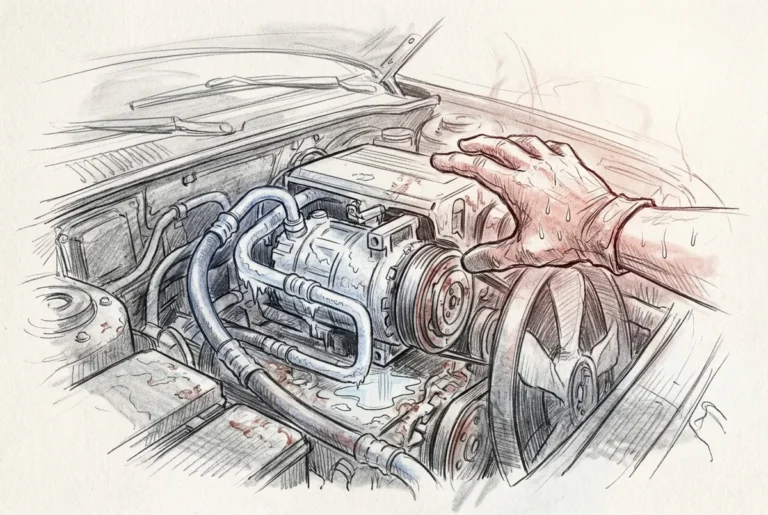
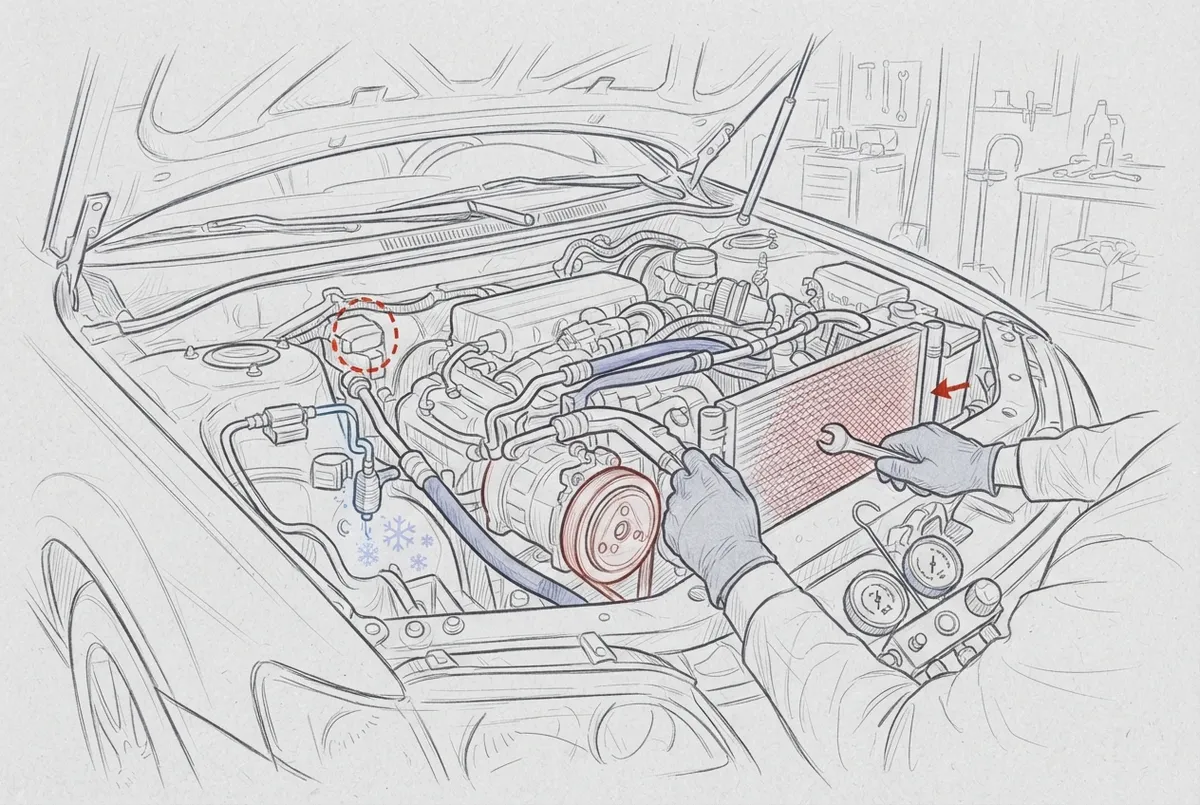
Here’s something a lot of drivers don’t realize: cars don’t just “use up” refrigerant over time like gas in a tank. If your system is low, there’s almost always a leak somewhere. Simply adding more refrigerant without finding that leak is like patching a hole in a boat with tape. It might work for a little while, but the problem comes right back.
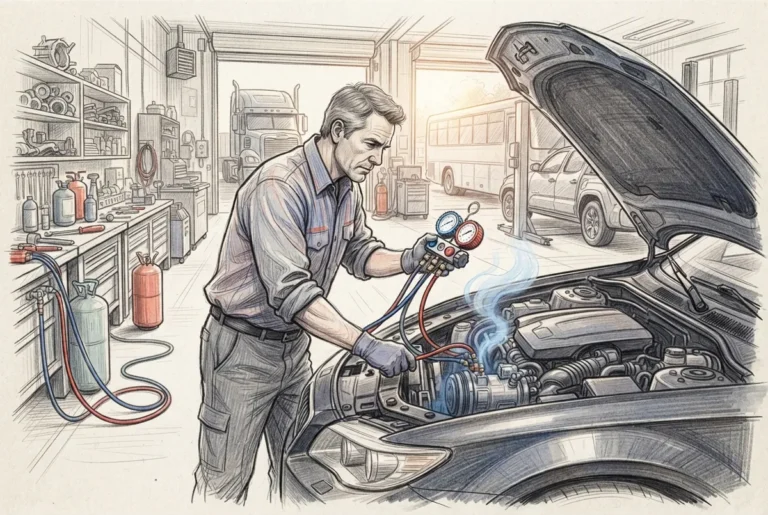
A proper diagnosis means checking hoses, seals, fittings, the condenser, evaporator, and compressor for signs of leaking. Once the leak is found and fixed, a good technician will recover any remaining refrigerant, evacuate the system, and recharge it to the exact amount your manufacturer specifies. Skipping steps here is one of the most common ways drivers end up paying for the same repair twice.
The Diagnostic Process: What a Good Shop Actually Does
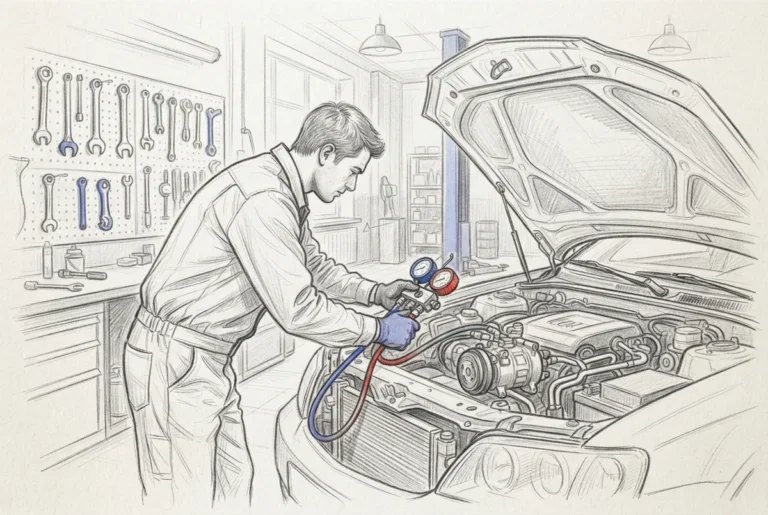
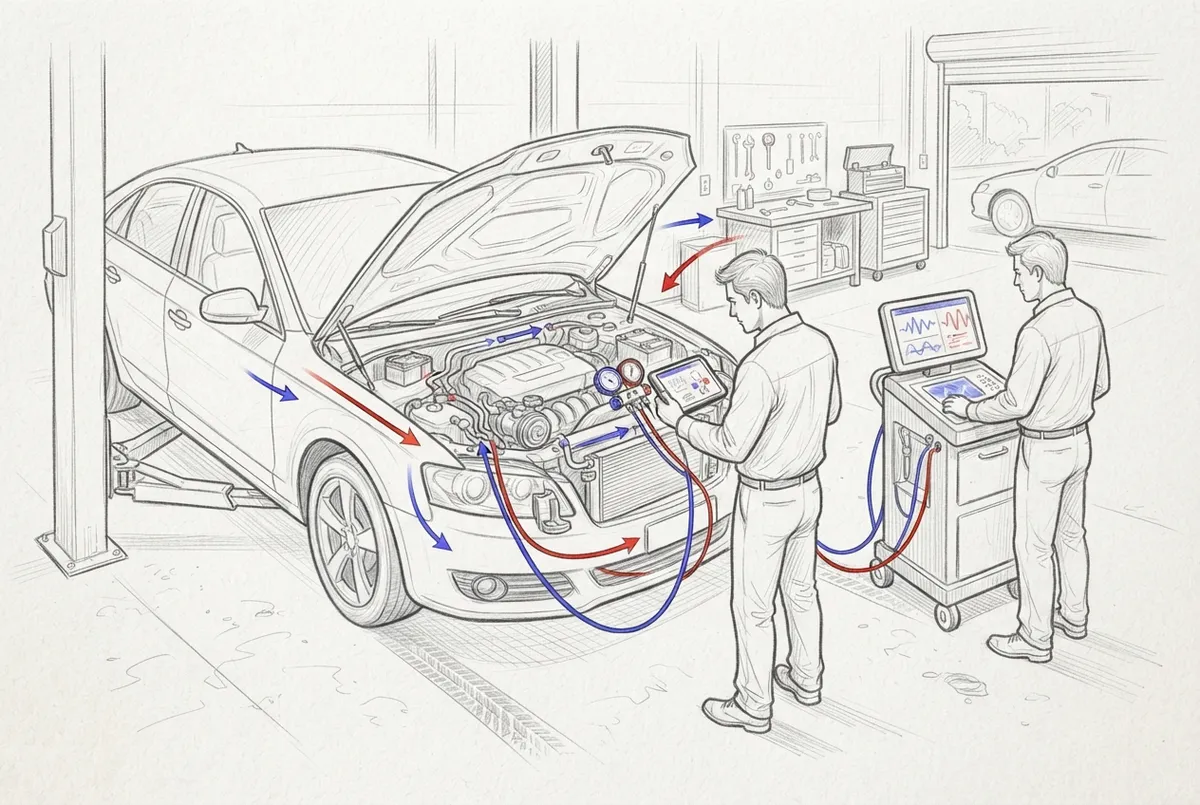
When you bring your car in for A/C trouble, a trustworthy shop won’t just guess. Here’s a typical step-by-step process you should expect:
- A visual inspection of hoses, fittings, and connections for oil residue or visible damage
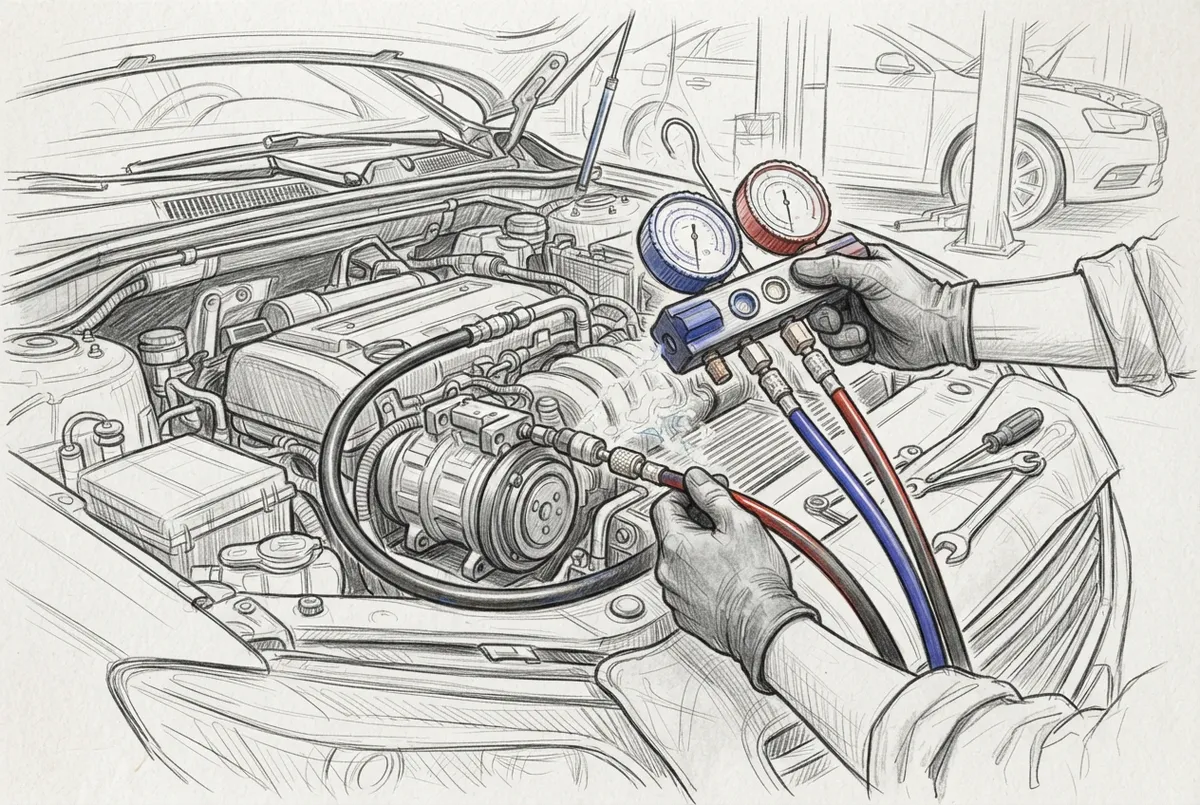
- Pressure testing to measure how the system is performing under real conditions
- Leak detection using UV dye or an electronic leak detector
- Checking the cabin air filter and evaporator for blockages or ice buildup
- Testing the compressor, condenser, and blend door for proper function
- Recovering old refrigerant and evacuating the system to remove air and moisture
- Recharging with the correct refrigerant type and exact amount
- A final test drive or run-through to confirm cold air is flowing consistently
This kind of thorough approach is exactly why proper diagnostics matter so much. You can learn more about what’s involved by checking out 3 Key Facts About Car AC Diagnostic Cost in 2026.
Understanding Refrigerant Types: R-134a vs R-1234yf
Not all car A/C systems use the same refrigerant, and getting this wrong can cause real damage. Your vehicle’s specific refrigerant type is usually listed on a sticker under the hood or in your owner’s manual.
| Feature | R-134a | R-1234yf |
|---|---|---|
| Common in | Older vehicles, pre-2015 models | Newer vehicles, increasingly standard |
| Global Warming Potential | 1,430 | 4 |
| Equipment needed | Standard recovery/recharge machines | Compatible R-1234yf specific equipment |
| Typical service cost | Generally lower | Generally higher due to refrigerant cost |
According to the U.S. Environmental Protection Agency, HFC-134a carries a global warming potential of 1,430, while HFO-1234yf sits at just 4. Neither is ozone-depleting, but the EPA has set new limits requiring lower global-warming-potential refrigerants in light-duty vehicles starting with model year 2025. This means more and more cars on Tampa roads will be using R-1234yf going forward, so it’s smart to know which one your vehicle needs before mixing anything up. For more details, check out 12 Things to Know About R-134a to 1234yf Conversion.
How Much Does Car A/C Repair Cost Near You?
Pricing can vary quite a bit depending on your vehicle, the refrigerant type, and what’s actually wrong. Here’s a general breakdown based on current 2026 pricing guides.
| Service Type | Typical Price Range |
|---|---|
| Basic recharge (no leak found) | $100 – $350 |
| Leak diagnosis and minor repair | $150 – $450 |
| Compressor replacement | $500 – $1,200 |
| Evaporator or multi-component repair | Varies significantly, often higher |
Keep in mind these are general ranges. Your actual cost depends on your specific vehicle, refrigerant type, and labor rates in your area. For a full cost breakdown, take a look at How Much Does Auto AC Repair Cost in 2026? and 13 Facts on Cost to Fix AC in Car (2026 Tampa Guide).
How to Choose the Right Shop for Your Vehicle
Finding “a/c repair for cars near me” is easy. Finding a shop you can actually trust takes a little more thought. Here’s what to look for.
Questions to Ask Before You Book
- Do they provide a written estimate before starting work?
- Does the estimate include refrigerant, labor, parts, and disposal fees?
- Do they explain their diagnostic findings in plain language?
- Are their technicians trained and certified for your refrigerant type?
- Do they offer a warranty on parts and labor?
- Can they service your specific vehicle type, whether that’s a car, truck, bus, or RV?
A shop that hesitates to answer these questions clearly is one worth thinking twice about. Reading customer feedback also helps. You can check out real customer reviews to see how a shop has treated people just like you.
Shop-Based vs Mobile Service
Some situations call for mobile service, especially for fleets or heavy equipment that’s hard to move. Other times, bringing your vehicle to a fully equipped shop gets you access to better diagnostic tools. If you’re weighing your options, this comparison on Local A/C Service Near Me: Shop vs. Mobile, Which Wins? breaks down the pros and cons nicely.
Special Considerations for Different Vehicles
Not every A/C system is built the same, and different vehicle types come with their own quirks.
Trucks and Fleet Vehicles
If you’re managing a fleet or driving long-haul routes, A/C downtime isn’t just uncomfortable, it can affect your schedule and compliance. Fleet owners benefit from preventive maintenance plans rather than waiting for a breakdown. Learn more in 4 Fleet Vehicle AC Repair Tips That Save You Money.
Buses and Transit Vehicles
Passenger comfort and safety go hand in hand for transit operators. A properly functioning A/C system isn’t optional when you’re responsible for dozens of riders every day. Check out What Does Proper Bus AC System Maintenance Actually Involve? for a deeper look.
RVs and Specialty Vehicles
RV cooling systems often face extra strain from long trips and extended parking in the sun. If you’re planning a trip through Florida heat, it pays to get your system checked beforehand. See 6 RV Air Conditioner Repair Parts Mistakes to Avoid for common pitfalls.
Heavy Equipment
Operators running construction or agricultural machinery in the Florida sun need working A/C to avoid fatigue and stay productive. A cab without cooling isn’t just uncomfortable, it’s a safety risk. Learn more at How to Get Heavy Equipment AC Repair Done Right.
Why DIY Recharge Kits Aren’t Always the Answer
We get it, those DIY recharge kits at the auto parts store look tempting. They’re cheap and promise a quick fix. But here’s the catch: they can mask a bigger problem, overcharge your system, or even damage your compressor if used incorrectly.
DIY kits are especially risky for newer vehicles using R-1234yf, hybrids, and electric vehicles, which often have more sensitive components. If your system truly just needs a top-off, a professional recharge takes about the same amount of time, usually 30 to 60 minutes, and comes with a proper diagnosis to boot.
A Shop With Deep Roots in Tampa
Since 1971, Marks Air has been a family-owned, woman-owned business dedicated entirely to A/C systems for cars, trucks, buses, RVs, and heavy equipment. That’s over five decades of focused experience right here in Tampa, and it shows in the quality of the diagnostics and repairs performed every day.
The shop stocks a full range of parts, including its own KOOL-TEMP line along with trusted brands like SPAL, ACT, BCC, gpd, and Omega, so many repairs can be completed the same day. Marks Air is also proud to be a member of the Mobile Air Climate Systems Association (MACS), keeping the team current on industry standards and evolving refrigerant technology.
You can browse the shop’s full A/C parts inventory or explore the range of available A/C services to see how comprehensive the offerings really are. And if you’re a technician looking to sharpen your skills, Marks Air even offers A/C training programs covering EPA 609 certification and HFO-1234yf best practices.
What to Bring and Ask When You Visit
Showing up prepared helps your technician diagnose the problem faster and gives you peace of mind. Here’s a simple checklist before your appointment.
- Note when the A/C problem started and any changes in sound or smell
- Check your owner’s manual for your refrigerant type if possible
- Ask for a written estimate before any work begins
- Confirm what’s included in the price: parts, labor, refrigerant, and disposal fees
- Ask about warranty coverage on both parts and labor
Being proactive like this puts you in the driver’s seat, pun fully intended, when it comes to getting fair and transparent service.
Ready to Get Your Cool Air Back?
Dealing with a warm, sticky car in Tampa’s heat is nobody’s idea of fun, but you don’t have to just live with it. A proper diagnosis, honest pricing, and skilled repair work can have you back to cruising in cool comfort in no time. Whether you drive a sedan, manage a fleet, or operate heavy equipment, getting your A/C checked by people who genuinely know these systems inside and out makes all the difference.
You can also visit us on Google — Marks Air to see what fellow Tampa drivers are saying, or follow along on Instagram and Facebook for updates and tips. You can also read more reviews over on Yelp or browse the shop’s profile on HVACService.io.
Ready to stop sweating through your commute? Schedule service today, or simply call us at 813-988-1671 to get your questions answered and your appointment booked. Your cool, comfortable drive is just a phone call away.
FAQs
Q: How much does car A/C repair cost near me?
A: It really depends on what’s wrong, but a basic recharge usually runs $100 to $350, while leak repairs land around $150 to $450. Compressor replacements tend to be pricier, often $500 to $1,200. The best way to know for sure is to get a written estimate after a proper diagnosis, so you’re never guessing.
Q: Why is my car A/C blowing warm air?
A: Warm air usually points to low refrigerant from a leak, a failing compressor, or an electrical issue with the system. Sometimes it’s something simpler, like a clogged cabin filter or a blend door problem. A trained technician can pinpoint the exact cause pretty quickly with the right diagnostic tools.
Q: Can I recharge my car A/C myself?
A: You technically can with a DIY kit, but we’d gently steer you away from it. These kits can mask leaks, overcharge your system, or even harm your compressor, especially on newer vehicles using R-1234yf. A professional recharge takes about the same time and comes with an actual diagnosis included.
Q: What refrigerant does my car use, R-134a or R-1234yf?
A: Great question, and the answer is usually printed right on a sticker under your hood or in your owner’s manual. Older vehicles typically use R-134a, while newer models increasingly use R-1234yf. Mixing the two is a big no-no, so it’s worth double-checking before any service.
Q: Is mobile car A/C repair safe and reliable?
A: Mobile service can definitely work well, especially for fleets or vehicles that are tough to move. Just make sure the technician has the right equipment for your refrigerant type and offers a written estimate like any shop would. A little research goes a long way in finding someone trustworthy.