Key Takeaways
-
Always replace the receiver-drier or accumulator when the A/C system is opened for major repairs; skipping this is one of the biggest mistakes that leads to system failure.
-
Warm air from your A/C doesn't automatically mean a bad compressor—it's often caused by refrigerant leaks, clogged orifice tubes, or failing sensors, so proper diagnostics are essential before replacing expensive parts.
-
Use only the refrigerant specified on your vehicle's under-hood label; mixing R-134a and HFO-1234yf or attempting incorrect retrofits creates safety and compliance issues that can damage your system.
-
A/C parts are not one-size-fits-all—fitment depends on your vehicle's year, make, model, engine type, and refrigerant type; verify compatibility using your VIN before ordering any part.
-
Schedule an annual A/C performance check and a full service every two years to catch small leaks and worn seals before they lead to expensive compressor failures.
-
Compressor replacement requires more than just swapping the part—proper service includes flushing lines, replacing the receiver-drier, testing for leaks, and recharging with the exact refrigerant amount.
If you live in Tampa, you already know the drill. You hop into your car after work, crank the A/C, and… nothing but warm air. It happens to car owners, truck drivers, bus operators, RV travelers, and fleet managers alike. Understanding a/c car parts can save you time, money, and a whole lot of sweat. This guide breaks down every major component in your vehicle’s cooling system, why parts fail, and what to do about it before the Florida heat gets the best of you.
Whether you’re driving a family sedan, running a long-haul route, managing a bus fleet, or operating heavy equipment on a job site, your comfort depends on a handful of key parts working together. We’ll walk through each one in plain language, no confusing jargon required. By the end, you’ll know exactly what to check, what to ask your mechanic, and when it’s time to call in the pros.
What Are the Main A/C Car Parts?
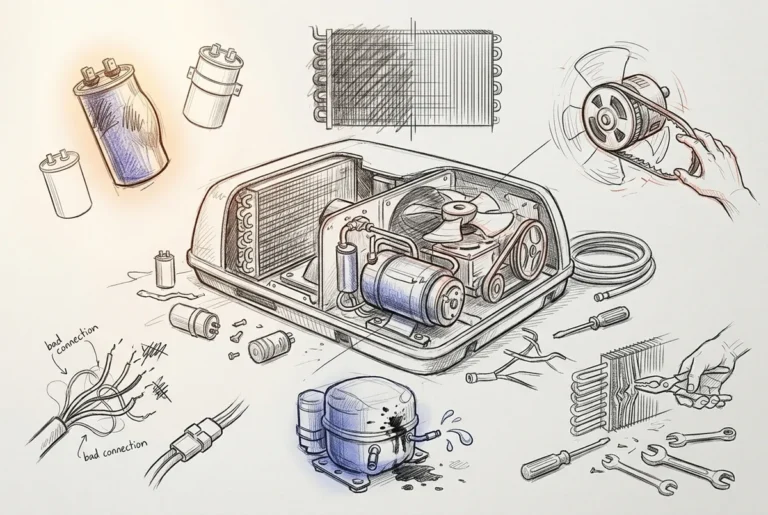
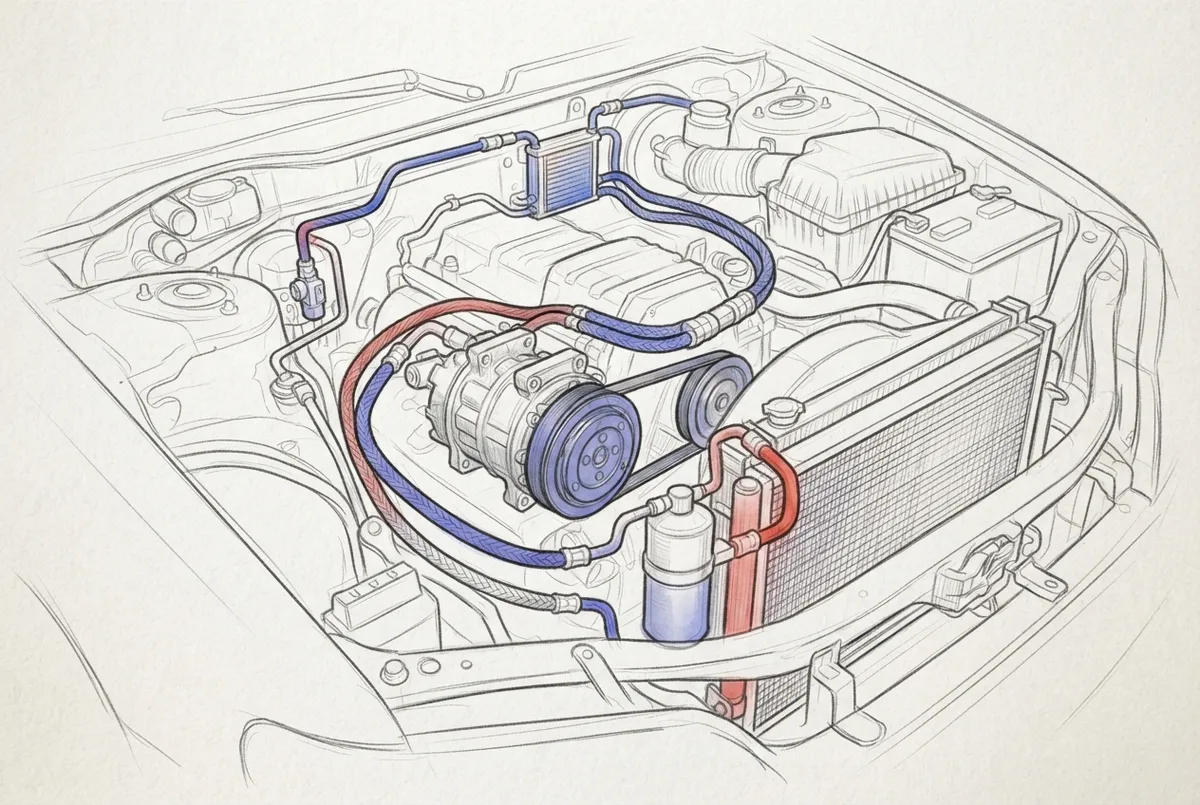
Your car’s air conditioning system is really a small refrigeration circuit. Refrigerant moves through a loop, changing from gas to liquid and back again to pull heat out of your cabin air. Here are the core components every vehicle owner should recognize:
- Compressor – the heart of the system, pressurizing and circulating refrigerant
- Condenser – releases heat from the refrigerant, usually mounted in front of your radiator
- Evaporator – absorbs heat from cabin air so you get that cold blast
- Expansion valve or orifice tube – controls how much refrigerant flows into the evaporator
- Receiver-drier or accumulator – removes moisture and filters out debris
- Refrigerant hoses and lines – carry refrigerant between components
- Blower motor – pushes cooled air into the cabin
- Cabin air filter – keeps dust and pollen out of your airflow
- A/C control module and sensors – manage pressure, temperature, and cycling
Each part has one job, but they all depend on each other. A weak link anywhere in this chain can leave you sweating through Tampa’s brutal summer traffic. Want a deeper dive into these components? Check out our guide on 6 A/C Parts Every Vehicle Owner Should Know in 2026.
Receiver-Drier vs Accumulator: What’s the Difference?
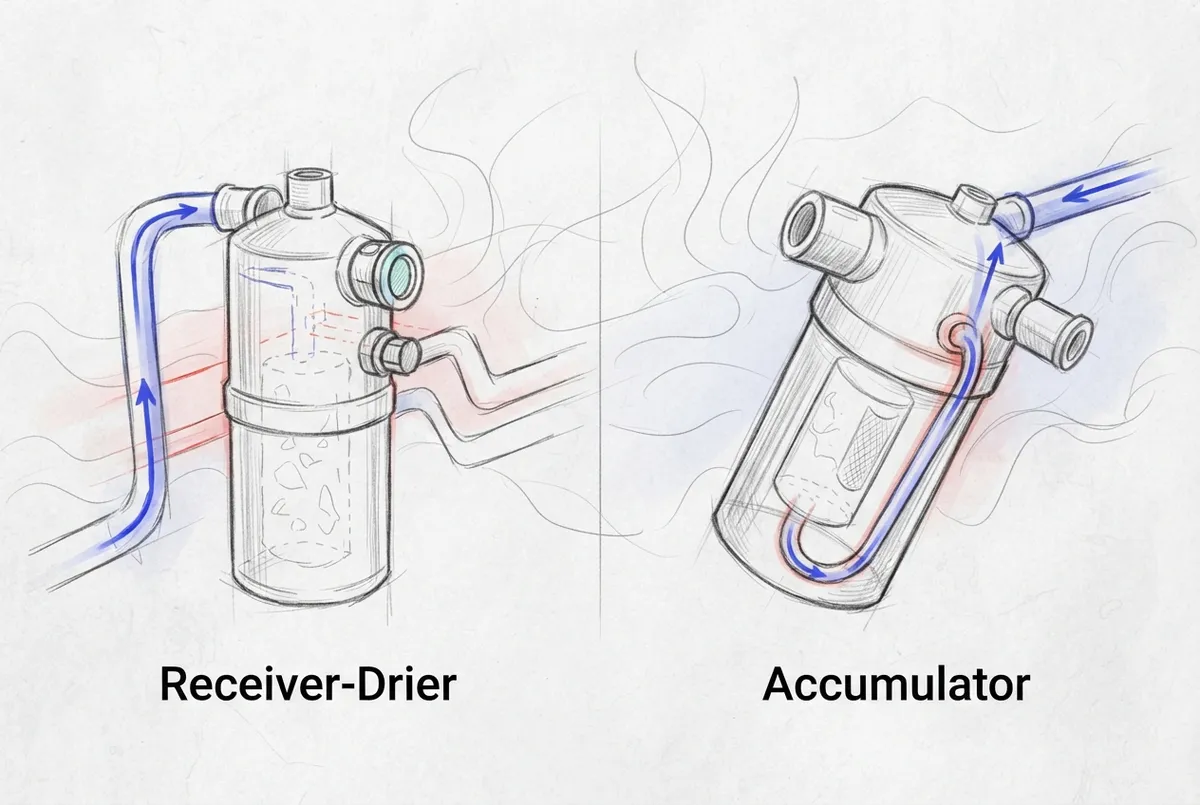
This is one of the most common questions we hear at our Tampa shop. Both parts do similar jobs, but they belong to different system designs.
| Feature | Receiver-Drier | Accumulator |
|---|---|---|
| Used With | Expansion valve systems | Orifice tube systems |
| Main Job | Stores liquid refrigerant, removes moisture | Separates liquid and gas, removes moisture |
| Location | Between condenser and expansion valve | Between evaporator and compressor |
| Replace When? | Anytime the system is opened for major repair | Anytime the system is opened for major repair |
Both parts filter contaminants and soak up moisture that can freeze inside your lines. Skipping replacement during a major repair is one of the biggest mistakes vehicle owners make. If you’re curious about other common slip-ups, take a look at our post on 8 AC Installation Mistakes Tampa Drivers Make Every Summer.
Signs Your A/C Car Parts Are Failing
Your car usually gives you warning signs before a full breakdown. Here’s what to watch for:
- Warm or inconsistent air coming from the vents
- Weak airflow even on the highest fan setting
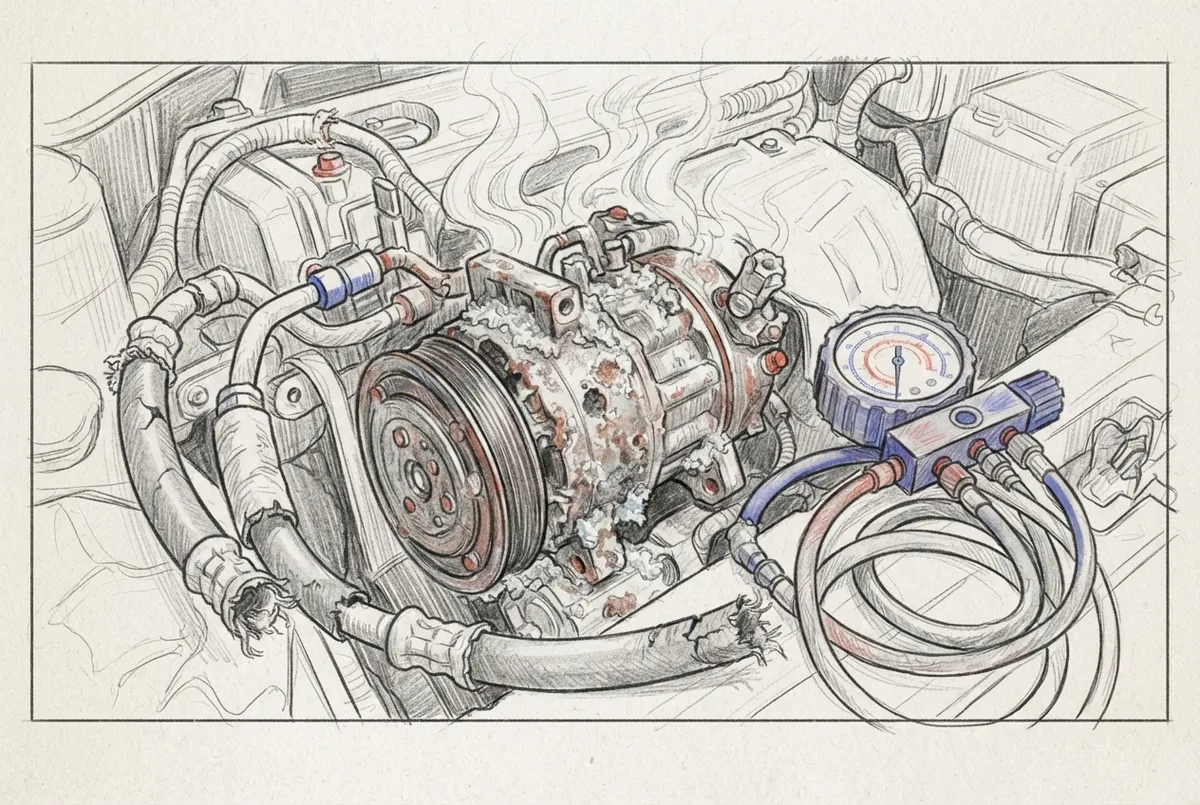
- Strange grinding or clicking noises from the compressor
- Visible oily residue or fluorescent dye around fittings (a sign of a leak)
- Refrigerant that seems to disappear faster than normal
- A/C that cycles on and off rapidly
- Poor defrost performance on your windshield
- A musty smell when you first turn on the system
None of these symptoms point to just one cause. That’s why proper diagnostics matter so much. Guessing and swapping parts randomly wastes money and often doesn’t fix the real problem. Our team walks through pressure, temperature, and electrical testing before recommending any repair. Learn more about the diagnostic process in 3 Key Facts About Car AC Diagnostic Cost in 2026.
Why Warm Air Doesn’t Always Mean a Bad Compressor
A lot of drivers assume warm air means they need a new compressor right away. Sometimes that’s true, but often the culprit is a simple refrigerant leak, a clogged orifice tube, or a failing sensor. We’ve written a full breakdown in 10 Reasons Your AC Is Blowing Warm Air (And How to Fix It) if you want specifics.
Compressor Replacement: What Actually Happens
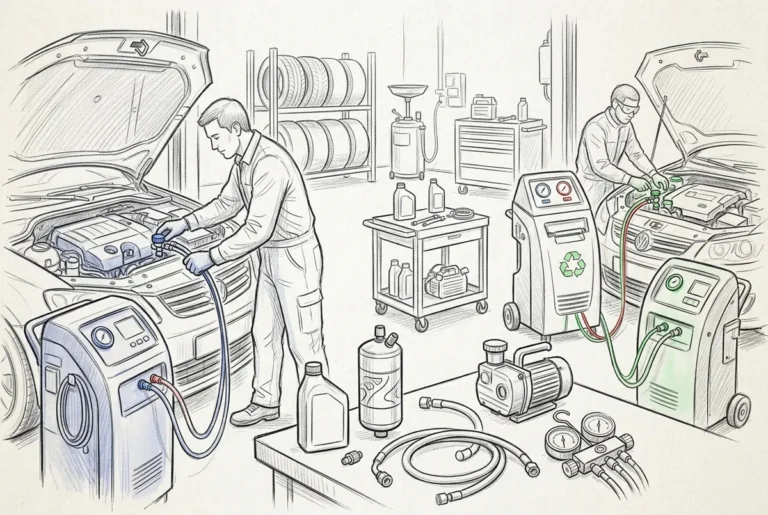
Replacing a compressor is more involved than just swapping the part. Here’s the typical process a qualified shop follows:
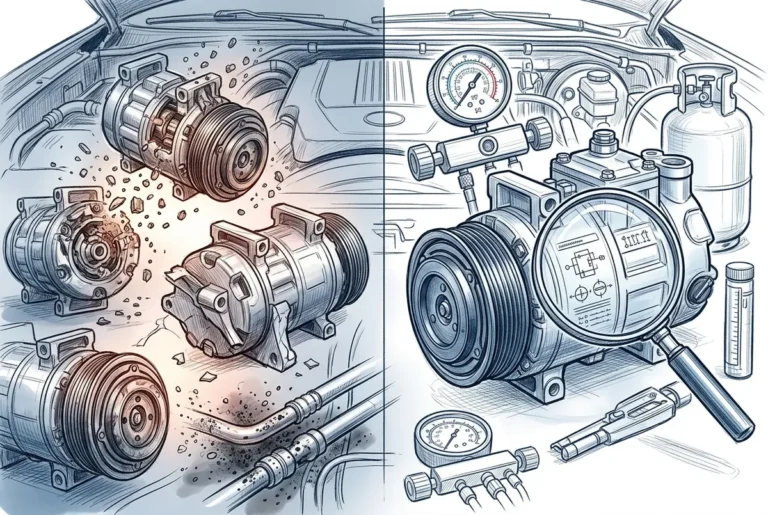
- Diagnose the failure and check for metal debris or discolored oil in the system
- Flush the refrigerant lines to remove contamination
- Install the new compressor with the correct oil type and amount
- Replace the receiver-drier or accumulator
- Replace the expansion valve or orifice tube if needed
- Evacuate the system to remove air and moisture
- Perform a leak test before recharging
- Recharge with the exact refrigerant amount specified for your vehicle
Skipping any of these steps can lead to a repeat failure within months. If you want to understand common compressor issues in more detail, our article on How to Fix an AC Compressor in Your Vehicle covers it well. And if budgeting is a concern, we’ve also put together How to Budget for AC Car Compressor Replacement Cost.
Refrigerant Matters: R-134a vs HFO-1234yf
Not every car uses the same refrigerant, and using the wrong one can seriously damage your system. Here’s a quick comparison:
| Refrigerant | Common In | Notes |
|---|---|---|
| R-134a | Older vehicles, still serviceable | Existing vehicles don’t need to switch just because newer rules exist |
| HFO-1234yf | Newer light-duty vehicles | Lower environmental impact, different fittings, specific safety steps required |
According to the U.S. EPA, vehicles must be serviced with the refrigerant specified on the label or by the manufacturer. Mixing refrigerants or attempting an incorrect retrofit can create both safety and compliance issues. For model year 2025 light-duty vehicles, the EPA’s refrigerant global-warming-potential limit is 150, with compliance required no earlier than October 24, 2024. If you’re weighing a conversion, our guide on 12 Things to Know About R-134a to 1234yf Conversion answers the most common questions.
Why Fitment Matters for Every Part
Here’s something a lot of people don’t realize: A/C parts are not one-size-fits-all. Fitment depends on your vehicle’s year, make, model, engine, refrigerant type, and even compressor configuration. Some newer systems also require software calibration after a parts swap.
Before ordering any part, it’s smart to look up your VIN and compare the new part against your original. Getting this wrong can mean a part that physically doesn’t fit, or one that fits but doesn’t work correctly with your system’s pressure and electrical setup.
Are Aftermarket Parts Reliable?
This question comes up constantly. The honest answer is: it depends on the brand and the application. Quality aftermarket parts from trusted manufacturers can perform just as well as original equipment, sometimes at a lower cost. That’s why we stock our own KOOL-TEMP parts line along with trusted names like SPAL, ACT, BCC, gpd, and Omega. Many of these items are available the same day for both retail customers and professional technicians across the Tampa area.
To see our full parts selection, visit our AC Parts page. We also cover this topic in more depth in OEM vs. Aftermarket Semi Truck AC Parts: Which Wins?, which applies to passenger vehicles too.
A/C Parts for Trucks, Buses, RVs, and Heavy Equipment
Different vehicle types face different A/C demands, and the parts often reflect that.
- Truck drivers need durable compressors and hose fabrication that hold up over thousands of miles. See our tips in 3 Key Steps for Truck AC Condenser Replacement Done Right.
- Bus operators require systems built for constant passenger loads and Tampa’s humidity. Our article on 3 Transit Bus Air Conditioning Parts You Must Know is a great starting point.
- RV enthusiasts often deal with unique roof-mounted units and longer refrigerant lines. Learn what to avoid in 6 RV Air Conditioner Repair Parts Mistakes to Avoid.
- Heavy equipment operators need cabs that stay cool to prevent fatigue on long shifts. Check out How to Get Heavy Equipment AC Repair Done Right for guidance.
- Fleet owners benefit from preventive maintenance schedules that reduce downtime across multiple vehicles. Our comparison in Preventive vs. Reactive Fleet AC Maintenance: Which Wins? explains why prevention wins.
Electric and Hybrid Vehicle A/C Systems
If you drive an EV or hybrid, your A/C system might work differently than you expect. Many of these vehicles use electrically driven compressors instead of the belt-driven type found in gas-powered cars. Some systems are also integrated with battery thermal management or heat pumps, which means service requires vehicle-specific procedures and high-voltage safety training.
This is one reason working with a shop that stays current on training matters so much. Marks Air offers programs covering EPA 609 certification, HFO-1234yf handling, MVAC best practices, and EVT A/C training. You can learn more on our Training page.
How Often Should You Service Your A/C System?
Industry guidance from MAHLE Aftermarket recommends an A/C check about once a year and a full service roughly every two years for passenger cars, though your manufacturer’s schedule should always take priority. Regular checks catch small leaks and worn seals before they turn into compressor failures.
Here’s a simple maintenance rhythm to follow:
- Get an annual A/C performance check, especially before summer
- Replace the cabin air filter as recommended by your manufacturer
- Watch for early warning signs like weak airflow or odd smells
- Schedule a full service or recharge every couple of years
- Address any leak immediately rather than just topping off refrigerant
For more tips tailored to Tampa’s climate, see 5 AC Maintenance Tips Every Tampa Vehicle Owner Needs.
Why Certified Service Matters
In the United States, paid A/C work on vehicles must be performed by a technician certified under EPA Section 609. This certification ensures refrigerant is handled safely and that recovered refrigerant gets recycled or reclaimed properly instead of vented into the air. Reclamation restores refrigerant to virgin specifications under AHRI Standard 700, protecting both the environment and your vehicle’s system.
Marks Air has been a family-owned, woman-owned business in Tampa since 1971, and we’re proud members of the Mobile Air Climate Systems Association (MACS), staying current with industry standards. You can read more about our story on our About Marks Air page.
Frequently Overlooked Parts
Beyond the big components, a few smaller parts often get ignored until they cause problems:
- Seals and O-rings that dry out and cause slow leaks
- Pressure and temperature sensors that trigger cycling issues
- Compressor clutch or control valve that wears with age
- Cabin air filters clogged with debris, reducing airflow
Replacing these small parts during routine service can prevent bigger, costlier repairs down the road. If you’re dealing with a persistent leak, our guide on 13 AC Leak Mistakes That Cost Car Owners More Money is worth a read.
What Customers Say
Nothing beats hearing from people who’ve actually experienced a repair firsthand. You can browse real feedback on our Reviews page, or check out what folks are saying on Yelp and Facebook. We also share photos and updates on Instagram, and you can see what our Marks Air customers say directly on Visit us on Google — Marks Air.
Bringing It All Together
Understanding a/c car parts doesn’t have to feel overwhelming. Once you know the basics, compressor, condenser, evaporator, receiver-drier or accumulator, hoses, and sensors, you can spot trouble early and make smarter decisions about repairs. Whether you’re a daily commuter, a truck driver logging long miles, a bus operator keeping passengers comfortable, an RV traveler chasing cooler weather, or a fleet manager juggling multiple vehicles, the same principles apply: diagnose before you replace, use the correct parts and refrigerant, and don’t skip the small components that keep everything sealed and clean.
Ready to get your A/C checked before the next Tampa heat wave hits? Schedule service with our team today, or simply call us at 813-988-1671 to talk through what you’re experiencing. We’re here to help you stay cool, no matter what you drive.
FAQs
Q: What are the main A/C parts in a car?
A: The main parts include the compressor, condenser, evaporator, expansion valve or orifice tube, receiver-drier or accumulator, hoses, blower motor, and cabin air filter. Each one plays a role in cooling your cabin air, and they all work together like a little team. If one part struggles, the whole system can suffer.
Q: How do I know whether my car needs a new compressor or just a refrigerant recharge?
A: Honestly, you can’t tell just by feeling warm air, that’s why proper diagnostics matter so much. A trained technician checks pressure, temperature, and looks for leaks before recommending anything. We always test first at Marks Air so you’re not paying for parts you don’t need.
Q: What’s the difference between a receiver-drier and an accumulator?
A: A receiver-drier is used in expansion valve systems, while an accumulator works with orifice tube systems. Both remove moisture and filter debris, but they sit in different spots in the refrigerant loop. Either way, replacing the right one during a major repair helps your system last longer.
Q: Should I use R-134a or HFO-1234yf refrigerant?
A: It depends entirely on what your vehicle was designed for, check your under-hood label or owner’s manual. Newer light-duty vehicles typically use HFO-1234yf, while older ones still run on R-134a just fine. Mixing them up can cause real damage, so it’s best to let a certified technician confirm.
Q: Are aftermarket A/C parts as good as OEM parts?
A: Quality aftermarket parts from trusted brands can absolutely perform as well as original equipment, sometimes even better for the price. We stock our own KOOL-TEMP line along with names like SPAL, ACT, and Omega because we trust them. It really comes down to choosing reputable brands and correct fitment for your vehicle.