Key Takeaways
-
A/C repair involves checking multiple interconnected components (compressor, condenser, evaporator, hoses, seals) not just adding refrigerant; skipping thorough diagnostics leads to repeat repairs within weeks.
-
Low refrigerant almost always indicates a leak that must be found and fixed; simply recharging without addressing the leak will require repeat service soon and wastes money.
-
Warm air from A/C vents can stem from electrical issues, blocked airflow, failing compressor, or blend-door problems, not just low refrigerant, requiring professional diagnostics rather than guessing.
-
R-134a and R-1234yf refrigerants are not interchangeable and use different fittings; newer 2025+ vehicles require R-1234yf ($250-$550 recharge) while older cars use R-134a ($150-$350 recharge).
-
DIY refrigerant cans risk using wrong refrigerant type, overcharging the compressor, or masking leaks temporarily; EPA 609 certification is required for paid service and proper refrigerant recovery.
-
Preventive maintenance like running A/C weekly, scheduling pre-summer checks, and addressing odd smells or noises immediately extends system life and prevents costly repairs.
Tampa summers are no joke. When your car’s A/C stops blowing cold air, every drive turns into a sweaty ordeal. Whether you’re a daily commuter, a truck driver logging long hours, or a fleet manager keeping dozens of vehicles on the road, a/c car repair isn’t just about comfort. It’s about safety, focus, and getting where you need to go without misery. This guide breaks down what really happens during a/c car repair, why a quick recharge often isn’t enough, and how to know when it’s time to call in the pros.
We’ll walk through common warning signs, how technicians actually diagnose problems, refrigerant types you need to understand, and rough costs you might expect. Marks Air has been fixing vehicle air conditioning in Tampa since 1971, so we’ve seen just about every A/C headache a car, truck, bus, or RV can throw at us. Let’s get into it.
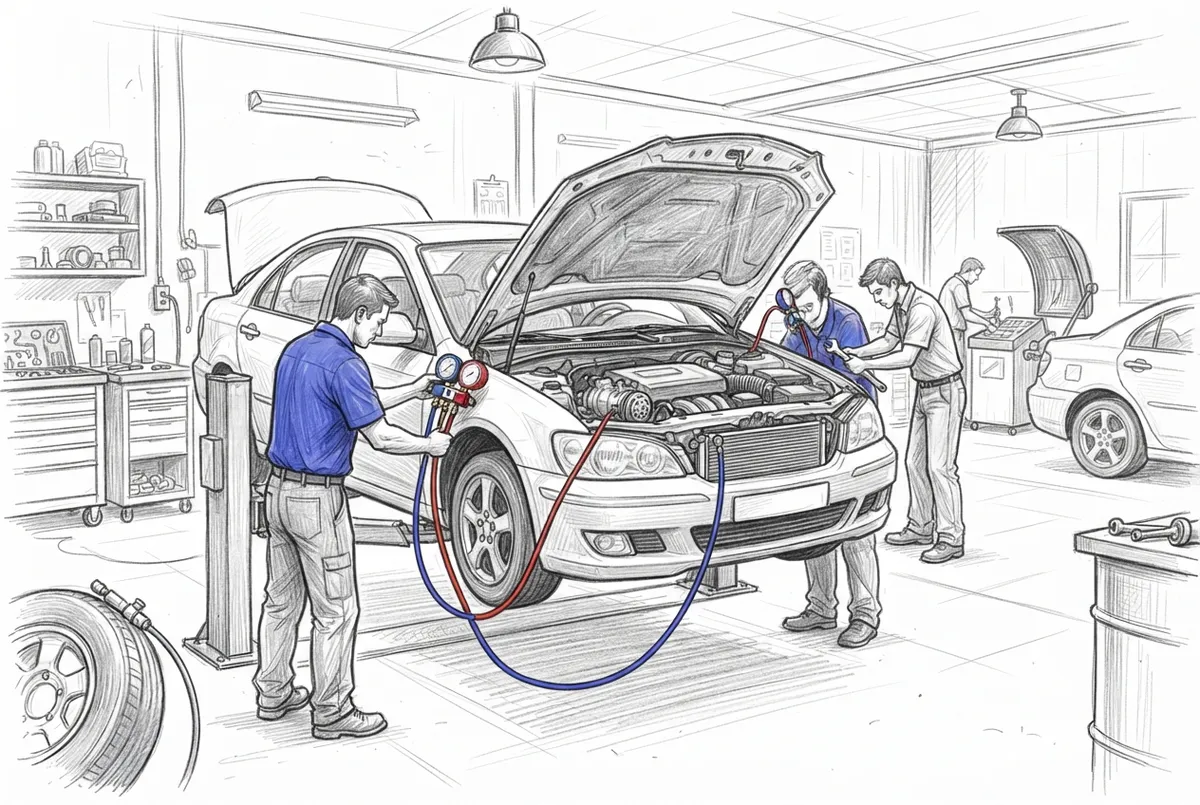
What Does A/C Car Repair Actually Involve?
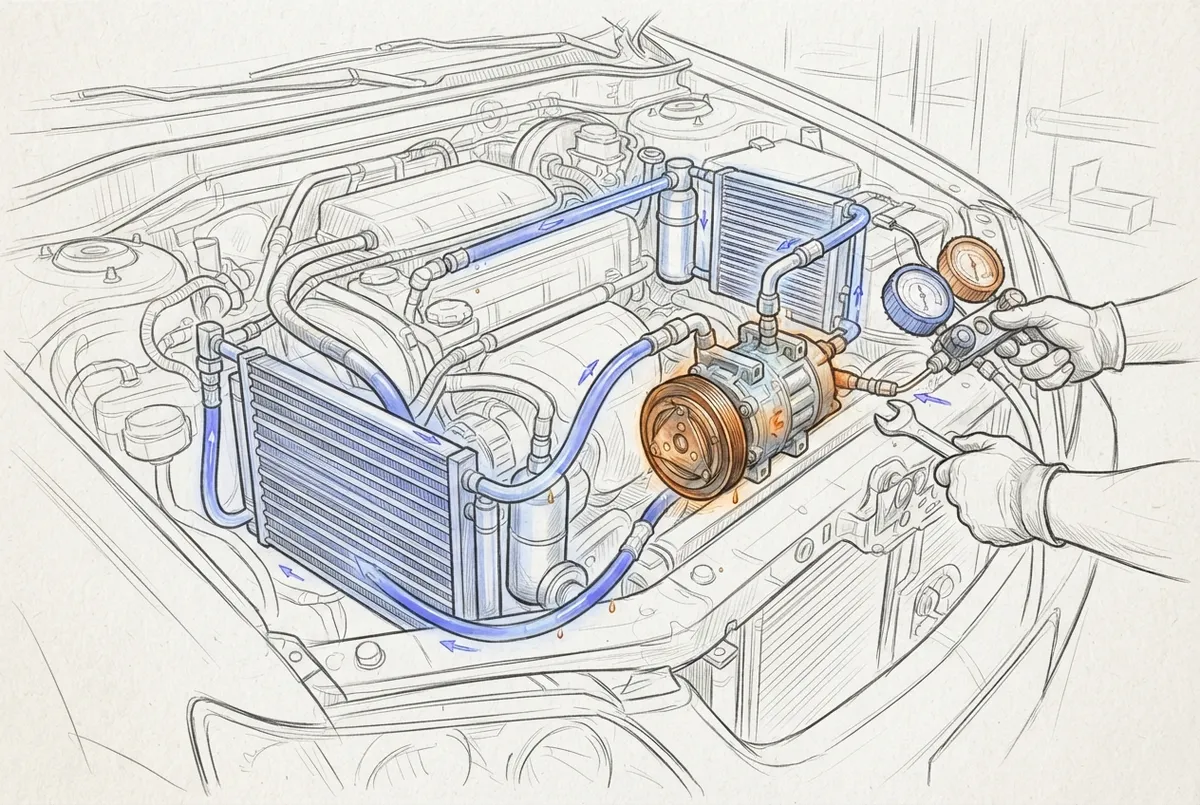
Many folks think a/c car repair just means adding more refrigerant. That’s a myth. Your vehicle’s cooling system is actually a whole network of parts working together.
Here’s what’s typically involved:
- The compressor, which pumps refrigerant through the system
- The condenser, which cools the refrigerant down
- The receiver-drier or accumulator, which filters moisture and debris
- The expansion valve or orifice tube, which controls refrigerant flow
- The evaporator, which actually creates the cold air you feel
- Hoses, seals, and pressure sensors that keep everything connected and controlled
A good technician checks all of these parts, not just the refrigerant level. That’s the difference between a quick fix and a lasting repair. If you want a deeper look at the parts involved, check out this guide on 6 A/C Parts Every Vehicle Owner Should Know in 2026.
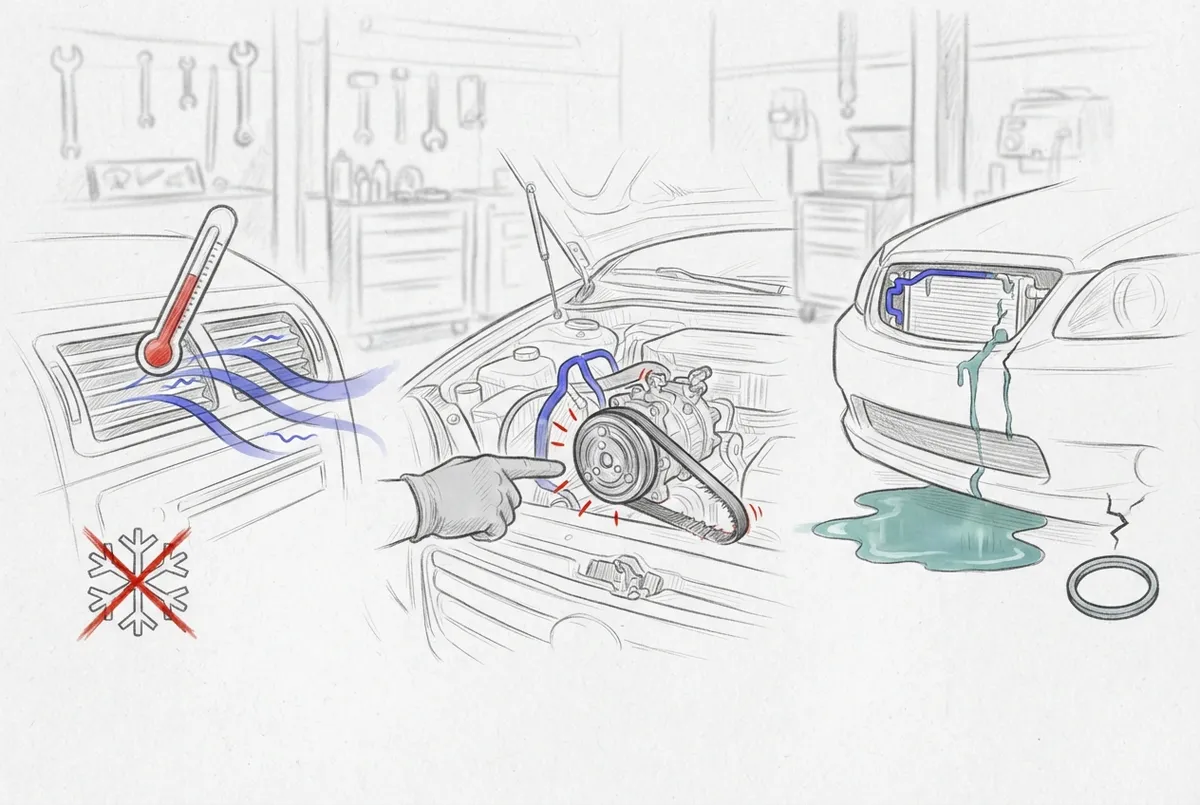
Common Signs Your Car A/C Needs Repair
Your car usually gives you warning signs before the A/C fails completely. Catching these early can save you a lot of money.
- Warm or barely cool air coming from the vents
- Cooling that comes and goes without warning
- Weak airflow even with the fan on high
- Strange noises from the compressor or blower motor
- A musty or foul smell when the A/C kicks on
- Foggy windows that won’t clear up
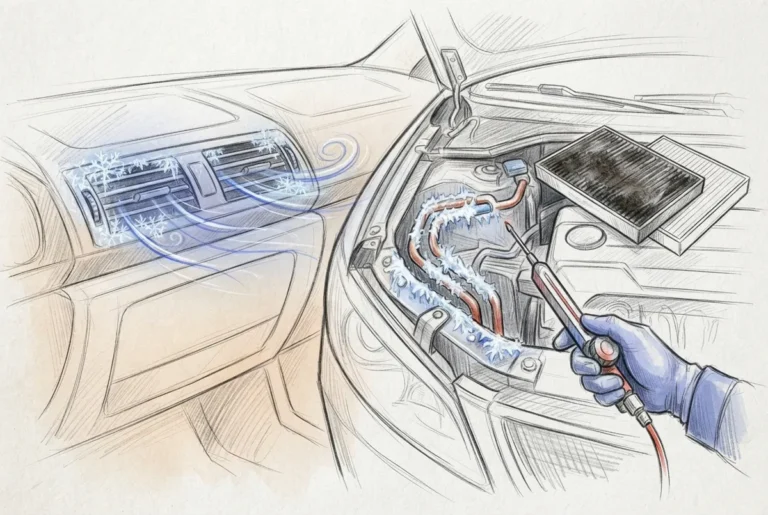
- Oily residue near hose connections or under the dash
- Water dripping from unusual spots inside or under the car
Here’s something important: warm air doesn’t always mean low refrigerant. It could be an electrical issue, a blocked air path, a failing compressor, or a blend-door problem. That’s why guessing at home rarely works. For a full breakdown, see 10 Reasons Your AC Is Blowing Warm Air (And How to Fix It).
How Technicians Diagnose A/C Problems
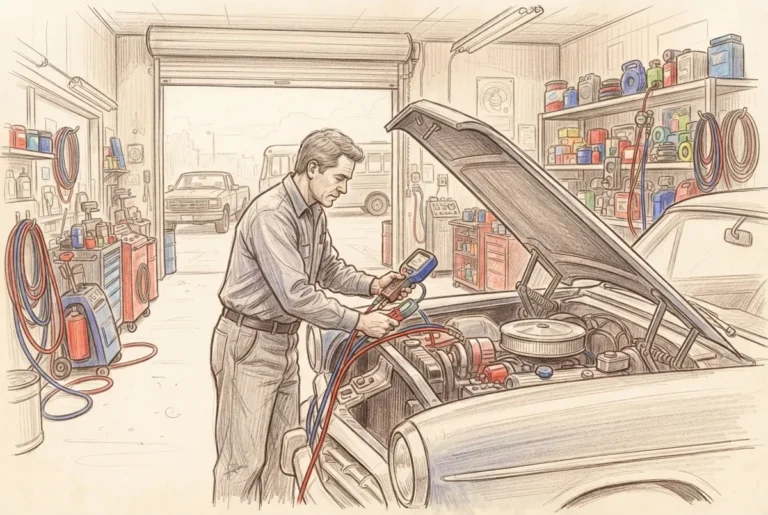
A trustworthy shop doesn’t just hook up a hose and start pumping refrigerant. There’s a real process behind proper a/c car repair.
The Diagnostic Process, Step by Step
- Listen to your description of the problem and when it happens
- Perform a visual inspection of hoses, connections, and components
- Test the temperature coming out of the vents
- Check system pressures to spot abnormal readings
- Run electrical and scan-tool diagnostics for sensor or wiring issues
- Identify the refrigerant type using approved equipment
- Test for leaks using electronic detectors or UV dye
According to DENSO Aftermarket guidance, a thorough A/C service usually takes about 45 minutes to an hour when there’s no major repair needed. That’s a good benchmark to keep in mind when comparing quotes. If you’re curious about diagnostic pricing specifically, take a look at 3 Key Facts About Car AC Diagnostic Cost in 2026.
Why a Simple Recharge Isn’t Always the Fix
If your A/C is low on refrigerant, that’s usually a symptom, not the root cause. Refrigerant doesn’t just disappear on its own. Low levels almost always point to a leak somewhere in the system.
A proper repair means:
- Finding and fixing the actual leak
- Recovering the old refrigerant safely
- Using a vacuum pump to remove air and moisture
- Replacing any contaminated or damaged parts
- Adding the correct type and amount of oil
- Recharging with the exact refrigerant weight specified by the manufacturer
Skipping these steps means you’ll likely be back in the shop within weeks. Common leak spots include condenser damage from road debris, worn hose connections, faulty service ports, compressor shaft seals, and corrosion-prone joints. Curious about how leaks sneak up on you? Read Why Is Your Car A/C Hose Leaking Refrigerant?.
R-134a vs. R-1234yf: Know Your Refrigerant
Not all car A/C systems use the same refrigerant, and mixing them up can cause serious damage. Here’s a quick comparison to keep things clear.
| Feature | R-134a | R-1234yf |
|---|---|---|
| Common Use | Older vehicles, still widely serviced | Newer vehicles, especially 2025+ models |
| Global Warming Potential | 150 or greater | Lower GWP, EPA-approved alternative |
| Fittings | Standard service ports | Unique fittings per SAE J639 standards |
| Typical Recharge Cost | Roughly $150-$350 | Roughly $250-$550 |
| Safety Features | Standard handling | Pressure-relief devices, high-pressure cutoffs |
The EPA’s Technology Transitions rules set a global-warming-potential limit for refrigerants in new light-duty vehicles starting with model year 2025. Existing R-134a vehicles can still be serviced with R-134a, so don’t worry if you’re driving an older car. If you want more detail on switching refrigerants, check out 12 Things to Know About R-134a to 1234yf Conversion.
Can You Recharge Your Car A/C Yourself?
Those DIY refrigerant cans at the auto parts store look tempting, we get it. But there are real downsides to going this route.
- You might add the wrong refrigerant type for your vehicle
- Overcharging can damage the compressor
- DIY kits don’t fix leaks, they just mask symptoms temporarily
- Handling refrigerant without certification is against EPA rules for paid service
In the United States, anyone performing paid mobile air conditioning service must hold EPA Section 609 certification and use approved recovery equipment. Venting refrigerant into the air is illegal, and recovered refrigerant has to be properly recycled. This isn’t red tape for the sake of it. It protects the environment and keeps your system running right. If you’re interested in learning proper certification, Marks Air offers training programs covering EPA 609 certification and HFO-1234yf best practices.
Typical A/C Car Repair Costs
Costs vary a lot depending on your vehicle, the refrigerant type, and what parts need replacing. Here’s a general breakdown based on 2025 industry estimates.
| Repair Type | Estimated Cost Range |
|---|---|
| R-134a Recharge | $150 – $350 |
| R-1234yf Recharge | $250 – $550 |
| Compressor Replacement | $800 – $1,500+ |
| Evaporator Replacement | Often higher due to dashboard removal |
These numbers are just starting points. Your actual bill depends on your specific vehicle and the parts chosen. For a full cost guide, see How Much Does Auto AC Repair Cost in 2026? or 13 Facts on Cost to Fix AC in Car (2026 Tampa Guide).
Special Considerations for Different Vehicle Types
Trucks and Fleet Vehicles
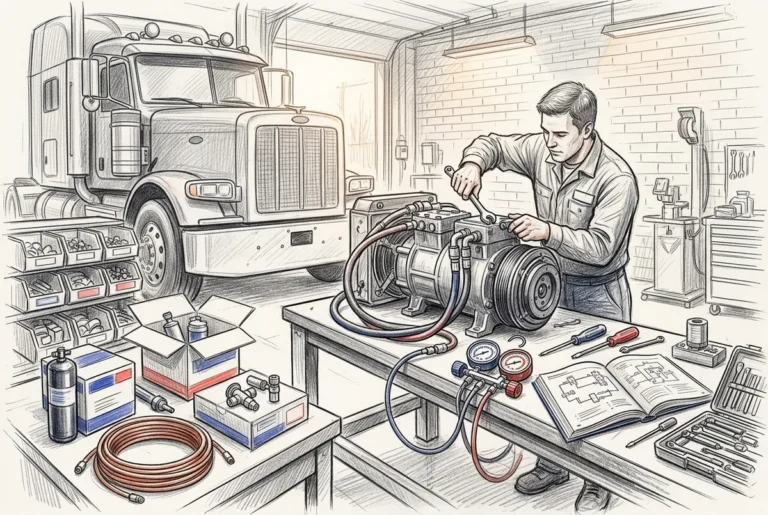
Long-haul drivers depend on working A/C for comfort and alertness behind the wheel. Fleet owners face extra pressure to minimize downtime, since every vehicle off the road costs money. Regular preventive checks beat waiting for a breakdown. Learn more in 4 Fleet Vehicle AC Repair Tips That Save You Money.
Buses and Transit Vehicles
Passenger comfort and safety both depend on reliable A/C in buses. Tampa’s heat and humidity make this especially important for transit operators. Proper maintenance schedules help avoid mid-route failures.
RVs and Specialty Vehicles
RV owners often deal with A/C systems that see heavy use during long trips. Upgrades and repairs need to account for the unique setup of recreational vehicles compared to standard cars.
Heavy Equipment
Construction and agricultural equipment operators need working A/C to prevent fatigue during long shifts in the sun. Downtime on a job site isn’t cheap, so quick, reliable repairs matter a lot here too.
Electric and Hybrid Vehicles
Some newer vehicles use electrically driven compressors instead of belt-driven ones. These systems can involve high-voltage safety procedures, so they need manufacturer-specific training and equipment. Standard repair methods shouldn’t be applied automatically.
Why Choose a Specialized A/C Shop
General repair shops handle a lot of different systems, but A/C specialists live and breathe cooling systems every day. Marks Air has focused exclusively on air conditioning for cars, trucks, buses, RVs, and heavy equipment since 1971 right here in Tampa. That kind of focused experience means fewer guesswork repairs and more lasting fixes backed by warranty.
We’re also proud to be a family-owned, woman-owned business and a member of the Mobile Air Climate Systems Association (MACS), which keeps our team current on industry standards. We stock a full lineup of parts, including our own KOOL-TEMP line plus trusted brands like SPAL, ACT, BCC, gpd, and Omega, often available same day. Browse our A/C parts inventory to see what’s on hand.
Don’t just take our word for it. You can visit us on Google — Marks Air to see what Tampa customers are saying, or check out our customer reviews directly on our site. We also share shop updates and helpful tips on Instagram and Facebook.
Simple Steps to Keep Your A/C Running Longer
Prevention beats repair every time. Here are a few habits that help extend the life of your car’s cooling system.
- Run your A/C for at least ten minutes weekly, even in cooler months
- Have your system checked before Tampa’s peak summer heat hits
- Address unusual smells or noises right away instead of waiting
- Keep an eye on refrigerant performance every couple of years
- Choose a shop that specializes in A/C rather than general repairs
For more preventive advice, check out 5 AC Maintenance Tips Every Tampa Vehicle Owner Needs. And if you’re dealing with driver fatigue from long hours in the heat, it might be worth exploring resources like West Florida Therapy for support alongside keeping your vehicle comfortable.
When to Call a Professional
Some signs mean it’s time to stop guessing and get expert help right away.
- Warm air that doesn’t improve after a basic recharge
- Visible oil residue anywhere near A/C components
- Loud grinding or squealing from the compressor area
- Repeated need for refrigerant top-offs
- Any sign of electrical A/C issues in a hybrid or electric vehicle
Trying to power through these problems usually leads to bigger repair bills down the road. Catching issues early keeps costs manageable and your vehicle reliable. Check out our FAQs page for more answers to common questions, or read customer feedback on Yelp and HVACService.io to see how local shops handle these situations.
Ready to Beat the Tampa Heat?
Your car’s A/C system deserves real attention, not just a quick refrigerant top-off. Whether you’re driving a personal car, managing a fleet, or keeping heavy equipment running smoothly, proper a/c car repair protects your comfort, your budget, and your time. Marks Air has spent over five decades earning Tampa’s trust for exactly this kind of work, and we’re ready to help you stay cool no matter what you drive. Ready to get your A/C sorted out the right way? Schedule service with our team today or simply call us at 813-988-1671 to talk through your options.
FAQs
Q: Why is my car A/C blowing warm air?
A: Warm air can mean a lot of things, not just low refrigerant. It could be an electrical issue, a blocked air path, a failing compressor, or a blend-door problem. The best way to know for sure is a proper diagnostic check rather than guessing at home.
Q: Does low refrigerant always mean my car has an A/C leak?
A: Pretty much, yes! Refrigerant doesn’t just disappear on its own, so if levels are low, there’s almost always a leak somewhere in the system. A good technician will find and fix that leak instead of just topping off refrigerant and sending you on your way.
Q: How much does a car A/C recharge or repair cost?
A: Basic recharges typically run $150-$350 for R-134a systems and $250-$550 for R-1234yf systems, based on 2025 industry estimates. Bigger repairs like compressor replacement can run $800-$1,500 or more depending on your vehicle.
Q: What is the difference between R-134a and R-1234yf refrigerant?
A: R-134a is used in older vehicles and has a higher global warming potential, while R-1234yf is the newer, lower-impact refrigerant found in many 2025 and newer models. They use different fittings and equipment, so they’re never interchangeable.
Q: Can I recharge my car A/C myself with a refrigerant can?
A: You technically can buy DIY cans, but we’d gently steer you away from it! You risk adding the wrong refrigerant, overcharging the system, or just masking a leak instead of fixing it. A quick visit to a certified shop saves you headaches later.