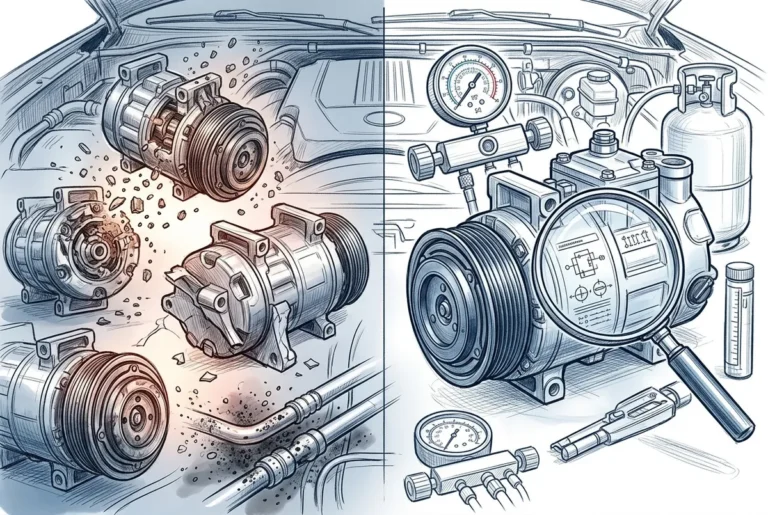

Key Takeaways
-
Never just add refrigerant to a low A/C system: refrigerant is not consumed during normal driving, so low levels mean a leak, and a recharge alone will fade again until the leak is repaired.
-
Avoid DIY recharge kits: they cannot find leaks, and overcharging or using the wrong refrigerant can strain or damage the compressor and complicate later repairs.
-
Insist on a proper diagnosis before replacing parts, since warm air can stem from a leak, compressor, electrical fault, or clogged condenser, while weak airflow may just be a dirty cabin filter or blower motor.
-
Verify that any shop holds EPA Section 609 certification, which is required for paid A/C servicing in the U.S., and ask for a written estimate and warranty before work begins.
-
Check the refrigerant type and charge amount on the under-hood label, since R-134a and HFO-1234yf systems need the correct refrigerant and oil and should never be mixed.
-
Prevent costly repairs by running your A/C year-round, replacing the cabin filter on schedule, and getting a yearly inspection before summer, especially in hot, humid climates like Tampa.
It is a hot Tampa afternoon. You climb into your car, crank the A/C, and get a blast of warm, stale air. We have all been there, and it is no fun at all! The good news is that car ac repair does not have to be a mystery or a money pit. The bad news is that a few common mistakes can turn a small fix into a big bill.
At Marks Air, we have worked on vehicle A/C systems in Tampa since 1971. We have seen the same costly mistakes over and over. Whether you drive a daily commuter, a delivery truck, a bus, an RV, or heavy equipment, this guide is for you. We will walk through five mistakes to avoid, explain how a proper repair works, and show you how to get cold air back the right way. Grab a cold drink (we hope it is cold!) and let’s dive in.

What Car AC Repair Really Involves
Many drivers think car ac repair just means adding refrigerant. It is a lot more than that. Your A/C is a full system with many parts working together. A problem in any one part can leave you sweating.
Here are the main parts of a vehicle A/C system:
- Compressor: Pumps refrigerant through the system.
- Condenser: Releases heat from the refrigerant, usually near the front of the vehicle.
- Evaporator: Cools the air that blows into the cabin.
- Expansion device: Controls how much refrigerant enters the evaporator.
- Hoses and lines: Carry refrigerant between parts.
- Electrical controls and blower: Run the fans, switches, and sensors, and move air into the cabin.
Because so many parts are involved, warm air can come from several different causes. That is why a good shop diagnoses first and fixes second. If you want a deeper look at causes, check out 10 Reasons Your AC Is Blowing Warm Air (And How to Fix It).

Mistake 1: Adding Refrigerant Without Finding the Leak
This is the number one money-waster in car ac repair. Refrigerant is not “used up” like gas in your tank. Your A/C is a sealed system. If the charge is low, there is almost always a leak somewhere, or the system was serviced poorly in the past.
A quick top-off might blow cold air for a few days or weeks. But the leak is still there. The refrigerant escapes again, and you are back where you started, with less money in your wallet.
Why Leaks Matter
Leaks can come from worn hoses, loose fittings, a tired compressor seal, a damaged condenser, or a leaking evaporator. Some leaks leave oily residue near the part that is leaking. That oily spot is a clue, because refrigerant oil travels with the refrigerant.
A proper shop finds the leak first. Then they repair it before refilling the system. You can learn more about spotting trouble early in What Are the Warning Signs of an AC Refrigerant Leak? and 13 AC Leak Mistakes That Cost Car Owners More Money.
Mistake 2: Trusting a DIY Recharge Kit to Fix Everything
Those store-bought recharge cans look so easy. A little squirt, and you are done, right? Not quite. We understand the temptation, especially when money is tight. But DIY kits come with real risks.
Here is why they can cause trouble:
- They hide the real problem. A kit does not find or fix a leak.
- It is easy to overcharge. Too much refrigerant raises pressure and can strain or damage the compressor.
- The wrong product can cause harm. Mixing refrigerants or oils can complicate repairs later.
- You may not know your refrigerant type. Different vehicles use different refrigerants and need the right charge amount.
Think of it like taking a cough drop for a broken leg. It might feel better for a moment, but it does not solve the real issue. If you are weighing the cost of doing it yourself, see DIY vs. Shop: Car AC Repair Price Showdown 2026.
Mistake 3: Skipping the Diagnosis and Guessing at Parts
Some people replace a part because a friend said it was the problem. Others pay a shop to swap parts without testing first. Both can waste money fast.
Warm air could be a bad compressor, a clogged condenser, a failed switch, a weak fan, or low refrigerant from a leak. Weak airflow might not even be a refrigerant problem. It could be a dirty cabin filter or a failing blower motor. Guessing means you might pay for a part you never needed.
What a Good Diagnosis Looks Like
A real diagnosis checks how the system runs and measures pressures. It looks at electrical parts and airflow parts. It also tests for leaks. At Marks Air, our process uses a 25-point Cool Check, so we look at the whole system, not just one piece.
| Symptom | Possible Cause | Why Diagnosis Matters |
|---|---|---|
| Air is warm or only sometimes cool | Leak, compressor issue, electrical fault | Several causes look the same from the driver’s seat |
| Weak airflow | Cabin filter, blower motor, airflow door | May have nothing to do with refrigerant |
| Strange noises | Worn compressor or belt problem | Early repair can prevent bigger damage |
| Bad smell | Moisture or buildup in the system | Needs cleaning, not extra refrigerant |
| Oily residue under the hood | Refrigerant oil from a leak | Points to where the leak may be |
To see what to expect on cost for testing, read 3 Key Facts About Car AC Diagnostic Cost in 2026.
Mistake 4: Hiring a Shop Without Checking Credentials
Here is a mistake that can bite you later. In the United States, anyone who services a motor vehicle A/C system for pay must hold EPA Section 609 certification. This applies no matter which refrigerant is used. Shops must also use approved refrigerant-handling equipment, and recovered refrigerant must be recycled or reclaimed before it goes back into a system.
These rules exist for good reasons. Intentionally venting refrigerant is not allowed. R-134a, common in many vehicles, has a global warming potential about 1,400 times that of CO₂, according to the EPA. Proper handling protects the air and protects your A/C system.
Questions to Ask Before You Book
- Are your technicians EPA 609 certified?
- Do you find and fix leaks before recharging?
- Will I get a written estimate before work begins?
- Is there a warranty on the repair?
- How long has your shop worked on A/C systems?
Marks Air is a family-owned, woman-owned shop and a member of the Mobile Air Climate Systems Association (MACS). We even teach EPA 609 and HFO-1234yf classes through our training programs, so we know the rules inside and out. For help picking a shop, take a look at How To Find Reliable Auto A C Service In Tampa Bay.
Mistake 5: Using the Wrong Refrigerant or Mixing Products
Not every vehicle uses the same refrigerant. Some use R-134a. Newer vehicles often use HFO-1234yf. Each system needs the right refrigerant, the right oil, and the right charge amount. Mixing them is a recipe for trouble.
You can usually find the refrigerant type and charge amount on a label under the hood or in the vehicle’s service information. A trained technician confirms this before touching the system. They also use equipment made for that specific refrigerant.
If you are curious about newer systems, our guides on R-134a to 1234yf conversion and HFO-1234yf refrigerant for fleets are a great place to start.
How a Proper Car AC Repair Visit Works
So what should a good repair look like from start to finish? Here is how the process runs at Marks Air:
- Schedule and drop off. Book an appointment and bring the vehicle in.
- Inspect. We test more than 25 points of your A/C system.
- Recommend and estimate. You get a clear recommendation, a written estimate, and a timeframe. No work starts until you approve.
- Repair. We replace only what is needed, using the right parts.
- Re-check. The technician runs the full checklist again.
- Back on the road. Your A/C is cool, verified, and backed by a one-year warranty on most repairs.
That last step matters. A repair is not finished until it is tested. Want to know how long it all takes? Our guide on 13 Factors That Decide How Long A/C Repair Takes (2026) breaks it down.
What About Trucks, Buses, RVs, and Heavy Equipment?
Car ac repair is only part of the story. Fleets and specialty vehicles face tougher conditions and tighter schedules. A truck driver with no A/C on a long haul loses comfort and focus. A bus operator needs happy passengers. A heavy equipment operator working in Florida heat needs relief to stay safe and sharp.
Marks Air services cars, light and heavy trucks, buses, RVs, emergency vehicles, and construction and agricultural equipment, all in one Tampa facility. We also build custom systems, fabricate hoses, and stock KOOL-TEMP parts and other trusted brands, with many items available the same day. For fleet managers, 4 Fleet Vehicle AC Repair Tips That Save You Money is worth a read. Truck owners may also like 11 Signs You Need Truck AC Repair Near Me Now.
If you work on A/C systems yourself, we also supply parts and offer training. Browse our A/C parts or see all of our A/C services.
Easy Habits That Prevent Big Repair Bills
The best repair is the one you never need! A few simple habits go a long way in Tampa’s heat.
- Run your A/C regularly, even in cooler weather, to keep seals lubricated.
- Replace your cabin filter on schedule so air flows well.
- Listen for new noises and act early.
- Watch for weak cooling and get it checked before it fails completely.
- Schedule a yearly inspection before summer hits.
For more ideas, see 5 AC Maintenance Tips Every Tampa Vehicle Owner Needs. And if you are wondering about price, How Much Does Auto AC Repair Cost in 2026? gives you a helpful starting point.
Why Local Experience Makes a Difference
Tampa heat and humidity are tough on vehicle A/C systems. A shop that has worked here for decades knows what fails and why. Marks Air has focused on A/C only since 1971, so we do not spread ourselves thin. You can read what drivers say about us on Yelp, and you can also see what our Marks Air customers say on Google by visiting our Visit us on Google — Marks Air listing. Curious about our story? Learn more about Marks Air.
Ready to Skip the Mistakes and Get Cold Air Back?
Car ac repair does not need to be stressful. Avoid these five mistakes, and you will save time, money, and a whole lot of sweat. Remember to find the leak, skip the quick-fix gimmicks, insist on a real diagnosis, check credentials, and use the right refrigerant.
Our friendly team is ready to help you stay cool and keep moving. Schedule service with Marks Air today or call us at 813-988-1671 to bring your vehicle in. We cannot wait to help you beat the Tampa heat!
FAQs
Q: Why is my car A/C blowing warm air?
A: Warm air can come from a refrigerant leak, a failing compressor, an electrical fault, or a clogged condenser. Since the causes look so similar, a proper diagnosis is the best first step before you buy any parts or add refrigerant.
Q: Should I recharge my car A/C or repair the leak?
A: Repair the leak! Refrigerant is not used up during normal driving, so low levels almost always mean a leak. A recharge alone may cool for a short time, but the cold air will fade again until the leak is fixed.
Q: Is it safe to use a DIY car A/C recharge kit?
A: DIY kits can be risky. They do not find leaks, and it is easy to overcharge the system or use the wrong product, which can damage parts and make later repairs harder. A certified shop with the right equipment is the safer choice.
Q: What refrigerant does my car use, and how can I find out?
A: Most vehicles list the refrigerant type and charge amount on a label under the hood, or you can find it in the service information. Common types include R-134a and HFO-1234yf, and they should never be mixed, so a trained technician will confirm this first.
Q: How do I know if my car A/C has a refrigerant leak?
A: Common clues include air that slowly gets warmer over time, hissing sounds, and oily residue near hoses or fittings. The only sure way to find a leak is a professional leak test, which a good shop does before any recharge.
Our Service Area