
Key Takeaways
-
Low refrigerant almost always means a leak, since car A/C is a sealed system; simply adding refrigerant without finding the leak means the problem will return.
-
Avoid over-the-counter recharge kits, which can overfill the system, hide leaks, or introduce the wrong refrigerant.
-
Verify that any shop technicians hold EPA Section 609 certification, and get a written estimate you approve before work begins.
-
Weak airflow does not always mean a refrigerant problem; a clogged cabin filter or failing blower motor can cause it too.
-
Never mix R-134a and R-1234yf or use adapters to get around their different fittings; check the label under your hood before any service.
-
Run your A/C regularly even in cooler weather, replace the cabin air filter on schedule, and keep the condenser clear of debris to protect the system.
Few things feel worse than climbing into your vehicle on a hot Tampa afternoon and getting a blast of warm air. If that sounds familiar, you are not alone. Whether you drive a daily commuter, haul freight, run a bus route, or tow an RV, a failing A/C system can turn a normal day into a sweaty one fast.
The good news? Smart ac automotive repair starts with one simple idea: find the real problem first. Many people think A/C trouble just means “add more refrigerant.” In truth, a car A/C is a sealed system. If it is low on refrigerant, there is usually a leak somewhere. This guide walks you through the whole process, step by step, so you know what to expect and what to ask for. Let’s get you cool again!

What AC Automotive Repair Really Includes
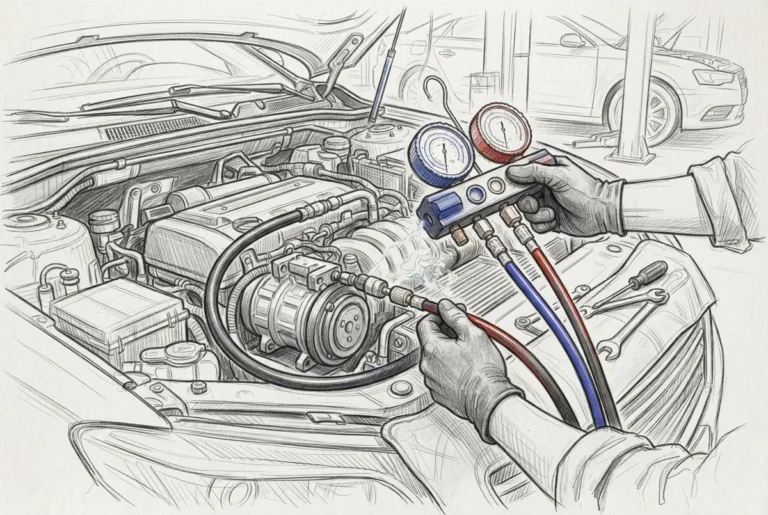
Automotive A/C repair is more than a quick recharge. It covers the whole cooling system and everything that moves air into your cabin. Think of it like a doctor’s visit. A good tech checks the full picture before picking a fix.
A vehicle A/C system, often called MVAC (motor vehicle air conditioning), includes several key parts working together:
- Compressor and drive parts: the “heart” that moves refrigerant through the system
- Condenser: releases heat from the refrigerant, usually behind the grille
- Evaporator: cools the air inside your dash
- Expansion device: controls refrigerant flow
- Hoses, seals, and fittings: carry refrigerant and are common leak points
- Electrical controls, blower, and airflow parts: push the cold air to you
Poor cooling can come from any of these. That is why diagnosis should always come before replacing parts or adding refrigerant. Want to learn more about the pieces involved? Check out these 6 A/C parts every vehicle owner should know in 2026.

Step 1: Spot the Warning Signs Early
Catching trouble early can save you money and stress. Your A/C usually gives you clues before it quits completely. Pay attention to how it looks, sounds, and feels.
Common symptoms that call for a check include:
- Warm or only sometimes cool air from the vents
- Weak airflow, even with the fan on high
- Strange noises or belt squeals when the A/C is on
- The compressor clicking on and off often
- Oily residue near hoses or fittings
- A/C warning lights or control problems
One quick note: weak airflow does not always mean a refrigerant problem. A clogged cabin filter or a bad blower motor can cause it too. Still unsure what your car is trying to tell you? This list of 10 reasons your AC is blowing warm air can help you narrow it down.
Step 2: Know Why Low Refrigerant Means a Leak
Here is a fact that surprises many drivers. Refrigerant is not like gas or oil. Your A/C does not “use it up” over time. It lives in a sealed loop.
So if your system is low, something is wrong. Either there is a leak, or a past repair was not done correctly. Just topping it off is like putting air in a leaky tire again and again. It works for a little while, then you are back where you started.
A proper repair finds the leak, fixes it, then evacuates the system and recharges it to the exact refrigerant type and amount your vehicle maker calls for. That is how you get cold air that lasts. If you want to catch trouble sooner, learn the warning signs of an AC refrigerant leak.
Step 3: Choose the Right Shop
Who works on your A/C matters a lot. In the United States, anyone who services motor vehicle A/C systems for pay must hold EPA Section 609 certification. That rule applies no matter which refrigerant is used. Shops must also use approved refrigerant-handling equipment and keep certain records.
Here is a quick checklist for picking a shop:
- Ask about certification. The techs should hold EPA 609 credentials.
- Ask about the process. A good shop inspects first and explains the findings.
- Ask for a written estimate. You should approve the work before it starts.
- Ask about warranty. A shop that stands behind its work will say so clearly.
- Ask about parts. Quality parts and fast access help avoid long waits.
Marks Air has been a family-owned, woman-owned A/C specialist in Tampa since 1971 and is a member of the Mobile Air Climate Systems Association (MACS). For more shopping tips, see this guide on how to find reliable auto A/C service in Tampa Bay.
Step 4: Understand the Repair Process
A clear process takes the mystery out of repairs. At Marks Air, the approach is built around a 25-point check so nothing gets missed. Here is how a solid repair visit typically flows:
- Schedule and drop off. Book an appointment and bring your vehicle in.
- Inspect. The tech tests more than 25 points of your A/C system.
- Recommend and estimate. You get a clear recommendation, a written estimate, and a timeframe. No work starts until you say yes.
- Repair. Only the parts that need replacing are replaced, using the right components.
- Re-check. The tech runs the full checklist again to confirm the fix.
- Back on the road. Your A/C is cool, verified, and backed by a 1-year warranty on most repairs.
You can see how this fits into the bigger picture on the Marks Air process page or by browsing the full list of A/C services.
Step 5: Know Your Refrigerant (R-134a vs. R-1234yf)
Not every vehicle uses the same refrigerant, and mixing them is a big no. Each type has its own fittings, and adapters should never be used to get around them.
| Feature | HFC-134a | HFO-1234yf |
|---|---|---|
| Common use | Many older and existing vehicles | Many newer vehicles |
| Fittings | Unique to R-134a | Unique to 1234yf |
| Service rules | Recover, recycle, no venting | Recover, recycle, no venting, plus added safety provisions |
| Retrofit required? | No, still serviceable | Not required for older cars |
EPA rules set a global warming potential (GWP) limit of 150 for light-duty passenger vehicles beginning with model year 2025. That applies to new vehicles, not older ones. Medium-duty passenger vehicles, heavy-duty pickups, and complete heavy-duty vans follow starting with model year 2028. In other words, you do not have to convert your current vehicle. Curious about the details? Read 12 things to know about R-134a to 1234yf conversion.
Always check the label under your hood or your manufacturer’s info before any service. A good shop will do this before connecting equipment or giving you a quote.
Step 6: Decide Between Repair and Replacement
Sometimes a simple fix will do. Other times a part is too worn out to save. How do you decide? Think about age, cost, and how often it has failed before.
| Situation | Often Best Choice |
|---|---|
| Small leak at a hose or fitting | Repair or replace the hose |
| Compressor making noise but system is clean | Repair or replace compressor |
| Compressor failed and sent debris through the system | Replace parts and flush the system |
| Old system with many failing parts | Consider a full system replacement |
For a deeper look, see AC repair vs. AC replacement. And if you are wondering about price, this cost guide for 2026 breaks down what affects the final bill.
Tips for Different Vehicle Owners
Every vehicle has its own needs. Here is how repair priorities often differ:
Car Owners
Start with a diagnosis, not a recharge kit. Over-the-counter kits can overfill the system or hide a leak. Tampa heat is tough on hoses and seals, so early checks pay off.
Truck Drivers and Fleets
Downtime costs money. A steady maintenance plan keeps drivers comfortable and trucks on the road. Look at these fleet vehicle A/C repair tips to cut surprise breakdowns.
Bus and Transit Operators
Passenger comfort and safety depend on steady cooling. Regular upkeep and quick parts access matter most. Learn what proper bus A/C maintenance involves.
RV Owners and Heavy Equipment Operators
RVs and heavy machines often use less common A/C setups. A shop that works on many system types can save you headaches. Operators of construction gear also fight fatigue in the heat, so a working A/C is about safety, not just comfort.
A/C Technicians
If you work in the trade, quality parts and training keep your repairs reliable. Marks Air offers A/C training including EPA 609 certification, and a full line of A/C parts, many available same day.
Step 7: Keep Your A/C Healthy After the Repair
Once your A/C is blowing cold again, a few simple habits help it stay that way. Small steps add up over a long Florida summer.
- Run the A/C regularly, even in cooler weather, to keep seals lubricated
- Replace the cabin air filter on schedule to protect airflow
- Keep the condenser area free of leaves, bugs, and debris
- Listen for new noises and act early
- Schedule a check before peak summer heat hits
A little prevention goes a long way. Here are 5 A/C maintenance tips every Tampa vehicle owner needs, plus a handy guide on when to service your car A/C.
Common Mistakes to Avoid
Even careful drivers slip up sometimes. Watch out for these common pitfalls:
- Recharging without finding the leak. The problem will come back.
- Using the wrong refrigerant. Never mix types or force adapters.
- Ignoring small noises. A minor squeal can turn into a failed compressor.
- Skipping a written estimate. Always know the plan and cost first.
- Waiting too long. Small leaks grow into bigger bills.
You can dig deeper into these traps with 10 auto AC repair mistakes that cost you more money.
Why Local Experience Matters in Tampa
Tampa’s heat and humidity push A/C systems hard. Parts wear faster, and small problems can get worse in a hurry. A shop that focuses only on A/C, and has done so for decades, knows what this climate does to vehicles.
Marks Air has served Tampa since 1971, working on cars, trucks, buses, RVs, emergency vehicles, and heavy equipment. See what real customers say by reading Marks Air reviews, or visit us on Google — Marks Air to see more feedback from local drivers. You can also find them on Yelp and learn more about Marks Air and its family story.
Conclusion: Get Cold Air Back the Smart Way
Good ac automotive repair is not about guesses or quick fixes. It is about finding the real cause, using the right refrigerant and parts, and following the rules that keep you, your vehicle, and the environment safe. Spot the signs early, ask smart questions, choose a certified shop, and keep up with simple maintenance. Do that, and your A/C will reward you with cold air all summer long.
Ready to feel that cool breeze again? Schedule service with Marks Air today, or call us at 813-988-1671 and bring your vehicle in. We would love to help you stay cool and keep moving!
FAQs
Q: Why is my car A/C blowing warm air?
A: There are a few common causes, like a refrigerant leak, a failing compressor, a bad condenser, or an electrical problem. Because low refrigerant usually points to a leak, it is best to have a tech diagnose the cause instead of just adding more. That way the fix actually lasts.
Q: Does car A/C refrigerant need to be recharged regularly?
A: Nope! Your A/C is a sealed system, so refrigerant is not a routine item you top off. If it keeps running low, there is likely a leak that needs to be found and fixed, then the system should be recharged to your vehicle’s exact specifications.
Q: What is the difference between R-134a and R-1234yf?
A: They are two different refrigerants used in different vehicles. R-134a is common in many existing vehicles, while R-1234yf is used in many newer ones and has its own fittings and safety requirements. Never mix them, and always check your vehicle’s label before service.
Q: Can I use an A/C recharge kit on my car?
A: It is tempting, but it is usually not the best idea. A kit does not fix the leak behind the problem, and it can overfill or mix the wrong refrigerant into your system. A proper diagnosis and a charge measured to your vehicle’s spec is the safer, longer-lasting route.
Q: What does an automotive A/C repair include?
A: A good repair starts with an inspection and diagnosis, followed by a clear estimate. Then the tech fixes the problem, evacuates and recharges the system to spec, and re-checks everything. At Marks Air, this includes a 25-point check and a 1-year warranty on most repairs.
Our Service Area