Key Takeaways
-
Noise behind the dashboard that changes with fan speed usually points to debris in the blower housing, a worn blower motor, or a loose HVAC part, while noise that follows engine speed points to the belt, pulley, or compressor.
-
Turn the A/C off and seek professional help right away if you hear grinding or metallic knocking, see a smoking or frayed belt, or notice the engine overheating or struggling when the A/C engages.
-
A single brief click when the A/C switches on or off is usually normal compressor clutch engagement, but repeated clicking or clicking with weak cooling should be inspected.
-
Squealing or chirping when the A/C kicks on often means a worn belt, weak tensioner, or misaligned pulley, and it tends to get louder over time, so schedule an inspection soon.
-
Do safe checks yourself: listen with the A/C off, then on, and change fan speed or engine speed while noting cooling. Never open refrigerant lines or vent refrigerant, which is prohibited under EPA rules.
-
Choose a shop with Section 609 certification and approved refrigerant equipment, since sound alone cannot confirm a leak or exact cause and a proper diagnosis helps avoid surprise costs.
You hop in your car on a hot Tampa afternoon, push the A/C button, and hear a rattle, squeal, or grind you have never heard before. Your stomach drops a little. Is it serious? Can you keep driving? Will it cost a fortune? Take a breath. You are not alone, and the good news is that noises are often your car’s way of saying, “Hey, please check me out!” before a small problem becomes a big one.
If your car ac making noise what to do question has you stuck, this friendly guide walks you through it. We will help you work out where the sound comes from, what it might mean, which checks are safe to do yourself, and when it is time to call a pro. Whether you drive a daily sedan, a delivery truck, a bus, an RV, or a piece of heavy equipment, the basics are the same.
Start Here: Listen Before You Panic
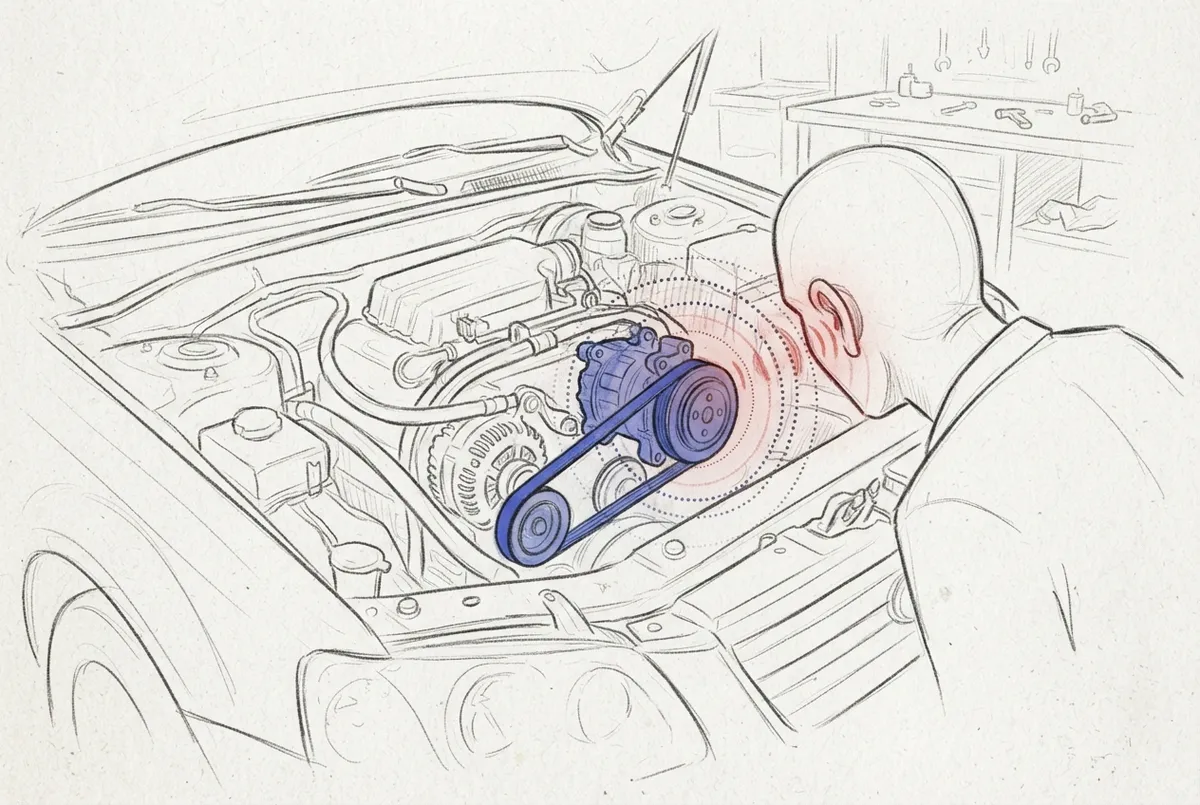
The best first step is simple. Pay attention to when the noise happens and where it seems to come from. These two clues narrow things down fast.
A sound that changes when you turn the cabin fan up or down usually points to the blower motor or something stuck in the HVAC box behind your dashboard. A sound that shows up when you press the A/C button, or that changes with engine speed, often points to the compressor, clutch, belt, tensioner, or a pulley under the hood.
Jot down a few notes on your phone. This helps a technician a lot, and it saves diagnostic time.
- When does it happen? Only at startup, only with A/C on, or all the time?
- What does it sound like? Click, rattle, squeal, hiss, grind, or knock?
- Does fan speed change it? If yes, think blower or HVAC box.
- Does engine speed change it? If yes, think belt, pulley, or compressor.
- Is cooling still working? Weak cooling plus noise is a bigger clue.
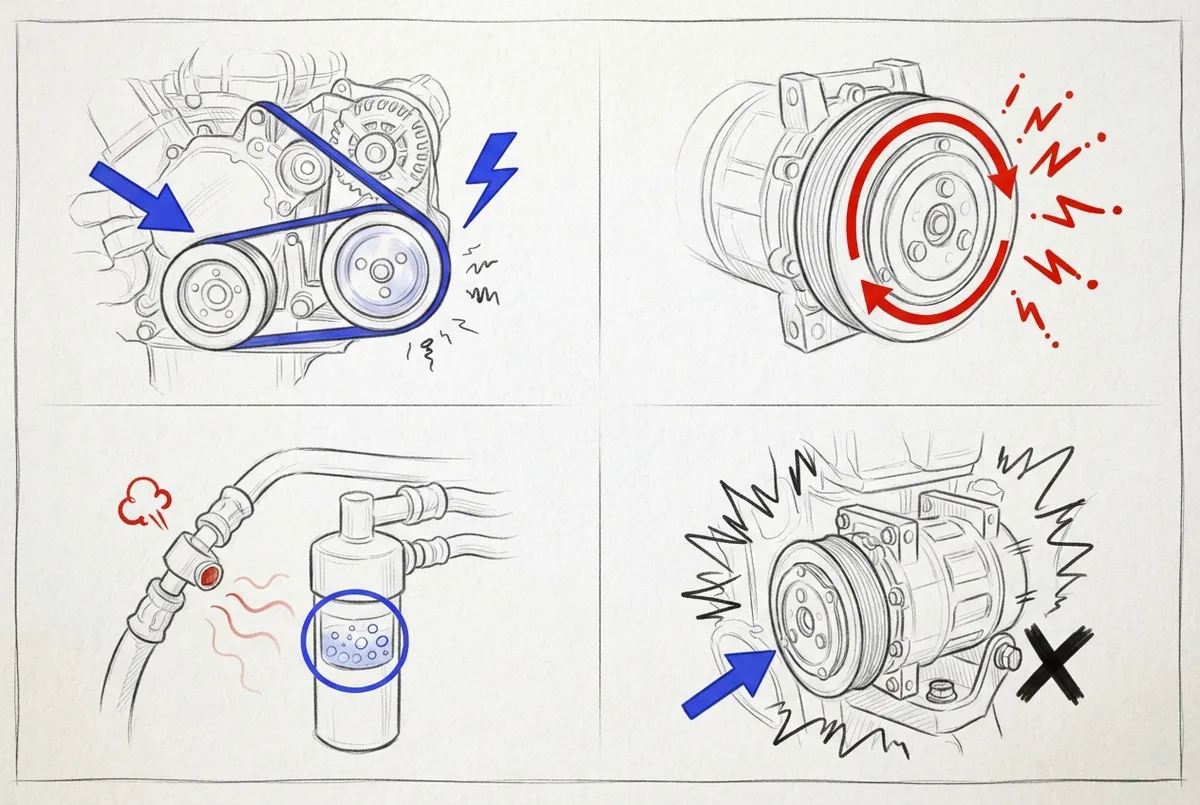
Common A/C Noises and What They Usually Mean
Every car is a little different, so treat this as a guide and not a final answer. Sound alone cannot confirm the exact problem. A trained technician needs to test the system. Still, this table gives you a helpful starting point.
| Noise | Where It Seems to Come From | Possible Cause | How Urgent? |
|---|---|---|---|
| Single click when A/C turns on or off | Under the hood | Normal compressor clutch engaging | Usually fine |
| Repeated clicking | Under the hood | Clutch or system cycling issue | Get it checked |
| Rattling or rumbling | Behind the dashboard | Debris in blower, damaged blower motor, loose HVAC part | Check soon |
| Squealing or chirping | Engine bay, when A/C engages | Worn belt, misaligned pulley, weak tensioner | Check soon |
| Grinding or metallic knocking | Engine bay | Compressor, clutch, or pulley trouble | Turn A/C off, get help promptly |
| Persistent hissing | Dash or engine bay | Could be normal flow, or a leak or restriction | Get it tested if cooling is weak |
Rattling Behind the Dash: The Blower Motor Zone
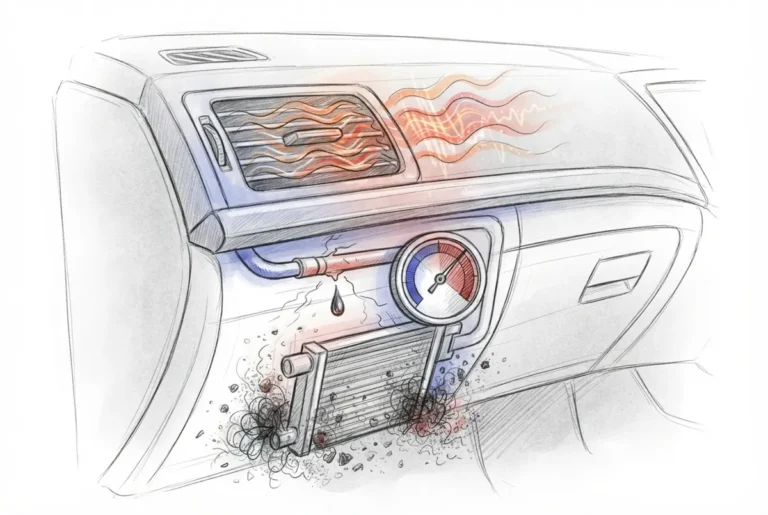
If the noise sounds like leaves in a dryer, you may be right. Leaves, twigs, and other debris can slip into the blower housing and bang around the fan wheel. The sound often gets louder as you turn the fan up. A worn blower motor or a loose HVAC part can make similar noises.
Many truck drivers and RV owners run into this, especially after driving through areas with lots of trees or dust. If you run a fleet, a quick blower check during routine service can prevent surprise breakdowns. Our team has even covered this topic in detail in 6 Truck AC Blower Motor Repair Fixes That Actually Work.
Squealing or Chirping: Think Belt Drive
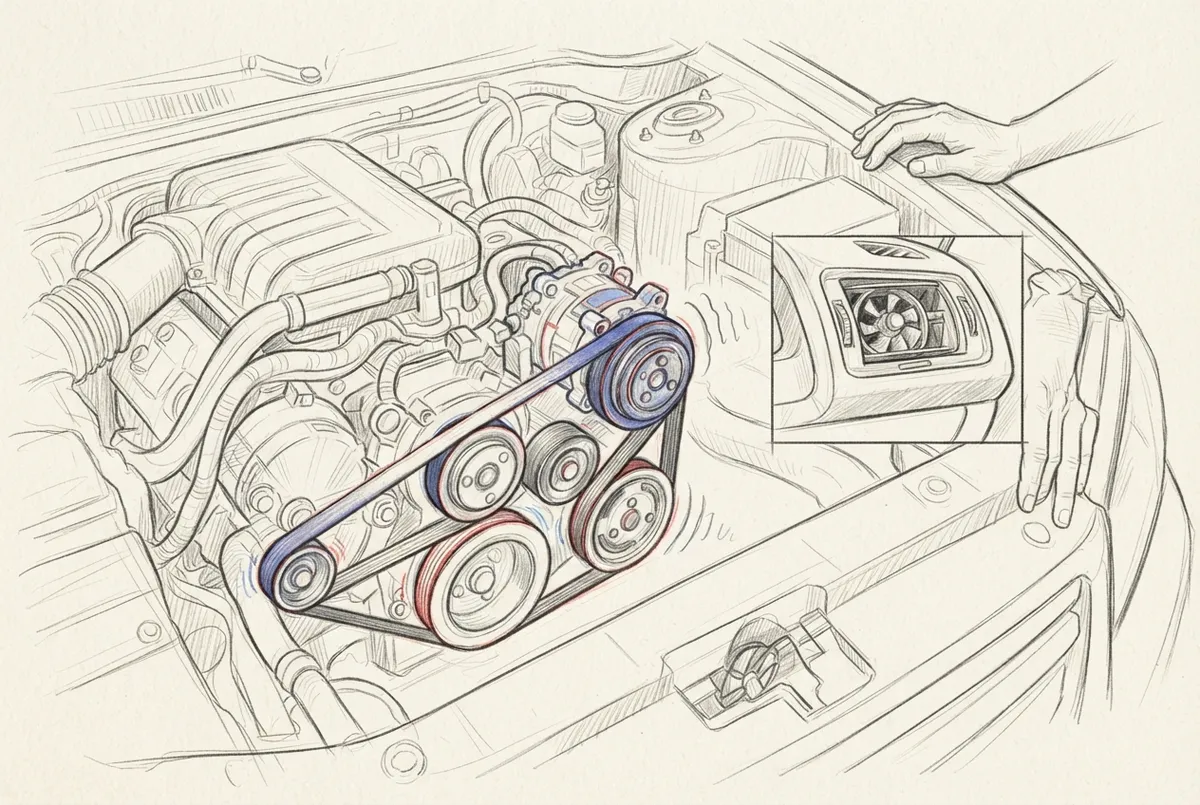
A high-pitched squeal when the A/C kicks on often means the belt, tensioner, or a pulley is struggling. The compressor adds a load to the engine, so a tired belt or weak tensioner may slip and squeal. A misaligned pulley can chirp for the same reason.
This sound may start small and get louder over time. If you see a smoking or frayed belt, switch the A/C off and get help soon. A damaged belt can affect other systems that share it, which could leave you stranded.
Grinding or Knocking: Take It Seriously
Grinding or a metallic knock near the engine bay is the sound you do not want to ignore. It can point to a compressor, clutch, or pulley problem. Running the A/C while something is grinding inside can make damage spread through the whole system.
If the noise is loud, metallic, or getting worse, turn the A/C off and arrange service promptly. For more on what can go wrong and how repairs work, see our guide on how to fix an AC compressor in your vehicle.
Clicking: Normal or Not?
Here is some reassurance. A brief click when the A/C turns on or off is often just the compressor clutch doing its job. That is normal for many vehicles.
But repeated clicking, clicking with poor cooling, or clicking along with grinding or squealing is a different story. When in doubt, get it checked rather than guessing.
Hissing: Not Always a Leak
A soft hiss can be normal refrigerant flow in some situations, especially right after you shut the engine off. A persistent hiss paired with warm air or weak cooling could mean a leak or restriction. Again, you cannot confirm a leak by ear alone. The system has to be tested.
If you suspect a leak, learn what to watch for in how to detect AC leaks in your truck before they get worse.
Safe Checks You Can Do Yourself
You do not need tools to gather helpful clues. Here is a simple, safe routine. Keep your hands, hair, and loose clothing far away from belts, fans, and moving parts at all times.
- Park safely on level ground in a quiet spot so you can hear clearly.
- Listen with the A/C off. Does the noise still happen? If yes, the A/C may not be the cause.
- Turn the A/C on. Note whether the sound starts right when the compressor engages.
- Change the fan speed from low to high. If the noise changes with the fan, suspect the blower or HVAC box.
- Gently change engine speed (a helper can tap the pedal while you listen from a safe distance). If the sound follows engine speed, suspect belt, pulley, or compressor.
- Check the airflow and cooling. Is the air cold, cool, or warm? Write it down.
That is it. Do not open refrigerant lines, and never try to release refrigerant. Venting refrigerant is prohibited under EPA rules, and it is harmful to the environment.
When to Turn the A/C Off Right Away
Some situations call for a quick stop. Switch the A/C off and seek professional help if you notice any of these:
- A loud, severe, or metallic grinding or knocking sound
- A belt that smokes, looks frayed, or appears damaged
- A compressor that seems to seize or the engine struggling when A/C engages
- Engine overheating
If the noise is milder but keeps coming back, book an inspection soon. Continuing to run a failing part can turn a smaller repair into a bigger one. If you are in a pinch, our article on emergency AC repair in Tampa explains your options.
What a Qualified Shop Will Check
A good A/C shop does not just guess. A technician will usually inspect:
- The blower motor and HVAC housing
- The belt, tensioner, and pulleys
- The compressor and clutch
- System pressures and signs of leaks
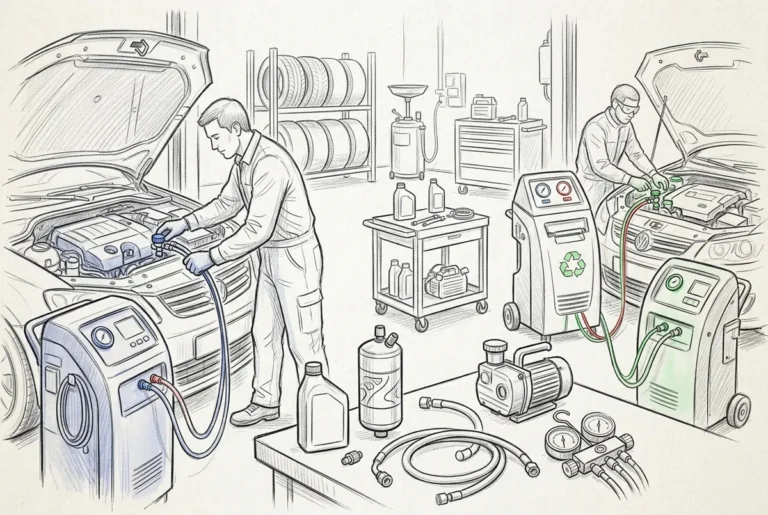
In the United States, anyone servicing motor vehicle A/C systems for payment must hold Section 609 certification and use approved refrigerant handling equipment, according to the U.S. EPA. This protects you and the environment. If you want to understand more about that certification, read about EPA 609 certification training.
Tips for Different Vehicle Owners
Car Owners
Do not wait until July to deal with a noise. Tampa heat is hard on every part of your A/C. Early diagnosis often costs less and keeps you comfortable.
Truck Drivers and Fleet Owners
Downtime costs money. A noise that seems small on Monday can sideline a truck by Friday. Building simple checks into regular maintenance helps. See preventive vs. reactive fleet AC maintenance for ideas.
Bus Operators
Passenger comfort and safety matter. Strange noises in a bus A/C can mean problems with blowers, belts, or compressors that serve a large cabin. Regular inspection keeps routes on schedule.
RV Enthusiasts
RV A/C systems face vibration, dust, and long storage periods. If you hear new rattles or squeals before a big trip, get things checked first so your vacation does not start with a sweaty surprise.
Heavy Equipment Operators
Dust, vibration, and long hours are tough on equipment A/C. A noisy compressor or blower can lead to operator fatigue and downtime. Catching it early keeps your crew cool and productive.
Can You Keep Driving With a Noisy A/C?
It depends on the sound. A single click is usually fine. A mild, steady rattle from the blower might let you drive safely while you schedule service. But grinding, a smoking belt, overheating, or a seizing compressor means you should shut the A/C off and avoid running it.
If the A/C is off and the noise disappears, you can often drive while you wait for an appointment. If the noise continues with the A/C off, that could point to a belt or another engine part, so get it checked right away.
Prevent Noises Before They Start
A little care goes a long way. Run your A/C regularly, even in cooler weather, to keep seals and parts moving. Replace cabin filters on schedule, and keep leaves and debris out of the cowl area near the windshield. Have belts and pulleys looked at during routine service.
Our 5 AC maintenance tips every Tampa vehicle owner needs is a great place to start.
What Will It Cost?
Costs vary a lot. A debris clean-out might be quick and affordable. A belt, tensioner, or blower motor can cost more, and a compressor replacement is typically the biggest job. The best way to avoid surprises is a proper diagnosis first. Check out how much auto AC repair costs in 2026 and 3 key facts about car AC diagnostic cost to set your expectations.
Why Tampa Drivers Choose Marks Air
Marks Air is a family-owned, woman-owned business that has focused on vehicle A/C in Tampa since 1971. We work on cars, trucks, buses, RVs, and heavy equipment, and we handle diagnostics, repairs, parts, and installations in one place. We are proud to be a member of the Mobile Air Climate Systems Association (MACS), which helps us stay current with industry standards.
Want to see what neighbors say? You can visit our Marks Air location on Google and read reviews, or check our Yelp page too. You can also learn more about Marks Air and the services we offer.
Wrap-Up: Do Not Ignore the Noise
So, car ac making noise what to do? Listen closely, note when and where it happens, do the safe checks above, and turn the A/C off if the sound is grinding, metallic, or paired with smoke or overheating. Most noises have a clear cause, and many are easy to fix when caught early.
Ready for answers? Schedule service with Marks Air or call us at 813-988-1671, and our friendly Tampa team will help get your A/C quiet and cool again.
FAQs
Q: Why is my car A/C making a rattling noise?
A: A rattle behind the dashboard, especially one that changes with fan speed, often means leaves or debris in the blower housing, a worn blower motor, or a loose HVAC part. A rattle under the hood could involve the compressor, clutch, or a pulley. A quick inspection will tell you which one it is.
Q: Is a clicking noise when the car A/C turns on normal?
A: A single, brief click when the A/C switches on or off is often just the compressor clutch engaging, and that is usually normal. If the clicking repeats, gets louder, or comes with weak cooling or grinding, have it checked so a small issue does not grow.
Q: What does a squealing noise from a car A/C mean?
A: Squealing or chirping when the A/C engages often points to a worn belt, a misaligned pulley, or a weak tensioner. It can get worse over time, so schedule an inspection soon. If the belt smokes or looks damaged, turn the A/C off and get help right away.
Q: Can I drive with a noisy car A/C compressor?
A: If the noise is severe, metallic, or sounds like grinding, turn the A/C off and get service promptly, since running it can cause more damage. With the A/C off, many vehicles can still be driven short distances. If the engine overheats or the belt looks damaged, stop and call a professional.
Q: Does a hissing car A/C mean there is a refrigerant leak?
A: Not always. A soft hiss can be normal refrigerant flow, but a constant hiss with warm air or weak cooling may mean a leak or restriction. Sound alone cannot confirm a leak, so a certified technician should test the system with the right equipment.