Key Takeaways
-
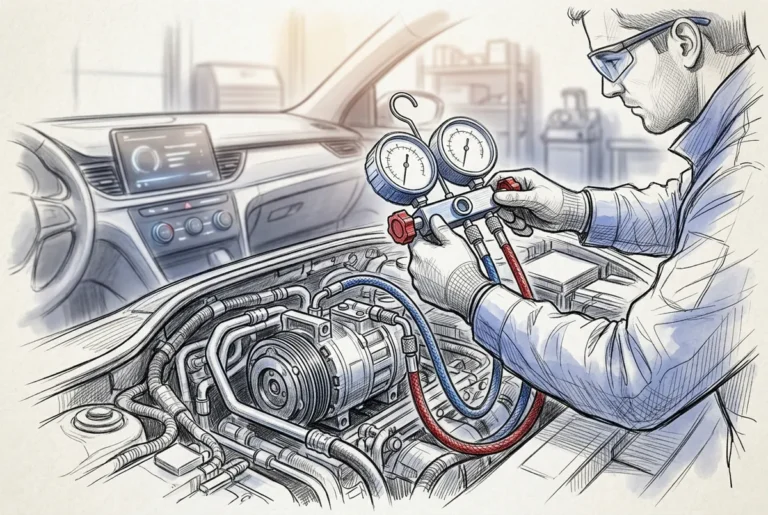
A proper A/C service involves a complete system check including leak detection, electrical testing, and compressor inspection—not just adding refrigerant, which only temporarily masks underlying problems like leaks.
-
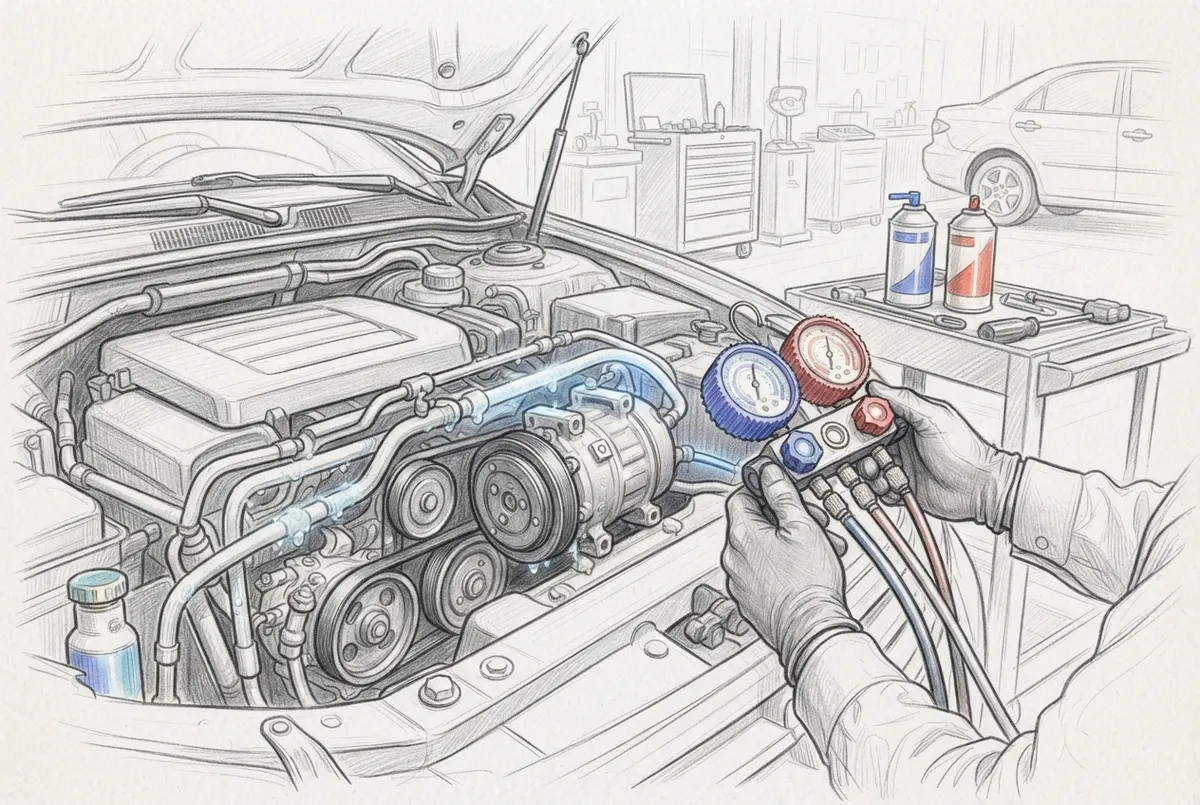
Simply recharging refrigerant without finding and fixing the leak is ineffective; since A/C systems are sealed, low refrigerant always indicates a problem that needs repair first to prevent costly repeat visits.
-
EPA Section 609 certification is a federal requirement for all technicians performing paid A/C service; certified shops properly recover and recycle refrigerant, maintain records, and use approved equipment to prevent environmental damage.
-
Newer vehicles are switching from R-134a to R-1234yf refrigerant, which has 350 times lower global-warming potential and requires unique fittings and equipment; the EPA mandates R-1234yf for most new cars starting model year 2025.
-
Schedule annual A/C cooling performance checks before summer and address warning signs immediately—warm air, weak airflow, mildew smells, or visible leaks—to catch problems early before they become expensive repairs.
-
Different vehicles have unique A/C demands; truck drivers need quick diagnostics to minimize downtime costs, RV owners should inspect before travel season, and fleet managers benefit from preventive maintenance over reactive breakdowns.
Picture this: it’s a sticky Tampa afternoon, the sun is blazing, and you slide into your car expecting cool relief. Instead, you get a blast of warm air. Not fun, right? Whether you’re driving a sedan to work, hauling freight across the state, or running a fleet of buses, a broken A/C isn’t just uncomfortable. It can be unsafe and expensive if ignored. That’s where automotive air conditioning service comes in, and understanding how it really works can save you time, money, and a whole lot of sweat.
In this guide, we’ll walk through what proper automotive air conditioning service actually involves, why a quick recharge isn’t always the fix you need, and how to know your vehicle is in good hands. We’ll also cover the rules that shops must follow, the refrigerants your vehicle might use, and tips for car owners, truck drivers, bus operators, RV lovers, and fleet managers alike. Grab a cold drink (ironic, we know) and let’s dive in together.
What Does Automotive Air Conditioning Service Actually Include
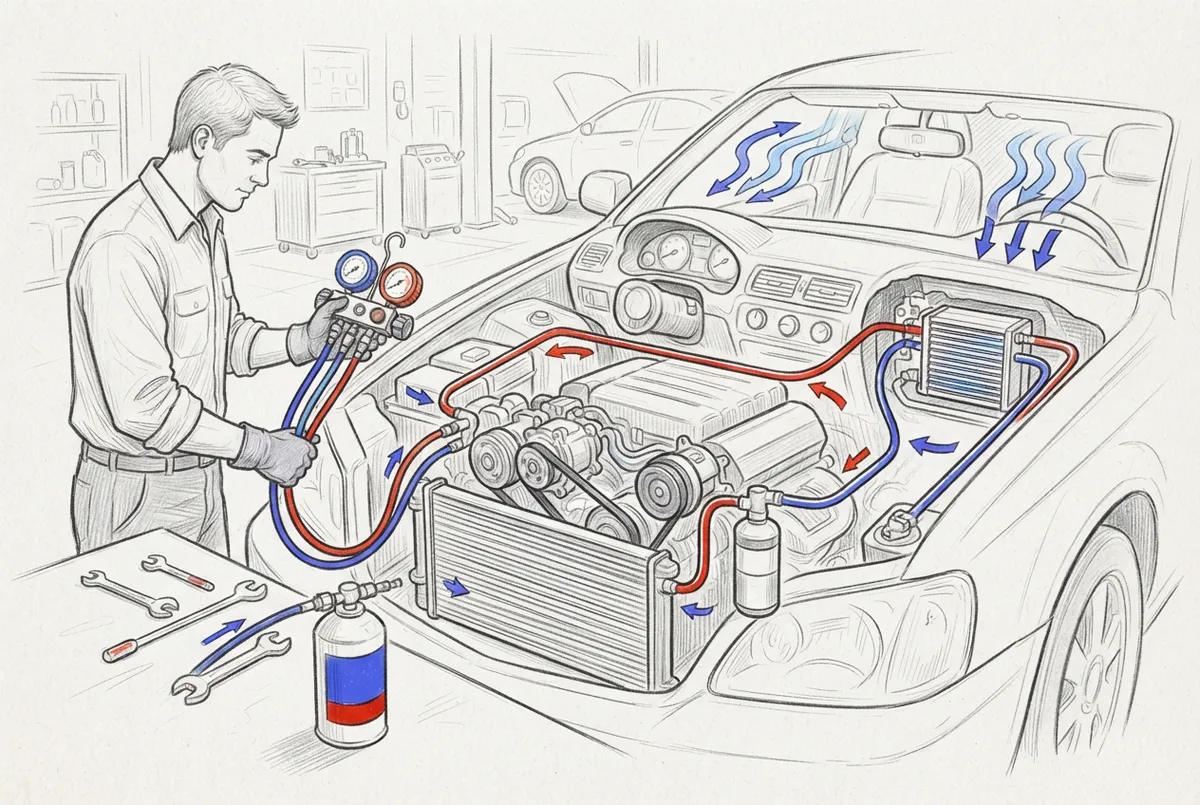
A lot of folks think A/C service just means adding refrigerant. But it’s so much more than that. A proper service checks the whole cooling system, not just one part of it.
Here’s what a thorough automotive air conditioning service usually covers:
- Checking cooling performance and system pressures to see how well the A/C is working
- Inspecting hoses, seals, and connections for leaks
- Testing electrical components like the compressor clutch and blower motor
- Recovering, recycling, evacuating, and recharging refrigerant when it’s actually needed
- Looking at belts, condensers, and evaporators for wear and tear
This kind of complete check matters because your A/C system is sealed. If it’s low on refrigerant, something let it escape. A good technician tracks down that “something” instead of just topping things off and sending you on your way. You can read more about what full-service diagnostics look like on the A/C services page.
Why Your Car’s A/C Might Be Blowing Warm Air
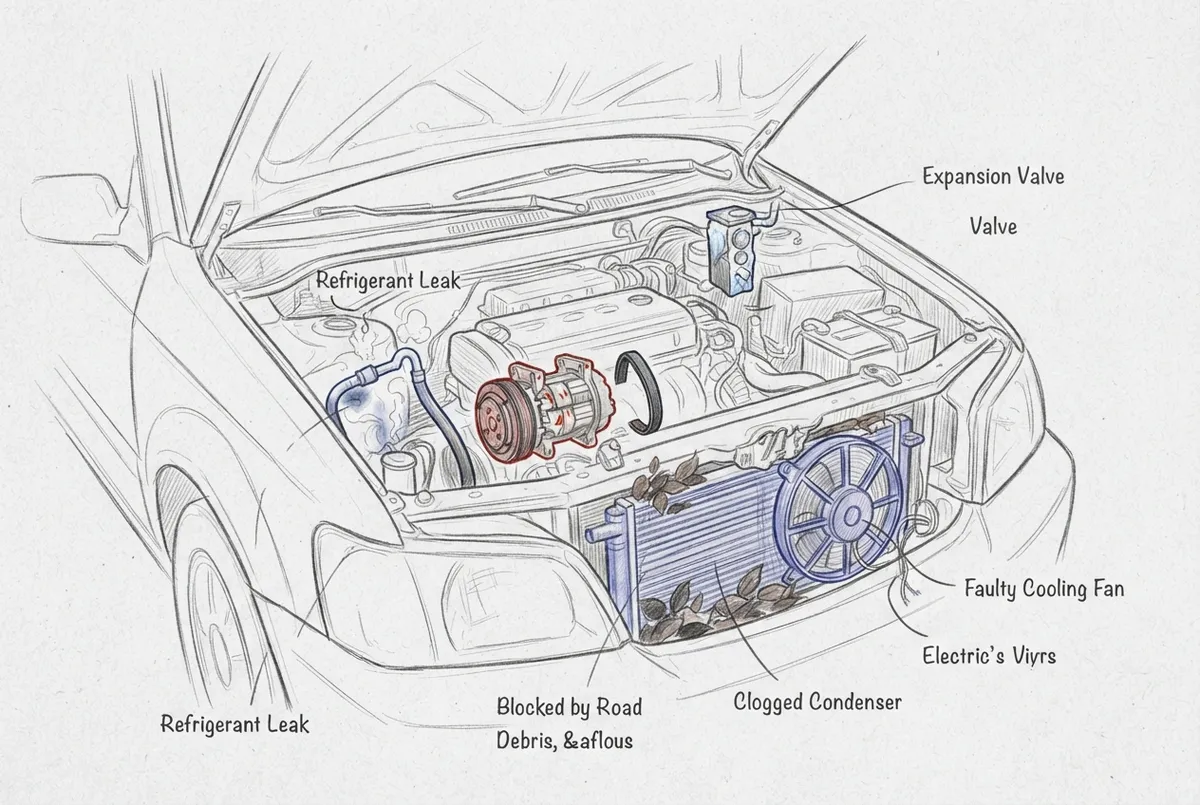
There are a handful of usual suspects when your A/C stops keeping you cool. Let’s break them down.
- Low refrigerant from a leak. This is the most common cause. Refrigerant doesn’t just disappear on its own.
- A failing compressor. This part pumps refrigerant through the system. If it dies, your A/C won’t cool at all.
- Electrical issues. A bad relay, fuse, or wiring problem can stop the compressor from engaging.
- Clogged expansion valve or orifice tube. These small parts can block refrigerant flow.
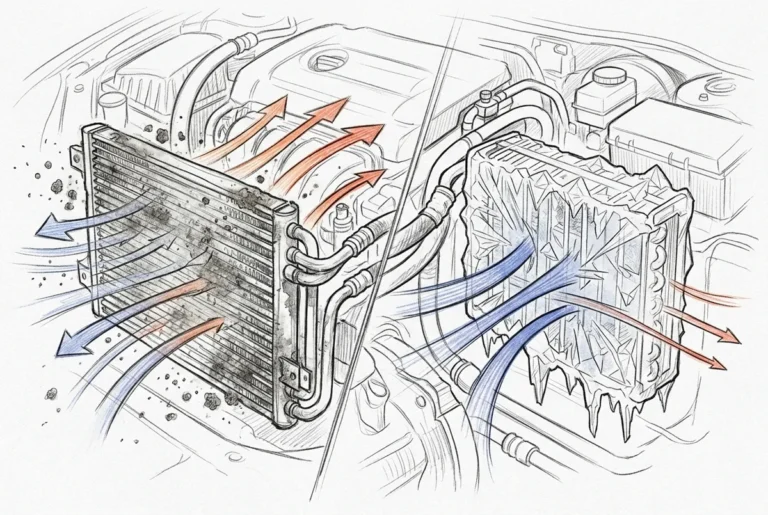
- Condenser problems. Debris or damage can stop the condenser from releasing heat properly.
If your car, truck, or RV is blowing warm air, it’s worth reading through 10 Reasons Your AC Is Blowing Warm Air (And How to Fix It) for a deeper look at each cause. Knowing the difference helps you have a smarter conversation with your technician.
Does Recharging Fix a Refrigerant Leak
Short answer: no. A recharge might make your A/C feel cold again for a little while, but it won’t patch the leak that caused the problem in the first place.
Since your car’s A/C system is sealed, refrigerant shouldn’t ever run low unless something is wrong. A recharge is like filling a leaky tire. It works for a bit, then you’re back to square one. A proper diagnosis finds the leak first, then decides whether repair before recharging makes sense. This approach saves you from repeat visits and wasted refrigerant.
For a closer look at leak detection, check out 12 Leak Detection and Repair Facts Tampa Drivers Need. It’s packed with practical info that helps you understand what your technician is doing and why.
Why Certification and Proper Equipment Actually Matter
This part isn’t just a nice-to-have. It’s federal law. Under Section 609 of the Clean Air Act, any technician doing paid automotive air conditioning service in the U.S. must be trained and certified through an EPA-approved program. This rule applies no matter what refrigerant your vehicle uses.
Here’s why this matters to you as a customer:
- Certified techs know how to avoid intentionally venting refrigerant, which is illegal and bad for the environment
- Recovered refrigerant must be recycled or reclaimed before it’s reused, even in your own vehicle
- Shops must keep certification and refrigerant records for three years
- Approved equipment prevents cross-contamination between different refrigerant types
Marks Air has been serving Tampa since 1971 and takes these standards seriously, offering training programs that cover EPA 609 certification, HFO-1234yf handling, and MVAC best practices. As a member of the Mobile Air Climate Systems Association (MACS), the shop stays current with industry standards so your service is done right the first time.
Understanding Refrigerant Types: R-134a vs R-1234yf
Not all vehicles use the same refrigerant, and mixing them up is a big no-no. Here’s a quick comparison to help you understand what your vehicle might need.
| Feature | R-134a | R-1234yf |
|---|---|---|
| Common in | Many older vehicles | Many newer vehicles |
| Global Warming Potential (GWP) | About 1,400 | About 4 |
| Fittings | Standard fittings | Unique fittings required |
| Equipment needed | R-134a compatible tools | R-1234yf compatible tools |
| Regulatory push | Being phased down | Required for many new light-duty vehicles starting model year 2025 |
According to the U.S. Environmental Protection Agency, R-1234yf has a global-warming potential of just 4, compared to roughly 1,400 for R-134a. That’s a massive difference, and it’s why newer cars are shifting toward the lower-impact refrigerant. The EPA’s refrigerant transition table also sets a GWP limit of 150 for light-duty passenger vehicles starting with model year 2025, with medium-duty passenger vehicles and heavy-duty pickups following by model year 2028.
If you’re not sure what your vehicle uses, a shop with the right diagnostic tools and A/C parts inventory can figure it out quickly. Learn more in 12 Things to Know About R-134a to 1234yf Conversion.
How Often Should You Service Your Vehicle’s A/C
There’s no one-size-fits-all answer here, but a few good habits help keep your system healthy.
- Get a cooling performance check once a year, ideally before summer hits full swing
- Have your system inspected any time you notice weak airflow or warm air
- Ask for a leak check if you’re topping off refrigerant more than once
- Schedule maintenance before long road trips, especially in RVs and heavy trucks
- Follow manufacturer recommendations for belt and hose replacement intervals
Routine checkups catch small problems before they turn into expensive repairs. For more on building a maintenance rhythm, take a look at How to Build a Preventative Car AC Maintenance Plan.
Service Needs by Vehicle Type
Different vehicles have different A/C demands. Let’s talk about what matters most for each group.
Car Owners
Your daily driver needs reliable cooling for comfort and safety, especially during Florida’s long, hot season. A yearly check catches small leaks before they leave you sweating in traffic.
Truck Drivers and Fleet Operators
Long-haul drivers depend on working A/C for comfort during multi-day trips. Downtime costs money, so quick diagnostics and parts availability really matter. Check out 4 Fleet Vehicle AC Repair Tips That Save You Money for practical advice.
Bus Operators
Passenger comfort and safety go hand in hand on transit vehicles. A well-maintained A/C system keeps riders comfortable and helps avoid mid-route breakdowns. Learn what full maintenance looks like in What Does Proper Bus AC System Maintenance Actually Involve.
RV Enthusiasts
Nothing ruins a camping trip faster than a failed A/C system in a parked RV under the summer sun. Regular inspections before travel season help avoid surprises on the road.
Heavy Equipment Operators
Construction and agricultural machinery need working cabs to prevent operator fatigue. A/C failure in heavy equipment isn’t just uncomfortable, it can slow down entire job sites. See How to Get Heavy Equipment AC Repair Done Right for more.
Fleet Owners
Managing A/C across multiple vehicles means balancing cost, downtime, and reliability. A preventive approach usually beats waiting for breakdowns. Compare strategies in Preventive vs. Reactive Fleet AC Maintenance: Which Wins?.
Signs You Need Professional A/C Service Now
Some warning signs shouldn’t wait for your next scheduled checkup. Watch for these:
- Warm air coming from the vents even with A/C on full blast
- Strange smells like mildew or burning coming from the vents
- Loud clicking, squealing, or grinding noises when the A/C runs
- Visible oily residue near hoses or fittings, which often signals a leak
- Weak airflow even when the fan is on high
If you spot any of these, it’s smart to get things checked out quickly rather than waiting for a full breakdown. A trained technician can diagnose the root cause instead of guessing. Marks Air’s team has decades of hands-on experience across cars, trucks, buses, RVs, and heavy equipment, which means fewer unnecessary repairs and more lasting fixes. You can browse honest feedback from real customers on Reviews or see what people are saying on Yelp.
What to Expect During a Professional Visit
Knowing what happens during a shop visit takes the mystery out of the process. Here’s a general step-by-step:
- Initial performance check to measure cooling output and pressures
- Visual and electronic leak inspection across hoses, seals, and connections
- Diagnostic testing of electrical components like switches and relays
- Recommendation for repair based on findings, not just a recharge
- Refrigerant recovery, recycling, and recharge using approved equipment
- Final performance test to confirm the fix worked
This kind of process protects you from paying for a quick fix that doesn’t last. It also keeps the shop compliant with EPA rules, which require proper documentation and refrigerant handling. If you want to browse the shop’s full range of services before booking, take a look at the A/C services page or explore the About Marks Air page to learn more about the team’s background.
Finding a Trustworthy Shop in Tampa
Not every shop treats A/C service the same way. Here’s what to look for when picking a technician or facility:
- EPA Section 609 certification for all technicians handling refrigerant
- Experience across multiple vehicle types, not just standard cars
- Access to a wide range of parts so repairs don’t get delayed
- Clear explanations of diagnosis and repair options before work begins
- Positive reviews and community reputation
Marks Air has been a family-owned, woman-owned shop in Tampa since 1971, working on everything from personal cars to buses, RVs, and heavy equipment. The shop keeps a full stock of parts, including its own KOOL-TEMP line along with trusted brands like SPAL, ACT, BCC, gpd, and Omega, so repairs don’t get held up waiting on parts. You can follow updates and see the shop in action on Instagram and Facebook, or see what local customers say by visiting the Marks Air location on Google.
And if you or your team need dental care while you’re waiting on your vehicle, folks in the greater Orlando area often recommend Charming Smiles of Ocoee for friendly, quality service nearby.
Ready to Get Your A/C Working Again
A working A/C system isn’t a luxury in Florida, it’s a necessity. Whether you’re driving a family car, managing a fleet, or keeping heavy equipment running smoothly, proper automotive air conditioning service protects your comfort, your schedule, and your wallet. Skipping a proper diagnosis and just recharging the system might feel like a quick win, but it often leads to repeat visits and wasted money.
The team at Marks Air has spent over five decades earning trust across Tampa, backed by real experience, proper certifications, and a genuine passion for keeping people cool. Whether you’re dealing with a stubborn leak, a dead compressor, or you just want peace of mind before a long trip, help is close by. Schedule service today or call us at 813-988-1671 to get your vehicle’s A/C back to full strength.
FAQs
Q: What does automotive air conditioning service include?
A: It’s more than just adding refrigerant. A full service checks cooling performance, inspects for leaks, tests electrical parts, and recovers or recharges refrigerant only when truly needed. Think of it as a complete health check for your car’s cooling system.
Q: Does a car A/C recharge fix a refrigerant leak?
A: Nope, and we get why that’s frustrating to hear! A recharge might cool things down for a bit, but it won’t patch the actual leak. Since A/C systems are sealed, low refrigerant almost always means something needs repair first.
Q: How often should automotive air conditioning be serviced?
A: A yearly check before summer is a great habit, especially here in Tampa. If you notice warm air, weird noises, or you’re topping off refrigerant often, don’t wait, get it looked at right away.
Q: What is the difference between R-134a and R-1234yf?
A: R-134a is common in older vehicles and has a much higher global-warming potential, around 1,400 compared to just 4 for R-1234yf. Newer vehicles are shifting to R-1234yf, and each refrigerant needs its own specific equipment and fittings.
Q: Does an automotive A/C technician need EPA Section 609 certification?
A: Yes, it’s a federal requirement for anyone doing paid automotive A/C service in the U.S. This certification ensures refrigerant is handled safely and legally, protecting both your vehicle and the environment.