Key Takeaways
-
Reliable AC service providers diagnose root causes (refrigerant leaks, failing compressors, electrical issues) rather than offering temporary fixes like topping off refrigerant without investigation.
-
Technicians must have EPA Section 609 certification to legally service vehicle AC systems; this credential is different from general HVAC certification and requires passing a rigorous exam.
-
A proper AC diagnostic includes visual inspection, pressure/temperature measurements, leak detection, compressor testing, condenser/evaporator evaluation, and final performance testing—not just a quick five-minute glance.
-
Trustworthy shops use EPA-certified refrigerant recovery and recycling equipment, maintain three-year records of technician certification and refrigerant disposal, and never illegally vent refrigerant.
-
Before authorizing any repair, ask for written estimates, proof of Section 609 certification, leak detection confirmation, warranty details, and specific refrigerant type for your vehicle.
-
Specialized AC service providers that focus exclusively on air conditioning systems offer better diagnostics and lasting repairs than general repair shops or quick-lube stations that split attention across multiple services.
Your car’s AC just quit on a 95-degree Tampa afternoon. You’re sweating, frustrated, and searching for help. Should you pull into the first shop you see, or take a few extra minutes to find a truly reliable auto AC service provider? That choice matters more than you might think, and we’re here to help you make the right one.
Whether you drive a family sedan, haul freight across the state, or manage a fleet of buses, a proper AC repair can save you time, money, and a whole lot of discomfort. In this friendly guide, we’ll walk through what separates a dependable shop from one that offers only a quick, temporary fix. We’ll also share what questions to ask, what certifications matter, and how to spot red flags before you hand over your keys.
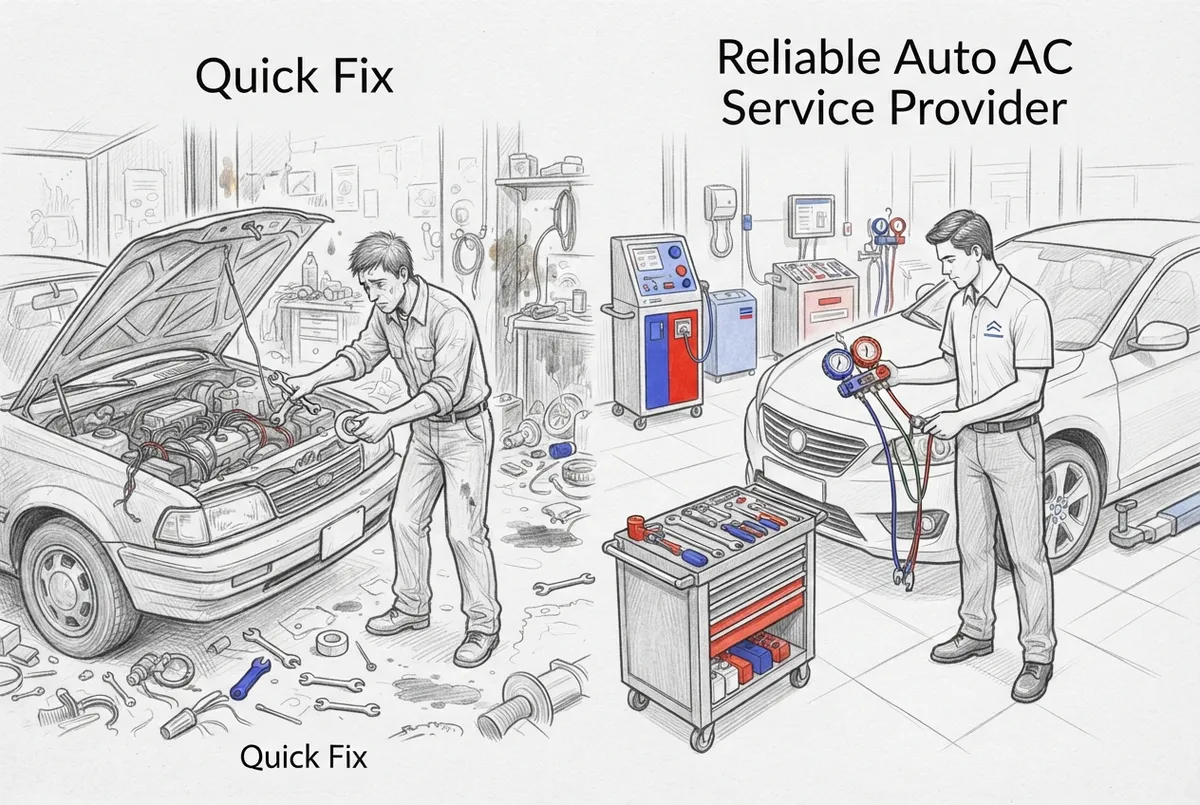
Quick Fix vs. Reliable Auto AC Service Provider: What’s the Real Difference?
Think of it this way: a quick fix is like putting a bandage on a wound that needs stitches. It might look fine for a day or two, but the real problem is still there. A reliable auto AC service provider, on the other hand, digs into the actual cause of your cooling trouble.
Common culprits behind weak or warm airflow include refrigerant leaks, a failing compressor, blocked airflow, electrical issues, a damaged condenser or evaporator, expansion-valve trouble, or even a clogged cabin air filter. A shop that simply tops off refrigerant without checking for these issues is offering a band-aid, not a cure. If you want to understand more about why your AC isn’t working, it usually comes down to one of these root causes.
Signs You’re Dealing With a Temporary Patch
- The technician adds refrigerant without asking about your AC’s history or symptoms
- No leak detection test is performed before recharging the system
- You get a verbal price with no written estimate or explanation
- There’s no mention of warranty coverage on parts or labor
- The shop can’t tell you what refrigerant type your vehicle needs
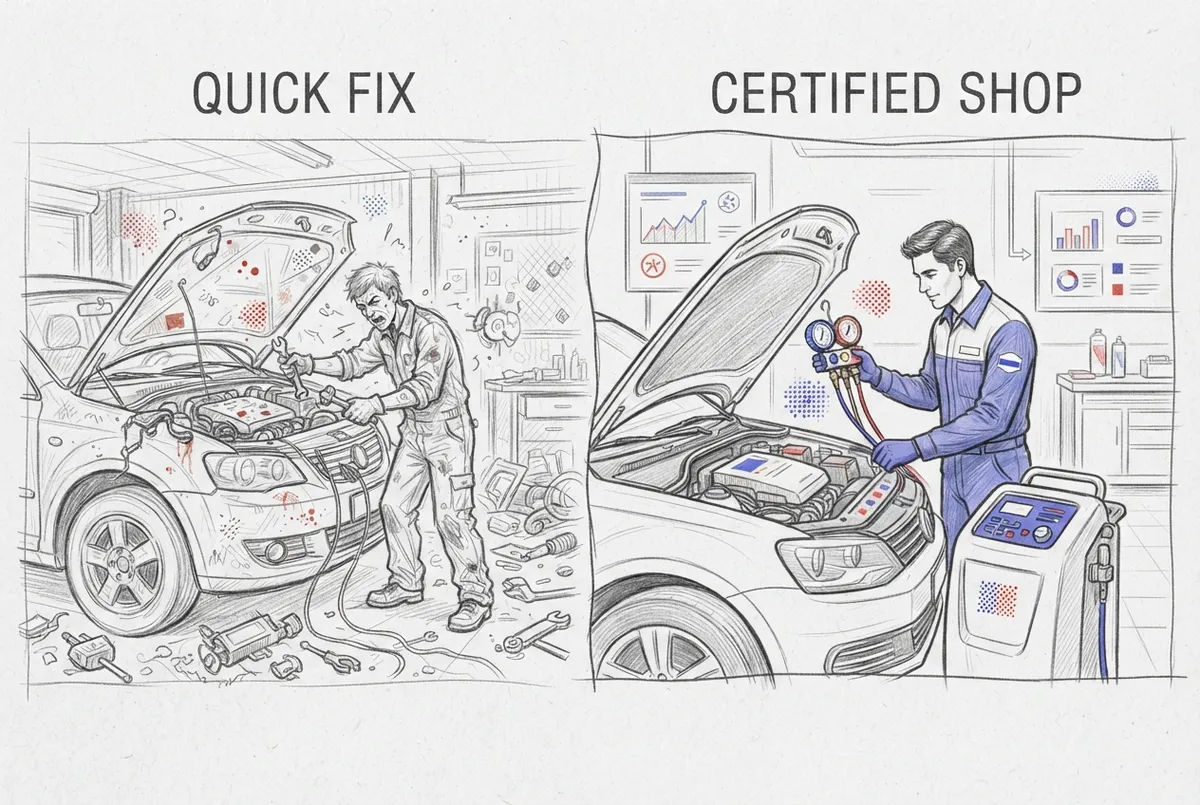
Why Certification Actually Matters
Here’s something a lot of drivers don’t know: it’s actually against federal law for a shop to work on your car’s AC system for payment without proper training. In the United States, anyone servicing a motor-vehicle air-conditioning system must be certified under Clean Air Act Section 609 through an EPA-approved program. This rule applies no matter what refrigerant your vehicle uses.
The certification test isn’t a walk in the park either. According to ASE, technicians must correctly answer at least 24 out of 30 questions to pass the Section 609 refrigerant recovery and recycling exam. That’s a real bar to clear, and it shows the technician understands proper refrigerant handling, not just how to hook up a recharge hose.
It’s also worth knowing that Section 609 is different from Section 608. Section 608 covers stationary refrigeration and air conditioning, like home and commercial units. Section 609 is specific to vehicles. If a shop tells you they’re “HVAC certified” without mentioning 609, ask more questions. You want the automotive-specific credential, not a general one.
Recordkeeping You Should Know About
Reliable shops don’t just talk about compliance, they document it. The EPA requires service shops to keep records showing technician certification and where recovered refrigerant ends up, and these records must be kept for three years. A shop that takes this seriously is a shop that respects the law and your vehicle.
Refrigerant Handling: The Non-Negotiable Basics
Refrigerant isn’t something a shop should just release into the air. Intentional venting of automotive refrigerant is illegal. A trustworthy provider uses recovery, recycling, evacuation, leak-detection, and recharge equipment that’s certified by the EPA or an approved independent testing group.
Before any repair that could release refrigerant, it should be recovered, then recycled or reclaimed before it’s reused. This isn’t just good manners toward the environment. It’s the law, and it protects your system from contamination too.
Know Your Refrigerant Type
Modern vehicles use different refrigerants, and mixing them is a recipe for disaster. Many older vehicles run on R-134a, while many newer models use HFO-1234yf. The correct refrigerant, oil type, and charge amount must come from your vehicle’s label or manufacturer specs.
Here’s a fact that surprised a lot of fleet managers: starting with model year 2025 vehicles built after October 24, 2024, light-duty passenger vehicles must meet a global-warming-potential limit of 150. Medium-duty passenger vehicles and heavy-duty trucks and vans follow with the same limit starting model year 2028. If you manage a mixed fleet, this transition is worth tracking closely, and our article on R-134a to 1234yf conversion breaks down what to expect.
What a Complete AC Diagnostic Should Actually Include
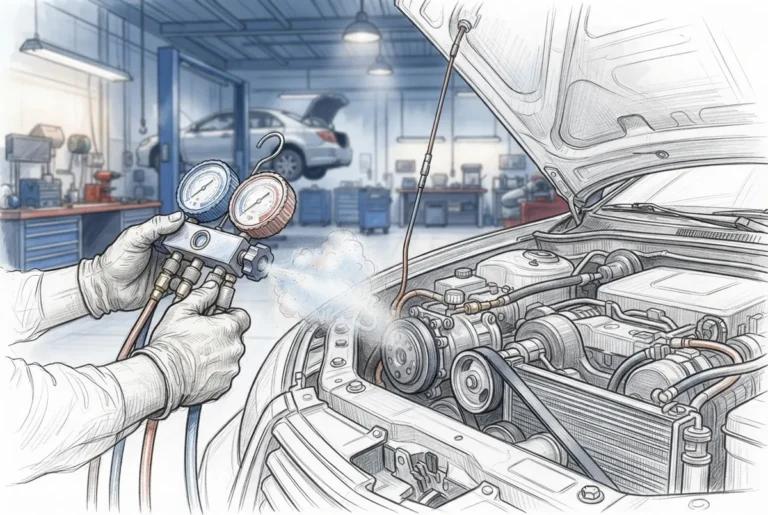
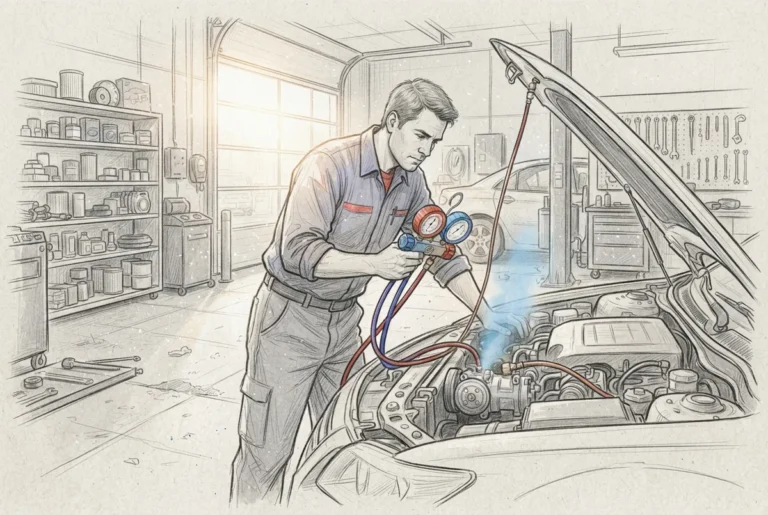
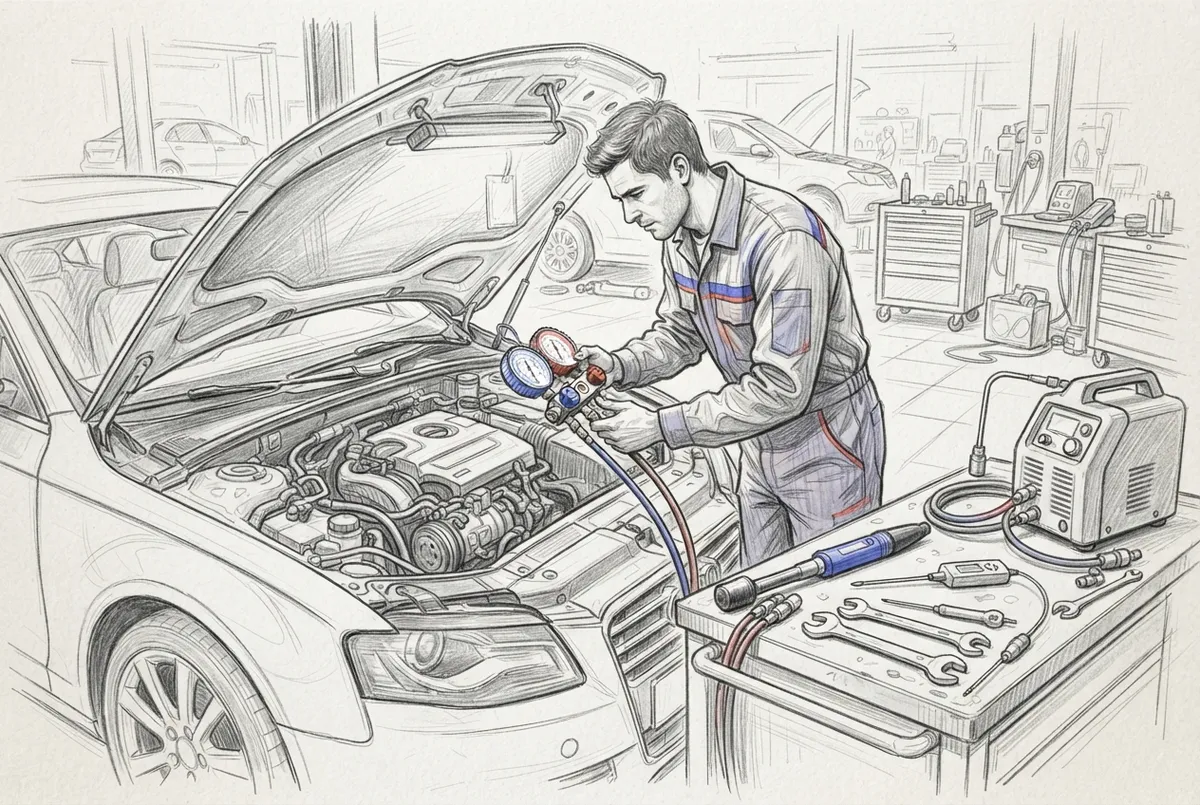
A real diagnostic isn’t a five-minute glance under the hood. It’s a thorough process that catches problems before they turn into breakdowns. Here’s what a proper inspection generally covers:
- Visual inspection of hoses, connections, and components for damage or wear
- Pressure and temperature measurements at key points in the system
- Electronic or fluorescent leak detection to pinpoint where refrigerant is escaping
- Recovery and recharge using certified equipment
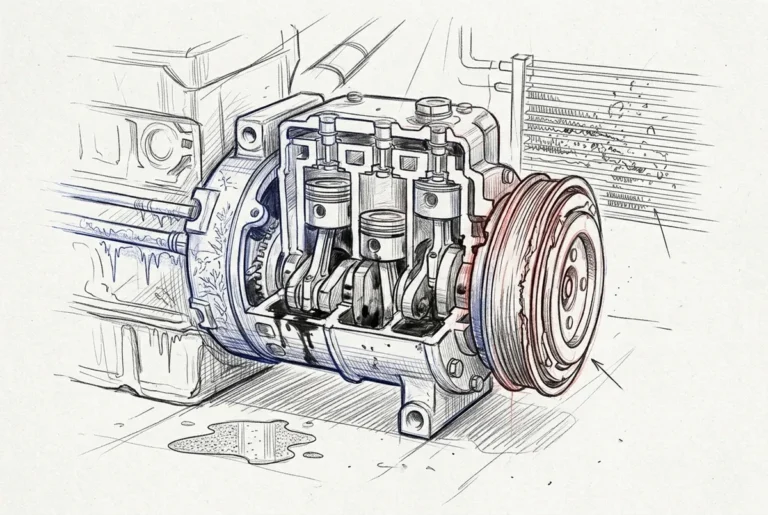
- Compressor and clutch testing to check for mechanical failure
- Condenser and evaporator evaluation for blockages or damage
- Blower motor and HVAC control diagnosis
- A final performance test measuring air temperature at the vents
If your shop skips most of these steps, you’re not getting a diagnosis. You’re getting a guess. For a deeper look at diagnostic pricing, check out our guide on car AC diagnostic cost.
Comparing Shop Types: Which One Fits Your Needs?
Not every AC problem calls for the same kind of shop. Here’s a quick comparison to help you decide where to take your vehicle, truck, bus, RV, or heavy equipment.
| Provider Type | Best For | Watch Out For |
|---|---|---|
| General repair shop | Basic checks, minor top-offs | May lack specialized AC diagnostic tools |
| Quick-lube or chain recharge station | Fast, low-cost recharge only | Rarely investigates leaks or root causes |
| Specialized AC service provider | Full diagnostics, leak repair, custom systems, fleets | May require scheduling ahead for busy seasons |
| Mobile AC repair van | On-site fleet or emergency service | Limited equipment for complex jobs |
For most car owners, truck drivers, and fleet managers in the Tampa area, a specialized shop like Marks Air offers the depth of experience needed for lasting repairs. Since 1971, this family-owned, woman-owned business has focused exclusively on AC systems for cars, trucks, buses, RVs, and heavy equipment, which means the team isn’t splitting attention across brakes, oil changes, and transmissions.
Special Considerations by Vehicle Type
Car Owners
If you’re driving a personal vehicle, comfort and safety on Tampa roads are the priority. A weak AC system isn’t just annoying, it can be dangerous during long summer commutes. Ask your shop for a written diagnostic explanation before any recharge, and read how to find reliable auto AC service in Tampa Bay for local tips.
Truck Drivers and Fleet Owners
For long-haul drivers, a broken AC isn’t just uncomfortable, it can affect focus and safety during extended trips. Fleet owners should look for shops experienced in fleet vehicle AC repair and same-day parts availability, since downtime costs money fast.
Bus Operators
Passenger comfort and safety go hand in hand for transit companies. A shop familiar with transit bus air conditioning parts can help you avoid mid-route breakdowns that upset riders and schedules alike.
RV Enthusiasts
Nothing ruins a road trip faster than a broken AC in a hot RV. Look for a provider experienced in RV air conditioner repair parts, especially if you’re planning summer travel through Florida’s heat.
Heavy Equipment Operators
Construction and agricultural crews rely on functioning cabs to keep operators alert and safe. A reliable provider will understand the unique demands of heavy equipment AC repair, including specialized components not found in passenger vehicles.
Hybrid and Electric Vehicles Need Extra Care
If you drive a hybrid or EV, not every shop is equipped to work on your AC system. These vehicles often use electrically driven compressors and involve high-voltage components that require special training and safety protocols. Ask directly whether the shop has experience with your specific powertrain before scheduling any work.
Questions to Ask Before You Authorize Any Repair
Before you say yes to any AC service, run through this checklist:
- Can you show me your Section 609 certification?
- Will you check for leaks before recharging my system?
- What refrigerant does my vehicle need, and how will you confirm it?
- Can I get a written, itemized estimate before work begins?
- What warranty do you offer on parts and labor?
- How long will the repair take, and can I get updates along the way?
A provider that welcomes these questions is a provider you can trust. One that gets defensive or vague? That’s a red flag worth paying attention to.
Training Matters, Even for Seasoned Technicians
The AC industry doesn’t stand still. Refrigerant rules change, new vehicle technology emerges, and best practices evolve. That’s why ongoing training is such a big deal. Shops that invest in EPA 609 certification renewal, HFO-1234yf handling courses, and EVT AC training are staying ahead of the curve rather than falling behind it.
Marks Air takes this seriously enough to offer its own training programs for technicians across the industry, covering everything from certification basics to advanced MVAC best practices. The shop is also a member of the Mobile Air Climate Systems Association (MACS), which keeps the team connected to the latest industry standards.
Parts Availability Can Make or Break Your Timeline
Nothing is more frustrating than waiting a week for a part that should’ve taken a day. Reliable shops stock trusted brands and keep common components on hand. Marks Air carries its own KOOL-TEMP parts line alongside industry names like SPAL, ACT, BCC, gpd, and Omega, with many items available the same day. You can browse the full range of AC parts to see what’s typically in stock.
Fast parts access matters most for commercial customers. If you’re managing a fleet, delays translate directly into lost revenue. Ask any shop you’re considering about typical turnaround times before you commit.
What Real Customers Say
Reviews tell you a lot about consistency and trustworthiness. Reading through customer reviews can give you a sense of how a shop handles both routine repairs and unexpected complications. You can also check independent platforms like Yelp or browse feedback on Facebook to get a broader picture. Photos and updates on Instagram can also show you the kind of work a shop takes pride in.
If you’re comparing local providers, it’s worth checking Visit us on Google — Marks Air to see firsthand feedback from Tampa-area customers who’ve had their vehicles serviced.
Traveling Out of State? Keep Your Paperwork Ready
If your fleet or RV crosses state lines often, it helps to keep your vehicle documentation organized, including driver credentials. Drivers heading internationally sometimes need extra documentation, and organizations like the International Driving Permit Association (IDPA) can help travelers keep their driving credentials in order for cross-border trips.
Final Verdict: Choose Diagnosis Over Guesswork
So, quick fix or reliable auto AC service provider? By now, the answer should feel pretty clear. A quick recharge might get you through the afternoon, but it won’t solve a leak, a failing compressor, or an electrical fault hiding underneath. A reliable provider takes the time to diagnose, explain, and repair the actual problem, backed by proper certification, the right equipment, and a warranty you can count on.
Tampa’s heat isn’t forgiving, and neither are hidden AC problems that get worse with time. Whether you’re a daily commuter, a long-haul trucker, a transit operator, an RV traveler, or a fleet manager, choosing the right shop now saves you money and headaches later. Our team at Marks Air has been solving these exact problems since 1971, and we’d love to help you stay cool no matter what you drive. Ready to get your AC checked out the right way? Schedule service today, or give us a call at 813-988-1671 to talk through your symptoms with our friendly team.
FAQs
Q: How do I find a reliable auto AC service provider near me?
A: Start by checking for Section 609 certification and reading recent customer reviews online. Look for a shop that offers written estimates and explains the diagnosis before recommending any repair, and don’t be shy about asking questions upfront.
Q: How can I tell whether an auto AC shop is properly certified?
A: Just ask to see their EPA Section 609 certification, it’s a fair question and any trustworthy shop will happily show you. You can also ask if their equipment for refrigerant recovery is EPA-certified, which is a great sign they’re doing things the right way.
Q: Should I recharge my car’s AC or repair a refrigerant leak?
A: If your system is low on refrigerant, there’s almost always a leak causing it, so a recharge alone is just a temporary fix. A reliable shop will find and repair the leak first, then recharge the system so the cool air actually sticks around.
Q: What refrigerant does my car use, R-134a or R-1234yf?
A: It depends on your vehicle’s age and model, so check the label under your hood or ask your service provider to confirm. Never let anyone mix refrigerant types, since that can damage your system and cost you a lot more down the road.
Q: Can a regular mechanic service AC systems in hybrid or electric vehicles?
A: Not always, since hybrids and EVs often use high-voltage components and electrically driven compressors that need special training. It’s best to ask directly whether your shop has experience with your specific vehicle before scheduling any AC work.