Key Takeaways
-
Refrigerant leaks are the most common A/C problem, and simply adding refrigerant without finding and fixing the leak will result in repeated failures; proper leak detection and repair is essential for a long-term fix.
-
Professional A/C repair costs vary widely ($40-$2,500) depending on the issue, so getting a diagnostic inspection ($150-$200) first helps identify the actual problem before committing to expensive repairs.
-
Newer vehicles using R-1234yf refrigerant require specialized EPA-approved equipment and certified technicians; DIY recharge kits won't work, making professional service the only viable option.
-
Regular annual A/C system maintenance catches small issues before they become expensive repairs; preventive care is especially critical for fleet and commercial vehicles facing heavier daily use.
-
Different warning signs indicate specific problems: warm air suggests refrigerant leaks, grinding noises point to compressor failure, and weak airflow indicates blower motor issues; identifying the symptom helps determine the repair needed.
-
When choosing an A/C repair shop, verify EPA 609 certification for technicians, check for experience across multiple vehicle types, and look for warranty coverage backing their work.
There’s nothing worse than climbing into a hot car in Tampa and turning the A/C on full blast, only to feel warm air hit your face. If you’re nodding along right now, you’re not alone. Every summer, thousands of drivers, truckers, bus operators, and fleet managers across the Tampa area deal with the same frustrating problem. The good news? Automobile air conditioning repair is one of the most well-understood parts of vehicle maintenance, and getting it fixed doesn’t have to be a mystery or a headache.
Whether you’re driving a family sedan, hauling freight across the state, running a shuttle route, or managing a fleet of work trucks, a working A/C system isn’t just about comfort. It’s about safety, focus, and getting through Florida’s brutal heat without misery. In this guide, we’ll walk through what causes A/C problems, what repairs typically cost, and how to know when it’s time to bring your vehicle in for professional help.

Why Automobile Air Conditioning Repair Matters So Much in Tampa
Tampa isn’t like other cities when it comes to heat. Our humidity makes even mild temperatures feel brutal, and that means your car’s A/C system works overtime almost year-round. A weak or broken A/C isn’t just uncomfortable. It can lead to fatigue behind the wheel, foggy windows, and even safety risks for long-haul drivers or bus operators carrying passengers.
Marks Air has been helping Tampa drivers stay cool since 1971, and in that time, one thing hasn’t changed: a healthy A/C system depends on catching small problems before they become expensive ones. That’s true whether you own a compact car or manage a dozen delivery vans.
Common Signs Your Car’s A/C Needs Attention
Most A/C problems don’t happen overnight. They usually show up as small warning signs first. Here are the most common ones drivers notice:
- Air blowing warm or barely cool, even on the highest fan setting
- Strange smells coming from the vents, like mildew or something burning
- Odd noises when the A/C compressor kicks on
- A/C works fine while driving but weakens at idle or stop lights
- Foggy or humid-feeling cabin air even with the A/C running
- Visible fluid stains under the vehicle, which could mean a refrigerant leak
If any of these sound familiar, it’s worth reading more about why your AC might be blowing warm air and what steps to take next.
What Causes Most Automobile A/C Problems
Understanding what’s actually wrong helps you make smart decisions about repairs. Most car A/C failures fall into a handful of categories, and knowing which one you’re dealing with saves time and money.
1. Refrigerant Leaks
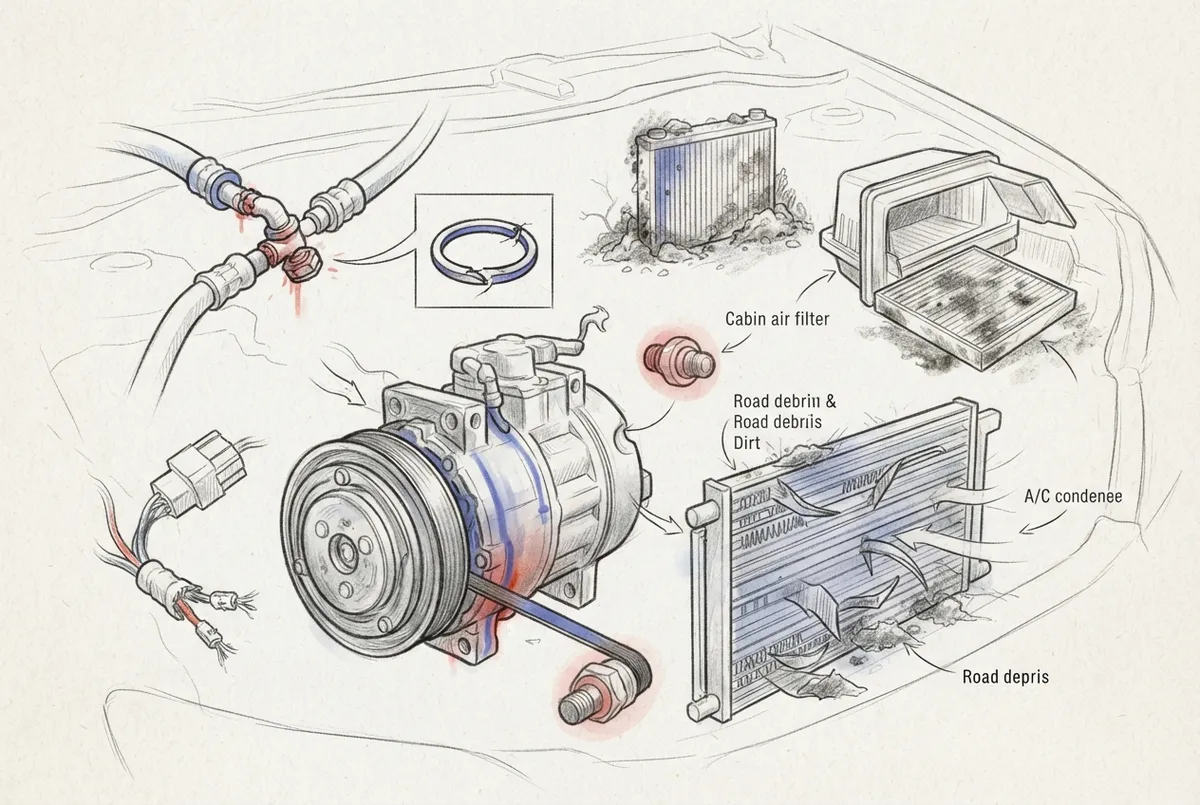
This is by far the most common culprit behind weak or warm A/C. Your system doesn’t just “run low” on refrigerant over time the way your car uses gas. If refrigerant levels are low, there’s almost always a leak somewhere in the system. Simply adding more refrigerant without finding the leak is like pouring water into a bucket with a hole in it.
2. Compressor Failure
The compressor is the heart of your A/C system. When it fails, you’ll often hear grinding or squealing noises, or notice the A/C stops working completely. Compressor problems are also one of the most expensive repairs, since a failing compressor can send metal debris through the whole system, damaging hoses, the condenser, and the receiver-drier along the way.
3. Condenser Issues
Your condenser sits at the front of your vehicle and helps release heat from the refrigerant. Road debris, bug buildup, or corrosion can block airflow or cause physical damage, leading to reduced cooling performance.
4. Blower Motor Problems
If you’re getting cool air but barely any airflow, the blower motor might be struggling. This part pushes air through your vents, and when it fails, you’ll notice weak airflow even if the rest of the system works fine.
5. Electrical and Control Failures
Modern vehicles rely on sensors, relays, and control modules to manage the A/C system. A faulty sensor or blown fuse can shut down cooling even when every mechanical part is working perfectly.
6. Clogged Cabin Air Filters
This one’s simple but often overlooked. A dirty cabin filter restricts airflow and can make your A/C seem weaker than it really is. It’s one of the cheapest and easiest fixes out there.
Understanding Refrigerant Types: R-134a vs R-1234yf
Here’s something a lot of drivers don’t realize until they need a repair: not all car A/C systems use the same refrigerant. Newer vehicles increasingly use R-1234yf, a low-global-warming-potential refrigerant that’s replacing the older R-134a standard.
This matters because R-1234yf requires specialized recovery and recharge equipment that meets specific technical standards. According to the EPA’s servicing equipment standards, machines used for R-1234yf must meet SAE J2843, SAE J2851, and SAE J3030 requirements. This isn’t equipment every shop has, and it’s part of why service costs can vary so much between vehicles.
The EPA also requires that any technician working on motor vehicle A/C systems be trained and certified by an EPA-approved program. This isn’t just red tape. It protects the environment and makes sure the person working on your car actually knows what they’re doing. If you’re curious about certification requirements, our training programs page covers EPA 609 certification and HFO-1234yf training in detail.
How Much Does Automobile Air Conditioning Repair Cost?
Repair costs depend heavily on what’s actually wrong, your vehicle type, and which refrigerant your system uses. Here’s a general breakdown based on 2025-2026 market pricing:
| Repair Type | Typical Cost Range | Notes |
|---|---|---|
| Diagnostic Inspection | $150 – $200 | Recommended before any repair to find the actual cause |
| Standard Recharge | $150 – $300 | Only fixes low refrigerant, not underlying leaks |
| Leak Repair + Recharge | $250 – $800 | Cost varies by leak location and vehicle type |
| Cabin Filter/Vent Fix | $40 – $150 | One of the most affordable common repairs |
| Compressor Replacement | $800 – $2,500 | Higher end for newer vehicles or complex systems |
These numbers can shift based on labor rates in your area and whether you’re driving a passenger car, a commercial truck, or specialty equipment. For a deeper dive into pricing specifics, check out our guide on how much auto AC repair costs in 2026.
Step-by-Step: What Happens During a Professional A/C Repair
Wondering what actually happens when you bring your vehicle in? Here’s a typical process:
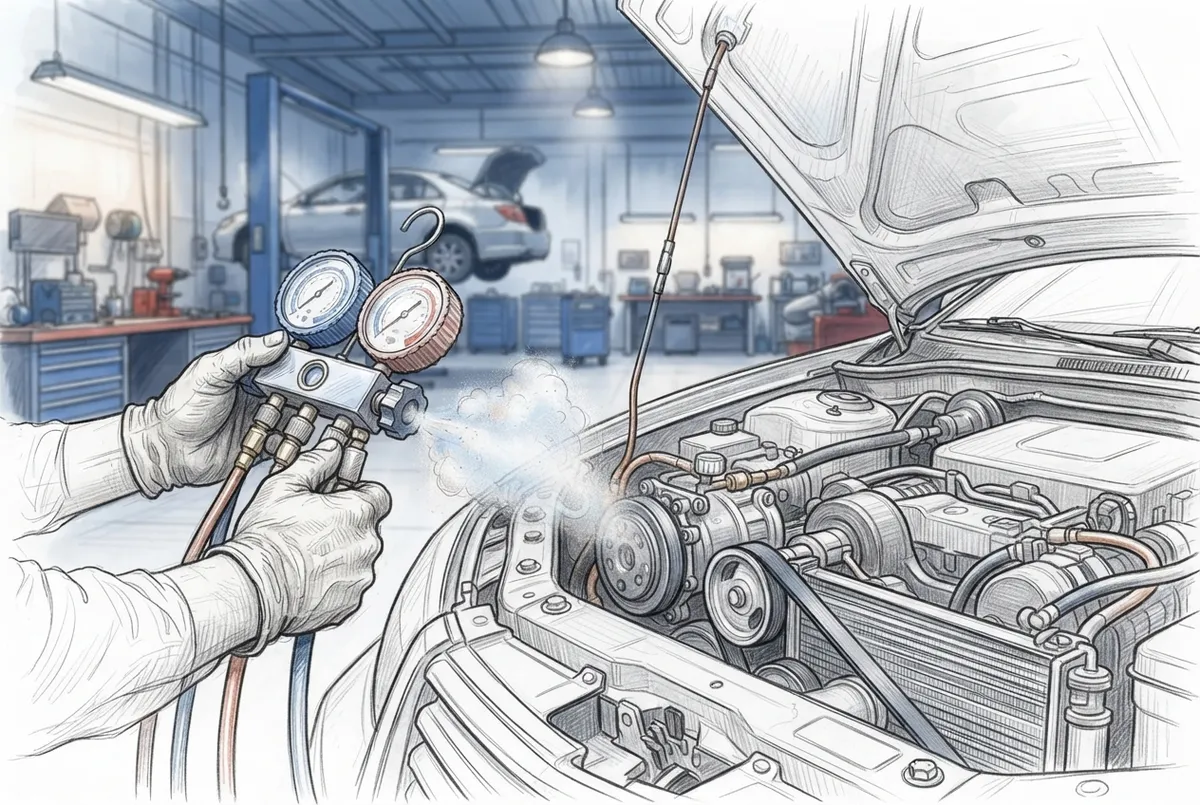
- Initial Diagnostic: A technician checks system pressure, looks for visible leaks, and tests electrical components.
- Leak Detection: If refrigerant is low, technicians use UV dye or electronic leak detectors to pinpoint the exact source.
- Component Inspection: The compressor, condenser, hoses, and receiver-drier get checked for wear or damage.
- Repair or Replacement: Based on findings, the technician repairs the leak, replaces damaged parts, or rebuilds the compressor system.
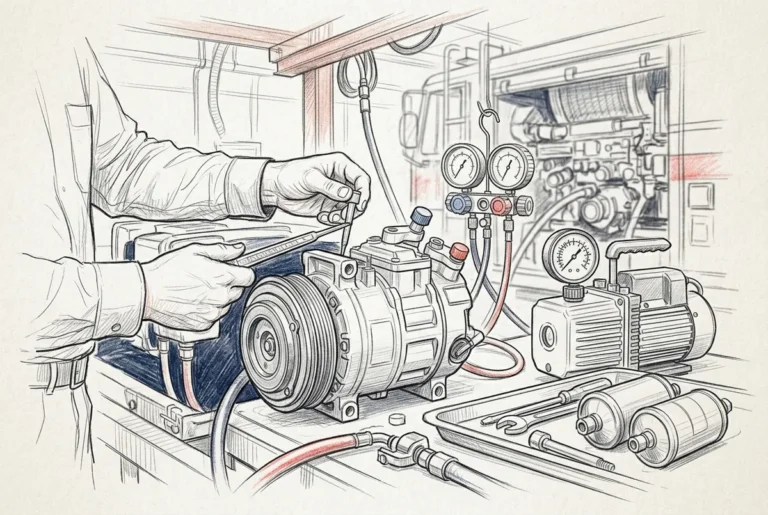
- Evacuation and Recharge: The system is vacuum-sealed to remove air and moisture, then recharged with the correct refrigerant type and amount.
- Final Testing: Technicians verify cooling performance and check for any remaining leaks before returning your keys.
This process applies across vehicle types, though heavy equipment and buses often have larger, more complex systems that require additional steps.
Repair Needs by Vehicle Type
Not every A/C system is built the same way, and different vehicles come with their own quirks and challenges.
Cars and Light Trucks
Personal vehicles usually have more compact, straightforward systems. Common issues include leaks at hose connections and compressor clutch failures. If you’re dealing with warm air on a hot Tampa afternoon, our article on signs you need car AC repair can help you figure out next steps.
Commercial Trucks and Fleet Vehicles
Fleet vehicles face heavier daily use, which means components wear out faster. Regular preventive maintenance saves fleet owners significant money over time. We cover strategies for this in our piece on preventive versus reactive fleet AC maintenance.
Buses and Transit Vehicles
Passenger buses need reliable A/C not just for comfort, but for safety and rider satisfaction. These systems are larger and often require specialized parts. Learn more about what’s involved in our guide to proper bus AC system maintenance.
RVs and Recreational Vehicles
RV owners often deal with unique cooling challenges, especially during long trips or off-grid camping. Our article on RV air conditioner repair mistakes to avoid covers common pitfalls.
Heavy Equipment and Construction Machinery
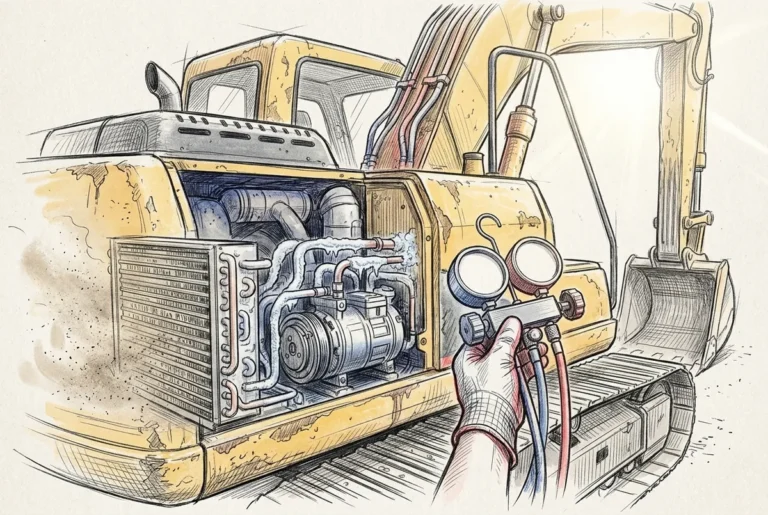
Operators running construction or agricultural equipment need functioning A/C to avoid fatigue during long shifts in the heat. Downtime for repairs can be costly, so getting reliable service matters. Check out our resource on heavy equipment AC repair done right.
DIY Recharge vs Professional Repair: What’s the Real Difference
Plenty of drivers wonder if they can just grab a recharge kit and handle things themselves. Here’s an honest comparison:
| Factor | DIY Recharge Kit | Professional Repair |
|---|---|---|
| Fixes Root Cause | No, just adds refrigerant temporarily | Yes, identifies and repairs the actual leak |
| Equipment Needed | Basic kit, works for R-134a only | EPA-approved equipment for all refrigerant types |
| Long-Term Cost | Often requires repeated recharges | One-time fix prevents repeat visits |
| R-1234yf Compatible | Not typically available for consumers | Yes, with proper certified equipment |
| Warranty Coverage | None | Often backed by shop warranty |
Self-service refrigerant on R-1234yf systems isn’t something most drivers can do at home. It requires certified equipment and EPA-approved training, which is one reason professional service tends to be the smarter long-term choice.
How to Choose a Reliable A/C Repair Shop
Not all repair shops are created equal, especially when it comes to specialized A/C work. Here’s what to look for:
- EPA 609 certification for technicians handling refrigerant
- Experience across multiple vehicle types, not just passenger cars
- Access to same-day parts for faster turnaround
- A warranty backing their repair work
- Positive reviews from real customers in your area
- Membership in recognized industry organizations
Marks Air is proud to be a member of the Mobile Air Climate Systems Association (MACS), which means our team stays current with the latest refrigerant standards and repair practices. We also stock our own KOOL-TEMP parts line along with trusted brands like SPAL, ACT, and Omega, so most repairs can happen the same day.
Curious what other Tampa drivers think? You can read customer reviews on Yelp or check out our latest updates on Facebook and Instagram. You can also visit us on Google — Marks Air to see what our customers are saying firsthand.
How Often Should You Service Your Car’s A/C System
A good rule of thumb is to have your A/C system checked once a year, ideally before summer hits full force. Regular maintenance helps catch small leaks or wear before they turn into major repairs. For fleet vehicles and commercial trucks, more frequent checks make sense given the heavier daily use.
Preventive care isn’t just about avoiding breakdowns. It’s about protecting your investment and keeping your vehicle comfortable and safe for years to come. If you want a simple checklist to follow, take a look at our guide on AC maintenance tips every Tampa vehicle owner needs.
When It’s Time to Call in the Experts
If your A/C is blowing warm, making strange noises, or just isn’t performing like it used to, it’s time to get a proper diagnostic. Waiting too long often turns a simple, affordable fix into a much bigger repair bill down the road.
Marks Air has spent over five decades helping Tampa drivers, truckers, bus operators, and fleet managers stay cool no matter what they’re driving. Our family-owned, woman-owned shop combines old-school customer care with modern EPA-certified equipment and training. Whether you need a quick diagnostic or a full system overhaul, our team is ready to help.
Ready to stop sweating through your commute? Schedule service with our team today or give us a call at 813-988-1671 to get your vehicle’s A/C back to full strength.
FAQs
Q: Why is my car AC blowing warm air?
A: This is usually caused by low refrigerant from a hidden leak, not just normal usage. It can also be a failing compressor, a clogged condenser, or an electrical issue. A quick diagnostic can pinpoint the real cause so you’re not just guessing.
Q: How much does automobile air conditioning repair cost?
A: It really depends on the problem. Simple fixes like a cabin filter swap run $40-$150, while a full compressor replacement can be $800-$2,500. A diagnostic inspection, usually $150-$200, helps figure out exactly what you’re dealing with before committing to a repair.
Q: Is it worth recharging car AC or should I fix the leak?
A: Honestly, a recharge alone is like a temporary band-aid if you have a leak. Refrigerant doesn’t just disappear over time, so if levels are low, something’s leaking. Fixing the leak first saves you money in the long run instead of paying for repeat recharges.
Q: What are the signs of a bad car AC compressor?
A: Listen for grinding or squealing noises when the AC kicks on, and watch for a complete loss of cooling. Sometimes you’ll also notice the compressor clutch isn’t engaging at all. Catching this early can save your condenser and hoses from additional damage.
Q: Can I service R-1234yf car AC myself?
A: Not really, and we’d honestly recommend against trying. R-1234yf requires specialized EPA-approved equipment that meets specific technical standards, plus proper certification to handle it safely. It’s best left to trained technicians who have the right tools for the job.