Key Takeaways
-
Refrigerant leaks from vibration, compressor failure from heat and wear, and clogged condensers from debris are the leading causes of heavy equipment AC failure—catching these early through routine maintenance saves thousands in downtime.
-
Schedule full A/C system inspections at least annually before Florida's peak heat season, with additional checks every 6 months for belts, tensioners, and condenser fins to prevent catastrophic failures on job sites.
-
When repair costs exceed 50% of replacement cost, a full system replacement is more economical than continuing repairs, especially for aging equipment that has already undergone multiple fixes.
-
Choose A/C shops with mobile equipment specialization, EPA Section 609 certification, proper diagnostic tools (manifold gauges and electronic leak detectors), and readily available parts inventory to ensure faster turnaround.
-
Watch for warning signs including weak airflow, unusual noises, visible refrigerant oil stains, musty odors, and rapid A/C cycling—professional diagnostics at the first sign cost far less than waiting for complete system failure.
-
Heavy equipment in construction and agricultural settings requires custom hose fabrication, more frequent condenser cleaning due to dust, and knowledge of varying refrigerant types (R-134a vs. HFO-1234yf) based on equipment age.
If you operate heavy machinery in Florida’s brutal heat, you already know how critical a working air conditioner is. An excavator cab at 100°F isn’t just uncomfortable — it’s a safety hazard. Operator fatigue sets in fast, productivity drops, and costly downtime follows. Whether you run a construction crew, manage agricultural equipment, or oversee an industrial fleet, keeping the A/C system on your heavy equipment in top shape is non-negotiable.
The good news? Heavy equipment AC repair doesn’t have to be a mystery. With the right knowledge, the right parts, and the right shop behind you, you can keep your operators cool and your machines running efficiently. This guide walks you through everything you need to know — from spotting early problems to choosing a qualified technician. Let’s dig in.
What Is Heavy Equipment AC Repair?
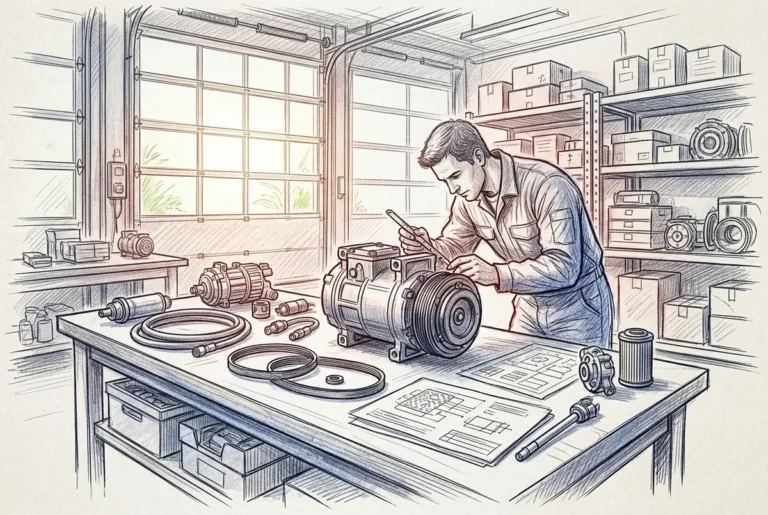
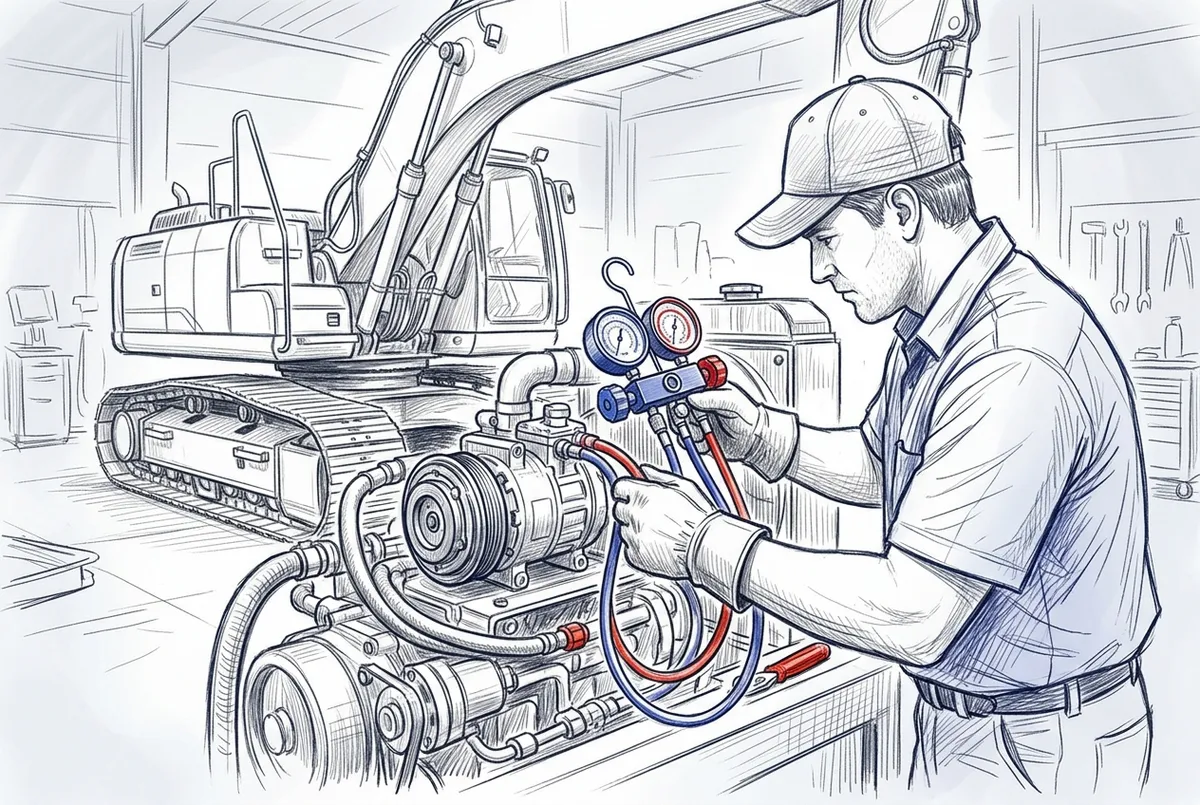
Heavy equipment AC repair refers to diagnosing, servicing, and fixing air conditioning systems on large machinery. We’re talking about equipment like excavators, bulldozers, loaders, cranes, tractors, combines, and other off-road machines used in construction, agriculture, mining, and industrial operations.
These A/C systems work similarly to what you’d find in a car or truck, but the components are often larger, harder to access, and subject to more vibration, dust, and heat. That means they need specialized knowledge — not just any auto shop can handle them well. If you want to understand the full scope of what mobile A/C service involves, check out these helpful A/C service FAQs for a quick overview.
Why Heavy Equipment AC Systems Fail
Understanding what causes AC failure helps you catch problems early and avoid expensive repairs down the road. Here are the most common culprits:
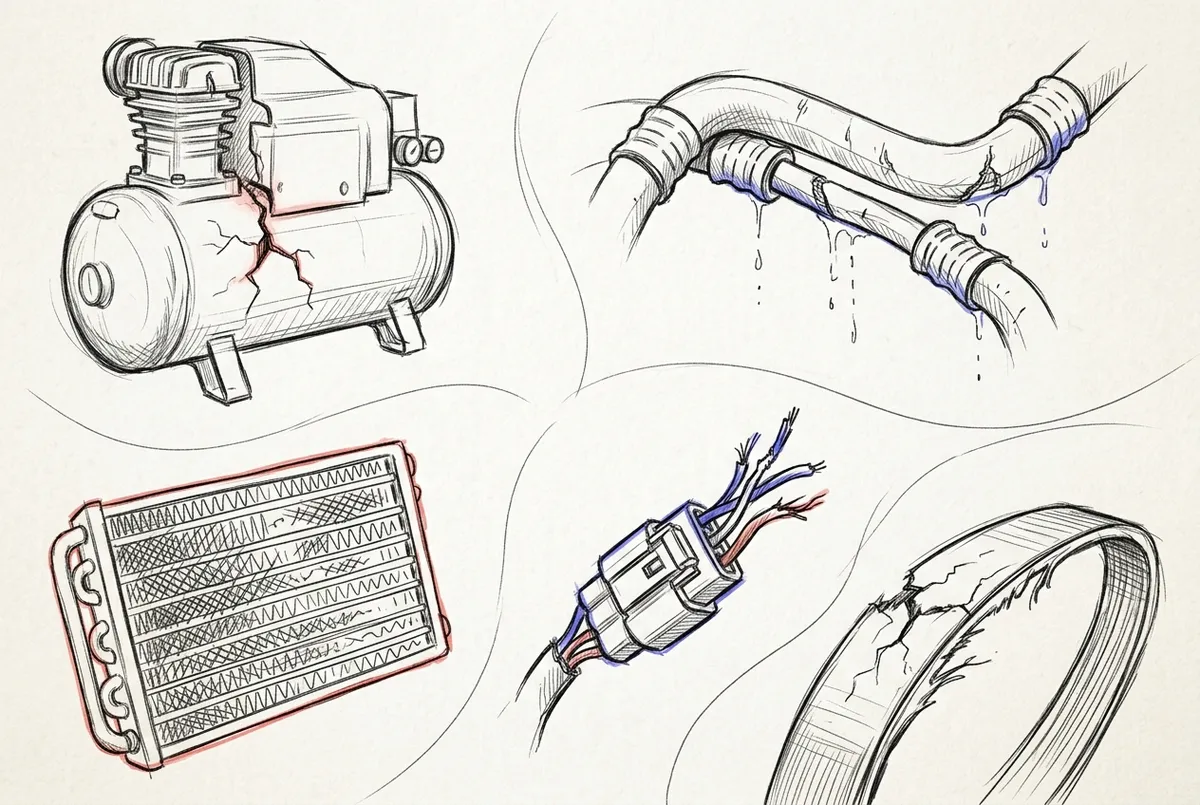
- Refrigerant leaks: Vibration from heavy use causes hoses and fittings to loosen over time, leading to slow refrigerant loss.
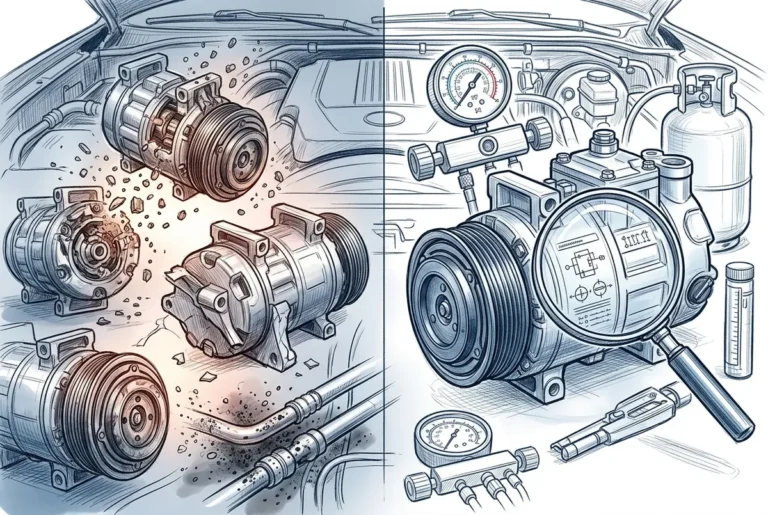
- Compressor failure: The compressor is the heart of the system. Heat, wear, and low refrigerant can cause it to seize or fail.
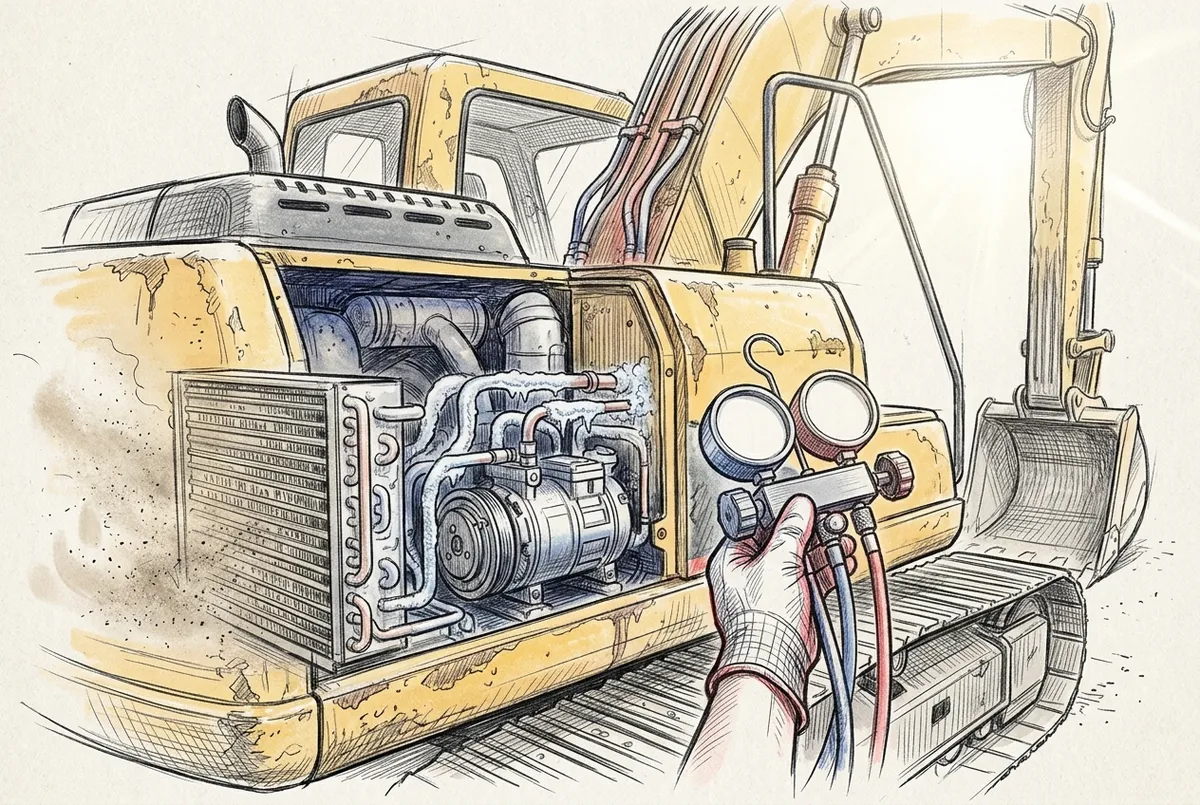
- Clogged or damaged condenser: Dust, debris, and mud are constant enemies on job sites. A blocked condenser can’t release heat properly.
- Worn belts and tensioners: These components drive the compressor. When they wear out, cooling stops completely.
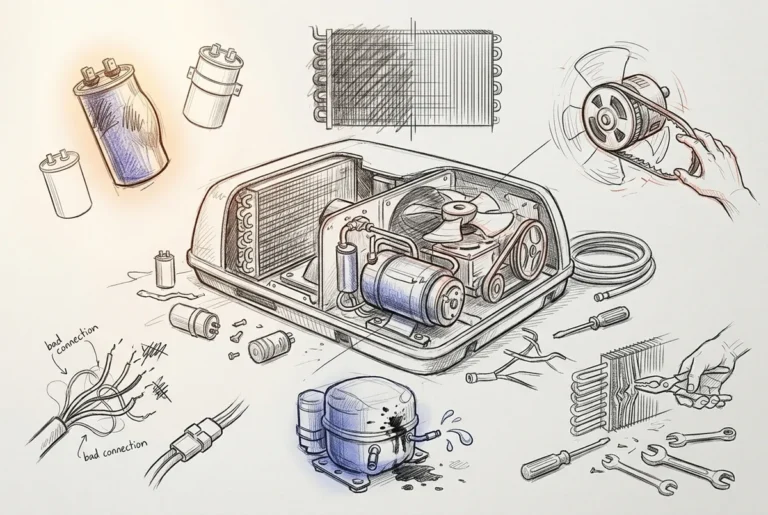
- Electrical issues: Corroded connectors, blown fuses, or faulty switches can disable the entire A/C system without any obvious mechanical damage.
- Evaporator problems: A clogged or leaking evaporator means warm air blowing into the cab even when everything else seems fine.
Many of these issues develop gradually. That’s why routine maintenance matters so much. For a deeper look at what can go wrong, this article on reasons your AC is blowing warm air covers the most common failure points in detail.
How to Spot AC Problems Early on Heavy Equipment
Catching A/C issues before they become full system failures saves you money and keeps your operators comfortable. Watch for these warning signs:
- Weak or warm airflow: If the cab isn’t cooling like it used to, low refrigerant or a failing compressor is often the cause.
- Unusual noises: Rattling, squealing, or grinding sounds when the A/C runs can signal compressor trouble or a worn belt.
- Visible refrigerant oil stains: Oily residue around hose fittings or connections usually points to a refrigerant leak.
- Bad smells from vents: Musty odors often indicate mold or bacteria growth in the evaporator — especially in humid Florida conditions.
- A/C cycling on and off rapidly: This can mean low refrigerant levels or an electrical fault in the system.
If you notice any of these signs, don’t wait. Getting a professional A/C diagnostic done early is almost always cheaper than waiting until the system fails completely on the job site.
Step-by-Step: What Happens During Heavy Equipment AC Repair
Wondering what actually happens when you bring in your machine for heavy equipment AC repair? Here’s a straightforward walkthrough of the process:
- Initial inspection: The technician checks the overall condition of the A/C system, including belts, hoses, fittings, and the compressor.
- Refrigerant level check: Using manifold gauges, the tech measures system pressure to determine if refrigerant is low or if there’s a more serious issue.
- Leak detection: Dye or electronic detectors are used to locate leaks in hoses, fittings, evaporators, and condensers.
- Component testing: Electrical components, switches, and controls are tested to identify any faults that might be disabling the system.
- Repairs and part replacement: Damaged or worn parts — compressors, hoses, condensers, evaporators — are replaced with quality components.
- System recharge: The system is evacuated and recharged with the correct type and amount of refrigerant.
- Final performance test: The technician verifies cooling performance and checks that everything operates correctly before the equipment goes back to work.
A shop that specializes in mobile A/C systems will also have the right tools for leak detection and refrigerant handling. You can learn more about the process for heavy duty AC evaporator replacement to get a sense of what a more involved repair looks like.
Common Heavy Equipment AC Parts That Need Replacing
Not every repair is a full system overhaul. Often, it’s a single worn component causing all the trouble. Here’s a quick look at the parts most commonly replaced during heavy equipment AC repair:
| Component | Common Failure Cause | Signs It’s Failing |
|---|---|---|
| Compressor | Low refrigerant, wear, heat | Noise, no cooling, clutch not engaging |
| Condenser | Debris blockage, physical damage | Poor cooling, high pressure readings |
| Evaporator | Leaks, corrosion, blockage | Warm air, bad smells, moisture in cab |
| Receiver/Dryer | Age, moisture contamination | Icing, poor system performance |
| Expansion Valve | Clogging, wear | Inconsistent cooling, frost on components |
| A/C Hoses | Vibration, age, abrasion | Refrigerant oil stains, leaks |
Having access to quality parts is just as important as having a skilled technician. Marks Air stocks a full line of A/C parts, including their KOOL-TEMP parts line, with many components available the same day — which means less downtime for your operation.
How Often Should Heavy Equipment AC Systems Be Serviced?
A good rule of thumb is to have your heavy equipment A/C systems inspected at least once a year — ideally before the hot season kicks in. For Florida operations, that means late winter or early spring is the perfect time. Here’s a simple maintenance schedule to follow:
- Annually: Full system inspection including compressor, condenser, evaporator, hoses, and refrigerant levels.
- Every 6 months: Check belts and tensioners for wear; inspect cabin air filters and clean condenser fins.
- After major repairs: Always re-check the entire system after any significant mechanical work that may have disturbed A/C components.
- Before seasonal peak use: Run a performance test before your busiest operating months to catch small issues before they become big ones.
Preventive maintenance is the key theme in the heavy equipment industry right now, and for good reason. The U.S. Machinery Maintenance and Heavy Equipment Repair Services industry is forecast to reach USD 60.7 billion by the end of 2026, reflecting just how much operators are investing in keeping their machines running. For tips on staying ahead of problems, check out these A/C maintenance tips every vehicle owner needs.
Repair vs. Replace: Making the Right Call
Sometimes a repair isn’t enough, and a full system replacement makes more sense financially. How do you know which route to take? Here are some factors to weigh:
- Age of the system: If the A/C system is old and has already had multiple repairs, replacement is often the smarter long-term investment.
- Cost of repair vs. replacement: A general rule is that if the repair cost exceeds 50% of the replacement cost, consider replacing the whole system.
- Severity of damage: Widespread corrosion, multiple leaks, or a seized compressor combined with condenser damage often warrants a full replacement.
- Equipment lifespan: If the machine itself is nearing the end of its useful life, a costly A/C overhaul may not be worth it.
The article on AC repair vs. AC replacement breaks this decision down even further and is well worth reading before you commit to a course of action.
Choosing the Right Shop for Heavy Equipment AC Repair
Not every auto shop has the experience or equipment to handle A/C systems on heavy machinery. Here’s what to look for when choosing a shop:
- Specialization in mobile A/C: Look for a shop that focuses exclusively on vehicle and equipment A/C systems, not a general mechanic who handles A/C on the side.
- Experience with heavy equipment: Ask specifically about experience with the type of machinery you operate — construction, agricultural, industrial.
- Proper certification: EPA Section 609 certification is required for technicians handling refrigerants. Make sure the shop is compliant.
- Parts availability: A shop with a solid parts inventory means faster turnaround and less downtime for your equipment.
- Diagnostic tools: Proper manifold gauges, electronic leak detectors, and refrigerant recovery machines are essential for accurate diagnosis.
Marks Air has been Tampa’s trusted A/C specialist since 1971, and is a member of the Mobile Air Climate Systems Association (MACS), which means they stay current with the latest industry standards and refrigerant technology. Their team handles everything from diagnostics and leak detection to full system installations for heavy equipment, trucks, buses, RVs, and more. You can see what real customers say by checking out Marks Air customer reviews or visiting Marks Air on Google to read firsthand experiences from the Tampa community.
The Growing Demand for Heavy Equipment AC Service
The need for qualified heavy equipment A/C technicians is only going up. The global machinery and heavy equipment repair services market was estimated at USD 180.0 billion in 2024 and is projected to reach USD 250.0 billion by 2035. The construction equipment repair segment alone crossed USD 34.6 billion in 2024, growing at a steady 4.3% CAGR.
Meanwhile, the Bureau of Labor Statistics projects 8% employment growth for HVAC and refrigeration mechanics and installers from 2024 to 2034, with about 40,100 job openings projected annually over that decade. Skilled technician availability remains one of the biggest challenges in the industry. For operators in Tampa and surrounding areas, this makes finding a reliable, experienced A/C specialist even more valuable. You can follow Marks Air on Facebook or Instagram for updates, tips, and service information.
Agricultural and Construction Equipment: Special Considerations
Heavy equipment in agricultural and construction settings faces unique challenges that standard automotive A/C service doesn’t always account for. Here’s what makes these applications different:
- Extreme dust and debris: Condensers and cabin filters clog much faster on job sites than in normal driving conditions.
- Constant vibration: Heavy equipment vibrates constantly during operation, which accelerates wear on hoses, fittings, and electrical connections.
- Custom hose requirements: Many pieces of heavy equipment require custom-fabricated hoses that don’t come off a standard parts shelf.
- Varied refrigerant types: Older equipment may still use R-134a, while newer systems use HFO-1234yf. It’s important to know what your equipment requires before any service.
For agricultural equipment specifically, these agricultural equipment AC service tips are a great starting point for staying on top of maintenance. And if you’re managing a whole fleet of machines, the fleet vehicle AC diagnostics guide offers practical advice for keeping multiple units in peak condition.
What About Training for Heavy Equipment AC Technicians?
If you manage a fleet or a large operation, having an in-house technician trained in A/C systems can be a smart investment. Proper training ensures your team handles refrigerants safely, diagnoses problems correctly, and avoids costly mistakes.
Marks Air offers A/C training programs covering EPA 609 certification, HFO-1234yf refrigerant handling, MVAC best practices, and EVT A/C training. These courses are designed for working technicians and fleet managers who want to build real-world skills. You can explore the full range of options on the Marks Air training page. Investing in training now pays dividends in lower repair costs and fewer system failures down the road.
Getting Your Heavy Equipment AC Repair Done in Tampa
If you’re in the Tampa area and your heavy equipment, truck, bus, RV, or fleet vehicle needs A/C attention, you don’t have to look far. Whether it’s a simple refrigerant recharge or a complete system overhaul, having a specialist in your corner makes all the difference. The combination of decades of experience, a deep parts inventory, and a team trained on the latest industry standards means faster turnaround and better results.
Don’t let a broken A/C system slow your crew down or put operator safety at risk. Schedule your heavy equipment AC service with Marks Air today, or give them a call directly at 813-988-1671 to talk through what your equipment needs. Staying cool on the job site starts with taking action before the heat becomes a problem.
FAQs
Q: What types of heavy equipment need AC repair?
A: Just about any machine with an enclosed cab can benefit from A/C service — excavators, bulldozers, loaders, tractors, combines, cranes, and more. If an operator is sitting in it for hours in Florida heat, that A/C system needs to work reliably! A specialist in mobile A/C can service virtually any type of heavy machinery.
Q: How much does heavy equipment AC repair typically cost?
A: Costs vary widely depending on the type of repair needed. A simple refrigerant recharge is generally one of the more affordable services, while a compressor replacement or full system overhaul will cost significantly more. The best way to get an accurate estimate is to bring your equipment in for a diagnostic — that way you know exactly what you’re dealing with before committing to repairs.
Q: How often should heavy equipment AC systems be serviced?
A: We recommend a full A/C inspection at least once a year, ideally before Florida’s hottest months. If your equipment operates in dusty or demanding environments, more frequent checks — every six months — can catch small issues before they turn into costly breakdowns. Think of it as routine maintenance that pays for itself in avoided downtime.
Q: Can I repair heavy equipment AC myself, or should I use a professional?
A: Some basic checks — like inspecting belts or cleaning the condenser — are manageable if you’re mechanically inclined. However, handling refrigerants requires EPA 609 certification by law, and diagnosing internal system issues requires specialized tools. For anything beyond a visual inspection, a trained and certified A/C technician is the way to go.
Q: What’s the difference between repairing and replacing a heavy equipment AC system?
A: A repair addresses a specific failed component — like a leaking hose or a worn compressor — while a replacement involves installing an entirely new A/C system. If your equipment’s system is old, has suffered widespread damage, or has required repeated repairs, replacement is often the more cost-effective long-term solution. A good technician will help you weigh the options honestly.