Key Takeaways
-
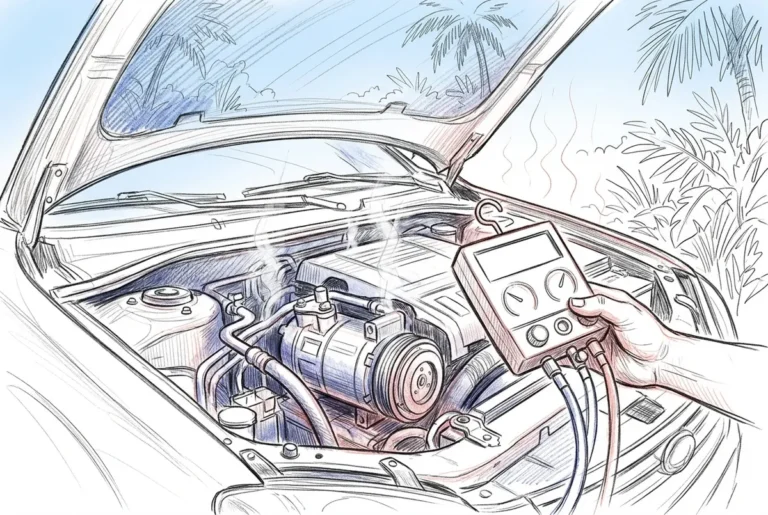
Warm or weak airflow on max A/C, an A/C that runs constantly without cooling, and ice on lines are the most common early signs of a refrigerant leak.
-
Hissing or bubbling sounds and oily, grimy residue near hoses, fittings, or the compressor point toward a leak, but a technician must confirm the source.
-
Topping off refrigerant is not a real fix: A/C systems are sealed, so a system that keeps losing charge has a leak that must be found and repaired.
-
Turn the A/C off if you suspect a leak, since low refrigerant also means low compressor oil, which can cause costly compressor damage.
-
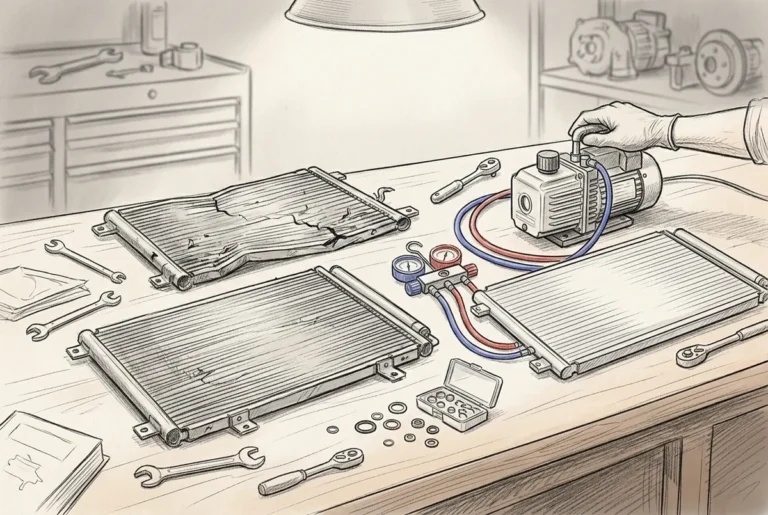
A proper repair includes pinpointing the leak, fixing the part, evacuating air and moisture, recharging the correct amount, and testing cooling performance.
-
Annual A/C checks before summer and prompt attention to small cooling changes or noises help catch leaks early and keep repair costs lower.
It is a hot Tampa afternoon. You hop in your car, turn the A/C to full blast, and wait for that sweet cool air. Instead, you get a lukewarm breeze that makes things worse. Sound familiar? You are not alone, and there is a good chance the culprit is a refrigerant leak.
Knowing the ac refrigerant leak symptoms early can save you money, time, and a lot of sweat. Whether you drive a daily commuter, haul freight across the state, run a shuttle bus, enjoy RV road trips, or operate heavy equipment, your A/C system works the same basic way. It is a sealed system, and it should not lose refrigerant over time.
In this friendly guide, we will walk through the most common signs, what they mean, and what to do next. We will also explain why topping off refrigerant is not a real fix. Let’s get started so you can get back to cool, comfortable driving in 2026.
How Does a Vehicle A/C System Use Refrigerant?
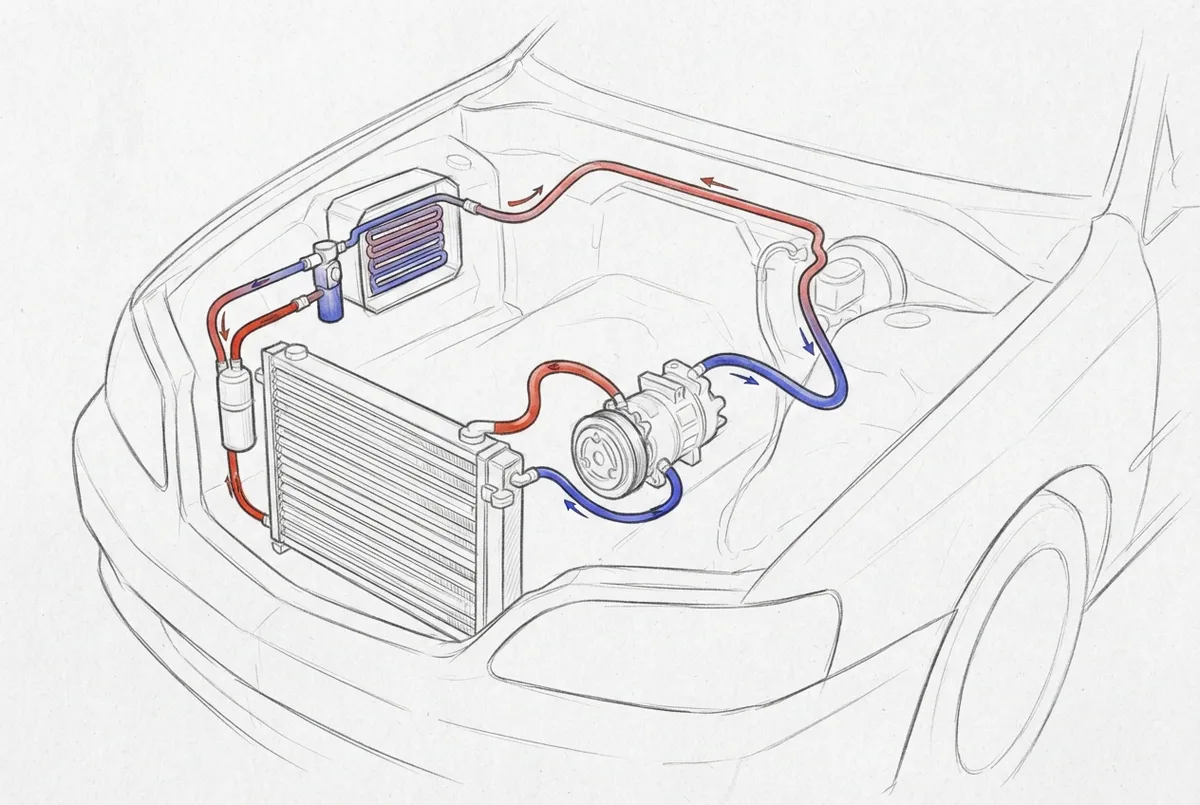
Your vehicle’s A/C does not “make” cold air. It moves heat from the cabin to the outside. Refrigerant is the fluid that carries that heat. It cycles through the compressor, condenser, evaporator, and hoses in a closed loop.
Because the system is sealed, refrigerant should stay put for years. If the level drops, something is leaking. Think of it like a tire. A tire may lose a tiny bit of air slowly, but if you keep refilling it, you have a hole somewhere.
Refrigerant also carries a little oil that keeps the compressor happy. When refrigerant escapes, the system loses both cooling power and lubrication. That is why a small leak can turn into a bigger, costlier problem if you ignore it.
If you want to learn more about the main parts that can leak, check out our guide on 6 A/C parts every vehicle owner should know in 2026.
What Are the Most Common AC Refrigerant Leak Symptoms?
Here are the top signs to watch for. Keep in mind that these clues are not 100% proof. Other problems, like a dirty filter or a bad fan, can look the same. A trained technician needs to confirm the cause.
- Weak or warm airflow: The air is not as cold as it used to be, even on max A/C.
- Longer run times: The system runs and runs but never really cools the cabin.
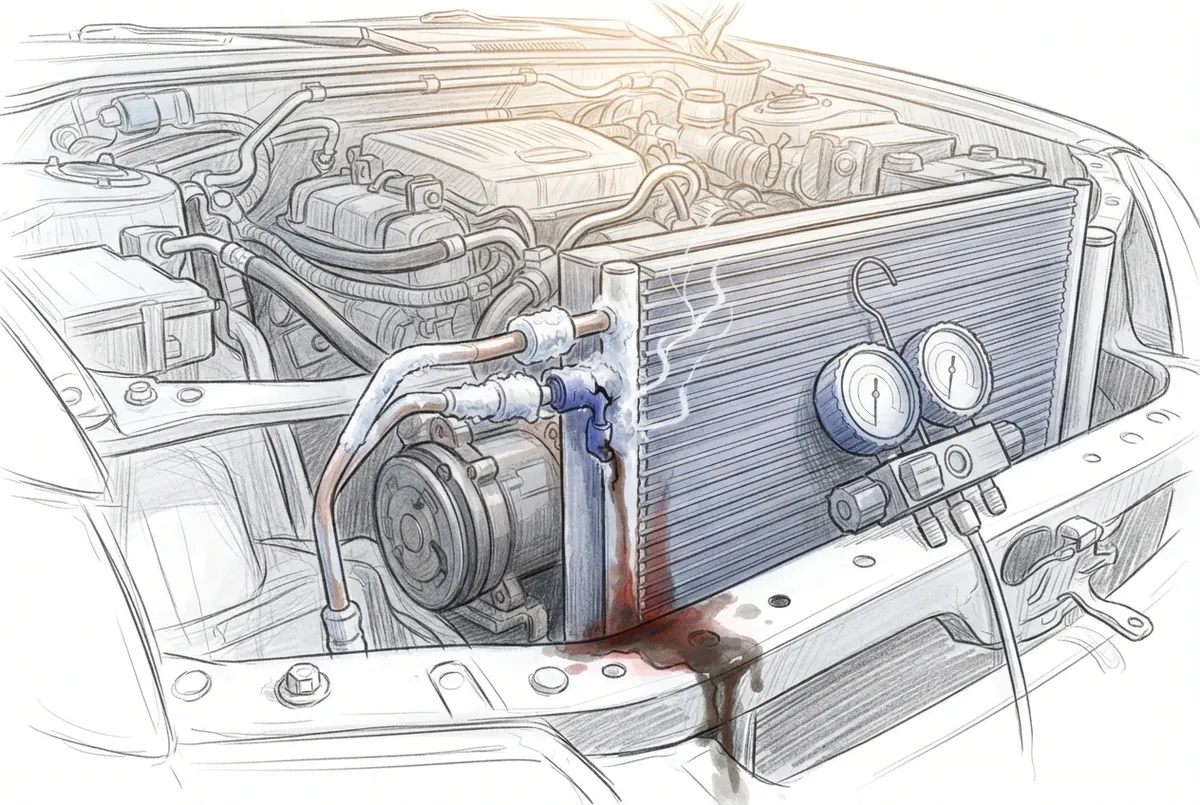
- Ice on lines or parts: Frost or ice may show on the A/C lines or components.
- Hissing or bubbling sounds: You may hear odd noises near the dash or under the hood.
- Oily residue: A greasy film shows up near fittings, hoses, or the compressor.
- Uneven cooling: Some vents feel cooler than others.
- Clutch cycling fast: The compressor clutch clicks on and off rapidly.
Let’s dig into each one so you know what you are looking at.
Why Is My A/C Blowing Warm or Weak Air?
This is the number one sign most drivers notice. When refrigerant is low, the system cannot move heat well. Cooling power drops, and the air feels warm or just “meh.”
The change can be slow. Many folks think it is just the summer heat. Then one day, the A/C simply cannot keep up. If your cabin takes much longer to cool than it did last year, pay attention.
Warm air can also come from a bad compressor, a failed blend door, or a clogged condenser. That is why diagnosis matters. If you want to explore other causes, see our post on 10 reasons your AC is blowing warm air.
Why Does My A/C Run Constantly but Never Cool?
A system low on refrigerant often runs longer to try to hit the set temperature. It works harder but gets less done. For truck drivers on long hauls and bus operators on busy routes, this can mean hours of poor cooling and tired, cranky passengers.
Extra run time also adds strain to the compressor. Over time, that stress can shorten its life. It can also hit your fuel economy a bit, since the compressor pulls power from the engine.
So, if your A/C seems to run nonstop with little payoff, do not just crank the dial. Get it checked.
Can a Refrigerant Leak Cause Ice on the A/C Lines?
Yes, it can. Low refrigerant changes pressures and temperatures inside the system. That can cause parts of the system to get too cold, and moisture from the air can freeze on them. You may see frost on a line or fitting.
Ice can then block airflow and make cooling even worse. Running the system while it is iced up can hurt performance and may risk damage. If you see ice, turn the A/C off and let it thaw.
Ice does not always mean a leak. Airflow problems and dirty parts can also cause it. Curious about that? Read what causes AC coils to freeze in your vehicle for more detail.
What Do Hissing, Bubbling, and Oily Spots Mean?
These clues can point right at a leak, but they need a pro’s eyes.
Hissing or Bubbling Sounds
A hiss near the dash or under the hood may be refrigerant escaping through a small opening. Bubbling can happen when the fluid moves unevenly in a low-charge system. Either way, it is a sign to stop guessing and get a check.
Oily Residue on A/C Parts
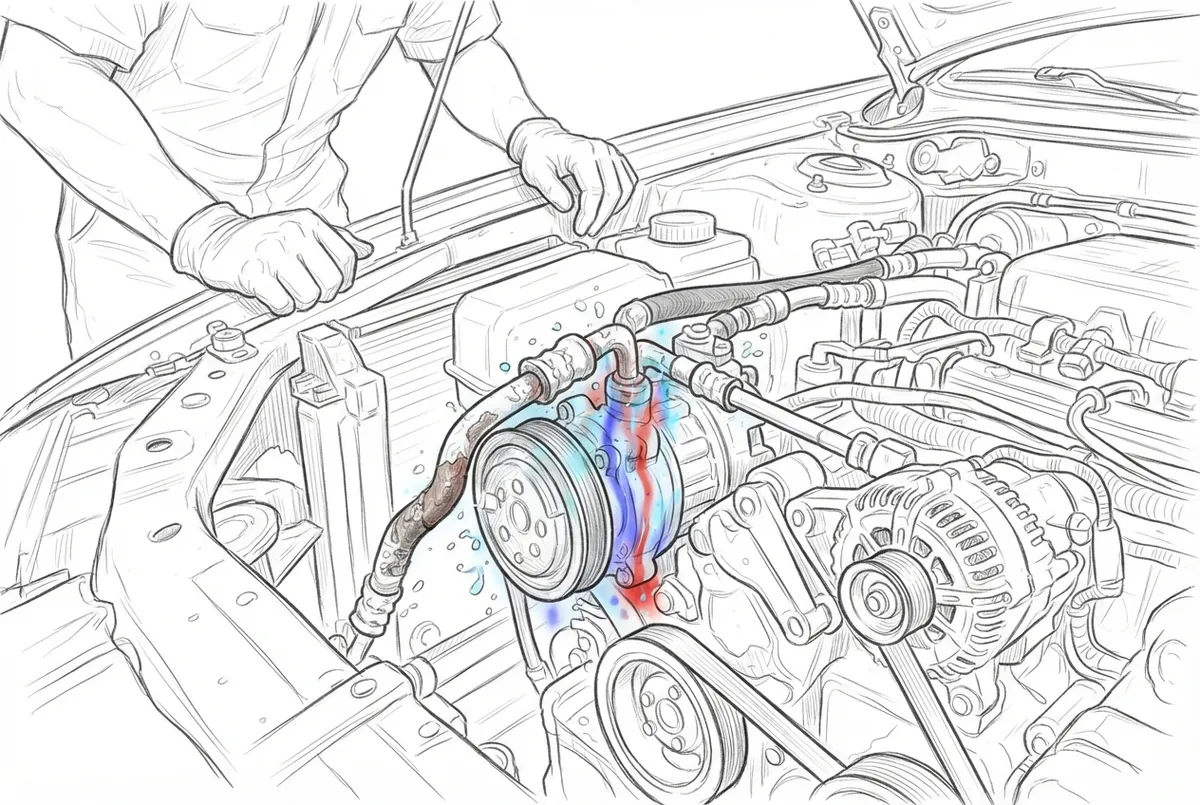
Refrigerant carries compressor oil. When it leaks out, it can leave a greasy, dirty film. Look near hose connections, the compressor, the condenser at the front of the vehicle, and service ports. Dirt sticks to that oil, so the spot may look grimy.
Do not rely on looks alone, though. A technician should confirm the exact source. If you want to see how leaks start in the first place, check out why your car A/C hose is leaking refrigerant.
Which Symptoms Point to a Leak and Which Do Not?
Use this quick table to sort out the clues. It is a helpful starting point, not a final answer.
| Symptom | Could Mean a Leak? | Other Possible Causes |
|---|---|---|
| Warm or weak air | Yes | Bad compressor, blend door, clogged condenser |
| A/C runs nonstop | Yes | Dirty filter, weak fan, failing parts |
| Ice on lines | Yes | Airflow problems, dirty evaporator |
| Hissing or bubbling | Yes | Normal system noise, expansion issues |
| Oily residue | Often | Other fluid leaks, dirt buildup |
| Uneven cooling | Possibly | Blocked vents, blend door faults |
| Rapid clutch cycling | Often | Electrical faults, pressure switch issues |
Why Is Adding Refrigerant Not a Real Fix?
Here is the part many people miss. A/C systems are sealed. They should not need refrigerant added again and again. If your system is low, the refrigerant went somewhere.
A quick top-off might cool things down for a few weeks. But the leak is still there. You are just treating the symptom, not the cause. Then the refrigerant leaks out again, and you pay again.
A proper repair finds the leak, fixes it, and then restores the correct charge. That is the only way to get lasting results. We cover this trap in detail in 13 AC leak mistakes that cost car owners more money.
Also, refrigerant handling is regulated in the United States. Technicians who open the refrigerant circuit need EPA Section 608 certification for stationary equipment, and EPA Section 609 applies to motor vehicle A/C work. Do-it-yourself recharge cans can also add the wrong amount, which may harm the system. It is best to leave the sealed system to the pros.
How Do Technicians Find and Fix a Refrigerant Leak?
A good shop follows a clear process. Here is what you can expect:
- Inspect the system: The tech checks airflow, belts, fans, and visible signs of leaks.
- Check pressures: Gauges show if the refrigerant charge and pressures are normal.
- Pinpoint the leak: Tools like electronic leak detectors or other approved methods find the exact spot.
- Repair or replace: The leaking hose, fitting, valve, coil, or other part gets fixed or replaced.
- Evacuate the system: Air and moisture are pulled out so the system is clean and dry.
- Recharge correctly: The right type and amount of refrigerant goes back in.
- Test performance: The tech confirms cold air and normal operation.
That last step matters. A great repair is not just about stopping the leak. It is about making sure the whole system works the way it should. For a deeper look at the detection side, read how to detect AC leaks in your truck before they get worse.
What Should Different Vehicle Owners Watch For?
Every type of vehicle has its own quirks. Here is a quick look by owner type.
| Vehicle Type | What to Watch | Why It Matters |
|---|---|---|
| Cars | Slow cooling, oily spots, clutch clicking | Catching it early keeps repairs smaller |
| Trucks | Weak air on long hauls, frost on lines | Driver comfort and alertness on the road |
| Buses | Uneven cooling, long run times | Passenger comfort and safety in Tampa heat |
| RVs | Poor cooling after storage, hissing | Leaks can start while parked for months |
| Heavy equipment | Warm cab air, dusty oily fittings | Operator fatigue and downtime |
| Fleets | Repeat recharges on the same unit | Repeat top-offs raise costs and downtime |
Fleet owners, in particular, should track any vehicle that needs repeated recharging. That unit is telling you something. Our post on 4 fleet vehicle A/C repair tips that save you money can help you stay ahead of the problem.
Is It Safe to Keep Driving With a Possible Leak?
Short answer: it is usually safe to drive, but not smart to keep running the A/C. A leaking system loses oil along with refrigerant. Running the compressor with low lubrication can cause serious wear and an expensive failure.
If you think you have a leak, try these steps:
- Turn the A/C off to protect the compressor.
- Note when the problem started and what you noticed.
- Look for oily spots or ice, but do not touch or open any lines.
- Book a diagnosis with a qualified A/C shop.
If you notice a chemical smell inside the cabin, open the windows and get it checked right away. Do not breathe in refrigerant on purpose, and do not try to repair lines yourself.
How Can You Prevent Refrigerant Leaks?
You cannot stop every leak, but you can lower the odds. Hoses, seals, and fittings wear out from heat, vibration, and age. Tampa’s hot, humid climate is tough on all of them.
- Run your A/C regularly, even in cooler months, to keep seals lubricated.
- Schedule a yearly A/C check before summer hits.
- Keep the condenser clean and free of debris.
- Fix small noises or cooling changes right away.
- Use quality replacement parts that fit your system.
Regular checkups catch tiny issues before they grow. Our 5 A/C maintenance tips every Tampa vehicle owner needs is a great place to start.
What About Costs and Rules?
Repair cost depends on where the leak is. A loose fitting is a much smaller job than a leaking evaporator or compressor. Getting an early diagnosis usually keeps the bill lower. You can see typical ranges in how much auto A/C repair costs in 2026.
On the rules side, EPA leak-repair requirements vary by refrigerant, charge size, and equipment type. EPA’s 2026 leak-repair provisions for certain HFC appliances with a charge of 15 pounds or more exclude residential and light-commercial air-conditioning and heat-pump equipment. Different rules may apply to other equipment. The takeaway for vehicle owners is simple: refrigerant is regulated, so use a certified shop.
Why Choose a Specialist for Your A/C Leak?
A/C is a different animal from general auto repair. A shop that focuses only on air conditioning will spot patterns faster and fix things right the first time. Marks Air has served Tampa since 1971 and is a member of the Mobile Air Climate Systems Association (MACS), so the team stays current on industry standards.
As a family-owned, woman-owned business, Marks Air handles leak detection, hose fabrication, repairs, and full system installs for cars, trucks, buses, RVs, and heavy equipment. You can learn more about our A/C services or browse A/C parts if you need components fast. Curious what other drivers think? See what our Marks Air customers say on Google by visiting Visit us on Google — Marks Air.
Ready to Stop the Leak and Get Cool Again?
Refrigerant leaks rarely fix themselves. The sooner you spot the symptoms, the easier and cheaper the fix tends to be. Watch for weak cooling, long run times, ice, odd sounds, and oily spots. Then get a pro to find the real cause instead of just topping off the system.
You deserve a cool, comfortable ride, whether you are commuting on the Selmon Expressway, hauling a load, or running a fleet. Ready to get started? Schedule service with the Marks Air team today, or call us at 813-988-1671 to talk with a real person who loves A/C as much as you love staying cool.
FAQs
Q: What are the most common symptoms of an AC refrigerant leak?
A: The big ones are warm or weak airflow, an A/C that runs a long time without cooling, ice on lines, hissing sounds, and oily residue near fittings. These signs can overlap with other problems, so a quick check by a pro is the best way to be sure.
Q: Can I tell if my car A/C is low on refrigerant without a technician?
A: You can spot clues, like weak cooling or oily spots, but you cannot confirm a leak by looking alone. A technician uses gauges and leak detection tools to read pressures and find the exact source. It is a quick way to avoid guessing.
Q: Does my air conditioner need refrigerant added every year?
A: Nope! A/C systems are sealed, so they should hold their charge for years. If you need to add refrigerant often, there is a leak that needs to be found and fixed instead of just refilled.
Q: Is it safe to run my A/C if I think there is a refrigerant leak?
A: It is best to turn the A/C off and get it checked soon. A leak also means lost compressor oil, and running the system low on lubrication can cause costly damage. Driving the vehicle itself is usually fine.
Q: How do technicians find and repair refrigerant leaks?
A: They check the system, read pressures, and use tools like electronic leak detectors to pinpoint the spot. Then they repair or replace the leaking part, remove air and moisture, recharge the correct amount, and test the cooling.