Key Takeaways
-
Ignoring early AC warning signs like weak airflow, warm air, musty smells, or unusual noises often leads to expensive repairs; catching these early can mean a simple recharge instead of full compressor replacement.
-
Avoid assuming every AC problem needs just a recharge—many shops skip proper diagnostics and miss leaks, causing you to pay for the same repair twice; demand a full system diagnostic before committing to repairs.
-
Take advantage of free AC inspections offered by reputable Tampa shops before authorizing any work; this prevents paying for unnecessary parts and gives you accurate repair costs upfront.
-
Verify your vehicle’s refrigerant type (R134a for pre-2014 vehicles, R1234yf for newer models) and confirm your repair shop has equipment for both systems to avoid costly damage.
-
Choose AC specialists over general repair shops; dedicated AC technicians spot subtle issues that generalists miss, especially important in Tampa’s extreme heat where AC systems work year-round.
-
Schedule preventive maintenance instead of waiting for complete AC failure, which almost always costs more and risks safety; a small $150 leak can become a $900 compressor replacement if ignored.
Tampa summers don’t play around. When your car’s AC starts blowing warm air, you feel it within minutes of getting on the road. Whether you’re a daily commuter, a truck driver logging long hours, or a fleet manager keeping vehicles rolling, a broken AC system is more than an annoyance. It’s a real safety issue in Florida heat. The good news? Most people make the same handful of mistakes when it comes to ac auto repair tampa, and every single one is avoidable once you know what to look for.
This guide walks through the nine most common mistakes Tampa drivers, fleet owners, and equipment operators make with their vehicle AC systems. We’ll also share what a trustworthy shop should offer, what fair pricing looks like, and how to spot trouble before it turns into a breakdown on I-275. Marks Air has been fixing AC systems in Tampa since 1971, so we’ve seen just about every version of these mistakes play out. Let’s make sure you don’t repeat them.
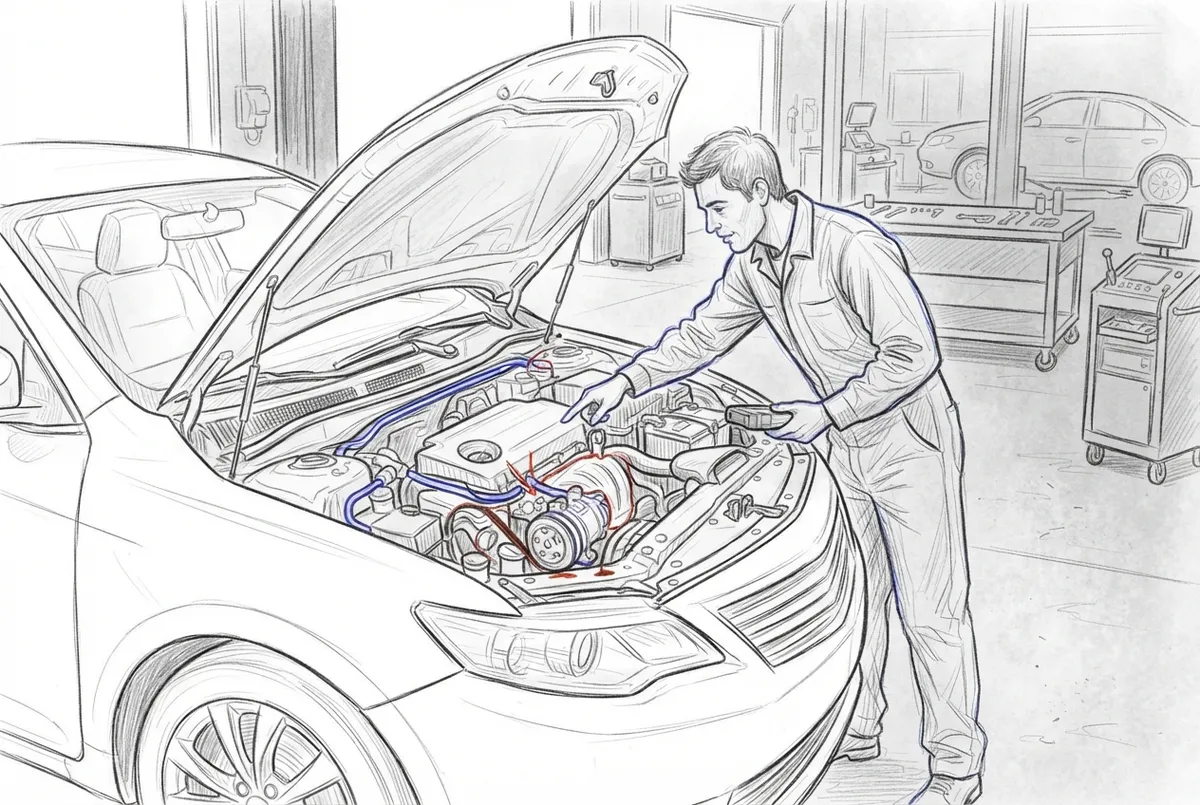
Mistake 1: Ignoring Early Warning Signs
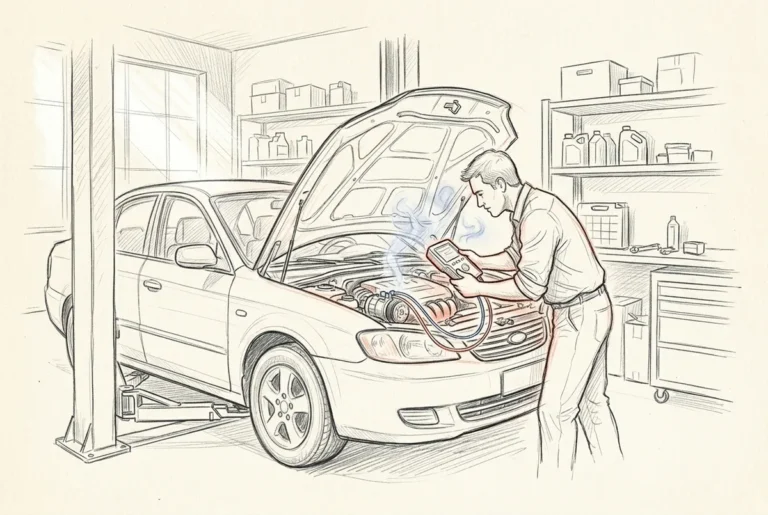
Most AC failures don’t happen overnight. They creep up slowly, and drivers often brush off the early clues. Weak airflow, a slightly warm breeze, or a faint odor might seem minor, but they’re usually the first hints of a bigger problem.
Common early warning signs include:
- Airflow that feels weaker than it used to
- Air that’s cool but not cold
- A musty or sour smell when the AC kicks on
- Rattling or squealing noises from under the dash or hood
- Cooling that comes and goes without warning
Catching these signs early can mean the difference between a simple recharge and a full compressor replacement. If you’re noticing any of these, it’s worth reading up on why your AC might not be working before the problem grows.
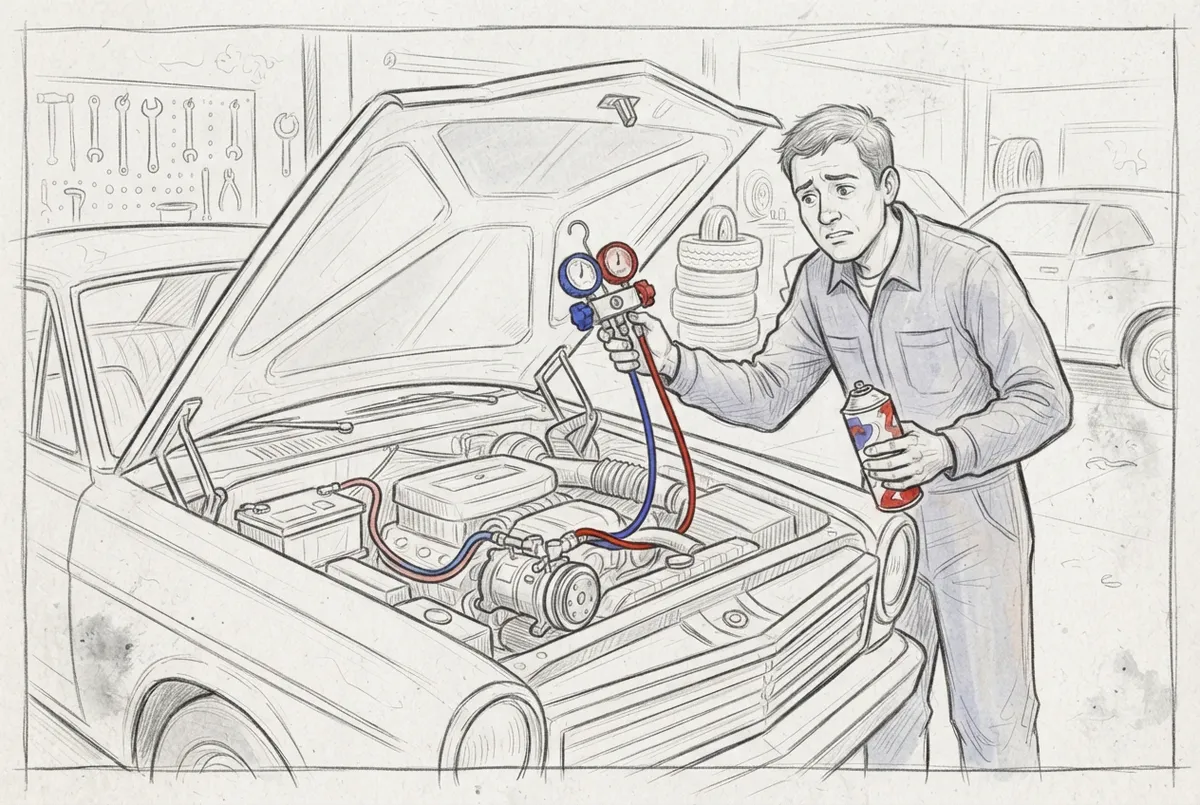
Mistake 2: Assuming Every Problem Needs a Recharge
A lot of drivers hear “AC not cold” and immediately think “just add refrigerant.” Sometimes that’s true. Other times, a recharge only masks a leak that will drain the system again in a few weeks.
A proper diagnostic checks the whole system, not just refrigerant levels. This includes the compressor, condenser, evaporator, hoses, and electrical connections. Skipping this step is one of the most expensive mistakes you can make, since a quick recharge without leak detection often means paying for the same repair twice.
Mistake 3: Skipping the Free AC Inspection
Many Tampa auto AC shops, including ours, offer free inspections or evaluations before any work begins. Yet plenty of drivers skip this step and go straight to guessing what’s wrong, which often leads to paying for parts they didn’t need.
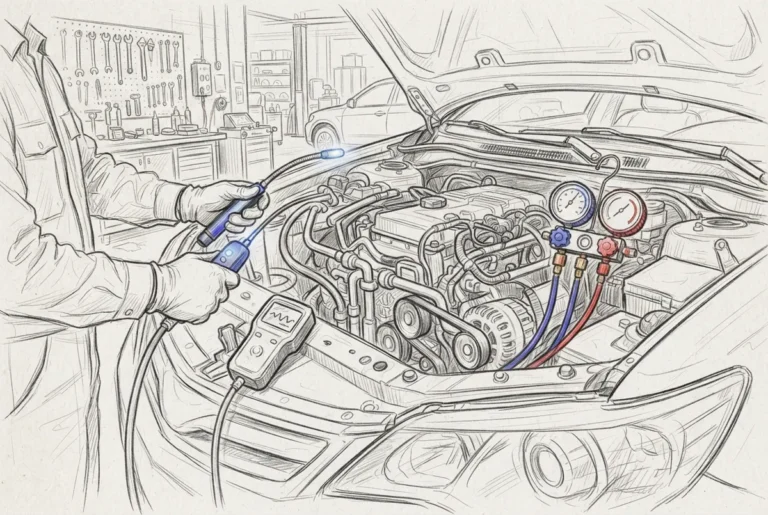
A free inspection typically covers:
- Checking refrigerant pressure levels
- Inspecting hoses and fittings for visible leaks
- Testing the compressor clutch engagement
- Checking cabin air filter and blower motor function
- Running an electrical diagnostic on the AC control system
Taking advantage of a free evaluation before committing to repairs is simply smart budgeting. It’s one reason our AC services page walks through exactly what our inspection process includes.
Mistake 4: Not Knowing Your Refrigerant Type
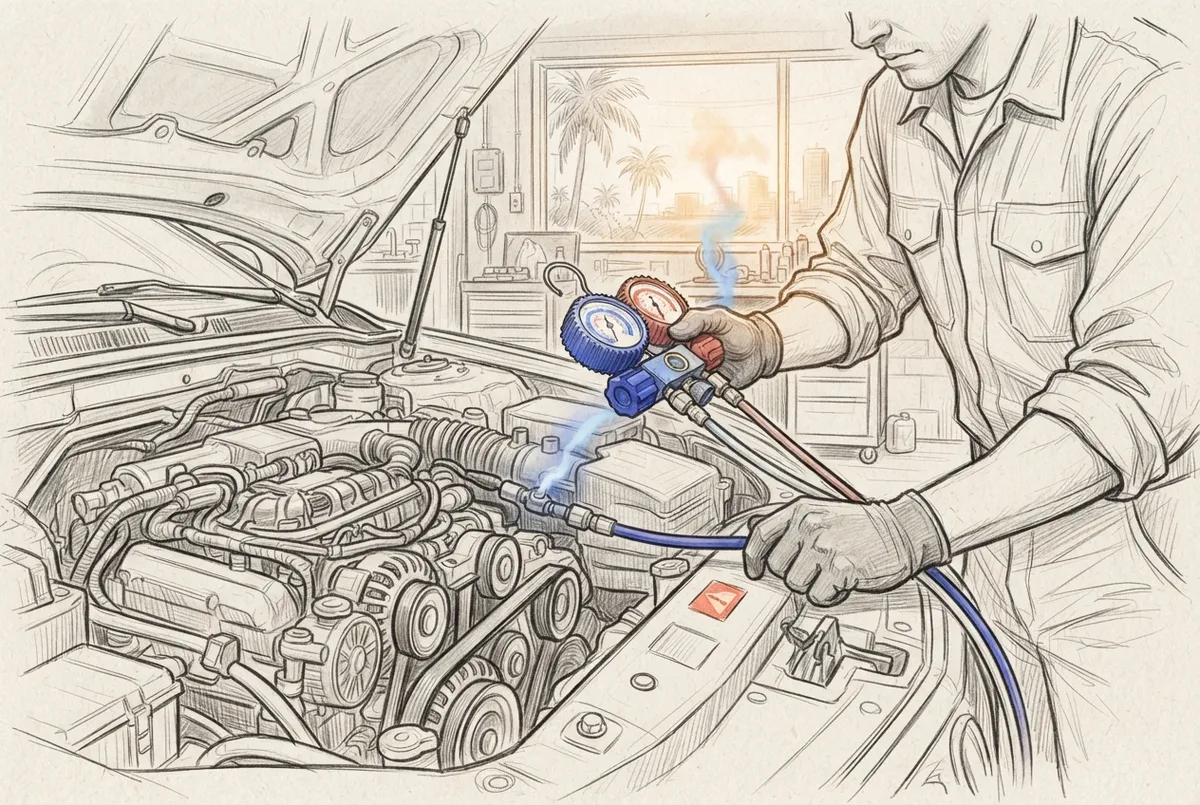
Older vehicles use R134a refrigerant, while many newer models use R1234yf. Using the wrong type, or working with a shop that isn’t equipped for both, can cause serious damage to your system.
| Refrigerant Type | Common In | Key Consideration |
|---|---|---|
| R134a | Vehicles made before roughly 2014-2017 | Widely available, lower cost per recharge |
| R1234yf | Newer vehicle platforms | Requires specialized equipment and handling |
Before booking a repair, ask if the shop services both systems. If you’re unsure which refrigerant your car uses, our team can confirm it quickly, or you can learn more from our guide on R-134a to 1234yf conversion.
Mistake 5: Choosing a Shop That Doesn’t Specialize in AC
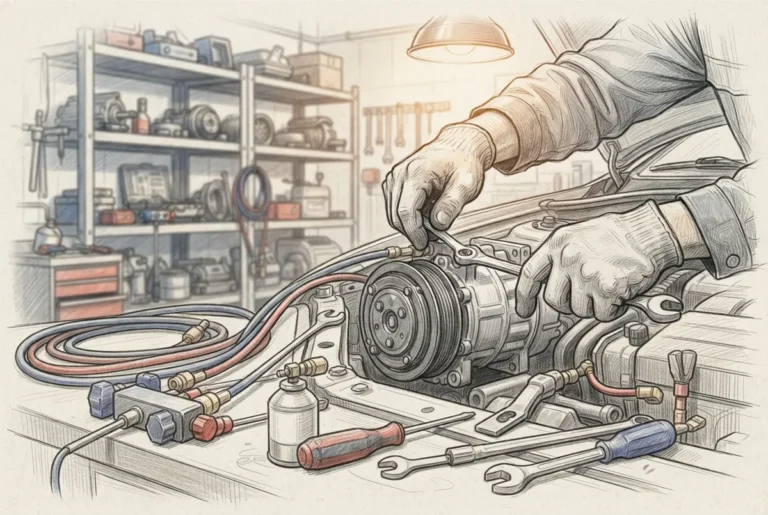
General repair shops handle brakes, oil changes, and AC all at once. That’s fine for basic maintenance, but AC systems are complex enough that specialization matters. A shop that only dabbles in AC work may miss subtle issues that a dedicated AC specialist would catch immediately.
Marks Air has focused exclusively on air conditioning systems for vehicles, trucks, buses, RVs, and heavy equipment since 1971. That kind of specialization means our technicians see AC problems every single day, not once in a while. You can read more about our background on our About Marks Air page.
Mistake 6: Overlooking Fleet and Commercial Vehicle Needs
Truck drivers, bus operators, and fleet owners face a different kind of pressure. Downtime costs money, and a broken AC in a long-haul truck or transit bus isn’t just uncomfortable, it can affect driver alertness and passenger safety.
Fleet-specific mistakes we see often include:
- Waiting until a vehicle breaks down instead of scheduling preventive checks
- Using generic parts instead of components built for heavy-duty use
- Not tracking AC service history across the whole fleet
- Skipping technician training on newer refrigerant systems
If you manage multiple vehicles, preventive maintenance almost always beats reactive repairs. Our article on preventive vs. reactive fleet AC maintenance breaks down the cost difference in detail.
Mistake 7: Forgetting About RVs and Specialty Vehicles
RV owners often assume their AC system works just like a car’s, but recreational vehicles have unique cooling demands, especially during long Florida road trips. Ignoring small issues before a trip can turn a relaxing getaway into a sweaty, miserable drive.
Before any long trip, RV owners should:
- Have the system inspected at least two weeks before departure
- Check for unusual noises during startup
- Test cooling performance while parked and while driving
- Confirm the compressor and condenser are free of debris
- Ask about upgrade options if the current system struggles in extreme heat
We cover more of these details in our guide on RV air conditioner repair parts mistakes to avoid.
Mistake 8: Not Asking About Parts Quality
Not all replacement parts are created equal. Cheap aftermarket components can fail faster, sometimes within months, leading to repeat visits and wasted money. Ask your shop what brands they stock and whether same-day parts availability is an option.
Quality shops typically carry:
- Trusted industry brands like SPAL, ACT, BCC, gpd, and Omega
- Specialty in-house lines built specifically for durability
- Same-day parts for common repairs to avoid extended downtime
- OEM-equivalent components for both light vehicles and heavy equipment
Our AC parts inventory includes our own KOOL-TEMP line along with trusted brand-name components, so most repairs don’t require waiting days for a part to arrive.
Mistake 9: Delaying Repairs Until It’s an Emergency
This is the big one. Waiting until your AC completely fails, usually on the hottest day of the year, almost always costs more than catching the problem early. A small refrigerant leak left untreated can damage a compressor, turning a $150 fix into a $900 repair.
Here’s a simple way to think about repair timing:
| Situation | Recommended Action | Estimated Turnaround |
|---|---|---|
| Weak airflow noticed recently | Schedule inspection within the week | Same day to 1-2 days |
| Warm air only, no cooling | Get diagnostic before next long drive | 1-2 days depending on parts |
| Complete AC failure in extreme heat | Seek emergency service immediately | Often same day |
If your AC has already given out, don’t wait. Our guide on emergency AC repair in Tampa covers what to expect when you need fast relief.
Why Tampa Heat Makes AC Reliability Non-Negotiable
Florida’s climate is uniquely tough on vehicle AC systems. High humidity combined with constant heat means compressors, condensers, and hoses work overtime almost every single day of the year. This is very different from cooler climates where AC systems get seasonal breaks.
Because of this, Tampa vehicles often need more frequent inspections than the same models driven in milder states. Regular maintenance isn’t just a nice-to-have here, it’s essential for avoiding breakdowns during our long, hot season. Learn more about why AC repair matters so much in Tampa and how our climate accelerates wear on these systems.
What to Look for in a Trustworthy Tampa AC Shop
Not every shop offers the same level of service, and it’s worth knowing what separates a solid choice from a risky one. Here’s a quick checklist to use before booking your next appointment:
- Ask if they offer a free AC inspection or evaluation before repairs begin
- Confirm they service both R134a and R1234yf systems
- Check if they specialize in AC work or handle it as a side service
- Ask about warranty coverage on parts and labor
- Find out if same-day parts are available for common repairs
- Look for reviews from real customers in the Tampa area
You can check what past customers have said about our work through our reviews page, or see what people are saying on Yelp and our Facebook page. We’re also proud members of the Mobile Air Climate Systems Association (MACS), which keeps our team current on industry standards.
Training Matters Too
Not every AC problem is a simple parts swap. Technicians need ongoing training to keep up with newer refrigerant systems, electrical diagnostics, and evolving vehicle technology. This matters whether you’re a solo car owner or managing a fleet of dozens of trucks.
Marks Air offers hands-on training programs covering EPA 609 certification, HFO-1234yf systems, MVAC best practices, and EVT AC training. This isn’t just useful for technicians looking to build their skills, it also reflects the depth of knowledge our own team brings to every repair.
Bringing It All Together
AC problems rarely fix themselves, and waiting almost always costs more in the long run. Whether you drive a sedan around South Tampa, haul freight across the state, or manage a fleet of buses, the same principles apply. Catch problems early, ask the right questions, and work with a shop that actually specializes in air conditioning.
Marks Air has been part of the Tampa community since 1971, and as a family-owned, woman-owned business, we’ve built our reputation on straightforward, honest AC service. Follow us on Instagram to see recent projects, or check out our profile on HVACService.io for more background on our services. You can also read what customers are saying by visiting our Marks Air listing, Visit us on Google — Marks Air, before you decide where to bring your vehicle.
Don’t wait for a small AC issue to become a big, expensive one. If your car, truck, bus, RV, or equipment needs attention, schedule service with our team today, or call us at 813-988-1671 to talk through what you’re experiencing. Staying cool in Tampa shouldn’t be complicated, and we’re here to make sure it isn’t.
FAQs
Q: How much does car AC repair cost in Tampa?
A: It really depends on what’s wrong. A simple recharge might run you under $150, while a compressor replacement can be several hundred dollars more. The best way to know for sure is to get a free inspection first, so you’re not guessing at the cost.
Q: What are the signs my car AC needs repair?
A: Weak airflow, warm air instead of cool, strange noises, or a musty smell are all classic signs. If your AC feels inconsistent, cooling great one day and struggling the next, that’s worth checking out too. Catching these early usually saves you money down the road.
Q: Do Tampa auto shops offer free AC inspections?
A: Many do, and we’re happy to say we’re one of them. A free evaluation lets you know exactly what’s going on before you spend a dime on repairs, which just makes good sense.
Q: Can a car AC just need a recharge, or does it need a full repair?
A: Sometimes a recharge is genuinely all it takes, but other times it’s masking a leak that will drain the system again soon. A full diagnostic check is the only way to know which situation you’re actually dealing with.
Q: Do Tampa repair shops service both R134a and R1234yf systems?
A: Good ones do. Since Tampa roads have everything from older sedans to brand new trucks, a shop needs equipment for both refrigerant types. It’s always worth asking before you book an appointment, just to be safe.