Key Takeaways
-
A proper car AC repair includes full system diagnostics, refrigerant recharge, leak detection, compressor testing, and electrical diagnostics—not just a quick refrigerant top-off that masks problems temporarily.
-
Costs vary significantly from $150-$300 for simple recharges to $800-$1,500+ for compressor replacement; getting an accurate diagnosis first prevents wasted money on unnecessary repairs.
-
Warm air can stem from low refrigerant due to leaks, failing compressors, electrical issues, clogged condensers, or stuck blend doors—only proper diagnostics reveal the true cause.
-
Choose specialized AC repair shops over general auto repair facilities, as they have deeper expertise, current equipment for both R-134a and R-1234yf refrigerants, and same-day service capabilities.
-
A recharge only makes sense if your system has no leak and just needs a top-up; if there's an active leak or failing compressor, recharging alone is a temporary band-aid fix.
-
Before booking service, note your symptoms, find your refrigerant type on the engine bay sticker, ask about diagnostic fees upfront, and confirm warranty coverage on parts and labor.
It’s another scorching Tampa afternoon, you hop in your car, crank the AC, and… nothing but hot air blows in your face. Sound familiar? You’re not alone. Every summer, thousands of Tampa drivers search “repair car ac near me” hoping to find a shop they can trust, fast. Whether you’re driving a family sedan, a delivery truck, or towing an RV down I-75, a broken AC isn’t just uncomfortable, it can be downright unsafe in Florida heat.
The good news? Finding reliable local help doesn’t have to be a guessing game. In this friendly guide, we’ll walk through what a proper AC repair actually involves, what it typically costs, and how to spot a shop that knows what it’s doing. We’ll also share why Marks Air has been Tampa’s go-to A/C specialist since 1971, helping everyone from car owners to fleet managers stay cool. Let’s dive in.
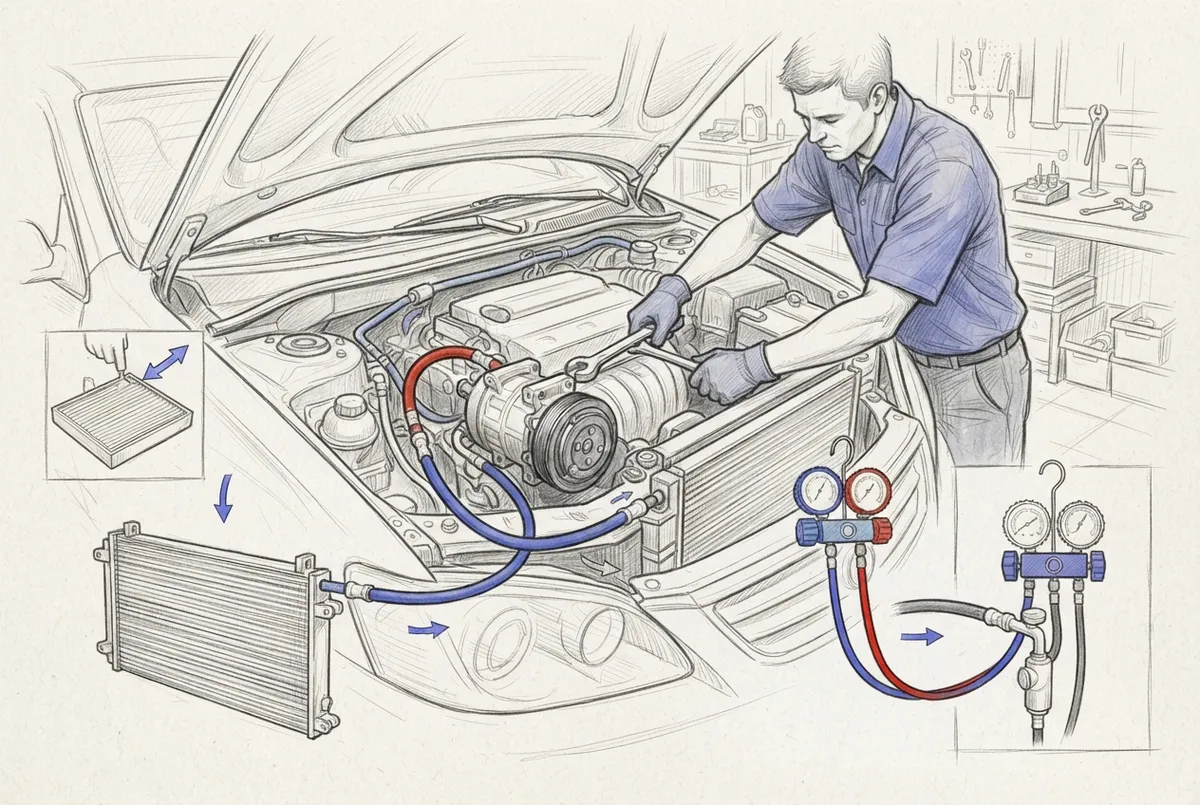
What Does Car AC Repair Near Me Usually Include?
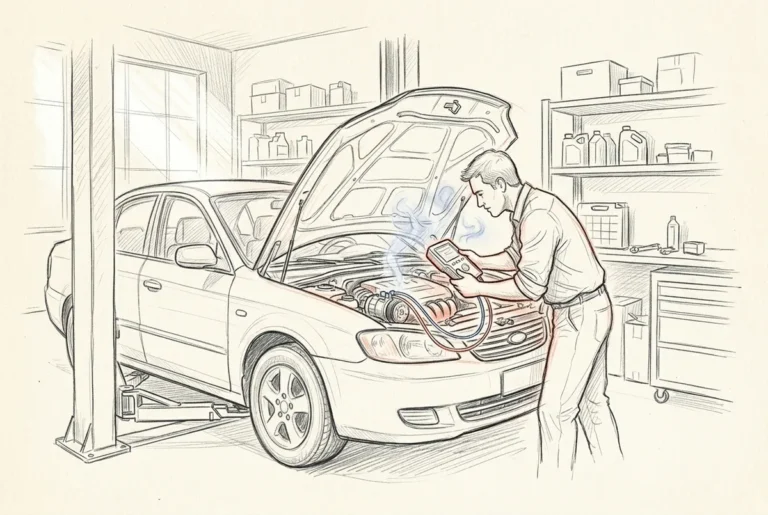
When you search for local auto AC help, you’re usually looking for more than a quick refrigerant top-off. A proper shop offers a full menu of services designed to actually fix the root problem, not just mask it for a week.
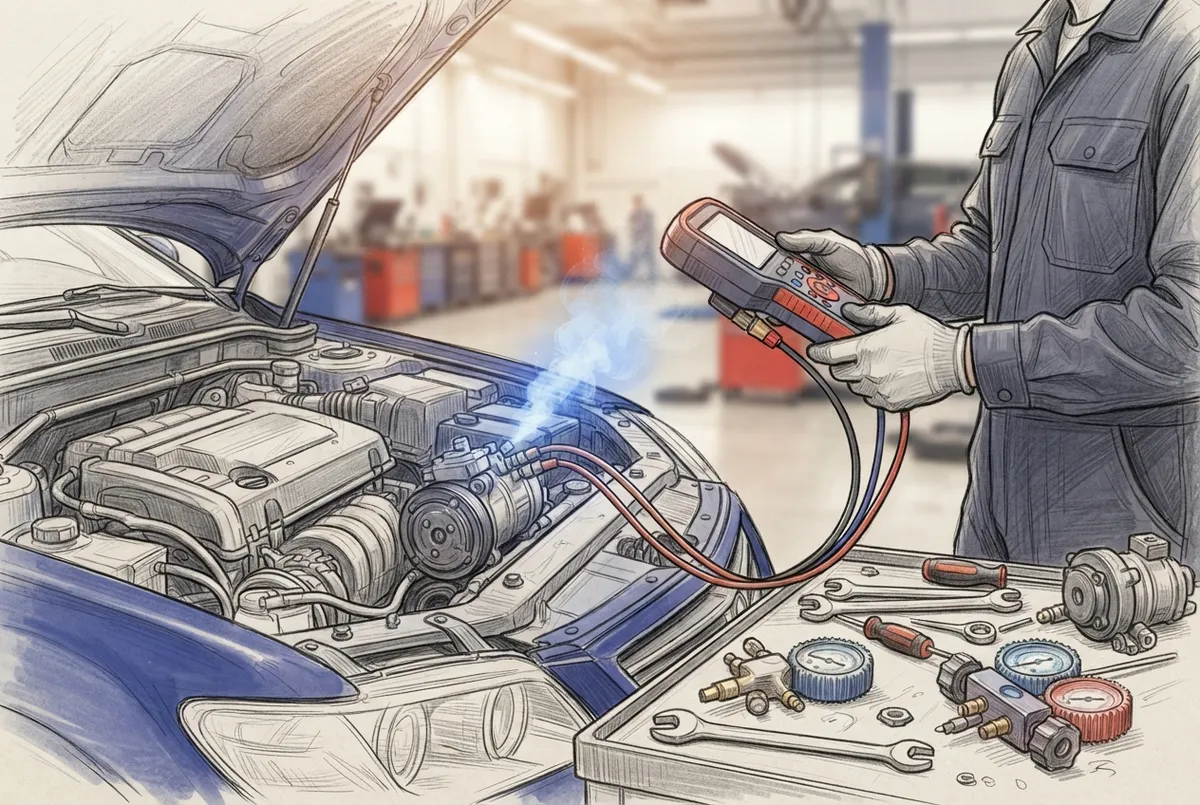
- Full system diagnostics to pinpoint the exact issue
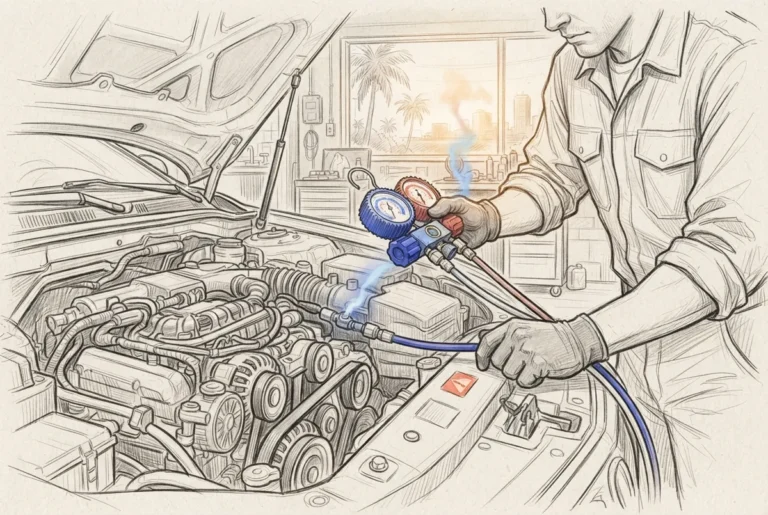
- Refrigerant recharge for R-134a or newer R-1234yf systems
- Leak detection and repair using dye or electronic sniffers
- Compressor testing, repair, or replacement
- Hose fabrication and replacement for custom or hard-to-find fittings
- Electrical diagnostics for blower motors, relays, and switches
Shops that only offer a basic recharge might get your air cold again for a little while. But if there’s an underlying leak or a failing part, that cold air won’t last long. That’s why it pays to choose a shop that checks everything before recommending a fix. You can learn more about this approach on our AC services page.
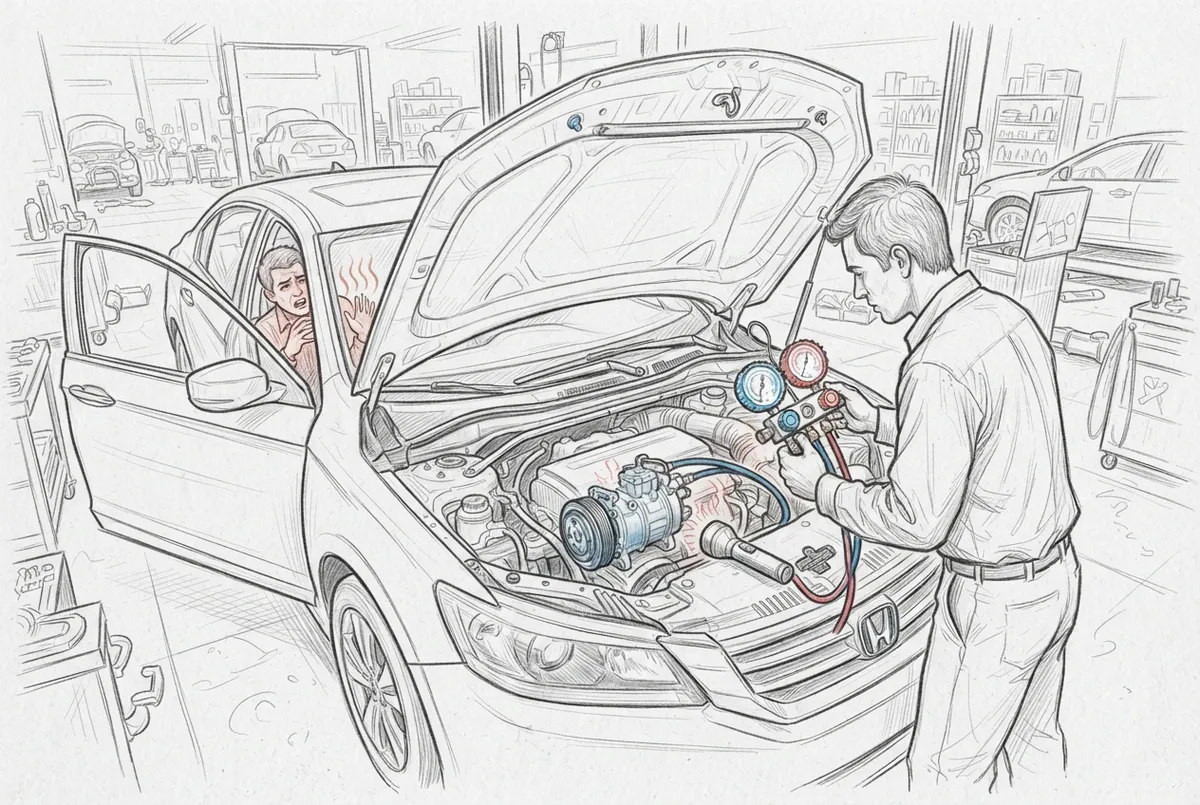
Why Is My Car AC Blowing Warm Air?
This is probably the number one question we hear from Tampa drivers. Warm air can come from several different culprits, and guessing wrong often means wasted money.
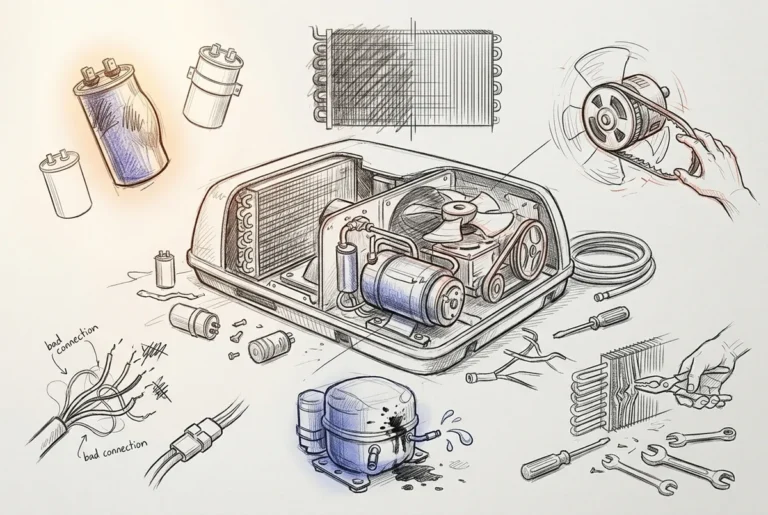
- Low refrigerant from a slow leak somewhere in the system
- A failing compressor that can’t pressurize refrigerant properly
- Electrical issues like a bad relay, fuse, or clutch switch
- A clogged or blocked condenser that can’t release heat
- A stuck or broken blend door mixing hot and cold air
Good technicians test before they replace parts. That’s the whole point of a proper diagnostic. We’ve written more about this in 10 Reasons Your AC Is Blowing Warm Air (And How to Fix It), which breaks down each cause in plain language.
How Much Does It Cost to Repair a Car Air Conditioner?
Costs vary a lot depending on what’s actually wrong. A simple recharge is much cheaper than a compressor swap, so getting an accurate diagnosis first can save you real money.
| Service Type | Typical Cost Range |
|---|---|
| Diagnostic fee | $75 – $200 |
| AC recharge (R-134a) | $150 – $300 |
| AC recharge (R-1234yf) | $250 – $500+ |
| Leak repair | $150 – $600 |
| Compressor replacement | $800 – $1,500+ |
| Average full repair (mixed parts/labor) | $384 – $445 |
Keep in mind these are general ranges, and your final bill depends on your vehicle’s make, model, and refrigerant type. Newer cars using R-1234yf refrigerant tend to cost more to service than older R-134a systems, since the refrigerant itself is pricier and requires different equipment. For a deeper cost breakdown, check out How Much Does Auto AC Repair Cost in 2026?
Should I Recharge My Car AC or Repair It?
This is a great question, and honestly, the answer depends on what’s causing the problem in the first place. A recharge alone only makes sense if your system isn’t leaking and just needs a top-up.
- If refrigerant levels are low with no leak, a recharge may be enough
- If there’s a leak, recharging alone is just a temporary fix
- If the compressor is failing, no amount of refrigerant will help
- If airflow is weak but temps drop fine, it might be a blower or duct issue
A trustworthy shop will always explain the difference and recommend the right path for your budget and vehicle. Our team walks every customer through this before starting any work, and you can read what people say about that honesty on our reviews page.
How Do I Find the Best Car AC Repair Shop Near Me?
With so many options out there, how do you pick the right shop? Here’s a simple checklist to help you filter out the noise and find a place you can actually trust.
- Look for shops that specialize in A/C, not just general repair
- Check if they offer same-day service or quick turnaround
- Ask if they test before replacing expensive parts
- Read local reviews and ratings from real customers
- Confirm they work on your specific vehicle type (car, truck, RV, bus)
- Ask about warranties on parts and labor
Since 1971, Marks Air has built its reputation in Tampa by focusing exclusively on A/C systems, nothing else. That kind of specialization matters because our team sees these exact problems every single day. You can browse feedback from real customers on Yelp or follow our latest work on Facebook.
Car Owners: What Tampa Drivers Should Know
If you’re driving a personal vehicle, comfort matters, but so does your safety on the road. Driving distracted by heat, or with fogged-up windows because your defrost isn’t working right, is a real risk.
- Get a diagnostic at the first sign of warm air or weak airflow
- Don’t ignore strange smells or noises from the AC vents
- Ask your shop which refrigerant your vehicle uses
- Consider a full system check before hurricane season road trips
For a closer look at common mistakes drivers make, take a peek at 10 Auto AC Repair Mistakes That Cost You More Money.
Truck Drivers and Fleet Operators: Staying Cool on Long Hauls
For professional drivers, a working AC isn’t a luxury, it’s part of doing the job safely. Long hours behind the wheel in extreme heat lead to fatigue, which affects reaction time and compliance with hours-of-service expectations.
- Prioritize shops that stock heavy-duty AC parts for trucks
- Schedule preventive checks before long routes through Florida summers
- Ask about custom hose fabrication for older or specialty trucks
We cover fleet-specific advice in 4 Fleet Vehicle AC Repair Tips That Save You Money, which is worth a read if you manage multiple vehicles.
Bus Operators and Passenger Comfort
Public transit and shuttle companies have a different challenge entirely, keeping dozens of passengers comfortable while maintaining strict safety standards. A failed AC system on a packed bus in Tampa’s summer heat isn’t just uncomfortable, it can become a health concern.
Marks Air handles full-system installations and maintenance for buses and transit vehicles, and our team understands the unique demands of passenger-focused fleets. Learn more in What Does Proper Bus AC System Maintenance Actually Involve?
RV Enthusiasts: Keeping Cool on the Road
If you’re an RV owner, you know that a broken AC can turn a relaxing trip into a miserable one, especially in Florida’s humidity. RV cooling systems often have quirks that regular car shops don’t understand.
- RV AC systems may combine vehicle and cabin cooling components
- Leak detection is especially important given the vibration RVs endure on the road
- Upgrades are available for older units struggling to keep up
Check out common pitfalls in 6 RV Air Conditioner Repair Parts Mistakes to Avoid before your next trip.
Heavy Equipment Operators: Preventing Downtime
Construction and industrial equipment operators face a unique challenge, too. Cabs without working AC lead to operator fatigue, and fatigue on a job site is a genuine safety hazard.
Marks Air services AC systems for heavy equipment, helping crews stay alert and productive even during Tampa’s hottest months. For more detail, see How to Get Heavy Equipment AC Repair Done Right.
Does My Car Use R-134a or R-1234yf Refrigerant?
This question trips up a lot of vehicle owners, and it actually matters a great deal for repair cost and shop capability. Most vehicles built before roughly 2015 use R-134a, while many newer models switched to R-1234yf.
- Check your engine bay sticker, it usually lists the refrigerant type
- R-1234yf systems require different equipment and cost more to service
- Not every shop is equipped to handle R-1234yf, so ask before booking
We cover this topic thoroughly in 12 Things to Know About R-134a to 1234yf Conversion, a great read if you’re unsure which system your vehicle has.
Same-Day Service and Convenience Matter
Let’s be honest, nobody wants to wait a week for AC repair in July. That’s why local shops offering same-day diagnostics and walk-in availability tend to win customer loyalty.
At our Tampa facility, we stock a full line of parts, including our own KOOL-TEMP line plus trusted brands like SPAL, ACT, BCC, gpd, and Omega, so many repairs can be completed the same day. Browse our inventory on the AC parts page to see what’s available.
Why Experience and Specialization Matter
A/C systems are complicated, with refrigerant chemistry, electrical components, and mechanical parts all working together. A shop that dabbles in AC repair alongside general auto work simply won’t have the same depth of knowledge as one that focuses on it exclusively.
As a proud member of the Mobile Air Climate Systems Association (MACS), Marks Air stays current with industry standards and best practices. We also offer training programs, including EPA 609 certification and HFO-1234yf training, so our technicians (and others in the industry) stay sharp year after year.
A Family-Owned Tampa Tradition Since 1971
Marks Air isn’t a chain or a franchise. We’re a family-owned, woman-owned business that’s been part of the Tampa community for over five decades. That kind of longevity doesn’t happen by accident, it happens by treating every customer’s vehicle like it matters.
Whether you’re bringing in a family sedan, a delivery truck, or a piece of construction equipment, our team treats the job with the same care and attention to detail. Feel free to visit us on Google — Marks Air to see photos, hours, and directions to our shop, or follow our day-to-day work on Instagram.
Quick Checklist Before You Book a Repair
- Note any symptoms: warm air, weird smells, strange noises
- Check your refrigerant type if you can find the sticker
- Ask about diagnostic fees upfront
- Confirm same-day availability if your schedule is tight
- Ask if the shop offers a warranty on parts and labor
Being prepared with this info helps your technician diagnose the problem faster, which usually means a quicker, more affordable fix.
Ready for Cool, Comfortable Rides Again?
A broken car AC in Tampa’s heat is more than an inconvenience, it’s a real quality-of-life issue. The good news is that a proper diagnosis, honest advice, and quality parts can get you back to comfortable driving fast. Whether you’re a daily commuter, a truck driver logging long miles, or managing a whole fleet, Marks Air is here to help.
Ready to stop sweating through your commute? Schedule service with our Tampa team today, or simply call us at 813-988-1671 to talk through your AC troubles with a friendly, knowledgeable voice. We can’t wait to get your ride cool again.
FAQs
Q: What does car AC repair near me usually include?
A: A good local shop will run a full diagnostic first, then handle whatever’s needed, whether that’s a refrigerant recharge, leak repair, compressor service, or electrical fix. It’s never just a quick top-off if there’s a real problem underneath. That’s exactly how we approach every vehicle that comes through our Tampa shop.
Q: How much does it cost to repair a car air conditioner?
A: Costs typically range from about $150 to $1,200 depending on what’s actually wrong. Simple recharges run $150-$300 for older R-134a systems, while compressor replacements can run $800-$1,500 or more. Getting an accurate diagnosis first is the best way to avoid overpaying.
Q: Why is my car AC blowing warm air?
A: Warm air usually points to low refrigerant, a leak, a failing compressor, or an electrical issue like a bad relay. It could also be something simpler, like a clogged condenser or stuck blend door. The only way to know for sure is a proper diagnostic, which we’re always happy to run.
Q: Should I recharge my car AC or get it fully repaired?
A: If there’s no leak and refrigerant is just low, a recharge might do the trick. But if there’s an active leak or a failing part, recharging alone is just a band-aid that won’t last. We’ll always tell you honestly which path makes sense for your vehicle and budget.
Q: Does my car use R-134a or R-1234yf refrigerant?
A: Most vehicles made before around 2015 use R-134a, while many newer ones use R-1234yf, which costs more to service. Check the sticker under your hood, or just ask us when you bring your car in. We’re equipped to handle both refrigerant types here in Tampa.