Key Takeaways
-
Always get a proper diagnostic that includes pressure testing, leak detection, and electrical checks instead of accepting simple refrigerant top-offs, as skipping diagnostic steps means you'll likely return within weeks.
-
Choose shops with EPA Section 609 certified technicians and verify they perform full leak repairs, not just recharges, since refrigerant leaks require finding and fixing the source to provide lasting results.
-
Understand that refrigerant types vary by vehicle model year—older cars use R-134a while newer models use HFO-1234yf—and these cannot be mixed, making certified technician expertise critical.
-
Request itemized estimates before work begins and ask about warranties on parts and labor to ensure transparency and protect yourself from hidden costs or poor-quality repairs.
-
Prioritize same-day repairs when possible since broken A/C in Tampa's climate causes driver fatigue and dehydration, creating real safety risks especially for commercial fleet operators and truck drivers.
-
Look for shops with specialized A/C experience and decades of focus on air conditioning systems, as this specialization means technicians have likely encountered your specific problem before.
There’s nothing worse than climbing into a hot car and realizing your air conditioner has given up on you. Whether you’re a Tampa commuter, a truck driver hauling freight across the state, or an RV owner planning a summer trip, a broken A/C system can turn any drive into a miserable experience. If you’ve typed “vehicle air conditioner repair near me” into your phone, you’re not alone. Tampa’s heat and humidity make working A/C a must-have, not a nice-to-have.
The good news? Finding a trustworthy local shop doesn’t have to be stressful. This guide walks you through the common causes of A/C trouble, what a real repair looks like, and how to pick a shop that will actually fix the problem instead of just patching it. Whether you drive a sedan, operate a fleet of delivery trucks, or manage a fleet of buses, we’ve got you covered. Let’s get you back to cool, comfortable driving.
Why Your Vehicle’s A/C Might Be Failing
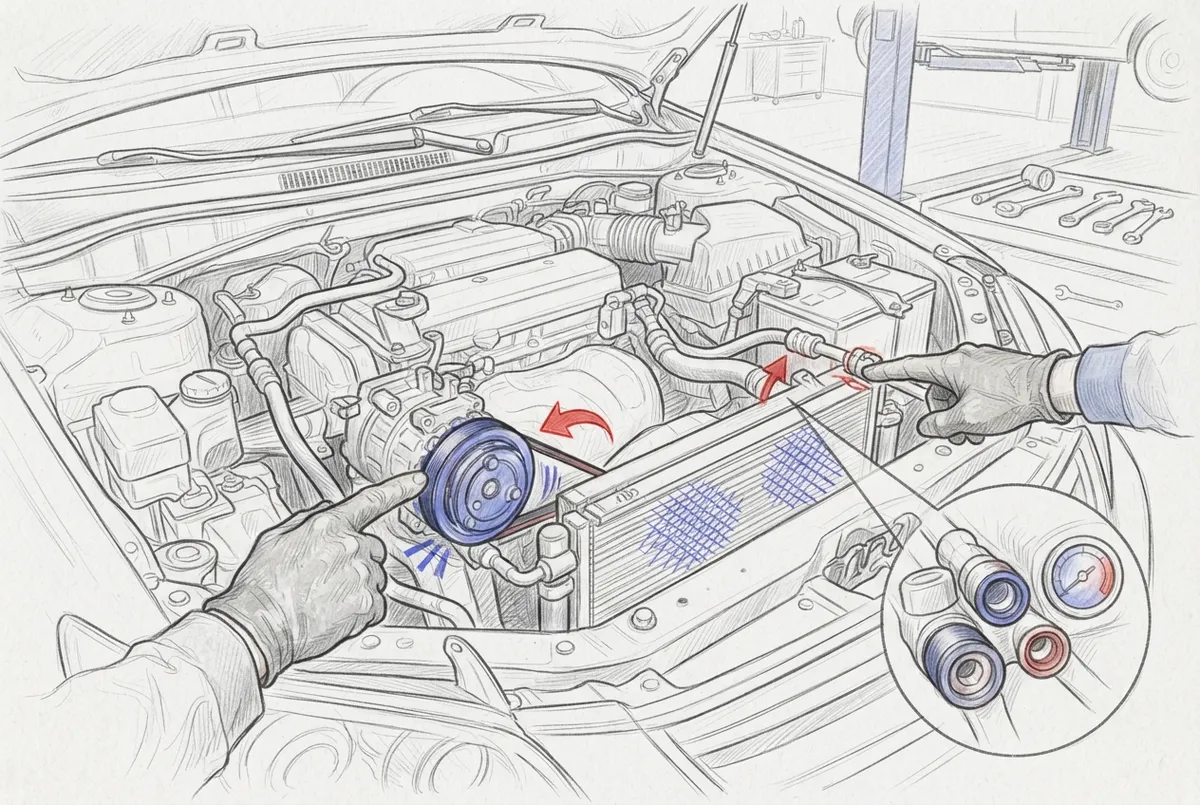
Car air conditioning systems are more complex than most people realize. They rely on a careful balance of refrigerant pressure, electrical signals, and mechanical parts working together. When one piece fails, the whole system can stop cooling properly.
Here are the most common symptoms that send Tampa drivers searching for help:
- Warm or lukewarm air blowing from the vents instead of cold air
- Weak airflow even when the fan is on high
- Cooling that comes and goes without warning
- Strange noises when the A/C compressor kicks on
- Musty or unpleasant smells coming from the vents
- Water pooling on the floorboard inside the cabin
- The compressor not engaging at all when you turn on the A/C
Any one of these signs points to a deeper issue. Ignoring them usually leads to bigger repair bills down the road. If you’re noticing your car blowing warm air instead of cold, it’s worth getting it checked out soon rather than later.
Common Causes Behind A/C Problems
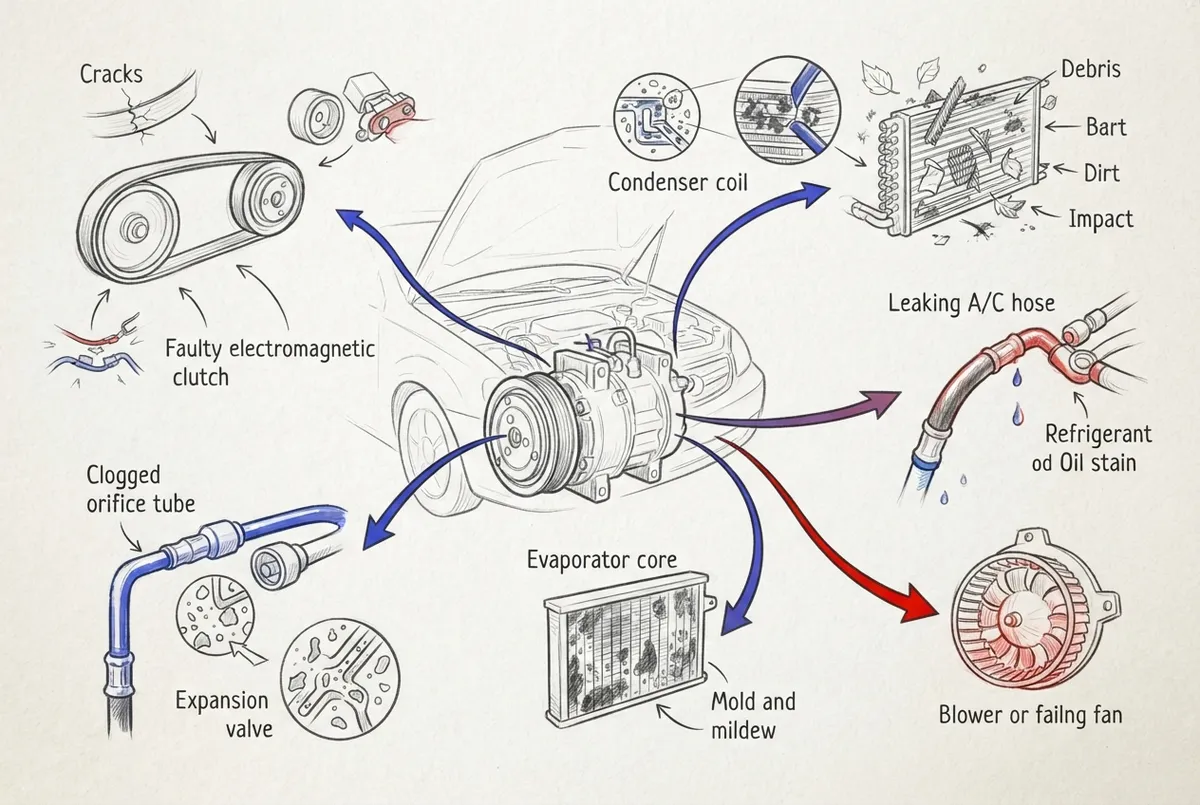
Understanding what’s actually wrong helps you have a better conversation with your technician. Here are the usual suspects:
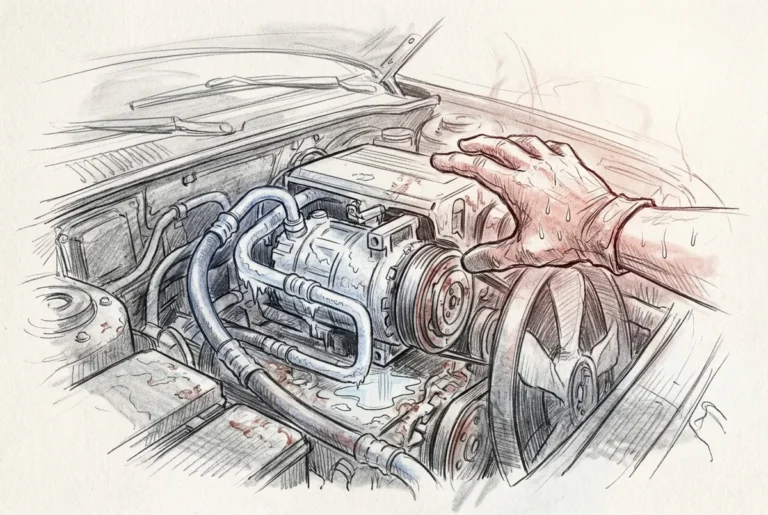
- Refrigerant leaks – Small cracks in hoses, seals, or connections let refrigerant escape slowly over time
- Compressor failure – The compressor is the heart of the system, and when its clutch or internal parts wear out, cooling stops
- Blocked orifice tube or expansion valve – Debris or moisture can clog these small but critical parts
- Damaged condenser or evaporator – Road debris, corrosion, or age can damage these components
- Faulty blower motor – This part pushes air through the vents, and when it fails, airflow weakens or stops
- Clogged cabin air filter – A dirty filter restricts airflow and can cause musty odors
- Electrical faults – Bad wiring, blown fuses, or a failing pressure sensor can prevent the system from working correctly
A shop that only tops off refrigerant without checking for these underlying issues isn’t doing you any favors. That’s why understanding the difference between repair and replacement matters so much when you’re deciding how to move forward.
What a Real Diagnostic Looks Like
A trustworthy repair shop won’t just guess at the problem. Here’s what a proper diagnostic process usually includes:
- Visual inspection of belts, hoses, and wiring connections
- Checking fuses and electrical components for faults
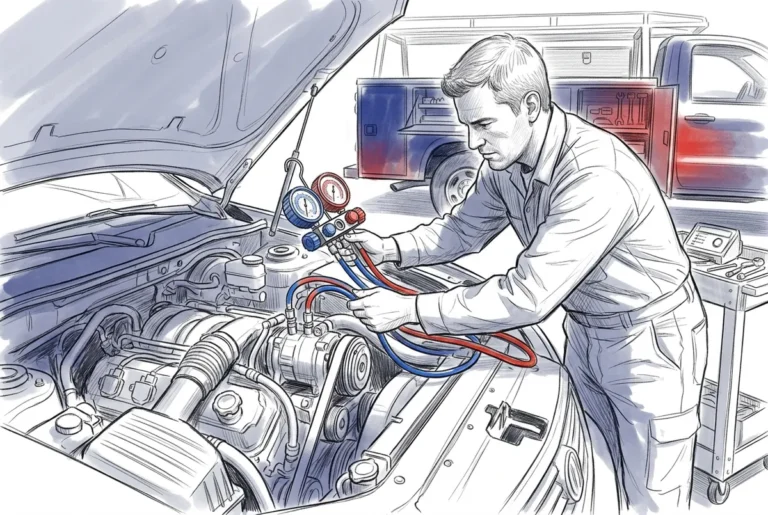
- Measuring refrigerant pressure on both the high and low side
- Testing vent temperature to confirm how much cooling is actually happening
- Watching the compressor engage and disengage properly
- Checking airflow strength through the vents
- Using dye or electronic leak detectors if a refrigerant leak is suspected
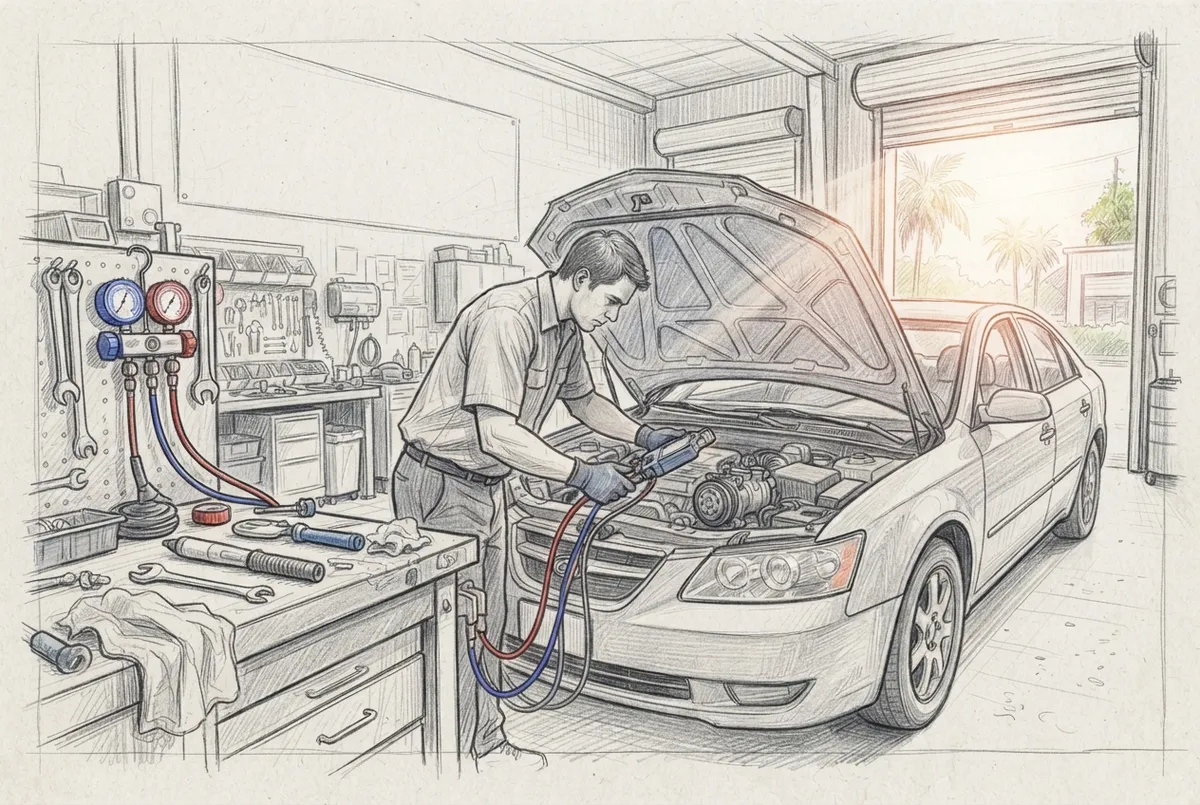
If refrigerant is involved, a proper repair means the system gets recovered, leak-tested, repaired, evacuated, and then recharged with the correct refrigerant type and amount. Skipping steps might save time upfront, but it usually means you’ll be back in the shop within weeks. For a deeper look at what these steps involve, check out our guide on car A/C diagnostic costs.
Recharge vs. Full Repair: What’s the Difference?
This is one of the most common questions we hear. A refrigerant recharge simply adds more refrigerant to the system. It’s fast and often cheaper upfront. But if there’s a leak, that cold air won’t last long.
A full repair identifies why the refrigerant is low in the first place. This might mean replacing a hose, fixing a seal, or swapping out a failed part. It costs more initially, but it actually solves the problem instead of covering it up.
| Service Type | What It Includes | Best For |
|---|---|---|
| Recharge Only | Adding refrigerant without leak repair | Systems with no detected leak |
| Leak Repair | Finding and fixing the source of refrigerant loss | Systems losing refrigerant over time |
| Component Replacement | Swapping failed parts like compressors or condensers | Systems with mechanical failure |
| Full System Service | Recovery, leak repair, evacuation, and recharge | Most reliable long-term fix |
A reputable shop should always explain which option fits your situation and why. Our team at Marks Air’s A/C services page breaks down exactly what each service involves so you know what you’re paying for.
Understanding Refrigerant Types
Not all vehicle A/C systems use the same refrigerant, and this matters more than most drivers realize. Older vehicles typically use R-134a, while many newer models use HFO-1234yf. These two refrigerants cannot be mixed under any circumstances.
According to the U.S. Environmental Protection Agency, technicians servicing motor vehicle A/C systems for payment must be trained and certified under EPA Clean Air Act Section 609. This certification requires proper training and the use of approved refrigerant-handling equipment. Intentional venting of refrigerant is strictly prohibited by federal law.
The EPA has also adopted SAE standards J2843, J2851, and J3030 specifically for equipment that recovers, recycles, and recharges HFO-1234yf systems. For new vehicles starting with model year 2025, the EPA has set a global-warming-potential limit of 150 for refrigerant used in light-duty passenger vehicles. Existing vehicles can still be serviced with their originally approved refrigerant type.
Recovered refrigerant must also be recycled or reclaimed before reuse, even if it’s going back into the same vehicle. Shops are required to keep records of technician certification and refrigerant destination for at least three years. This is why choosing a certified shop matters so much, not just for your comfort, but for legal compliance too.
How to Choose a Trustworthy Local A/C Shop
Not every shop that advertises A/C repair actually specializes in it. Here’s what to look for when searching for vehicle air conditioner repair near you:
- Verify the shop employs EPA Section 609 certified technicians
- Ask if they have experience with your vehicle’s specific refrigerant type
- Check whether they offer real diagnostic testing, not just a quick recharge
- Look for a warranty on parts and labor
- Request an itemized estimate before work begins
- Read online reviews from real customers
- Ask about appointment availability and turnaround time
- Confirm they perform leak repairs, not just refrigerant top-offs
Marks Air has been serving Tampa drivers since 1971, and our team believes in transparency at every step. We’re proud to be a member of the Mobile Air Climate Systems Association (MACS), which keeps us current on industry standards. You can also check out what our customers have to say by visiting us on Google — Marks Air, or reading through our customer reviews directly on our site.
Repair Needs by Vehicle Type
Different vehicles come with different A/C challenges. Here’s how needs vary across the types of vehicles we serve:
Passenger Cars and Trucks
Daily drivers need quick, reliable service that gets them back on the road fast. Common issues include compressor failure, refrigerant leaks, and blower motor problems. Same-day service is often possible for straightforward repairs.
Commercial Trucks and Fleets
Fleet operators can’t afford downtime. A/C failure in a delivery truck or long-haul rig affects driver comfort and productivity. Fleet owners should look into fleet vehicle A/C repair strategies that emphasize preventive care over reactive fixes, which can save serious money over time.
Buses and Transit Vehicles
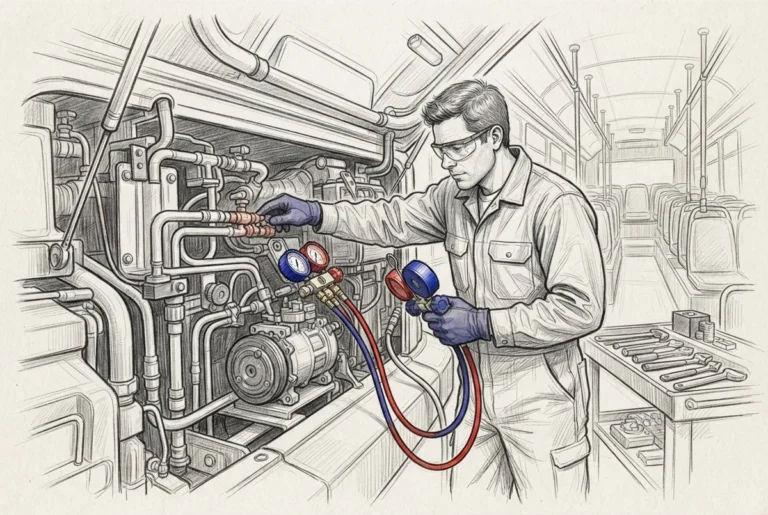
Passenger comfort and safety are top priorities for bus operators. A malfunctioning A/C system in Tampa’s heat isn’t just uncomfortable, it can be a real safety concern for passengers and drivers alike.
RVs and Specialty Vehicles
RV owners often deal with unique cooling challenges because these vehicles sit unused for stretches of time, which can lead to seal deterioration and refrigerant loss. Regular checks before a big trip can prevent unpleasant surprises on the road.
Heavy Equipment and Construction Machinery
Operators running heavy equipment in Tampa’s outdoor heat need working A/C to avoid fatigue and maintain focus. Heavy equipment A/C repair often involves different components than standard vehicles, so specialized experience matters here.
Cost and Timing: What to Expect
Repair costs vary quite a bit depending on what’s actually wrong. A simple recharge might run you a modest amount, while a full compressor replacement costs significantly more. Here’s a general breakdown:
- Basic diagnostic check: typically a smaller fee, sometimes waived with repair
- Refrigerant recharge: moderate cost depending on refrigerant type and amount needed
- Leak repair: varies based on location and severity of the leak
- Compressor replacement: one of the higher-cost repairs due to parts and labor
- Full system replacement: the most expensive option, reserved for severe damage
Timing depends on the complexity of the repair. Many straightforward issues can be fixed the same day, while parts availability for less common vehicles might add a day or two. Our A/C parts inventory includes our own KOOL-TEMP line along with trusted brands like SPAL, ACT, BCC, gpd, and Omega, so many repairs can happen quickly without waiting on shipped parts.
Is It Safe to Drive With Broken A/C?
Technically, yes, you can drive without working A/C. But in Tampa’s climate, it’s more than just uncomfortable. Extreme heat inside a vehicle can cause fatigue, dehydration, and reduced focus while driving, which is a real safety concern.
For fleet operators and truck drivers, this becomes even more important. Tired, overheated drivers make more mistakes. If you’re experiencing A/C trouble, it’s worth addressing sooner rather than later, especially during Tampa’s long, hot summers.
Why Local Experience Matters
Choosing a shop with decades of focused A/C experience makes a real difference. Marks Air has spent over five decades working exclusively on air conditioning systems for vehicles and heavy equipment. This kind of specialization means our technicians have likely seen your exact problem before, whether it’s on a sedan, a semi-truck, or a piece of construction equipment.
We also offer A/C training programs covering EPA 609 certification, HFO-1234yf training, and MVAC best practices. This commitment to ongoing education means our team stays sharp on the latest refrigerant standards and repair techniques. You can learn more about our story on our About Marks Air page, or follow us on Instagram and Facebook for updates and tips.
Final Thoughts on Finding Reliable A/C Repair
Searching for vehicle air conditioner repair near you doesn’t have to feel overwhelming. Focus on certification, transparency, and a shop’s willingness to explain what’s actually wrong instead of pushing a quick fix. Whether you’re dealing with a personal car, a fleet of trucks, or heavy equipment, the right shop makes all the difference in getting reliable, lasting results.
Marks Air has proudly served Tampa since 1971 as a family-owned, woman-owned business specializing in vehicle A/C repair, parts, and installation. We handle everything from cars and trucks to buses, RVs, and heavy equipment, all at our fully equipped Tampa facility. Ready to get your cool air back? Schedule service today, or give us a call at 813-988-1671 to talk through your A/C concerns with our friendly team. You can also check out reviews from our satisfied customers on Yelp to see why Tampa drivers keep coming back to us.
FAQs
Q: How much does vehicle air conditioner repair cost near me?
A: Costs really depend on what’s going on with your system. A simple recharge is usually the most affordable option, while compressor replacement or full system repairs cost more due to parts and labor. Getting an itemized estimate from your local shop is the best way to know exactly what you’re paying for before any work starts.
Q: Why is my car A/C blowing warm air?
A: Warm air usually points to low refrigerant, a failing compressor, or an electrical issue somewhere in the system. It could also be as simple as a clogged cabin air filter blocking proper airflow. A proper diagnostic check will pinpoint the exact cause so you’re not just guessing.
Q: Should I get an A/C recharge or a leak repair?
A: If your system has a leak, a recharge alone will only give you temporary relief before the cold air disappears again. A proper leak repair fixes the actual source of the problem, which saves you money and hassle down the road. A trustworthy shop will always test for leaks before recommending just a recharge.
Q: How do I find a certified automotive A/C repair shop near me?
A: Look for shops with technicians certified under EPA Section 609, since this is legally required for anyone handling refrigerant for payment. Check online reviews, ask about warranties, and confirm they offer real diagnostics rather than just quick fixes. A shop with decades of A/C-specific experience, like ours here in Tampa, is always a good sign.
Q: How long does vehicle A/C repair take?
A: Many common repairs, like recharges or simple part replacements, can often be done the same day. More complex issues, or repairs needing special parts, might take a bit longer depending on availability. Your technician should give you a realistic timeline once the diagnostic is complete.