Key Takeaways
-
Low refrigerant from leaks is the most common cause of hot air—simply topping off refrigerant without finding and repairing the leak is a temporary band-aid fix that will fail within days or weeks.
-
Professional technicians use calibrated pressure gauges, leak detection tools, and electrical testing equipment that home DIY kits cannot replicate, making proper diagnosis essential for long-term solutions.
-
If your A/C blows cold on the highway but warm at idle or in traffic, condenser airflow obstruction or cooling fan failure is the likely culprit—a specific symptom that points technicians toward the real problem.
-
EPA-certified technicians must handle refrigerant systems legally; DIY recharge kits from auto parts stores risk overcharging the compressor, masking leaks, and violating federal environmental regulations.
-
Warm air can come from non-refrigerant issues like a stuck blend-door actuator, faulty temperature sensor, or clogged cabin air filter—systems that pass pressure tests but still feel warm, causing driver confusion.
-
Running your A/C for a few minutes weekly even in cooler months, replacing cabin air filters on schedule, and inspecting annually before summer prevents most warm-air emergencies.
Nothing ruins a Tampa summer drive faster than reaching for cold air and getting a blast of heat instead. If your a/c blowing hot air in car problem has you sweating through every red light, you’re definitely not alone. This is one of the most common complaints we hear from car owners, truck drivers, and fleet managers across the Tampa area, and the good news is that most causes are totally diagnosable once you know what to look for.
Whether you’re a daily commuter, a long-haul trucker logging miles in the summer heat, or you manage a whole fleet of vehicles, warm air from your vents is more than just uncomfortable. It can be a sign of a bigger issue brewing under the hood. Let’s walk through why this happens, what you can check yourself, and when it’s time to bring in a trained professional like the team at Marks Air.
Why Your Car A/C Suddenly Blows Warm Air
There are several reasons your system might stop delivering that refreshing chill. Some causes are simple, while others need a real technician with the right tools. Here are the most common culprits behind warm air complaints.
Low Refrigerant From a Leak
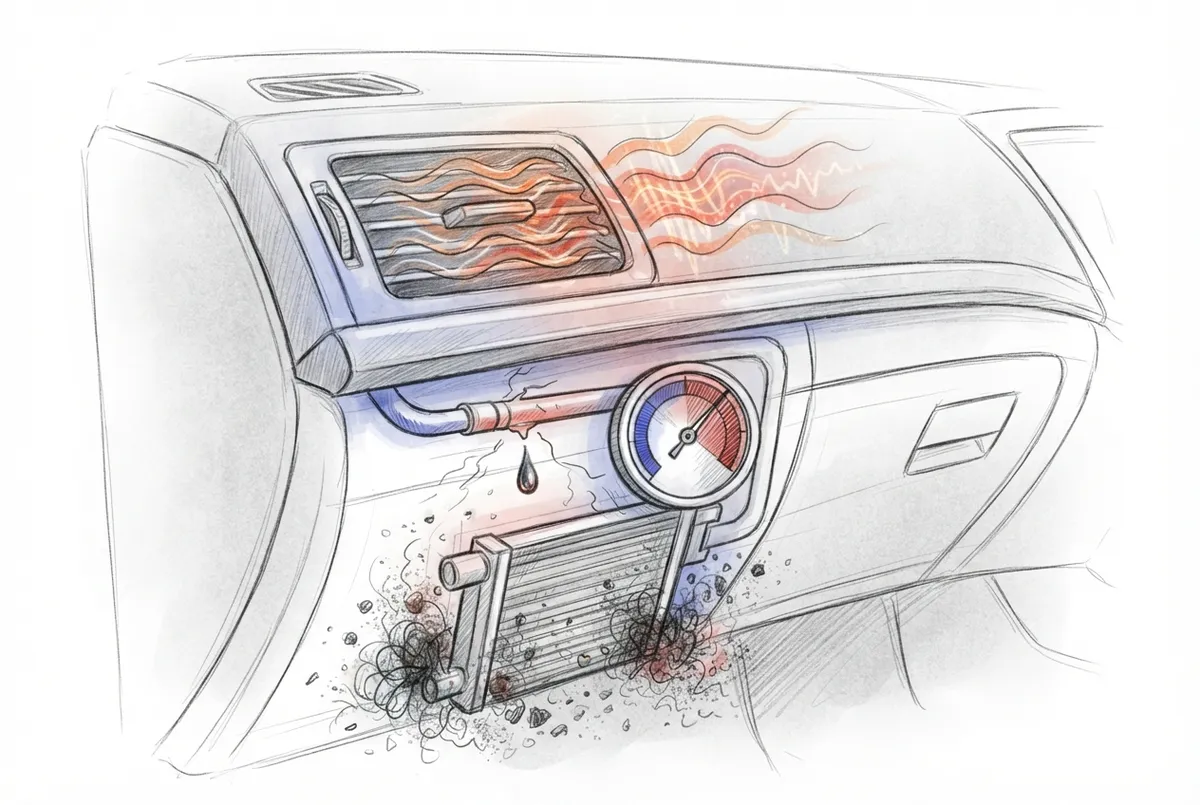
Refrigerant isn’t something your car burns up over time like gasoline. If your levels are low, there’s almost always a leak somewhere in the system. Simply adding more refrigerant without finding the leak is only a band-aid fix, and the cold air will fade again soon. A trained tech needs to locate the leak first, then repair it before recharging the system properly.
Compressor or Clutch Failure
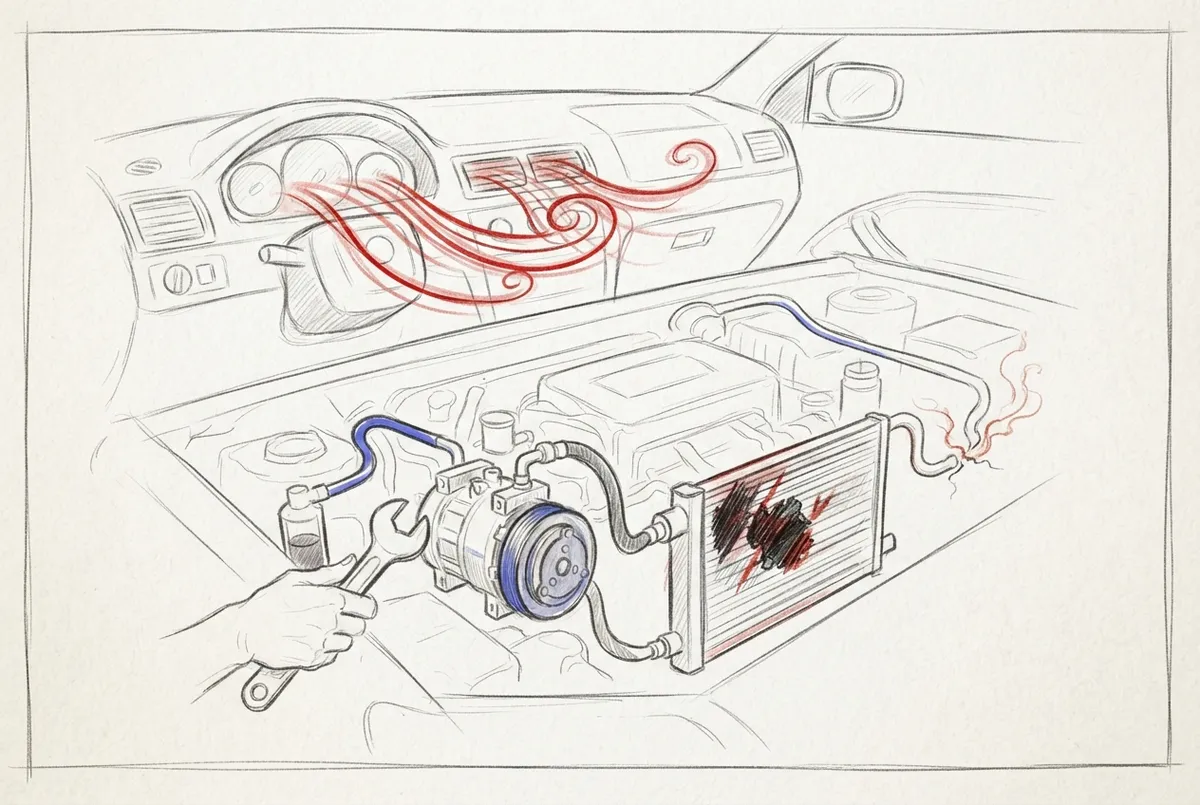
Your compressor is the heart of the whole A/C system. If it wears out, or if the clutch that engages it fails, refrigerant simply can’t circulate. This can also happen because of a blown fuse, a bad relay, a low-pressure safety switch tripping, or wiring problems. Sometimes a faulty control module is the real hidden cause.
Poor Airflow Across the Condenser
Your condenser needs steady airflow to do its job, especially when you’re sitting still in traffic. Bent fins, road debris, or a dead electric cooling fan can all block that airflow. This is a big reason cars cool fine on the highway but blow warm at idle or in stop-and-go traffic.
Blocked Expansion Valve or Orifice Tube
These small components control refrigerant flow through your system. When they get clogged or contaminated, pressures go haywire and cooling drops off. A failed receiver-drier or accumulator can cause the same kind of trouble. These issues almost always require pressure testing equipment that only a shop has access to.
Cabin Control Problems, Not Refrigerant Issues
Sometimes the refrigerant circuit is working just fine, but the air still feels warm. A stuck blend-door actuator, a bad temperature sensor, or a clogged cabin air filter can all cause this. It’s an easy thing to overlook, but it’s a common reason drivers get confused when a shop tells them the A/C “passed” a pressure test.
Quick Checks You Can Do Before Calling a Shop
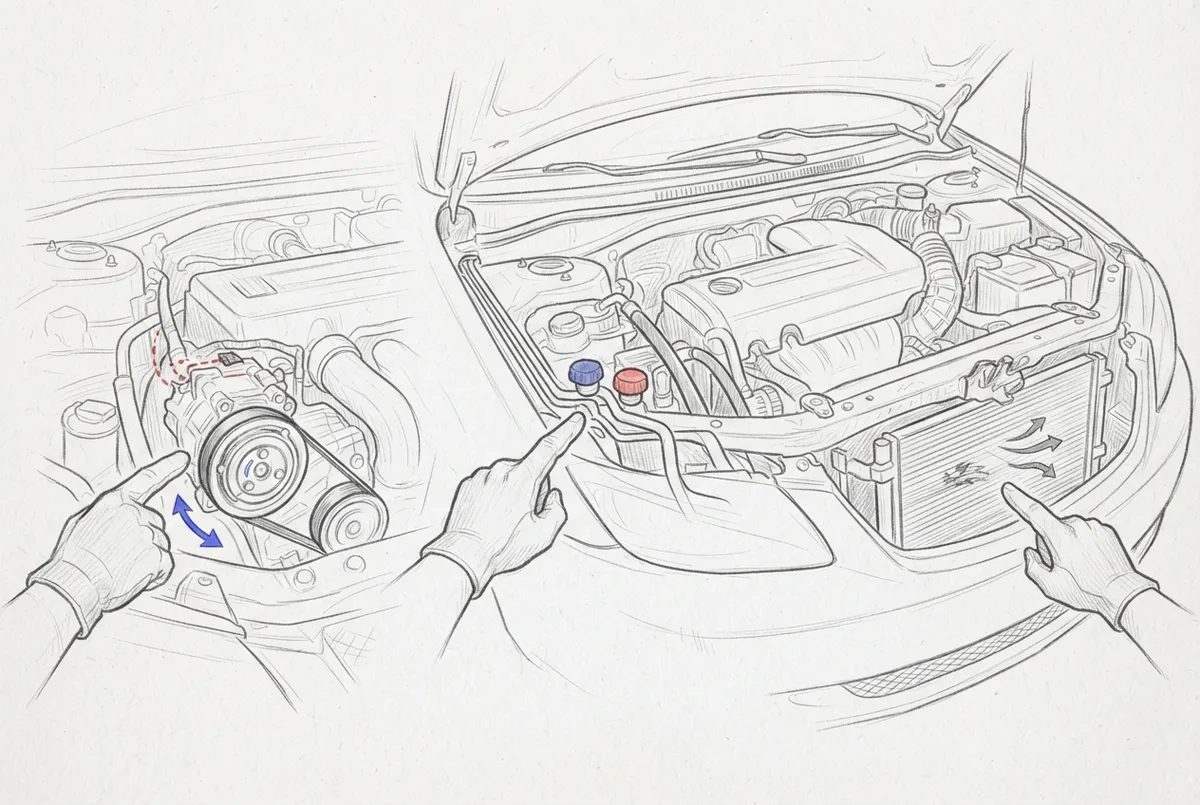
Before you head in for service, a few simple observations can help your technician diagnose the problem faster. Pay attention to these details next time you turn on your A/C.
- Is the airflow from the vents weak or strong?
- Does the air get colder once you start driving?
- Do you hear or feel the compressor engage when you switch on A/C?
- Are the cooling fans running when the A/C is selected?
- Is the warm air coming from all vents, or just certain zones?
- Does the problem only happen at idle, or all the time?
If your car only blows cold at highway speeds, that’s often a strong clue pointing toward condenser airflow or a failing cooling fan. Bringing these details with you saves diagnostic time and can lower your overall repair bill.
Steps a Professional Technician Follows to Diagnose the Problem
When you bring your vehicle to a qualified A/C shop, here’s generally what happens behind the scenes to find the real cause of warm air.
- Confirm the refrigerant type specified for your exact vehicle, either R-134a or the newer HFO-1234yf.
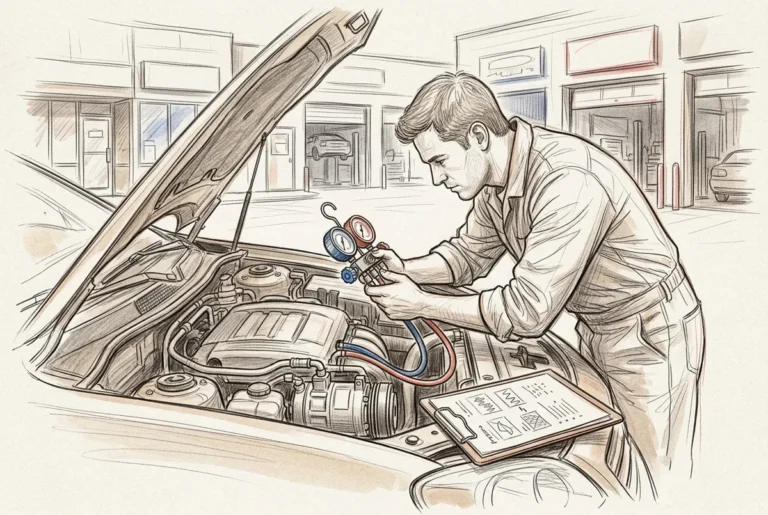
- Measure system pressures on both the high and low sides using calibrated gauges.
- Check vent temperature, often looking for readings in the 35–45°F range depending on conditions.
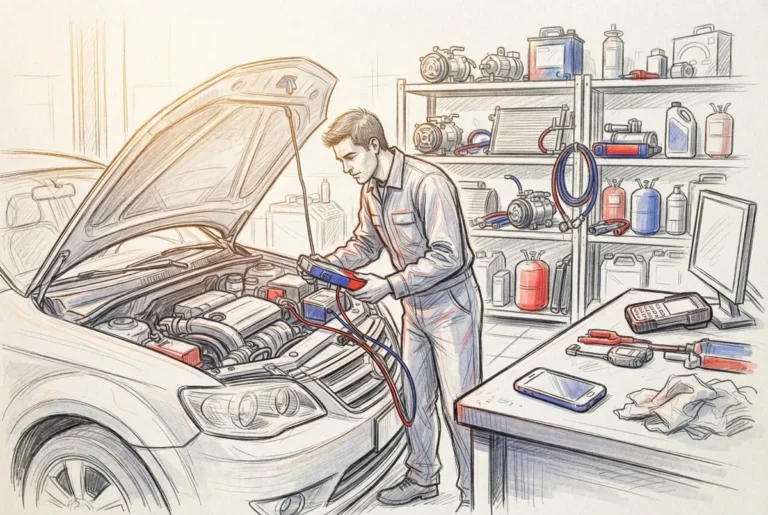
- Inspect electrical connections, fuses, relays, and control modules for faults.
- Test for refrigerant leaks using approved detection methods like UV dye or electronic sniffers.
- Examine the condenser and cooling fan for airflow restrictions or mechanical failure.
- Recover, recycle, and properly recharge refrigerant only after leaks are repaired.
This kind of thorough process is why guessing at home rarely solves the problem long term. Our team at Marks Air follows this exact approach for cars, trucks, buses, and heavy equipment coming through our Tampa shop, and you can schedule service whenever your A/C starts acting up.
Common Causes Compared: What They Mean for You
| Cause | Typical Symptom | DIY Fixable? | Needs Professional Tools? |
|---|---|---|---|
| Refrigerant leak | Cooling fades over days or weeks | No | Yes, leak detection required |
| Compressor/clutch failure | No cold air, unusual noise | No | Yes, electrical and mechanical testing |
| Condenser airflow issue | Cold on highway, warm at idle | Sometimes (debris removal) | Yes, for fan diagnosis |
| Expansion valve/orifice blockage | Inconsistent or weak cooling | No | Yes, pressure testing |
| Blend door or sensor fault | Warm air despite working compressor | No | Yes, HVAC control diagnosis |
Why This Matters for Different Drivers
Car Owners in Tampa Heat
For everyday drivers, warm A/C isn’t just annoying, it can turn a commute into a miserable sweatbox during Tampa’s brutal summer months. Getting a proper diagnostic early can save you from a full breakdown later. Check out our guide on why A/C repair matters so much for your vehicle in this climate.
Truck Drivers and Long-Haul Operators
If you’re spending eight or more hours behind the wheel, a working A/C system isn’t a luxury, it’s a safety necessity. Heat fatigue is real, and it affects reaction time on long routes. We stock parts and offer repairs designed for the demands of truck A/C systems that see heavy daily use.
Bus Operators and Transit Fleets
Passenger comfort and safety both depend on functioning climate control, especially on crowded routes during peak summer heat. Regular maintenance schedules matter more for buses than personal vehicles because of the extra strain from constant door cycling and passenger loads. See our resource on proper bus A/C system maintenance for more detail.
RV Enthusiasts on the Road
Nothing derails a camping trip faster than warm air blasting through your RV’s cab while you’re miles from the nearest shop. RV systems often have unique components and larger refrigerant capacities than standard cars. We recommend reviewing common RV air conditioner repair mistakes to avoid before your next big trip.
Heavy Equipment Operators
Construction and agricultural equipment operators spend long shifts in cabs that can get dangerously hot without proper cooling. A/C failure here isn’t just uncomfortable, it directly impacts productivity and operator safety. Learn more about how to get heavy equipment A/C repair done right the first time.
Fleet Owners Managing Multiple Vehicles
When you’re responsible for dozens of vehicles, one A/C failure can snowball into lost productivity and unhappy drivers. Preventive maintenance across your whole fleet is almost always cheaper than emergency repairs. Our article on preventive versus reactive fleet A/C maintenance breaks down why staying ahead of problems pays off.
The Legal Side: EPA Rules You Should Know
Car A/C repair isn’t just about mechanical skill, it’s also regulated. Here’s what every vehicle owner should understand before letting anyone touch their refrigerant system.
- Technicians servicing systems with refrigerants like R-134a or HFO-1234yf must hold EPA Section 609 certification.
- Approved recovery equipment is required, and intentionally venting refrigerant into the air is against federal law.
- Recovered refrigerant must be recycled or reclaimed before it’s reused, even in the same vehicle.
- Mixing refrigerants or using sealants and off-brand additives can cause serious system damage.
This is exactly why DIY refrigerant top-offs from a hardware store can cause more harm than good. Our shop is fully certified and equipped to handle these rules properly, and we’re proud to be a member of the Mobile Air Climate Systems Association (MACS), which keeps us current on industry standards.
R-134a or HFO-1234yf: Know Your Refrigerant
Many drivers don’t realize their vehicle’s refrigerant type matters a lot for repairs. Older vehicles typically use R-134a, while many newer models have switched to HFO-1234yf. Mixing these up can damage your system and even void warranties, so always check your under-hood label or ask a technician to confirm before any service. If you’re curious about the transition, our breakdown of R-134a to 1234yf conversion facts covers what’s changed.
Why DIY Recharge Kits Often Fall Short
It’s tempting to grab a can of refrigerant from the auto parts store and try a quick fix yourself. But without proper gauges, you risk overcharging the system, which can cause compressor damage. You also can’t detect leaks or test pressures accurately with a basic canister kit, meaning the warm air often returns within days or weeks.
Worse, if your system already has a leak, you’re just wasting refrigerant and money without solving anything. Professional service means your technician checks the real cause, not just symptoms. It’s also safer, since these systems run at high pressure and involve fast-moving belts and fans.
What to Expect During a Professional Visit
Not sure what a shop visit actually involves? Here’s a simple rundown of what typically happens when you bring your vehicle in for warm A/C complaints.
- Initial consultation about your symptoms and driving conditions.
- Visual inspection of belts, hoses, fans, and visible components.
- Electrical system check including fuses and relays.
- Pressure testing with calibrated equipment.
- Leak detection using dye or electronic tools.
- Repair or replacement of the faulty part.
- Recharge with the correct refrigerant type and amount.
- Final test to confirm proper vent temperature.
This methodical process is standard practice across our shop, and it’s part of why our customers keep coming back. You can browse real customer reviews or check out what people are saying about us on Yelp and Facebook.
Cost Considerations for Repair
Repair costs vary quite a bit depending on what’s actually wrong. A simple leak repair and recharge costs far less than a full compressor replacement. Getting an accurate diagnosis upfront prevents you from paying for guesswork, which is one reason many drivers search for detailed pricing guides before booking service. If budgeting is a concern, our resource on how much auto A/C repair typically costs can help set expectations.
Prevention: Keep Your Car’s A/C Running Cold
A little maintenance goes a long way toward avoiding warm air surprises down the road. Consider these habits to keep your system running smoothly for years.
- Run your A/C for a few minutes weekly, even in cooler months, to keep seals lubricated.
- Replace your cabin air filter on schedule to maintain good airflow.
- Have your system inspected annually, especially before Tampa’s peak summer heat arrives.
- Address small leaks immediately instead of waiting for a full system failure.
- Keep your condenser clear of debris, bugs, and road grime.
Following a regular maintenance routine is one of the easiest ways to avoid a surprise breakdown. For more tips, check out our guide on essential A/C maintenance every Tampa vehicle owner needs.
Trained Technicians Make the Difference
Since 1971, our family-owned and woman-owned shop has focused entirely on vehicle air conditioning systems. We don’t split our attention between engines, brakes, and A/C like general repair shops do. This specialization means our techs see warm-air complaints every single day and know exactly where to look first.
We also run A/C training programs covering EPA 609 certification and modern refrigerant handling, so our team stays sharp on the latest standards. If you’d like to see our shop and read what past customers have said, visit us on Google — Marks Air for verified reviews and directions.
Ready to Get Your Cold Air Back?
Warm air blowing from your vents doesn’t have to ruin your summer. Whether you’re driving a sedan, hauling freight across the state, or managing a whole fleet of vehicles, our Tampa team has the tools and experience to diagnose the real problem fast. Don’t wait until you’re stuck sweating in traffic, schedule service with our team today or simply call us at 813-988-1671 to get your A/C back to blowing ice cold air where it belongs.
FAQs
Q: Why is my car A/C blowing hot air but the fan is working?
A: Great question, and it’s a really common one! If your fan works fine but the air is warm, the issue is usually low refrigerant, a compressor that isn’t engaging, or a blocked condenser. Bring it into our Tampa shop and we’ll figure out exactly what’s going on.
Q: Can low refrigerant make a car A/C blow hot air?
A: Absolutely, this is one of the top reasons we see warm air complaints. Since refrigerant doesn’t get used up naturally, low levels almost always mean there’s a leak somewhere that needs to be found and fixed, not just topped off.
Q: How do I know if my car A/C has a refrigerant leak?
A: If your cooling fades gradually over days or weeks rather than failing all at once, a leak is likely the culprit. Our techs use approved leak detection tools like UV dye and electronic sniffers to pinpoint the exact spot, so you’re not just guessing.
Q: Is it safe or legal to add refrigerant to my car A/C myself?
A: We totally understand wanting to save a few bucks with a DIY kit, but it’s not the best idea here! Federal EPA rules require certified technicians and approved equipment for a reason, and DIY kits can overcharge your system or mask a leak instead of fixing it.
Q: How much does it cost to diagnose or repair a car A/C blowing hot air?
A: Costs really depend on what’s actually wrong, whether it’s a simple leak repair or a full compressor replacement. The best way to know for sure is to get a proper diagnostic, which helps you avoid paying for guesswork or unnecessary parts.