
Key Takeaways
-
A sealed A/C system should not lose refrigerant on its own; low refrigerant always indicates a leak that must be fixed before recharging, or the problem will recur.
-
A comprehensive A/C service includes leak detection, system evacuation, vacuum testing, and temperature verification—not just adding refrigerant—to ensure lasting repairs.
-
Early warning signs like warm air, weak airflow, musty smells, unusual noises, and intermittent cooling should prompt immediate inspection to prevent expensive repairs.
-
Different vehicles use different refrigerants (R-12 for pre-1994, R-134a for 1994-2021, HFO-1234yf for 2021+), and using the wrong type can damage your system.
-
Preventive maintenance like running your A/C weekly, scheduling annual inspections before summer, and addressing odd smells or sounds immediately extends system lifespan.
-
Choosing an A/C specialist rather than a general auto shop ensures access to proper diagnostic tools, comprehensive expertise, and faster resolution of complex issues.
Tampa heat is no joke. When your car’s air conditioning stops working, every drive feels like a sauna session. Whether you’re a daily commuter, a truck driver logging long miles, or a fleet manager keeping vehicles on the road, a broken car A/C is more than an inconvenience — it’s a real problem. The good news? Most air conditioner repair car issues are fixable, and knowing what to look for can save you time and money. In this guide, we’re breaking down nine practical tips to help you understand, diagnose, and address your vehicle’s cooling system. From spotting early warning signs to knowing when to call in a pro, we’ve got you covered. Let’s get your ride cool and comfortable again!
1. Understand How Your Car A/C Actually Works
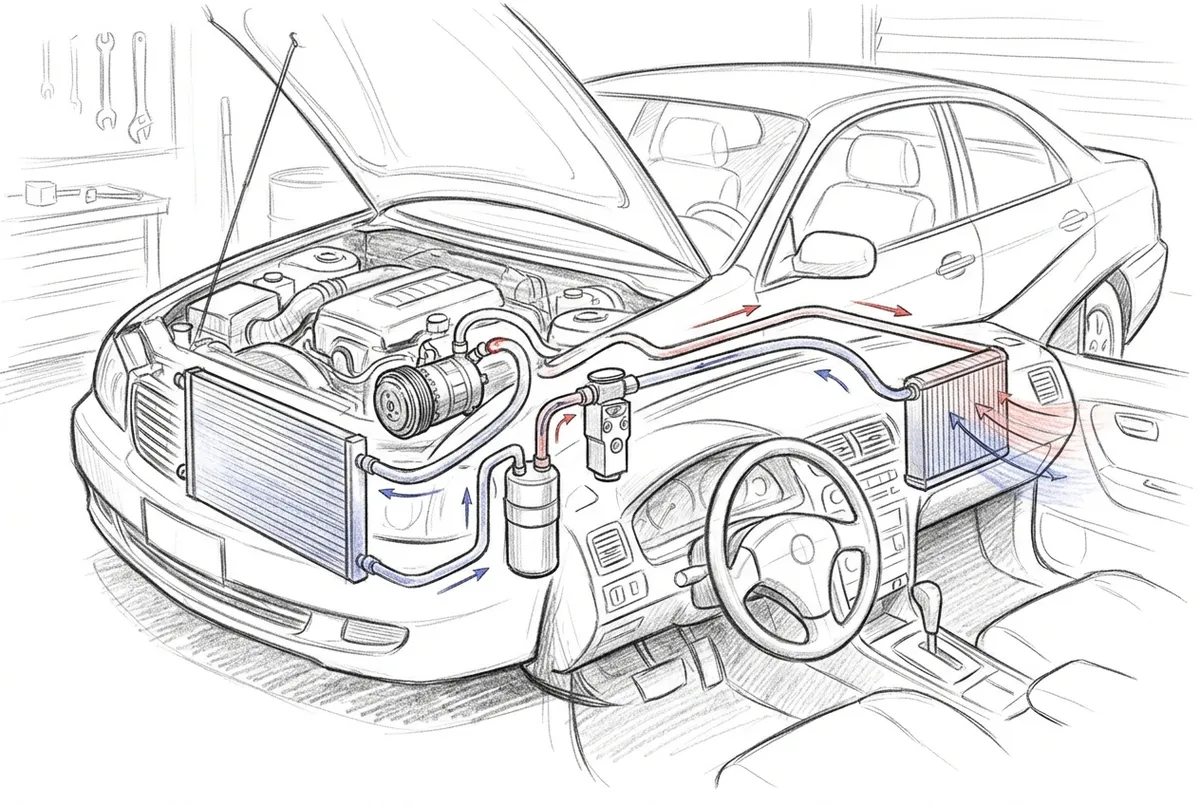
Your car’s air conditioning system doesn’t actually create cold air. What it does is remove heat and humidity from inside your cabin. It uses refrigerant, a compressor, a condenser, and an evaporator to pull warmth out of the air — leaving you with cool, dry comfort. Understanding this basic principle helps you communicate better with technicians and make smarter decisions about repairs.
When any part of this system fails, the whole cycle breaks down. That’s why a thorough A/C service looks at every component, not just the refrigerant level. Think of it like a chain — one weak link affects everything else.

2. Recognize the Most Common Warning Signs
Catching A/C problems early saves you from bigger, more expensive repairs later. Here are the most common signs your car’s air conditioner needs attention:
- Warm or lukewarm air blowing from the vents even when set to the coldest setting
- Weak airflow that feels like a gentle breeze instead of a strong cool blast
- Strange or musty smells coming from the vents, which can indicate bacteria or mold buildup
- Unusual noises like clicking, rattling, or squealing when the A/C is running
- Visible refrigerant leaks — an oily residue around A/C fittings or hoses
- A/C that only cools intermittently, working fine one day and failing the next
If any of these sound familiar, it’s a smart idea to schedule an inspection before things get worse. You can learn more about 5 signs you need car A/C repair to get a clearer picture of what’s going on with your system.
3. Don’t Ignore Low Refrigerant — But Know What It Means
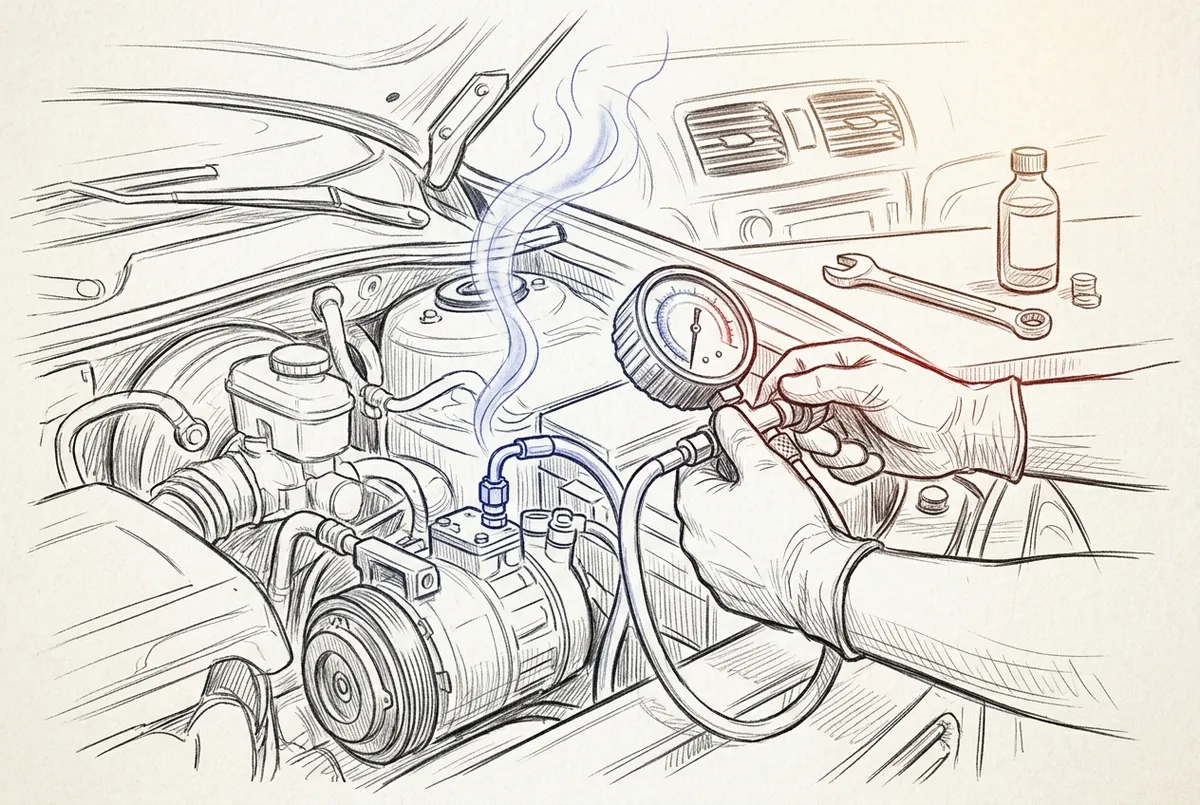
Low refrigerant is one of the most common reasons a car A/C blows warm air. Most passenger vehicles use about 28 to 32 ounces of refrigerant for a proper recharge, while larger vehicles and rear A/C systems may require more. But here’s the key thing to remember: a sealed A/C system should not lose refrigerant on its own.
If your system is low on refrigerant, that almost always means there’s a leak somewhere. Simply adding more refrigerant without fixing the leak is a temporary patch, not a real repair. A good technician will find and fix the leak first, then recharge the system correctly. Check out our resource on AC leak mistakes that cost car owners more money to avoid common pitfalls.
4. Know What a Professional A/C Service Includes
When you bring your vehicle in for air conditioner repair, a professional service typically covers a lot more than just adding refrigerant. Here’s what a thorough inspection usually includes:
- Visual inspection of belts, hoses, and accessible A/C components for wear or damage
- Compressor check to verify it’s engaging and operating properly
- Leak detection using UV dye, electronic detectors, or pressure testing
- System evacuation — removing old refrigerant before servicing
- Vacuum test to confirm the system holds pressure and has no hidden leaks
- Refrigerant recharge to the manufacturer’s specified amount
- Temperature output check to confirm the repair was successful
This kind of comprehensive approach is what separates a quality repair from a quick fix. To understand the full scope of what’s available, explore the A/C services offered by Marks Air.
5. Understand Your Vehicle’s Refrigerant Type
Not all cars use the same refrigerant, and using the wrong type can damage your system. Here’s a quick breakdown of the most common refrigerant types used in vehicles today:
| Refrigerant Type | Common Use | Status in 2026 |
|---|---|---|
| R-12 (Freon) | Older vehicles (pre-1994) | Phased out; hard to find and expensive |
| R-134a | Vehicles made 1994–2021 | Still widely used; being phased out in newer models |
| HFO-1234yf | Newer vehicles (2021 and later) | Industry standard for new vehicles in 2026 |
R-12, also known as CFC-12, was phased out by the EPA because of its ozone-depleting effects. If you own an older vehicle that still uses R-12, a retrofit to R-134a has been a common and cost-effective solution. For newer vehicles, HFO-1234yf is now the standard. Want to learn more? Check out our guide on R-134a to 1234yf conversion.
6. Address Smells and Sounds Quickly
A musty or foul smell from your vents isn’t just unpleasant — it’s a sign that moisture, bacteria, or fungus has built up in your A/C system. This commonly happens in the evaporator core, where condensation collects and can become a breeding ground for mold if not properly drained and maintained.
Strange noises are another red flag. A clicking or rattling sound when you turn on the A/C often points to compressor issues or debris in the system. A squealing noise may indicate a worn belt. Don’t wait on these — catching them early is always less costly. You can read more about why your A/C is blowing warm air for more insight on what these symptoms mean.
7. Know the Difference Between Repair and Replacement
Sometimes a simple repair — like fixing a hose or replacing a seal — is all you need. Other times, a major component like the compressor or condenser may need to be replaced entirely. How do you know which route to take? Consider these factors:
- Age of the vehicle: Older vehicles may need more extensive work to bring their systems up to spec
- Severity of the damage: Minor leaks can often be repaired; catastrophic compressor failure usually means replacement
- Cost comparison: Sometimes it makes more financial sense to replace a failing component than to keep patching it
- System compatibility: Upgrading to a more modern refrigerant may require component changes
Our article on A/C repair vs. A/C replacement breaks this down in detail so you can make the best decision for your vehicle and budget.
8. Keep Up With Preventive Maintenance
Like most things on your vehicle, your A/C system lasts longer and works better when it gets regular attention. You don’t have to wait until something breaks to have your system checked. In fact, spring is the ideal time to schedule a quick A/C inspection — before the full heat of summer hits and demand spikes.
Here are some simple preventive habits that make a real difference:
- Run your A/C for at least 10 minutes weekly, even in cooler months, to keep seals lubricated
- Use the defrost setting occasionally — it runs the compressor and helps prevent mold buildup
- Have belts and hoses inspected during routine service visits
- Address any unusual smells or sounds right away rather than ignoring them
- Schedule a professional A/C inspection every one to two years depending on vehicle use
For more helpful guidance, check out 5 A/C maintenance tips every Tampa vehicle owner needs. Staying ahead of problems is always easier than dealing with a breakdown in the middle of July.
9. Choose a Specialist for Car Air Conditioner Repair
When it comes to air conditioner repair for your car, truck, bus, RV, or heavy equipment, going to a specialist makes a huge difference. A shop that focuses exclusively on A/C systems has the tools, parts, and experience to handle complex diagnoses that general auto shops might miss.
Marks Air has been Tampa’s trusted A/C specialist since 1971. As a family-owned, woman-owned business, they bring over five decades of focused expertise to every job. Whether you need a simple recharge, a full system installation, or hard-to-find A/C parts, Marks Air stocks a full inventory — including their own KOOL-TEMP parts line — to get you back on the road fast. They’re also a proud member of the Mobile Air Climate Systems Association (MACS), which keeps them aligned with the latest industry standards and best practices.
You can see what Tampa customers are saying by checking out Marks Air reviews or by visiting Marks Air on Google to read firsthand experiences from drivers just like you. Their reputation speaks for itself — and their team is always happy to help you figure out the best path forward for your specific vehicle and situation.
Quick Reference: Common A/C Problems and What Causes Them
| Symptom | Likely Cause | Recommended Action |
|---|---|---|
| Warm air from vents | Low refrigerant, compressor issue, or leak | Professional inspection and leak test |
| Weak airflow | Clogged cabin filter or blower motor issue | Check filter; have blower motor inspected |
| Musty smell | Bacteria or mold in evaporator | Evaporator cleaning and drain check |
| Clicking/rattling noise | Compressor problem or debris in system | Compressor inspection |
| Squealing when A/C runs | Worn or loose belt | Belt inspection and replacement if needed |
| Intermittent cooling | Electrical issue or refrigerant fluctuation | Full system diagnostic |
Fleet and Commercial Vehicles Need Extra Attention
If you manage a fleet of cars, trucks, or buses, keeping every vehicle’s A/C in top shape is critical — not just for driver comfort, but for productivity and safety. A driver who is overheated is a distracted driver. Fleet vehicle A/C diagnostics can help you catch problems early across multiple vehicles before they cause costly downtime.
For bus operators and transit companies, consistent A/C performance is a passenger satisfaction issue as much as a mechanical one. And for construction or agricultural equipment operators, a working A/C keeps operators alert and safe during long shifts in the Florida sun. Marks Air is fully equipped to handle all of these vehicle types at their Tampa facility — from basic diagnostics to full system overhauls.
You can also follow along with tips, updates, and service highlights on Marks Air on Facebook and Marks Air on Instagram to stay informed about seasonal service reminders and special offerings.
Wrapping It Up: Cool Cars Start With Smart Choices
Car air conditioner repair doesn’t have to be stressful. When you know the warning signs, understand how the system works, and work with a trusted specialist, you can get back to driving in comfort quickly. The tips in this guide apply whether you’re driving a personal car, a delivery truck, an RV, or a heavy-duty piece of equipment.
Don’t wait until the hottest day of the year to find out your A/C is struggling. Early action saves money, prevents bigger repairs, and keeps you comfortable on the road. You can also check out why A/C repair in Tampa is so important for your vehicle to understand just how critical this system is in Florida’s climate.
Ready to get your vehicle’s A/C system checked, repaired, or upgraded? The team at Marks Air is here to help. Schedule your A/C service appointment today or give them a call at 813-988-1671 — and drive cool all year long.
FAQs
Q: Why is my car A/C blowing warm air?
A: Warm air from your vents is usually a sign of low refrigerant, a failing compressor, or a refrigerant leak somewhere in the system. Since a properly sealed A/C system shouldn’t lose refrigerant on its own, it’s best to have a professional inspect the system to find and fix the root cause rather than just adding more refrigerant.
Q: How do I know if my car A/C has a refrigerant leak?
A: Common signs of a refrigerant leak include warm air from the vents, oily residue around A/C hoses or fittings, and A/C performance that gradually gets worse over time. A professional technician can confirm a leak using UV dye, an electronic leak detector, or a pressure test — so don’t guess when you can get a definitive answer!
Q: Can I just recharge my car A/C without fixing a leak first?
A: You can, but it’s not a great idea and won’t last long. If there’s a leak, any refrigerant added will simply escape again, leaving you right back where you started. The smart move is to repair the leak first and then recharge the system — that way the fix actually sticks.
Q: Why does my car A/C smell bad?
A: A musty or foul smell coming from your vents is usually caused by moisture, bacteria, or mold that has built up in the evaporator core. It’s more common in humid climates like Tampa, where condensation can accumulate quickly. A professional A/C cleaning service can clear it out and get your air smelling fresh again.
Q: How often should I have my car A/C serviced?
A: Most experts recommend having your car’s A/C inspected at least once every one to two years, depending on how much you use it and the age of your vehicle. In hot climates like Tampa, where your A/C works hard year-round, annual check-ups are a smart investment to catch small problems before they become big ones.